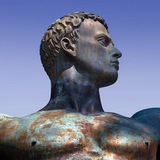
NS On the Virtue of Self Control
"One expects that a person who drives a car is in control, and that he causes no accidents... so that he does not endanger himself or others. The forces within us can raise or lower us. It depends on the use we make of them, on whether we control them and therefore ourselves. Hunger and thirst exist to be satisfied. But woe to him who eats for the sake of eating or drinks for the sake of drinking. He is lower than an animal that knows when it has had enough."
"We eat and drink to live, but we never live in order to eat and drink. The body must be kept under iron discipline so that we are always in charge of it and it is always dependable..."
"Command yourself so that you can master yourself... You must in order to become a real man. That is the secret of every great personality."
Stellrecht, H. (1943). Glauben und Handeln.
"One expects that a person who drives a car is in control, and that he causes no accidents... so that he does not endanger himself or others. The forces within us can raise or lower us. It depends on the use we make of them, on whether we control them and therefore ourselves. Hunger and thirst exist to be satisfied. But woe to him who eats for the sake of eating or drinks for the sake of drinking. He is lower than an animal that knows when it has had enough."
"We eat and drink to live, but we never live in order to eat and drink. The body must be kept under iron discipline so that we are always in charge of it and it is always dependable..."
"Command yourself so that you can master yourself... You must in order to become a real man. That is the secret of every great personality."
Stellrecht, H. (1943). Glauben und Handeln.
👍2
Bearing patience with our kinsmen
"Begin the morning by saying to thyself, I shall meet with the busy-body, the ungrateful, arrogant, deceitful, envious, unsocial. All these things happen to them by reason of their ignorance of what is good and evil. But I who have seen the nature of the good that it is beautiful, and of the bad that it is ugly, and the nature of him who does wrong, that it is akin to me, not only of the same blood or seed, but that it participates in the same intelligence and the same portion of the divinity, I can neither be injured by any of them, for no one can fix on me what is ugly, nor can I be angry with my kinsman, nor hate him. For we are made for co-operation, like feet, like hands, like eyelids, like the rows of the upper and lower teeth. To act against one another then is contrary to nature; and it is acting against one another to be vexed and to turn away."
Marcus Aurelius. The Meditations.
#Art: Robert, H. (1733-1808). Washerwomen by the Statue of Marcus Aurelius.
"Begin the morning by saying to thyself, I shall meet with the busy-body, the ungrateful, arrogant, deceitful, envious, unsocial. All these things happen to them by reason of their ignorance of what is good and evil. But I who have seen the nature of the good that it is beautiful, and of the bad that it is ugly, and the nature of him who does wrong, that it is akin to me, not only of the same blood or seed, but that it participates in the same intelligence and the same portion of the divinity, I can neither be injured by any of them, for no one can fix on me what is ugly, nor can I be angry with my kinsman, nor hate him. For we are made for co-operation, like feet, like hands, like eyelids, like the rows of the upper and lower teeth. To act against one another then is contrary to nature; and it is acting against one another to be vexed and to turn away."
Marcus Aurelius. The Meditations.
#Art: Robert, H. (1733-1808). Washerwomen by the Statue of Marcus Aurelius.
❤2
The Blessed Priest Alfons Tracki
Alfons Tracki (* 2 December 1896 in Bleischwitz, Upper Silesia, German Empire; † 18 July 1946 in Shkodra, Albania) was a German Catholic priest who worked in Albania and was murdered there during the religious persecution of the communist regime. He is one of the Blessed Martyrs of Albania of the Roman Catholic Church.
Biography:
Alfons Tracki was the son of Josef Tracki and his wife Martha, née Schramm. He was born in Bleischwitz (today: Bliszczyce), a small village in Upper Silesia, in the district of Leobschütz (today: Glubczyce) which belonged to the administrative district of Oppeln (today: Opole). He received the sacrament of baptism on 13 December 1896 in the local parish church of St. Catherine. He had two brothers, one of whom was called Georg, and a sister.
Alfonso attended primary school. He was in contact with the Congregation of the Christian School Brothers. On 15 July 1911 he began the so-called small novitiate there in the Austrian capital Vienna. At the end of this first probationary period, the major novitiate followed on 13 July 1912 and he was initiated or received on 16 August 1913. Alfonso was given the name Gebhardus, after St. Bishop Gebhard II of Constance. His time in Vienna was to be short-lived, as the Provincial soon assigned him to Southeast Europe and sent him to Albania, where he taught as a teacher of the Brothers of the Christian Schools at the College of St. Xaverius in Shkodrë. His speciality was physical education.
In 1914, Alphonsus took one yearʼs vows, vowing poverty, chastity and obedience publicly before God and his Congregation in Scutari. He renewed his vows in 1916 and 1917. During the time of the First World War, Alfonso left Albania and travelled to the Silesian capital of Wroclaw to complete his military service, which lasted two years. During those years, clarity matured in him about a vocation to the priesthood. He studied philosophy and theology in Austria.
He returned to Albania in 1922. He received the sacrament of priestly ordination in Shkodrë on 14 June 1925 from the hands of Archbishop Lazzaro Miedia (1859–1935). He served as chaplain at the cathedral church in Shkodrë. In those years, he founded the community Viribus unitis within the Catholic youth, a spiritual formation for deepening a life according to the Gospel. After his assignment as cathedral chaplain, his chief shepherd sent him to Pulaj (Velipoje). Together with other priests, he built a church and a school in Pulaj.
The communist party, which came to power in Albania in 1944, decided to dissolve all religious orders and to expropriate all church property. In December 1944, three Catholic printing houses were confiscated. In May 1945 they closed all kindergartens run by religious sisters, especially the Ancelle della Carità of Brescia and the Salesian Sisters. The teachers of the Jesuit and Franciscan schools were replaced by state teachers.
When many people had taken refuge in the mountains for fear of the communists, Tracki heard of the fate of 26-year-old Ndoc Jakova, who had been lured out and mortally wounded despite his hiding place. To help this Catholic youth in his distress, Tracki was captured and imprisoned while hearing his confession and administering the anointing of the sick. On 13 February 1946, he was sent to Shkodrë prison. On 17 July 1946, Tracki was sentenced to death for being caught in the performance of his priestly ministry, which was forbidden. The execution by firing squad took place one day later in Shkodrë behind a cemetery. His body was thrown into a pit saturated with lime so that the bones disintegrated. As a result, no remains could be identified, let alone preserved.
Alfons Tracki (* 2 December 1896 in Bleischwitz, Upper Silesia, German Empire; † 18 July 1946 in Shkodra, Albania) was a German Catholic priest who worked in Albania and was murdered there during the religious persecution of the communist regime. He is one of the Blessed Martyrs of Albania of the Roman Catholic Church.
Biography:
Alfons Tracki was the son of Josef Tracki and his wife Martha, née Schramm. He was born in Bleischwitz (today: Bliszczyce), a small village in Upper Silesia, in the district of Leobschütz (today: Glubczyce) which belonged to the administrative district of Oppeln (today: Opole). He received the sacrament of baptism on 13 December 1896 in the local parish church of St. Catherine. He had two brothers, one of whom was called Georg, and a sister.
Alfonso attended primary school. He was in contact with the Congregation of the Christian School Brothers. On 15 July 1911 he began the so-called small novitiate there in the Austrian capital Vienna. At the end of this first probationary period, the major novitiate followed on 13 July 1912 and he was initiated or received on 16 August 1913. Alfonso was given the name Gebhardus, after St. Bishop Gebhard II of Constance. His time in Vienna was to be short-lived, as the Provincial soon assigned him to Southeast Europe and sent him to Albania, where he taught as a teacher of the Brothers of the Christian Schools at the College of St. Xaverius in Shkodrë. His speciality was physical education.
In 1914, Alphonsus took one yearʼs vows, vowing poverty, chastity and obedience publicly before God and his Congregation in Scutari. He renewed his vows in 1916 and 1917. During the time of the First World War, Alfonso left Albania and travelled to the Silesian capital of Wroclaw to complete his military service, which lasted two years. During those years, clarity matured in him about a vocation to the priesthood. He studied philosophy and theology in Austria.
He returned to Albania in 1922. He received the sacrament of priestly ordination in Shkodrë on 14 June 1925 from the hands of Archbishop Lazzaro Miedia (1859–1935). He served as chaplain at the cathedral church in Shkodrë. In those years, he founded the community Viribus unitis within the Catholic youth, a spiritual formation for deepening a life according to the Gospel. After his assignment as cathedral chaplain, his chief shepherd sent him to Pulaj (Velipoje). Together with other priests, he built a church and a school in Pulaj.
The communist party, which came to power in Albania in 1944, decided to dissolve all religious orders and to expropriate all church property. In December 1944, three Catholic printing houses were confiscated. In May 1945 they closed all kindergartens run by religious sisters, especially the Ancelle della Carità of Brescia and the Salesian Sisters. The teachers of the Jesuit and Franciscan schools were replaced by state teachers.
When many people had taken refuge in the mountains for fear of the communists, Tracki heard of the fate of 26-year-old Ndoc Jakova, who had been lured out and mortally wounded despite his hiding place. To help this Catholic youth in his distress, Tracki was captured and imprisoned while hearing his confession and administering the anointing of the sick. On 13 February 1946, he was sent to Shkodrë prison. On 17 July 1946, Tracki was sentenced to death for being caught in the performance of his priestly ministry, which was forbidden. The execution by firing squad took place one day later in Shkodrë behind a cemetery. His body was thrown into a pit saturated with lime so that the bones disintegrated. As a result, no remains could be identified, let alone preserved.
Alfons Tracki (2 December 1896–18 July 1946) was a German Catholic priest of the Archbishopric of Shkodra in Albania who died as a martyr as a result of religious persecution by the regime of Enver Hoxha in communist Albania and was beatified.
Beatification of Alfons Tracki
The Albanian Bishopsʼ Conference, presided over by Italian-born Franciscan Archbishop Angelo Massafra of Shokdrë-Pult, opened beatification proceedings on 10 November 2002 for 40 witnesses to the faith who died violent deaths under Albaniaʼs cruel rampaging communism, including Alfons Tracki. On 26 April 2016, Pope Francis recognised the martyrʼs martyrdom. He was beatified on 5 November 2016 in Shkodra (Scutari), Albania, along with 37 other Catholics as martyrs of the then communist regime by the Prefect of the Congregation for the Causes of Saints, Cardinal Angelo Amato, on behalf of Pope Francis in the square in front of St Stephenʼs Cathedral. Among them were bishops, priests, religious and lay people who were also victims of the regime between 1945 and 1974. Among them was Father Josef Marxen, another German priest.
The Albanian Bishopsʼ Conference, presided over by Italian-born Franciscan Archbishop Angelo Massafra of Shokdrë-Pult, opened beatification proceedings on 10 November 2002 for 40 witnesses to the faith who died violent deaths under Albaniaʼs cruel rampaging communism, including Alfons Tracki. On 26 April 2016, Pope Francis recognised the martyrʼs martyrdom. He was beatified on 5 November 2016 in Shkodra (Scutari), Albania, along with 37 other Catholics as martyrs of the then communist regime by the Prefect of the Congregation for the Causes of Saints, Cardinal Angelo Amato, on behalf of Pope Francis in the square in front of St Stephenʼs Cathedral. Among them were bishops, priests, religious and lay people who were also victims of the regime between 1945 and 1974. Among them was Father Josef Marxen, another German priest.
Many years before the differences between Germany and Poland escalated to the point of no return, numerous diplomatic efforts were made by the German government to defuse the ever more dangerous situation the two countries were facing. These efforts were all rejected by Poland. One of them comes to mind: on January 6th, 1939, the German Foreign Minister von Ribbentrop met with the Polish Foreign Minister Josef Beck in Munich to discuss the differences between the two countries. Von Ribbentrop proposed “the following solution: the return of Danzig to Germany. In return, all of Poland’s economic interests in this region would be guaranteed, and most generously at that. Germany would be given access to her province of East Prussia by means of an extraterritorial highway and rail line. In return, Germany would guarantee the Corridor and the entire Polish status, in other words, a final and permanent recognition of each nation’s borders.” Beck replied: “For the first time I am pessimistic…” Particularly in the matter of Danzig I see ‘no possibility of cooperation.
https://ww2truth.com/2021/07/01/the-unknown-history-of-the-1939-german-polish-conflict/
https://ww2truth.com/2021/07/01/the-unknown-history-of-the-1939-german-polish-conflict/
The Russo-Japanese War was a military conflict fought between the Russian Empire and the Empire of Japan from 1904 to 1905. Much of the fighting took place in what is now northeastern China. The Russo-Japanese War was also a naval conflict, with ships exchanging fire in the waters surrounding the Korean peninsula. The brutal conflict in the western Pacific changed the balance of power in Asia and set the stage for World War I.
In 1904, the Russian Empire, which was ruled by the autocratic Czar Nicholas II, was one of the largest territorial powers in the world.
However, with the Siberian shipping center of Vladivostok forced to close for much of the winter months, the empire was in need of a warm-water port in the Pacific Ocean, both for purposes of trade as well as a base for its growing navy.
Czar Nicholas set his sights on the Korean and Liaodong peninsulas, the latter located in present-day China. The Russian Empire already leased a port on the Liaodong Peninsula from China—Port Arthur—but it wanted to have a base of operations firmly under its control.
The Japanese, meanwhile, had been concerned about Russian influence in the region since the First Sino-Japanese War of 1895. Russia provided military support to the Qing Empire in China during that conflict, which pitted the two Asian powers against each other.
With the Russians’ history of military aggression, the Japanese initially sought a deal, offering to cede control of Manchuria (northeastern China). Under the terms of the proposal, Japan would have maintained influence over Korea.
However, Russia refused Japan’s offer and demanded that Korea north of the 39th parallel serve as a neutral zone.
As negotiations broke down, the Japanese opted to go to war, staging a surprise attack on the Russian navy at Port Arthur on February 8, 1904.
In 1904, the Russian Empire, which was ruled by the autocratic Czar Nicholas II, was one of the largest territorial powers in the world.
However, with the Siberian shipping center of Vladivostok forced to close for much of the winter months, the empire was in need of a warm-water port in the Pacific Ocean, both for purposes of trade as well as a base for its growing navy.
Czar Nicholas set his sights on the Korean and Liaodong peninsulas, the latter located in present-day China. The Russian Empire already leased a port on the Liaodong Peninsula from China—Port Arthur—but it wanted to have a base of operations firmly under its control.
The Japanese, meanwhile, had been concerned about Russian influence in the region since the First Sino-Japanese War of 1895. Russia provided military support to the Qing Empire in China during that conflict, which pitted the two Asian powers against each other.
With the Russians’ history of military aggression, the Japanese initially sought a deal, offering to cede control of Manchuria (northeastern China). Under the terms of the proposal, Japan would have maintained influence over Korea.
However, Russia refused Japan’s offer and demanded that Korea north of the 39th parallel serve as a neutral zone.
As negotiations broke down, the Japanese opted to go to war, staging a surprise attack on the Russian navy at Port Arthur on February 8, 1904.
Vault of Secrets - Unpopular History
The Russo-Japanese War was a military conflict fought between the Russian Empire and the Empire of Japan from 1904 to 1905. Much of the fighting took place in what is now northeastern China. The Russo-Japanese War was also a naval conflict, with ships exchanging…
Russian Vs Japanese Cavalry
Vault of Secrets - Unpopular History
Russian Vs Japanese Cavalry
The Night Landing of the Japanese Troops at Chemuplo
Vault of Secrets - Unpopular History
Russian Vs Japanese Cavalry
With the Russian Army on its March to the Front
Vault of Secrets - Unpopular History
Russian Vs Japanese Cavalry
Twenty-Third Artillery Brigade About to Leave Gatchina for the Front
Vault of Secrets - Unpopular History
Russian Vs Japanese Cavalry
Shinto Ceremony Held by the Japanese in Honor of
Vault of Secrets - Unpopular History
Russian Vs Japanese Cavalry
Bringing Wounded Russians to the Dressing Station at the
Vault of Secrets - Unpopular History
Russian Vs Japanese Cavalry
Russian Infantry in the Trenches on a Hot Day
Vault of Secrets - Unpopular History
Russian Vs Japanese Cavalry
Burying Japanese and Russian Dead Together Outside Liao-Yang
Vault of Secrets - Unpopular History
Russian Vs Japanese Cavalry
Attaches and Correspondents with General Kuroki’s
Vault of Secrets - Unpopular History
Russian Vs Japanese Cavalry
General Nogi and his Staff, the Conquerors of Port Arthur
Vault of Secrets - Unpopular History
The Russo-Japanese War was a military conflict fought between the Russian Empire and the Empire of Japan from 1904 to 1905. Much of the fighting took place in what is now northeastern China. The Russo-Japanese War was also a naval conflict, with ships exchanging…
In the end, the Russo-Japanese War was a particularly brutal one, foreshadowing the global conflicts that were to follow.
It’s believed that both sides sustained casualties mounting to more than 150,000 combined, and that some 20,000 Chinese civilians were killed as well.
The fighting concluded with the Treaty of Portsmouth, which was mediated by U.S. President Theodore Roosevelt at Portsmouth, New Hampshire, during the spring and summer of 1905. Negotiating for Russia was Sergei Witte, a minister in Czar Nicholas’ government. Harvard graduate Baron Komura represented Japan.
Although Japan had won the war decisively, victory had come at a severe cost: the country’s coffers were virtually empty.
It’s believed that both sides sustained casualties mounting to more than 150,000 combined, and that some 20,000 Chinese civilians were killed as well.
The fighting concluded with the Treaty of Portsmouth, which was mediated by U.S. President Theodore Roosevelt at Portsmouth, New Hampshire, during the spring and summer of 1905. Negotiating for Russia was Sergei Witte, a minister in Czar Nicholas’ government. Harvard graduate Baron Komura represented Japan.
Although Japan had won the war decisively, victory had come at a severe cost: the country’s coffers were virtually empty.
👍1