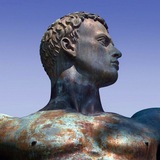
New Athos Monastery is a monastery in New Athos, municipality of Gudauta, in a breakaway republic of Abkhazia.
Roman Cuisine
We can thank "Marcus Gavius Apicius", a Roman gourmet who lived during Tiberius’ reign for details on Roman cooking. Often found in their recipes is a savory ingredient known as "Liquamen" or "Garum": a salty preserved fish sauce. Possibly replicable with Asian fish sauce [or salted anchovies]. Pine nuts, and Caroenum a Sweet Grape Syrup. Here is a recipe for a type of Meat Patty or 'Burger'.
ISICIA OMENTATA (Apic. modern adaptation]
Ingredients:
------------
500g minced meat
1 french roll, soaked in white wine
1/2 tsp freshly ground pepper
50ml Liquamen (can be replaced by 1/2 tsp salt + a little white wine)
some Pine Nuts and Green Peppercorns
A little Caroenum
Baking foil
Instructions:
-------------
Mix minced meat with the soaked french roll. Ground spices and mix into the meat. Form small burgers and put pine kernels and peppercorns into them. Put them into baking foil and grill them together with Caroenum.
We can thank "Marcus Gavius Apicius", a Roman gourmet who lived during Tiberius’ reign for details on Roman cooking. Often found in their recipes is a savory ingredient known as "Liquamen" or "Garum": a salty preserved fish sauce. Possibly replicable with Asian fish sauce [or salted anchovies]. Pine nuts, and Caroenum a Sweet Grape Syrup. Here is a recipe for a type of Meat Patty or 'Burger'.
ISICIA OMENTATA (Apic. modern adaptation]
Ingredients:
------------
500g minced meat
1 french roll, soaked in white wine
1/2 tsp freshly ground pepper
50ml Liquamen (can be replaced by 1/2 tsp salt + a little white wine)
some Pine Nuts and Green Peppercorns
A little Caroenum
Baking foil
Instructions:
-------------
Mix minced meat with the soaked french roll. Ground spices and mix into the meat. Form small burgers and put pine kernels and peppercorns into them. Put them into baking foil and grill them together with Caroenum.
👍1
Media is too big
VIEW IN TELEGRAM
The Secret Story: The Soviet Gulag Archipelago
Forwarded from Ulrich Hirschmann Archives
Political Leaders of the NSDAP (1972).pdf
39 MB
📄🇬🇧 Political Leaders of the NSDAP (1972)
Translation from the 1943 Organisationsbuch der NSDAP.
Translation from the 1943 Organisationsbuch der NSDAP.
Piri-reis Map.pdf
35.3 MB
Chart of the Ocean Sea [the Piri Reis Map]
"During a naval campaign against Venice in 1501, a Turkish fleet captured a Spanish ship in the western Mediterranean. One of the prisoners taken had earlier made three voyages to the West Indies with Columbus and carried with him a set of Columbus’ American charts. In this fortuitous manner Kemal Reis, the famous Turkish admiral, acquired maps of great importance showing a newly discovered part of the world. Piri Reis, nephew of Kemal, was born in Gallipoli on the shore of the Dardanelles in 1470. Piri also became an admiral and is remembered as a scholar of navigational science and an accomplished linguist. He produced charts, an important book on navigation, and a superb map of the world, which employed the Columbus maps taken by his uncle’s sailors. Although fragmentary, this work and the Zorzi sketches (#304) are the only world maps with a direct Columbus delineation for part of America"
"During a naval campaign against Venice in 1501, a Turkish fleet captured a Spanish ship in the western Mediterranean. One of the prisoners taken had earlier made three voyages to the West Indies with Columbus and carried with him a set of Columbus’ American charts. In this fortuitous manner Kemal Reis, the famous Turkish admiral, acquired maps of great importance showing a newly discovered part of the world. Piri Reis, nephew of Kemal, was born in Gallipoli on the shore of the Dardanelles in 1470. Piri also became an admiral and is remembered as a scholar of navigational science and an accomplished linguist. He produced charts, an important book on navigation, and a superb map of the world, which employed the Columbus maps taken by his uncle’s sailors. Although fragmentary, this work and the Zorzi sketches (#304) are the only world maps with a direct Columbus delineation for part of America"
❤2
Forwarded from Deleted Account
This media is not supported in your browser
VIEW IN TELEGRAM
Media is too big
VIEW IN TELEGRAM
Military Parade Chile (2018)
The marriage of the Amazons to the Scythians which created the Sarmatian Nation
Herodotus wrote of them: 'Amazons', whom the Scythians call ['man-slayers']. Despite wars, some Scythians had a strong desire to obtain children from so notable a race approached them slowly to become acquainted, and taught them the Scythian language, "neither having anything but their arms and horses." The Amazons said, "We could not live with your women - our customs are quite different from theirs. To draw the bow, to hurl the javelin, to bestride the horse... Your women, on the contrary, do none of these things; but stay at home in their wagons, engaged in womanish tasks, and never go out to hunt, or to do anything. We could never agree... But if you truly wish to keep us as your wives... go you home to your parents, bid them give you your inheritance, and then come back to us, and let us and you live together by ourselves... they still observe their ancient customs, frequently hunting... and in war taking the field.."
Herodotus wrote of them: 'Amazons', whom the Scythians call ['man-slayers']. Despite wars, some Scythians had a strong desire to obtain children from so notable a race approached them slowly to become acquainted, and taught them the Scythian language, "neither having anything but their arms and horses." The Amazons said, "We could not live with your women - our customs are quite different from theirs. To draw the bow, to hurl the javelin, to bestride the horse... Your women, on the contrary, do none of these things; but stay at home in their wagons, engaged in womanish tasks, and never go out to hunt, or to do anything. We could never agree... But if you truly wish to keep us as your wives... go you home to your parents, bid them give you your inheritance, and then come back to us, and let us and you live together by ourselves... they still observe their ancient customs, frequently hunting... and in war taking the field.."
This media is not supported in your browser
VIEW IN TELEGRAM
Maison Carrée in Nîmes,
France 🇫🇷
- Roman Reconstruction
France 🇫🇷
- Roman Reconstruction
Media is too big
VIEW IN TELEGRAM
“So ziehʼn wir unter fremder Fahne” – White Army/German Freikorps Song
Parts of the German Freikorps in the Baltic States joined the anti-Bolshevik West Russian Volunteer Army in 1919. The lyrics of this song were written to the tune of the old Russian song by the partisan Stenka Rasin.
The West Russian Volunteer Army (also called the Bermontians) was a White Army in the Western Baltic during the Russian Civil War and the Latvian War of Independence. The commander, Pavel Bermondt-Awaloff, had troops of 40,000 Imperial Germans and Baltic Germans and barely 10,000 to 15,000 Russians. The army fought in the autumn of 1919 against the Republic of Latvia, which had been proclaimed a year earlier.
Parts of the German Freikorps in the Baltic States joined the anti-Bolshevik West Russian Volunteer Army in 1919. The lyrics of this song were written to the tune of the old Russian song by the partisan Stenka Rasin.
The West Russian Volunteer Army (also called the Bermontians) was a White Army in the Western Baltic during the Russian Civil War and the Latvian War of Independence. The commander, Pavel Bermondt-Awaloff, had troops of 40,000 Imperial Germans and Baltic Germans and barely 10,000 to 15,000 Russians. The army fought in the autumn of 1919 against the Republic of Latvia, which had been proclaimed a year earlier.
The West Russian Volunteer Army
From July 1919, two months after the conquest of Riga by the Baltic Land Army and Iron Division, Bermondt-Awalov replaced the Baltic German Prince Anatol Pavlovich Lieven as leader of a German-Russian Freikorps in the Baltic formed by Rüdiger von der Goltz to fight the Bolsheviks.
“Since German troops were to be withdrawn from Courland and the Entente would not tolerate German intervention in Russia, a corps of volunteers under Russian leadership was to fight against the Bolsheviks. Bermondt was considered pro-German and anti-Bolshevik. Therefore he was entrusted with the leadership of this corps.”
The West Russian Volunteer Army (so called only from September 1919) was also known as the Bermontians with headquarters in Mitau. On 3 July 1919, an armistice was reached between the two Latvian governments, which provided for Ulmanisʼ return to office and the final clearing of the Baltic from German units. On 21 September 1919, Bermondt, who had in the meantime promoted himself to major general, was given supreme command of the German Legion and the Iron Division under Major Josef Bischoff.
The Bermontians and its “white” units were fought by the Latvians with the help of the Allies. On 13 October 1919, Major General von Eberhardt replaced the Commanding General of the VI Reserve Corps, Rüdiger von der Goltz. The corps led regular units of the German army, Freikorps and native troops of Latvian, Russian and Baltic German nationality in a multi-faceted resistance against the communist army of Rätelettland. When the West Russian Volunteer Army of the Russian freedom fighter Pavel Bermondt-Awalov, consisting of 80 % German Freikorps, was forced to retreat by a Red-Latvian counter-offensive in November 1919 after its unsuccessful attack on Riga and was also driven out of Mitau, Bermondt retreated to Denmark. The remnants of his German Freikorps were placed under the command of Lieutenant General von Eberhardt on 10 November, who organised their evacuation to East Prussia. This was completed by mid-December 1919. Afterwards, von Eberhardt acted as leader of the Reichswehr Brigade 20. Pavel Bermondt-Awalov did not live in Germany until 1921.
Structure of the West Russian Volunteer Army:
– Corps Graf Keller (Colonel Potozki): about 10,000/7000 soldiers, near Jelgava
– Corps Virgolitsch (Colonel Virgolitsch): about 5,000/3500 soldiers, stationed in northern Lithuania
– Iron Division (Major Bischoff): about 18,000/15000 soldiers, near Jelgava, joined in August
– German Legion (Captain z. S. Siewert): about 12,000/9000 soldiers, formed from various independent Freikorps
– Freikorps Plehwe (Captain von Plehwe): about 3000 soldiers (the former 2nd Guards Reserve Regiment), before Libau
– Freikorps Diebitsch: about 3000 soldiers, for railway protection in Lithuania
– Freikorps Roßbach: about 1000 soldiers, appeared at the end of October after a march of 1,200 km before Riga
From July 1919, two months after the conquest of Riga by the Baltic Land Army and Iron Division, Bermondt-Awalov replaced the Baltic German Prince Anatol Pavlovich Lieven as leader of a German-Russian Freikorps in the Baltic formed by Rüdiger von der Goltz to fight the Bolsheviks.
“Since German troops were to be withdrawn from Courland and the Entente would not tolerate German intervention in Russia, a corps of volunteers under Russian leadership was to fight against the Bolsheviks. Bermondt was considered pro-German and anti-Bolshevik. Therefore he was entrusted with the leadership of this corps.”
The West Russian Volunteer Army (so called only from September 1919) was also known as the Bermontians with headquarters in Mitau. On 3 July 1919, an armistice was reached between the two Latvian governments, which provided for Ulmanisʼ return to office and the final clearing of the Baltic from German units. On 21 September 1919, Bermondt, who had in the meantime promoted himself to major general, was given supreme command of the German Legion and the Iron Division under Major Josef Bischoff.
The Bermontians and its “white” units were fought by the Latvians with the help of the Allies. On 13 October 1919, Major General von Eberhardt replaced the Commanding General of the VI Reserve Corps, Rüdiger von der Goltz. The corps led regular units of the German army, Freikorps and native troops of Latvian, Russian and Baltic German nationality in a multi-faceted resistance against the communist army of Rätelettland. When the West Russian Volunteer Army of the Russian freedom fighter Pavel Bermondt-Awalov, consisting of 80 % German Freikorps, was forced to retreat by a Red-Latvian counter-offensive in November 1919 after its unsuccessful attack on Riga and was also driven out of Mitau, Bermondt retreated to Denmark. The remnants of his German Freikorps were placed under the command of Lieutenant General von Eberhardt on 10 November, who organised their evacuation to East Prussia. This was completed by mid-December 1919. Afterwards, von Eberhardt acted as leader of the Reichswehr Brigade 20. Pavel Bermondt-Awalov did not live in Germany until 1921.
Structure of the West Russian Volunteer Army:
– Corps Graf Keller (Colonel Potozki): about 10,000/7000 soldiers, near Jelgava
– Corps Virgolitsch (Colonel Virgolitsch): about 5,000/3500 soldiers, stationed in northern Lithuania
– Iron Division (Major Bischoff): about 18,000/15000 soldiers, near Jelgava, joined in August
– German Legion (Captain z. S. Siewert): about 12,000/9000 soldiers, formed from various independent Freikorps
– Freikorps Plehwe (Captain von Plehwe): about 3000 soldiers (the former 2nd Guards Reserve Regiment), before Libau
– Freikorps Diebitsch: about 3000 soldiers, for railway protection in Lithuania
– Freikorps Roßbach: about 1000 soldiers, appeared at the end of October after a march of 1,200 km before Riga
“Members of the Iron Division together with their comrades from the West Russian Volunteer Army. The German Freikorps Men also wear the large oval Russian cockade on their caps.”
👍1
General Prince Bermondt-Awaloff (centre) and staff officers of the West Russian Volunteer Army at the funeral of the German Empress Auguste Viktoria of Schleswig-Holstein-Sonderburg-Augustenburg, 1921.
👍1
Commemorative Medal of the West Russian Volunteer Army.