This media is not supported in your browser
VIEW IN TELEGRAM
Temporary Propping in Deep Excavations
On projects like the one on the video, temporary propping systems based on high-capacity struts played a central role in securing the excavation and protecting adjacent structures during construction.
What makes this approach powerful?
• simple, modular propping that spans from shallow trenches to deep basements
• adjustable strut systems up to ~41 m spans and high loads, enabling staged support and sequencing with structural works
• engineered design and on-site coordination with civil and structural teams
• collaboration between temporary works supplier and contractor for safe installation and sequencing
📸 Instagram:
@us_construction
https://t.me/structuralengineerco
❤1👍1
This media is not supported in your browser
VIEW IN TELEGRAM
Automatic Rebar Coupler
The Automatic Mechanical Splice is a new generation of rebar connection technology that works without threads, welding, or torque. Once the bar is inserted, an internal wedge-grip mechanism locks it automatically, creating a mechanical splice compliant with ACI 318 Type 2 performance.
Key Benefits:
Rapid, controlled installation
No specialized tools required
Full load-transfer capacity
Ideal for congested reinforcement and seismic zones
A modern, efficient alternative to traditional rebar splicing methods.
📸 Instagram:
@us_construction
https://t.me/structuralengineerco
❤2👍2
This media is not supported in your browser
VIEW IN TELEGRAM
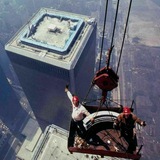
High-Rise Steel Structure Construction
Behind every skyscraper standing in modern cities, there are highly skilled ironworkers operating hundreds of feet above ground. Precision, experience, and strict safety coordination are essential at every step of steel erection.
📸 Instagram:
@us_construction
https://t.me/structuralengineerco
Behind every skyscraper standing in modern cities, there are highly skilled ironworkers operating hundreds of feet above ground. Precision, experience, and strict safety coordination are essential at every step of steel erection.
📸 Instagram:
@us_construction
https://t.me/structuralengineerco
❤6
This media is not supported in your browser
VIEW IN TELEGRAM
𝐇𝐨𝐰 𝐖𝐚𝐬 𝐭𝐡𝐞 𝐖𝐨𝐫𝐥𝐝’𝐬 𝐓𝐚𝐥𝐥𝐞𝐬𝐭 𝐁𝐮𝐢𝐥𝐝𝐢𝐧𝐠 𝐁𝐮𝐢𝐥𝐭?
The iconic Burj Khalifa in Dubai, United Arab Emirates stands at 828 meters and is a true engineering masterpiece. But how was it built?
Strong Foundation
More than 190 deep foundation piles were drilled 50 meters into the ground. Over 45,000 cubic meters of high-performance concrete were used to support the massive load.
Unique Structural Design
Designed by Skidmore, Owings & Merrill, the tower uses a “Buttressed Core” structural system, which provides exceptional stability against wind forces.
📸 Instagram:
@us_construction
https://t.me/structuralengineerco
👍2❤1
This media is not supported in your browser
VIEW IN TELEGRAM
Imagine walking along a beautiful hidden beach you've just discovered, turning on your smartphone or digital camera, and filming as you go. An algorithm processes your footage and turns it into a high-definition 3D environment precise down to the iridescent seashells glistening at the surf's edge. When you share the video with your friends, they will be able to explore your paradise cove on their own in 3D. It sounds improbable, but this vision can soon become a reality thanks to a technology called Gaussian splatting.
📸 Instagram:
@us_construction
https://t.me/structuralengineerco
📸 Instagram:
@us_construction
https://t.me/structuralengineerco
❤2
What is a Gaussian splat, you ask? Named after the 18th- and 19th-century German mathematician and astronomer Carl Friedrich Gauss—he also gave us the bell curve—it's a new, revolutionary way of visualizing reality. Each "splat" is like a snowball in space that carries information about its position, color, size, transparency, and orientation. Layered together, millions of these splats can reconstruct a 3D scene with striking realism — capturing thin wires, reflections is sea shells, and even glass that changes appearance as you move around it.
📸 Instagram:
@us_construction
https://t.me/structuralengineerco
📸 Instagram:
@us_construction
https://t.me/structuralengineerco
Telegram
STRUCTURAL ENGINEERING
🏗️ A technical hub for A.E.C professionals
🔬 Structural, seismic & geotechnical research
🛣️ Highway, hydrological, roadway & bridge design and inspection
🏛️ Architectural design, materials & construction execution
📘 Sharing knowledge
🔬 Structural, seismic & geotechnical research
🛣️ Highway, hydrological, roadway & bridge design and inspection
🏛️ Architectural design, materials & construction execution
📘 Sharing knowledge
❤1
Construction inspection is essential for ensuring safety, quality, and compliance at every stage of a project. Using advanced tools like 3D and 4D modelling helps inspectors visualize work sequences and communicate method statements more clearly. This technology makes it easier to detect issues early, improve planning accuracy, and support better coordination on site. With digital models, teams can compare real progress to planned activities and confirm that construction follows required specifications. Overall, integrating modelling into inspection reduces errors, strengthens safety practices, and helps deliver projects on time and to a high standard.
📸 Instagram:
@us_construction
https://t.me/structuralengineerco
📸 Instagram:
@us_construction
https://t.me/structuralengineerco
Telegram
STRUCTURAL ENGINEERING
🏗️ A technical hub for A.E.C professionals
🔬 Structural, seismic & geotechnical research
🛣️ Highway, hydrological, roadway & bridge design and inspection
🏛️ Architectural design, materials & construction execution
📘 Sharing knowledge
🔬 Structural, seismic & geotechnical research
🛣️ Highway, hydrological, roadway & bridge design and inspection
🏛️ Architectural design, materials & construction execution
📘 Sharing knowledge
❤2
Media is too big
VIEW IN TELEGRAM
Shotcrete in construction
Shotcrete is a concrete placement method in which a cementitious mixture is pneumatically conveyed and projected at high velocity onto a surface, achieving simultaneous placement and compaction upon impact. It is governed by specifications such as those published by the American Concrete Institute (ACI) and is widely used where conventional formwork is impractical.
Shotcrete is applied using dry-mix (water introduced at the nozzle) or wet-mix (fully mixed concrete pumped to the nozzle) processes. Wet-mix shotcrete provides better quality control, reduced rebound, and lower dust, while dry-mix offers greater flexibility and longer conveying distances. Typical mix designs employ fine to small coarse aggregates (≤10 mm), low water–cement ratios (~0.35–0.45), and chemical admixtures such as accelerators, plasticizers, and fibers. Fiber-reinforced shotcrete is commonly used to enhance ductility, crack control, and energy absorption.
https://t.me/structuralengineerco
❤3👍1
From a structural perspective, shotcrete exhibits high bond strength, low permeability, and dense microstructure when properly placed and cured. It is particularly effective for tunnel linings, slope stabilization, soil nailing, retaining systems, structural repair, and free-form concrete shells. Quality control relies on operator skill, thickness control, rebound management, curing, and in-situ testing (cores, compressive strength, bond tests).
In summary, shotcrete is a high-performance, formwork-minimizing concrete technology that integrates delivery, compaction, and placement, enabling efficient construction and rehabilitation of geotechnically and geometrically complex structures.
📸 Instagram:
@us_construction
In summary, shotcrete is a high-performance, formwork-minimizing concrete technology that integrates delivery, compaction, and placement, enabling efficient construction and rehabilitation of geotechnically and geometrically complex structures.
📸 Instagram:
@us_construction
❤3
This media is not supported in your browser
VIEW IN TELEGRAM
This timelapse captures the incredible journey of constructing a modern ship—thousands of components, precise engineering, and coordinated design coming together to create something powerful and functional.
📸 Instagram:
@us_construction
https://t.me/structuralengineerco
📸 Instagram:
@us_construction
https://t.me/structuralengineerco
❤5
Media is too big
VIEW IN TELEGRAM
Advanced rockfall barrier testing proves the system’s ability to absorb multiple heavy impacts, improving safety for infrastructure located in rockfall-prone mountainous regions.
Rockfall protection systems are essential for safeguarding roads, railways, and infrastructure in mountainous regions. Engineers conducted an advanced performance test by releasing two large rock blocks weighing approximately 4.8 tons each simultaneously toward a protection barrier.
📸 Instagram:
@us_construction
https://t.me/structuralengineerco
❤3🔥1
This media is not supported in your browser
VIEW IN TELEGRAM
𝗧𝗵𝗲 𝗥𝗼𝗮𝗱 𝗧𝗵𝗮𝘁 𝗕𝘂𝗶𝗹𝗱𝘀 𝗜𝘁𝘀𝗲𝗹𝗳 🚧
Every step is calculated:
A perfectly prepared base.
A continuous concrete flow.
A machine that doesn’t just place concrete — it shapes performance.
Slipform paving turns complexity into efficiency.
No stop. No weak joints. Just a seamless structure designed to carry millions of loads over decades.
Why this matters:
✔ Consistent thickness = predictable strength
✔ Fewer joints = less maintenance
✔ Controlled compaction = longer lifespan
📸 Instagram:
@us_construction
https://t.me/structuralengineerco
❤2
Understanding NYC’s First “Underground Skyscraper” Concept
As part of ongoing efforts to expand affordable housing options, the
NYC Department of Buildings
has reviewed a proposal for a 90-story structure built entirely below grade in
New York City’s borough of
Manhattan.
📸 Instagram:
@us_construction
https://t.me/structuralengineerco
As part of ongoing efforts to expand affordable housing options, the
NYC Department of Buildings
has reviewed a proposal for a 90-story structure built entirely below grade in
New York City’s borough of
Manhattan.
📸 Instagram:
@us_construction
https://t.me/structuralengineerco
❤4
From a construction and engineering standpoint, the project highlights three key topics:
🔹 Deep Excavation in Dense Urban Environments
Advances in drilling and rock-removal technologies are making large-scale sub-surface development increasingly viable in high-density areas.
🔹 Load Management Below Street Level
Designing multi-level underground structures requires specialized approaches for soil pressure, waterproofing, ventilation, emergency egress, and long-term structural stability.
🔹 Preserving Above-Ground Urban Visual Corridors
Sub-surface development offers new options for adding square footage without altering the city’s skyline or zoning height limitations.
Engineers, contractors, and site-safety professionals can benefit from reviewing updated guidelines on safe excavation, rock handling, and deep-foundation sequencing.
This media is not supported in your browser
VIEW IN TELEGRAM
The iconic Tokyo Big Sight stands as a perfect example of bold design meeting advanced engineering. Those striking inverted pyramid structures aren’t just visually stunning—they represent precision, innovation, and the power of structural intelligence.
From complex load distribution to meticulous planning and execution, projects like these highlight how engineering pushes boundaries beyond imagination.
📸 Instagram:
@us_construction
https://t.me/structuralengineerco
From complex load distribution to meticulous planning and execution, projects like these highlight how engineering pushes boundaries beyond imagination.
📸 Instagram:
@us_construction
https://t.me/structuralengineerco
❤5
Media is too big
VIEW IN TELEGRAM
Earthquake performance is governed by the interaction of structural design, foundation behavior, and ground conditions. Failures during seismic events are often triggered not by a single weakness, but by a combination of inadequate lateral resistance, structural irregularities, and unfavorable soil response.
This visualization highlights several critical concepts in earthquake engineering, including soft-story mechanisms, soil liquefaction, seismic force redistribution, structural bracing systems, ground improvement techniques, and base isolation technology. Each of these factors plays a significant role in determining how a structure responds to dynamic loading.
📸 Instagram:
@us_construction
https://t.me/structuralengineerco
❤4🔥1
Modern seismic design extends far beyond strength calculations. It requires a comprehensive understanding of structural dynamics, ductility, energy dissipation, soil–structure interaction, and performance-based engineering principles to ensure life safety and structural resilience.
The most successful earthquake-resistant structures are those designed as integrated systems, where the superstructure, foundation, and supporting soil work together to withstand seismic demands.
📸 Instagram:
@us_construction
https://t.me/structuralengineerco
The most successful earthquake-resistant structures are those designed as integrated systems, where the superstructure, foundation, and supporting soil work together to withstand seismic demands.
📸 Instagram:
@us_construction
https://t.me/structuralengineerco
Telegram
STRUCTURAL ENGINEERING
🏗️ A technical hub for A.E.C professionals
🔬 Structural, seismic & geotechnical research
🛣️ Highway, hydrological, roadway & bridge design and inspection
🏛️ Architectural design, materials & construction execution
📘 Sharing knowledge
🔬 Structural, seismic & geotechnical research
🛣️ Highway, hydrological, roadway & bridge design and inspection
🏛️ Architectural design, materials & construction execution
📘 Sharing knowledge
❤7