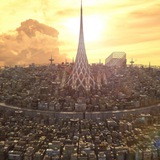
This is one of the dungeons in Core Keeper. How do I implement procedural generation for a dungeon like this?
https://preview.redd.it/q65wiphx7rbh1.png?width=435&format=png&auto=webp&s=ad3b92ef87673698d690c10117470cd9c2dbc251
As you can see in the screenshot, there's a boss room right in the center, surrounded by pre-made rooms that are placed throughout the map, along with some treasure rooms hidden in between.
How can I design a procedural generation algorithm to achieve this kind of layout? Any advice or specific algorithms you'd recommend?
https://redd.it/1upn4sk
@proceduralgeneration
https://preview.redd.it/q65wiphx7rbh1.png?width=435&format=png&auto=webp&s=ad3b92ef87673698d690c10117470cd9c2dbc251
As you can see in the screenshot, there's a boss room right in the center, surrounded by pre-made rooms that are placed throughout the map, along with some treasure rooms hidden in between.
How can I design a procedural generation algorithm to achieve this kind of layout? Any advice or specific algorithms you'd recommend?
https://redd.it/1upn4sk
@proceduralgeneration

Simulating Procedural Ponds in my Micro Voxel Engine (Devlog #4)
https://youtu.be/ZxfV7su168U?is=MRBmKPHKWgQnM-21
https://redd.it/1upoiw5
@proceduralgeneration
https://youtu.be/ZxfV7su168U?is=MRBmKPHKWgQnM-21
https://redd.it/1upoiw5
@proceduralgeneration
YouTube
Simulating Procedural Ponds in my Micro Voxel Engine (Devlog #4)
In this devlog, water features and fluid simulation has been added to the engine! Featuring a fairly complex, but efficient, water visualisation shader, which renders the results of the underlying GPU water sim.
All running on Apple M1 Pro Macbook - A few…
All running on Apple M1 Pro Macbook - A few…
I tried to recreate the planet from Project Hail Mary in Blender
https://redd.it/1uppr8q
@proceduralgeneration
https://redd.it/1uppr8q
@proceduralgeneration
Reddit
From the proceduralgeneration community on Reddit: I tried to recreate the planet from Project Hail Mary in Blender
Explore this post and more from the proceduralgeneration community
Programmatic logo design for the ML shop
/r/logodesign/comments/1upsb71/programmatic_logo_design_for_the_ml_shop/
https://redd.it/1upsbrj
@proceduralgeneration
/r/logodesign/comments/1upsb71/programmatic_logo_design_for_the_ml_shop/
https://redd.it/1upsbrj
@proceduralgeneration
Reddit
From the proceduralgeneration community on Reddit: Programmatic logo design for the ML shop
Posted by Mountain-Yellow6559 - 1 vote and 0 comments
This media is not supported in your browser
VIEW IN TELEGRAM
Procedural Neutron Star (Magnetar) animation with Blender EEVEE
https://redd.it/1upwvfg
@proceduralgeneration
https://redd.it/1upwvfg
@proceduralgeneration
Tested LLMs for pixel art generation via HTML output — unexpected coherent results across model families D
I ran an informal test that yielded some completely unexpected results. I asked several LLMs (GPT-4o, Claude Sonnet 4.6, Gemini Flash) to generate pixel art tilesets as HTML output, where each table cell corresponds to a single pixel. I fully expected incoherent output. Instead, all three models produced coherent tilesets with consistent palettes, seamless tileable edges, and themed variations on the very first try.
This is interesting because diffusion-based pixel art generation (even with custom LoRAs) typically struggles to maintain palette consistency across tiles or produce truly seamless edges, since each tile is generated in isolation. LLMs generating HTML seem to plan the entire tileset as a single, coherent whole and respect hard constraints (palette, tile size, theme) much better than diffusion models.
I'm sharing this because I think it's an under-explored LLM capability that the image research community might be overlooking. I've attached sample images generated using the exact same prompt across three different model architectures.
An important clarification: these outputs are not standalone, usable pixel art. Real pixel art requires human intent, an artistic touch, and decision-making that no model possesses.
Questions I'm curious to get feedback on from the community:
Has anyone explored using LLM-based structured outputs (HTML, SVG, canvas) for pixel art or other grid-based media?
Why do hard constraints seem to work better here compared to diffusion? Is it the full-tileset planning, or something deeper regarding grid representations?
Any known edge cases where this approach fails in funny or spectacular ways?
Happy to share the exact prompt if anyone wants to replicate this. Not selling anything, just trying to understand if this is a known phenomenon or worth investigating further. All the assets in the photo (not the character and hammer tho) are created with this method
https://redd.it/1uq7ci3
@proceduralgeneration
I ran an informal test that yielded some completely unexpected results. I asked several LLMs (GPT-4o, Claude Sonnet 4.6, Gemini Flash) to generate pixel art tilesets as HTML output, where each table cell corresponds to a single pixel. I fully expected incoherent output. Instead, all three models produced coherent tilesets with consistent palettes, seamless tileable edges, and themed variations on the very first try.
This is interesting because diffusion-based pixel art generation (even with custom LoRAs) typically struggles to maintain palette consistency across tiles or produce truly seamless edges, since each tile is generated in isolation. LLMs generating HTML seem to plan the entire tileset as a single, coherent whole and respect hard constraints (palette, tile size, theme) much better than diffusion models.
I'm sharing this because I think it's an under-explored LLM capability that the image research community might be overlooking. I've attached sample images generated using the exact same prompt across three different model architectures.
An important clarification: these outputs are not standalone, usable pixel art. Real pixel art requires human intent, an artistic touch, and decision-making that no model possesses.
Questions I'm curious to get feedback on from the community:
Has anyone explored using LLM-based structured outputs (HTML, SVG, canvas) for pixel art or other grid-based media?
Why do hard constraints seem to work better here compared to diffusion? Is it the full-tileset planning, or something deeper regarding grid representations?
Any known edge cases where this approach fails in funny or spectacular ways?
Happy to share the exact prompt if anyone wants to replicate this. Not selling anything, just trying to understand if this is a known phenomenon or worth investigating further. All the assets in the photo (not the character and hammer tho) are created with this method
https://redd.it/1uq7ci3
@proceduralgeneration
Reddit
From the proceduralgeneration community on Reddit
Explore this post and more from the proceduralgeneration community
Oatmeal Spice - Getting More with Less
https://www.boristhebrave.com/2026/07/05/oatmeal-spice/
https://redd.it/1uq8l7a
@proceduralgeneration
https://www.boristhebrave.com/2026/07/05/oatmeal-spice/
https://redd.it/1uq8l7a
@proceduralgeneration
BorisTheBrave.Com
Oatmeal Spice
Say you’ve written a little procedural generation program. Say it’s some art, music or level generator. It looks kinda cool, but after a few generations, you are already bored with it. …
Media is too big
VIEW IN TELEGRAM
2D animation engine where every frame is a pure function of t — supersampled offscreen render, frames piped straight into ffmpeg
https://redd.it/1uqnd0l
@proceduralgeneration
https://redd.it/1uqnd0l
@proceduralgeneration
Media is too big
VIEW IN TELEGRAM
[OC] World Cup matches as procedurally-generated 3D terrain from real event data
https://redd.it/1uqo8t2
@proceduralgeneration
https://redd.it/1uqo8t2
@proceduralgeneration
Media is too big
VIEW IN TELEGRAM
Eternity: Procedural Solar Systems and Fleet Formations in Unity
https://redd.it/1uqowye
@proceduralgeneration
https://redd.it/1uqowye
@proceduralgeneration