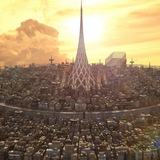
4096x4096 render of a valheim style radial biome world map. 16 Km radius world.
https://redd.it/1669gra
@proceduralgeneration
https://redd.it/1669gra
@proceduralgeneration
Reddit
From the proceduralgeneration community on Reddit: 4096x4096 render of a valheim style radial biome world map. 16 Km radius world.
Explore this post and more from the proceduralgeneration community
How would you approach cutting out a terrain like this? I'm struggling to imagine a system that takes both terrain features and arbitrary lines and combines them for a realistic border.
https://redd.it/167ikii
@proceduralgeneration
https://redd.it/167ikii
@proceduralgeneration
procedural terrain with grass and wind
https://youtu.be/t-cyS5IXdoM?feature=shared
https://redd.it/167kk0f
@proceduralgeneration
https://youtu.be/t-cyS5IXdoM?feature=shared
https://redd.it/167kk0f
@proceduralgeneration
YouTube
OpenGL grass demo 02
Windy hills.
Textures from FreePBR.com
List of features currently implemented into the Antares Engine:
. PBR materials
. HDR
. tone mapping
. normal mapping
. parallax occlusion mapping (with self shadowing)
. shadow mapping
. omnidirectional shadow maps…
Textures from FreePBR.com
List of features currently implemented into the Antares Engine:
. PBR materials
. HDR
. tone mapping
. normal mapping
. parallax occlusion mapping (with self shadowing)
. shadow mapping
. omnidirectional shadow maps…
Revised generation for Wild West forest biome in Forty-Niner
https://redd.it/167yu4a
@proceduralgeneration
https://redd.it/167yu4a
@proceduralgeneration
Question: Does someone here ever made something to correct an flaw in an image ? like PixelArt ?
So here is the Problem in Pixelart there are some rules that let pixelart look good.
But in complex pictures its hard to find every flaw, for example
Pixelart Lines need to be like this
http://rjanes.com/images/tutorials/introduction/Tutorial1-LineArt1.png
and curves like this:
http://rjanes.com/images/tutorials/introduction/Tutorial1-LineArt4.png
Now my question is ,is it possible for an script to detect wrong lines and/or curves and mark/correct them on the fly in the right form with overpainting ???
https://redd.it/16834p3
@proceduralgeneration
So here is the Problem in Pixelart there are some rules that let pixelart look good.
But in complex pictures its hard to find every flaw, for example
Pixelart Lines need to be like this
http://rjanes.com/images/tutorials/introduction/Tutorial1-LineArt1.png
and curves like this:
http://rjanes.com/images/tutorials/introduction/Tutorial1-LineArt4.png
Now my question is ,is it possible for an script to detect wrong lines and/or curves and mark/correct them on the fly in the right form with overpainting ???
https://redd.it/16834p3
@proceduralgeneration
This media is not supported in your browser
VIEW IN TELEGRAM
Creating procedural vegetation (L-System) until I don't suck at it | Houdini - part 1 (result in the video)
https://redd.it/1684mkg
@proceduralgeneration
https://redd.it/1684mkg
@proceduralgeneration
Houdini Tutorial | Cooling Effect inside Houdini
https://youtu.be/VnzJh_MOX-g
https://redd.it/168521r
@proceduralgeneration
https://youtu.be/VnzJh_MOX-g
https://redd.it/168521r
@proceduralgeneration
YouTube
Houdini Tutorial | Cooling Effect inside Houdini
Project File - https://fxguru.gumroad.com/l/aotsz
If you're looking to create effects that take advantage of Houdini's powerful particle and fluid capabilities, then this tutorial is for you! In this tutorial, we'll show you how to create a cooling effect…
If you're looking to create effects that take advantage of Houdini's powerful particle and fluid capabilities, then this tutorial is for you! In this tutorial, we'll show you how to create a cooling effect…
New idea for generating interesting terrain or occasionally discontinuous results.
I lack a computer at the moment and thus am working on preproduction stuff for my project.
One of the things I've been struggling with is how to make a terrain generator that fits my needs.
One of the traits I've desired is the ability to occasionally produce non-smooth results such as cliffs or ravines.
I think I figured out how to accomplish this and I can't wait to explore all the other possibilities as well.
The idea here is to produce three noise maps, this can be done by any fashion you like that produces noise maps, though I will generally treat it at perlin noise like (note, perlin noise and similar often combines many layers at different scales, with my method, fewer layers are needed).
Two of these maps are basically terrain maps, the third dictates how to combine the two.
The values of the third map, the union map, dictate adding the values (or multiplying them) in different amounts. The extreme values near 0 and 1 result in roughly equal measure of the two maps, but as values approach 0.5, things are skewed towards one map or the other. Less then 0.5 will skew towards map A as values get closer to 0.5, but above 0.5 things will skew towards map B. Thus when the union map reaches 0.5 it creates a discontinuity on the result.
Of course, there is a lot of flexibility in using a union map by changing how the union map values influence the two maps. For example, in the Myst games, one of the ages (basically worlds) is a lot of low hills but with these really tall rock pillars dotting the landscape. This should be reproducible by setting map A to produce low hills and setting map B to be much higher and with more interesting underground generation, then the union map can be set to be all map A except when the union map gets values above 0.95 then it jumps to all map B, resulting in rock pillars.
Another Myst age has basically three heights really low, really high and winding paths and corridors about halfway up thus having tall walls and deep crevices. This could be reproduced by map A being low, map B being high and the union map having only a narrow window of values where the maps are combined in which the values of the two maps are averaged, giving mid height terrain in narrow corridors or canyons.
Anyway, because the two maps can be combined, depending on your setup, you can have each noise map operate at fewer layers since the combination will be at the layers of both maps except near the discontinuities.
Extra broken terrain can be produced by having multiple discontinuities.
What do you guys think? Anyone think they might find use for this?
https://redd.it/169v2pn
@proceduralgeneration
I lack a computer at the moment and thus am working on preproduction stuff for my project.
One of the things I've been struggling with is how to make a terrain generator that fits my needs.
One of the traits I've desired is the ability to occasionally produce non-smooth results such as cliffs or ravines.
I think I figured out how to accomplish this and I can't wait to explore all the other possibilities as well.
The idea here is to produce three noise maps, this can be done by any fashion you like that produces noise maps, though I will generally treat it at perlin noise like (note, perlin noise and similar often combines many layers at different scales, with my method, fewer layers are needed).
Two of these maps are basically terrain maps, the third dictates how to combine the two.
The values of the third map, the union map, dictate adding the values (or multiplying them) in different amounts. The extreme values near 0 and 1 result in roughly equal measure of the two maps, but as values approach 0.5, things are skewed towards one map or the other. Less then 0.5 will skew towards map A as values get closer to 0.5, but above 0.5 things will skew towards map B. Thus when the union map reaches 0.5 it creates a discontinuity on the result.
Of course, there is a lot of flexibility in using a union map by changing how the union map values influence the two maps. For example, in the Myst games, one of the ages (basically worlds) is a lot of low hills but with these really tall rock pillars dotting the landscape. This should be reproducible by setting map A to produce low hills and setting map B to be much higher and with more interesting underground generation, then the union map can be set to be all map A except when the union map gets values above 0.95 then it jumps to all map B, resulting in rock pillars.
Another Myst age has basically three heights really low, really high and winding paths and corridors about halfway up thus having tall walls and deep crevices. This could be reproduced by map A being low, map B being high and the union map having only a narrow window of values where the maps are combined in which the values of the two maps are averaged, giving mid height terrain in narrow corridors or canyons.
Anyway, because the two maps can be combined, depending on your setup, you can have each noise map operate at fewer layers since the combination will be at the layers of both maps except near the discontinuities.
Extra broken terrain can be produced by having multiple discontinuities.
What do you guys think? Anyone think they might find use for this?
https://redd.it/169v2pn
@proceduralgeneration
Reddit
From the proceduralgeneration community on Reddit
Explore this post and more from the proceduralgeneration community
I made my own noise function
Noise functions in gamedev and computer graphics are often used for procedural generation like terrains, textures, etc...
We often use Perlin Noise or Simplex Noise, Sin/Cos, etc... or even a combination of them to produce interesting patterns.
The same is true for my game "Warmonger Dynasty" which aims to be a 4X, a sort of mix of Civilization and Age of Empire. For the past few months though, I have been "stuck" (not really, but this is the fun part for me) on tweaking/tinkering with the map generation algorithm. I use multiple techniques to generate the features I want: cellular automatons, real physics formula (heat diffusion, pressure gradients, coriolis force, etc.), and of course, noise functions.
The problem though, is that my map data structure uses a cubic coordinate system (
After reading a bit on how to make noise functions, I decided to make my own.
It was fun, interesting, not that complicated, and I'm satisfied with the result.
If you're curious, I wrote about it in more details on my blog: the article.
TL;DR: Here is the result
https://redd.it/16aa1sf
@proceduralgeneration
Noise functions in gamedev and computer graphics are often used for procedural generation like terrains, textures, etc...
We often use Perlin Noise or Simplex Noise, Sin/Cos, etc... or even a combination of them to produce interesting patterns.
The same is true for my game "Warmonger Dynasty" which aims to be a 4X, a sort of mix of Civilization and Age of Empire. For the past few months though, I have been "stuck" (not really, but this is the fun part for me) on tweaking/tinkering with the map generation algorithm. I use multiple techniques to generate the features I want: cellular automatons, real physics formula (heat diffusion, pressure gradients, coriolis force, etc.), and of course, noise functions.
The problem though, is that my map data structure uses a cubic coordinate system (
Q;R;S coordinates), not a cartesian coordinate system (X;Y coordinates). So assigning a noise value to every hexagon in my map gets a little tricky.After reading a bit on how to make noise functions, I decided to make my own.
It was fun, interesting, not that complicated, and I'm satisfied with the result.
If you're curious, I wrote about it in more details on my blog: the article.
TL;DR: Here is the result
https://redd.it/16aa1sf
@proceduralgeneration
Redblobgames
Red Blob Games: Hexagonal Grids
Amit's guide to math, algorithms, and code for hexagonal grids
This media is not supported in your browser
VIEW IN TELEGRAM
[WIP] The progress of Oppy -world generator- has been a fascinating blend of design and programming for me. It has been quite a journey, from tile-based techniques to sampling algorithms, hand-drawn vegetation to water shaders, and low-poly to stylized models.
https://redd.it/16aqd4y
@proceduralgeneration
https://redd.it/16aqd4y
@proceduralgeneration