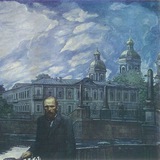
At the end of the nineteenth century, Russian literature entered into dialogue with religious philosophy. A central figure in this intellectual exchange was Vladimir Solovyov.
Solovyov developed the concept of “all-unity” - the idea of the spiritual wholeness of the world, where the material and the divine are interconnected rather than opposed. In his view, art is a means of comprehending higher reality.
Particularly significant was his philosophy of Sophia - Divine Wisdom. This concept influenced the aesthetics of Russian Symbolism. Poets of the turn of the century understood art as a path toward revealing hidden spiritual meanings of existence.
In The Justification of the Good (1897), Solovyov affirmed the ethical foundation of culture. Moral idealism became the basis of artistic search.
Thus, the literature of the Silver Age developed in close connection with philosophical thought. Symbolism, in many respects, grew out of Solovyov’s religious and metaphysical ideas.
#ScienceAndThought
References
Соловьёв В. С. (1988). Оправдание добра. М.: Мысль.
Лосский Н. О. (1991). История русской философии.
Институт русской литературы АН СССР. (1956). История русской литературы. Т. X.
Please open Telegram to view this post
VIEW IN TELEGRAM
Please open Telegram to view this post
VIEW IN TELEGRAM
❤2🔥2🥰2
Не слышно шуму городского,
Над невской башней тишина,
И больше нет городового —
Гуляй, ребята, без вина!
Стоит буржуй на перекрестке
И в воротник упрятал нос.
А рядом жмется шерстью жесткой
Поджавший хвост паршивый пес.
Стоит буржуй, как пес голодный,
Стоит безмолвный, как вопрос.
И старый мир, как пес безродный,
Стоит за ним, поджавши хвост.
part of a poem The Twelve (1918)
At the turn of the twentieth century, Russian literature underwent a transition toward modernism. One of the central figures of Symbolism was Alexander Blok.
Symbolism sought to move beyond the social concreteness of realism. The poet aimed to reveal a “higher reality” hidden behind visible phenomena.
In Blok’s early lyrics, the image of the Beautiful Lady expresses mystical anticipation of spiritual renewal. However, the historical events of the early twentieth century changed the tone of his poetry.
The poem The Twelve (1918) became an artistic response to the Russian Revolution. Blok combined symbolist imagery with a real historical cataclysm.
#SilverAge
References
Блок А. А. (1918). Двенадцать
Блок А. А. (1904). Стихи о Прекрасной Даме
Жирмунский В. М. (1991). МЕТАФОРА В ПОЭТИКЕ РУССКИХ СИМВОЛИСТОВ.
Please open Telegram to view this post
VIEW IN TELEGRAM
Please open Telegram to view this post
VIEW IN TELEGRAM
👍2🔥2🥰2
Он мне сказал: «Я верный друг!»
И моего коснулся платья.
Так не похожи на объятья
Прикосновенья этих рук.
Так гладят кошек или птиц,
Так на наездниц смотрят стройных…
Лишь смех в глазах его спокойных
Под легким золотом ресниц.
part of a poetry Evening (1912)
In the 1910s, a new movement emerged within modernism - Acmeism. Its most prominent representative was Anna Akhmatova.
The Acmeists opposed the abstraction of Symbolism. They demanded clarity, precision of language, and concreteness of imagery.
In Akhmatova’s early collections (Evening, Rosary), poetry is focused on personal experience. Love, separation, and memory become central themes, presented with remarkable brevity.
Akhmatova created a new model of the lyrical subject: restrained, internally intense, and expressed through minimal artistic means.
#SilverAge
References
Ахматова А. А. (1912). Вечером
Ахматова А. А. (1914). Чётки
Чуковская Л. К. (1976). Записки об Анне Ахматовой.
Please open Telegram to view this post
VIEW IN TELEGRAM
Please open Telegram to view this post
VIEW IN TELEGRAM
👍2🔥2❤1
Серебро, огни и блестки, -
Целый мир из серебра!
В жемчугах горят березки,
Черно-голые вчера.
Это — область чьей-то грезы,
Это — призраки и сны!
Все предметы старой прозы
Волшебством озарены.
part of a poetry First Snow (1895)
One of the key architects of Russian modernism was Valery Bryusov.
If Blok embodied the intuitive dimension of Symbolism, Bryusov acted as its theorist and organizer. He actively shaped the literary community, edited the journal Vesy, and formulated the aesthetic program of the movement.
Bryusov insisted on the autonomy of art. Poetry, in his view, was not obliged to serve a social program - it creates its own symbolic reality. The artist becomes the creator of an independent aesthetic world.
His poetry is marked by strict form, intellectual intensity, and a deep interest in world history and culture. Bryusov sought to give Russian Symbolism a European scale.
#SilverAge
References
Максимов Д. Е. (1986). Русские поэты начала века.
Жирмунский В. М. (1991). МЕТАФОРА В ПОЭТИКЕ РУССКИХ СИМВОЛИСТОВ.
Please open Telegram to view this post
VIEW IN TELEGRAM
Please open Telegram to view this post
VIEW IN TELEGRAM
🔥2🥰2👍1
Alexander Pushkin — a man of his historical era
Alexander Sergeyevich Pushkin was born in 1799 into a noble family at a time when Russia entered the nineteenth century with a conflicting mix of growing European cultural influence and the persistence of serfdom (Binyon, 2007, p. 15).
His childhood encompassed the Patriotic War of 1812, an event that deeply shaped Russian national consciousness and the social context in which his worldview developed (Binyon, 2007).
Education at the Tsarskoe Selo Lyceum (1811–1817) became a formative stage in his biography: there Pushkin encountered not only classical culture but also ideas of freedom and civic duty that later emerged in his verse (Binyon, 2007).
The circle of friends he formed at the Lyceum later became historically significant as part of the generation connected with the Decembrist movement.
After graduating in 1817, Pushkin moved to Saint Petersburg and quickly made a name for himself in literary circles. His poetry drew admiration from readers but also concern from authorities; in 1820 he was sent into southern exile, a development stemming from both his political views and incisive social observations in his writing (Binyon, 2007).
Pushkin knew many of the future Decembrists personally and shared many of their ideals. The Decembrist uprising of 1825 became a major turning point in his life.
After its failure, he lived under the supervision of Nicholas I, shaping his position as a writer caught between artistic freedom and political constraint (Binyon, 2007).
In the 1830s Pushkin lived under increasing censorship, faced financial difficulties and personal struggles, yet in this period his work turned to major historical subjects — from the Time of Troubles to eighteenth-century popular uprisings. For Pushkin, the past served as a means to understand the present (Binyon, 2007).
Pushkin’s biography reflects the key historical processes of the first half of the nineteenth century — from the aftermath of the War of 1812 to the autocratic reaction after the Decembrist uprising.
🎞️ He became not only the poet of the new Russian literary language but also a symbol of his generation, whose life became part of his nation’s history.
Interesting Fact:
Pushkin learned about the execution of the five Decembrists, which he wrote about in his workbook. The famous Pushkin scholar Mstislav Alexandrovich Tsyavlovsky believed that it was on this day, July 24, 1826, that the poet wrote the poem "The Prophet", shocked by the cruelty of the punishment.
#People #InterestingFact
Alexander Sergeyevich Pushkin was born in 1799 into a noble family at a time when Russia entered the nineteenth century with a conflicting mix of growing European cultural influence and the persistence of serfdom (Binyon, 2007, p. 15).
His childhood encompassed the Patriotic War of 1812, an event that deeply shaped Russian national consciousness and the social context in which his worldview developed (Binyon, 2007).
Education at the Tsarskoe Selo Lyceum (1811–1817) became a formative stage in his biography: there Pushkin encountered not only classical culture but also ideas of freedom and civic duty that later emerged in his verse (Binyon, 2007).
The circle of friends he formed at the Lyceum later became historically significant as part of the generation connected with the Decembrist movement.
After graduating in 1817, Pushkin moved to Saint Petersburg and quickly made a name for himself in literary circles. His poetry drew admiration from readers but also concern from authorities; in 1820 he was sent into southern exile, a development stemming from both his political views and incisive social observations in his writing (Binyon, 2007).
Pushkin knew many of the future Decembrists personally and shared many of their ideals. The Decembrist uprising of 1825 became a major turning point in his life.
After its failure, he lived under the supervision of Nicholas I, shaping his position as a writer caught between artistic freedom and political constraint (Binyon, 2007).
In the 1830s Pushkin lived under increasing censorship, faced financial difficulties and personal struggles, yet in this period his work turned to major historical subjects — from the Time of Troubles to eighteenth-century popular uprisings. For Pushkin, the past served as a means to understand the present (Binyon, 2007).
Pushkin’s biography reflects the key historical processes of the first half of the nineteenth century — from the aftermath of the War of 1812 to the autocratic reaction after the Decembrist uprising.
🎞️ He became not only the poet of the new Russian literary language but also a symbol of his generation, whose life became part of his nation’s history.
Interesting Fact:
Pushkin learned about the execution of the five Decembrists, which he wrote about in his workbook. The famous Pushkin scholar Mstislav Alexandrovich Tsyavlovsky believed that it was on this day, July 24, 1826, that the poet wrote the poem "The Prophet", shocked by the cruelty of the punishment.
#People #InterestingFact
Binyon, T. J. (2007). Pushkin: a biography. Vintage.
🔥2🥰2❤1
Leo Tolstoy — count, soldier, prophet
Tolstoy was born in 1828 into an aristocratic family, in a world of estates, balls, and serfdom. His childhood unfolded within a rigid social hierarchy that seemed natural and unquestionable (Wilson, 2014).
From the very beginning, his life carried a central tension: he was raised inside the system he would later condemn.
His youth was marked by restless searching. He abandoned his studies at Kazan University and soon became disillusioned with fashionable society. Russia at that time lived under the strict autocracy of Nicholas I, and Tolstoy’s personal uncertainty mirrored the moral stagnation of the age (Wilson, 2014).
Military service proved decisive. In the Caucasus and during the Crimean War, Tolstoy experienced empire from the inside — as fear, violence, and meaningless orders. He learned to see war not as heroism but as everyday catastrophe, where human dignity collapses (Wilson, 2014). This experience shaped his lasting distrust of state ideology.
By the time serfdom was abolished in 1861, Tolstoy was already a famous writer. Yet the era of reforms did not bring him a sense of renewal. He saw that social change was not accompanied by moral change and entered a profound personal crisis: how to live in a world where freedom exists only in law, not in conscience? (Wilson, 2014).
In the second half of his life, Tolstoy broke with aristocratic norms, criticized Church and state, and rejected private property. He became not only a literary figure but a political one: his ideas of nonviolence, moral autonomy, and personal responsibility turned him into a global moral authority (Wilson, 2014).
His biography unites the entire nineteenth century:
🎞️ aristocratic privilege
🔱 imperial wars
🙏🏻 crisis of faith
⚔️conflict between individual and power
Tolstoy lived as if testing every historical form on himself — from count to outcast.
Interesting Fact:
Leo Tolstoy — an unexpected fact
Tolstoy once seriously tried to give up his aristocratic title and live as a peasant. He wore simple clothes, worked in the fields, and insisted on making his own shoes. For him, this was not a performance but a moral experiment: he believed that true dignity could only exist without privilege.
#People #InterestingFact
Tolstoy was born in 1828 into an aristocratic family, in a world of estates, balls, and serfdom. His childhood unfolded within a rigid social hierarchy that seemed natural and unquestionable (Wilson, 2014).
From the very beginning, his life carried a central tension: he was raised inside the system he would later condemn.
His youth was marked by restless searching. He abandoned his studies at Kazan University and soon became disillusioned with fashionable society. Russia at that time lived under the strict autocracy of Nicholas I, and Tolstoy’s personal uncertainty mirrored the moral stagnation of the age (Wilson, 2014).
Military service proved decisive. In the Caucasus and during the Crimean War, Tolstoy experienced empire from the inside — as fear, violence, and meaningless orders. He learned to see war not as heroism but as everyday catastrophe, where human dignity collapses (Wilson, 2014). This experience shaped his lasting distrust of state ideology.
By the time serfdom was abolished in 1861, Tolstoy was already a famous writer. Yet the era of reforms did not bring him a sense of renewal. He saw that social change was not accompanied by moral change and entered a profound personal crisis: how to live in a world where freedom exists only in law, not in conscience? (Wilson, 2014).
In the second half of his life, Tolstoy broke with aristocratic norms, criticized Church and state, and rejected private property. He became not only a literary figure but a political one: his ideas of nonviolence, moral autonomy, and personal responsibility turned him into a global moral authority (Wilson, 2014).
His biography unites the entire nineteenth century:
🎞️ aristocratic privilege
🔱 imperial wars
🙏🏻 crisis of faith
⚔️conflict between individual and power
Tolstoy lived as if testing every historical form on himself — from count to outcast.
Interesting Fact:
Leo Tolstoy — an unexpected fact
Tolstoy once seriously tried to give up his aristocratic title and live as a peasant. He wore simple clothes, worked in the fields, and insisted on making his own shoes. For him, this was not a performance but a moral experiment: he believed that true dignity could only exist without privilege.
#People #InterestingFact
Wilson, A. N. (2014). Tolstoy. Atlantic Books Ltd.
👍2🔥2❤1
Fyodor Dostoevsky — a writer born from catastrophe
Dostoevsky was born in Moscow in 1821 into the family of a military doctor. His childhood unfolded not in a country estate but in a hospital building for the poor, where illness, noise, and human suffering were part of daily life. This early experience shaped his vision of the world as a confined and oppressive space (Carr, 2014).
Unlike many writers of his generation who grew up in aristocratic surroundings, Dostoevsky belonged to urban Russia from the beginning. Poverty, sickness, and psychological tension became the natural material of his future fiction (Carr, 2014).
His youth coincided with the era following the Napoleonic Wars and the Decembrist uprising. Under Nicholas I, political repression and censorship dominated public life. His education at the Engineering Academy in St. Petersburg gave him discipline but deepened his isolation (Carr, 2014).
A decisive biographical trauma occurred in 1839 with the violent death of his father, killed by his own peasants.
This event introduced lasting themes of guilt, violence, and familial collapse into Dostoevsky’s imagination (Carr, 2014).
In the 1840s, Dostoevsky joined intellectual circles discussing socialism and utopian reform. These debates unfolded against the backdrop of political surveillance. In 1849 he was arrested and sentenced to death, only to be reprieved at the last moment and sent to Siberian penal labor instead (Carr, 2014).
Siberia became the central rupture in his life. There he encountered not theories but living people — criminals, soldiers, and peasants. The experience of humiliation and suffering transformed his understanding of freedom and human nature (Carr, 2014).
After his return, he lived in the era of Alexander II’s reforms: the abolition of serfdom, the rise of radical ideologies, and social instability. Dostoevsky responded not with political programs but with novels exploring inner division, freedom as burden, and faith as a response to historical chaos (Carr, 2014).
His biography unites three Russias:
🗡️the Russia of control
⚔️the Russia of punishment
⚒️ the Russia of reform and ideological struggle
Dostoevsky lived as if passing through every extreme of the nineteenth century — from utopia to prison, from reason to suffering.
Interesting fact:
Dostoevsky was addicted to roulette and often lost entire fortunes in a single night. While living in Europe, he could gamble away all the money meant for daily life and publishing and then write desperate letters to his editors asking for urgent advances.
The irony is that one of his most famous novels, The Gambler, was written because of these debts.
In other words, one of the most accurate literary portraits of addiction was born from the writer’s own addiction.
Dostoevsky turned personal weakness into literature.
#People #InterestingFact
Dostoevsky was born in Moscow in 1821 into the family of a military doctor. His childhood unfolded not in a country estate but in a hospital building for the poor, where illness, noise, and human suffering were part of daily life. This early experience shaped his vision of the world as a confined and oppressive space (Carr, 2014).
Unlike many writers of his generation who grew up in aristocratic surroundings, Dostoevsky belonged to urban Russia from the beginning. Poverty, sickness, and psychological tension became the natural material of his future fiction (Carr, 2014).
His youth coincided with the era following the Napoleonic Wars and the Decembrist uprising. Under Nicholas I, political repression and censorship dominated public life. His education at the Engineering Academy in St. Petersburg gave him discipline but deepened his isolation (Carr, 2014).
A decisive biographical trauma occurred in 1839 with the violent death of his father, killed by his own peasants.
This event introduced lasting themes of guilt, violence, and familial collapse into Dostoevsky’s imagination (Carr, 2014).
In the 1840s, Dostoevsky joined intellectual circles discussing socialism and utopian reform. These debates unfolded against the backdrop of political surveillance. In 1849 he was arrested and sentenced to death, only to be reprieved at the last moment and sent to Siberian penal labor instead (Carr, 2014).
Siberia became the central rupture in his life. There he encountered not theories but living people — criminals, soldiers, and peasants. The experience of humiliation and suffering transformed his understanding of freedom and human nature (Carr, 2014).
After his return, he lived in the era of Alexander II’s reforms: the abolition of serfdom, the rise of radical ideologies, and social instability. Dostoevsky responded not with political programs but with novels exploring inner division, freedom as burden, and faith as a response to historical chaos (Carr, 2014).
His biography unites three Russias:
🗡️the Russia of control
⚔️the Russia of punishment
⚒️ the Russia of reform and ideological struggle
Dostoevsky lived as if passing through every extreme of the nineteenth century — from utopia to prison, from reason to suffering.
Interesting fact:
Dostoevsky was addicted to roulette and often lost entire fortunes in a single night. While living in Europe, he could gamble away all the money meant for daily life and publishing and then write desperate letters to his editors asking for urgent advances.
The irony is that one of his most famous novels, The Gambler, was written because of these debts.
In other words, one of the most accurate literary portraits of addiction was born from the writer’s own addiction.
Dostoevsky turned personal weakness into literature.
#People #InterestingFact
Carr, E. H. (2014). Dostoevsky: 1821–1881. Routledge. (Original work published 1931)
👍2❤1🔥1
Anton Chekhov — doctor, writer, and witness of the late nineteenth century
Anton Chekhov was born in 1860 in Taganrog into the family of a small shopkeeper. His childhood was marked by strict discipline and poverty. After his father’s bankruptcy, the family fled to Moscow, leaving the teenage Chekhov behind to finish school alone. This early experience of hardship shaped his sensitivity to humiliation and social inequality (Rayfield, 2013).
Chekhov’s youth coincided with the period after the abolition of serfdom, when the old social order was collapsing and a new one had not yet emerged. Moving to Moscow and studying medicine gave him not only a profession but also direct contact with physical and psychological suffering. He began writing fiction alongside his medical training, turning literature into a means of supporting his family (Rayfield, 2013).
By the 1880s, Chekhov had become a professional writer. His early satire focused on urban poverty, minor officials, and students — people caught between the fading world of the nobility and the uncertain rise of a new middle class. This generation lived in a state of stagnation and unfulfilled hopes (Rayfield, 2013).
In 1890, Chekhov traveled to Sakhalin, a penal colony at the far edge of the empire. There he conducted a census and studied the lives of convicts and exiles.
The journey transformed him into a social investigator and revealed the hidden violence of the imperial system of punishment and exclusion (Rayfield, 2013).
Chekhov’s final years unfolded against the growing crisis of the Russian Empire: revolutionary movements, disappointment in reforms, and exhaustion with grand ideologies.
His plays portray people who speak about the future but remain trapped in a powerless present. History is no longer heroic; it becomes quiet, everyday, and tragic (Rayfield, 2013).
Chekhov’s biography brings together three Russias:
🔨 provincial merchant Russia
📚urban intelligentsia
🔇the Russia of exile and silence
He lived between medicine and literature, between compassion and irony, becoming the writer of an age when grand ideas gave way to the fragile value of individual life.
Interesting fact:
Chekhov personally financed the construction of schools and libraries in rural villages. He used the money he earned from his stories to support education in poor regions, believing that knowledge was the only real cure for social illness
#People #InterestingFact
Anton Chekhov was born in 1860 in Taganrog into the family of a small shopkeeper. His childhood was marked by strict discipline and poverty. After his father’s bankruptcy, the family fled to Moscow, leaving the teenage Chekhov behind to finish school alone. This early experience of hardship shaped his sensitivity to humiliation and social inequality (Rayfield, 2013).
Chekhov’s youth coincided with the period after the abolition of serfdom, when the old social order was collapsing and a new one had not yet emerged. Moving to Moscow and studying medicine gave him not only a profession but also direct contact with physical and psychological suffering. He began writing fiction alongside his medical training, turning literature into a means of supporting his family (Rayfield, 2013).
By the 1880s, Chekhov had become a professional writer. His early satire focused on urban poverty, minor officials, and students — people caught between the fading world of the nobility and the uncertain rise of a new middle class. This generation lived in a state of stagnation and unfulfilled hopes (Rayfield, 2013).
In 1890, Chekhov traveled to Sakhalin, a penal colony at the far edge of the empire. There he conducted a census and studied the lives of convicts and exiles.
The journey transformed him into a social investigator and revealed the hidden violence of the imperial system of punishment and exclusion (Rayfield, 2013).
Chekhov’s final years unfolded against the growing crisis of the Russian Empire: revolutionary movements, disappointment in reforms, and exhaustion with grand ideologies.
His plays portray people who speak about the future but remain trapped in a powerless present. History is no longer heroic; it becomes quiet, everyday, and tragic (Rayfield, 2013).
Chekhov’s biography brings together three Russias:
🔨 provincial merchant Russia
📚urban intelligentsia
🔇the Russia of exile and silence
He lived between medicine and literature, between compassion and irony, becoming the writer of an age when grand ideas gave way to the fragile value of individual life.
Interesting fact:
Chekhov personally financed the construction of schools and libraries in rural villages. He used the money he earned from his stories to support education in poor regions, believing that knowledge was the only real cure for social illness
#People #InterestingFact
Rayfield, D. (2013). Anton Chekhov: a life. Faber & Faber.
👍1🔥1🥰1
Time to Interactive Quiz! 🌟 Can You Recognize the Voice of the Silver Age? 🌟
We have studied the turn of the twentieth century was a time of artistic revolution. Russian poetry moved beyond classical realism and entered the world of Symbolism and Acmeism. Some poets searched for hidden metaphysical meaning, others insisted on clarity and precision. Some became theorists of new movements, while others expressed the dramatic pulse of history.
Can you identify the author based only on their artistic ideas and aesthetic position?
Let’s test your knowledge of the #SilverAge !
We have studied the turn of the twentieth century was a time of artistic revolution. Russian poetry moved beyond classical realism and entered the world of Symbolism and Acmeism. Some poets searched for hidden metaphysical meaning, others insisted on clarity and precision. Some became theorists of new movements, while others expressed the dramatic pulse of history.
Can you identify the author based only on their artistic ideas and aesthetic position?
Let’s test your knowledge of the #SilverAge !
Please open Telegram to view this post
VIEW IN TELEGRAM
❤2👍2🥰1
Who demanded clarity, precision, and rejected Symbolist abstraction? 🌟
Anonymous Quiz
33%
Anna Akhmatova
67%
Valery Bryusov
0%
Alexander Blok
🔥3👏2😁2
Who was both poet and main theorist of Russian Symbolism? 🌟
Anonymous Quiz
25%
Alexander Blok
50%
Valery Bryusov
25%
Anna Akhmatova
❤3👍1🥰1
Who interpreted revolution through Symbolist metaphysical imagery? 🌟
Anonymous Quiz
67%
Alexander Blok
0%
Anna Akhmatova
33%
Valery Bryusov
❤3🔥1🥰1