
Hardware Hacking Brasil
Hackaday Hackaday Links: October 29, 2023 https://hackaday.com/wp-content/uploads/2014/11/had-links-banner.jpg?w=800 “As California goes, so goes the nation.” That adage has been true on and off for the last 100 years or so, and it’s true again now that…
itish comedy, as the number shows up time and again as an answer across multiple disciplines. Along with a bunch of arcane mathematical stuff, a rainbow creates a 42° arc in the sky, the Hubble constant that describes the expansion of the universe has a 42 in it (if you mix traditional units in with SI), and it appears the Sun with complete 42 orbits of the galactic center before it dies.
➖ @hardwareHack ➖
➖ @hardwareHack ➖
Hackaday
2023 Halloween Hackfest: Hack Skellington Is the Life of the Party
https://hackaday.com/wp-content/uploads/2023/10/hack-skellington-800.jpg?w=800
[Matt Vella] has had a talking, non-posable skeleton knocking around for years. As cool as that sounds, [Matt] is really tired of its three stock phrases. Fast forward to this year — [Matt] got a posable skeleton and decided to go all out on this, the hackiest of all holidays. The result? Hack Skellington.
https://hackaday.com/wp-content/uploads/2023/10/hack-skellington-inner.jpeg?w=300 Between the eye socket-mounted camera, the speaker, and servos in the head, jaw, and one arm, Hack Skellington is decked out to scare trick-or-treaters (or anyone who gets close enough) in modern fashion. Thanks to ChatGPT and an AI-generated voice, Hack can recognize people and welcome them by name, look people in the eye, or simply move its arm when someone gets too close.
The brains of this operation is a Radxa Zero SBC programmed in Viam, though any SBC with Wi-Fi, GPIO, I²C, and USB should work just fine. [Matt] only spent about $150 total, half of which went to the skeleton itself. Be sure to check the spooky action out after the break.
You have until 9 AM PT on Tuesday, October 31st to enter the 2023 Halloween Hackfest. Procrastinators unite! Don’t want to animate a whole skeleton? Come to think of it, a severed, animated hand is even creepier, anyway.
https://hackaday.com/wp-content/uploads/2023/09/bn-long-banner@2x.png
➖ @hardwareHack ➖
2023 Halloween Hackfest: Hack Skellington Is the Life of the Party
https://hackaday.com/wp-content/uploads/2023/10/hack-skellington-800.jpg?w=800
[Matt Vella] has had a talking, non-posable skeleton knocking around for years. As cool as that sounds, [Matt] is really tired of its three stock phrases. Fast forward to this year — [Matt] got a posable skeleton and decided to go all out on this, the hackiest of all holidays. The result? Hack Skellington.
https://hackaday.com/wp-content/uploads/2023/10/hack-skellington-inner.jpeg?w=300 Between the eye socket-mounted camera, the speaker, and servos in the head, jaw, and one arm, Hack Skellington is decked out to scare trick-or-treaters (or anyone who gets close enough) in modern fashion. Thanks to ChatGPT and an AI-generated voice, Hack can recognize people and welcome them by name, look people in the eye, or simply move its arm when someone gets too close.
The brains of this operation is a Radxa Zero SBC programmed in Viam, though any SBC with Wi-Fi, GPIO, I²C, and USB should work just fine. [Matt] only spent about $150 total, half of which went to the skeleton itself. Be sure to check the spooky action out after the break.
You have until 9 AM PT on Tuesday, October 31st to enter the 2023 Halloween Hackfest. Procrastinators unite! Don’t want to animate a whole skeleton? Come to think of it, a severed, animated hand is even creepier, anyway.
https://hackaday.com/wp-content/uploads/2023/09/bn-long-banner@2x.png
➖ @hardwareHack ➖
Hackaday
2023 Halloween Hackfest: Hack Skellington Is The Life Of The Party
[Matt Vella] has had a talking, non-posable skeleton knocking around for years. As cool as that sounds, [Matt] is really tired of its three stock phrases. Fast forward to this year — [Matt] g…
Hackaday
Real NES Plays Frame-Perfect For You On Twitch
https://hackaday.com/wp-content/uploads/2023/10/nes-auto-feature.jpg?w=800
Have you ever wanted to be the best Super Mario Brothers speedrunner, but you just couldn’t do the frame-perfect inputs? Fear not, because [Gregory Strike] is here to save the day with his automatic NES controller!
In his previous video, [Greg] already made an automatic controller that plays a sequence of inputs at the perfect time, but it still failed some of the frame-perfect tricks. So what gives? Deviation in the timing of the NES itself gives, as he shows how the NES doesn’t sample inputs at exactly the same time every frame. To account for this, he used the latch signal, which starts the controller reading process as a time reference, and replaced his digital “mixtape” with a more time-flexible Arduino. After the modification, he shows it pulling off frame-perfect inputs every time he plays Super Mario Brothers.
But if you have a controller that can do frame-perfect inputs and it can be connected to a computer, you can connect the controller to the internet! That’s right, [Greg] created a Twitch bot that tells the Arduino exactly what inputs to send, which then relays it to the NES. It accepts simple sequences of inputs via chat, and you can try it out right now on [Greg]’s Twitch stream.
This project shows promising results, and we think it’s possible to do much more with its internet connection. We’re certainly looking forward to what [Greg] decides to make next.
Video after the break.
➖ @hardwareHack ➖
Real NES Plays Frame-Perfect For You On Twitch
https://hackaday.com/wp-content/uploads/2023/10/nes-auto-feature.jpg?w=800
Have you ever wanted to be the best Super Mario Brothers speedrunner, but you just couldn’t do the frame-perfect inputs? Fear not, because [Gregory Strike] is here to save the day with his automatic NES controller!
In his previous video, [Greg] already made an automatic controller that plays a sequence of inputs at the perfect time, but it still failed some of the frame-perfect tricks. So what gives? Deviation in the timing of the NES itself gives, as he shows how the NES doesn’t sample inputs at exactly the same time every frame. To account for this, he used the latch signal, which starts the controller reading process as a time reference, and replaced his digital “mixtape” with a more time-flexible Arduino. After the modification, he shows it pulling off frame-perfect inputs every time he plays Super Mario Brothers.
But if you have a controller that can do frame-perfect inputs and it can be connected to a computer, you can connect the controller to the internet! That’s right, [Greg] created a Twitch bot that tells the Arduino exactly what inputs to send, which then relays it to the NES. It accepts simple sequences of inputs via chat, and you can try it out right now on [Greg]’s Twitch stream.
This project shows promising results, and we think it’s possible to do much more with its internet connection. We’re certainly looking forward to what [Greg] decides to make next.
Video after the break.
➖ @hardwareHack ➖
Hackaday
Real NES Plays Frame-Perfect For You On Twitch
Have you ever wanted to be the best Super Mario Brothers speedrunner, but you just couldn’t do the frame-perfect inputs? Fear not, because [Gregory Strike] is here to save the day with his au…
Hackaday
Creating a New Metal Rohde & Schwarz EB200 Miniport Receiver Dial Knob
https://hackaday.com/wp-content/uploads/2023/10/eb200knob_10.jpg?w=642
Recently [Roberto Barrios] got his hands on a Rohde & Schwarz EB200 monitoring and surveillance receiver that, despite its late 90s vintage, was in mint condition. Aside from damage to the main dial, that is, which was very much broken. With no off-the-shelf replacement available in 2023, the obvious answer was to get a close-enough dial knob with the rough proportions and use a lathe to machine it into shape. Initially, [Roberto] had used some filler material to replace the front of the original knob that was missing, but this was a decidedly inferior tactile experience with questionable long-term reliability.
https://hackaday.com/wp-content/uploads/2023/10/eb200knob_06.gif?w=400 Dimensions of the Rhode & Schwarz EB200 dial knob. (Credit: Roberto Barrios)
The challenge in replacing the original knob with a proper replacement was in how the dial knob is mounted on the receiver, as an internally threaded shell that goes on the internal dial encoder assembly. With a lathe at his behest, taking an off-the-shelf dial knob that accepts a 6 mm shaft and turning it into a compatible knob was a straightforward affair. Removing the excess material and creating the internal 1 mm pitch thread allowed the newly made knob to fit on the receiver like an OEM part. The only niggle was having to remove 1.8 mm off the face of the brass body to get the knob to sit close to the front panel.
Unlike the old patched-up knob, this new one is fully out of metal and has the absolutely essential feature of the recessed area for easy fine-tuning. Although perhaps not the most exciting fix for old gear, it’s decidedly essential to keep it functional.
➖ @hardwareHack ➖
Creating a New Metal Rohde & Schwarz EB200 Miniport Receiver Dial Knob
https://hackaday.com/wp-content/uploads/2023/10/eb200knob_10.jpg?w=642
Recently [Roberto Barrios] got his hands on a Rohde & Schwarz EB200 monitoring and surveillance receiver that, despite its late 90s vintage, was in mint condition. Aside from damage to the main dial, that is, which was very much broken. With no off-the-shelf replacement available in 2023, the obvious answer was to get a close-enough dial knob with the rough proportions and use a lathe to machine it into shape. Initially, [Roberto] had used some filler material to replace the front of the original knob that was missing, but this was a decidedly inferior tactile experience with questionable long-term reliability.
https://hackaday.com/wp-content/uploads/2023/10/eb200knob_06.gif?w=400 Dimensions of the Rhode & Schwarz EB200 dial knob. (Credit: Roberto Barrios)
The challenge in replacing the original knob with a proper replacement was in how the dial knob is mounted on the receiver, as an internally threaded shell that goes on the internal dial encoder assembly. With a lathe at his behest, taking an off-the-shelf dial knob that accepts a 6 mm shaft and turning it into a compatible knob was a straightforward affair. Removing the excess material and creating the internal 1 mm pitch thread allowed the newly made knob to fit on the receiver like an OEM part. The only niggle was having to remove 1.8 mm off the face of the brass body to get the knob to sit close to the front panel.
Unlike the old patched-up knob, this new one is fully out of metal and has the absolutely essential feature of the recessed area for easy fine-tuning. Although perhaps not the most exciting fix for old gear, it’s decidedly essential to keep it functional.
➖ @hardwareHack ➖
Hackaday
Creating A New Metal Rohde & Schwarz EB200 Miniport Receiver Dial Knob
Recently [Roberto Barrios] got his hands on a Rohde & Schwarz EB200 monitoring and surveillance receiver that, despite its late 90s vintage, was in mint condition. Aside from damage to the main…
Hackaday
All Inverters are (Not) Created Equal
https://hackaday.com/wp-content/uploads/2023/10/inv.png?w=800
Building a crystal clock source for a CPU used to be a bit of an effort but these days, there’s nothing to it. Even if your CPU or other device needs an external clock, you just slap in an inverter, a crystal, and two capacitors together, and you are done, right? Maybe not. [Dave Collins] got interested in the common circuit and pulled out his scope and an array of different kinds of inverters. He looked at inverters and NAND gates and a few common circuit configurations.
This is one of those things you just assume is of little importance, but it turns out your choice of circuit architecture and active device can have a big impact on the output. But who has time to do all the testing? Thanks to [Dave] you don’t have to.
Honestly, we are as likely to just buy a “can” oscillator if we need something like that these days. But still, it is interesting to see what kind of differences there are between using different inverting elements.
Crystal oscillators are relatively ancient tech, but they still beat everything until you get into exotic and expensive things. If you want to look even deeper into what goes into these, [Ken] can help.
➖ @hardwareHack ➖
All Inverters are (Not) Created Equal
https://hackaday.com/wp-content/uploads/2023/10/inv.png?w=800
Building a crystal clock source for a CPU used to be a bit of an effort but these days, there’s nothing to it. Even if your CPU or other device needs an external clock, you just slap in an inverter, a crystal, and two capacitors together, and you are done, right? Maybe not. [Dave Collins] got interested in the common circuit and pulled out his scope and an array of different kinds of inverters. He looked at inverters and NAND gates and a few common circuit configurations.
This is one of those things you just assume is of little importance, but it turns out your choice of circuit architecture and active device can have a big impact on the output. But who has time to do all the testing? Thanks to [Dave] you don’t have to.
Honestly, we are as likely to just buy a “can” oscillator if we need something like that these days. But still, it is interesting to see what kind of differences there are between using different inverting elements.
Crystal oscillators are relatively ancient tech, but they still beat everything until you get into exotic and expensive things. If you want to look even deeper into what goes into these, [Ken] can help.
➖ @hardwareHack ➖
Hackaday
All Inverters Are (Not) Created Equal
Building a crystal clock source for a CPU used to be a bit of an effort but these days, there’s nothing to it. Even if your CPU or other device needs an external clock, you just slap in an in…
Hackaday
Tile-Based Macro Pad Keeps Getting Better
https://hackaday.com/wp-content/uploads/2023/10/tile-based-macropad-800.jpg?w=800
If there’s one thing we love to see around here, it is the various iterations of a project. If you keep up with Keebin’, you know that [Michael Gardi] created a tile-based macropad after developing a tile system for yet another project. This macro pad would have 3D-printed tiles next to the keys that would not only make them easy to relabel, but give [Michael] a novel way to change the function when changing the tile using magnets and Hall effect sensors.
https://hackaday.com/wp-content/uploads/2023/10/tile-based-macropad-inner.jpg?w=355 Well, fast forward to [Michael] actually using the thing, and he’s found that, more often than not, he’s pressing the tiles instead of the keys next to them. So it was time for another iteration: a macro pad with tile buttons. Much like the previous iteration, this one uses a Pro Micro for a brain and a handful of very cool Futaba MD switches that bear Cherry MX stems.
Those Futaba switches are activated by tile holder buttons, which were quite the feat to create. These tile holder buttons each contain two Hall effect sensors and have a Cherry MX-style recession on the other side to connect to the Futaba. Unfortunately, some usage has already damaged the connections, so the next iteration will include small PCBs for surface-mount Hall effect sensors and a main PCB, as well.
[Michael] can make these pretty cheaply, but are they cheap enough to be given away?
➖ @hardwareHack ➖
Tile-Based Macro Pad Keeps Getting Better
https://hackaday.com/wp-content/uploads/2023/10/tile-based-macropad-800.jpg?w=800
If there’s one thing we love to see around here, it is the various iterations of a project. If you keep up with Keebin’, you know that [Michael Gardi] created a tile-based macropad after developing a tile system for yet another project. This macro pad would have 3D-printed tiles next to the keys that would not only make them easy to relabel, but give [Michael] a novel way to change the function when changing the tile using magnets and Hall effect sensors.
https://hackaday.com/wp-content/uploads/2023/10/tile-based-macropad-inner.jpg?w=355 Well, fast forward to [Michael] actually using the thing, and he’s found that, more often than not, he’s pressing the tiles instead of the keys next to them. So it was time for another iteration: a macro pad with tile buttons. Much like the previous iteration, this one uses a Pro Micro for a brain and a handful of very cool Futaba MD switches that bear Cherry MX stems.
Those Futaba switches are activated by tile holder buttons, which were quite the feat to create. These tile holder buttons each contain two Hall effect sensors and have a Cherry MX-style recession on the other side to connect to the Futaba. Unfortunately, some usage has already damaged the connections, so the next iteration will include small PCBs for surface-mount Hall effect sensors and a main PCB, as well.
[Michael] can make these pretty cheaply, but are they cheap enough to be given away?
➖ @hardwareHack ➖
Hackaday
Tile-Based Macro Pad Keeps Getting Better
If there’s one thing we love to see around here, it is the various iterations of a project. If you keep up with Keebin’, you know that [Michael Gardi] created a tile-based macropad afte…
Hackaday
How Framework Laptop Broke The Hacker Ceiling
https://hackaday.com/wp-content/uploads/2023/10/Framework.jpg?w=800
We’ve been keeping an eye on the Framework laptop over the past two years – back in 2021, they’ve announced a vision for a repairable and hacker-friendly laptop based on the x86 architecture. They’re not claiming to be either open-source or libre hardware, but despite that, they have very much delivered on repairability and fostered a hacker community around the laptop, while sticking to pretty ambitious standards for building upgradable hardware that lasts.
https://hackaday.com/wp-content/uploads/2023/09/hadimg_framework_future_feat.jpeg?w=800
I’ve long had a passion for laptop hardware, and when Hackaday covered Framework announcing the motherboards-for-makers program, I submitted my application, then dove into the ecosystem and started poking at the hardware internals every now and then. A year has passed since then, and I’ve been using a Framework as a daily driver, reading the forums on the regular, hanging out in the Discord server, and even developed a few Framework accessories along the way. I’d like to talk about what I’ve seen unfold in this ecosystem, both from Framework and the hackers that joined their effort, because I feel like we have something to learn from it.
If you have a hacker mindset, you might be wondering – just how much is there to hack on? And, if you have a business mindset, you might be wondering – how much can a consumer-oriented tech company achieve by creating a hacker-friendly environment? Today, I’d like to give you some insights and show cool things I’ve seen happen as an involved observer, as well as highlight the path that Framework is embarking upon with its new Framework 16. As Community Expands, So Do The Options
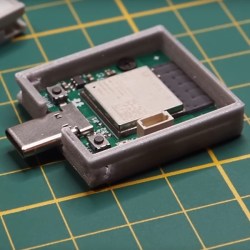
https://hackaday.com/wp-content/uploads/2023/09/hadimg_framework_future_2.jpeg?w=400 One of the selling points of a Framework laptop is that none of its external ports are set in stone – instead, it has USB-C-based slots for cards that can have various ports on them. This doesn’t give you more ports than the usual, maybe even less depending on which cards you get, but it does give you more flexibility in what ports you give yourself.
Maybe you prefer three external displays and a Thunderbolt dock, maybe you want three USB-A ports, or maybe you want to go full USB-C – whatever combination you’d like to use day to day, you can likely combine a few cards and get there. The “Expansion Card” standard also opens the door for third-party cards – cards that someone else has designed, either a hacker or Framework themselves in the future, or maybe even cards that you might want to design for your own use. In particular, Framework has published KiCad PCB files and 3D case drawings, keeps a separate forum area for expansion card development, and even gives more targeted support to individual hackers prototyping their own Expansion Cards.
Over the two years, we’ve seen a ton of expansion card ideas, mockups, designs and actual hardware. I’d estimate that out of all the expansion card ideas, 50% of them have stayed in the idea realm, 40% have been designed but never built, and 10% have been built and become available to users. The 10% include cards like UART, CAN and RS485 expansion cards, a Solo 2 security token adapter, an ESP32-S3 devboard, an optoisolated USB port card, an EC debugging adapter for your low-level laptop hacking needs, a USB3-connected logic analyzer, and other ones. By making expansion cards into a playground for hackers, Framework has let quite a few beginners go through their own “making a PCB idea into reality” journeys, something that’s so often a stepping stone to a myriad of wonderful projects down the line.
There are also less involved but nevertheless useful projects, like multiple Logitech mouse dongle hider cards using off-the-shelf adapters, a SNACK project t[...]
How Framework Laptop Broke The Hacker Ceiling
https://hackaday.com/wp-content/uploads/2023/10/Framework.jpg?w=800
We’ve been keeping an eye on the Framework laptop over the past two years – back in 2021, they’ve announced a vision for a repairable and hacker-friendly laptop based on the x86 architecture. They’re not claiming to be either open-source or libre hardware, but despite that, they have very much delivered on repairability and fostered a hacker community around the laptop, while sticking to pretty ambitious standards for building upgradable hardware that lasts.
https://hackaday.com/wp-content/uploads/2023/09/hadimg_framework_future_feat.jpeg?w=800
I’ve long had a passion for laptop hardware, and when Hackaday covered Framework announcing the motherboards-for-makers program, I submitted my application, then dove into the ecosystem and started poking at the hardware internals every now and then. A year has passed since then, and I’ve been using a Framework as a daily driver, reading the forums on the regular, hanging out in the Discord server, and even developed a few Framework accessories along the way. I’d like to talk about what I’ve seen unfold in this ecosystem, both from Framework and the hackers that joined their effort, because I feel like we have something to learn from it.
If you have a hacker mindset, you might be wondering – just how much is there to hack on? And, if you have a business mindset, you might be wondering – how much can a consumer-oriented tech company achieve by creating a hacker-friendly environment? Today, I’d like to give you some insights and show cool things I’ve seen happen as an involved observer, as well as highlight the path that Framework is embarking upon with its new Framework 16. As Community Expands, So Do The Options
https://hackaday.com/wp-content/uploads/2023/09/hadimg_framework_future_2.jpeg?w=400 One of the selling points of a Framework laptop is that none of its external ports are set in stone – instead, it has USB-C-based slots for cards that can have various ports on them. This doesn’t give you more ports than the usual, maybe even less depending on which cards you get, but it does give you more flexibility in what ports you give yourself.
Maybe you prefer three external displays and a Thunderbolt dock, maybe you want three USB-A ports, or maybe you want to go full USB-C – whatever combination you’d like to use day to day, you can likely combine a few cards and get there. The “Expansion Card” standard also opens the door for third-party cards – cards that someone else has designed, either a hacker or Framework themselves in the future, or maybe even cards that you might want to design for your own use. In particular, Framework has published KiCad PCB files and 3D case drawings, keeps a separate forum area for expansion card development, and even gives more targeted support to individual hackers prototyping their own Expansion Cards.
Over the two years, we’ve seen a ton of expansion card ideas, mockups, designs and actual hardware. I’d estimate that out of all the expansion card ideas, 50% of them have stayed in the idea realm, 40% have been designed but never built, and 10% have been built and become available to users. The 10% include cards like UART, CAN and RS485 expansion cards, a Solo 2 security token adapter, an ESP32-S3 devboard, an optoisolated USB port card, an EC debugging adapter for your low-level laptop hacking needs, a USB3-connected logic analyzer, and other ones. By making expansion cards into a playground for hackers, Framework has let quite a few beginners go through their own “making a PCB idea into reality” journeys, something that’s so often a stepping stone to a myriad of wonderful projects down the line.
There are also less involved but nevertheless useful projects, like multiple Logitech mouse dongle hider cards using off-the-shelf adapters, a SNACK project t[...]
Hackaday
How Framework Laptop Broke The Hacker Ceiling
We’ve been keeping an eye on the Framework laptop over the past two years – back in 2021, they’ve announced a vision for a repairable and hacker-friendly laptop based on the x86 a…
Hardware Hacking Brasil
Hackaday How Framework Laptop Broke The Hacker Ceiling https://hackaday.com/wp-content/uploads/2023/10/Framework.jpg?w=800 We’ve been keeping an eye on the Framework laptop over the past two years – back in 2021, they’ve announced a vision for a repairable…
hat’s a 3D-printed empty expansion card you can store things in, or a conveniently-sized full-size SD card reader turned expansion card with just a little bit of PCB cutting!
https://hackaday.com/wp-content/uploads/2023/06/framework-esp32-thumbnail.jpg?w=250 There are a few upcoming cards, too – the dual-port USB-C card project is impressive, giving you two extra USB3-capable USB-C ports! Three different people and companies are working on an LTE card, and I might just make it four, purely because I have an outrageous idea that would be fun to make real. Framework also hasn’t been slacking – we’ve got an Ethernet expansion card, a 3.5mm audio adapter card that fits the upcoming Framework 16 but works everywhere, and we’ve also got firmware updates and rework instructions to enable power saving on the DisplayPort and HDMI cards they’ve already shipped.
In that way, USB-C and the Framework laptop are a match made in heaven, and the mechanical standard is reasonably well thought-out. If I were to be designing a laptop or other portable device today, I’d absolutely add a Framework-compatible Expansion Card socket!
Innovation in consumer laptop space seems to be mostly stagnant and improvements superficial, so having a ripe for the taking standard like this on the table is exciting, as even the currently relatively small number of third-party expansion cards makes it super worthwhile as a selling point. Given that MNT Reform has gone all-in on the USB-C in its Pocket edition, it could very well turn out to be a community mod – not that you can’t already plug an Expansion Card into a random USB-C socket, as the cards are fundamentally USB-C compatible!
Framework has also recently announced a video series where they’re going to take a full-sized SD Expansion Card from idea to manufacturing, and I have a suspicion that it won’t be limited to PCB design tutorials. Seeing a company get an actual product through their pipeline, explaining the reasoning behind it, is not the kind of lesson you get every day, and you can’t expect any other laptop company to give you such insights, as it stands. Reduce, Reuse, Rejoice
https://hackaday.com/wp-content/uploads/2023/09/hadimg_framework_future_7.jpg?w=400 When it comes to repairability, upgradability and hacker-friendliness, there’s an elephant in the room – individual part reuse, from the motherboards and screens, to keyboards and cases. Since the beginning, Framework has promised that you would be able to upgrade your motherboard when they release a new one, and indeed, there’s now 12th generation Intel CPU motherboards available, with 13th gen Intel and even AMD motherboards on the horizon. This is amazing, but what do you do with the old motherboard you now have laying on your desk, which is effectively a full computer in need of a home?
Framework has addressed this from multiple angles – the most fun one was the “motherboards for makers” program, a seed effort where they’ve sent out motherboards to people who described what kind of project they’d like to do. The reality of such an effort is lower-than-100% ROI – plenty of people will put the board on a shelf, and I have to admit that I’ve effectively done the same with the board I got, never using it for the purpose I stated I would. However, we’ve seen a good few prominent projects grace our pages, and my view is that the main achievement of this program has been putting the idea of “you can build things with this mainboard” rather than 100% return on the hardware investment. Something is better than nothing?
https://hackaday.com/wp-content/uploads/2023/09/hadimg_framework_future_6.jpg?w=800
I’ve noticed that Framework hooks into “I’ve built it myself” aspect of maker culture. Even if you’re just printing out a new case for a motherboard, it’s a project that you’re directing, and having a finished project under your belt feels good. With Framework, whenever you decide to upgrade your motherboard, you get a whole computer in return, that’s also a project par[...]
https://hackaday.com/wp-content/uploads/2023/06/framework-esp32-thumbnail.jpg?w=250 There are a few upcoming cards, too – the dual-port USB-C card project is impressive, giving you two extra USB3-capable USB-C ports! Three different people and companies are working on an LTE card, and I might just make it four, purely because I have an outrageous idea that would be fun to make real. Framework also hasn’t been slacking – we’ve got an Ethernet expansion card, a 3.5mm audio adapter card that fits the upcoming Framework 16 but works everywhere, and we’ve also got firmware updates and rework instructions to enable power saving on the DisplayPort and HDMI cards they’ve already shipped.
In that way, USB-C and the Framework laptop are a match made in heaven, and the mechanical standard is reasonably well thought-out. If I were to be designing a laptop or other portable device today, I’d absolutely add a Framework-compatible Expansion Card socket!
Innovation in consumer laptop space seems to be mostly stagnant and improvements superficial, so having a ripe for the taking standard like this on the table is exciting, as even the currently relatively small number of third-party expansion cards makes it super worthwhile as a selling point. Given that MNT Reform has gone all-in on the USB-C in its Pocket edition, it could very well turn out to be a community mod – not that you can’t already plug an Expansion Card into a random USB-C socket, as the cards are fundamentally USB-C compatible!
Framework has also recently announced a video series where they’re going to take a full-sized SD Expansion Card from idea to manufacturing, and I have a suspicion that it won’t be limited to PCB design tutorials. Seeing a company get an actual product through their pipeline, explaining the reasoning behind it, is not the kind of lesson you get every day, and you can’t expect any other laptop company to give you such insights, as it stands. Reduce, Reuse, Rejoice
https://hackaday.com/wp-content/uploads/2023/09/hadimg_framework_future_7.jpg?w=400 When it comes to repairability, upgradability and hacker-friendliness, there’s an elephant in the room – individual part reuse, from the motherboards and screens, to keyboards and cases. Since the beginning, Framework has promised that you would be able to upgrade your motherboard when they release a new one, and indeed, there’s now 12th generation Intel CPU motherboards available, with 13th gen Intel and even AMD motherboards on the horizon. This is amazing, but what do you do with the old motherboard you now have laying on your desk, which is effectively a full computer in need of a home?
Framework has addressed this from multiple angles – the most fun one was the “motherboards for makers” program, a seed effort where they’ve sent out motherboards to people who described what kind of project they’d like to do. The reality of such an effort is lower-than-100% ROI – plenty of people will put the board on a shelf, and I have to admit that I’ve effectively done the same with the board I got, never using it for the purpose I stated I would. However, we’ve seen a good few prominent projects grace our pages, and my view is that the main achievement of this program has been putting the idea of “you can build things with this mainboard” rather than 100% return on the hardware investment. Something is better than nothing?
https://hackaday.com/wp-content/uploads/2023/09/hadimg_framework_future_6.jpg?w=800
I’ve noticed that Framework hooks into “I’ve built it myself” aspect of maker culture. Even if you’re just printing out a new case for a motherboard, it’s a project that you’re directing, and having a finished project under your belt feels good. With Framework, whenever you decide to upgrade your motherboard, you get a whole computer in return, that’s also a project par[...]
Hardware Hacking Brasil
hat’s a 3D-printed empty expansion card you can store things in, or a conveniently-sized full-size SD card reader turned expansion card with just a little bit of PCB cutting! https://hackaday.com/wp-content/uploads/2023/06/framework-esp32-thumbnail.jpg?w=250…
t, and a seed for a project that you might just bring to reality.
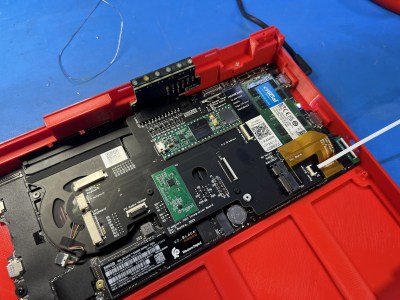
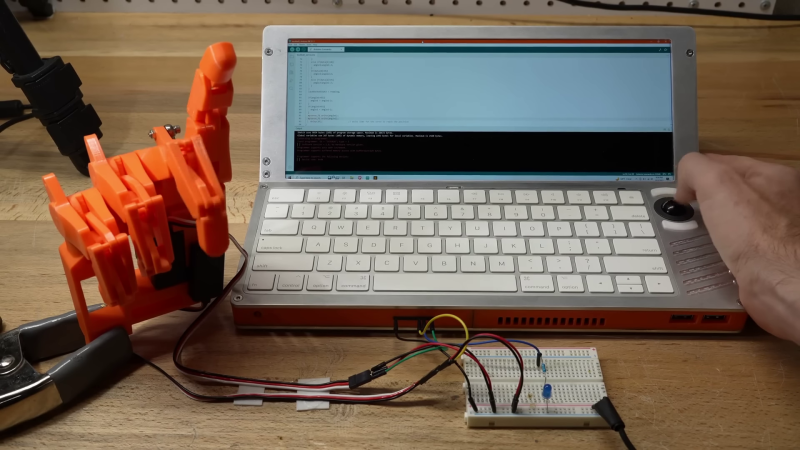
On Hackaday alone, we’ve covered a cyberdeck, a cool-looking handheld, a tablet, a futuristic-looking terminal, a rebuild of venerable Thinkpad 701C, a mechanical keyboard, and all sorts of other devices like this all-in-one. On the Framework Discord server, I’ve just watched someone work on a build where a Framework board is packed together with a PC PSU and a Thunderbolt-connected external GPU for a reasonably powerful yet compact gaming machine. Upgrading such a laptop isn’t just a regular kind of upgrade you can do in the future, it’s a moment you can eagerly await with a special project idea in mind.
https://hackaday.com/wp-content/uploads/2023/09/hadimg_framework_future_9.jpeg?w=400 The Thinkpad 701C rebuild project is still ongoing, and involves an impressive amount of custom PCBs
Part reuse has been the area that I’ve focused on – I love such mostly-unexplored niches, and I’ve been building laptop hardware reuse projects long before that. This is where Framework has given free reign to the community, publishing partial schematics focused on external connectors of the board, and following up whenever people had further inquiries. They’ve released DXFs of the motherboard and associated boards, pinout, connector and part sourcing information for third-party boards, notes on the wiring intricacies, even EC sourcecode and a decent amount of sourcecode or libraries for various parts of the ecosystem, and they are quite helpful to all projects seeking to go beyond expansion cards and motherboard reuse. The Framework board has essentially become a kind of high-power x86 CPU module you can use for your project, with all sorts of interfaces you can pull out of USB-C and lower-level onboard ports, and a ready-to-go battery power solution if you need that.
Because of trade secret concerns and subsequent NDAs with the companies Framework has to work with in the x86 platform space, we may never see full Framework laptop schematics – what we hackers have is a 12-page PDF with the high-level board overview and Framework-specific connector schematics. This partial openness is understandable, and, it’s way better than building projects using smuggled schematics that only become available years after the device’s release.
There were a few nuances stemming from the proprietary aspects, that I and others had to reverse-engineer – for instance, Compal screwing up the pinout on the input cover connector symbol using a completely pin numbering different notation than the connector’s datasheet. However, simply probing the board with a multimeter has led to success, and in the end, I’ve successfully developed a RP2040-based controller for the keyboard+touchpad combo of the Framework – which has been a good playground for me to learn QMK, and also a platform for my experiments with HID over I2C, a wonderful technology that I hope I can introduce to you all sometime soon!
https://hackaday.com/wp-content/uploads/2023/10/hadimg_framework_future_11.jpeg?w=400 One thing we didn’t see materialize was third-party motherboards – despite us getting info like DXF outlines. However, a few people did start hacking on it, and as someone who talks with other hackers in the Framework community, I know that we might just get a surprise project down the road!
That said, as much as it’d be fun to have such a board, there’s not much demand – all in all, people have been pretty satisfied with the 12th and 13th generation Intel motherboard upgrades. Also, AMD motherboards already getting into the hands of people who have preordered them, and given that, we might just see an influx of projects based on Framework motherboards in the Hackaday Tips line! It won’t be the only influx we see, either. Bigger, Faster, More Expandable
About a year ago, Framework has announced the Framework 16 – a 16″ gaming/workstation laptop, larger, all-AMD, and with a discrete GPU. It’s no doubt a response to people who wanted something more beef[...]
On Hackaday alone, we’ve covered a cyberdeck, a cool-looking handheld, a tablet, a futuristic-looking terminal, a rebuild of venerable Thinkpad 701C, a mechanical keyboard, and all sorts of other devices like this all-in-one. On the Framework Discord server, I’ve just watched someone work on a build where a Framework board is packed together with a PC PSU and a Thunderbolt-connected external GPU for a reasonably powerful yet compact gaming machine. Upgrading such a laptop isn’t just a regular kind of upgrade you can do in the future, it’s a moment you can eagerly await with a special project idea in mind.
https://hackaday.com/wp-content/uploads/2023/09/hadimg_framework_future_9.jpeg?w=400 The Thinkpad 701C rebuild project is still ongoing, and involves an impressive amount of custom PCBs
Part reuse has been the area that I’ve focused on – I love such mostly-unexplored niches, and I’ve been building laptop hardware reuse projects long before that. This is where Framework has given free reign to the community, publishing partial schematics focused on external connectors of the board, and following up whenever people had further inquiries. They’ve released DXFs of the motherboard and associated boards, pinout, connector and part sourcing information for third-party boards, notes on the wiring intricacies, even EC sourcecode and a decent amount of sourcecode or libraries for various parts of the ecosystem, and they are quite helpful to all projects seeking to go beyond expansion cards and motherboard reuse. The Framework board has essentially become a kind of high-power x86 CPU module you can use for your project, with all sorts of interfaces you can pull out of USB-C and lower-level onboard ports, and a ready-to-go battery power solution if you need that.
Because of trade secret concerns and subsequent NDAs with the companies Framework has to work with in the x86 platform space, we may never see full Framework laptop schematics – what we hackers have is a 12-page PDF with the high-level board overview and Framework-specific connector schematics. This partial openness is understandable, and, it’s way better than building projects using smuggled schematics that only become available years after the device’s release.
There were a few nuances stemming from the proprietary aspects, that I and others had to reverse-engineer – for instance, Compal screwing up the pinout on the input cover connector symbol using a completely pin numbering different notation than the connector’s datasheet. However, simply probing the board with a multimeter has led to success, and in the end, I’ve successfully developed a RP2040-based controller for the keyboard+touchpad combo of the Framework – which has been a good playground for me to learn QMK, and also a platform for my experiments with HID over I2C, a wonderful technology that I hope I can introduce to you all sometime soon!
https://hackaday.com/wp-content/uploads/2023/10/hadimg_framework_future_11.jpeg?w=400 One thing we didn’t see materialize was third-party motherboards – despite us getting info like DXF outlines. However, a few people did start hacking on it, and as someone who talks with other hackers in the Framework community, I know that we might just get a surprise project down the road!
That said, as much as it’d be fun to have such a board, there’s not much demand – all in all, people have been pretty satisfied with the 12th and 13th generation Intel motherboard upgrades. Also, AMD motherboards already getting into the hands of people who have preordered them, and given that, we might just see an influx of projects based on Framework motherboards in the Hackaday Tips line! It won’t be the only influx we see, either. Bigger, Faster, More Expandable
About a year ago, Framework has announced the Framework 16 – a 16″ gaming/workstation laptop, larger, all-AMD, and with a discrete GPU. It’s no doubt a response to people who wanted something more beef[...]
Hardware Hacking Brasil
t, and a seed for a project that you might just bring to reality. On Hackaday alone, we’ve covered a cyberdeck, a cool-looking handheld, a tablet, a futuristic-looking terminal, a rebuild of venerable Thinkpad 701C, a mechanical keyboard, and all sorts of…
y than the 13″ model, and it also has two standout features that push the Framework’s expandability standard even further – the Input Module ecosystem, and the Expansion Bay, giving you input device modularity and GPU replacements respectively.
https://hackaday.com/wp-content/uploads/2023/09/hadimg_framework_future_10.jpeg?w=171 An RGB LED-packed community-designed Input Module by [Joe Schroedl]The Expansion Bay has a PCIe x8 link you can bifurcate into two x4 links, a beefy power bus capable of bidirectional power transfer, and a few extra useful connections like a direct-to-panel eDP input, I2C, and a few GPIOs. From the business standpoint, it’s also a fun way to reduce SKUs they have to offer, and from a hackability standpoint, it’s a port for the ultimate kind of upgrades given its sheer PCIe capabilities. The connector, once again, makes use of reasonably accessible FX-Beam interconnect lineup, and Framework has released reference design information – which led to a community-sourced KiCad template, and a few in-progress projects have popped up that are adding things like OcuLink, extra expansion card sockets, or even an MXM GPU and a Dell docking station port.
The Input Modules, on the other hand, take the 13″ laptop’s single-piece keyboard+touchpad combination, and split it into modules socketed onto a common base, with the individual modules connected over USB or I2C. For a user, this means you can easily add a numpad to your Framework, remove it if you’re numpad-averse, or stack eight numpads in case you suffer from numpad deprival-induced trauma. It also means you can create your own modules that go in the place of the keyboard or the touchpad – from macropads to smartcard readers, and even extra screens! Framework has, once again, provided reference designs, and community members are already manufacturing their own cards, like this RGB LED matrix card that’s already been manufactured and is now in its second revision! Raising The Bar
Now, this is a lot to say about a two-year-old product, but I guess my background helps. I’ve spent a decade using devices like laptops and phones and then a decade more fixing and improving them, and during that time, I’ve watched them turn more and more into black boxes with knobs to tune the endless stream of entertainment. The difference is especially stark when I compare it to the 8-bit computing years I’ve been taught about, years that raised the generation whose knowledge and advice helped me find my place in the world of hacking and electronics. We’ve had a treasure trove of technological improvements since then, sure, but we’ve lost some core principles that made computers more human-friendly, and accumulated a fair bit of cruft that made the personal computer world feel dull and grey – no matter how bright the everpresent RGB lights shine.
https://hackaday.com/wp-content/uploads/2023/09/hadimg_framework_future_5.jpg?w=400 Looking at what Framework has achieved so far, I feel reassured. A lot of the most annoying cruft has been shed here, and you can see people having fun with the concept, driven because they get to improve upon a thing they will be using on the daily, or build something new that helps them live a fulfilling life in this tech-focused world.
Just throughout the few last days, I’ve been watching someone on the Framework Discord server build a powerful router out of a Framework motherboard, with PCIe Ethernet cards in both of the M.2 sockets, and a colorful 3D-printed case that makes the project look solid while shielding it from dust. Given the trove of existing mechanical designs you can start with, it’s been an easy project for them to build, and it’s been fun to observe for me too. It warms my heart to see people build their own tech so easily, because ultimately, it isn’t something you can buy – not just the specific device you build, but the fun you have on the way, and the power that it gives you.
The hacker-driven projects I list, aren’t there just for the technical value – each [...]
https://hackaday.com/wp-content/uploads/2023/09/hadimg_framework_future_10.jpeg?w=171 An RGB LED-packed community-designed Input Module by [Joe Schroedl]The Expansion Bay has a PCIe x8 link you can bifurcate into two x4 links, a beefy power bus capable of bidirectional power transfer, and a few extra useful connections like a direct-to-panel eDP input, I2C, and a few GPIOs. From the business standpoint, it’s also a fun way to reduce SKUs they have to offer, and from a hackability standpoint, it’s a port for the ultimate kind of upgrades given its sheer PCIe capabilities. The connector, once again, makes use of reasonably accessible FX-Beam interconnect lineup, and Framework has released reference design information – which led to a community-sourced KiCad template, and a few in-progress projects have popped up that are adding things like OcuLink, extra expansion card sockets, or even an MXM GPU and a Dell docking station port.
The Input Modules, on the other hand, take the 13″ laptop’s single-piece keyboard+touchpad combination, and split it into modules socketed onto a common base, with the individual modules connected over USB or I2C. For a user, this means you can easily add a numpad to your Framework, remove it if you’re numpad-averse, or stack eight numpads in case you suffer from numpad deprival-induced trauma. It also means you can create your own modules that go in the place of the keyboard or the touchpad – from macropads to smartcard readers, and even extra screens! Framework has, once again, provided reference designs, and community members are already manufacturing their own cards, like this RGB LED matrix card that’s already been manufactured and is now in its second revision! Raising The Bar
Now, this is a lot to say about a two-year-old product, but I guess my background helps. I’ve spent a decade using devices like laptops and phones and then a decade more fixing and improving them, and during that time, I’ve watched them turn more and more into black boxes with knobs to tune the endless stream of entertainment. The difference is especially stark when I compare it to the 8-bit computing years I’ve been taught about, years that raised the generation whose knowledge and advice helped me find my place in the world of hacking and electronics. We’ve had a treasure trove of technological improvements since then, sure, but we’ve lost some core principles that made computers more human-friendly, and accumulated a fair bit of cruft that made the personal computer world feel dull and grey – no matter how bright the everpresent RGB lights shine.
https://hackaday.com/wp-content/uploads/2023/09/hadimg_framework_future_5.jpg?w=400 Looking at what Framework has achieved so far, I feel reassured. A lot of the most annoying cruft has been shed here, and you can see people having fun with the concept, driven because they get to improve upon a thing they will be using on the daily, or build something new that helps them live a fulfilling life in this tech-focused world.
Just throughout the few last days, I’ve been watching someone on the Framework Discord server build a powerful router out of a Framework motherboard, with PCIe Ethernet cards in both of the M.2 sockets, and a colorful 3D-printed case that makes the project look solid while shielding it from dust. Given the trove of existing mechanical designs you can start with, it’s been an easy project for them to build, and it’s been fun to observe for me too. It warms my heart to see people build their own tech so easily, because ultimately, it isn’t something you can buy – not just the specific device you build, but the fun you have on the way, and the power that it gives you.
The hacker-driven projects I list, aren’t there just for the technical value – each [...]

Hardware Hacking Brasil
y than the 13″ model, and it also has two standout features that push the Framework’s expandability standard even further – the Input Module ecosystem, and the Expansion Bay, giving you input device modularity and GPU replacements respectively. https://hackaday.com/wp…
one of them holds a fair bit of joy from the person who worked on it. And that’s, without doubt, because Framework’s focus on the hackability has helped people channel the fundamental desire to play with the technology we use, each hacker imbuing their creation or mod with a piece of their soul. That’s a stark contrast to the soulless machines designed to be used in a certain way for a few years and then discarded – each Framework laptop is a gateway to a Framework laptop-based project, and each Framework project brings yet another hacker into our community.
https://hackaday.com/wp-content/uploads/2023/10/framework_cyberdeck.png?w=800 A cyberdeck build that we’ve just covered a week ago
I don’t know if these relatively high standards can nudge other companies to take lead, though we can all hope. I do know how powerful can examples of actual success be when it comes to making the world turn, and it matters that we can highlight a company that’s making large steps in the hacker-friendly direction while maintaining undeniable mass appeal. Sure, you can form an underground movement with repurposed and low-volume tech, but producing hackable things at scale is how you shape a generation, and we could always use a bit more of that.
Framework is, in many ways, an ecosystem ripe to be conquered by the hacking spirit, from upgrades to repairs made simple. I personally can’t wait to see where it goes, and whether its high standards can nudge other companies into a better direction as the repairability, hackability and openness promises come true one by one. The Framework experiment has, without a doubt, paid off, and sets a high standard for hacker community involvement and outreach – one that we haven’t been seeing companies do on such a scale, and can only hope to see more in the future.
➖ @hardwareHack ➖
https://hackaday.com/wp-content/uploads/2023/10/framework_cyberdeck.png?w=800 A cyberdeck build that we’ve just covered a week ago
I don’t know if these relatively high standards can nudge other companies to take lead, though we can all hope. I do know how powerful can examples of actual success be when it comes to making the world turn, and it matters that we can highlight a company that’s making large steps in the hacker-friendly direction while maintaining undeniable mass appeal. Sure, you can form an underground movement with repurposed and low-volume tech, but producing hackable things at scale is how you shape a generation, and we could always use a bit more of that.
Framework is, in many ways, an ecosystem ripe to be conquered by the hacking spirit, from upgrades to repairs made simple. I personally can’t wait to see where it goes, and whether its high standards can nudge other companies into a better direction as the repairability, hackability and openness promises come true one by one. The Framework experiment has, without a doubt, paid off, and sets a high standard for hacker community involvement and outreach – one that we haven’t been seeing companies do on such a scale, and can only hope to see more in the future.
➖ @hardwareHack ➖
Hackaday
Rotating Necked Guitar Looks Difficult To Play
https://hackaday.com/wp-content/uploads/2023/10/360-guitar.jpg?w=800
Have you ever looked at a guitar and thought “Nah, that’s way too easy to play.”[Mattias Kranz] seems to have done, so he built the 360 Guitar, a new instrument with a circular, rotating neck. The rotating neck means that it can have more strings than most: we think that it has sixteen, but it’s hard to tell. Anyway, it has a lot of strings and looks utterly impractical, which makes it an exciting project.
The basic idea is intriguing: take a conventional guitar design and replace the fretboard with a rotating pillar. Perhaps even stick a motor in there to rotate it on command. Each of the strings is mounted along this pillar using standard string retainers and tuning pegs, with frets along the pillar. Because you can fit so many strings, you can use all of the standard strings for a bass and treble guitar, plus a few extra like the thickest bass string available and the thinnest guitar strings. It’s like a four-dimensional Chapman Stick.
[Mathias] is still working on the project as you can see in the video below the break, so we will be interested to see what new design aspects he comes up with, like the plan to use a motor to rotate the neck. [Mattias] has built a few instruments that we have featured before, like the Helium guitar, which replaces the resonant cavity with a helium balloon, and the Plasma Piano, a combination of piano and tuned plasma coil.
➖ @hardwareHack ➖
Rotating Necked Guitar Looks Difficult To Play
https://hackaday.com/wp-content/uploads/2023/10/360-guitar.jpg?w=800
Have you ever looked at a guitar and thought “Nah, that’s way too easy to play.”[Mattias Kranz] seems to have done, so he built the 360 Guitar, a new instrument with a circular, rotating neck. The rotating neck means that it can have more strings than most: we think that it has sixteen, but it’s hard to tell. Anyway, it has a lot of strings and looks utterly impractical, which makes it an exciting project.
The basic idea is intriguing: take a conventional guitar design and replace the fretboard with a rotating pillar. Perhaps even stick a motor in there to rotate it on command. Each of the strings is mounted along this pillar using standard string retainers and tuning pegs, with frets along the pillar. Because you can fit so many strings, you can use all of the standard strings for a bass and treble guitar, plus a few extra like the thickest bass string available and the thinnest guitar strings. It’s like a four-dimensional Chapman Stick.
[Mathias] is still working on the project as you can see in the video below the break, so we will be interested to see what new design aspects he comes up with, like the plan to use a motor to rotate the neck. [Mattias] has built a few instruments that we have featured before, like the Helium guitar, which replaces the resonant cavity with a helium balloon, and the Plasma Piano, a combination of piano and tuned plasma coil.
➖ @hardwareHack ➖
Hackaday
Rotating Necked Guitar Looks Difficult To Play
Have you ever looked at a guitar and thought “Nah, that’s way too easy to play.”[Mattias Kranz] seems to have done, so he built the 360 Guitar, a new instrument with a circular, r…
Hackaday
Particle Accelerator… on a Chip
https://hackaday.com/wp-content/uploads/2023/10/part.png?w=800
When you think of a particle accelerator, you usually think of some giant cyclotron with heavy-duty equipment in a massive mad-science lab. But scientists now believe they can create particle accelerators that can fit on a chip smaller than a penny. The device uses lasers and dielectrics instead of electric fields and metal. The conventional accelerators are limited by the peak fields the metallic surfaces can withstand. Dielectric materials can withstand much higher fields but, of course, don’t conduct electricity.
Physicists fabricated a 225 nanometers wide channel in various sizes up to 0.5 millimeters long. An electron beam moves through the channel. Very short infrared laser pulses on top of the channels accelerate the electrons down it using tiny silicon pillars.
The electron beam entered the channel at 28,400 electron volts. They exited at 40,700 electron volts, a substantial increase. The tiny pillars are only two microns high, so fabrication is tricky. Possible applications include cancer treatment, electron microscopy, and the creation of compact high-energy lasers.
The nanofabrication required for these devices won’t be in our garage any time soon. However, we hope this might lead to a new class of devices that we can use to build exciting new things. After all, remember how it used to be hard to build things using a laser?
We’ve seen laser-based accelerators before. If you want a history of particle accelerators, we can help you there, too.
➖ @hardwareHack ➖
Particle Accelerator… on a Chip
https://hackaday.com/wp-content/uploads/2023/10/part.png?w=800
When you think of a particle accelerator, you usually think of some giant cyclotron with heavy-duty equipment in a massive mad-science lab. But scientists now believe they can create particle accelerators that can fit on a chip smaller than a penny. The device uses lasers and dielectrics instead of electric fields and metal. The conventional accelerators are limited by the peak fields the metallic surfaces can withstand. Dielectric materials can withstand much higher fields but, of course, don’t conduct electricity.
Physicists fabricated a 225 nanometers wide channel in various sizes up to 0.5 millimeters long. An electron beam moves through the channel. Very short infrared laser pulses on top of the channels accelerate the electrons down it using tiny silicon pillars.
The electron beam entered the channel at 28,400 electron volts. They exited at 40,700 electron volts, a substantial increase. The tiny pillars are only two microns high, so fabrication is tricky. Possible applications include cancer treatment, electron microscopy, and the creation of compact high-energy lasers.
The nanofabrication required for these devices won’t be in our garage any time soon. However, we hope this might lead to a new class of devices that we can use to build exciting new things. After all, remember how it used to be hard to build things using a laser?
We’ve seen laser-based accelerators before. If you want a history of particle accelerators, we can help you there, too.
➖ @hardwareHack ➖
Hackaday
Particle Accelerator… On A Chip
When you think of a particle accelerator, you usually think of some giant cyclotron with heavy-duty equipment in a massive mad-science lab. But scientists now believe they can create particle accel…
Hackaday
Saving Australia’s Ants With Age of Empires II
https://hackaday.com/wp-content/uploads/2023/10/A-meat-ant-grapples-with-two-smaller-Argentine-ants_featured.png?w=800
Australia’s native meat ants are struggling. Invasive species of foreign ants have a foothold on the continent, and are increasingly outcompeting their native rivals for territory. Beyond simple encroachment, they pose a hazard to native animals and agriculture. Scientists at the CSIRO have been investigating the problem, hoping to find a way to halt the invasion. Charged with finding a way to help Australia’s native ants fight back, they turned to one of the most popular battle simulations of all time: Age of Empires II. Lanchester’s Laws https://hackaday.com/wp-content/uploads/2023/10/Lanchesters-Laws-in-AoE2-0-10-screenshot.png?w=400 In a battle between equally-skilled soldiers, a small numerical advantage at the outset of battle can have a major impact. Lanchester’s laws were developed to model scenarios like these. Credit: YouTube/Spirit of the Law
The work by the CSIRO aimed to investigate the dynamics of conflict between Australia’s native meat ants and the smaller invasive Argentine ant species. The latter are much smaller than the local Australian ants, with the Argentine species tending to live in huge, dense colonies that are highly cooperative in behaviour.
In one-on-one combat, the native meat ant will always win against the Argentine invader, by virtue of its much larger size. However, in the real world, a meat ant might find itself overwhelmed in combat by the sheer numbers of Argentine soldier ants that show up to battle.
The researchers aimed to determine how this numerical advantage worked in various scenarios. It’s a topic that has been explored deeply in military contexts, with English engineer Frederick William Lanchester noted for his work on the problem in the early 1900s. He developed mathematical models that could be used to compare the progress of a battle between two armies based on their initial strengths. His laws came to be used to determine the value of a smaller number of stronger soldiers versus a much larger army of weaker individuals. In a scenario where combat occurs on a restrictive one-on-one basis, the stronger soldiers are typically favored. They can vanquish one weaker enemy before moving on to the next. However, in areas where the weaker soldiers can all attack a stronger soldier at once, the greater numbers will carry the day.
Thus, the composition of a battlefield can play a great role in the outcome of a battle. A great example of Lanchester’s work at play is the famous tale of the Greeks fighting at Thermopylae. There, a narrow pass allowed a tiny but highly capable Greek force to hold the Perisan invaders at bay, despite their overwhelming numerical superiority. Any kind of terrain or feature that restricts the swarming of a larger force around a smaller one can tilt a battle towards a numerically-weaker force made up of stronger individuals.
The CSIRO researchers used Age of Empires II to explore this mathematical concept, and relate it to combat between Australian and Argentine ant species. The game readily represents Lanchester’s laws well, and helped the researchers understand the impact of battlefield complexity on the outcome of a battle. The team noted that in the game, a small army of strong Teutonic Knights could easily best 50 units of the weaker Two-Handed Swordsman on an open field. in a more complex battle space, however, where the weaker units couldn’t all attack the Teutonic Knights at once, things changed. In these conditions, just nine Teutonic Knights could secure a victory over as many as 70 Two-Handed Swordsman.
As the researchers tried the same concepts with real ants, the same logic played out. Simple, featureless plastic arenas were more favorable to the tiny Argentine ants, as they could easily swarm the lar[...]
Saving Australia’s Ants With Age of Empires II
https://hackaday.com/wp-content/uploads/2023/10/A-meat-ant-grapples-with-two-smaller-Argentine-ants_featured.png?w=800
Australia’s native meat ants are struggling. Invasive species of foreign ants have a foothold on the continent, and are increasingly outcompeting their native rivals for territory. Beyond simple encroachment, they pose a hazard to native animals and agriculture. Scientists at the CSIRO have been investigating the problem, hoping to find a way to halt the invasion. Charged with finding a way to help Australia’s native ants fight back, they turned to one of the most popular battle simulations of all time: Age of Empires II. Lanchester’s Laws https://hackaday.com/wp-content/uploads/2023/10/Lanchesters-Laws-in-AoE2-0-10-screenshot.png?w=400 In a battle between equally-skilled soldiers, a small numerical advantage at the outset of battle can have a major impact. Lanchester’s laws were developed to model scenarios like these. Credit: YouTube/Spirit of the Law
The work by the CSIRO aimed to investigate the dynamics of conflict between Australia’s native meat ants and the smaller invasive Argentine ant species. The latter are much smaller than the local Australian ants, with the Argentine species tending to live in huge, dense colonies that are highly cooperative in behaviour.
In one-on-one combat, the native meat ant will always win against the Argentine invader, by virtue of its much larger size. However, in the real world, a meat ant might find itself overwhelmed in combat by the sheer numbers of Argentine soldier ants that show up to battle.
The researchers aimed to determine how this numerical advantage worked in various scenarios. It’s a topic that has been explored deeply in military contexts, with English engineer Frederick William Lanchester noted for his work on the problem in the early 1900s. He developed mathematical models that could be used to compare the progress of a battle between two armies based on their initial strengths. His laws came to be used to determine the value of a smaller number of stronger soldiers versus a much larger army of weaker individuals. In a scenario where combat occurs on a restrictive one-on-one basis, the stronger soldiers are typically favored. They can vanquish one weaker enemy before moving on to the next. However, in areas where the weaker soldiers can all attack a stronger soldier at once, the greater numbers will carry the day.
Thus, the composition of a battlefield can play a great role in the outcome of a battle. A great example of Lanchester’s work at play is the famous tale of the Greeks fighting at Thermopylae. There, a narrow pass allowed a tiny but highly capable Greek force to hold the Perisan invaders at bay, despite their overwhelming numerical superiority. Any kind of terrain or feature that restricts the swarming of a larger force around a smaller one can tilt a battle towards a numerically-weaker force made up of stronger individuals.
The CSIRO researchers used Age of Empires II to explore this mathematical concept, and relate it to combat between Australian and Argentine ant species. The game readily represents Lanchester’s laws well, and helped the researchers understand the impact of battlefield complexity on the outcome of a battle. The team noted that in the game, a small army of strong Teutonic Knights could easily best 50 units of the weaker Two-Handed Swordsman on an open field. in a more complex battle space, however, where the weaker units couldn’t all attack the Teutonic Knights at once, things changed. In these conditions, just nine Teutonic Knights could secure a victory over as many as 70 Two-Handed Swordsman.
As the researchers tried the same concepts with real ants, the same logic played out. Simple, featureless plastic arenas were more favorable to the tiny Argentine ants, as they could easily swarm the lar[...]
Hackaday
Saving Australia’s Ants With Age Of Empires II
Australia’s native meat ants are struggling. Invasive species of foreign ants have a foothold on the continent, and are increasingly outcompeting their native rivals for territory. Beyond sim…
Hardware Hacking Brasil
Hackaday Saving Australia’s Ants With Age of Empires II https://hackaday.com/wp-content/uploads/2023/10/A-meat-ant-grapples-with-two-smaller-Argentine-ants_featured.png?w=800 Australia’s native meat ants are struggling. Invasive species of foreign ants have…
ger meat ants all at once. In more complex arenas, however, meat ants would take less casualties as the Argentine ants were restricted to attacking in smaller numbers at a time.
This has implications for conservation efforts for Australia’s native ants. Researchers have already noted that the invasive foreign ants are most prevalent in “disturbed” environments, where the landscape is simpler and undergrowth and natural debris has largely been removed. Meanwhile, the actual ant fights run by researchers, along with the battle models, indicate that a more complex environment might help the natives dominate more easily. By restoring natural debris and undergrowth, the battlefield may turn to their favor, even against far greater numbers of invasive ants. Simplification
The idea of using a real-time strategy gaming engine to model insect warfare makes a lot of sense. Game engines allow the simulation of combat between tens, hundreds, or even thousands of individual units, allowing a proper exploration of battles at scale. It’s also possible to modify game units to suit the parameters of a given creature, with regards to things like strength, defensive armor, or the ability to attack close in or at range.
However, there are also some limitations to this methodology. Strategy game engines necessarily use abstractions to simulate combat. The vast majority of games simulate a unit like a soldier or a tank with a health bar. As the unit is attacked, its health is slowly depleted, with the unit dying when its health reaches zero. Real combat is far more complex. A human soldier might take a bullet to the hand or have a leg blown off—both survivable shots, but ones that drastically degrades their combat ability in an instant, and in different ways. Simplified strategy games rarely go beyond some window dressing, with badly injured units slowing down or attacking slower. https://hackaday.com/wp-content/uploads/2023/10/ageempires.jpg?w=400 The more complex landscape prevents the weaker units from swarming the stronger soldiers, giving the latter an advantage. In Age of Empires II, as in life. Credit: CSIRO, Age of Empires II
There’s also something to be said for the human element in setting up the scenario. Let’s say you’re simulating insect battles in Age of Empires II. How many hit points should an inch ant have? What about its pierce armor and melee armor, and damage output? For most stats beyond speed, it’s difficult to subjectively assign accurate parameters for one insect over another, without introducing some kind of human bias. Those that believe stick insects are better armored than ladybugs will unfairly rate their statistics higher, for example.
Without micromanagement by a human, such battles may also ignores tactics and strategy. Perhaps fire ants know that their cockroach enemies are readily disabled by attacks to the legs, leaving them motionless and vulnerable, making it impossible for them to fight back. Complex externalities like this generally aren’t baked into strategy game engines unless put there by design.
Some games go to great lengths to do so, such as the vehicle damage models in games like Company of Heroes, but these engines were specifically designed to more accurately represent a certain type of vehicular combat. A proper insect battle model would have to be designed from the ground up in a similar way to give reliable quantitative results for a given scenario.
However, the key to good research is often abstraction, backed up with real-world insight. That’s very much the case here. Researchers didn’t simply rely on gaming studies to inform their results, nor did they feel the need to modify the game with simulated ants. Instead, they relied on a simple model of a small force of strong soldiers versus a greater force of weaker ones. They used this to relate Lanchester’s mathematical models to both the game itself and the observations they made in actual ant combat studies from the lab. That enabled the insight that battlefield comple[...]
This has implications for conservation efforts for Australia’s native ants. Researchers have already noted that the invasive foreign ants are most prevalent in “disturbed” environments, where the landscape is simpler and undergrowth and natural debris has largely been removed. Meanwhile, the actual ant fights run by researchers, along with the battle models, indicate that a more complex environment might help the natives dominate more easily. By restoring natural debris and undergrowth, the battlefield may turn to their favor, even against far greater numbers of invasive ants. Simplification
The idea of using a real-time strategy gaming engine to model insect warfare makes a lot of sense. Game engines allow the simulation of combat between tens, hundreds, or even thousands of individual units, allowing a proper exploration of battles at scale. It’s also possible to modify game units to suit the parameters of a given creature, with regards to things like strength, defensive armor, or the ability to attack close in or at range.
However, there are also some limitations to this methodology. Strategy game engines necessarily use abstractions to simulate combat. The vast majority of games simulate a unit like a soldier or a tank with a health bar. As the unit is attacked, its health is slowly depleted, with the unit dying when its health reaches zero. Real combat is far more complex. A human soldier might take a bullet to the hand or have a leg blown off—both survivable shots, but ones that drastically degrades their combat ability in an instant, and in different ways. Simplified strategy games rarely go beyond some window dressing, with badly injured units slowing down or attacking slower. https://hackaday.com/wp-content/uploads/2023/10/ageempires.jpg?w=400 The more complex landscape prevents the weaker units from swarming the stronger soldiers, giving the latter an advantage. In Age of Empires II, as in life. Credit: CSIRO, Age of Empires II
There’s also something to be said for the human element in setting up the scenario. Let’s say you’re simulating insect battles in Age of Empires II. How many hit points should an inch ant have? What about its pierce armor and melee armor, and damage output? For most stats beyond speed, it’s difficult to subjectively assign accurate parameters for one insect over another, without introducing some kind of human bias. Those that believe stick insects are better armored than ladybugs will unfairly rate their statistics higher, for example.
Without micromanagement by a human, such battles may also ignores tactics and strategy. Perhaps fire ants know that their cockroach enemies are readily disabled by attacks to the legs, leaving them motionless and vulnerable, making it impossible for them to fight back. Complex externalities like this generally aren’t baked into strategy game engines unless put there by design.
Some games go to great lengths to do so, such as the vehicle damage models in games like Company of Heroes, but these engines were specifically designed to more accurately represent a certain type of vehicular combat. A proper insect battle model would have to be designed from the ground up in a similar way to give reliable quantitative results for a given scenario.
However, the key to good research is often abstraction, backed up with real-world insight. That’s very much the case here. Researchers didn’t simply rely on gaming studies to inform their results, nor did they feel the need to modify the game with simulated ants. Instead, they relied on a simple model of a small force of strong soldiers versus a greater force of weaker ones. They used this to relate Lanchester’s mathematical models to both the game itself and the observations they made in actual ant combat studies from the lab. That enabled the insight that battlefield comple[...]

Hardware Hacking Brasil
ger meat ants all at once. In more complex arenas, however, meat ants would take less casualties as the Argentine ants were restricted to attacking in smaller numbers at a time. This has implications for conservation efforts for Australia’s native ants. Researchers…
xity favors a larger, stronger ant just as the pass of Thermopylae favored the valiant Greek defence.
Fundamentally, a game of Age of Empires II won’t be enough to guarantee success for your ant reintroduction project in any given suburb. What it can do, however, is guide conservation efforts towards tactics that could give Australia’s meat ants the best possible chance of success.
Featured image: “Two meat ants fight two smaller Argentine ant adversaries.” by Bruce Webber, CC BY-SA, CSIRO
➖ @hardwareHack ➖
Fundamentally, a game of Age of Empires II won’t be enough to guarantee success for your ant reintroduction project in any given suburb. What it can do, however, is guide conservation efforts towards tactics that could give Australia’s meat ants the best possible chance of success.
Featured image: “Two meat ants fight two smaller Argentine ant adversaries.” by Bruce Webber, CC BY-SA, CSIRO
➖ @hardwareHack ➖
Hackaday
William Blake Was Etching Copper in 1790
https://hackaday.com/wp-content/uploads/2023/10/William-Blake-800.jpeg?w=800
You may know William Blake as a poet, or even as #38 in the BBC’s 2002 poll of the 100 Greatest Britons. But did you know that Blake was also an artist and print maker who made illuminated (flourished) books?
Blake sought to marry his art with his poetry and unleash it on the world. To do so, he created an innovative printing process, which is recreated by [Michael Phillips] in the video after the break. Much like etching a PCB, Blake started with a copper sheet, writing and drawing his works backwards with stopping varnish, an acid-resistant varnish that sticks around after a nitric acid bath. The result was a raised design that could then be used for printing.
https://hackaday.com/wp-content/uploads/2023/10/William-Blake-inner.jpeg?w=400 Cleaning up the ink smudges before printing.
Blake was a master of color, using few pigments plus linseed or nut oil to create pastes of many different hues. Rather than use a brayer, Blake dabbed ink gently around the plate, careful not to splash ink or get any in the etched-away areas. As this was bound to happen anyway, Blake would then spend more time wiping out the etched areas than he did applying the ink.
Another of Blake’s innovations was the printing process itself. Whereas traditionally, illuminated texts must be printed in two different workshops, one for the text and the other for the illustrations, Blake’s method of etching both in the same plate of copper made it possible to print using his giant handmade press.
Want to avoid censorship and print your own ‘zines? Why not build a proofing press?.
Thanks for the tip, [Andy Pugh]!
➖ @hardwareHack ➖
William Blake Was Etching Copper in 1790
https://hackaday.com/wp-content/uploads/2023/10/William-Blake-800.jpeg?w=800
You may know William Blake as a poet, or even as #38 in the BBC’s 2002 poll of the 100 Greatest Britons. But did you know that Blake was also an artist and print maker who made illuminated (flourished) books?
Blake sought to marry his art with his poetry and unleash it on the world. To do so, he created an innovative printing process, which is recreated by [Michael Phillips] in the video after the break. Much like etching a PCB, Blake started with a copper sheet, writing and drawing his works backwards with stopping varnish, an acid-resistant varnish that sticks around after a nitric acid bath. The result was a raised design that could then be used for printing.
https://hackaday.com/wp-content/uploads/2023/10/William-Blake-inner.jpeg?w=400 Cleaning up the ink smudges before printing.
Blake was a master of color, using few pigments plus linseed or nut oil to create pastes of many different hues. Rather than use a brayer, Blake dabbed ink gently around the plate, careful not to splash ink or get any in the etched-away areas. As this was bound to happen anyway, Blake would then spend more time wiping out the etched areas than he did applying the ink.
Another of Blake’s innovations was the printing process itself. Whereas traditionally, illuminated texts must be printed in two different workshops, one for the text and the other for the illustrations, Blake’s method of etching both in the same plate of copper made it possible to print using his giant handmade press.
Want to avoid censorship and print your own ‘zines? Why not build a proofing press?.
Thanks for the tip, [Andy Pugh]!
➖ @hardwareHack ➖
Hackaday
William Blake Was Etching Copper In 1790
You may know William Blake as a poet, or even as #38 in the BBC’s 2002 poll of the 100 Greatest Britons. But did you know that Blake was also an artist and print maker who made illuminated (f…
https://youtu.be/LgcunFx5xts alternativa ao flipper zero, é só organizar direitinho que logo logo pode ter as mesmas funcionalidades
YouTube
Novo Flipper Zero! CardPuter M5stack
📜 **LISTA DE DISPOSITIVOS:**
👉 https://t.me/hardwareHackingMarket
🎓 **CURSO GRÁTIS DE HARDWARE HACKING:**
👉 https://solyd.com.br/cursos/introducao-ao-hardware-hacking/
🎓 **NOVO TREINAMENTO AQUI - SOLYD ONE**
👉https://solyd.com.br/?ca=julio
📟 **LINK DO…
👉 https://t.me/hardwareHackingMarket
🎓 **CURSO GRÁTIS DE HARDWARE HACKING:**
👉 https://solyd.com.br/cursos/introducao-ao-hardware-hacking/
🎓 **NOVO TREINAMENTO AQUI - SOLYD ONE**
👉https://solyd.com.br/?ca=julio
📟 **LINK DO…
🔍 Hardware Hacking Broadcast Group 🔧
Gain quick and secure access to essential resources for security analysts and hardware hackers! This channel is your direct source for:
🔗 Curated links to cutting-edge devices for research and Red Team
https://t.me/hardwareHackingMarket
Gain quick and secure access to essential resources for security analysts and hardware hackers! This channel is your direct source for:
🔗 Curated links to cutting-edge devices for research and Red Team
https://t.me/hardwareHackingMarket
Telegram
Hardware Tools
O GRUPO SECRETO que analistas de segurança NÃO querem que você conheça!
💎
Acesso INSTANTÂNEO e EXCLUSIVO a dispositivos de última geração para pesquisa e Red Team. Links curados que você NÃO vai encontrar em outro lugar
💎
Acesso INSTANTÂNEO e EXCLUSIVO a dispositivos de última geração para pesquisa e Red Team. Links curados que você NÃO vai encontrar em outro lugar