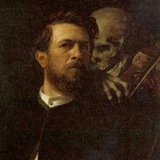
"Tsar Nicholas II was a heavy smoker, probably about forty a day. Some today are shocked by this, forgetting that at that time virtually all men smoked and it was considered unhealthy not to smoke. Indeed, the more you smoked the better. In the early part of the century women also smoked, but in private. After the evening meal, well-off men would retire to a purpose-made ‘smoking room’ in order to smoke – this was normal, the way of life of the time. And some well-known clergy, including bishops, smoked in that period."
- Archpriest Andrew Phillips (Orthodox England)
- Archpriest Andrew Phillips (Orthodox England)
"It is requisite that he who goes about to pray should be a son or the catholic and orthodox church: for whosoever has not the church for a mother, neither can he have God for his father: As it is said, Tell it until the Church; but if he refuses to hear the Church, let him be to you as a Gentile and a tax-collector (Matthew 18:17)."
- The Catechism of St Peter Mogila
- The Catechism of St Peter Mogila
I'm very interested in entertaining apparent contradictions that violate mundane logic; such as the idea that earth could be flat and spherical concurrently — not merely phenomenologically flat, but actually. How could this this contradiction be reconciled? Fourth dimensionality, perhaps. I want to study more and meditate more on the matter.
Just today, reading about creation myths, particularly the biblical book of Genesis, another fun contradictory position occurred to me. Perhaps earth is young and old at the same time — that is, it is simultaneously merely 7.5 thousand years old, and also nearly eternal, or as close to eternal as matter can be. Mircea Eliade wrote about time being both cyclical and linear, and I agree. I also think that following the biblical narrative, earth was created in eternity before time as we know it exists. Even assuming time was a functioning dimension of reality when Adam was created, prelapsarian time surely was in no way completely identical or equal to the postlapsarian time we experience now. (I also believe that time may fluctuate, but that can be ruminated on later.) The more I meditate on and read about metaphysics the more I hope to eventually write articles or essays on things like this, or perhaps even eventually make videos. Nonetheless, the cosmos is more complex and fascinating than any fiction from the mind of man. Glory to God for all things — now and forever.
Just today, reading about creation myths, particularly the biblical book of Genesis, another fun contradictory position occurred to me. Perhaps earth is young and old at the same time — that is, it is simultaneously merely 7.5 thousand years old, and also nearly eternal, or as close to eternal as matter can be. Mircea Eliade wrote about time being both cyclical and linear, and I agree. I also think that following the biblical narrative, earth was created in eternity before time as we know it exists. Even assuming time was a functioning dimension of reality when Adam was created, prelapsarian time surely was in no way completely identical or equal to the postlapsarian time we experience now. (I also believe that time may fluctuate, but that can be ruminated on later.) The more I meditate on and read about metaphysics the more I hope to eventually write articles or essays on things like this, or perhaps even eventually make videos. Nonetheless, the cosmos is more complex and fascinating than any fiction from the mind of man. Glory to God for all things — now and forever.
"Man is...a very strange being; almost in the sense of being a stranger on the earth. In all sobriety, he has much more of the external appearance of one bringing alien habits from another land than of a mere growth of this one. He cannot sleep in his own skin; he cannot trust his own instincts. He is at once a creator moving miraculous hands and fingers and a kind of cripple. He is wrapped in artificial bandages called clothes; he is propped on artificial crutches called furniture. His mind has the same doubtful liberties and the same wild limitations. Alone among the animals, he is shaken with the beautiful madness called laughter; as if he had caught sight of some secret in the very aisle of the universe hidden from the universe itself. Alone among the animals he feels the need of averting his thought from the root realities of his own bodily being; of hiding them as in the presence of some higher possibility."
- G.K. Chesterton, The Everlasting Man
- G.K. Chesterton, The Everlasting Man
It seems to me that buddhahood or the state of enlightenment in Buddhism is qualitatively equivalent to the state of "illumination" in the Christian tradition. The difference in understandings about this state of being are that in Christianity, illumination may be a mark of holiness or divine blessing but is not a prerequisite to salvation and most faithful do not attain illumination in this life, or may experience it at different times while for the Buddhist it seems to be the primary goal of practice and a prerequisite to attainment of nibana.
It is not shocking to me as a Christian that those outside my tradition would discover the psychic state we may call "enlightenment" through trial and error and ascetical practice. I think it is good that the Buddhists have discovered it and teach asceticism and virtuous living. Yet, I think the Buddhistic tradition is lacking and less far-reaching in scope. Still, as a comparative religion enthusiast this warrants further study.
It is not shocking to me as a Christian that those outside my tradition would discover the psychic state we may call "enlightenment" through trial and error and ascetical practice. I think it is good that the Buddhists have discovered it and teach asceticism and virtuous living. Yet, I think the Buddhistic tradition is lacking and less far-reaching in scope. Still, as a comparative religion enthusiast this warrants further study.
Forwarded from Agape Mystagogy
"As the memory of fire does not warm the body, so faith without love does not bring about the illumination of knowledge in the soul."
— Saint Maximus the Confessor
— Saint Maximus the Confessor