
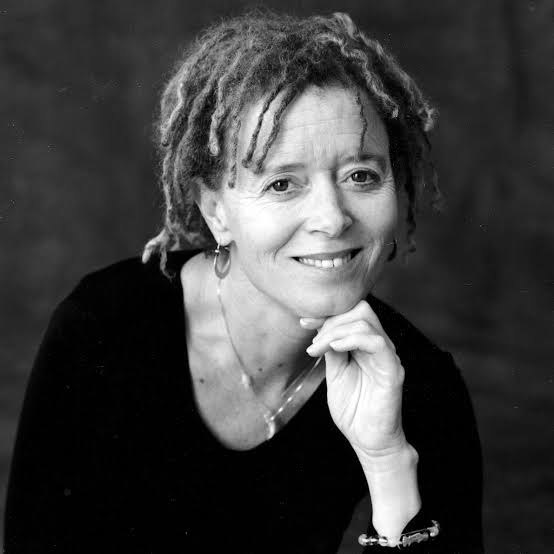
📚 Author Spotlight: Anne Lamott
Meet Anne Lamott, the witty and wise wordsmith behind beloved literary works that blend humor, honesty, and profound insight. Born on April 10, 1954, in San Francisco, Lamott's writing journey is as vibrant and eclectic as the city she calls home.
🌟 Writing Style: Lamott's writing is like a warm embrace, inviting readers into her world with a unique blend of vulnerability and humor. Whether she's tackling life's messy moments or exploring matters of faith and spirituality, her prose resonates with authenticity and compassion.
📖 Notable Works:
- "Bird by Bird": A timeless guide to the craft of writing, filled with Lamott's trademark wit and wisdom. This book has inspired countless writers to embrace the messiness of the creative process and find joy in the act of storytelling.
- "Operating Instructions": A candid memoir chronicling Lamott's experiences as a single mother, navigating the highs and lows of parenthood with grace and humor.
- "Traveling Mercies": A collection of essays that offer glimpses into Lamott's spiritual journey, exploring themes of grace, forgiveness, and the search for meaning in a chaotic world.
🌿 Themes and Impact: Lamott's writing delves into the messy, beautiful complexities of human existence, touching on themes of love, loss, redemption, and the quest for spiritual truth. Her work has resonated with readers from all walks of life, offering solace, laughter, and profound insights into the human condition.
🎙️ Beyond the Pages: In addition to her writing, Lamott is an engaging speaker known for her candid and humorous approach to life's big questions. Whether she's delivering a keynote address or participating in a panel discussion, her wit and wisdom shine through, leaving audiences inspired and uplifted.
🌟 Legacy: Anne Lamott's impact extends far beyond the written word. Through her books, lectures, and interviews, she has touched the hearts and minds of readers around the world, reminding us all to embrace the messiness of life with courage, compassion, and a healthy dose of laughter.
@ebookscafe
Meet Anne Lamott, the witty and wise wordsmith behind beloved literary works that blend humor, honesty, and profound insight. Born on April 10, 1954, in San Francisco, Lamott's writing journey is as vibrant and eclectic as the city she calls home.
🌟 Writing Style: Lamott's writing is like a warm embrace, inviting readers into her world with a unique blend of vulnerability and humor. Whether she's tackling life's messy moments or exploring matters of faith and spirituality, her prose resonates with authenticity and compassion.
📖 Notable Works:
- "Bird by Bird": A timeless guide to the craft of writing, filled with Lamott's trademark wit and wisdom. This book has inspired countless writers to embrace the messiness of the creative process and find joy in the act of storytelling.
- "Operating Instructions": A candid memoir chronicling Lamott's experiences as a single mother, navigating the highs and lows of parenthood with grace and humor.
- "Traveling Mercies": A collection of essays that offer glimpses into Lamott's spiritual journey, exploring themes of grace, forgiveness, and the search for meaning in a chaotic world.
🌿 Themes and Impact: Lamott's writing delves into the messy, beautiful complexities of human existence, touching on themes of love, loss, redemption, and the quest for spiritual truth. Her work has resonated with readers from all walks of life, offering solace, laughter, and profound insights into the human condition.
🎙️ Beyond the Pages: In addition to her writing, Lamott is an engaging speaker known for her candid and humorous approach to life's big questions. Whether she's delivering a keynote address or participating in a panel discussion, her wit and wisdom shine through, leaving audiences inspired and uplifted.
🌟 Legacy: Anne Lamott's impact extends far beyond the written word. Through her books, lectures, and interviews, she has touched the hearts and minds of readers around the world, reminding us all to embrace the messiness of life with courage, compassion, and a healthy dose of laughter.
@ebookscafe
❤11👍8
Top 10 Books for Self Growth - "Mindset: The New Psychology of Success" by Carol S. Dweck
Carol Dweck explores the concept of fixed versus growth mindsets and how they impact personal development and achievement.- "The Subtle Art of Not Giving a F*ck: A Counterintuitive Approach to Living a Good Life" by Mark Manson
Mark Manson challenges conventional self-help advice, encouraging readers to focus on what truly matters and let go of superficial concerns.- "The Four Agreements: A Practical Guide to Personal Freedom" by Don Miguel Ruiz
Don Miguel Ruiz presents four principles for living a life of personal freedom, based on ancient Toltec wisdom.- "Daring Greatly: How the Courage to Be Vulnerable Transforms the Way We Live, Love, Parent, and Lead" by Brené Brown
Brené Brown explores the power of vulnerability and its role in cultivating meaningful connections and personal growth.- "The Power of Now: A Guide to Spiritual Enlightenment" by Eckhart Tolle
Eckhart Tolle offers insights into the importance of living in the present moment and transcending the ego for spiritual growth.- "Atomic Habits: An Easy & Proven Way to Build Good Habits & Break Bad Ones" by James Clear
James Clear presents a practical framework for building good habits and breaking bad ones to enhance personal growth and productivity.- "The 7 Habits of Highly Effective People: Powerful Lessons in Personal Change" by Stephen R. Covey
Stephen Covey shares timeless principles for personal and professional effectiveness, emphasizing proactive behavior and personal responsibility.- "The Gifts of Imperfection: Let Go of Who You Think You're Supposed to Be and Embrace Who You Are" by Brené Brown
Brené Brown explores the importance of embracing imperfection and cultivating self-compassion for personal growth and fulfillment.- "You Are a Badass: How to Stop Doubting Your Greatness and Start Living an Awesome Life" by Jen Sincero
Jen Sincero provides humorous and straightforward advice for overcoming self-doubt and living a life aligned with one's true potential.- "Man's Search for Meaning" by Viktor E. Frankl
Viktor Frankl reflects on his experiences in Nazi concentration camps and explores the importance of finding meaning in life, even in the midst of suffering.@ebookscafe
👍27❤19
If you believe morality has gone down, maybe do some small and random acts of kindness.
If you believe people aren’t nice to each other anymore, try being nice and helpful yourself.
If you believe there’s too much superficial content on YouTube, maybe stop watching them, and start watching those that are genuinely good.
If you believe that big publications are taking over, start supporting a couple of smaller publications.
If you believe local businesses are struggling, do make an effort to shop locally.
If you believe education is lacking, maybe start a YouTube channel or something. (I love The Coding Train and Eddie Woo.)
If you believe people are becoming increasingly isolated, make sure to reach out to your friends, family, and neighbours.
If you believe that society is acting like a poopy-pantsed four-year-old who dropped its ice cream, maybe write a self-help book for societies, exactly like Tim Urban did.
🎧@homeofbookquotes
If you believe people aren’t nice to each other anymore, try being nice and helpful yourself.
If you believe there’s too much superficial content on YouTube, maybe stop watching them, and start watching those that are genuinely good.
If you believe that big publications are taking over, start supporting a couple of smaller publications.
If you believe local businesses are struggling, do make an effort to shop locally.
If you believe education is lacking, maybe start a YouTube channel or something. (I love The Coding Train and Eddie Woo.)
If you believe people are becoming increasingly isolated, make sure to reach out to your friends, family, and neighbours.
If you believe that society is acting like a poopy-pantsed four-year-old who dropped its ice cream, maybe write a self-help book for societies, exactly like Tim Urban did.
🎧@homeofbookquotes
❤37👍31🙏1🌚1
“I split problems into two groups: muddy puddles and leaky ceilings.
Some problems are like muddy puddles. The way to clear a muddy puddle is to leave it alone. The more you mess with it, the muddier it becomes. Many of the problems I dream up when I’m overthinking or worrying or ruminating fall into this category. Is life really falling apart or am I just in a sour mood? Is this as hard as I’m making it or do I just need to go workout? Drink some water. Go for a walk. Get some sleep. Go do something else and give the puddle time to turn clear.
Other problems are like a leaky ceiling. Ignore a small leak and it will always widen. Relationship tension that goes unaddressed. Overspending that becomes a habit. One missed workout drifting into months of inactivity. Some problems multiply when left unattended. You need to intervene now.
Are you dealing with a leak or a puddle?”
@ebookscafe
Some problems are like muddy puddles. The way to clear a muddy puddle is to leave it alone. The more you mess with it, the muddier it becomes. Many of the problems I dream up when I’m overthinking or worrying or ruminating fall into this category. Is life really falling apart or am I just in a sour mood? Is this as hard as I’m making it or do I just need to go workout? Drink some water. Go for a walk. Get some sleep. Go do something else and give the puddle time to turn clear.
Other problems are like a leaky ceiling. Ignore a small leak and it will always widen. Relationship tension that goes unaddressed. Overspending that becomes a habit. One missed workout drifting into months of inactivity. Some problems multiply when left unattended. You need to intervene now.
Are you dealing with a leak or a puddle?”
@ebookscafe
❤38👍21🥰2👏1
*Operationalize things/words*
These definitions and defining these words and boiling them down to the most basic version is simply amazing...helps a lot.
1)
Patience is just finding something enjoyable to do in the meantime.
2)
Sadness is perceived lack of options/options - which is ignorance problem - so Knowledge is the answer.. learning
3)
Anxiety is the opposite - which is having too many options - priority problem - taking Descisions is the answer.
4)Strategy is just prioritzing
5)Effort are the things you must begin doing that you do not want to do.
6)Sacrifice is the opp. Things that you stop doing that you want to do.
7) Learning is same condition new behaviour.
8)
Speed is not doing things fast.
Speed is not getting distracted by the other shit that doesn't matter.
@ebookscafe
These definitions and defining these words and boiling them down to the most basic version is simply amazing...helps a lot.
1)
Patience is just finding something enjoyable to do in the meantime.
2)
Sadness is perceived lack of options/options - which is ignorance problem - so Knowledge is the answer.. learning
3)
Anxiety is the opposite - which is having too many options - priority problem - taking Descisions is the answer.
4)Strategy is just prioritzing
5)Effort are the things you must begin doing that you do not want to do.
6)Sacrifice is the opp. Things that you stop doing that you want to do.
7) Learning is same condition new behaviour.
8)
Speed is not doing things fast.
Speed is not getting distracted by the other shit that doesn't matter.
@ebookscafe
👍23❤10🔥3🕊2
https://www.albertbridgecapital.com/post/stay-in-the-game
The car ran over Chica. My son screamed. In that brief moment everything that Max had worked for, everything he had overcome, everything that he was living for, was gone.
WhatsApp Channel - Unenumerated
The car ran over Chica. My son screamed. In that brief moment everything that Max had worked for, everything he had overcome, everything that he was living for, was gone.
WhatsApp Channel - Unenumerated
👍4
The person that is well rested might be able to work 16 hour days 6 days per week. The person who never works but scrolls TikTok all day can struggle to do 30 minutes of work without burning out.
💯53👍18👎5😁4❤1👌1
Many young people trapped in the "intellectual black hole". A person that's very good at consuming impressive amounts of information. But doesn't produce much.
The best people output often more than they input, IMHO. In a kind of uncontrollable way.
@ebookscafe
The best people output often more than they input, IMHO. In a kind of uncontrollable way.
@ebookscafe
👍15💯2❤1
If you’re not a person who hustles, who are you?
Where does that leave the people counting on you?
@ebookscafe
Where does that leave the people counting on you?
@ebookscafe
❤🔥12👍6❤4
“You’ll probably surprise yourself with what you can accomplish—if you’re focused on one thing.
You’ll probably frustrate yourself with what you fail to accomplish—if you’re doing 5 or 7 or 10 things.
Nobody performs well when stretched in a half dozen directions.”
@ebookscafe
You’ll probably frustrate yourself with what you fail to accomplish—if you’re doing 5 or 7 or 10 things.
Nobody performs well when stretched in a half dozen directions.”
@ebookscafe
👍22❤6🕊4💯2🔥1
Stop exchanging things that matter for ones that don’t.
“If you already live a comfortable life, then choosing to make more money but live a worse daily life is a bad trade.
And yet we talk ourselves into it all the time. We take promotions that pay more, but swallow our free time. We already have a successful business, but we break ourselves trying to make it even more successful.
Too much focus on wealth, not enough focus on lifestyle.” — JamesClear
@ebookscafe
“If you already live a comfortable life, then choosing to make more money but live a worse daily life is a bad trade.
And yet we talk ourselves into it all the time. We take promotions that pay more, but swallow our free time. We already have a successful business, but we break ourselves trying to make it even more successful.
Too much focus on wealth, not enough focus on lifestyle.” — JamesClear
@ebookscafe
❤14👍7🔥2
👍8
On saving time - A Letter by Seneca
Greetings from Seneca to his friend Lucilius.
Continue to act thus, my dear Lucilius - set yourself free for your own sake; gather and save your time, which till lately has been forced from you, or filched away, or has merely slipped from your hands. Make yourself believe the truth of my words, - that certain moments are torn from us, that some are gently removed, and that others glide beyond our reach. The most disgraceful kind of loss, however, is that due to carelessness. Furthermore, if you will pay close heed to the problem, you will find that the largest portion of our life passes while we are doing ill, a goodly share while we are doing nothing, and the whole while we are doing that which is not to the purpose. What man can you show me who places any value on his time, who reckons the worth of each day, who understands that he is dying daily? For we are mistaken when we look forward to death; the major portion of death has already passed. Whatever years be behind us are in death's hands.
Therefore, Lucilius, do as you write me that you are doing: hold every hour in your grasp. Lay hold of to-day's task, and you will not need to depend so much upon to-morrow's. While we are postponing, life speeds by. Nothing, Lucilius, is ours, except time. We were entrusted by nature with the ownership of this single thing, so fleeting and slippery that anyone who will can oust us from possession. What fools these mortals be! They allow the cheapest and most useless things, which can easily be replaced, to be charged in the reckoning, after they have acquired them; but they never regard themselves as in debt when they have received some of that precious commodity, - time! And yet time is the one loan which even a grateful recipient cannot repay.
You may desire to know how I, who preach to you so freely, am practising. I confess frankly: my expense account balances, as you would expect from one who is free-handed but careful. I cannot boast that I waste nothing, but I can at least tell you what I am wasting, and the cause and manner of the loss; I can give you the reasons why I am a poor man. My situation, however, is the same as that of many who are reduced to slender means through no fault of their own: every one forgives them, but no one comes to their rescue.
What is the state of things, then? It is this: I do not regard a man as poor, if the little which remains is enough for him. I advise you, however, to keep what is really yours; and you cannot begin too early. For, as our ancestors believed, it is too late to spare when you reach the dregs of the cask.[1] Of that which remains at the bottom, the amount is slight, and the quality is vile.
Farewell.
Greetings from Seneca to his friend Lucilius.
Continue to act thus, my dear Lucilius - set yourself free for your own sake; gather and save your time, which till lately has been forced from you, or filched away, or has merely slipped from your hands. Make yourself believe the truth of my words, - that certain moments are torn from us, that some are gently removed, and that others glide beyond our reach. The most disgraceful kind of loss, however, is that due to carelessness. Furthermore, if you will pay close heed to the problem, you will find that the largest portion of our life passes while we are doing ill, a goodly share while we are doing nothing, and the whole while we are doing that which is not to the purpose. What man can you show me who places any value on his time, who reckons the worth of each day, who understands that he is dying daily? For we are mistaken when we look forward to death; the major portion of death has already passed. Whatever years be behind us are in death's hands.
Therefore, Lucilius, do as you write me that you are doing: hold every hour in your grasp. Lay hold of to-day's task, and you will not need to depend so much upon to-morrow's. While we are postponing, life speeds by. Nothing, Lucilius, is ours, except time. We were entrusted by nature with the ownership of this single thing, so fleeting and slippery that anyone who will can oust us from possession. What fools these mortals be! They allow the cheapest and most useless things, which can easily be replaced, to be charged in the reckoning, after they have acquired them; but they never regard themselves as in debt when they have received some of that precious commodity, - time! And yet time is the one loan which even a grateful recipient cannot repay.
You may desire to know how I, who preach to you so freely, am practising. I confess frankly: my expense account balances, as you would expect from one who is free-handed but careful. I cannot boast that I waste nothing, but I can at least tell you what I am wasting, and the cause and manner of the loss; I can give you the reasons why I am a poor man. My situation, however, is the same as that of many who are reduced to slender means through no fault of their own: every one forgives them, but no one comes to their rescue.
What is the state of things, then? It is this: I do not regard a man as poor, if the little which remains is enough for him. I advise you, however, to keep what is really yours; and you cannot begin too early. For, as our ancestors believed, it is too late to spare when you reach the dregs of the cask.[1] Of that which remains at the bottom, the amount is slight, and the quality is vile.
Farewell.
👍10🥰3❤2