2019 Cloud and IoT Trends in the Industrial Products Market
Cloud services and solutions continue to evolve. Increases are predicted for the coming year, with public cloud platforms growing faster than private cloud applications. Security will continue to be an issue, and digital twinning will be an everyday thing.
As cloud services and solutions evolve, so does consumer demand. Increases are predicted once again for the coming new year, with public cloud platforms growing faster than private cloud applications.
The last year helped to set the pace for this development: in the second quarter of 2018, Amazon’s cloud business grew nearly 48.9 percent, generating $6.11 billion in revenue. In July, it was reported that the Google Cloud division as a whole had grown rapidly, with Google CEO Sundar Pichai highlighting several major new customers. IBM also reported in July that cloud revenue—including hardware, software, and services for hybrid, public, and private cloud solutions—had generated $18.5 billion year over year, up 23 percent.
Microsoft is also on the rise; in October, the company reported that commercial cloud revenue, including Azure sales, hit $8.5 billion, up 47 percent from the year-ago quarter. The growth margin for that business rose to 62 percent from 58 percent in the year-ago quarter and 59 percent in the prior quarter.
While the big cloud providers are offering a wider range of tools and services to help drive this growth, users will still need internal/external cloud expertise—beyond the public providers—to implement their own IoT systems. This will drive the need for hybrid cloud solutions and contribute to the blurring of cloud usage across edge, public, and private solutions.
Industrial Products Lead IoT Platform Adoption
2019 will become the year that enterprise companies dive head-first into IoT. Forrester reports that industrial products will lead all industries in IoT adoption at 45 percent with an additional 22 percent planning to adopt IoT in the next 12 months. According to Forbes, the Industrial Internet of Things (IIoT) market is predicted to reach $123B in 2021, attaining a CAGR of 7.3 percent through 2020. This will give executives the ability to analyze large quantities of industry and/or products-specific data and use that information for business intelligence and decision-making.
Artificial intelligence (AI) and machine learning (ML) will also come into play, with IT executives opening up data that was formally siloed, enabling enterprises to derive informed insight on everything from product maintenance and development to daily operations.
IoT Security Issues Keep IT Executives on Their Toes
With IoT and cloud platform adoption on the rise, security will continue to be a concern. By 2020, more than 25 percent of security breaches in the industrial enterprise will involve IoT, according to Gartner. However, the same study reporters that IoT will account for less than 10 percent of IT security budgets.
IP-based connectivity is one of the challenges here, because of its necessity for communication across multiple devices and the inherent security risks. The use of sophisticated microprocessors in industrial equipment will play a role and also make the industrial equipment space a vulnerable target.
Although technology exists to make end-point devices secure, it will not be adopted universally, especially by low-cost manufacturers who want to sell equipment. Expect to see distributed denial of service (DDoS) attacks continuing through 2019, and don’t be surprised when you see cloud-side accounts hacked and used to mine cryptocurrency or something similar on someone else’s cloud budget.
IT executives will need to be on their toes. They must plan for these attacks before they happen by adopting the technology necessary to encrypt and keep data safe.
Cloud services and solutions continue to evolve. Increases are predicted for the coming year, with public cloud platforms growing faster than private cloud applications. Security will continue to be an issue, and digital twinning will be an everyday thing.
As cloud services and solutions evolve, so does consumer demand. Increases are predicted once again for the coming new year, with public cloud platforms growing faster than private cloud applications.
The last year helped to set the pace for this development: in the second quarter of 2018, Amazon’s cloud business grew nearly 48.9 percent, generating $6.11 billion in revenue. In July, it was reported that the Google Cloud division as a whole had grown rapidly, with Google CEO Sundar Pichai highlighting several major new customers. IBM also reported in July that cloud revenue—including hardware, software, and services for hybrid, public, and private cloud solutions—had generated $18.5 billion year over year, up 23 percent.
Microsoft is also on the rise; in October, the company reported that commercial cloud revenue, including Azure sales, hit $8.5 billion, up 47 percent from the year-ago quarter. The growth margin for that business rose to 62 percent from 58 percent in the year-ago quarter and 59 percent in the prior quarter.
While the big cloud providers are offering a wider range of tools and services to help drive this growth, users will still need internal/external cloud expertise—beyond the public providers—to implement their own IoT systems. This will drive the need for hybrid cloud solutions and contribute to the blurring of cloud usage across edge, public, and private solutions.
Industrial Products Lead IoT Platform Adoption
2019 will become the year that enterprise companies dive head-first into IoT. Forrester reports that industrial products will lead all industries in IoT adoption at 45 percent with an additional 22 percent planning to adopt IoT in the next 12 months. According to Forbes, the Industrial Internet of Things (IIoT) market is predicted to reach $123B in 2021, attaining a CAGR of 7.3 percent through 2020. This will give executives the ability to analyze large quantities of industry and/or products-specific data and use that information for business intelligence and decision-making.
Artificial intelligence (AI) and machine learning (ML) will also come into play, with IT executives opening up data that was formally siloed, enabling enterprises to derive informed insight on everything from product maintenance and development to daily operations.
IoT Security Issues Keep IT Executives on Their Toes
With IoT and cloud platform adoption on the rise, security will continue to be a concern. By 2020, more than 25 percent of security breaches in the industrial enterprise will involve IoT, according to Gartner. However, the same study reporters that IoT will account for less than 10 percent of IT security budgets.
IP-based connectivity is one of the challenges here, because of its necessity for communication across multiple devices and the inherent security risks. The use of sophisticated microprocessors in industrial equipment will play a role and also make the industrial equipment space a vulnerable target.
Although technology exists to make end-point devices secure, it will not be adopted universally, especially by low-cost manufacturers who want to sell equipment. Expect to see distributed denial of service (DDoS) attacks continuing through 2019, and don’t be surprised when you see cloud-side accounts hacked and used to mine cryptocurrency or something similar on someone else’s cloud budget.
IT executives will need to be on their toes. They must plan for these attacks before they happen by adopting the technology necessary to encrypt and keep data safe.
Industrial Factories Build Digital Twins to Monitor Factory Floors in Real Time
B2B IoT and 3D modelling, also called digital twinning technology, is finally moving away from phenomenon status into everyday life. As the modelling trend matures, manufacturers are looking closely at unique ways to adopt this technology while pushing for a “digitally connected” factory floor.
Digital twinning is a new phenomenon in the world of manufacturing that lets operators build a 3D model of a facility and superimpose real-time sensor data on that model. This is where virtual modelling meets IoT and digital twinning comes to life. Real-time sensor data is mapped onto a 3D model of the facility, and visual clues are provided to allow the user to easily visualize what is happening.
Digital twinning is taking shape in the virtual world; up to 85 percent of IoT platforms will contain some form of this technology by 2022, according to Orbis Research. AI plays a big role here as well and will find wide adoption in machine learning algorithms used for things like predictive maintenance, factory floor design, machinery usage analysis and much more.
Leading the Way in 2019
The insights above and industry statistics all point to the industrial products sector leading the way in IoT and cloud platform adoption in 2019. From public cloud implementations to the ongoing use of hybrid solutions, industrial products manufacturers will harness the power of IoT to monitor assets in real time while collecting important data in the cloud for informed business intelligence. These industries will be the ones to watch in the coming year.
B2B IoT and 3D modelling, also called digital twinning technology, is finally moving away from phenomenon status into everyday life. As the modelling trend matures, manufacturers are looking closely at unique ways to adopt this technology while pushing for a “digitally connected” factory floor.
Digital twinning is a new phenomenon in the world of manufacturing that lets operators build a 3D model of a facility and superimpose real-time sensor data on that model. This is where virtual modelling meets IoT and digital twinning comes to life. Real-time sensor data is mapped onto a 3D model of the facility, and visual clues are provided to allow the user to easily visualize what is happening.
Digital twinning is taking shape in the virtual world; up to 85 percent of IoT platforms will contain some form of this technology by 2022, according to Orbis Research. AI plays a big role here as well and will find wide adoption in machine learning algorithms used for things like predictive maintenance, factory floor design, machinery usage analysis and much more.
Leading the Way in 2019
The insights above and industry statistics all point to the industrial products sector leading the way in IoT and cloud platform adoption in 2019. From public cloud implementations to the ongoing use of hybrid solutions, industrial products manufacturers will harness the power of IoT to monitor assets in real time while collecting important data in the cloud for informed business intelligence. These industries will be the ones to watch in the coming year.

The Value of Smart Parking Systems
Smart cities need smart parking, and urban citizens need somewhere to leave their car without having to walk an unreasonable distance to their destination. The future of smart parking systems will allow us all to make the most of available spots while vastly improving the efficiency of parking management for both drivers and the agencies that control this vital city resource.
Full article: https://teletype.in/@vasylzelinskiy/H1g3pvYVV
Smart cities need smart parking, and urban citizens need somewhere to leave their car without having to walk an unreasonable distance to their destination. The future of smart parking systems will allow us all to make the most of available spots while vastly improving the efficiency of parking management for both drivers and the agencies that control this vital city resource.
Full article: https://teletype.in/@vasylzelinskiy/H1g3pvYVV

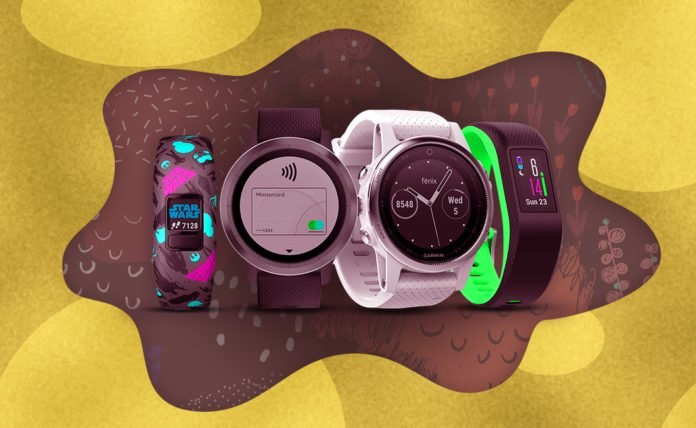
Where Do Wearables Fit into the Internet of Things?
IoT devices have not fully penetrated consumers’ daily lives with wearable devices. However, wearable technology has a bright future in healthcare with the passive monitoring of vital statistics.
Full article: https://teletype.in/@vasylzelinskiy/rJ0feW34V
IoT devices have not fully penetrated consumers’ daily lives with wearable devices. However, wearable technology has a bright future in healthcare with the passive monitoring of vital statistics.
Full article: https://teletype.in/@vasylzelinskiy/rJ0feW34V
Smart Farming: The Future of Agriculture
IoT devices have not fully penetrated consumers’ daily lives with wearable devices. However, wearable technology has a bright future in healthcare with the passive monitoring of vital statistics.
Full article:https://telegra.ph/Smart-Farming-The-Future-of-Agriculture-02-13
IoT devices have not fully penetrated consumers’ daily lives with wearable devices. However, wearable technology has a bright future in healthcare with the passive monitoring of vital statistics.
Full article:https://telegra.ph/Smart-Farming-The-Future-of-Agriculture-02-13

IoT in Agriculture
Anonymous Poll
94%
Yes, it's really future
6%
Need wait a few more years, because IoT it's not stable techology
The Internet of Wine: From Agtech to Smart Cellars
IoT solutions can help winegrowers and winemakers control environmental variables and gain more insight into the production process, thereby enhancing both their bottom line and the end product. Needless to say, IoT applications in the winemaking business are still in the early stages of development.
Full article: https://telegra.ph/The-Internet-of-Wine-From-Agtech-to-Smart-Cellars-02-13
IoT solutions can help winegrowers and winemakers control environmental variables and gain more insight into the production process, thereby enhancing both their bottom line and the end product. Needless to say, IoT applications in the winemaking business are still in the early stages of development.
Full article: https://telegra.ph/The-Internet-of-Wine-From-Agtech-to-Smart-Cellars-02-13

Networking 215+ Smart Home Devices
This post details problems homeowners face when trying to make their home a smart one. With so many wireless technologies, there’s a lot to learn in order to be able to tackle this big task.
Full article: https://telegra.ph/Networking-215-Smart-Home-Devices-02-13
This post details problems homeowners face when trying to make their home a smart one. With so many wireless technologies, there’s a lot to learn in order to be able to tackle this big task.
Full article: https://telegra.ph/Networking-215-Smart-Home-Devices-02-13

A Revolutionary New School that invests in you!
Lambda School is a 30 week, immersive program that gives you the tools and training you need to launch your new career—from the comfort of your own home.
Lambda School is a 30 week, immersive program that gives you the tools and training you need to launch your new career—from the comfort of your own home.

Globalization 4.0: Building a Hyper-Connected World through IoT
The main focus of Globalization 4.0 is to bring the world together. For a truly globalized world, data analysis and connectivity have to be efficient. Thus, IoT continues to shape our future fundamentally.
Full article - https://teletype.in/@vasylzelinskiy/ByhBoTMSV
The main focus of Globalization 4.0 is to bring the world together. For a truly globalized world, data analysis and connectivity have to be efficient. Thus, IoT continues to shape our future fundamentally.
Full article - https://teletype.in/@vasylzelinskiy/ByhBoTMSV

Sharing Economy 2.0: Can Blockchain Remove the Need for Single-Asset Ownership?
The next evolution of the sharing economy will redistribute wealth. Innovative tech, including blockchain and IoT, divert us from the Airbnb and Uber models, which centralize wealth.
Full article - https://teletype.in/@vasylzelinskiy/HyTy36MSN
The next evolution of the sharing economy will redistribute wealth. Innovative tech, including blockchain and IoT, divert us from the Airbnb and Uber models, which centralize wealth.
Full article - https://teletype.in/@vasylzelinskiy/HyTy36MSN

How IoT and AR Can Amplify Marketing Initiatives
Augmented Reality (AR) is a way of superimposing helpful information onto a video feed of the real world. The potential for AR innovations to improve marketing outcomes is staggering. IoT and AR can together both generate user insights for marketers and enhance experiences for customers
Full article - https://teletype.in/@vasylzelinskiy/BJDY2TMBN
Augmented Reality (AR) is a way of superimposing helpful information onto a video feed of the real world. The potential for AR innovations to improve marketing outcomes is staggering. IoT and AR can together both generate user insights for marketers and enhance experiences for customers
Full article - https://teletype.in/@vasylzelinskiy/BJDY2TMBN

Why You Need Digital Policies for Your IoT Devices
It’s important to build IoT on a foundation of strong digital policies. Discuss what could go wrong and establish policies to keep those things from happening. Without digital policies, your organization is at greater risk than you realize.
Full article - https://teletype.in/@vasylzelinskiy/HyR9YqUrN
It’s important to build IoT on a foundation of strong digital policies. Discuss what could go wrong and establish policies to keep those things from happening. Without digital policies, your organization is at greater risk than you realize.
Full article - https://teletype.in/@vasylzelinskiy/HyR9YqUrN

9 Factors of a Well-Tuned IoT Network Architecture
There are nine factors IoT firms must be aware of to achieve success in the coming years. They involve ensuring that IoT tools can connect to other standards and systems, remembering that IoT Interacts with the real world, achieving future-proofed scalability through a hub-and-zone model, and more.
Full article - https://teletype.in/@vasylzelinskiy/SJA_9qUr4
There are nine factors IoT firms must be aware of to achieve success in the coming years. They involve ensuring that IoT tools can connect to other standards and systems, remembering that IoT Interacts with the real world, achieving future-proofed scalability through a hub-and-zone model, and more.
Full article - https://teletype.in/@vasylzelinskiy/SJA_9qUr4
How New Technology Is Changing Business Models
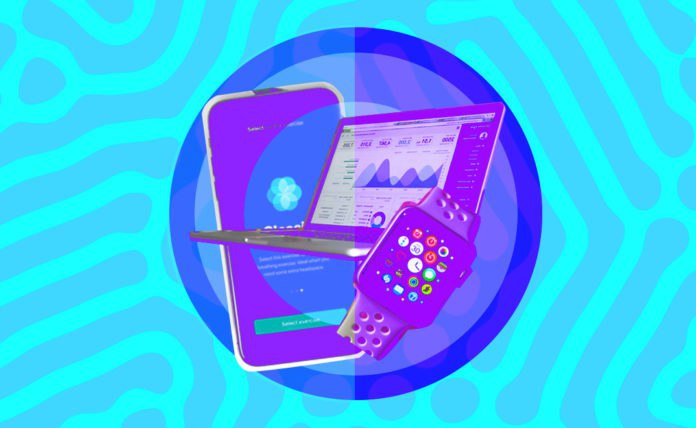
The future of the IoT and smart home spaces is bright. Although traditional business models remain viable, innovation in the smart home space specifically is making possible entirely new ways of doing business.
Full article - https://teletype.in/@vasylzelinskiy/SkvzscLHE
The future of the IoT and smart home spaces is bright. Although traditional business models remain viable, innovation in the smart home space specifically is making possible entirely new ways of doing business.
Full article - https://teletype.in/@vasylzelinskiy/SkvzscLHE