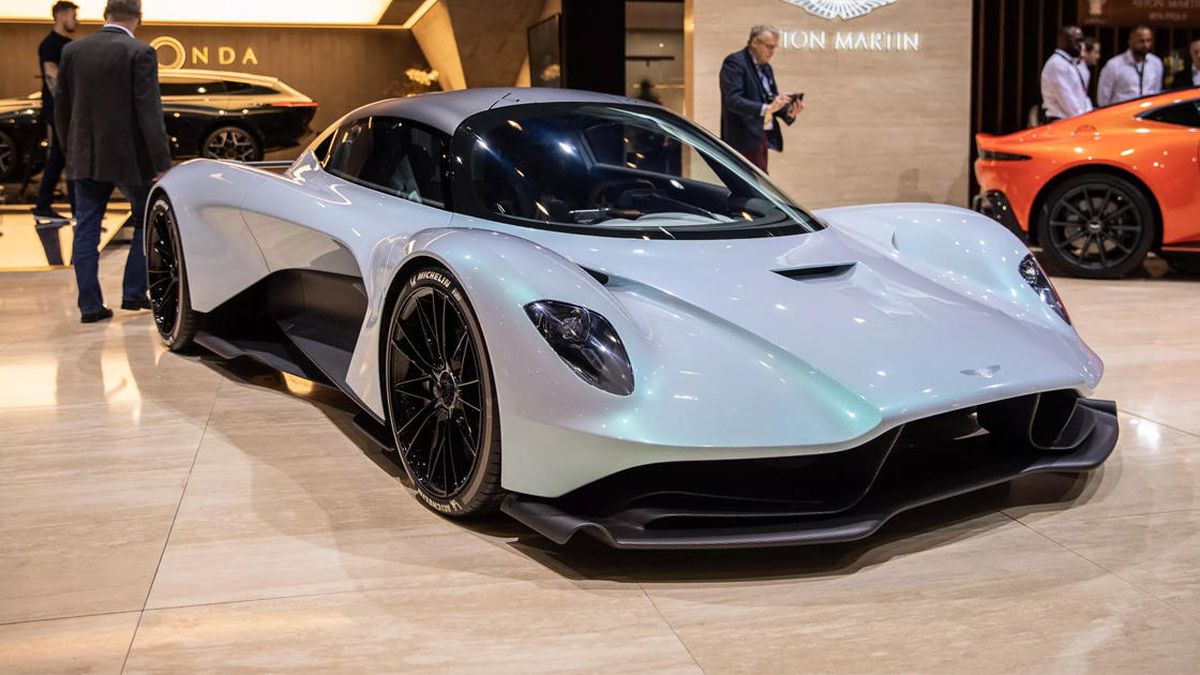
Aston Martin Valhalla (1-of-500), approx. US$1,041,118
Aston Martin Valhalla rides lower than the track-focused Valkyrie and is more usable as an everyday car. But it’s futuristic looks are no less impressive. Its key component is the FlexFoil rear wing that can change the car’s downforce without influencing its angle of attack: hence, generating no drag or aerodynamic disruption.
Aston Martin Valhalla rides lower than the track-focused Valkyrie and is more usable as an everyday car. But it’s futuristic looks are no less impressive. Its key component is the FlexFoil rear wing that can change the car’s downforce without influencing its angle of attack: hence, generating no drag or aerodynamic disruption.
Koenigsegg Gemera (1-of-300), P.O.R.
The leader of our list is innovative in many ways and worth waiting for. Not only does it boast an amazing, high-tech design, but it also is the first plug-in hybrid with a compact engine–and the first, four-seater, grand-tourer built by Koenigsegg. The car features a 2.0 liter Tiny Friendly Giant or TFG (a three-cylinder, twin-turbocharged engine driving the front wheels) and three electric motors. Its combined peak output of 1,700 PS (1,250 kW; 1,677 hp) is higher than, for instance, that of the new Koenigsegg Jesko.
The leader of our list is innovative in many ways and worth waiting for. Not only does it boast an amazing, high-tech design, but it also is the first plug-in hybrid with a compact engine–and the first, four-seater, grand-tourer built by Koenigsegg. The car features a 2.0 liter Tiny Friendly Giant or TFG (a three-cylinder, twin-turbocharged engine driving the front wheels) and three electric motors. Its combined peak output of 1,700 PS (1,250 kW; 1,677 hp) is higher than, for instance, that of the new Koenigsegg Jesko.

Dutch design firm imagines a modern Ferrari F50
Dutch firm Ugur Sahin Design has reimagined the Ferrari F50. Dubbed Project Fenix, the concept was created to celebrate the firm's 15th anniversary.
The design's integrated basket-handle rear wing and black body line are clear references to the original F50, but its larger front air intakes and slim headlights and taillights are more modern touches.
The original F50 was a mid-engine two-seater with a targa top, but it's unclear from the renderings if Ugur Sahin retained the targa roof for Project Fenix.
Ferrari launched the F50 in 1995 as the successor to the F40. Just 349 were built in a production run that lasted through 1997, and Ferrari also fielded a GT racing version. The F50 was in turn succeeded by the Ferrari Enzo.
Ugur Sahin didn't mention what is underneath its supercar concept's transparent engine cover, but the original F50 was powered by a 4.7-liter V-12 that made 520 hp and 347 lb-ft of torque, and was related to Ferrari's F1 engine at the time. The F50 could get from 0-62 mph in 3.7 seconds and a 202-mph top speed, according to period estimates.
Those are still respectable performance figures today.
It's unclear if Ugur Sahin plans to turn Project Fenix from a design study into a working car, but the company has overseen a handful of coach-built supercars. It previously teamed up with U.S. tuner Mallett on a small batch of Chevrolet Corvette "Z03" coupes, and the Corvette-derived Anandi. In 2014, Ugur Sahin also unveiled a Ferrari 458-derived concept called the Project F, although it didn't immediately get any takers for a production version.
Dutch firm Ugur Sahin Design has reimagined the Ferrari F50. Dubbed Project Fenix, the concept was created to celebrate the firm's 15th anniversary.
The design's integrated basket-handle rear wing and black body line are clear references to the original F50, but its larger front air intakes and slim headlights and taillights are more modern touches.
The original F50 was a mid-engine two-seater with a targa top, but it's unclear from the renderings if Ugur Sahin retained the targa roof for Project Fenix.
Ferrari launched the F50 in 1995 as the successor to the F40. Just 349 were built in a production run that lasted through 1997, and Ferrari also fielded a GT racing version. The F50 was in turn succeeded by the Ferrari Enzo.
Ugur Sahin didn't mention what is underneath its supercar concept's transparent engine cover, but the original F50 was powered by a 4.7-liter V-12 that made 520 hp and 347 lb-ft of torque, and was related to Ferrari's F1 engine at the time. The F50 could get from 0-62 mph in 3.7 seconds and a 202-mph top speed, according to period estimates.
Those are still respectable performance figures today.
It's unclear if Ugur Sahin plans to turn Project Fenix from a design study into a working car, but the company has overseen a handful of coach-built supercars. It previously teamed up with U.S. tuner Mallett on a small batch of Chevrolet Corvette "Z03" coupes, and the Corvette-derived Anandi. In 2014, Ugur Sahin also unveiled a Ferrari 458-derived concept called the Project F, although it didn't immediately get any takers for a production version.

Ferrari BR20 revealed as latest Special Projects
Ferrari has a new addition to its growing list of one-off cars developed by the Special Projects division on behalf of a well-heeled client.
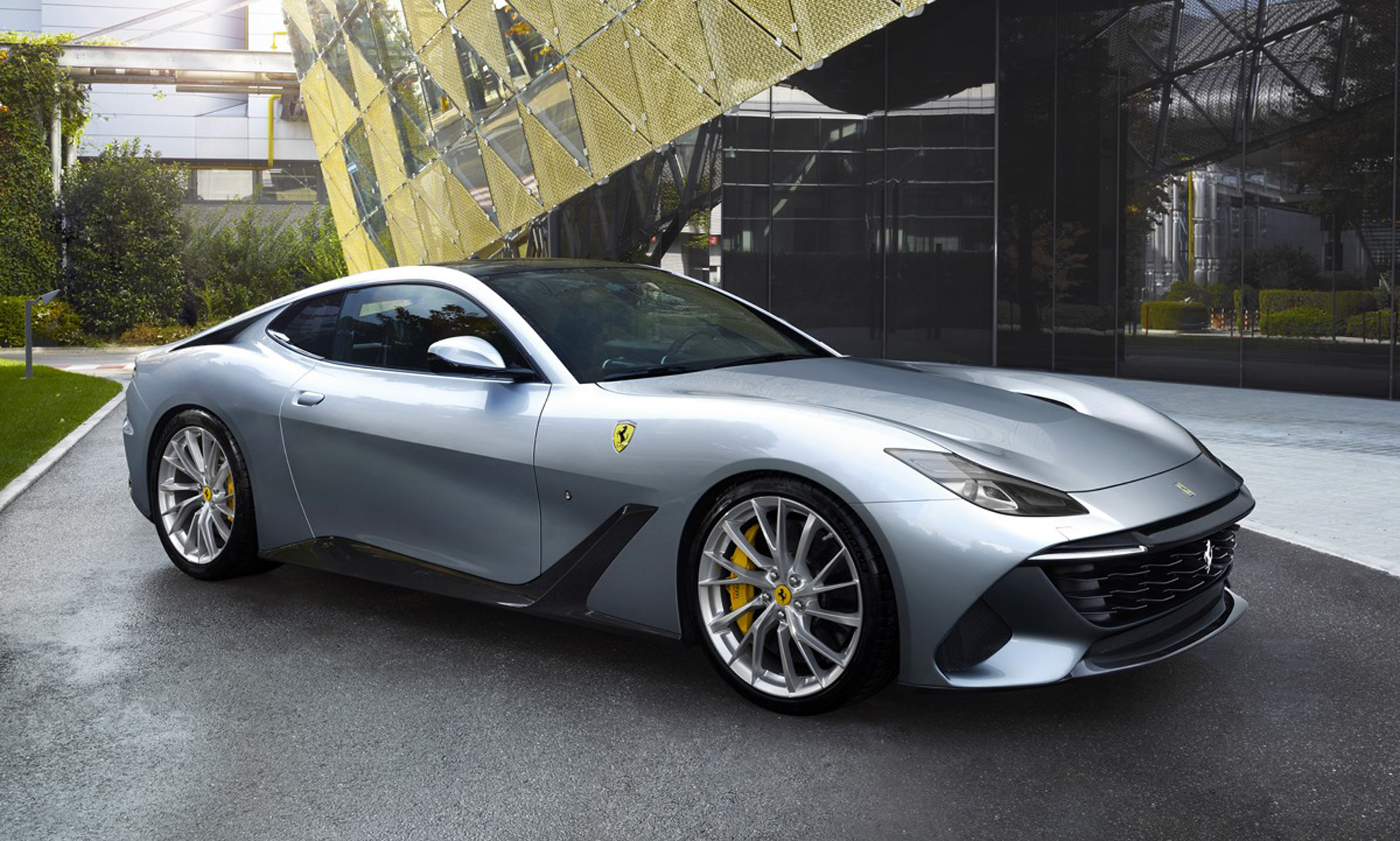
The latest, unveiled on Thursday, is the BR20. The coach-built supercar is based on the discontinued GTC4 Lusso and features a body whose lines were inspired by Ferraris of the 1950s and '60s. Specific models mentioned by Ferrari include the 410 Superamerica and 500 Superfast.
Surprisingly, the BR20 has ditched the GTC4 Lusso's rear hatch and four-seat layout, which makes you wonder why an 812 Superfast wasn't chosen as the donor car. If we were to make a guess, the bigger footprint of the GTC4 was probably chosen to give the BR20 more presence, and perhaps the client also wanted a car with all-wheel drive.
According to Ferrari, the BR20 is even longer than the GTC4, by about three inches. The automaker also said the rear hatch was removed to give the car a sportier profile. Inside, the rear seats of the donor car have been replaced by a new storage section, with everything trimmed in dark brown leather. Oak trim with carbon-fiber inserts also features at the rear of the cabin.
No change has been made to the powertrain, which is normally the case with Special Projects cars. Here a 6.3-liter V-12 spits out 680 hp and 514 lb-ft of torque, with drive going to all four wheels. The GTC4 also came in a T model equipped with a 3.9-liter twin-turbocharged V-8 good for 610 hp and 560 lb-ft. Both variants came with a 7-speed dual-clutch transmission but the T model had rear-wheel drive only.
Note, the BR20 isn't the new Icona model Ferrari plans to unveil later this month. While the Icona cars are also coach-built models developed by the Special Projects team, they are built in multiple units and the inspiration for their design is chosen by Ferrari instead of the client. The next Icona is expected to be a mid-engine model inspired by 1967's 330 P4 endurance racer.
Ferrari has a new addition to its growing list of one-off cars developed by the Special Projects division on behalf of a well-heeled client.
The latest, unveiled on Thursday, is the BR20. The coach-built supercar is based on the discontinued GTC4 Lusso and features a body whose lines were inspired by Ferraris of the 1950s and '60s. Specific models mentioned by Ferrari include the 410 Superamerica and 500 Superfast.
Surprisingly, the BR20 has ditched the GTC4 Lusso's rear hatch and four-seat layout, which makes you wonder why an 812 Superfast wasn't chosen as the donor car. If we were to make a guess, the bigger footprint of the GTC4 was probably chosen to give the BR20 more presence, and perhaps the client also wanted a car with all-wheel drive.
According to Ferrari, the BR20 is even longer than the GTC4, by about three inches. The automaker also said the rear hatch was removed to give the car a sportier profile. Inside, the rear seats of the donor car have been replaced by a new storage section, with everything trimmed in dark brown leather. Oak trim with carbon-fiber inserts also features at the rear of the cabin.
No change has been made to the powertrain, which is normally the case with Special Projects cars. Here a 6.3-liter V-12 spits out 680 hp and 514 lb-ft of torque, with drive going to all four wheels. The GTC4 also came in a T model equipped with a 3.9-liter twin-turbocharged V-8 good for 610 hp and 560 lb-ft. Both variants came with a 7-speed dual-clutch transmission but the T model had rear-wheel drive only.
Note, the BR20 isn't the new Icona model Ferrari plans to unveil later this month. While the Icona cars are also coach-built models developed by the Special Projects team, they are built in multiple units and the inspiration for their design is chosen by Ferrari instead of the client. The next Icona is expected to be a mid-engine model inspired by 1967's 330 P4 endurance racer.
Apollo previews new hypercar and electric coupe
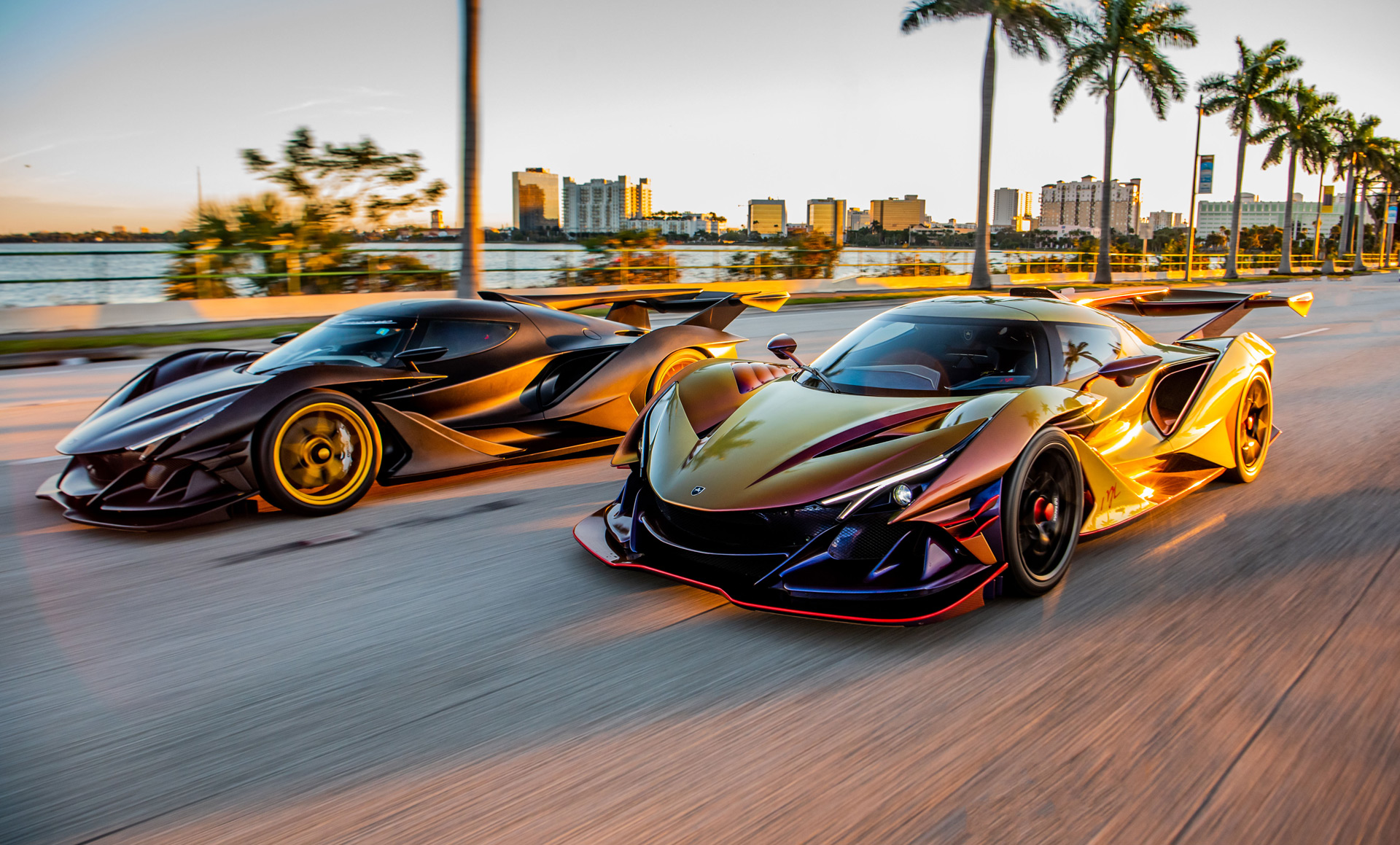
After making its mark in the world in 2019 with the insane Intensa Emozione hypercar, Apollo is now pressing ahead with a successor model code-named Project Evo, as well as an expansion into the rapidly growing electric-vehicle segment.
The company on Friday presented several concepts at the China International Import Expo 2021 trade show currently underway in Shanghai, among which were the Project Evo hypercar and EVision S electric coupe. The company also presented a video of an EVision X electric crossover concept.
Few details were mentioned apart from the Project Evo featuring a carbon-fiber monocoque structure that exceeds LMP2 standards, and the EVision S having enough space for four adults.
Other concepts included an electric powertrain and electric delivery vehicle, both developed as a showcase of engineering services available via a new in-house consulting division called Apollo Advanced Technologies. The electric powertrain, known as the Crate Powertrain, is claimed to run on an 800-volt system and feature a silicon-carbide inverter, both of which are ideal for high efficiency.
To oversee its expanding operations, Apollo has established Apollo Future Mobility Group (AFMG) which includes the Apollo Automobil hypercar division and new Apollo Advanced Technologies consulting division. AFMG is also an investor in America's Divergent 3D, the 3D printing technology company with links to rival hypercar marque Czinger.
“Our group delivers a full suite of services to the industry that accelerate innovation, ranging from design, engineering, simulation, prototyping, prototype testing, and all the way to pre-production prototypes,” Ho King Fung Eric, chairman of AFMG, said in a statement.
After making its mark in the world in 2019 with the insane Intensa Emozione hypercar, Apollo is now pressing ahead with a successor model code-named Project Evo, as well as an expansion into the rapidly growing electric-vehicle segment.
The company on Friday presented several concepts at the China International Import Expo 2021 trade show currently underway in Shanghai, among which were the Project Evo hypercar and EVision S electric coupe. The company also presented a video of an EVision X electric crossover concept.
Few details were mentioned apart from the Project Evo featuring a carbon-fiber monocoque structure that exceeds LMP2 standards, and the EVision S having enough space for four adults.
Other concepts included an electric powertrain and electric delivery vehicle, both developed as a showcase of engineering services available via a new in-house consulting division called Apollo Advanced Technologies. The electric powertrain, known as the Crate Powertrain, is claimed to run on an 800-volt system and feature a silicon-carbide inverter, both of which are ideal for high efficiency.
To oversee its expanding operations, Apollo has established Apollo Future Mobility Group (AFMG) which includes the Apollo Automobil hypercar division and new Apollo Advanced Technologies consulting division. AFMG is also an investor in America's Divergent 3D, the 3D printing technology company with links to rival hypercar marque Czinger.
“Our group delivers a full suite of services to the industry that accelerate innovation, ranging from design, engineering, simulation, prototyping, prototype testing, and all the way to pre-production prototypes,” Ho King Fung Eric, chairman of AFMG, said in a statement.
First customer example of 1,139-hp Aston Martin Valkyrie has been built
Aston Martin's Valkyrie hypercar is finally in production, five years after it was first shown as a concept.
The automaker announced on Thursday that the first customer example has been completed and will be delivered in the coming weeks. That's about two years later than originally planned.
Production is taking place at Aston Martin's plant in Gaydon, U.K., and will see a total 150 regular Valkyries built, plus 85 Valkyrie Spider convertibles and 40 track-only Valkyrie AMR Pros.
According to Aston Martin, the track car will be quicker around a track than a Le Mans Hypercar racer and almost as quick as an LMP1 or Formula One car. This is due in part to it essentially being Aston Martin's stillborn Valkyrie LMH racer but developed without the need to adhere to any racing regulations.
A dedicated team handles Valkyrie production, with each car requiring more than 2,000 man hours to complete. Each car will also be extensively tested at the Silverstone Circuit before being signed off.
It's been a long road to get to this point. We'll remind you that the Valkyrie concept was presented with help from F1 star Daniel Ricciardo, who at the time was driving for Red Bull Racing, a technical partner of the project. Since the reveal Ricciardo has gone on to drive for Renault and has since switched again to McLaren. Aston Martin itself has launched its own F1 team, undergone a complete management shift, and survived a certain pandemic. Yes, it's been a long time.
“The Aston Martin Valkyrie program has tested everyone who has worked on it to the limit but the commitment to the dream has produced a truly incredible car, an F1 car for the road,” Tobias Moers, CEO of Aston Martin, said in a statement. “The Valkyrie is born out of the steadfast dedication of a large group of highly skilled engineers and technicians who have worked tirelessly to get Valkyrie to the production stage.”
Aston Martin on Thursday also confirmed the car's maximum output. A peak 1,139 hp is generated from a bespoke V-12 and KERS-style hybrid system. While it doesn't have an actual F1 engine like the rival Mercedes-Benz AMG One currently promised for delivery in 2022, the Valkyrie's Cosworth-developed 6.5-liter V-12 is still a work of art. And the sound at full tilt? Just like an F1 engine from the 1990s, thanks in part to its 12-into-1 exhaust design.
Beyond the engine, the car also stands out due to its wild design. From every angle you really get the impression that you're looking at an open-wheel racer with the bare minimum of body panels to somewhat resemble a road car. This has some drawbacks. The cabin is tight, and access to it is via small, prototype race car-style gullwing doors. To enter, you step onto the seat and then slide in and adopt a reclined feet-up position just like in a modern F1 racer. Oh, and the seats are tailored for each buyer.
Aston Martin's Valkyrie hypercar is finally in production, five years after it was first shown as a concept.
The automaker announced on Thursday that the first customer example has been completed and will be delivered in the coming weeks. That's about two years later than originally planned.
Production is taking place at Aston Martin's plant in Gaydon, U.K., and will see a total 150 regular Valkyries built, plus 85 Valkyrie Spider convertibles and 40 track-only Valkyrie AMR Pros.
According to Aston Martin, the track car will be quicker around a track than a Le Mans Hypercar racer and almost as quick as an LMP1 or Formula One car. This is due in part to it essentially being Aston Martin's stillborn Valkyrie LMH racer but developed without the need to adhere to any racing regulations.
A dedicated team handles Valkyrie production, with each car requiring more than 2,000 man hours to complete. Each car will also be extensively tested at the Silverstone Circuit before being signed off.
It's been a long road to get to this point. We'll remind you that the Valkyrie concept was presented with help from F1 star Daniel Ricciardo, who at the time was driving for Red Bull Racing, a technical partner of the project. Since the reveal Ricciardo has gone on to drive for Renault and has since switched again to McLaren. Aston Martin itself has launched its own F1 team, undergone a complete management shift, and survived a certain pandemic. Yes, it's been a long time.
“The Aston Martin Valkyrie program has tested everyone who has worked on it to the limit but the commitment to the dream has produced a truly incredible car, an F1 car for the road,” Tobias Moers, CEO of Aston Martin, said in a statement. “The Valkyrie is born out of the steadfast dedication of a large group of highly skilled engineers and technicians who have worked tirelessly to get Valkyrie to the production stage.”
Aston Martin on Thursday also confirmed the car's maximum output. A peak 1,139 hp is generated from a bespoke V-12 and KERS-style hybrid system. While it doesn't have an actual F1 engine like the rival Mercedes-Benz AMG One currently promised for delivery in 2022, the Valkyrie's Cosworth-developed 6.5-liter V-12 is still a work of art. And the sound at full tilt? Just like an F1 engine from the 1990s, thanks in part to its 12-into-1 exhaust design.
Beyond the engine, the car also stands out due to its wild design. From every angle you really get the impression that you're looking at an open-wheel racer with the bare minimum of body panels to somewhat resemble a road car. This has some drawbacks. The cabin is tight, and access to it is via small, prototype race car-style gullwing doors. To enter, you step onto the seat and then slide in and adopt a reclined feet-up position just like in a modern F1 racer. Oh, and the seats are tailored for each buyer.

Ferrari sued Mansory, and won, for copying the LeFerrari FXX K's design
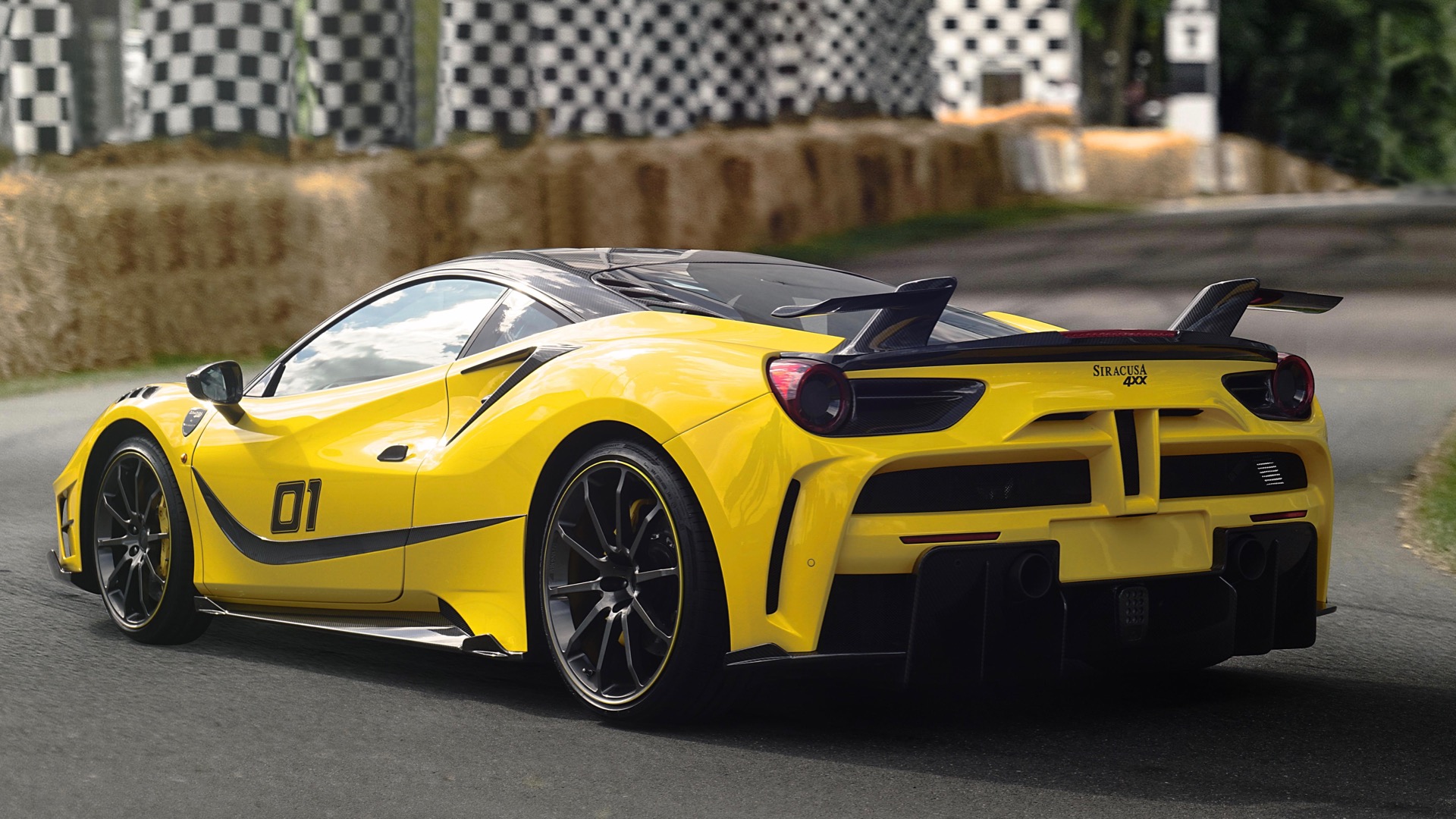
Ferrari on Thursday won a legal dispute with German tuner Mansory Design after a European court agreed that Mansory illegally copied the design of the Ferrari FXX K track car for one of its tuned vehicles, Reuters reported.
The case centered around the Mansory 4XX Siracusa, a Ferrari 488 GTB with a body kit that, Ferrari argued, was too close to the $2.7 million LaFerrari-based FXX K. Just 32 examples of the genuine article were built, for track use only.
Ferrari initially sued Mansory in a German court, specifically pointing to a V-shaped area of the hood and front bumper as being too close to the FXX K design. The German court sought guidance from the Luxembourg-based Court of Justice of the European Union (CJEU), which ruled in Ferrari's favor, according to the Reuters report.
It's unclear how Mansory will respond to the court ruling, but the company isn't the only one to design a body kit that copies elements of an automaker's design. DarwinPro Aerodynamics recently showed a body kit for the McLaren 720S designed to make the supercar look like a McLaren Senna, Carscoops noted.
Ferrari has been one of the most common marks for this sort of thing. The Pontiac Fiero-based Testarossa kit car has become a cliche in the car world, after all. So it will be interesting to see how this case affects tuning companies and their body kit designs.
Mansory has never shied away from modifying rare and desirable supercars, but perhaps in the future the company will stick with more original designs.
Ferrari on Thursday won a legal dispute with German tuner Mansory Design after a European court agreed that Mansory illegally copied the design of the Ferrari FXX K track car for one of its tuned vehicles, Reuters reported.
The case centered around the Mansory 4XX Siracusa, a Ferrari 488 GTB with a body kit that, Ferrari argued, was too close to the $2.7 million LaFerrari-based FXX K. Just 32 examples of the genuine article were built, for track use only.
Ferrari initially sued Mansory in a German court, specifically pointing to a V-shaped area of the hood and front bumper as being too close to the FXX K design. The German court sought guidance from the Luxembourg-based Court of Justice of the European Union (CJEU), which ruled in Ferrari's favor, according to the Reuters report.
It's unclear how Mansory will respond to the court ruling, but the company isn't the only one to design a body kit that copies elements of an automaker's design. DarwinPro Aerodynamics recently showed a body kit for the McLaren 720S designed to make the supercar look like a McLaren Senna, Carscoops noted.
Ferrari has been one of the most common marks for this sort of thing. The Pontiac Fiero-based Testarossa kit car has become a cliche in the car world, after all. So it will be interesting to see how this case affects tuning companies and their body kit designs.
Mansory has never shied away from modifying rare and desirable supercars, but perhaps in the future the company will stick with more original designs.
Pure V-12 Lamborghinis sold out ahead of electrified future
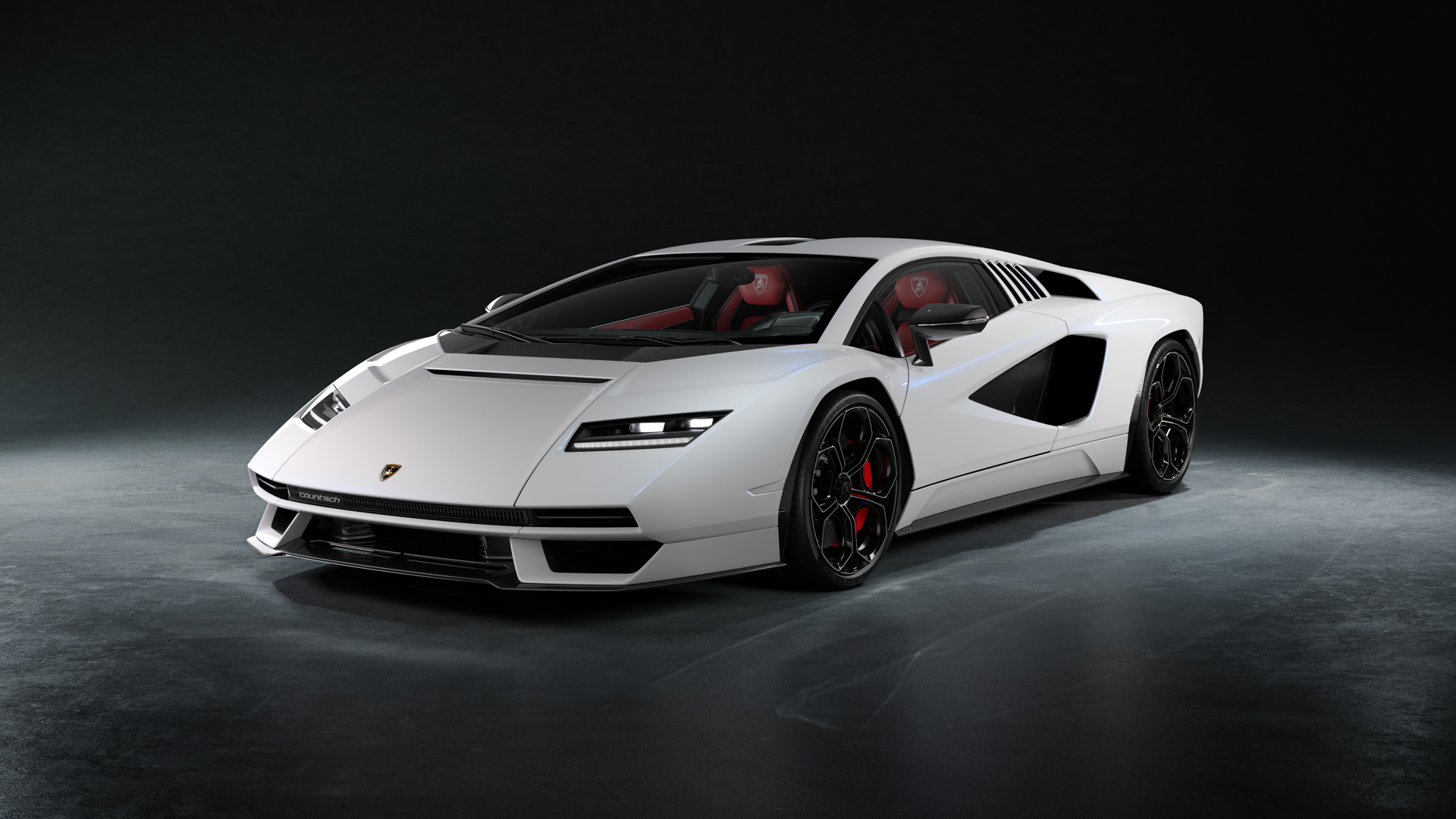
The Lamborghini Aventador and Lamborghini itself have reached the end of an era. The Aventador LP 780-4 Ultimae, which Lamborghini claims will be its last non-electrified V-12 supercar, has officially sold out.
In a press release discussing sales, Lamborghini confirmed that both the Ultimae and the Countach LPI 800-4 hybrid have sold out. The Ultimae is arriving as a coupe or roadster, with production capped at 350 units and 250 units, respectively. Production of the coupe-only Countach LPI 800-4 is limited to 112 units.
Unveiled earlier this year, the Ultimae is powered by the same 6.5-liter V-12 used in all other versions of the Aventador. However, it's tuned to deliver 769 hp and 531 lb-ft of torque via tweaks to the valve timing. The peak power is the highest of any Aventador road car, and it arrives at a screaming 8,500 rpm.
Power is routed to all four wheels through a 7-speed independent shifting rod transmission. Lamborghini quotes 0-62 mph times of 2.8 seconds for the coupe and 2.9 seconds for the roadster, with a 220-mph top speed.
The Countach LPI 800-4 is based on the Aventador, and also uses the 6.5-liter V-12, but here it's teamed with a hybrid powertrain similar to the one used in the Lamborghini Sián. Peak output is 803 hp (compared to the Sián's 807 hp). Lamborghini quotes the same 0-62 mph time as the Aventador Ultimae coupe, and a 221-mph top speed.
While the Ultimae is billed as the last pure V-12 Lamborghini, the automaker isn't done with these engines. An Aventador successor due in 2023 is expected to use a newly developed V-12, which will only be the third V-12 in Lamborghini's entire history. However, it's expected to be part of a plug-in hybrid powertrain.
The Lamborghini Aventador and Lamborghini itself have reached the end of an era. The Aventador LP 780-4 Ultimae, which Lamborghini claims will be its last non-electrified V-12 supercar, has officially sold out.
In a press release discussing sales, Lamborghini confirmed that both the Ultimae and the Countach LPI 800-4 hybrid have sold out. The Ultimae is arriving as a coupe or roadster, with production capped at 350 units and 250 units, respectively. Production of the coupe-only Countach LPI 800-4 is limited to 112 units.
Unveiled earlier this year, the Ultimae is powered by the same 6.5-liter V-12 used in all other versions of the Aventador. However, it's tuned to deliver 769 hp and 531 lb-ft of torque via tweaks to the valve timing. The peak power is the highest of any Aventador road car, and it arrives at a screaming 8,500 rpm.
Power is routed to all four wheels through a 7-speed independent shifting rod transmission. Lamborghini quotes 0-62 mph times of 2.8 seconds for the coupe and 2.9 seconds for the roadster, with a 220-mph top speed.
The Countach LPI 800-4 is based on the Aventador, and also uses the 6.5-liter V-12, but here it's teamed with a hybrid powertrain similar to the one used in the Lamborghini Sián. Peak output is 803 hp (compared to the Sián's 807 hp). Lamborghini quotes the same 0-62 mph time as the Aventador Ultimae coupe, and a 221-mph top speed.
While the Ultimae is billed as the last pure V-12 Lamborghini, the automaker isn't done with these engines. An Aventador successor due in 2023 is expected to use a newly developed V-12, which will only be the third V-12 in Lamborghini's entire history. However, it's expected to be part of a plug-in hybrid powertrain.
Mazzanti Evantra Pura: Lightweight model weighs 2,843 lb, packs 761 hp
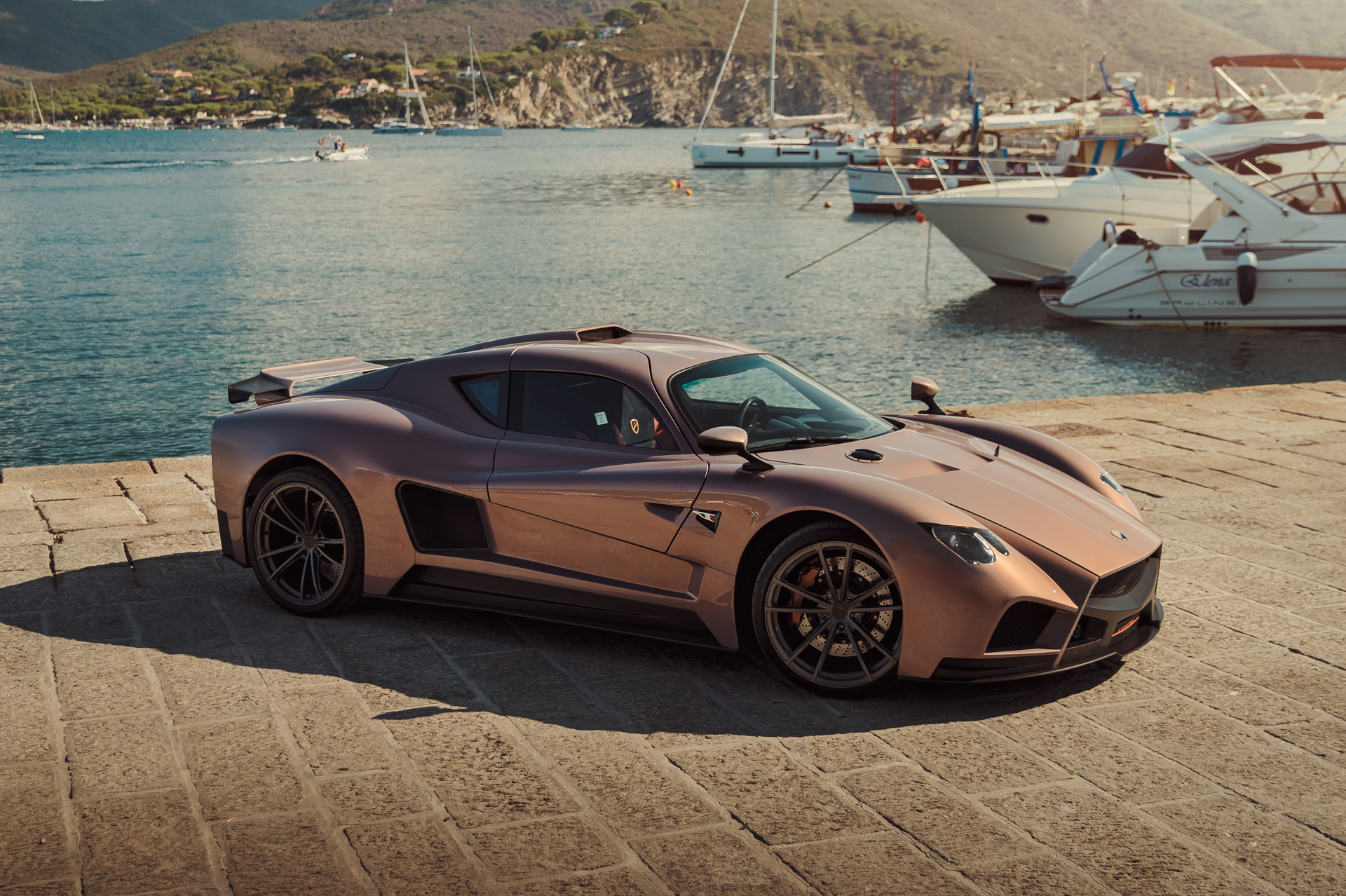
It's been a while since we last heard from Mazzanti but the Italian performance marque has quietly continued development of its Evantra supercar to the point that there are now three distinct versions.
The latest in the lineup is the Evantra Pura which Mazzanti unveiled on Saturday during the 2021 Florence Biennale art festival in Florence, Italy.
The car serves as the entry point to the Evantra lineup and places its focus on lightness and pure driving pleasure.
For buyers looking for extreme performance, there's still the range-topping Evantra Millecavalli R whose bespoke 7.4-liter twin-turbocharged V-8 spits out a hypercar-worthy 1,121 hp. And if you enjoy luxury in your supercar, there's the plush Evantra 781 which still throws up plenty of performance thanks to a 6.2-liter supercharged V-8 good for 781 hp. Both models are evolutions of the previous Evantra Millecavalli and Evantra 771.
The new Pura shares its engine with the 781, though its output is slightly lower at 761 hp. Peak torque is rated at 671 lb-ft. These figures are combined with a curb weight of just 2,843 pounds, resulting in scintillating performance. Mazzanti quotes a 0-62 mph time of 2.9 seconds and a top speed of more than 223 mph. Drive is to the rear wheels only, via a 7-speed sequential transmission with paddle shifters.
Like all Evantras, the Pura features a mid-engine layout and a central structure consisting of a high-tensile, boxed-section frame made from steel. Molybdenum chrome is used in some key sections, such as the roll cage and rear sub-frame. MacPherson strut suspension is used front and rear, and a fully adjustable suspension setup can be added as an option.
The car sits on OZ Racing wheels wrapped with Michelin rubber measuring 255/35R19 up front and 315/30R20 at the rear. Also fitted to the car is a carbon-ceramic Brembo brake package with 6-piston calipers and 14.9-inch rotors up front and 4-piston calipers and 14-inch rotors at the rear.
Mazzanti has also revised the interior design for its latest Evantra models. There's now a digital instrument cluster whose design is similar to what you find in a race car, while the infotainment hub relies on a large touchscreen display with portrait mounting. As an option, buyers can select a steering wheel with its own central screen that displays key information such as the current gear and ideal shift times. Almost every other element of the interior is customizable, with Mazzanti offering trim options like leather and Alcantara in multiple colors.
Mazzanti tends to build its cars at a rate of just five per year, so availability is limited. Production is handled at Mazzanti's headquarters located on the outskirts of the famous Tuscan city of Pisa.
It's been a while since we last heard from Mazzanti but the Italian performance marque has quietly continued development of its Evantra supercar to the point that there are now three distinct versions.
The latest in the lineup is the Evantra Pura which Mazzanti unveiled on Saturday during the 2021 Florence Biennale art festival in Florence, Italy.
The car serves as the entry point to the Evantra lineup and places its focus on lightness and pure driving pleasure.
For buyers looking for extreme performance, there's still the range-topping Evantra Millecavalli R whose bespoke 7.4-liter twin-turbocharged V-8 spits out a hypercar-worthy 1,121 hp. And if you enjoy luxury in your supercar, there's the plush Evantra 781 which still throws up plenty of performance thanks to a 6.2-liter supercharged V-8 good for 781 hp. Both models are evolutions of the previous Evantra Millecavalli and Evantra 771.
The new Pura shares its engine with the 781, though its output is slightly lower at 761 hp. Peak torque is rated at 671 lb-ft. These figures are combined with a curb weight of just 2,843 pounds, resulting in scintillating performance. Mazzanti quotes a 0-62 mph time of 2.9 seconds and a top speed of more than 223 mph. Drive is to the rear wheels only, via a 7-speed sequential transmission with paddle shifters.
Like all Evantras, the Pura features a mid-engine layout and a central structure consisting of a high-tensile, boxed-section frame made from steel. Molybdenum chrome is used in some key sections, such as the roll cage and rear sub-frame. MacPherson strut suspension is used front and rear, and a fully adjustable suspension setup can be added as an option.
The car sits on OZ Racing wheels wrapped with Michelin rubber measuring 255/35R19 up front and 315/30R20 at the rear. Also fitted to the car is a carbon-ceramic Brembo brake package with 6-piston calipers and 14.9-inch rotors up front and 4-piston calipers and 14-inch rotors at the rear.
Mazzanti has also revised the interior design for its latest Evantra models. There's now a digital instrument cluster whose design is similar to what you find in a race car, while the infotainment hub relies on a large touchscreen display with portrait mounting. As an option, buyers can select a steering wheel with its own central screen that displays key information such as the current gear and ideal shift times. Almost every other element of the interior is customizable, with Mazzanti offering trim options like leather and Alcantara in multiple colors.
Mazzanti tends to build its cars at a rate of just five per year, so availability is limited. Production is handled at Mazzanti's headquarters located on the outskirts of the famous Tuscan city of Pisa.
2023 Maserati MC20 Cielo debuts with retractable glass roof
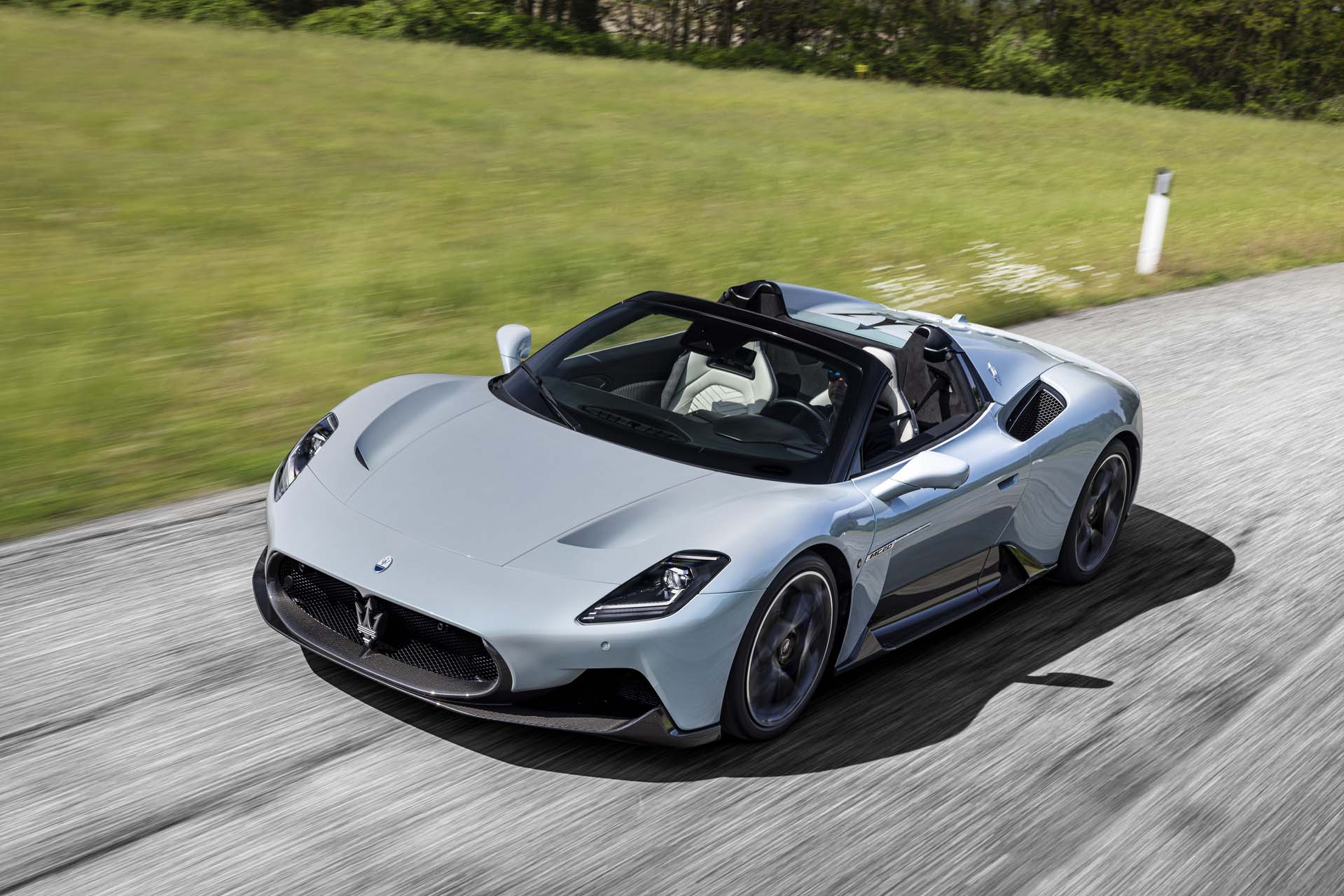
Maserati has revealed the convertible version of its MC20 supercar, which skips the automaker's more traditional Spyder name for open-top cars in favor of the new name Cielo.
The name means “sky” in Italian, and its usage on the convertible MC20 is apt as occupants get a full view of the sky whether the roof is up or down. That's because the car's automated roof is made from glass, specifically electrochromic glass which means the level of transparency can be changed in an instant.
The addition of a retractable hard-top (as opposed to a soft-top) also means the MC20 Cielo should deliver similar comfort, noise levels, and driving performance to the coupe. Operating the roof is done via the central screen and takes just 12 seconds to turn the car from a coupe into a sun-soaked roadster.
There is a weight penalty of 143 pounds (resulting in a curb weight of 3,395 pounds), though this will be hard to notice from behind the wheel. Such a small weight penalty was made possible due to the MC20's carbon-fiber monocoque structure which didn't require any additional reinforcements, as it was developed from the onset to support the roofless version of the car. It was also developed to support a battery for a planned electric version of the MC20 likely to be called the MC20 Folgore.
Aside from the ability to drop the top, the MC20 Cielo is virtually identical to the coupe. Behind the cabin sits a 3.0-liter twin-turbocharged V-6 rated at 621 hp and 538 lb-ft of torque. Drive is routed to the rear wheels via an 8-speed dual-clutch automatic, and sees the car sprint from 0-60 mph in under 3.0 seconds and finally top out at close to 200 mph.
The MC20 Cielo arrives as a 2023 model and brings with it some new features added to the MC20 range. Among the new items are a surround-view camera, traffic sign recognition, and automatic emergency braking. Maserati said the available 12-speaker Sonus Faber audio system was also specifically optimized to fit the unique acoustic and positioning needs of the MC20 Cielo's cabin.
There will be a special PrimaSerie Launch Edition version of the MC20 Cielo. Limited to just 60 units worldwide, the cars will come with extra equipment including some exclusive items, one of which is a unique combination of the new color Acquamarina for the body, coupled with wheels finished in matte black and featuring a “PrimaSerie” script.
The MC20 coupe starts at $212,000, and the MC20 Cielo will undoubtedly carry a premium. Pricing information will be announced closer to the market launch.
Maserati has a busy year ahead. In addition to the MC20 Cielo, the Italian marque will also start sales of the new Grecale small crossover and a redesigned GranTurismo boasting an electric model delivering more than 1,200 hp.
Maserati has revealed the convertible version of its MC20 supercar, which skips the automaker's more traditional Spyder name for open-top cars in favor of the new name Cielo.
The name means “sky” in Italian, and its usage on the convertible MC20 is apt as occupants get a full view of the sky whether the roof is up or down. That's because the car's automated roof is made from glass, specifically electrochromic glass which means the level of transparency can be changed in an instant.
The addition of a retractable hard-top (as opposed to a soft-top) also means the MC20 Cielo should deliver similar comfort, noise levels, and driving performance to the coupe. Operating the roof is done via the central screen and takes just 12 seconds to turn the car from a coupe into a sun-soaked roadster.
There is a weight penalty of 143 pounds (resulting in a curb weight of 3,395 pounds), though this will be hard to notice from behind the wheel. Such a small weight penalty was made possible due to the MC20's carbon-fiber monocoque structure which didn't require any additional reinforcements, as it was developed from the onset to support the roofless version of the car. It was also developed to support a battery for a planned electric version of the MC20 likely to be called the MC20 Folgore.
Aside from the ability to drop the top, the MC20 Cielo is virtually identical to the coupe. Behind the cabin sits a 3.0-liter twin-turbocharged V-6 rated at 621 hp and 538 lb-ft of torque. Drive is routed to the rear wheels via an 8-speed dual-clutch automatic, and sees the car sprint from 0-60 mph in under 3.0 seconds and finally top out at close to 200 mph.
The MC20 Cielo arrives as a 2023 model and brings with it some new features added to the MC20 range. Among the new items are a surround-view camera, traffic sign recognition, and automatic emergency braking. Maserati said the available 12-speaker Sonus Faber audio system was also specifically optimized to fit the unique acoustic and positioning needs of the MC20 Cielo's cabin.
There will be a special PrimaSerie Launch Edition version of the MC20 Cielo. Limited to just 60 units worldwide, the cars will come with extra equipment including some exclusive items, one of which is a unique combination of the new color Acquamarina for the body, coupled with wheels finished in matte black and featuring a “PrimaSerie” script.
The MC20 coupe starts at $212,000, and the MC20 Cielo will undoubtedly carry a premium. Pricing information will be announced closer to the market launch.
Maserati has a busy year ahead. In addition to the MC20 Cielo, the Italian marque will also start sales of the new Grecale small crossover and a redesigned GranTurismo boasting an electric model delivering more than 1,200 hp.
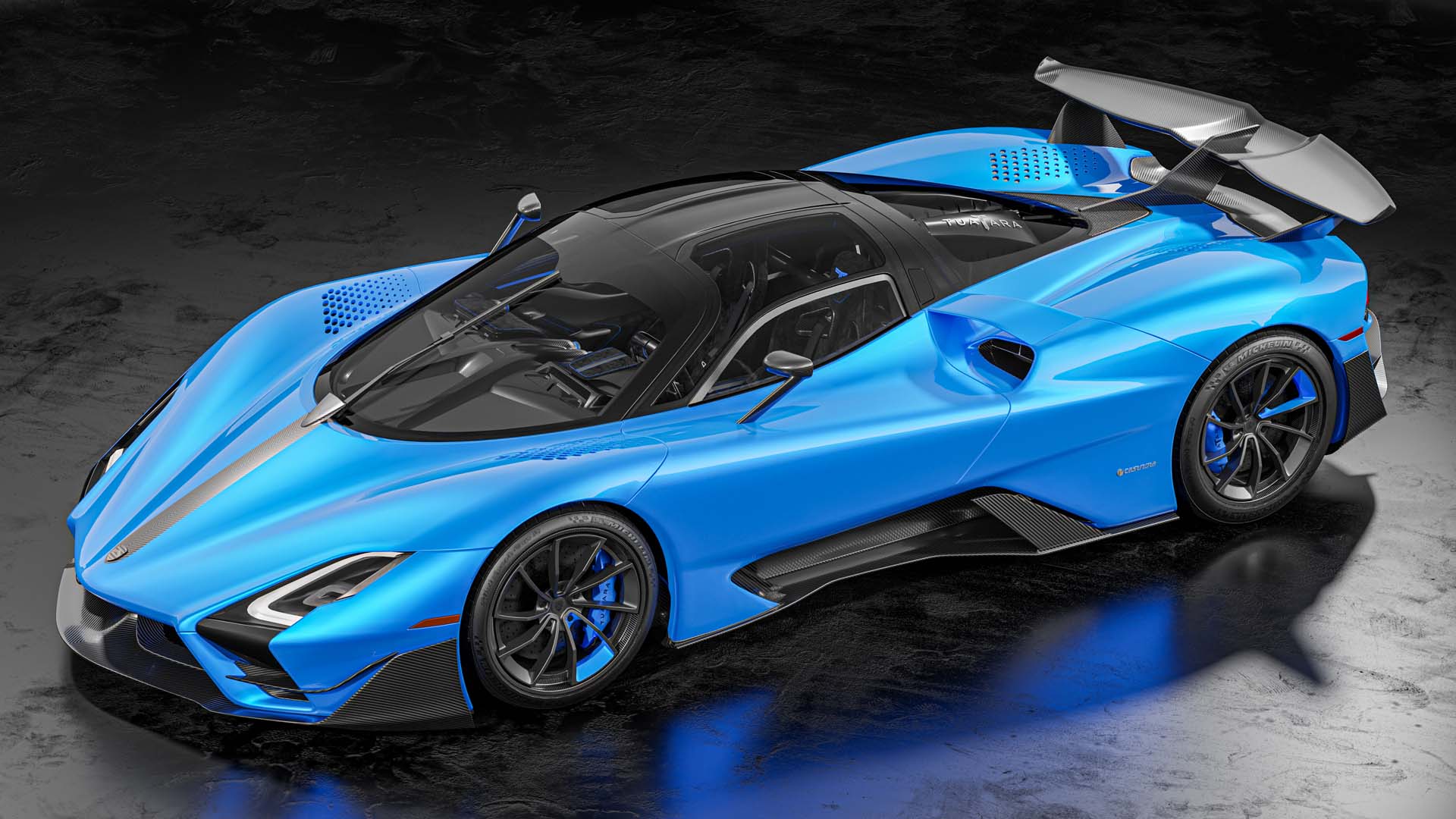
Electrified SSC Tuatara to have AWD, first Striker to debut at 2022 Quail
After the company's Tuatara hypercar hit a confirmed 295 mph earlier this month, SSC CEO and founder Jerod Shelby sat down with Motor Authority and revealed an electrified Tuatara is in the works.
The electrified model will have a small production run and not be part of the 125 Tuataras (including 25 Tuatara Aggressor track cars) set to be produced by the end of 2025.
Development has already begun, though Shelby wasn't read to talk a production timeline but said it is completely independent of the non-electrified Tuatara's production timeline.
Shelby said the electrified model will have electric front hub motors, which will make the new version of Tuatara all-wheel drive (the current models are rear-wheel drive).
At this point Shelby said it hasn't been decided if the electrified model will bear the Tuatara nameplate.
"The electrification of the car will make it a more well-rounded vehicle," Shelby said. The addition of electrification won't be for top speed, but will enhance other areas of the vehicle's dynamics including acceleration, trackability, and other lower-speed characteristics.
Shelby also revealed that the first Tuatara Striker will be unveiled in August at The Quail. The Striker set to be unveiled was purchased by a celebrity, though Shelby wouldn't comment on who the buyer is, yet.
The Tuatara Stiker is a high-downforce version of the regular Tuatara and is essentially a body kit upgrade, as opposed to a standalone model. The upgraded aerodynamics include a fixed rear wing augmenting the Tuatara's active rear wing, plus a revised diffuser. The front features a new splitter design, dive planes, and the sides feature six vaned rockers.
Striker models feature 1,000 lb of downforce at 160 mph. Standard Tuatara's have 362 lb of downforce at the same speed, according to SSC. The design puts 45.4% of the downforce on the front axle with 54.6% placed on the rear.
Shelby would not comment how many of 125 Tuatara build slots have been spoken for to date.
SSC is also planning a new, much larger production facility that will be operational around 2025. It will be used for a second model which Shelby described as a "little brother" to the Tuatara. A location wasn't mentioned but it may be close to the Richland, Washington, facility where the Tuatara is built.
After the company's Tuatara hypercar hit a confirmed 295 mph earlier this month, SSC CEO and founder Jerod Shelby sat down with Motor Authority and revealed an electrified Tuatara is in the works.
The electrified model will have a small production run and not be part of the 125 Tuataras (including 25 Tuatara Aggressor track cars) set to be produced by the end of 2025.
Development has already begun, though Shelby wasn't read to talk a production timeline but said it is completely independent of the non-electrified Tuatara's production timeline.
Shelby said the electrified model will have electric front hub motors, which will make the new version of Tuatara all-wheel drive (the current models are rear-wheel drive).
At this point Shelby said it hasn't been decided if the electrified model will bear the Tuatara nameplate.
"The electrification of the car will make it a more well-rounded vehicle," Shelby said. The addition of electrification won't be for top speed, but will enhance other areas of the vehicle's dynamics including acceleration, trackability, and other lower-speed characteristics.
Shelby also revealed that the first Tuatara Striker will be unveiled in August at The Quail. The Striker set to be unveiled was purchased by a celebrity, though Shelby wouldn't comment on who the buyer is, yet.
The Tuatara Stiker is a high-downforce version of the regular Tuatara and is essentially a body kit upgrade, as opposed to a standalone model. The upgraded aerodynamics include a fixed rear wing augmenting the Tuatara's active rear wing, plus a revised diffuser. The front features a new splitter design, dive planes, and the sides feature six vaned rockers.
Striker models feature 1,000 lb of downforce at 160 mph. Standard Tuatara's have 362 lb of downforce at the same speed, according to SSC. The design puts 45.4% of the downforce on the front axle with 54.6% placed on the rear.
Shelby would not comment how many of 125 Tuatara build slots have been spoken for to date.
SSC is also planning a new, much larger production facility that will be operational around 2025. It will be used for a second model which Shelby described as a "little brother" to the Tuatara. A location wasn't mentioned but it may be close to the Richland, Washington, facility where the Tuatara is built.
McLaren presents the GT by MSO, but it’s only available in the UK
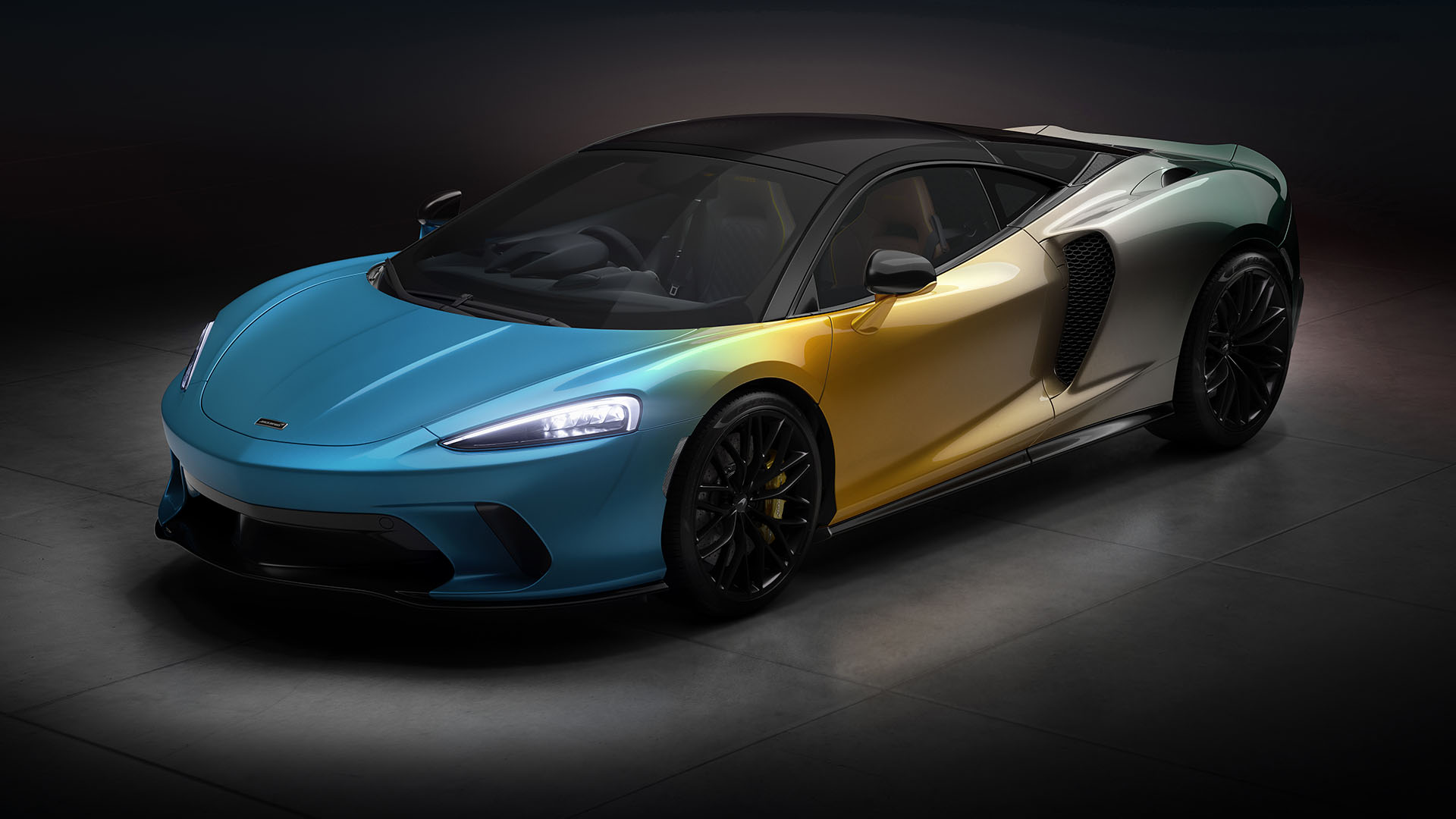
McLaren UK presents GT by MSO; four exquisite and highly limited production specifications for the McLaren GT that have been created exclusively for the UK market. Each design will be limited to just two cars, ensuring a high level of rarity for these exclusive editions of McLaren’s Grand Tourer. Each creation offers a unique specification, with color and material combinations not previously seen on the McLaren GT.
The design and materials team at McLaren Special Operations (MSO) – McLaren’s in-house personalization service – created unique new interior features for the GT in tribute to the UK market. Each GT by MSO features new diamond-pattern quilted stitching in body color on the backrest and the seat base, which is combined with an MSO logo on the seat headrests. Taking inspiration from our 60th anniversary and British heritage, each model has a debossed ‘Union Jack‘ flag design, on the armrest and key fob – an elegant homage to our home market.
Four striking and vibrant exterior paint colors make their debut on the GT by MSO, with color-coded brake calipers matching the paints chosen for the bodywork. GT by MSO is available in four exterior colors. Cerulean Blue is an MSO Bespoke paint originally developed for the McLaren P1™, the first McLaren Ultimate model. A popular option with MSO customers, it is a rich, blue metallic with bright pearlescent tones that highlight the GT’s muscular lines.
XP Green was produced by MSO as an homage to the iconic McLaren F1. Dark green metallic shades are synonymous with prototype versions of the F1 road car, and this particular green is matched to the shade of the F1 XP GT ‘Longtail’ prototype from 1997, created to homologate an evolution of the Le Mans 24 Hours-winning F1 GTR.
Synonymous with the launch of Speedtail, Sarigan Quartz is the color of Speedtail XP2, the development car that hit a maximum speed in excess of 250mph more than 30 times during high-speed testing at the Johnny Bohmer Proving Grounds at Kennedy Space Centre, Florida, USA. The color of the fastest McLaren road car ever built is worn here by the GT for the very first time.
An entirely new color, named Cyber Yellow, has been developed by MSO for this project. An evolution of the popular Volcano Yellow paint option with a modified pearlescent coat, when viewed in a certain light, the paint showcases a bright, silver, and white sparkle effect.
All versions of the GT by MSO come equipped with the MSO Black Pack as standard. This includes Gloss Black Door Mirror Casings, Gloss Black Exterior Upper Window Surround, and Gloss Black Exhaust Finishers. The usually optional 10 Twin-Spoke Lightweight Forged Alloy wheel design is also included – in Gloss Black finish – and the roof is also painted Gloss Black.
“The GT remains a milestone car for McLaren, and GT by MSO is the perfect way to pay tribute to its position as the everyday McLaren for the UK. Its combination of lightweight, carbon fiber supercar design and performance with versatile grand touring abilities are now celebrated in a way like never before, and exclusively for our home market.” Nick Crossley, Market Director – United Kingdom, McLaren Automotive
McLaren UK presents GT by MSO; four exquisite and highly limited production specifications for the McLaren GT that have been created exclusively for the UK market. Each design will be limited to just two cars, ensuring a high level of rarity for these exclusive editions of McLaren’s Grand Tourer. Each creation offers a unique specification, with color and material combinations not previously seen on the McLaren GT.
The design and materials team at McLaren Special Operations (MSO) – McLaren’s in-house personalization service – created unique new interior features for the GT in tribute to the UK market. Each GT by MSO features new diamond-pattern quilted stitching in body color on the backrest and the seat base, which is combined with an MSO logo on the seat headrests. Taking inspiration from our 60th anniversary and British heritage, each model has a debossed ‘Union Jack‘ flag design, on the armrest and key fob – an elegant homage to our home market.
Four striking and vibrant exterior paint colors make their debut on the GT by MSO, with color-coded brake calipers matching the paints chosen for the bodywork. GT by MSO is available in four exterior colors. Cerulean Blue is an MSO Bespoke paint originally developed for the McLaren P1™, the first McLaren Ultimate model. A popular option with MSO customers, it is a rich, blue metallic with bright pearlescent tones that highlight the GT’s muscular lines.
XP Green was produced by MSO as an homage to the iconic McLaren F1. Dark green metallic shades are synonymous with prototype versions of the F1 road car, and this particular green is matched to the shade of the F1 XP GT ‘Longtail’ prototype from 1997, created to homologate an evolution of the Le Mans 24 Hours-winning F1 GTR.
Synonymous with the launch of Speedtail, Sarigan Quartz is the color of Speedtail XP2, the development car that hit a maximum speed in excess of 250mph more than 30 times during high-speed testing at the Johnny Bohmer Proving Grounds at Kennedy Space Centre, Florida, USA. The color of the fastest McLaren road car ever built is worn here by the GT for the very first time.
An entirely new color, named Cyber Yellow, has been developed by MSO for this project. An evolution of the popular Volcano Yellow paint option with a modified pearlescent coat, when viewed in a certain light, the paint showcases a bright, silver, and white sparkle effect.
All versions of the GT by MSO come equipped with the MSO Black Pack as standard. This includes Gloss Black Door Mirror Casings, Gloss Black Exterior Upper Window Surround, and Gloss Black Exhaust Finishers. The usually optional 10 Twin-Spoke Lightweight Forged Alloy wheel design is also included – in Gloss Black finish – and the roof is also painted Gloss Black.
“The GT remains a milestone car for McLaren, and GT by MSO is the perfect way to pay tribute to its position as the everyday McLaren for the UK. Its combination of lightweight, carbon fiber supercar design and performance with versatile grand touring abilities are now celebrated in a way like never before, and exclusively for our home market.” Nick Crossley, Market Director – United Kingdom, McLaren Automotive
Lamborghini Aventador SVJ With Gintani Exhaust Is Like An F1 Car
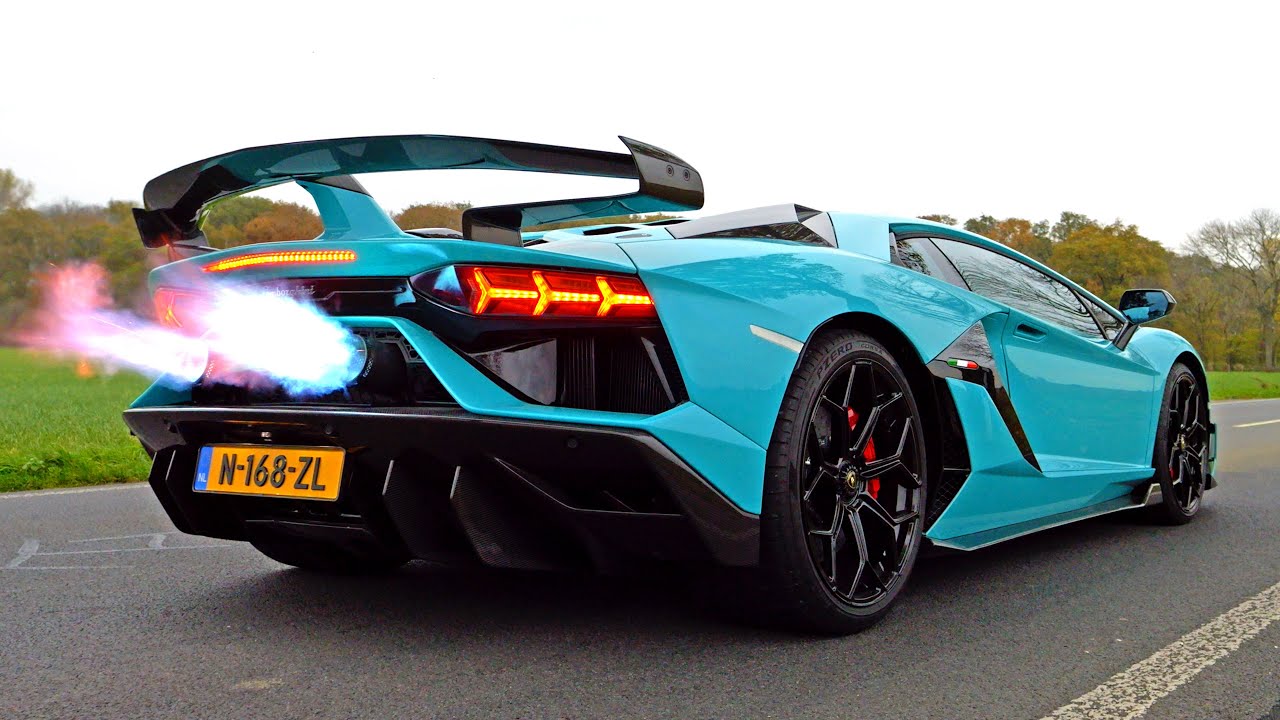
The folks at AutoTopNL got their hands on a Lamborghini Aventador SVJ fitted with the Gintani exhaust system and quickly put it to the test by going flat out on Autobahn.
This exhaust system, crafted by Gintani in the US, is constructed from stainless steel and, as per the manufacturer, is entirely handcrafted. It is available in both valved and non-valved configurations. It’s important to emphasize that this exhaust system was exclusively designed to enhance its sound.
The SVJ retains its original 6.5-liter V-12 engine, delivering a formidable 759 horsepower and 531 pound-feet of torque. The supercar boasts a permanent all-wheel-drive system and rear-wheel steering. Lamborghini claims it can accelerate from 0 to 60 mph in just 2.8 seconds and reach an impressive top speed of 217 mph.
In the video, the Gintani exhaust truly elevates the V12’s sound profile. Combined with the V12, the exhaust system produces a menacing sound that resembles a real Formula One car!
👉🏻 https://youtu.be/MidSXDaAsdQ
The folks at AutoTopNL got their hands on a Lamborghini Aventador SVJ fitted with the Gintani exhaust system and quickly put it to the test by going flat out on Autobahn.
This exhaust system, crafted by Gintani in the US, is constructed from stainless steel and, as per the manufacturer, is entirely handcrafted. It is available in both valved and non-valved configurations. It’s important to emphasize that this exhaust system was exclusively designed to enhance its sound.
The SVJ retains its original 6.5-liter V-12 engine, delivering a formidable 759 horsepower and 531 pound-feet of torque. The supercar boasts a permanent all-wheel-drive system and rear-wheel steering. Lamborghini claims it can accelerate from 0 to 60 mph in just 2.8 seconds and reach an impressive top speed of 217 mph.
In the video, the Gintani exhaust truly elevates the V12’s sound profile. Combined with the V12, the exhaust system produces a menacing sound that resembles a real Formula One car!
👉🏻 https://youtu.be/MidSXDaAsdQ
Best new supercars & exotics coming 2024
Got a few million to blow? We give you our top new supercars coming this year.
So 2024 is your year – that private equity firm has finally made you an offer you can't refuse. You've got a cheque with a hell-of-a-lot-of zeroes on it and an empty spot in your garage.
We've got good news for you, as this year stands to be a golden one for new supercars from the world's exotic vehicle manufacturers. From electric American muscle coupes to rip-snorting Prancing Horse convertibles, we give you the supercars coming to Australia this year – the ones that will have us spending exorbitant amounts on TattsLotto.
Got a few million to blow? We give you our top new supercars coming this year.
So 2024 is your year – that private equity firm has finally made you an offer you can't refuse. You've got a cheque with a hell-of-a-lot-of zeroes on it and an empty spot in your garage.
We've got good news for you, as this year stands to be a golden one for new supercars from the world's exotic vehicle manufacturers. From electric American muscle coupes to rip-snorting Prancing Horse convertibles, we give you the supercars coming to Australia this year – the ones that will have us spending exorbitant amounts on TattsLotto.
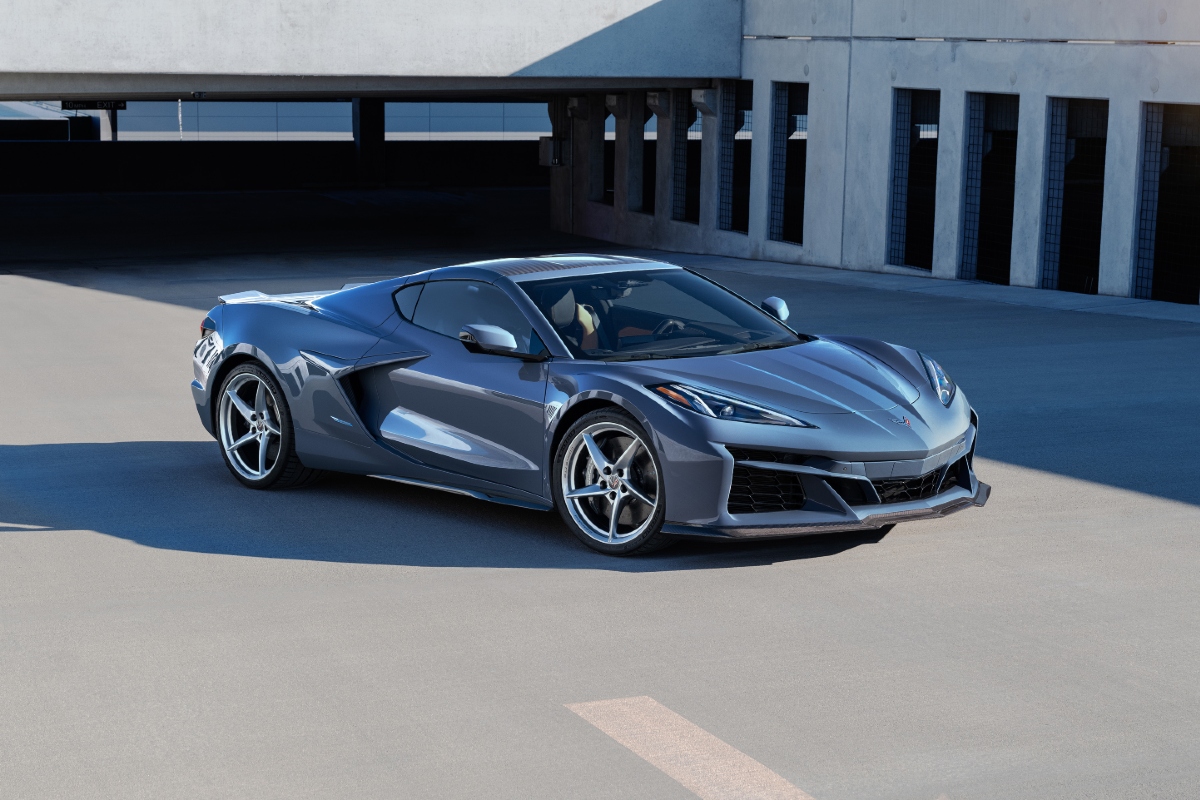
Chevrolet Corvette E-Ray
Are the neighbours complaining about you starting your 6.2-litre V8 Corvette in the garage before 11am on Sunday mornings? The new Corvette E-Ray could be the answer to your prayers (and domestic disputes). The addition of a 120kW electric motor and 1.9kWh battery grants this American sports car “Stealth Mode”, allowing you to breeze in and out of your garage in absolute silence.
There's still a naturally aspirated V8 in there, too, don't worry. With a total system output of 396kW/637Nm, the electric motor also grants this hybrid Corvette all-wheel-drive (and makes it front-drive in electric-only mode) and drops the 0-60mph (0-96km/h) sprint to just 2.5 seconds, on to a claimed 10.5sec quarter mile. That's despite it weighing up to 185kg more than the Stingray coupe (at 1712kg dry). Pricing is yet to be released, but we would guess around $250,000.
Are the neighbours complaining about you starting your 6.2-litre V8 Corvette in the garage before 11am on Sunday mornings? The new Corvette E-Ray could be the answer to your prayers (and domestic disputes). The addition of a 120kW electric motor and 1.9kWh battery grants this American sports car “Stealth Mode”, allowing you to breeze in and out of your garage in absolute silence.
There's still a naturally aspirated V8 in there, too, don't worry. With a total system output of 396kW/637Nm, the electric motor also grants this hybrid Corvette all-wheel-drive (and makes it front-drive in electric-only mode) and drops the 0-60mph (0-96km/h) sprint to just 2.5 seconds, on to a claimed 10.5sec quarter mile. That's despite it weighing up to 185kg more than the Stingray coupe (at 1712kg dry). Pricing is yet to be released, but we would guess around $250,000.
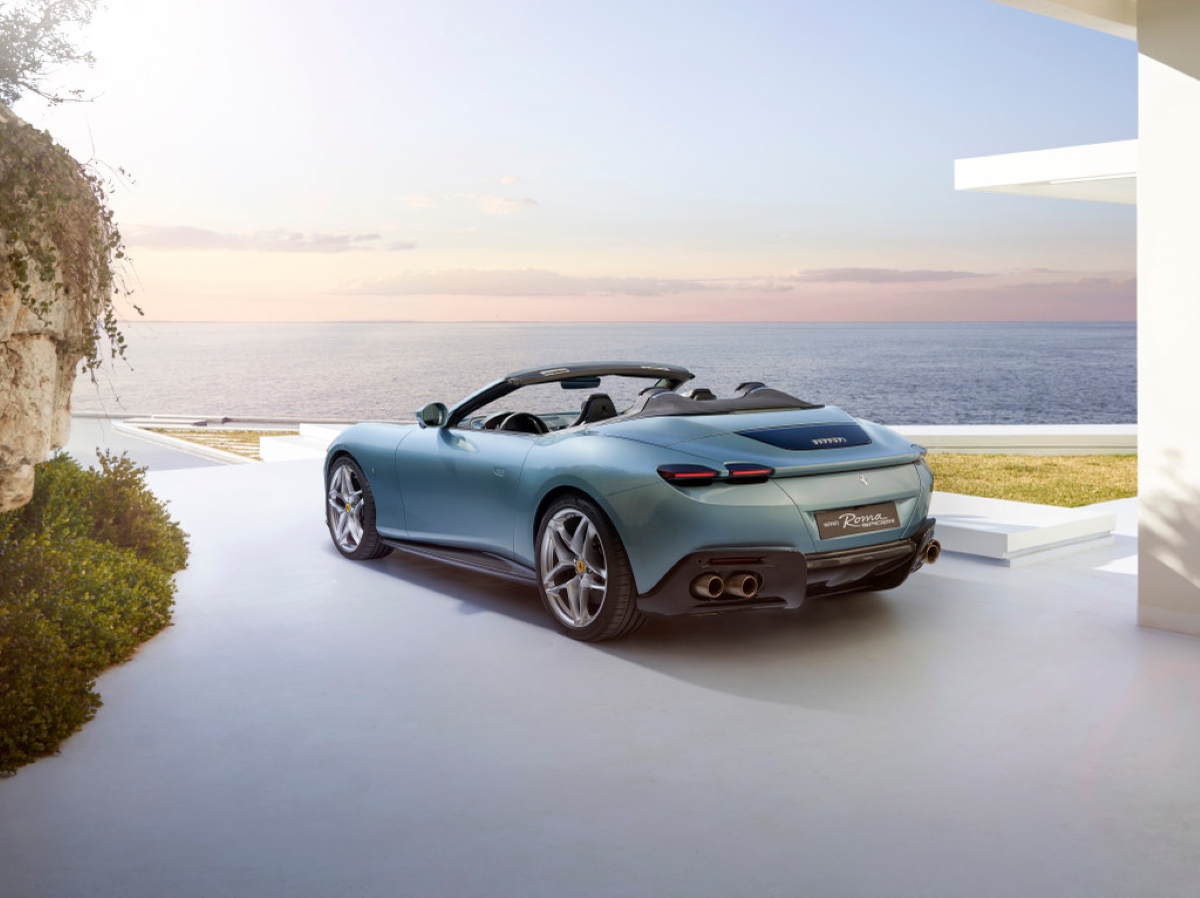
Ferrari Roma Spider
Ferrari's first front-engine, soft-top convertible sports car in more than 50 years, the Roma Spider ditches the folding metal lid for a cloth roof and tucks a 3.9-litre twin-turbo V8 under its long bonnet, one that torments its rear tyres with 456kW and 760Nm. While weight has crept up 84kg over the coupe, the Roma Spider will still test the glue of plenty of hairpieces with a 0-100km/h time of 3.4 seconds (claimed).
Ferrari says the soft, cloth roof can fold down in 13.5 seconds at speeds up to 60km/h. Ferrari will also hand you a bill for $520,300 excluding the on-road costs. That's $67,300 more than the Roma Coupe.
Ferrari's first front-engine, soft-top convertible sports car in more than 50 years, the Roma Spider ditches the folding metal lid for a cloth roof and tucks a 3.9-litre twin-turbo V8 under its long bonnet, one that torments its rear tyres with 456kW and 760Nm. While weight has crept up 84kg over the coupe, the Roma Spider will still test the glue of plenty of hairpieces with a 0-100km/h time of 3.4 seconds (claimed).
Ferrari says the soft, cloth roof can fold down in 13.5 seconds at speeds up to 60km/h. Ferrari will also hand you a bill for $520,300 excluding the on-road costs. That's $67,300 more than the Roma Coupe.
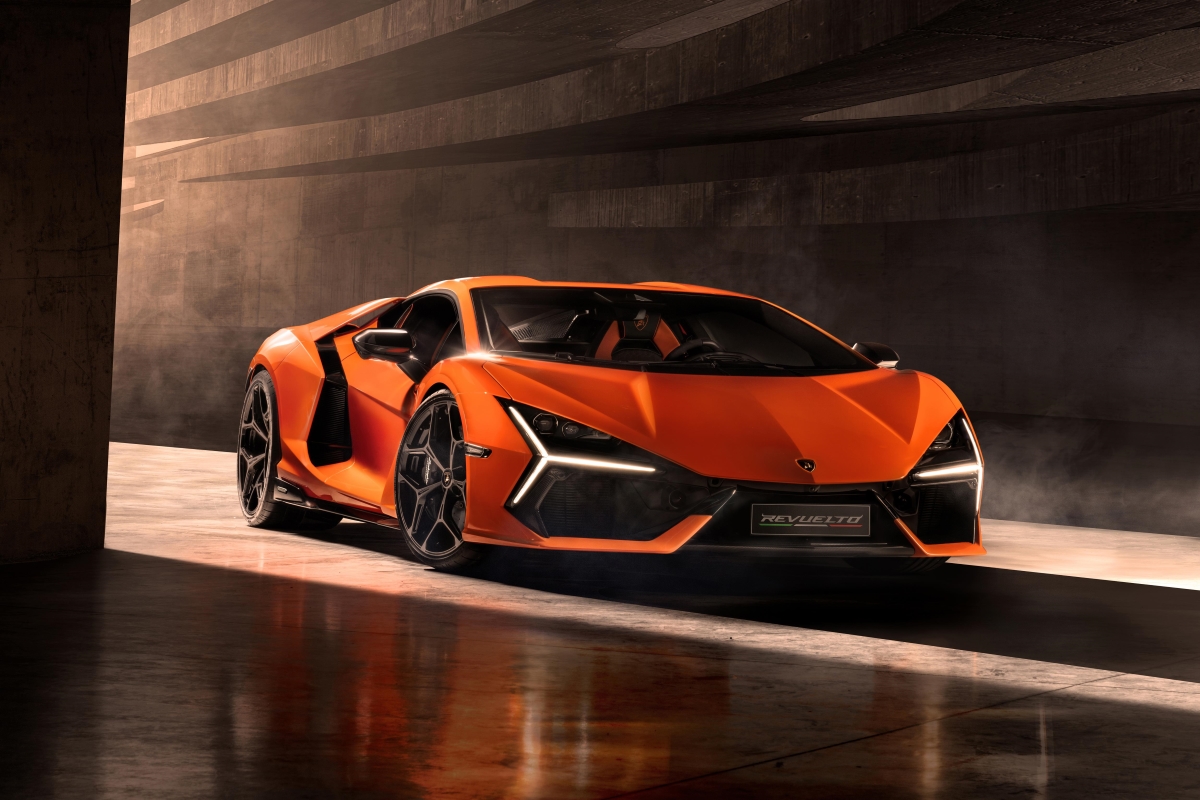
Lamborghini Revuelto
With the world's sports car makers dropping cubes, cylinders and even petrol engines in the race to decarbonise their line-ups, we're not sure how Lamborghini has managed to keep a 6.5-litre naturally aspirated V12 in its halo sports car, but also we don't care. The Revuelto – pronounced “ray-well-toe” in your best Italian accent – combines its monstrous engine with triple electric motors for a total output of 746kW and around 1500Nm.
Despite weighing 197kg more than an Aventador, the Revuelto will still charge from zero to 100km/h in a claimed 2.5sec – on to a 350km/h top speed. Lamborghini says the small onboard lithium-ion battery can store “below” 20km of electric-only range. Not that you'll be using it that often, as the V12 promises to be one of the best-sounding engines Lamborghini has produced. Price? More than a million Aussie dollars on-the-road.
With the world's sports car makers dropping cubes, cylinders and even petrol engines in the race to decarbonise their line-ups, we're not sure how Lamborghini has managed to keep a 6.5-litre naturally aspirated V12 in its halo sports car, but also we don't care. The Revuelto – pronounced “ray-well-toe” in your best Italian accent – combines its monstrous engine with triple electric motors for a total output of 746kW and around 1500Nm.
Despite weighing 197kg more than an Aventador, the Revuelto will still charge from zero to 100km/h in a claimed 2.5sec – on to a 350km/h top speed. Lamborghini says the small onboard lithium-ion battery can store “below” 20km of electric-only range. Not that you'll be using it that often, as the V12 promises to be one of the best-sounding engines Lamborghini has produced. Price? More than a million Aussie dollars on-the-road.
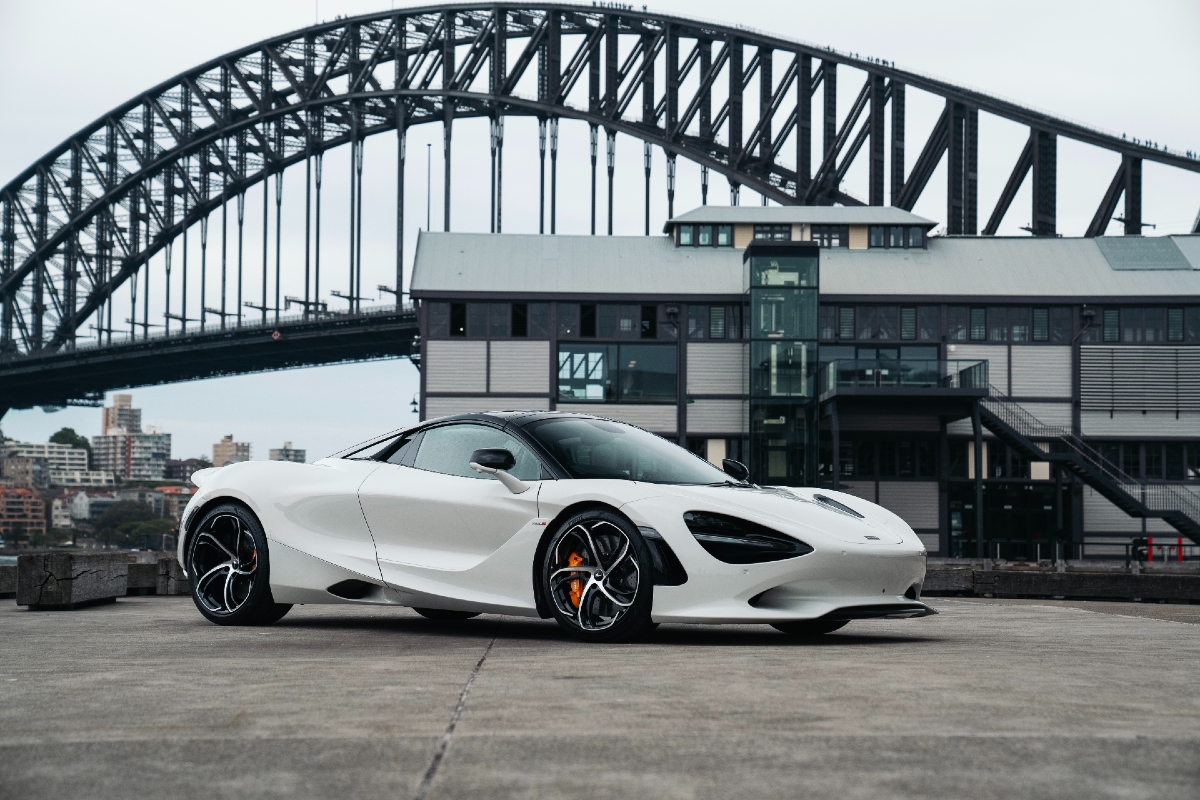
McLaren 750S
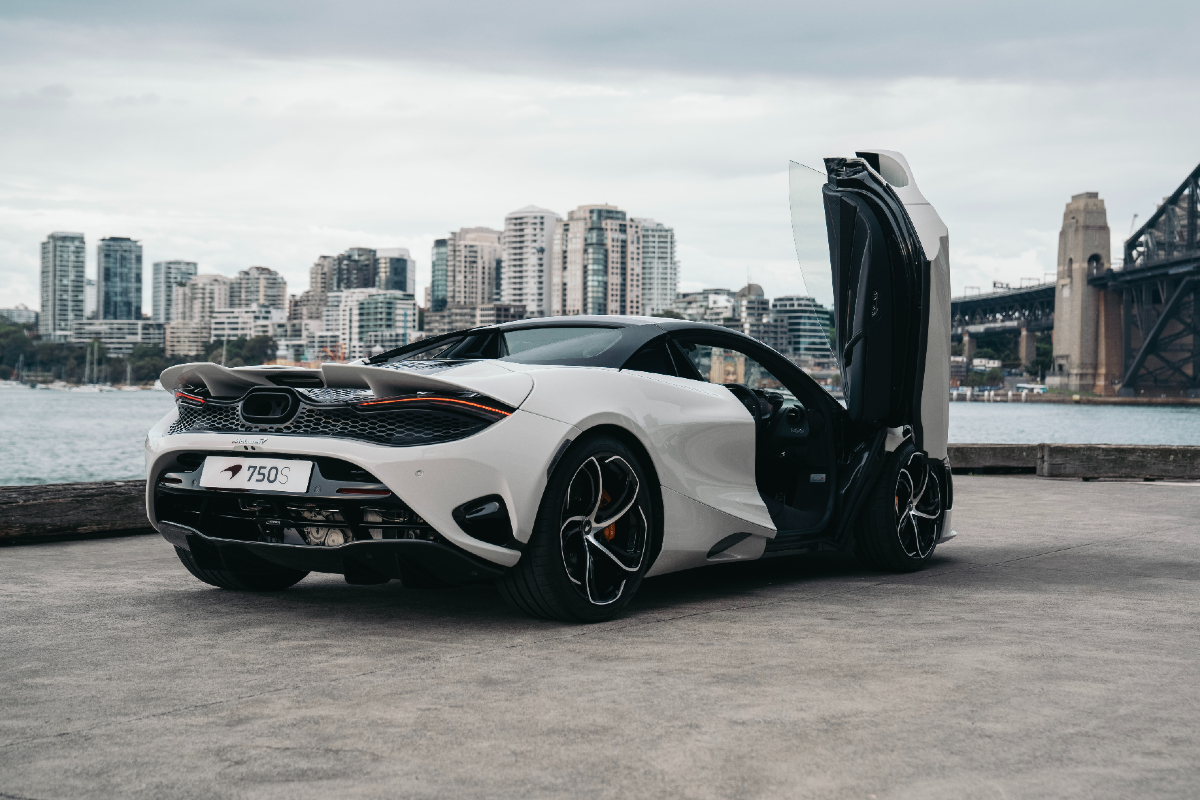
McLaren's racoon-eyed Ferrari fighter ups its outputs to 552kW and 800Nm (from the same 4.0-litre twin-turbo V8) presumably because customers complained the previous 720S was underpowered (hot tip from us: it wasn't). Weight is also down 30kg for a total figure of 1389kg. With just the rear tyres doing the work, zero to 100km/h drops by one tenth to 2.8sec, while 0-200km/h takes 7.2sec – making this still one of the most rapid super sports cars you can get.
The chassis has had a going-over incorporating bits from the Senna, and inside, there's a new 8.0-inch central vertical touchscreen infotainment system. Priced from $585,500 for the coupe and $654,600 for the convertible Spider, the 750S intends to be the stuff of the Ferrari 296 GTB's nightmares.
McLaren's racoon-eyed Ferrari fighter ups its outputs to 552kW and 800Nm (from the same 4.0-litre twin-turbo V8) presumably because customers complained the previous 720S was underpowered (hot tip from us: it wasn't). Weight is also down 30kg for a total figure of 1389kg. With just the rear tyres doing the work, zero to 100km/h drops by one tenth to 2.8sec, while 0-200km/h takes 7.2sec – making this still one of the most rapid super sports cars you can get.
The chassis has had a going-over incorporating bits from the Senna, and inside, there's a new 8.0-inch central vertical touchscreen infotainment system. Priced from $585,500 for the coupe and $654,600 for the convertible Spider, the 750S intends to be the stuff of the Ferrari 296 GTB's nightmares.
Mercedes-AMG GT
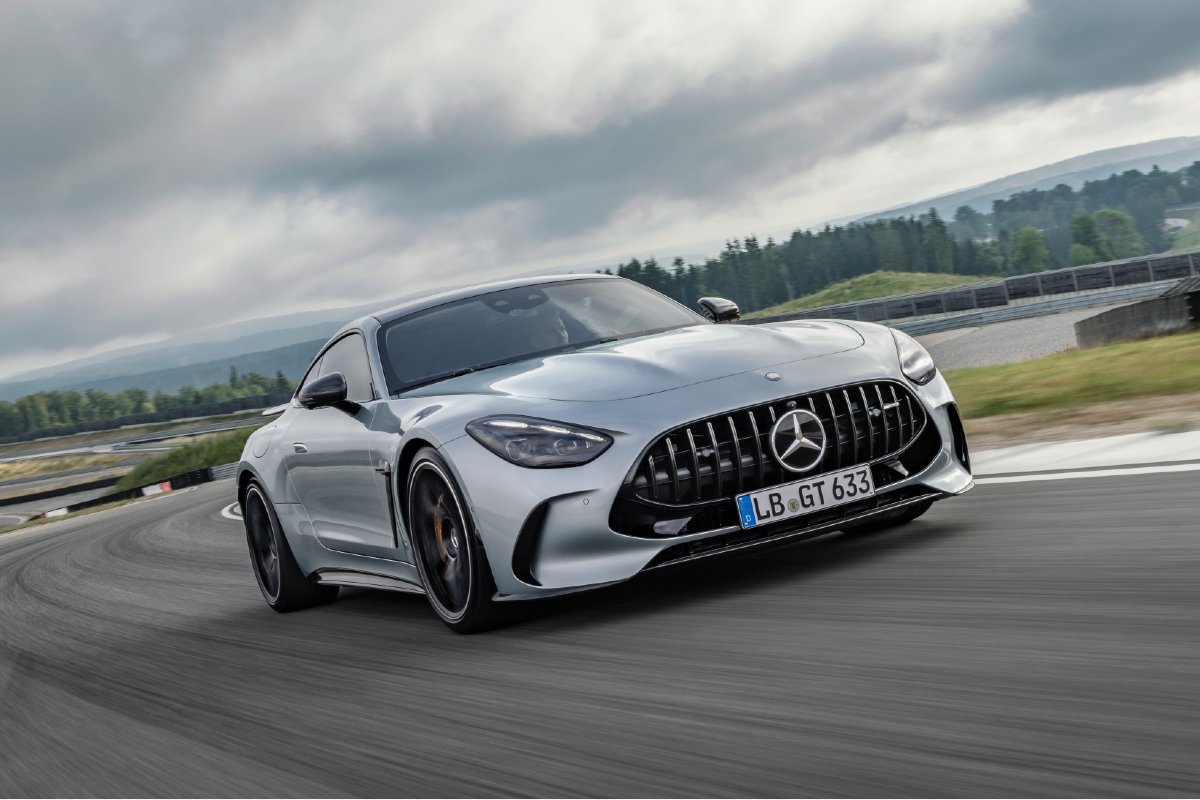
With its original GT coupe, Mercedes-AMG promised a V8 sports car that could match the Porsche 911 for ultimate handling appeal – but it fell spectacularly short. The new one aims to correct that, being newly built off the same platform as the Mercedes SL but still with the same 4.0-litre twin-turbo V8 as before – and a notable lack of electrification, for now anyway.
With all-wheel-drive standard across the range, outputs start from 350kW/700Nm for the entry model. The biggest change, however, is the interior, switching from a two-seater to a two-plus-two, even if AMG says the back seats are only suitable for people 1.5m and under. Pricing is yet to be released, but don't expect much change from three to four hundred grand.
With its original GT coupe, Mercedes-AMG promised a V8 sports car that could match the Porsche 911 for ultimate handling appeal – but it fell spectacularly short. The new one aims to correct that, being newly built off the same platform as the Mercedes SL but still with the same 4.0-litre twin-turbo V8 as before – and a notable lack of electrification, for now anyway.
With all-wheel-drive standard across the range, outputs start from 350kW/700Nm for the entry model. The biggest change, however, is the interior, switching from a two-seater to a two-plus-two, even if AMG says the back seats are only suitable for people 1.5m and under. Pricing is yet to be released, but don't expect much change from three to four hundred grand.
Porsche 911 S/T
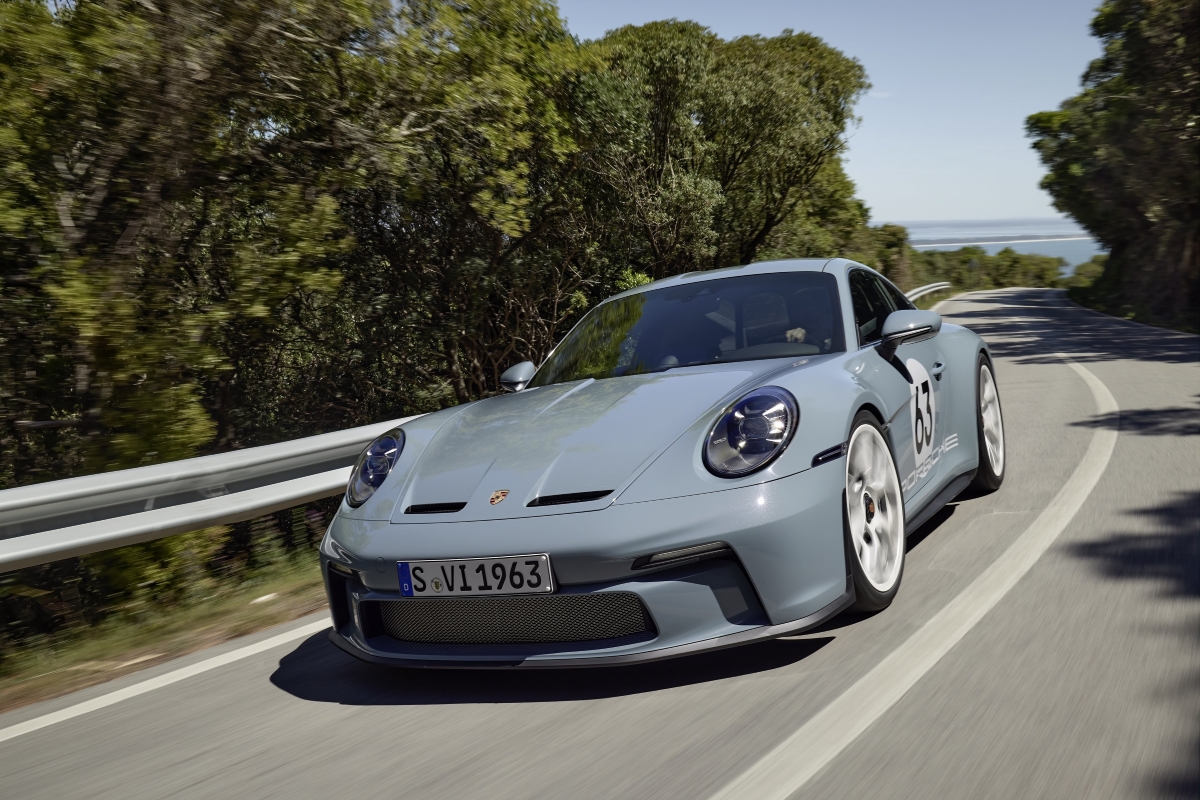
When Porsche promises that a certain model of 911 is the ‘driver's 911', that's saying something – and that's what's written on the box of the new 911 S/T. Basically the 4.0-litre 386kW/465Nm, 9000rpm flat-six of the 911 GT3 RS in a GT3 body, the S/T also gets a six-speed manual gearbox and is the lightest 992 911 yet, at 1380kg DIN – 40kg down on a manual GT3 Touring.
There's just one catch, and it's a fairly major one. Porsche says it'll cost you $660,500 plus on-road costs, but they've left off that you'll have likely also needed to have bought a small car park full of Macans, Cayennes and maybe a Cayman or 911 from the same dealership over probably several years. And not missed any of their customer Christmas parties.
When Porsche promises that a certain model of 911 is the ‘driver's 911', that's saying something – and that's what's written on the box of the new 911 S/T. Basically the 4.0-litre 386kW/465Nm, 9000rpm flat-six of the 911 GT3 RS in a GT3 body, the S/T also gets a six-speed manual gearbox and is the lightest 992 911 yet, at 1380kg DIN – 40kg down on a manual GT3 Touring.
There's just one catch, and it's a fairly major one. Porsche says it'll cost you $660,500 plus on-road costs, but they've left off that you'll have likely also needed to have bought a small car park full of Macans, Cayennes and maybe a Cayman or 911 from the same dealership over probably several years. And not missed any of their customer Christmas parties.