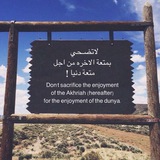
Do Not Grieve Over The Past
Shaykh AbduRahmaan As-Sa'adi [رحمه الله] said: ❝Do not grieve over past matters which have not been destined, from ill health, or loss of wealth or a worldly matter, etc.
Your concern should be with rectification of actions on the day.
Since a person is living in the moment. He should not be saddened for what has passed. Also he should not research into the future where that research would not be of any benefit.
It is upon you to be truthful, fulfill your contracts, keep to one's promises and justice in all dealings.
Fulfilling rights completely and perfectly with a tranquil soul and with truthful pure Eemaan.
Busy yourself with your own mistakes and your matters, rather than the mistakes of the people and their matters.
Deal with everyone according to their situation and condition, whether he is a senior, or youngster, male or female, a leader or a follower.
Be gentle and merciful to everyone even animals and livestock, since indeed Allaah is merciful to his merciful worshippers.
Be balanced in all your matters, and open up your mind to every religious and worldly benefit.❞
[Majmoo Mualifaat As-Saadi, (21/258)]
Shaykh AbduRahmaan As-Sa'adi [رحمه الله] said: ❝Do not grieve over past matters which have not been destined, from ill health, or loss of wealth or a worldly matter, etc.
Your concern should be with rectification of actions on the day.
Since a person is living in the moment. He should not be saddened for what has passed. Also he should not research into the future where that research would not be of any benefit.
It is upon you to be truthful, fulfill your contracts, keep to one's promises and justice in all dealings.
Fulfilling rights completely and perfectly with a tranquil soul and with truthful pure Eemaan.
Busy yourself with your own mistakes and your matters, rather than the mistakes of the people and their matters.
Deal with everyone according to their situation and condition, whether he is a senior, or youngster, male or female, a leader or a follower.
Be gentle and merciful to everyone even animals and livestock, since indeed Allaah is merciful to his merciful worshippers.
Be balanced in all your matters, and open up your mind to every religious and worldly benefit.❞
[Majmoo Mualifaat As-Saadi, (21/258)]
Allah includes the following ayah in surah al-Buruj [85] regarding the crimes that the People of the Ditch committed against the believers:
[وَمَا نَقَمُوا مِنْهُمْ إِلَّا أَن يُؤْمِنُوا بِاللَّـهِ الْعَزِيزِ الْحَمِيدِ]
"And they only resented them because they believed in Allah, al-'Azeez al-Hameed" [08]
Sheikh Salih al-Fawzan commented on the named al-Hameed in this ayah by writing:
"al-Hameed" - i.e. the One who is worthy of praise in every situation. For nothing in the universe, whether good or bad, takes places without Allah deserving to be praised for it.
That is because Allah did not create evil for its own sake; He only created evil and brought it into existence for a reason, which is to use it as a test and a trial.
So He deserves to be praised in every circumstance, for every thing that He has decreed, for every thing that He has legislated, and for all of His actions. For there is not a single action of His that is not worthy of being praised.
[Ma Tayassar wa Tahassal min Duroos al-Qur'an fee Hizab al-Mufassal 2/324]
[وَمَا نَقَمُوا مِنْهُمْ إِلَّا أَن يُؤْمِنُوا بِاللَّـهِ الْعَزِيزِ الْحَمِيدِ]
"And they only resented them because they believed in Allah, al-'Azeez al-Hameed" [08]
Sheikh Salih al-Fawzan commented on the named al-Hameed in this ayah by writing:
"al-Hameed" - i.e. the One who is worthy of praise in every situation. For nothing in the universe, whether good or bad, takes places without Allah deserving to be praised for it.
That is because Allah did not create evil for its own sake; He only created evil and brought it into existence for a reason, which is to use it as a test and a trial.
So He deserves to be praised in every circumstance, for every thing that He has decreed, for every thing that He has legislated, and for all of His actions. For there is not a single action of His that is not worthy of being praised.
[Ma Tayassar wa Tahassal min Duroos al-Qur'an fee Hizab al-Mufassal 2/324]
Ibn Taymiyah said:
As for sins, a person should not do them, and if he does them, then he must repent from them.
Whoever repents and feels remorse resembles his father Adam.
But whoever persists and makes excuses resembles his enemy Iblis.
[Majmu' al-Fatawa 2/109]
As for sins, a person should not do them, and if he does them, then he must repent from them.
Whoever repents and feels remorse resembles his father Adam.
But whoever persists and makes excuses resembles his enemy Iblis.
[Majmu' al-Fatawa 2/109]
In surah al-Rahman [55], Allah describes the people of Jannah by saying:
[مُتَّكِئِينَ عَلَىٰ فُرُشٍ بَطَائِنُهَا مِنْ إِسْتَبْرَقٍ]
"Reclining on beds whose insides are made of silk brocade ..." [54]
Ibn Kathir commented on this by saying: "Allah informed us of the excellence of the outside by mentioning the excellence of the inside. This is an example of using something lesser to draw our attention to something greater."
[Tafsir ibn Kathir 7/507]
[مُتَّكِئِينَ عَلَىٰ فُرُشٍ بَطَائِنُهَا مِنْ إِسْتَبْرَقٍ]
"Reclining on beds whose insides are made of silk brocade ..." [54]
Ibn Kathir commented on this by saying: "Allah informed us of the excellence of the outside by mentioning the excellence of the inside. This is an example of using something lesser to draw our attention to something greater."
[Tafsir ibn Kathir 7/507]
At the outset of surah al-Nahl - also sometimes called "the surah of blessings" - Allah said:
[يُنَزِّلُ الْمَلَائِكَةَ بِالرُّوحِ مِنْ أَمْرِهِ عَلَىٰ مَن يَشَاءُ مِنْ عِبَادِهِ أَنْ أَنذِرُوا أَنَّهُ لَا إِلَٰهَ إِلَّا أَنَا فَاتَّقُونِ]
"He sends down the angels with the inspiration of His command to whichever of His slaves He wishes, saying: Warn the people that there is no deity worthy of worship except Me, so fear Me." [al-Nahl 2]
Ibn 'Uyaynah said, "Allah has not given any of His slaves any blessing greater than the blessing of making them aware of *laa ilaaha illAllaah* - that there is no deity worthy of worship except Allah."
[Kalimah al-Ikhlas pg. 52-53]
[يُنَزِّلُ الْمَلَائِكَةَ بِالرُّوحِ مِنْ أَمْرِهِ عَلَىٰ مَن يَشَاءُ مِنْ عِبَادِهِ أَنْ أَنذِرُوا أَنَّهُ لَا إِلَٰهَ إِلَّا أَنَا فَاتَّقُونِ]
"He sends down the angels with the inspiration of His command to whichever of His slaves He wishes, saying: Warn the people that there is no deity worthy of worship except Me, so fear Me." [al-Nahl 2]
Ibn 'Uyaynah said, "Allah has not given any of His slaves any blessing greater than the blessing of making them aware of *laa ilaaha illAllaah* - that there is no deity worthy of worship except Allah."
[Kalimah al-Ikhlas pg. 52-53]
Ahmad, ibn Abi Hatim, & al-Bayhaqi in al-Dala'il all reported from Umm Salamah that al-Najashi asked Ja'far ibn Abi Talib, "Do you have anything that he" - meaning the Messenger of Allah - "brought from Allah?"
Ja'far said, "Yes," and he recited to him starting from Kaf Ha Ya 'Ayn Saad [i.e. from the beginning of surah Maryam] and al-Najashi cried so much that his beard became wet and his bishops cried so much that their scriptures became wet when they heard what he was reciting to them.
Then al-Najashi said, "This and what Moosaa brought certainly came out of the same light source."
And ibn Ishaq mentioned the story in all its details.
[Fath al-Qadeer 1/882]
Ja'far said, "Yes," and he recited to him starting from Kaf Ha Ya 'Ayn Saad [i.e. from the beginning of surah Maryam] and al-Najashi cried so much that his beard became wet and his bishops cried so much that their scriptures became wet when they heard what he was reciting to them.
Then al-Najashi said, "This and what Moosaa brought certainly came out of the same light source."
And ibn Ishaq mentioned the story in all its details.
[Fath al-Qadeer 1/882]
The Sign Of Good Character Is In Ten Qualities
Al-Haafiz `Abdur-Ra-oof Al-Munaawee [رحمه الله] [D. 1031 H] said: Yoosuf Ibn Asbaat said:
❝The sign of good character is in ten qualities:
1. Rarely arguing,
2. Treating others fairly,
3. Abandoning seeking out people’s faults,
4. Seeking to rectify and improve any evil qualities which appear,
5. Seeking excuses for people,
6. Bearing harm,
7. Blaming oneself,
8. Occupying oneself with awareness of one’s own faults and not with the faults of others,
9. Having a cheerful face,
10. And being mild in speech.❞
[Faydul-Qadeer, (3/464)]
Al-Haafiz `Abdur-Ra-oof Al-Munaawee [رحمه الله] [D. 1031 H] said: Yoosuf Ibn Asbaat said:
❝The sign of good character is in ten qualities:
1. Rarely arguing,
2. Treating others fairly,
3. Abandoning seeking out people’s faults,
4. Seeking to rectify and improve any evil qualities which appear,
5. Seeking excuses for people,
6. Bearing harm,
7. Blaming oneself,
8. Occupying oneself with awareness of one’s own faults and not with the faults of others,
9. Having a cheerful face,
10. And being mild in speech.❞
[Faydul-Qadeer, (3/464)]
In surah al-Ra'd [13], Allah mentions 8 characteristics of His believing servants and a detail about their entrance into Jannah when He said:
[وَالْمَلَائِكَةُ يَدْخُلُونَ عَلَيْهِم مِّن كُلِّ بَابٍ * سَلَامٌ عَلَيْكُم بِمَا صَبَرْتُمْ ۚ فَنِعْمَ عُقْبَى الدَّارِ]
"And the angels will enter upon them from every gate * saying "Peace be upon you for the sabr you had." So what a wonderful end destination that is!" [23-24]
'Abdullah ibn Salam and 'Ali ibn al-Hasan are both reported to have said:
On the Day of Resurrection, a caller will call out for the people of al-sabr to stand up, so a group of people will stand up and be told, "Go forward to al-Jannah."
They will meet the angels who will say, "Where are you going?" They will reply, "To al-Jannah."
The angels will ask, "Before the reckoning?" to which they will say, "Yes!"
So the angels will ask, "Who are you?" They will respond, "We are the people of al-sabr."
The angels will ask, "What was your this sabr of yours?"
They will say, "We made ourselves consistent in obeying Allah, and we consistently held ourselves back from disobeying Allah, and we kept ourselves firm in the face of the trials and challenges of the worldly life."
'Ali ibn al-Hasan then said: So the angels will tell them, "Enter al-Jannah! What a wonderful reward for the good-doers!"
Ibn Salam said: So the angels will tell them:
[سَلَامٌ عَلَيْكُم بِمَا صَبَرْتُمْ]
"Peace be upon you for the sabr you had!" [al-Ra'd 24]
[Jaami' li-Ahkam al-Qur'an 9/273]
[وَالْمَلَائِكَةُ يَدْخُلُونَ عَلَيْهِم مِّن كُلِّ بَابٍ * سَلَامٌ عَلَيْكُم بِمَا صَبَرْتُمْ ۚ فَنِعْمَ عُقْبَى الدَّارِ]
"And the angels will enter upon them from every gate * saying "Peace be upon you for the sabr you had." So what a wonderful end destination that is!" [23-24]
'Abdullah ibn Salam and 'Ali ibn al-Hasan are both reported to have said:
On the Day of Resurrection, a caller will call out for the people of al-sabr to stand up, so a group of people will stand up and be told, "Go forward to al-Jannah."
They will meet the angels who will say, "Where are you going?" They will reply, "To al-Jannah."
The angels will ask, "Before the reckoning?" to which they will say, "Yes!"
So the angels will ask, "Who are you?" They will respond, "We are the people of al-sabr."
The angels will ask, "What was your this sabr of yours?"
They will say, "We made ourselves consistent in obeying Allah, and we consistently held ourselves back from disobeying Allah, and we kept ourselves firm in the face of the trials and challenges of the worldly life."
'Ali ibn al-Hasan then said: So the angels will tell them, "Enter al-Jannah! What a wonderful reward for the good-doers!"
Ibn Salam said: So the angels will tell them:
[سَلَامٌ عَلَيْكُم بِمَا صَبَرْتُمْ]
"Peace be upon you for the sabr you had!" [al-Ra'd 24]
[Jaami' li-Ahkam al-Qur'an 9/273]
Allah describes His believing servants with 8 qualities in surah al-Ra'd [13] by saying:
[ الَّذِينَ يُوفُونَ بِعَهْدِ اللَّهِ وَلَا يَنقُضُونَ الْمِيثَاقَ * وَالَّذِينَ يَصِلُونَ مَا أَمَرَ اللَّهُ بِهِ أَن يُوصَلَ وَيَخْشَوْنَ رَبَّهُمْ وَيَخَافُونَ سُوءَ الْحِسَابِ * وَالَّذِينَ صَبَرُوا ابْتِغَاءَ وَجْهِ رَبِّهِمْ وَأَقَامُوا الصَّلَاةَ وَأَنفَقُوا مِمَّا رَزَقْنَاهُمْ سِرًّا وَعَلَانِيَةً وَيَدْرَءُونَ بِالْحَسَنَةِ السَّيِّئَةَ أُولَٰئِكَ لَهُمْ عُقْبَى الدَّارِ * جَنَّاتُ عَدْنٍ يَدْخُلُونَهَا وَمَن صَلَحَ مِنْ آبَائِهِمْ وَأَزْوَاجِهِمْ وَذُرِّيَّاتِهِمْ ۖ وَالْمَلَائِكَةُ يَدْخُلُونَ عَلَيْهِم مِّن كُلِّ بَابٍ * سَلَامٌ عَلَيْكُم بِمَا صَبَرْتُمْ ۚ فَنِعْمَ عُقْبَى الدَّارِ ]
1️Those who fulfill Allah's covenant and do not break the contract *
2️And those who connect what Allah has commanded to connect
3️and revere their Lord
4️and fear a bad reckoning *
5️And those who exercise sabr, seeking their Lord's Face
6️and establish the prayer
7️and spend out of what We have provided them with both secretly and openly
8️and counter evil with good
Those one will have a good outcome * Gardens of everlasting residence. They will enter them with whichever of their forefathers, spouses, and offspring were righteous. And the angels will enter upon them from every gate, * saying "Peace be upon you for the sabr you had." So what a wonderful end destination that is! [al-Ra'd 20-24]
'Abdullah ibn al-Mubarak said, "These eight qualities point to the eight gates of al-Jannah."
[Tafsir al-Baghawi 4/313]
[ الَّذِينَ يُوفُونَ بِعَهْدِ اللَّهِ وَلَا يَنقُضُونَ الْمِيثَاقَ * وَالَّذِينَ يَصِلُونَ مَا أَمَرَ اللَّهُ بِهِ أَن يُوصَلَ وَيَخْشَوْنَ رَبَّهُمْ وَيَخَافُونَ سُوءَ الْحِسَابِ * وَالَّذِينَ صَبَرُوا ابْتِغَاءَ وَجْهِ رَبِّهِمْ وَأَقَامُوا الصَّلَاةَ وَأَنفَقُوا مِمَّا رَزَقْنَاهُمْ سِرًّا وَعَلَانِيَةً وَيَدْرَءُونَ بِالْحَسَنَةِ السَّيِّئَةَ أُولَٰئِكَ لَهُمْ عُقْبَى الدَّارِ * جَنَّاتُ عَدْنٍ يَدْخُلُونَهَا وَمَن صَلَحَ مِنْ آبَائِهِمْ وَأَزْوَاجِهِمْ وَذُرِّيَّاتِهِمْ ۖ وَالْمَلَائِكَةُ يَدْخُلُونَ عَلَيْهِم مِّن كُلِّ بَابٍ * سَلَامٌ عَلَيْكُم بِمَا صَبَرْتُمْ ۚ فَنِعْمَ عُقْبَى الدَّارِ ]
1️Those who fulfill Allah's covenant and do not break the contract *
2️And those who connect what Allah has commanded to connect
3️and revere their Lord
4️and fear a bad reckoning *
5️And those who exercise sabr, seeking their Lord's Face
6️and establish the prayer
7️and spend out of what We have provided them with both secretly and openly
8️and counter evil with good
Those one will have a good outcome * Gardens of everlasting residence. They will enter them with whichever of their forefathers, spouses, and offspring were righteous. And the angels will enter upon them from every gate, * saying "Peace be upon you for the sabr you had." So what a wonderful end destination that is! [al-Ra'd 20-24]
'Abdullah ibn al-Mubarak said, "These eight qualities point to the eight gates of al-Jannah."
[Tafsir al-Baghawi 4/313]
In his famous hadith collection, Abu 'Eesaa al-Tirmidhi mentioned:
[قَالَتْ عَائِشَةُ كَانَ النَّبِيُّ صلى الله عليه وسلم لاَ يَنَامُ حَتَّى يَقْرَأَ بَنِي إِسْرَائِيلَ وَالزُّمَرَ]
'A'ishah said: The Prophet would not sleep until he had recited surah Banu Israa'eel [i.e. surah al-Isra'] and surah al-Zumar.
[Jaami' al-Tirmidhi #2920. Also included in al-Albani's Silsilah al-Sahihah #641 with a grading of "jayyid" - "good".]
Commenting on this in his explanation of Jaami' al-Tirmidhi, al-Mubarakfoori wrote: Meaning that it wasn't typical for him to sleep before having recited these two surahs.
[Tuhfah al-Ahwadhi 8/191]
[قَالَتْ عَائِشَةُ كَانَ النَّبِيُّ صلى الله عليه وسلم لاَ يَنَامُ حَتَّى يَقْرَأَ بَنِي إِسْرَائِيلَ وَالزُّمَرَ]
'A'ishah said: The Prophet would not sleep until he had recited surah Banu Israa'eel [i.e. surah al-Isra'] and surah al-Zumar.
[Jaami' al-Tirmidhi #2920. Also included in al-Albani's Silsilah al-Sahihah #641 with a grading of "jayyid" - "good".]
Commenting on this in his explanation of Jaami' al-Tirmidhi, al-Mubarakfoori wrote: Meaning that it wasn't typical for him to sleep before having recited these two surahs.
[Tuhfah al-Ahwadhi 8/191]
There are seven sequential surahs within the Qur'an - Ghafir (40), Fussilat (41), al-Shura (42), al-Zukhruf (43), al-Dhukhan (44), al-Jathiyah (45), & al-Ahqaf (46) - that all begin with the disconnected letters حم Ha Mim. These seven surahs are sometimes referred to as Āl Ha Mīm - "The Ha Mim Family" or al-Hawāmīm - "The Ha Mims".
In the beginning of his explanation of the first of these surahs, surah Ghafir, al-haafidh ibn Kathir included the following statements from two of the sahabah:
Ibn 'Abbaas said, "Everything has a core essence, and the core essence of the Qur'an is al-Hawāmīm."
Ibn Mas'ood said, "When I reach the Ha Mim surahs, I have reached luxurious gardens which I enjoy my time in."
[Tafsir ibn Kathir 7/126]
In the beginning of his explanation of the first of these surahs, surah Ghafir, al-haafidh ibn Kathir included the following statements from two of the sahabah:
Ibn 'Abbaas said, "Everything has a core essence, and the core essence of the Qur'an is al-Hawāmīm."
Ibn Mas'ood said, "When I reach the Ha Mim surahs, I have reached luxurious gardens which I enjoy my time in."
[Tafsir ibn Kathir 7/126]
In the beginning of his explanation of surah al-Hujurat [49], al-Qurtubi wrote: The scholars have said: Harshness, poor manners in addressing the Prophet and giving people bad nicknames used to be typical among the Arabs, so this surah is focused on instructing people to behave well and mind their manners.
[Jaami' li-Ahkam al-Qur'an 16/273]
[Jaami' li-Ahkam al-Qur'an 16/273]
In part of a discussion about the difference between major and minor sins, ibn al-Qayyim wrote the following beautiful words: There are three great rivers for sinners to cleanse themselves on their sins during this life. But if one is not cleansed by their cleansing, they will be cleansed in the river of a blazing fire on the Day of Resurrection.
1) The river of sincere repentance
2) The river of good deeds which drown out the surrounding sins
3) The river of great calamities which expiate sins
If Allah wants good for His servant, He enters him into one of these three rivers so that he comes on the Day of Resurrection pure and clean without needing that fourth type of cleansing.
[Madarij al-Salikeen 1/319]
1) The river of sincere repentance
2) The river of good deeds which drown out the surrounding sins
3) The river of great calamities which expiate sins
If Allah wants good for His servant, He enters him into one of these three rivers so that he comes on the Day of Resurrection pure and clean without needing that fourth type of cleansing.
[Madarij al-Salikeen 1/319]
Regarding Allah's statement
[وَالَّذِينَ جَاهَدُوا فِينَا لَنَهْدِيَنَّهُمْ سُبُلَنَا ۚ وَإِنَّ اللَّهَ لَمَعَ الْمُحْسِنِينَ]
"And those who strive for Our sake, We will surely guide them to Our ways. And Allah is certainly with the good-doers." [al-'Ankaboot 69]
... Abu Ahmad of Akka said, "For those who put what they know into practice, Allah will guide them to what they do not know."
[Tafsir ibn Abi Hatim #17451. Also quoted in Tafsir ibn Kathir 6/296]
[وَالَّذِينَ جَاهَدُوا فِينَا لَنَهْدِيَنَّهُمْ سُبُلَنَا ۚ وَإِنَّ اللَّهَ لَمَعَ الْمُحْسِنِينَ]
"And those who strive for Our sake, We will surely guide them to Our ways. And Allah is certainly with the good-doers." [al-'Ankaboot 69]
... Abu Ahmad of Akka said, "For those who put what they know into practice, Allah will guide them to what they do not know."
[Tafsir ibn Abi Hatim #17451. Also quoted in Tafsir ibn Kathir 6/296]
Allah commands the believers in surah al-Baqarah:
[حَافِظُوا عَلَى الصَّلَوَاتِ وَالصَّلَاةِ الْوُسْطَىٰ]
Maintain the prayers, and especially the middle prayer [2:238]
From early times, scholars have held different opinions about which prayer is the "middle prayer" mentioned here. Towards the end of his discussion of this in his tafsir, Imam ibn Jarir al-Tabari mentioned the following report:
Nusayr ibn Dhu'luq - a.k.a Abu Tu'mah - said:
I asked al-Rabee' ibn Khuthaym about the middle prayer.
He said, "Do you think that if you knew which one it is, you would perform it diligently while neglecting the others?"
I said, "No!"
So he said, "If you maintain all of the prayers, then you will have been diligent in performing that one."
[Tafsir al-Tabari 5/220]
[حَافِظُوا عَلَى الصَّلَوَاتِ وَالصَّلَاةِ الْوُسْطَىٰ]
Maintain the prayers, and especially the middle prayer [2:238]
From early times, scholars have held different opinions about which prayer is the "middle prayer" mentioned here. Towards the end of his discussion of this in his tafsir, Imam ibn Jarir al-Tabari mentioned the following report:
Nusayr ibn Dhu'luq - a.k.a Abu Tu'mah - said:
I asked al-Rabee' ibn Khuthaym about the middle prayer.
He said, "Do you think that if you knew which one it is, you would perform it diligently while neglecting the others?"
I said, "No!"
So he said, "If you maintain all of the prayers, then you will have been diligent in performing that one."
[Tafsir al-Tabari 5/220]
Allah said:
[وَمَا يُؤْمِنُ أَكْثَرُهُم بِاللَّهِ إِلَّا وَهُم مُّشْرِكُونَ ]
"And most of them only believe in Allah while committing shirk." [Yusuf 106]
Some of the salaf said: When you asked them, "Who created the heavens and the earth," they will say, "Allah," yet despite that they still worship others besides Him.
[Majmu' al-Rasa'il 1/4]
[وَمَا يُؤْمِنُ أَكْثَرُهُم بِاللَّهِ إِلَّا وَهُم مُّشْرِكُونَ ]
"And most of them only believe in Allah while committing shirk." [Yusuf 106]
Some of the salaf said: When you asked them, "Who created the heavens and the earth," they will say, "Allah," yet despite that they still worship others besides Him.
[Majmu' al-Rasa'il 1/4]
Allah says in surah al-Mulk (67):
[أَفَمَن يَمْشِي مُكِبًّا عَلَىٰ وَجْهِهِ أَهْدَىٰ أَمَّن يَمْشِي سَوِيًّا عَلَىٰ صِرَاطٍ مُّسْتَقِيمٍ]
"Is one who walks overturned on his face better guided, or one who walks upright on a straight path?" [22]
Regarding Allah's statement:
[أَفَمَن يَمْشِي مُكِبًّا عَلَىٰ وَجْهِهِ]
"Is one who walks overturned on his face ..."
... Ma'mar relayed that Qatadah said: That is referring to a disbeliever who engaged in disobedience to Allah, so on the Day of Resurrection Allah will raise him back to life on his face.
Ma'mar said: The Prophet was asked, "How will they walk on their faces?" to which he replied, "The One who made them walk on their feet is certainly able to make them walk on their faces."
Regarding Allah's statement:
[ يَمْشِي سَوِيًّا عَلَىٰ صِرَاطٍ مُّسْتَقِيمٍ]
"... or one who walks upright on a straight path?"
... Ma'mar relayed that Qatadah said: The believer engages in obedience to Allah, so Allah will raise him back to life in a state of obedience to Him.
[Tafsir al-Tabari 23/517]
[أَفَمَن يَمْشِي مُكِبًّا عَلَىٰ وَجْهِهِ أَهْدَىٰ أَمَّن يَمْشِي سَوِيًّا عَلَىٰ صِرَاطٍ مُّسْتَقِيمٍ]
"Is one who walks overturned on his face better guided, or one who walks upright on a straight path?" [22]
Regarding Allah's statement:
[أَفَمَن يَمْشِي مُكِبًّا عَلَىٰ وَجْهِهِ]
"Is one who walks overturned on his face ..."
... Ma'mar relayed that Qatadah said: That is referring to a disbeliever who engaged in disobedience to Allah, so on the Day of Resurrection Allah will raise him back to life on his face.
Ma'mar said: The Prophet was asked, "How will they walk on their faces?" to which he replied, "The One who made them walk on their feet is certainly able to make them walk on their faces."
Regarding Allah's statement:
[ يَمْشِي سَوِيًّا عَلَىٰ صِرَاطٍ مُّسْتَقِيمٍ]
"... or one who walks upright on a straight path?"
... Ma'mar relayed that Qatadah said: The believer engages in obedience to Allah, so Allah will raise him back to life in a state of obedience to Him.
[Tafsir al-Tabari 23/517]
Allah says in surah al-Baqarah [02]:
[يَا أَيُّهَا الَّذِينَ آمَنُوا أَنفِقُوا مِمَّا رَزَقْنَاكُم مِّن قَبْلِ أَن يَأْتِيَ يَوْمٌ لَّا بَيْعٌ فِيهِ وَلَا خُلَّةٌ وَلَا شَفَاعَةٌ ۗ وَالْكَافِرُونَ هُمُ الظَّالِمُونَ]
"O you who believe, spend out of what We have provided for you before a day comes on which there will be no trading nor friendship nor intercession. And the disbelievers are the wrongdoers." [254]
Then in the very next ayah, Ayah al-Kursi, Allah says:
[مَن ذَا الَّذِي يَشْفَعُ عِندَهُ إِلَّا بِإِذْنِهِ]
"Who is it that can intercede with Him except by His permission?" [255]
Commenting on this in his book of tafsir, ibn Juzay wrote:
"... nor intercession ..." [254] meaning, on the Day of Resurrection there will be no intercession except by Allah's permission, for the truth of the matter is that it is a mercy from Allah to the one who is being interceded for and an honor for the one making intercession, not some form of litigating with Allah.
It is in this way that we can understand the places in the Qur'an where intercession is negating; i.e. that it will only happen by Allah's permission. Therefore there is no contradiction between instances where intercession is negated and instances where it is affirmed.
In passages whose context is dealing with the terrors of the Day of Resurrection and instilling fear about it, then intercession is negated without exception as a very strong form of instilling fear.
Meanwhile, in passages whose context centers around exalting Allah, then intercession is negated except for if He wills it.
[Tashil fi-'Uloom al-Tanzil 1/474-475]
[يَا أَيُّهَا الَّذِينَ آمَنُوا أَنفِقُوا مِمَّا رَزَقْنَاكُم مِّن قَبْلِ أَن يَأْتِيَ يَوْمٌ لَّا بَيْعٌ فِيهِ وَلَا خُلَّةٌ وَلَا شَفَاعَةٌ ۗ وَالْكَافِرُونَ هُمُ الظَّالِمُونَ]
"O you who believe, spend out of what We have provided for you before a day comes on which there will be no trading nor friendship nor intercession. And the disbelievers are the wrongdoers." [254]
Then in the very next ayah, Ayah al-Kursi, Allah says:
[مَن ذَا الَّذِي يَشْفَعُ عِندَهُ إِلَّا بِإِذْنِهِ]
"Who is it that can intercede with Him except by His permission?" [255]
Commenting on this in his book of tafsir, ibn Juzay wrote:
"... nor intercession ..." [254] meaning, on the Day of Resurrection there will be no intercession except by Allah's permission, for the truth of the matter is that it is a mercy from Allah to the one who is being interceded for and an honor for the one making intercession, not some form of litigating with Allah.
It is in this way that we can understand the places in the Qur'an where intercession is negating; i.e. that it will only happen by Allah's permission. Therefore there is no contradiction between instances where intercession is negated and instances where it is affirmed.
In passages whose context is dealing with the terrors of the Day of Resurrection and instilling fear about it, then intercession is negated without exception as a very strong form of instilling fear.
Meanwhile, in passages whose context centers around exalting Allah, then intercession is negated except for if He wills it.
[Tashil fi-'Uloom al-Tanzil 1/474-475]
In the beginning of surah Hud [11], Allah describes part of the message of the Prophets as:
[وَأَنِ اسْتَغْفِرُوا رَبَّكُمْ ثُمَّ تُوبُوا إِلَيْهِ يُمَتِّعْكُم مَّتَاعًا حَسَنًا]
"And saying: seek your Lord's forgiveness and then repent to Him. He will let you enjoy a good provision ..." [3]
Qatadah said: You are currently enjoying that provision, so put it to use towards obeying Allah and learning the truth. Allah is the One who provides blessings and He loves those who are grateful. The people who are grateful receive more from Allah - that is a decree that He has decreed.
[al-Durr al-Manthoor 8/10]
[وَأَنِ اسْتَغْفِرُوا رَبَّكُمْ ثُمَّ تُوبُوا إِلَيْهِ يُمَتِّعْكُم مَّتَاعًا حَسَنًا]
"And saying: seek your Lord's forgiveness and then repent to Him. He will let you enjoy a good provision ..." [3]
Qatadah said: You are currently enjoying that provision, so put it to use towards obeying Allah and learning the truth. Allah is the One who provides blessings and He loves those who are grateful. The people who are grateful receive more from Allah - that is a decree that He has decreed.
[al-Durr al-Manthoor 8/10]
Allah says in surah Fatir [35]
[ إِنَّ الَّذِينَ يَتْلُونَ كِتَابَ اللَّهِ وَأَقَامُوا الصَّلَاةَ وَأَنفَقُوا مِمَّا رَزَقْنَاهُمْ سِرًّا وَعَلَانِيَةً يَرْجُونَ تِجَارَةً لَّن تَبُورَ * لِيُوَفِّيَهُمْ أُجُورَهُمْ وَيَزِيدَهُم مِّن فَضْلِهِ ۚ إِنَّهُ غَفُورٌ شَكُورٌ]
"Those who recite Allah's Book, establish the prayer and spend out of what We have provided for them both secretly and openly hope for a transaction which will not diminish. * That He will given them their rewards in full and He will give them more out of His graciousness. He is certainly Forgiving, Appreciative." [29-30]
Ibn 'Abbaas said: He forgives them even for their grave sins and rewards them even for their minor good deeds.
[Tafsir al-Baghawi 6/421]
[ إِنَّ الَّذِينَ يَتْلُونَ كِتَابَ اللَّهِ وَأَقَامُوا الصَّلَاةَ وَأَنفَقُوا مِمَّا رَزَقْنَاهُمْ سِرًّا وَعَلَانِيَةً يَرْجُونَ تِجَارَةً لَّن تَبُورَ * لِيُوَفِّيَهُمْ أُجُورَهُمْ وَيَزِيدَهُم مِّن فَضْلِهِ ۚ إِنَّهُ غَفُورٌ شَكُورٌ]
"Those who recite Allah's Book, establish the prayer and spend out of what We have provided for them both secretly and openly hope for a transaction which will not diminish. * That He will given them their rewards in full and He will give them more out of His graciousness. He is certainly Forgiving, Appreciative." [29-30]
Ibn 'Abbaas said: He forgives them even for their grave sins and rewards them even for their minor good deeds.
[Tafsir al-Baghawi 6/421]