
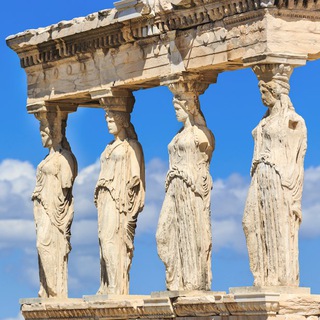

CARTER, J. W (2019). Aristotle on earlier Greek psychology: the science of soul.Cambridge; New York: Cambridge University Press, 2019. xiii, 253 p. $99.99. ISBN 9781108481076.
This volume is the first in English to provide a full, systematic investigation into Aristotle’s criticisms of earlier Greek theories of the soul from the perspective of his theory of scientific explanation. Some interpreters of the De Anima have seen Aristotle’s criticisms of Presocratic, Platonic, and other views about the soul as unfair or dialectical, but Jason W. Carter argues that Aristotle’s criticisms are in fact a justified attempt to test the adequacy of earlier theories in terms of the theory of scientific knowledge he advances in the Posterior Analytics. Carter proposes a new interpretation of Aristotle’s confron- tations with earlier psychology, showing how his reception of other Greek philosophers shaped his own hylomorphic psychology and led him to adopt a novel dualist theory of the soul–body relation. His book will be important for students and scholars of Aristotle, ancient Greek psychology, and the history of the mind–body problem.
This volume is the first in English to provide a full, systematic investigation into Aristotle’s criticisms of earlier Greek theories of the soul from the perspective of his theory of scientific explanation. Some interpreters of the De Anima have seen Aristotle’s criticisms of Presocratic, Platonic, and other views about the soul as unfair or dialectical, but Jason W. Carter argues that Aristotle’s criticisms are in fact a justified attempt to test the adequacy of earlier theories in terms of the theory of scientific knowledge he advances in the Posterior Analytics. Carter proposes a new interpretation of Aristotle’s confron- tations with earlier psychology, showing how his reception of other Greek philosophers shaped his own hylomorphic psychology and led him to adopt a novel dualist theory of the soul–body relation. His book will be important for students and scholars of Aristotle, ancient Greek psychology, and the history of the mind–body problem.
A new release of Corpora for Alfred (MacOS only) is out with 4405 new TLG entries and 3011 new pre-socratic fragments in the database. It now has a total of over 10.000 entries for instant search and access. Download it at https://tinyurl.com/y4wqaaf4
This workflow has to do with accessing the texts quickly and directly (thus shortening the time it would take for you to go online, hit the search, type, wait for results and choose a text). With this workflow, I can simply press ⌘Space (to open Alfred) and start typing whatever it is that I am looking for to see a list of possible results from the TLG and LOEB databases. After finding the entry, I can either hit ⌘⏎ to open the text online or hit ⌃⏎ to open it offline (Diogenes must be running). Since version 1.0.4, I have added the option of copying parts of the data, thus making the workflow useful for citing. If I simply hit ⏎, it will set to the clipboard the TLG code or LOEB Volume + Year. If I hit ⌥⏎, it will set the Work’s Title and if you hit ⇧⌥⏎ it will set the Author’s Name.
There are also some functions related to a software called DEVONthink. I highly recommend checking it out. If I hit ⇧⌘⏎ the online page with the text will be opened and stored in DEVONthink and an applescript will add metadata to it (such as author name, work title, tlg code and tags). Likewise, if I hit ⇧⌃⏎ the page opened will be the offline instead.
This workflow has to do with accessing the texts quickly and directly (thus shortening the time it would take for you to go online, hit the search, type, wait for results and choose a text). With this workflow, I can simply press ⌘Space (to open Alfred) and start typing whatever it is that I am looking for to see a list of possible results from the TLG and LOEB databases. After finding the entry, I can either hit ⌘⏎ to open the text online or hit ⌃⏎ to open it offline (Diogenes must be running). Since version 1.0.4, I have added the option of copying parts of the data, thus making the workflow useful for citing. If I simply hit ⏎, it will set to the clipboard the TLG code or LOEB Volume + Year. If I hit ⌥⏎, it will set the Work’s Title and if you hit ⇧⌥⏎ it will set the Author’s Name.
There are also some functions related to a software called DEVONthink. I highly recommend checking it out. If I hit ⇧⌘⏎ the online page with the text will be opened and stored in DEVONthink and an applescript will add metadata to it (such as author name, work title, tlg code and tags). Likewise, if I hit ⇧⌃⏎ the page opened will be the offline instead.
GitHub
Release Corpora 1.0.5 for Alfred · bcdavasconcelos/Corpora
Added 4405 new TLG entries
Added 3011 new pre-socratic fragments (linked to Daphnet)
There are now 10160 search items in the database
Added 3011 new pre-socratic fragments (linked to Daphnet)
There are now 10160 search items in the database
Channel name was changed to «The Digital Classicist's Guide to the Galaxy»
In less than a generation, we have moved from shooting still images on film to high-definition movies on mobile phones. Yet over that same period, the electronic ‘replacements’ for books have only mimicked what was already being done in ink on paper. Compare what you get from a PDF, iBook or eBook, and text has hardly changed in comparison. (...)
https://eclecticlight.co/2019/04/28/last-week-on-my-mac-taking-text-further/
https://eclecticlight.co/2019/04/28/last-week-on-my-mac-taking-text-further/
The Eclectic Light Company
Last Week on My Mac: Taking text further
The Books app demonstrates how stultified is the approach to text on computers. It’s carefully engineered to work like a book, not to bring any new powers to text or reading.
Forwarded from Gustavo
Novidade muito aguardada no LibGen: http://gen.lib.rus.ec/book/index.php?md5=A88E44E5128096873BBB1AB861A96EC0
gen.lib.rus.ec
Library Genesis: Simplicius; Barrie Fleet (trans.) - On Aristotle Physics 2
Library Genesis is a scientific community targeting collection of books on natural science disciplines and engineering.
Channel name was changed to «The Digital Classicist’s Guide to the Galaxy»
DiogenesWeb Home Page
https://d.iogen.es/web/?ver=1.001&user=acad
https://d.iogen.es/web/?ver=1.001&user=acad
What happened to the Cambridge Greek Lexicon's plan of an online version at Perseus? I wonder.
The lastest version of the Gentium Plus Font now contains bold and bold-italic faces! https://software.sil.org/gentium/download/
Gentium
Download - Gentium
If you would like stay informed of updates to Gentium and other SIL fonts, please subscribe to the SIL Font News Announcement List. For more information see
The owner of this channel has been inactive for the last 2 months. If they remain inactive for the next 27 days, they may lose their account and admin rights in this channel. The contents of the channel will remain accessible for all users.