Not every method of change is a method of Islam.
True reform begins with knowledge, wisdom, and sincere advice.
May Allah guide us to what pleases Him.
True reform begins with knowledge, wisdom, and sincere advice.
May Allah guide us to what pleases Him.
❤2
This media is not supported in your browser
VIEW IN TELEGRAM
What can we do?
A filmed diary capturing the resilience and daily struggles of Palestinians living in the Al-Yarmouk refugee camp in Syria.
A filmed diary capturing the resilience and daily struggles of Palestinians living in the Al-Yarmouk refugee camp in Syria.
Little Palestine: Diary of a Siege (2021), directed by Abdallah Al-Khatib, documents life inside the besieged camp between 2011 and 2015. Using footage he and his friends filmed during the siege, the documentary offers an intimate and deeply human account of hope, courage, and survival under unimaginable conditions.
❤2
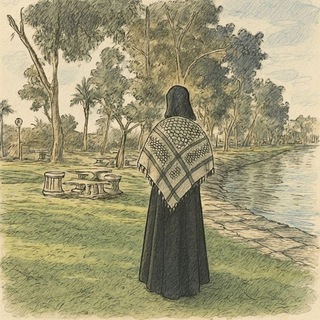
The first stage usually starts very simple. The account is used for posting Islamic or beneficial content, and there is no music or entertainment focus. At this stage, the face is not shown at all. Sometimes only the hands are visible, either with gloves or without gloves. Everything appears modest, private, and purely for reminder-based content.
After some time, the account begins to grow in views and engagement. Because of this, the style of posting slowly changes. Mirror selfies start appearing, but the face is either blurred or removed. OOTD videos also begin, showing abayas, khimars, and even niqabs. The focus is still claimed to be modesty, but the attention is now shifting toward appearance and aesthetics.
As engagement increases, niqab content becomes more frequent. The comments also increase, with people saying things like "you're so aesthetic," "Allāhumma bārik," and similar praise. This attention affects the content, and the niqab becomes more focused on presentation. Videos begin to highlight the eyes more, often with angles designed to attract attention, especially through eye contact and visual expression.
After this stage, a change happens where the niqab is reduced into a "half niqab." At this point, makeup such as mascara and natural eyeshadow begins to appear, while the person still claims to be modest and covered. The same style of aesthetic videos continues, including nasheeds and edited visuals, but now with more emphasis on beauty and appearance rather than just covering.
Eventually, even the niqab is removed completely. However, the face is still hidden in other ways, such as using aesthetic objects, camera angles, or creative editing in TikTok videos and slideshows. Over time, even this becomes less important, and the content continues to grow in followers and engagement. At this point, the person begins to believe that the khimar and abaya are enough, thinking "it is still halal because I am covered."
As engagement continues, the khimar and abaya become part of regular TikTok content. However, over time, even this level of covering starts to feel like too much because the dopamine reward from likes and views decreases when engagement slows down. Because of this, the person begins to think that a simple hijab is enough, while still receiving growing attention and compliments from followers and viewers.
As the account continues to grow, full-body content becomes more common. The person begins showing full outfits while still fully covered. These videos are usually edited in an aesthetic way, sometimes with twirling movements of the abaya or slow-motion effects, often combined with nasheeds in the background. At this stage, modest clothing is still worn, but it is now clearly being used for content and engagement.
At certain points, videos go viral, causing likes, comments, and followers to increase massively. The attention becomes focused not only on clothing but also on beauty and body shape. Comments such as "body tea," "your body ate," and similar phrases become common. At this stage, abayas may start to disappear, and outfits become more fitted or revealing in shape. Over time, even showing areas like the neck begins to feel normal because the attention and praise are very strong.
This process continues because of a dopamine feedback loop. When a post that is slightly less modest receives more engagement than previous posts, the brain interprets it as a successful strategy. Because of this, boundaries slowly change over time. The person starts comparing themselves to other hijabi influencers who wear full makeup, jewelry, and beautified outfits while still presenting themselves as modest. This comparison influences further changes in behavior and content.
Eventually, the account grows very large, but at the same time, the sense of modesty weakens. The hijab may eventually be abandoned completely. When advice is given, the response often becomes defensive, with statements such as "only Allah can judge me," "mind your own business," or "I only post for myself and girls." However, if something is posted publicly, it is not limited to girls, and if privacy is intended, it should be kept private. 'Umar ibn al-Khattab (may Allah be pleased with him) said, "We judge by what is apparent and we leave the inner secrets to Allah."
The Prophet ﷺ also warned against rejecting sincere advice, saying that it is disliked when someone is told to fear Allah and responds by saying "mind your own business," and that this is the most hated speech. The Prophet ﷺ also said that all of his Ummah will be forgiven except those who openly commit sins. He ﷺ also said that if a person loses haya', then they may do as they wish, meaning that when shame is removed, a person can fall into anything without restraint.
Please open Telegram to view this post
VIEW IN TELEGRAM
❤7