Ritual purity was only legislated as a preparation and cleansing for intimate converse with the Lord, and as a gathering [of the self] for standing before Him. One should therefore make the heart present so that it may be present in the prayer.
Maintaining perpetual purity engenders reverent humility (khushūʿ), expansiveness in provision, and [good] character – and Allah is the Granter of success.
—Aḥmad Zarrūq, Al-Naṣiḥah al-Kubra.
Maintaining perpetual purity engenders reverent humility (khushūʿ), expansiveness in provision, and [good] character – and Allah is the Granter of success.
—Aḥmad Zarrūq, Al-Naṣiḥah al-Kubra.
❤9
Forwarded from Musa’s Social Media Musings (musa furber)
# In awe at the opening of Irshād al-Muhtadī Sharh Kifāyat al-Mubtadī and feeling envious of its author
I am reading through another ʿaqīdah text written in Arabic by Ahl al-Nusantara – ʿAbd al-Ḥamīd ibn Muḥammad ʿAlī Quds ibn ʿAbd al-Qādir al-Khaṭīb begins his Irshād al-Muhtadī, a commentary finished in 1306 AH/1888–1889 CE on his father’s Kifāyat al-Mubtadī.
While his opening may not be unique in its content and reverence, I am nonetheless in awe and grateful that my heart still stirs:
To proceed: The dust beneath the feet of the greatest scholars, the humble servitor (khuwaydim) of the seekers of knowledge at the Sacred Mosque,[1] he who implores his Master for aid, sincerity, pardon, and imminent opening – ʿAbd al-Ḥamīd ibn Muḥammad ʿAlī Quds ibn ʿAbd al-Qādir al-Khaṭīb (may Allah exalted is He grant him success in what He loves and is pleased with, forgive him what he has committed and earned, be well-pleased with him and with his parents, look upon him with the eye of His solicitude, appoint for him a portion in the spoils of felicity, and string him upon the thread of those who have merited the Finest Reward and more; and likewise all Muslims,[2] by the rank of the Chosen One, Āmīn) says:
Verily the most profitable of deeds in recompense, the most enduring of them in remembrance among all creation, and the most fragrant of them in diffusion throughout the celestial world, is the acquisition of the sciences that are of benefit in this world and the next. And among the most excellent, most exalted, most majestic, and most resplendent of them is the science of religious beliefs, through which the Divine Attributes are known – for it is the most sublime of disciplines and the most elevated, the most consummate of sciences and the most beneficial, the finest of intellectual crafts and the most glorious of cognitive acts of worship.
And among the most wondrous of what has been compiled within it – most comprehensive in scope, most encompassing of the horizons of knowledge, and finest in workmanship – is the treatise through which one arrives at the pinnacle of felicity for the rightly-guided, named Kifāyat al-Mubtadī, composed by my Shaykh and my Master, my minister and my refuge, my father, the very vessel of my nurturing, my soul and my body[3] – the Scholar, the Great Scholar, the Learned One of profound discernment: Shaykh Muḥammad ʿAlī al-Qudsī in origin…[4]
NOTES
[1] Please appreciate the author’s humility: “The dust beneath the feet of the greatest scholars, the humble servitor (khuwaydim) of the seekers of knowledge…” – not the ʿamāmah atop the heads of the Shaykhs of Islām nor a teacher; he uses the diminutive of khādim, that is: a lowly, inferior servant.
This is the furthest thing from the sort of ijāzah-seeking, self-promoting, selfie-taking, microphone-snatching that has become commonplace today 137 years after his writing. Just as people and situations may worsen, they may also improve. May Allah protect me from the temptations of our age.
[2] May Allah accept his supplication for oneself, one’s family, and the Ummah – including us, dear reader!
[3] In short: his physical and spiritual father.
[4] I am envious of (i.e. have ghibṭ for) this author’s awareness, humility, knowledge, upbringing, and having written such a beautiful passage. May Allah grant him (and us!) his supplication.
Public share contains more:
https://www.patreon.com/posts/in-awe-at-of-al-153325416
I am reading through another ʿaqīdah text written in Arabic by Ahl al-Nusantara – ʿAbd al-Ḥamīd ibn Muḥammad ʿAlī Quds ibn ʿAbd al-Qādir al-Khaṭīb begins his Irshād al-Muhtadī, a commentary finished in 1306 AH/1888–1889 CE on his father’s Kifāyat al-Mubtadī.
While his opening may not be unique in its content and reverence, I am nonetheless in awe and grateful that my heart still stirs:
To proceed: The dust beneath the feet of the greatest scholars, the humble servitor (khuwaydim) of the seekers of knowledge at the Sacred Mosque,[1] he who implores his Master for aid, sincerity, pardon, and imminent opening – ʿAbd al-Ḥamīd ibn Muḥammad ʿAlī Quds ibn ʿAbd al-Qādir al-Khaṭīb (may Allah exalted is He grant him success in what He loves and is pleased with, forgive him what he has committed and earned, be well-pleased with him and with his parents, look upon him with the eye of His solicitude, appoint for him a portion in the spoils of felicity, and string him upon the thread of those who have merited the Finest Reward and more; and likewise all Muslims,[2] by the rank of the Chosen One, Āmīn) says:
Verily the most profitable of deeds in recompense, the most enduring of them in remembrance among all creation, and the most fragrant of them in diffusion throughout the celestial world, is the acquisition of the sciences that are of benefit in this world and the next. And among the most excellent, most exalted, most majestic, and most resplendent of them is the science of religious beliefs, through which the Divine Attributes are known – for it is the most sublime of disciplines and the most elevated, the most consummate of sciences and the most beneficial, the finest of intellectual crafts and the most glorious of cognitive acts of worship.
And among the most wondrous of what has been compiled within it – most comprehensive in scope, most encompassing of the horizons of knowledge, and finest in workmanship – is the treatise through which one arrives at the pinnacle of felicity for the rightly-guided, named Kifāyat al-Mubtadī, composed by my Shaykh and my Master, my minister and my refuge, my father, the very vessel of my nurturing, my soul and my body[3] – the Scholar, the Great Scholar, the Learned One of profound discernment: Shaykh Muḥammad ʿAlī al-Qudsī in origin…[4]
NOTES
[1] Please appreciate the author’s humility: “The dust beneath the feet of the greatest scholars, the humble servitor (khuwaydim) of the seekers of knowledge…” – not the ʿamāmah atop the heads of the Shaykhs of Islām nor a teacher; he uses the diminutive of khādim, that is: a lowly, inferior servant.
This is the furthest thing from the sort of ijāzah-seeking, self-promoting, selfie-taking, microphone-snatching that has become commonplace today 137 years after his writing. Just as people and situations may worsen, they may also improve. May Allah protect me from the temptations of our age.
[2] May Allah accept his supplication for oneself, one’s family, and the Ummah – including us, dear reader!
[3] In short: his physical and spiritual father.
[4] I am envious of (i.e. have ghibṭ for) this author’s awareness, humility, knowledge, upbringing, and having written such a beautiful passage. May Allah grant him (and us!) his supplication.
Public share contains more:
https://www.patreon.com/posts/in-awe-at-of-al-153325416
❤5
Eid Mubarak.
May Allah accept our fasts, prayers, supplications, recitations, charity, and all other good acts, and may He forgive us our lapses and shortcomings.
—musa
May Allah accept our fasts, prayers, supplications, recitations, charity, and all other good acts, and may He forgive us our lapses and shortcomings.
—musa
❤17🎉1
NEW PUBLICATION: Al-Malaybārī’s Branches of Faith: Shuʿab al-īmān
al-salamu alaykum
I am honoured to announce that Al-Malaybārī’s Branches of Faith: Shuʿab al-īmān is now available to the general public on Amazon.
The booklet presents an English translation of Shuʿab al-imān by Shaykh Zayn al-Din ibn 'Ali ibn Ahmad al-Malaybari (872-928 AH/1467-1522 CE), itself an Arabic translation and condensation of the Persian Shuʿab al-imān by Nūr al-Dīn Muḥammad al-Ījī. The translation before the reader is thus a translation of a translation - or more precisely, an English rendering of a condensed Arabic rendering of a Persian original.
The work identifies seventy-seven branches of faith derived from the Prophetic hadith, progressing from the foundations of creed and the pillars of worship through moral conduct and social obligation, to the inward virtues of patience, sincerity, and generosity. Al-Malaybari's treatment is at once practical and devotional, concerned with both outward observance and inward refinement. It follows the tradition of organising the branches around the tripartite framework of islām, imān, and iḥsān (outward practices, beliefs, and spiritual excellence) drawn from the hadith of Jibrīl (peace be upon him). The bilingual Arabic-English text is accompanied by biographical notes, sourced references for the roughly 350 hadiths cited, and indices of Qur'anic verses, Prophetic traditions, persons, and technical terms.
Available through regional Amazon storefronts, including:
* US: https://www.amazon.com/dp/1944904255
* UK: https://www.amazon.co.uk/dp/1944904255
* CA: https://www.amazon.ca/dp/1944904255
* AU: https://www.amazon.com.au/dp/1944904255
* IE: https://www.amazon.ie/dp/1944904255
* And others.
al-salamu alaykum
I am honoured to announce that Al-Malaybārī’s Branches of Faith: Shuʿab al-īmān is now available to the general public on Amazon.
The booklet presents an English translation of Shuʿab al-imān by Shaykh Zayn al-Din ibn 'Ali ibn Ahmad al-Malaybari (872-928 AH/1467-1522 CE), itself an Arabic translation and condensation of the Persian Shuʿab al-imān by Nūr al-Dīn Muḥammad al-Ījī. The translation before the reader is thus a translation of a translation - or more precisely, an English rendering of a condensed Arabic rendering of a Persian original.
The work identifies seventy-seven branches of faith derived from the Prophetic hadith, progressing from the foundations of creed and the pillars of worship through moral conduct and social obligation, to the inward virtues of patience, sincerity, and generosity. Al-Malaybari's treatment is at once practical and devotional, concerned with both outward observance and inward refinement. It follows the tradition of organising the branches around the tripartite framework of islām, imān, and iḥsān (outward practices, beliefs, and spiritual excellence) drawn from the hadith of Jibrīl (peace be upon him). The bilingual Arabic-English text is accompanied by biographical notes, sourced references for the roughly 350 hadiths cited, and indices of Qur'anic verses, Prophetic traditions, persons, and technical terms.
Available through regional Amazon storefronts, including:
* US: https://www.amazon.com/dp/1944904255
* UK: https://www.amazon.co.uk/dp/1944904255
* CA: https://www.amazon.ca/dp/1944904255
* AU: https://www.amazon.com.au/dp/1944904255
* IE: https://www.amazon.ie/dp/1944904255
* And others.
❤7
NEW PUBLICATION: Al-Sanūsī’s Sharḥ al-Muqaddimāt: The Prolegomena to Islamic Theology
al-salamu alaykum
I an honoured to announce that Imām al-Sanūsī’s Sharḥ al-Muqaddimāt: The Prolegomena to Islamic Theology is available to the general public on Amazon.
Al-Sanūsī’s Sharḥ al-Muqaddimāt is a commentary on his own al-Muqaddimāt (Prolegomena), a work composed as a preparation for his Umm al-Barāhīn, establishing the logical and epistemological foundations required for the conduct of kalām: the typology of judgements, the categories of rational necessity, impossibility, and possibility, and the conceptual framework within which the divine attributes can be rigorously demonstrated. It is prolegomena in the strict sense - not prefatory remarks, but the premises without which the argument cannot proceed.
The thirty-three paragraphs are organised into eight sections. The first treats the typology of judgements - legal, customary, and rational - and their subdivisions, including the demand-forms of legal judgement, the stipulative category with its subdivisions of cause, condition, and impediment, and the three divisions of rational judgement into the necessary, the impossible, and the possible. Subsequent sections address volitional acts and the doctrine of acquisition; the varieties of shirk and the roots of disbelief and innovation; the classification of existent things; and the divine attributes of capability, will, knowledge, life, hearing, sight, and speech, closing with a definition of trustworthiness and a doxology.
The commentary is a masterclass in the scholastic method. Al-Sanūsī parses each formula component by component, identifying genus and differentia and specifying what each clause includes and excludes. He grounds abstract categories in concrete examples drawn from jurisprudence and rational demonstration, and where the Prolegomena gestures toward a proof, he sets it out in full. The polemical dimension is equally rigorous: the positions of the Muʿtazilah, the Jabriyyah, the Qadariyyah, the corporealists, and the dualists are presented with precision and systematically refuted. The treatment of shirk and disbelief expands into a rich taxonomy of historical communities and theological schools, and the discussion of the roots of disbelief develops into an epistemological account that constitutes a diagnosis of the errors the whole work is designed to forestall.
Readers who work through this commentary will find themselves equipped – in method, vocabulary, and argument – to engage with the Umm al-Barāhīn and al-Sanūsī’s own commentary thereon.
Available through regional Amazon storefronts, including:
• US: https://www.amazon.com/dp/1944904271
• UK: https://www.amazon.co.uk/dp/1944904271
• CA: https://www.amazon.ca/dp/1944904271
• AU: https://www.amazon.com.au/dp/1944904271
• IE: https://www.amazon.ie/dp/1944904271
• And others.
al-salamu alaykum
I an honoured to announce that Imām al-Sanūsī’s Sharḥ al-Muqaddimāt: The Prolegomena to Islamic Theology is available to the general public on Amazon.
Al-Sanūsī’s Sharḥ al-Muqaddimāt is a commentary on his own al-Muqaddimāt (Prolegomena), a work composed as a preparation for his Umm al-Barāhīn, establishing the logical and epistemological foundations required for the conduct of kalām: the typology of judgements, the categories of rational necessity, impossibility, and possibility, and the conceptual framework within which the divine attributes can be rigorously demonstrated. It is prolegomena in the strict sense - not prefatory remarks, but the premises without which the argument cannot proceed.
The thirty-three paragraphs are organised into eight sections. The first treats the typology of judgements - legal, customary, and rational - and their subdivisions, including the demand-forms of legal judgement, the stipulative category with its subdivisions of cause, condition, and impediment, and the three divisions of rational judgement into the necessary, the impossible, and the possible. Subsequent sections address volitional acts and the doctrine of acquisition; the varieties of shirk and the roots of disbelief and innovation; the classification of existent things; and the divine attributes of capability, will, knowledge, life, hearing, sight, and speech, closing with a definition of trustworthiness and a doxology.
The commentary is a masterclass in the scholastic method. Al-Sanūsī parses each formula component by component, identifying genus and differentia and specifying what each clause includes and excludes. He grounds abstract categories in concrete examples drawn from jurisprudence and rational demonstration, and where the Prolegomena gestures toward a proof, he sets it out in full. The polemical dimension is equally rigorous: the positions of the Muʿtazilah, the Jabriyyah, the Qadariyyah, the corporealists, and the dualists are presented with precision and systematically refuted. The treatment of shirk and disbelief expands into a rich taxonomy of historical communities and theological schools, and the discussion of the roots of disbelief develops into an epistemological account that constitutes a diagnosis of the errors the whole work is designed to forestall.
Readers who work through this commentary will find themselves equipped – in method, vocabulary, and argument – to engage with the Umm al-Barāhīn and al-Sanūsī’s own commentary thereon.
Available through regional Amazon storefronts, including:
• US: https://www.amazon.com/dp/1944904271
• UK: https://www.amazon.co.uk/dp/1944904271
• CA: https://www.amazon.ca/dp/1944904271
• AU: https://www.amazon.com.au/dp/1944904271
• IE: https://www.amazon.ie/dp/1944904271
• And others.
❤9
NEW PUBLICATION: Ibn Juzayy’s Taqrīb Al-Wuṣūl ilā ʿIlm al-Uṣūl: Facilitating Access to the Science of Legal Theory
al-salamu alaykum
I am honoured to announce that Ibn Juzayy’s Taqrīb Al-Wuṣūl ilā ʿIlm al-Uṣūl: Facilitating Access to the Science of Legal Theory is now available to the general public through Amazon.
The Taqrīb al-Wuṣūl ilā ʿIlm al-Uṣūl of Ibn Juzayy al-Kalbī (d. 741 AH/1340 CE) is a concise manual of Islamic legal theory (uṣūl al-fiqh) composed with an explicit commitment to brevity, clarity, and sound organisation. The work comprises a preface and five chapters, each divided into ten sections, for a total of fifty sections. These treat, in sequence: rational knowledge, linguistic knowledge, legal rulings, the evidences on which those rulings rest, and the topics of independent legal reasoning (ijtihād), uncritical adherence to authority (taqlīd), legal responsa (fatwā), and the reconciliation and preferential weighting of conflicting proofs. Ibn Juzayy explains that legal rulings are placed before their evidences because they are the ultimate object of the discipline, while the rational and linguistic preliminaries come first because no subsequent discussion is intelligible without them.
Ibn Juzayy drew primarily on al-Qarāfī’s Sharḥ Tanqīḥ al-Fuṣūl, from which he borrowed extensively and at times verbatim. He also made significant use of al-Ghazālī’s Mustaṣfā – particularly for the section on rational knowledge, where he follows the approach of the mutakallimūn and logicians – and of al-Juwaynī’s Burhān, especially in his treatment of transmitted reports and analogical reasoning. Among works he is thought to have consulted are those of al-Bājī, al-Baqillānī, Ibn Ḥazm, and Fakhr al-Dīn al-Rāzī.
Several features distinguish the work. Ibn Juzayy consistently presents the Mālikī position before noting Shāfiʿī and Ḥanafī views, then adjudicates between them on the basis of rational and textual evidence. He avoids repetition through frequent cross-references and formulates many definitions independently rather than reproducing those of earlier authorities. Extended polemical engagement is deliberately eschewed in keeping with his goal of simplification. Most distinctively, he closes the work with a chapter on the causes of disagreement among the mujtahids - a subject he considered essential for grounding confidence in the results of ijtihād, but one that earlier uṣūlīs had generally left to works of comparative jurisprudence.
Available through regional Amazon storefronts, including:
• US: https://www.amazon.com/dp/194490428X
• UK: https://www.amazon.co.uk/dp/194490428X
• CA: https://www.amazon.ca/dp/194490428X
• AU: https://www.amazon.com.au/dp/194490428X
• IE: https://www.amazon.ie/dp/194490428X
• And others.
al-salamu alaykum
I am honoured to announce that Ibn Juzayy’s Taqrīb Al-Wuṣūl ilā ʿIlm al-Uṣūl: Facilitating Access to the Science of Legal Theory is now available to the general public through Amazon.
The Taqrīb al-Wuṣūl ilā ʿIlm al-Uṣūl of Ibn Juzayy al-Kalbī (d. 741 AH/1340 CE) is a concise manual of Islamic legal theory (uṣūl al-fiqh) composed with an explicit commitment to brevity, clarity, and sound organisation. The work comprises a preface and five chapters, each divided into ten sections, for a total of fifty sections. These treat, in sequence: rational knowledge, linguistic knowledge, legal rulings, the evidences on which those rulings rest, and the topics of independent legal reasoning (ijtihād), uncritical adherence to authority (taqlīd), legal responsa (fatwā), and the reconciliation and preferential weighting of conflicting proofs. Ibn Juzayy explains that legal rulings are placed before their evidences because they are the ultimate object of the discipline, while the rational and linguistic preliminaries come first because no subsequent discussion is intelligible without them.
Ibn Juzayy drew primarily on al-Qarāfī’s Sharḥ Tanqīḥ al-Fuṣūl, from which he borrowed extensively and at times verbatim. He also made significant use of al-Ghazālī’s Mustaṣfā – particularly for the section on rational knowledge, where he follows the approach of the mutakallimūn and logicians – and of al-Juwaynī’s Burhān, especially in his treatment of transmitted reports and analogical reasoning. Among works he is thought to have consulted are those of al-Bājī, al-Baqillānī, Ibn Ḥazm, and Fakhr al-Dīn al-Rāzī.
Several features distinguish the work. Ibn Juzayy consistently presents the Mālikī position before noting Shāfiʿī and Ḥanafī views, then adjudicates between them on the basis of rational and textual evidence. He avoids repetition through frequent cross-references and formulates many definitions independently rather than reproducing those of earlier authorities. Extended polemical engagement is deliberately eschewed in keeping with his goal of simplification. Most distinctively, he closes the work with a chapter on the causes of disagreement among the mujtahids - a subject he considered essential for grounding confidence in the results of ijtihād, but one that earlier uṣūlīs had generally left to works of comparative jurisprudence.
Available through regional Amazon storefronts, including:
• US: https://www.amazon.com/dp/194490428X
• UK: https://www.amazon.co.uk/dp/194490428X
• CA: https://www.amazon.ca/dp/194490428X
• AU: https://www.amazon.com.au/dp/194490428X
• IE: https://www.amazon.ie/dp/194490428X
• And others.
❤7
NEW PUBLICATION: Nawawī al-Jāwī’s Tījān al-Darārī
al-salamu alaykum
I am honoured to announce that Nawawī al-Jāwī’s Tījān al-Darārī is now available to the general public on Amazon.
This book presents Shaykh Muhammad Nawawī al-Jāwī al-Bantanī’s Tījān al-darārī, a commentary on Imām Ibrāhīm al-Bājūrī’s (1198-1276 AH/1787-1861 CE) Risālah fi-t-tawḥīd, which provides an introduction to the creed that is essential for all responsible Muslims to know, along with their rational proofs. It is more advanced than his Al-Nahjah al-jayyidah li-ḥall alfāẓ Nuqāwat al-ʿaqīdah (published as The Correct Approach to Unpacking “The Select Creed”) in that it includes rational proofs. However, our book has a narrower focus in that it concentrates on matters related to the Divine and to the Prophets (may Allah bless them and give them peace) and does not include much of the supplementary materials included in The Correct Approach.
Available through regional Amazon storefronts, including:
• US: https://www.amazon.com/dp/1944904263
• UK: https://www.amazon.co.uk/dp/1944904263
• CA: https://www.amazon.ca/dp/1944904263
• AU: https://www.amazon.com.au/dp/1944904263
• IE: https://www.amazon.ie/dp/1944904263
• And others.
al-salamu alaykum
I am honoured to announce that Nawawī al-Jāwī’s Tījān al-Darārī is now available to the general public on Amazon.
This book presents Shaykh Muhammad Nawawī al-Jāwī al-Bantanī’s Tījān al-darārī, a commentary on Imām Ibrāhīm al-Bājūrī’s (1198-1276 AH/1787-1861 CE) Risālah fi-t-tawḥīd, which provides an introduction to the creed that is essential for all responsible Muslims to know, along with their rational proofs. It is more advanced than his Al-Nahjah al-jayyidah li-ḥall alfāẓ Nuqāwat al-ʿaqīdah (published as The Correct Approach to Unpacking “The Select Creed”) in that it includes rational proofs. However, our book has a narrower focus in that it concentrates on matters related to the Divine and to the Prophets (may Allah bless them and give them peace) and does not include much of the supplementary materials included in The Correct Approach.
Available through regional Amazon storefronts, including:
• US: https://www.amazon.com/dp/1944904263
• UK: https://www.amazon.co.uk/dp/1944904263
• CA: https://www.amazon.ca/dp/1944904263
• AU: https://www.amazon.com.au/dp/1944904263
• IE: https://www.amazon.ie/dp/1944904263
• And others.
❤6
NEW PUBLICATION: Al-Fādānī’s Treatise on Logic: Risālah fī ʿIlm al-Manṭiq
al-salamu alaykum
I an honoured to announce that Al-Fādānī’s Treatise on Logic: Risālah fī ʿIlm al-Manṭiq is now available to the general public on Amazon.
This booklet presents a translation of Shaykh Muḥammad Yasīn al-Fādānī's (1335-1410 AH/1917-1990 CE) Risālah fī ʿilm al-manṭiq. Al-Fādānī composed his treatises for “novices” – his own word – who needed a ladder into the science. He structured it as a series of questions and answers to strip away the intimidating apparatus that can make classical manṭiq texts so impenetrable to beginners.
The author of the text comes from a family of scholars hailing from Padang, West Sumatra, though he himself was born in Mecca in 1355/1917. He began his studies with his father, Shaykh Muḥammad ʿĪsā al-Fādānī, and his uncle, Shaykh Maḥmūd al-Fādānī. He then enrolled in the Madrasah al-Sawlatiyyah al-Hindiyyah. While there, he also attended lessons in al-Masjid al-Ḥarām. He also studied at Dār al-ʿUlūm al-Dīniyyah in Shiʿb ʿAlī, Mecca, once it had been established. During his various studies, he gathered many chains of narration and became the hadith authority of Mecca. He taught at Dār al-ʿUlūm al-Dīniyyah, where he was appointed its supervisor and director. He held those positions until passing away in 1410/1990.
He authored over one hundred books and treatises on hadith, jurisprudence, Arabic, astronomy, and logic – including our text.
Available through regional Amazon storefronts, including:
• US: https://www.amazon.com/dp/1944904239
• UK: https://www.amazon.co.uk/dp/1944904239
• CA: https://www.amazon.ca/dp/1944904239
• AU: https://www.amazon.com.au/dp/1944904239
• IE: https://www.amazon.ie/dp/1944904239
• And others.
al-salamu alaykum
I an honoured to announce that Al-Fādānī’s Treatise on Logic: Risālah fī ʿIlm al-Manṭiq is now available to the general public on Amazon.
This booklet presents a translation of Shaykh Muḥammad Yasīn al-Fādānī's (1335-1410 AH/1917-1990 CE) Risālah fī ʿilm al-manṭiq. Al-Fādānī composed his treatises for “novices” – his own word – who needed a ladder into the science. He structured it as a series of questions and answers to strip away the intimidating apparatus that can make classical manṭiq texts so impenetrable to beginners.
The author of the text comes from a family of scholars hailing from Padang, West Sumatra, though he himself was born in Mecca in 1355/1917. He began his studies with his father, Shaykh Muḥammad ʿĪsā al-Fādānī, and his uncle, Shaykh Maḥmūd al-Fādānī. He then enrolled in the Madrasah al-Sawlatiyyah al-Hindiyyah. While there, he also attended lessons in al-Masjid al-Ḥarām. He also studied at Dār al-ʿUlūm al-Dīniyyah in Shiʿb ʿAlī, Mecca, once it had been established. During his various studies, he gathered many chains of narration and became the hadith authority of Mecca. He taught at Dār al-ʿUlūm al-Dīniyyah, where he was appointed its supervisor and director. He held those positions until passing away in 1410/1990.
He authored over one hundred books and treatises on hadith, jurisprudence, Arabic, astronomy, and logic – including our text.
Available through regional Amazon storefronts, including:
• US: https://www.amazon.com/dp/1944904239
• UK: https://www.amazon.co.uk/dp/1944904239
• CA: https://www.amazon.ca/dp/1944904239
• AU: https://www.amazon.com.au/dp/1944904239
• IE: https://www.amazon.ie/dp/1944904239
• And others.
❤7
NEW PUBLICATION: Al-Khayrābādī’s Ladder to Logic: Al-Mirqāt fī ʿilm al-manṭiq
al-salamu alaykum
I am honoured to announce that Faḍl Imām al-Khayrābādī's introduction to the science of logic titled Al-Mirqāt fī ʿilm al-manṭiq is available to the general public through Amazon.
The booklet presents an English translation of along with its Arabic text.
Faḍl Imām al-Khayrābādī (d. 1243 AH/c. 1828 CE) was an early 19th-century Indian scholar unrivalled among his contemporaries in logic and philosophy. He devoted himself entirely to teaching, writing, and advancing these disciplines, leaving behind a small but influential body of work. His Ladder to Logic (Al-Mirqāt) is a standard part of the Subcontinent’s Dars-e-Niẓāmī curriculum, and is also read at institutions in North America, the United Kingdom, and South Africa that follow that tradition.
Composed in the Avicennan tradition, the text offers a rigorous yet compact treatment of classical Arabic logic: from conception and assent, through propositions and their modalities, to the four syllogistic figures, composite arguments, reductio ad absurdum, and the five crafts of reasoning – demonstrative, dialectical, rhetorical, poetic, and sophistic – closing with supplementary remarks on the nature of the sciences and the Eight Headings of the ancients.
This edition is directed at students of the Islamic sciences reading with an instructor or with access to the Arabic commentarial tradition. Translation choices throughout favour bilingual reading, making the edition equally suited to those approaching the text in both languages.
Available through regional Amazon storefronts, including:
• US: https://www.amazon.com/dp/1944904212
• UK: https://www.amazon.co.uk/dp/1944904212
• CA: https://www.amazon.ca/dp/1944904212
• AU: https://www.amazon.com.au/dp/1944904212
• IE: https://www.amazon.ie/dp/1944904212
• And others.
al-salamu alaykum
I am honoured to announce that Faḍl Imām al-Khayrābādī's introduction to the science of logic titled Al-Mirqāt fī ʿilm al-manṭiq is available to the general public through Amazon.
The booklet presents an English translation of along with its Arabic text.
Faḍl Imām al-Khayrābādī (d. 1243 AH/c. 1828 CE) was an early 19th-century Indian scholar unrivalled among his contemporaries in logic and philosophy. He devoted himself entirely to teaching, writing, and advancing these disciplines, leaving behind a small but influential body of work. His Ladder to Logic (Al-Mirqāt) is a standard part of the Subcontinent’s Dars-e-Niẓāmī curriculum, and is also read at institutions in North America, the United Kingdom, and South Africa that follow that tradition.
Composed in the Avicennan tradition, the text offers a rigorous yet compact treatment of classical Arabic logic: from conception and assent, through propositions and their modalities, to the four syllogistic figures, composite arguments, reductio ad absurdum, and the five crafts of reasoning – demonstrative, dialectical, rhetorical, poetic, and sophistic – closing with supplementary remarks on the nature of the sciences and the Eight Headings of the ancients.
This edition is directed at students of the Islamic sciences reading with an instructor or with access to the Arabic commentarial tradition. Translation choices throughout favour bilingual reading, making the edition equally suited to those approaching the text in both languages.
Available through regional Amazon storefronts, including:
• US: https://www.amazon.com/dp/1944904212
• UK: https://www.amazon.co.uk/dp/1944904212
• CA: https://www.amazon.ca/dp/1944904212
• AU: https://www.amazon.com.au/dp/1944904212
• IE: https://www.amazon.ie/dp/1944904212
• And others.
❤8
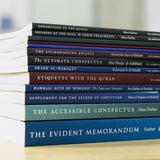
Six new publications are now available through Amazon:
1. Al-Malaybārī’s Branches of Faith: Shuʿab al-īmān
2. Al-Fādānī’s Treatise on Logic: Risālah fī ʿIlm al-Manṭiq
3. Nawawī al-Jāwī’s Tījān al-Darārī
4. Al-Sanūsī’s Sharḥ al-Muqaddimāt: The Prolegomena to Islamic Theology
5. Ibn Juzayy’s Taqrīb Al-Wuṣūl ilā ʿIlm al-Uṣūl: Facilitating Access to the Science of Legal Theory
6. Al-Khayrābādī’s Ladder to Logic: Al-Mirqāt fī ʿilm al-manṭiq
See my Patreon page for more information:
https://www.patreon.com/musafurber
Many thanks to the supporters who helped make this possible.
1. Al-Malaybārī’s Branches of Faith: Shuʿab al-īmān
2. Al-Fādānī’s Treatise on Logic: Risālah fī ʿIlm al-Manṭiq
3. Nawawī al-Jāwī’s Tījān al-Darārī
4. Al-Sanūsī’s Sharḥ al-Muqaddimāt: The Prolegomena to Islamic Theology
5. Ibn Juzayy’s Taqrīb Al-Wuṣūl ilā ʿIlm al-Uṣūl: Facilitating Access to the Science of Legal Theory
6. Al-Khayrābādī’s Ladder to Logic: Al-Mirqāt fī ʿilm al-manṭiq
See my Patreon page for more information:
https://www.patreon.com/musafurber
Many thanks to the supporters who helped make this possible.
Patreon
Get more from Musa Furber on Patreon
creating accessible, classical Islamic scholarship
❤5🔥2🎉1
# Al-Qudusī al-Jāwī’s Kifāyat al-Mubtadī: The Beginner’s Sufficiency ~ part 1
al-salamu alaykum
Here is the first share Shaykh Muḥammad ʿAlī ibn ʿAbd al-Qādir al-Khaṭīb al-Qudusī al-Jāwī al-Makkī’s (d. 1293 AH/1876 CE) Kifāyat al-Mubtadī (The Beginner’s Sufficiency), another text written in Arabic by an Indonesian-world scholar residing in the Ḥaramayn.
From the preface:
> Kifāyat al-Mubtadī is a concise creedal primer in the Ashʿarī tradition, composed in Mecca in 1271 AH/1854 CE by Muḥammad ʿAlī al-Qudusī al-Jāwī al-Makkī (d. 1293 AH/1876 CE), a scholar from Central Java permanently settled in Mecca. The work follows the standard post-Sanūsī schema of the fifty doctrines: twenty necessary attributes of Allah (grouped into the essential, negative, qualitative, and attributive-state categories), their twenty impossible contraries, and the single contingent attribute, followed by four necessary prophetic attributes with their contraries and the prophetic contingent. Each doctrine is stated, defined, given a rational proof, and paired with its opposite. The text then appends a substantial section on transmitted doctrines covering angels, heavenly books, eschatological realities (the intermediate realm, the reckoning, the balance, the bridge, intercession, the Garden and the Fire), the Prophet's lineage, wives, children, the ranking of the Companions and caliphs, and concludes with an analysis of the two testimonies of faith as a summary of the entire creedal system. Its content is very similar to al-Faḍālī's Kifāyat al-ʿAwāmm fī ʿIlm al-Kalām and al-Bājūrī's gloss on the same, Taḥqīq al-Maqām, and at times appears to be derived from them, though this is something requiring further study.
>
> The book is for the beginning student of theology-based creed and assumes no prior training in formal logic or theology; there is no treatment of the relationship between existence and essence, no engagement with philosophy or Māturīdī alternatives, and no discussion of formal logic. A student who completes this text would have the doctrinal vocabulary, the argumentative skeleton of each proof, and a working sense of how rational and transmitted proofs cooperate – enough to proceed to the commentary and gloss literature or to a more advanced text like al-Sanūsī's longer creed.
>
> What makes the text noteworthy is its provenance. Al-Qudusī belongs to the scholarly community of nineteenth-century Mecca – men born in the Indonesian archipelago who travelled for pilgrimage or study and remained in the Ḥijāz until death, becoming part of Mecca's own scholarly class. The same community produced Nawawī al-Bantanī (d. 1314 AH/1897 CE), Aḥmad Khaṭīb al-Minangkabāwī (d. 1334 AH/1915 CE), and Maḥfūẓ al-Tarmasī (d. 1338 AH/1920 CE). These were not visiting scholars maintaining ties with a homeland; they were Meccan scholars originating from the Indonesian archipelago, teaching in the Sacred Mosque or in their homes, writing in Arabic, and being buried there. Their books travelled back to the religious school networks of the archipelago through the pilgrimage pipeline and the book trade. Al-Qudusī's Kifāyah is one more witness to that community's confident, productive Arabic-language theological output – a teaching text composed far from Arabic’s heartland by a scholar fully embedded in its tradition.
A few things stand out when compared to Shaykh Nawawī al-Jāwī’s Tījān al-Darārī: it is a matn, not a matn plus sharḥ, which makes for cleaner prose and easier reading; it covers more material, especially in regards to matters known only through revelation – like those related to the unseen and the afterlife; it includes a brief overview of the objectives of Islam and purification of the soul.
And when compared to his Unpacking the Select Creed: it is a matn, not a matn plus sharḥ, which makes for cleaner prose and easier reading; it covers the same breadth of issues but goes into more depth – especially in that it includes proofs.
[CONTINUED IN NEXT MESSAGE]
al-salamu alaykum
Here is the first share Shaykh Muḥammad ʿAlī ibn ʿAbd al-Qādir al-Khaṭīb al-Qudusī al-Jāwī al-Makkī’s (d. 1293 AH/1876 CE) Kifāyat al-Mubtadī (The Beginner’s Sufficiency), another text written in Arabic by an Indonesian-world scholar residing in the Ḥaramayn.
From the preface:
> Kifāyat al-Mubtadī is a concise creedal primer in the Ashʿarī tradition, composed in Mecca in 1271 AH/1854 CE by Muḥammad ʿAlī al-Qudusī al-Jāwī al-Makkī (d. 1293 AH/1876 CE), a scholar from Central Java permanently settled in Mecca. The work follows the standard post-Sanūsī schema of the fifty doctrines: twenty necessary attributes of Allah (grouped into the essential, negative, qualitative, and attributive-state categories), their twenty impossible contraries, and the single contingent attribute, followed by four necessary prophetic attributes with their contraries and the prophetic contingent. Each doctrine is stated, defined, given a rational proof, and paired with its opposite. The text then appends a substantial section on transmitted doctrines covering angels, heavenly books, eschatological realities (the intermediate realm, the reckoning, the balance, the bridge, intercession, the Garden and the Fire), the Prophet's lineage, wives, children, the ranking of the Companions and caliphs, and concludes with an analysis of the two testimonies of faith as a summary of the entire creedal system. Its content is very similar to al-Faḍālī's Kifāyat al-ʿAwāmm fī ʿIlm al-Kalām and al-Bājūrī's gloss on the same, Taḥqīq al-Maqām, and at times appears to be derived from them, though this is something requiring further study.
>
> The book is for the beginning student of theology-based creed and assumes no prior training in formal logic or theology; there is no treatment of the relationship between existence and essence, no engagement with philosophy or Māturīdī alternatives, and no discussion of formal logic. A student who completes this text would have the doctrinal vocabulary, the argumentative skeleton of each proof, and a working sense of how rational and transmitted proofs cooperate – enough to proceed to the commentary and gloss literature or to a more advanced text like al-Sanūsī's longer creed.
>
> What makes the text noteworthy is its provenance. Al-Qudusī belongs to the scholarly community of nineteenth-century Mecca – men born in the Indonesian archipelago who travelled for pilgrimage or study and remained in the Ḥijāz until death, becoming part of Mecca's own scholarly class. The same community produced Nawawī al-Bantanī (d. 1314 AH/1897 CE), Aḥmad Khaṭīb al-Minangkabāwī (d. 1334 AH/1915 CE), and Maḥfūẓ al-Tarmasī (d. 1338 AH/1920 CE). These were not visiting scholars maintaining ties with a homeland; they were Meccan scholars originating from the Indonesian archipelago, teaching in the Sacred Mosque or in their homes, writing in Arabic, and being buried there. Their books travelled back to the religious school networks of the archipelago through the pilgrimage pipeline and the book trade. Al-Qudusī's Kifāyah is one more witness to that community's confident, productive Arabic-language theological output – a teaching text composed far from Arabic’s heartland by a scholar fully embedded in its tradition.
A few things stand out when compared to Shaykh Nawawī al-Jāwī’s Tījān al-Darārī: it is a matn, not a matn plus sharḥ, which makes for cleaner prose and easier reading; it covers more material, especially in regards to matters known only through revelation – like those related to the unseen and the afterlife; it includes a brief overview of the objectives of Islam and purification of the soul.
And when compared to his Unpacking the Select Creed: it is a matn, not a matn plus sharḥ, which makes for cleaner prose and easier reading; it covers the same breadth of issues but goes into more depth – especially in that it includes proofs.
[CONTINUED IN NEXT MESSAGE]
❤2
[CONTINUATION]
In addition to the above, Kifāyat al-Mubtadī has a sharḥ written by the author’s son that is roughly 6x the length of our matn.
Despite Kifāyat al-Mubtadī’s aforementioned comparative advantages, it does not seem to have received the long-term attention that Shaykh Nawawī’s did. It may simply be a matter of Shaykh Nawawī having more students and students sticking to what they read with their teacher.
I recommend reading all three: Unpacking for broad basics, Tījān for proofs of the essentials, then Kifāyah to review and expand. The repetition – especially of core material – shouldn’t be seen as a disadvantage since it helps to enforce memory and expose slips.
—musa
Supporters can access the first part here:
https://www.patreon.com/posts/al-qudusi-al-al-154115589
In addition to the above, Kifāyat al-Mubtadī has a sharḥ written by the author’s son that is roughly 6x the length of our matn.
Despite Kifāyat al-Mubtadī’s aforementioned comparative advantages, it does not seem to have received the long-term attention that Shaykh Nawawī’s did. It may simply be a matter of Shaykh Nawawī having more students and students sticking to what they read with their teacher.
I recommend reading all three: Unpacking for broad basics, Tījān for proofs of the essentials, then Kifāyah to review and expand. The repetition – especially of core material – shouldn’t be seen as a disadvantage since it helps to enforce memory and expose slips.
—musa
Supporters can access the first part here:
https://www.patreon.com/posts/al-qudusi-al-al-154115589
Patreon
Al-Qudusī al-Jāwī’s Kifāyat al-Mubtadī: The Beginner’s Sufficiency ~ part 1 | Musa Furber
Al-Qudusī al-Jāwī’s Kifāyat al-Mubtadī: The Beginner’s Sufficiency ~ part 1 by Musa Furber on Patreon. Join Musa Furber's community for exclusive content and updates.
❤4
# Al-Qudusī al-Jāwī’s Kifāyat al-Mubtadī: The Beginner’s Sufficiency ~ parts 1–2
al-salamu alaykum
Here is Shaykh Muḥammad ʿAlī ibn ʿAbd al-Qādir al-Khaṭīb al-Qudusī al-Jāwī al-Makkī’s (d. 1293 AH/1876 CE) Kifāyat al-Mubtadī (The Beginner’s Sufficiency), another ʿaqīdah text written in Arabic by an Indonesian-world scholar residing in the Ḥaramayn.
I did a complete revision, so I am resharing part 1.
The Arabic text is only 4.8k words, making it significantly shorter than Tījān al-Darārī’s 8.6k words (1k of them matn, 7.6k of them sharh). This surprised me; I expect it to be the reverse. I think the primary factor is that Tījān gives more detailed arguments – especially when it comes to opposites.
I transcribed the commentary and have begun reading through it. It is 80k words in length. Much of it comes from Imām al-Bājūrī’s works which are waiting for revision. While I probably will not translate the whole text, I would like to at least make a clean copy of the Arabic available.
–musa
Supporters can access the 83 page PDF here:
https://www.patreon.com/posts/al-qudusi-al-al-154751359
al-salamu alaykum
Here is Shaykh Muḥammad ʿAlī ibn ʿAbd al-Qādir al-Khaṭīb al-Qudusī al-Jāwī al-Makkī’s (d. 1293 AH/1876 CE) Kifāyat al-Mubtadī (The Beginner’s Sufficiency), another ʿaqīdah text written in Arabic by an Indonesian-world scholar residing in the Ḥaramayn.
I did a complete revision, so I am resharing part 1.
The Arabic text is only 4.8k words, making it significantly shorter than Tījān al-Darārī’s 8.6k words (1k of them matn, 7.6k of them sharh). This surprised me; I expect it to be the reverse. I think the primary factor is that Tījān gives more detailed arguments – especially when it comes to opposites.
I transcribed the commentary and have begun reading through it. It is 80k words in length. Much of it comes from Imām al-Bājūrī’s works which are waiting for revision. While I probably will not translate the whole text, I would like to at least make a clean copy of the Arabic available.
–musa
Supporters can access the 83 page PDF here:
https://www.patreon.com/posts/al-qudusi-al-al-154751359
Patreon
Al-Qudusī al-Jāwī’s Kifāyat al-Mubtadī: The Beginner’s Sufficiency ~ parts 1–2 | Musa Furber
Al-Qudusī al-Jāwī’s Kifāyat al-Mubtadī: The Beginner’s Sufficiency ~ parts 1–2 by Musa Furber on Patreon. Join Musa Furber's community for exclusive content and updates.
👍3
# Creed from al-Thimār al-Yāniʿah
al-salamu alaykum
This share presents the section on creed excerpted from Shaykh Muḥammad Nawawī al-Jāwī of Banten's (d. 1316 AH/1898 CE) al-Thimār al-Yāniʿah, a commentary on al-Riyāḍ al-Badīʿah by al-ʿAllāma Muḥammad b. Sulaymān Ḥasb Allāh (d. 1225 AH/1810 CE). The commentary was completed in 1277 AH and first printed in 1299 AH. The text comprises approximately 6,600 words in total: the matn segment consists of about 600 words, to which the sharḥ adds roughly 6,000 words. The matn itself predates 1225 AH.
What stands out about this book is how much it packs into such a small package. Of Shaykh Nawawī’s books, it covers the widest range of non-methodologically related credal issues, while still including the most important points of methodology. Despite its compactness, the language of the text remains accessible.
Another interesting feature of the book is its division of obligatory matters into primary obligations of belief, subsidiary obligations of belief, obligations of knowledge, and obligations of practice – a division that I have seen mentioned in only a few other books.
I chose to share this text for its accessible and concise breadth, despite it being only a portion of the full book – as those three qualities do not always come together.
—musa
Supporters can access the 84 page PDF here:
https://www.patreon.com/posts/155406657/
al-salamu alaykum
This share presents the section on creed excerpted from Shaykh Muḥammad Nawawī al-Jāwī of Banten's (d. 1316 AH/1898 CE) al-Thimār al-Yāniʿah, a commentary on al-Riyāḍ al-Badīʿah by al-ʿAllāma Muḥammad b. Sulaymān Ḥasb Allāh (d. 1225 AH/1810 CE). The commentary was completed in 1277 AH and first printed in 1299 AH. The text comprises approximately 6,600 words in total: the matn segment consists of about 600 words, to which the sharḥ adds roughly 6,000 words. The matn itself predates 1225 AH.
What stands out about this book is how much it packs into such a small package. Of Shaykh Nawawī’s books, it covers the widest range of non-methodologically related credal issues, while still including the most important points of methodology. Despite its compactness, the language of the text remains accessible.
Another interesting feature of the book is its division of obligatory matters into primary obligations of belief, subsidiary obligations of belief, obligations of knowledge, and obligations of practice – a division that I have seen mentioned in only a few other books.
I chose to share this text for its accessible and concise breadth, despite it being only a portion of the full book – as those three qualities do not always come together.
—musa
Supporters can access the 84 page PDF here:
https://www.patreon.com/posts/155406657/
Patreon
Creed from al-Thimār al-Yāniʿah | Musa Furber
Creed from al-Thimār al-Yāniʿah by Musa Furber on Patreon. Join Musa Furber's community for exclusive content and updates.
❤1
# Maḥmūd al-Bājūrī: al-Fuṣūl al-Badīʿah fī Uṣūl al-Sharīʿah, part 1
Today’s share comes from a translation of al-Fuṣūl al-Badīʿah fī Uṣūl al-Sharīʿah (“The Exquisite Chapters on the Principles of the Law”) by Maḥmūd ibn ʿUmar ibn Aḥmad ibn ʿUmar ibn Shāhīn al-Bājūrī (d. after 1323/1905).
Al-Bājūrī states in his introduction that he summarised Jamʿ al-Jawāmiʿ – the celebrated compendium of legal theory by Tāj al-Dīn al-Subkī (d. 771/1370) – and its commentary by Jalāl al-Dīn al-Maḥallī (d. 864/1459), reporting the scholarly disagreements with the particle aw (“alternatively”), clarifying the original’s compressed expressions, elucidating its obscure allusions, and appending additional benefits for students. The result is a work of approximately one hundred pages that covers the full range of uṣūl al-fiqh together with an opening chapter on creed (ʿaqīdah) and a closing chapter of supplementary principles drawn from theology (kalām), philosophy (falsafah), and ethics (akhlāq).
Al-Bājūrī’s audience was not writing for traditional Azharī students who would proceed directly from the Waraqāt to Maḥallī’s commentary on Jamʿ al-Jawāmiʿ. He was writing for graduates of the modern educational institutions – Dār al-ʿUlūm, the Muhandiskhānah, the Khedival schools – who had been trained in arithmetic, geometry, and the natural sciences but who lacked a systematic introduction to the Islamic legal and theological disciplines. For such readers, al-Subkī’s compressed prose and al-Maḥallī’s terse commentary would have been impenetrable. Al-Bājūrī’s summary, with its explanatory expansions and illustrative examples, offered an accessible point of entry.
The present translation repurposes al-Bājūrī’s work for a new audience: bilingual students of the Islamic sciences (ṭullāb al-ʿilm) who have completed an introductory study of legal theory – such as the Waraqāt of al-Juwaynī with al-Maḥallī’s commentary – and seek a bridge to the advanced classical texts, above all Jamʿ al-Jawāmiʿ itself.
See the preface for more details.
Today’s share of 150 pages covers roughly the first half of the book, namely: the author’s introduction, creed, preliminaries for studying principles of jurisprudence, the Qurʾān and the investigation of utterances.
Many thanks to those who support this endeavour to ensure that English speaking students have easier access to our scholarly works. May the next coming generations be giants standing on the shoulders of ants.
—musa
Supporters can access the 150 page PDF here:
https://www.patreon.com/posts/mahmud-al-bajuri-156559631
Today’s share comes from a translation of al-Fuṣūl al-Badīʿah fī Uṣūl al-Sharīʿah (“The Exquisite Chapters on the Principles of the Law”) by Maḥmūd ibn ʿUmar ibn Aḥmad ibn ʿUmar ibn Shāhīn al-Bājūrī (d. after 1323/1905).
Al-Bājūrī states in his introduction that he summarised Jamʿ al-Jawāmiʿ – the celebrated compendium of legal theory by Tāj al-Dīn al-Subkī (d. 771/1370) – and its commentary by Jalāl al-Dīn al-Maḥallī (d. 864/1459), reporting the scholarly disagreements with the particle aw (“alternatively”), clarifying the original’s compressed expressions, elucidating its obscure allusions, and appending additional benefits for students. The result is a work of approximately one hundred pages that covers the full range of uṣūl al-fiqh together with an opening chapter on creed (ʿaqīdah) and a closing chapter of supplementary principles drawn from theology (kalām), philosophy (falsafah), and ethics (akhlāq).
Al-Bājūrī’s audience was not writing for traditional Azharī students who would proceed directly from the Waraqāt to Maḥallī’s commentary on Jamʿ al-Jawāmiʿ. He was writing for graduates of the modern educational institutions – Dār al-ʿUlūm, the Muhandiskhānah, the Khedival schools – who had been trained in arithmetic, geometry, and the natural sciences but who lacked a systematic introduction to the Islamic legal and theological disciplines. For such readers, al-Subkī’s compressed prose and al-Maḥallī’s terse commentary would have been impenetrable. Al-Bājūrī’s summary, with its explanatory expansions and illustrative examples, offered an accessible point of entry.
The present translation repurposes al-Bājūrī’s work for a new audience: bilingual students of the Islamic sciences (ṭullāb al-ʿilm) who have completed an introductory study of legal theory – such as the Waraqāt of al-Juwaynī with al-Maḥallī’s commentary – and seek a bridge to the advanced classical texts, above all Jamʿ al-Jawāmiʿ itself.
See the preface for more details.
Today’s share of 150 pages covers roughly the first half of the book, namely: the author’s introduction, creed, preliminaries for studying principles of jurisprudence, the Qurʾān and the investigation of utterances.
Many thanks to those who support this endeavour to ensure that English speaking students have easier access to our scholarly works. May the next coming generations be giants standing on the shoulders of ants.
—musa
Supporters can access the 150 page PDF here:
https://www.patreon.com/posts/mahmud-al-bajuri-156559631
Patreon
Maḥmūd al-Bājūrī: al-Fuṣūl al-Badīʿah fī Uṣūl al-Sharīʿah, part 1 | Musa Furber
Maḥmūd al-Bājūrī: al-Fuṣūl al-Badīʿah fī Uṣūl al-Sharīʿah, part 1 by Musa Furber on Patreon. Join Musa Furber's community for exclusive content and updates.
👍2
# Books in Malaysia
al-salamu alaykum
The six recent books are now available in Kuala Lumpur at Pelita Dhihin Bookstore (Petaling Jaya) and Nur Innai Bookshop (Sri Hartamas).
al-salamu alaykum
The six recent books are now available in Kuala Lumpur at Pelita Dhihin Bookstore (Petaling Jaya) and Nur Innai Bookshop (Sri Hartamas).
❤6
# Sanūsiyyan Reasoning & Ontology
While working on thesis materials, I found myself writing about Imām al-Sanūsī's reasoning and ontology. This is something I had wanted to write as a companion booklet for a long time. So I threw it together in a small booklet, tentatively titled: Sanūsiyyan Reasoning & Ontology: A Companion to Imām al-Sanūsī's Short Theological Writings.
## What it is
A plain-English companion to the mutūn of Imām Muḥammad b. Yūsuf al-Sanūsī (d. 895/1490). It is not a commentary on those works, nor a survey of their doctrines, but a study aid: it gathers, from across his corpus – al-Muqaddimāt, Umm al-Barāhīn (al-Ṣughrā), al-Wusṭā, al-Kubrā, and the Mukhtaṣar fī al-Manṭiq, together with their commentaries – the operational apparatus a reader needs in order to follow the reasoning those texts deploy, and teaches it as a toolkit rather than a catalogue of belief. The aim throughout is that, once equipped with the apparatus, the reader should find the mutūn themselves legible.
## Who it is for
The intended reader is a newcomer working through al-Sanūsī's mutūn in English, often without an instructor or a commentary at hand. It is also useful as a quick refresher for intermediate readers who learned the apparatus once but lack a single-volume reference to it. No prior training in logic or kalām is assumed; Arabic technical terms are transliterated and glossed on first use, and the surrounding English is kept plain.
## What it currently contains
After an opening chapter on Imām al-Sanūsī and his works, the body runs in two halves. The first sets out his reasoning: what kalām is, the three rational rulings (necessity, impossibility, possibility), the Five Crafts of inference and which of them is relied upon (al-muʿtamad), the six certainty-types that compose a demonstration, the forms of inference, and the defensive moves a practitioner needs. The second sets out his ontology: the modal categories read as kinds of existence, the structure of contingent being (substance, body, accident, and the four modes of being), the cornerstone proof of the world's temporal-origination (ḥudūth al-ʿālam) with the dawr/tasalsul machinery that secures it, and the framework of attributes, contrariety, and causation. A set of appendices then gathers matn passages and selected sharḥ-snippets keyed to each of the mutūn (App. MQ, U, W, K) along with al-Hawwārī's Ḥaqāʾiq al-Tawḥīd (App. Haq), followed by a glossary and bibliography.
It is a work in progress.
===
I shared the second revision yesterday. Supporters can read it here:
https://www.patreon.com/posts/updated-ontology-159267820
While working on thesis materials, I found myself writing about Imām al-Sanūsī's reasoning and ontology. This is something I had wanted to write as a companion booklet for a long time. So I threw it together in a small booklet, tentatively titled: Sanūsiyyan Reasoning & Ontology: A Companion to Imām al-Sanūsī's Short Theological Writings.
## What it is
A plain-English companion to the mutūn of Imām Muḥammad b. Yūsuf al-Sanūsī (d. 895/1490). It is not a commentary on those works, nor a survey of their doctrines, but a study aid: it gathers, from across his corpus – al-Muqaddimāt, Umm al-Barāhīn (al-Ṣughrā), al-Wusṭā, al-Kubrā, and the Mukhtaṣar fī al-Manṭiq, together with their commentaries – the operational apparatus a reader needs in order to follow the reasoning those texts deploy, and teaches it as a toolkit rather than a catalogue of belief. The aim throughout is that, once equipped with the apparatus, the reader should find the mutūn themselves legible.
## Who it is for
The intended reader is a newcomer working through al-Sanūsī's mutūn in English, often without an instructor or a commentary at hand. It is also useful as a quick refresher for intermediate readers who learned the apparatus once but lack a single-volume reference to it. No prior training in logic or kalām is assumed; Arabic technical terms are transliterated and glossed on first use, and the surrounding English is kept plain.
## What it currently contains
After an opening chapter on Imām al-Sanūsī and his works, the body runs in two halves. The first sets out his reasoning: what kalām is, the three rational rulings (necessity, impossibility, possibility), the Five Crafts of inference and which of them is relied upon (al-muʿtamad), the six certainty-types that compose a demonstration, the forms of inference, and the defensive moves a practitioner needs. The second sets out his ontology: the modal categories read as kinds of existence, the structure of contingent being (substance, body, accident, and the four modes of being), the cornerstone proof of the world's temporal-origination (ḥudūth al-ʿālam) with the dawr/tasalsul machinery that secures it, and the framework of attributes, contrariety, and causation. A set of appendices then gathers matn passages and selected sharḥ-snippets keyed to each of the mutūn (App. MQ, U, W, K) along with al-Hawwārī's Ḥaqāʾiq al-Tawḥīd (App. Haq), followed by a glossary and bibliography.
It is a work in progress.
===
I shared the second revision yesterday. Supporters can read it here:
https://www.patreon.com/posts/updated-ontology-159267820
Patreon
Updated: Sanūsiyyan Reasoning & Ontology | Musa Furber
Updated: Sanūsiyyan Reasoning & Ontology by Musa Furber on Patreon. Join Musa Furber's community for exclusive content and updates.
❤3🔥1
# Sanūsiyyan Proofs Unpacked and Unfolded
Last week I started sharing the booklet titled Sanūsiyyan Reasoning and Ontology. Yesterday, I started drafting a chapter to show how that reasoning works in the compact proof for existence in Umm al-Barāhīn, and then how it gets unpacked and extended in the shurūḥ and ḥawāshī. The chapter quickly outgrew the format of that booklet, so I figured it might make the first of a series of similar unpackings and extensions.
This second book is tentatively titled Sanūsiyyan Proofs Unpacked and Unfolded.
## What it is
The sister volume to Sanūsiyyan Reasoning & Ontology. Where the companion teaches the apparatus, this book puts it to work: it takes a single proof from al-Sanūsī's Umm al-Barāhīn and carries it all the way down – beginning with his compact, one-sentence demonstration and unfolding every premise he left unsaid, then following how that proof is unpacked and extended across the shurūḥ and ḥawāshī. The aim is to model, on one attribute, how these mutūn are meant to be read.
## Who it is for
A reader who has met the apparatus – ideally in the companion, whose toolkit this book assumes – and wants to see it deployed in full on a real proof, in plain English. It is written for students of the mutūn (ṭullāb al-ʿilm) preparing to work through the commentaries themselves: the book names each proof-form as it is used, leaves the working markers standing in the running argument, and trains the habit of pressing a terse matn for the premises it suppresses. The two volumes are meant to be read together – learn the toolkit there, then watch it deployed in full here.
## What it currently contains
It currently contains a single chapter: “Existence: Carried to Its Full.” It takes al-Sanūsī's demonstration of God's existence and reads it through al-Qayrawānī's architecture and al-Wajhānī's logic, drawing in the wider ring of ḥawāshī (al-Dasūqī, al-ʿAdawī, al-Suḥaymī, al-Mallāwī, and al-Ḥāmidī). It reconstructs the proof as a stack of nested certainties – from observed change, up through the world's temporal-origination, to the Maker; distinguishes a demonstration (burhān) from a mere proof (dalīl); names the form of inference the argument travels in; sets the temporal-origination road against the possibility road; and closes with the whole proof laid out step by step, as a numbered natural-language derivation alongside a symbolic companion. Four figures support the prose.
It is a trial run – a model chapter, offered to see whether the "carried to its full" treatment earns its keep. If it proves useful, the remaining attributes will follow on the same pattern; if not, the material folds back into the companion, where the existence proof already lives in shorter form.
===
I shared the first revision yesterday. Supporters can read it here:
https://www.patreon.com/posts/unexpected-and-159267979
Last week I started sharing the booklet titled Sanūsiyyan Reasoning and Ontology. Yesterday, I started drafting a chapter to show how that reasoning works in the compact proof for existence in Umm al-Barāhīn, and then how it gets unpacked and extended in the shurūḥ and ḥawāshī. The chapter quickly outgrew the format of that booklet, so I figured it might make the first of a series of similar unpackings and extensions.
This second book is tentatively titled Sanūsiyyan Proofs Unpacked and Unfolded.
## What it is
The sister volume to Sanūsiyyan Reasoning & Ontology. Where the companion teaches the apparatus, this book puts it to work: it takes a single proof from al-Sanūsī's Umm al-Barāhīn and carries it all the way down – beginning with his compact, one-sentence demonstration and unfolding every premise he left unsaid, then following how that proof is unpacked and extended across the shurūḥ and ḥawāshī. The aim is to model, on one attribute, how these mutūn are meant to be read.
## Who it is for
A reader who has met the apparatus – ideally in the companion, whose toolkit this book assumes – and wants to see it deployed in full on a real proof, in plain English. It is written for students of the mutūn (ṭullāb al-ʿilm) preparing to work through the commentaries themselves: the book names each proof-form as it is used, leaves the working markers standing in the running argument, and trains the habit of pressing a terse matn for the premises it suppresses. The two volumes are meant to be read together – learn the toolkit there, then watch it deployed in full here.
## What it currently contains
It currently contains a single chapter: “Existence: Carried to Its Full.” It takes al-Sanūsī's demonstration of God's existence and reads it through al-Qayrawānī's architecture and al-Wajhānī's logic, drawing in the wider ring of ḥawāshī (al-Dasūqī, al-ʿAdawī, al-Suḥaymī, al-Mallāwī, and al-Ḥāmidī). It reconstructs the proof as a stack of nested certainties – from observed change, up through the world's temporal-origination, to the Maker; distinguishes a demonstration (burhān) from a mere proof (dalīl); names the form of inference the argument travels in; sets the temporal-origination road against the possibility road; and closes with the whole proof laid out step by step, as a numbered natural-language derivation alongside a symbolic companion. Four figures support the prose.
It is a trial run – a model chapter, offered to see whether the "carried to its full" treatment earns its keep. If it proves useful, the remaining attributes will follow on the same pattern; if not, the material folds back into the companion, where the existence proof already lives in shorter form.
===
I shared the first revision yesterday. Supporters can read it here:
https://www.patreon.com/posts/unexpected-and-159267979
Patreon
Unexpected: Sanūsiyyan Proofs Unpacked and Unfolded | Musa Furber
Unexpected: Sanūsiyyan Proofs Unpacked and Unfolded by Musa Furber on Patreon. Join Musa Furber's community for exclusive content and updates.
❤2🔥2