
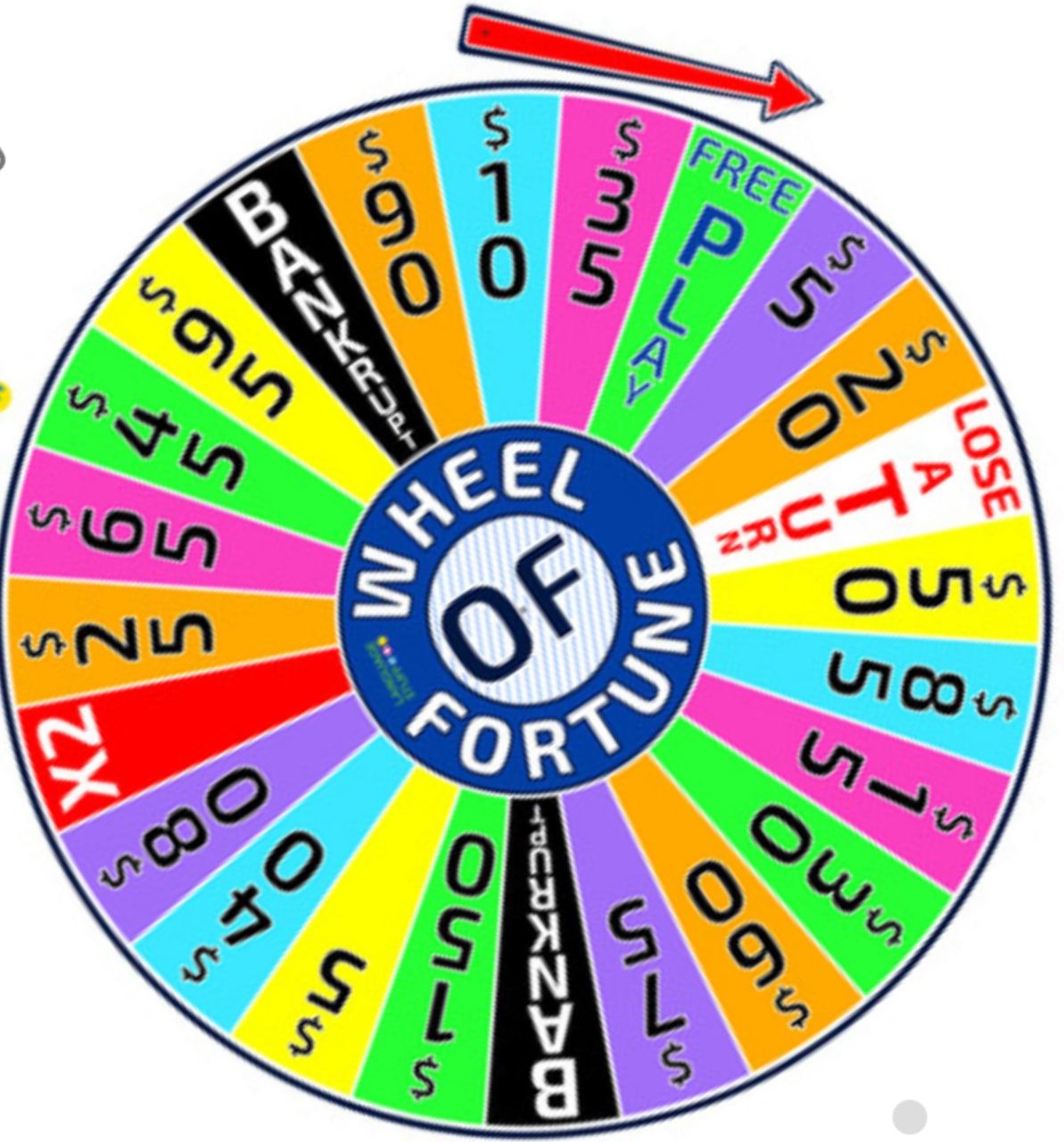
A cool game for all occasions and a great way to diversify everyday lessons, evenings in summer camps, parties in language centres and speaking clubs or complete the school year! The game includes a board and an arrow (you can use a spinner instead) and a blank of a back side for cards with your questions and tasks.
How to use:
- transform the revision into the form of a QUIZ!
Prepare the required number of questions on special cards in advance. Questions can be of any kind, e.g. fill in the correct form of the verb, guess the word by its definition, make a sentence with the word/verb using the right tense form, or questions on erudition.
For young learners the following options are possible: read/write/spell a sight word, name a letter/sound or 3 words with this letter/sound/diphthong, name the card, answer the question (what colour? where? what? how many?) etc.
The child spins the "wheel" (in our case, an arrow or a spinner) and gets the opportunity to answer the question. If the answer is correct, he gets the specified number of points in the sector (you may write the names of students and the number of their points on the board). All points are counted at the end of the game. The player with the highest score wins. If the budget allows, you can prepare small prizes (stickers, candy, pencils, notebooks, etc.) or put prizes on the tables (pretended to be a shop) with a specified prices, and provide them with the opportunity to choose their own prizes for winning scores.
- well-known game "Wheel of Fortune".
It's played in several rounds (3-5 you decide).
Select a few words-tasks, come up with definitions for them + think about a couple of tips. Words should not be too simple or complicated (with teenagers, you can use tasks on erudition).
Number of players / teams: 2-5 people (each round is played by different representatives of the teams).
Players spin the "wheel" and call one letter for one move.
- If there is a called letter in the word, the leader opens it on the scoreboard (or writes on the board in the right place), and the player gets the number of points that's fallen on the sector.
- If there are two or three same letters, the points are doubled or tripled accordingly.
- If there is no such a letter in the word, the move goes to another player. (You can add a point that the player can buy a hint for a certain number of points + name the letter or ask the team for help).
- If a player wants to name the whole word, he must also spell it.
Sectors have the following purposes:
- sectors with the number of points for the correct answer, which are summed up at the end of the game (a good reason to brush up numbers when counting the points);
- sector Bankrupt – a player loses all the points;
- sector *2 - the number of points, a player has, doubles with the correct answer;
sector Lose a turn - a player misses his turn;
Ferghana region Kushtepa district School number 49 Teacher
Pulatova U
@Englishteacherideas1
How to use:
- transform the revision into the form of a QUIZ!
Prepare the required number of questions on special cards in advance. Questions can be of any kind, e.g. fill in the correct form of the verb, guess the word by its definition, make a sentence with the word/verb using the right tense form, or questions on erudition.
For young learners the following options are possible: read/write/spell a sight word, name a letter/sound or 3 words with this letter/sound/diphthong, name the card, answer the question (what colour? where? what? how many?) etc.
The child spins the "wheel" (in our case, an arrow or a spinner) and gets the opportunity to answer the question. If the answer is correct, he gets the specified number of points in the sector (you may write the names of students and the number of their points on the board). All points are counted at the end of the game. The player with the highest score wins. If the budget allows, you can prepare small prizes (stickers, candy, pencils, notebooks, etc.) or put prizes on the tables (pretended to be a shop) with a specified prices, and provide them with the opportunity to choose their own prizes for winning scores.
- well-known game "Wheel of Fortune".
It's played in several rounds (3-5 you decide).
Select a few words-tasks, come up with definitions for them + think about a couple of tips. Words should not be too simple or complicated (with teenagers, you can use tasks on erudition).
Number of players / teams: 2-5 people (each round is played by different representatives of the teams).
Players spin the "wheel" and call one letter for one move.
- If there is a called letter in the word, the leader opens it on the scoreboard (or writes on the board in the right place), and the player gets the number of points that's fallen on the sector.
- If there are two or three same letters, the points are doubled or tripled accordingly.
- If there is no such a letter in the word, the move goes to another player. (You can add a point that the player can buy a hint for a certain number of points + name the letter or ask the team for help).
- If a player wants to name the whole word, he must also spell it.
Sectors have the following purposes:
- sectors with the number of points for the correct answer, which are summed up at the end of the game (a good reason to brush up numbers when counting the points);
- sector Bankrupt – a player loses all the points;
- sector *2 - the number of points, a player has, doubles with the correct answer;
sector Lose a turn - a player misses his turn;
Ferghana region Kushtepa district School number 49 Teacher
Pulatova U
@Englishteacherideas1
FolktaleGenresPosterSetFREEBIEFa.pdf
25 MB
@Englishteacherideas1
Folktales Genres Poster
Folktales Genres Poster