Forwarded from 0/0 (Haidar A. Fahad)
Everyone agrees that Osler’s greatest contribution to medicine was the recognition that physicians (whether students or old timers) learn more from their observations and conversations with patients than they do from books: “Medicine is learned by the bedside and not in the classroom”, and that is why our teachers, by their own example and by the critiques of our early interviews, taught us to ask open-ended questions and to listen attentively and respectfully while patients told their stories.
- Osler and the Way We Were Taught
- Osler and the Way We Were Taught
Forwarded from 0/0 (Haidar A. Fahad)
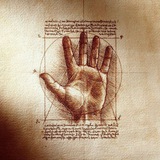
The practice of medicine is an art based on science.
- Sir William Osler
- Sir William Osler
Forwarded from 0/0 (Haidar A. Fahad)
0/0
The practice of medicine is an art based on science. - Sir William Osler
سلام الله على أوسلر
Forwarded from 0/0 (Haidar A. Fahad)
0/0
The practice of medicine is an art based on science. - Sir William Osler
Patients, as a rule, want to understand the meanings behind their illnesses “Why me?”, “Why now?”, “What lesson is this meant to teach me?”, “What did I do to deserve this?”
They hope to engage their physicians in the quest for answers, but physicians today are more interested in questions they can more easily answer: “What genes?”, “What proteins?”, and “What nerve pathways?”
Existential queries are dismissed as humanistic marginalia, no longer central, as they once were, to medical practice.
- Osler and the Way We Were Taught
They hope to engage their physicians in the quest for answers, but physicians today are more interested in questions they can more easily answer: “What genes?”, “What proteins?”, and “What nerve pathways?”
Existential queries are dismissed as humanistic marginalia, no longer central, as they once were, to medical practice.
- Osler and the Way We Were Taught
Forwarded from 0/0 (Haidar A. Fahad)
إنّ الطبّ بالدرجةِ الأساس يتَعامَلُ مع المريضِ وليسَ مع المشاكلِ البيولوجية (الأمراض) بحدّ ذاتِها، لأنّ المرض لا يُصيبُ المريض على المستوى البيولوجي فقط: من وجهةِ نظر المريض، هو "عِلّة" تَعبَثُ بكيانِه كُلِّه على المستوى الإجتماعي والنفسي والمالي حتى. بكلماتٍ أُخرى: المَرَضُ مشكلةٌ وجودية، لأنّه يُسَمِّم وجودَ الإنسانِ كُلَّه.
لهذا فإنَّ الطبَ، في تعامُلِه مع المريضِ بمرضِه (البيولوجي) وعلّتِه (الوجودية) معًا، هو أيضًا مُحَمَّلٌ بكلُ أنواعِ التَبِعاتِ العِلمية والإجتماعية والأخلاقية والنفسية وحتى الفلسفية.
لهذا فإنَّ الطبَ، في تعامُلِه مع المريضِ بمرضِه (البيولوجي) وعلّتِه (الوجودية) معًا، هو أيضًا مُحَمَّلٌ بكلُ أنواعِ التَبِعاتِ العِلمية والإجتماعية والأخلاقية والنفسية وحتى الفلسفية.
History taking and careful observation (not laboratory results) were the authority upon which differential diagnoses and initial treatment plans were built. Laboratory tests confirmed (or not) our hypotheses, not the other way around.
- Osler and the Way We Were Taught
- Osler and the Way We Were Taught
Cerebral salt-wasting (sometimes called renal salt-wasting)
The most common presenting story for cerebral salt wasting is hyponatremia after aneurysmal subarachnoid hemorrhage. A few days after the hemorrhage the patient’s serum sodium begins to drop while the urine sodium increases. The patient’s fluid status also decreases, and the patient becomes hyponatremic and hypovolemic.
It is important to distinguish between cerebral salt wasting and SIADH as the two are treated with opposite treatment strategies. For cerebral salt wasting the patient is given fluids and sodium supplementation. For SIADH the patient is fluid restricted.
Brain natriuretic peptide (BNP) is a bitch, and no one can change my mind about it
Hyponatremia + hypovolemia = Cerebral salt-wasting (CSW).
Hyponatremia + euvolemia or hypervolemia = SIADH.
Hyponatremia + euvolemia or hypervolemia = SIADH.
The key to understanding the pathophysiology, signs, symptoms, and treatment of SIADH is the awareness that the hyponatremia in this syndrome is a result of an excess of water and not a deficiency of Na+.
Today I’ve seen a case of receptive (Wernicke) aphasia in the hospital.
Lab Rats In Lab Coats
Today I’ve seen a case of receptive (Wernicke) aphasia in the hospital.
Patients with this type of aphasia usually have profound language comprehension deficits, even for single words or simple sentences. This is because in Wernicke’s aphasia individuals have damage in brain areas that are important for processing the meaning of words and spoken language. Such damage includes left posterior temporal regions of the brain, which are part of what is knows as Wernicke’s area.
The doctor asked him: where do you live?
He answered: I have this cough since a while.
He answered: I have this cough since a while.
DKA is no joke, it’s a serious condition that can lead to diabetic coma or even death. DKA is caused by an overload of ketones present in the blood.
When cells don't get the glucose they need for energy, the body begins to burn fat for energy, which produces ketones.
Ketones are chemicals that the body creates when it breaks down fat to use for energy. The body does this when it doesn’t have enough insulin to use glucose -body’s normal source of energy-. When ketones build up in the blood, they make it more acidic.
When levels get too high, the patient can develop DKA.
DKA may happen to anyone with diabetes, though it is rare in people with type 2.
When cells don't get the glucose they need for energy, the body begins to burn fat for energy, which produces ketones.
Ketones are chemicals that the body creates when it breaks down fat to use for energy. The body does this when it doesn’t have enough insulin to use glucose -body’s normal source of energy-. When ketones build up in the blood, they make it more acidic.
When levels get too high, the patient can develop DKA.
DKA may happen to anyone with diabetes, though it is rare in people with type 2.