
🔊 Iran, Qatari foreign ministers discuss regional developments over phone
During their call on Tuesday, the two foreign ministers also discussed the talks between Iran and the US which was held in Islamabad earlier this week.
Earlier today, Araghchi had another phone conversation with his Saudi counterpart Faisal bin Farhan where they talked about Islamabad talks and other regional developments.
Pakistani sources say that Pakistan’s Prime Minister Muhammad Shehbaz Sharif is going to visit Saudi Arabia soon for discussions over regional de-escalation and ways to bring a complete end to the US-Israeli-imposed war against Iran.
📲 @Irna_en
📌 Tehran, IRNA – Foreign Minister Abbas Araghchi and his Qatari counterpart have had a phone conversation, reviewing the latest developments going on across the region.
During their call on Tuesday, the two foreign ministers also discussed the talks between Iran and the US which was held in Islamabad earlier this week.
Earlier today, Araghchi had another phone conversation with his Saudi counterpart Faisal bin Farhan where they talked about Islamabad talks and other regional developments.
Pakistani sources say that Pakistan’s Prime Minister Muhammad Shehbaz Sharif is going to visit Saudi Arabia soon for discussions over regional de-escalation and ways to bring a complete end to the US-Israeli-imposed war against Iran.
📲 @Irna_en
👍24❤9👎1🤬1
🔻 National resilience shattered enemies' dream of Iran collapse: Pezeshkian
During a meeting on Monday, Pezeshkian addressed the war imposed on the Iranian nation by the United States and the Zionist regime, emphasizing that the Islamic Republic’s resilience, grounded in international laws and regulations, stems from its defensive strength and commitment to protecting national interests.
He added, “The Islamic Republic of Iran does not seek to infringe on the rights of other nations, but it will act decisively and resolutely in defending the undeniable rights of the Iranian people.”
Pezeshkian also sharply criticized the dual approach of certain so-called human rights bodies and their affiliated media, pointing out that the silence of these bodies in response to egregious acts—such as attacks on civilian sites, schools, medical centers, and relief institutions by the United States and the Zionist regime—, along with their biased positions on Iran’s domestic issues, exemplifies double standards and irresponsibility.
The president highlighted the failure of the enemies’ hostile strategies, stating, “Their assumption that the country would quickly collapse has been thwarted by the resistance and perseverance of the Iranian nation over the past forty-plus days. The threat to target our infrastructure reveals their desperation and inability to impose their will.”
While expressing appreciation for the sacrifices and dedication of the armed forces, he emphasized, “The Islamic Republic of Iran, relying on its defensive capabilities and national unity, will continue to progress with strength and will further reinforce the nation’s dignity and honor.”
On February 28, following the assassination of the late Leader of the Islamic Revolution Ayatollah Seyyed Ali Khamenei and several military commanders, the US and Israeli regimes initiated a sweeping military campaign against Iran.
In response, the Iranian Armed Forces executed a series of counterattacks over a span of 40 days, targeting American and Israeli military installations in the region and demonstrating their combat capabilities. Contrary to the expectations of a swift victory, the Iranian retaliations caused considerable damage to US and Israeli assets, prolonging the conflict and escalating tensions in the region.
In an attempt to ease hostilities, a two-week ceasefire was brokered on April 8, allowing for mediated negotiations to take place in Islamabad. Iran presented a ten-point plan during these discussions, which called for the withdrawal of US troops, the lifting of sanctions, and control over the key Strait of Hormuz. Despite engaging in 21 hours of intense talks with US negotiators in Pakistan, the Iranian delegation returned to Tehran without reaching an agreement, citing a lack of trust and excessive demands by the US.
📲 @Irna_en
📌 Tehran, IRNA – President Masoud Pezeshkian emphasized that the enemies' hostile strategies have failed in the recent war, and their assumption that the country would collapse quickly was shattered by the resilience and steadfastness of the Iranian nation.
During a meeting on Monday, Pezeshkian addressed the war imposed on the Iranian nation by the United States and the Zionist regime, emphasizing that the Islamic Republic’s resilience, grounded in international laws and regulations, stems from its defensive strength and commitment to protecting national interests.
He added, “The Islamic Republic of Iran does not seek to infringe on the rights of other nations, but it will act decisively and resolutely in defending the undeniable rights of the Iranian people.”
Pezeshkian also sharply criticized the dual approach of certain so-called human rights bodies and their affiliated media, pointing out that the silence of these bodies in response to egregious acts—such as attacks on civilian sites, schools, medical centers, and relief institutions by the United States and the Zionist regime—, along with their biased positions on Iran’s domestic issues, exemplifies double standards and irresponsibility.
The president highlighted the failure of the enemies’ hostile strategies, stating, “Their assumption that the country would quickly collapse has been thwarted by the resistance and perseverance of the Iranian nation over the past forty-plus days. The threat to target our infrastructure reveals their desperation and inability to impose their will.”
While expressing appreciation for the sacrifices and dedication of the armed forces, he emphasized, “The Islamic Republic of Iran, relying on its defensive capabilities and national unity, will continue to progress with strength and will further reinforce the nation’s dignity and honor.”
On February 28, following the assassination of the late Leader of the Islamic Revolution Ayatollah Seyyed Ali Khamenei and several military commanders, the US and Israeli regimes initiated a sweeping military campaign against Iran.
In response, the Iranian Armed Forces executed a series of counterattacks over a span of 40 days, targeting American and Israeli military installations in the region and demonstrating their combat capabilities. Contrary to the expectations of a swift victory, the Iranian retaliations caused considerable damage to US and Israeli assets, prolonging the conflict and escalating tensions in the region.
In an attempt to ease hostilities, a two-week ceasefire was brokered on April 8, allowing for mediated negotiations to take place in Islamabad. Iran presented a ten-point plan during these discussions, which called for the withdrawal of US troops, the lifting of sanctions, and control over the key Strait of Hormuz. Despite engaging in 21 hours of intense talks with US negotiators in Pakistan, the Iranian delegation returned to Tehran without reaching an agreement, citing a lack of trust and excessive demands by the US.
📲 @Irna_en
👍21❤8👏3
📄 Pezeshkian condemns Trump’s insults to Pope
“His Holiness Pope Louis XIV, I condemn the insult to Your Excellency on behalf of the great nation of Iran, and declare that the desecration of Jesus, the prophet of peace and brotherhood, is not acceptable to any free person. I wish you glory by Allah,” Pezeshkian wrote on his official X account on Tuesday.
Shortly after Pope’s reactions to US-Israeli aggression against Iran, Trump posted insulting words against him on his account on Truth Social, claiming that the leader of the Catholic Church is weak in dealing with crimes and is not good at foreign policy.
📲 @Irna_en
📌 Tehran, IRNA – President Masoud Pezeshkian has condemned insults to Pope Louis XIV by US President Donald Trump, declaring that the desecration of Jesus is not acceptable to any free person.
“His Holiness Pope Louis XIV, I condemn the insult to Your Excellency on behalf of the great nation of Iran, and declare that the desecration of Jesus, the prophet of peace and brotherhood, is not acceptable to any free person. I wish you glory by Allah,” Pezeshkian wrote on his official X account on Tuesday.
Shortly after Pope’s reactions to US-Israeli aggression against Iran, Trump posted insulting words against him on his account on Truth Social, claiming that the leader of the Catholic Church is weak in dealing with crimes and is not good at foreign policy.
📲 @Irna_en
👏30❤11👍4
🔻 Armed Forces’ strategic reserves sufficiently supplied: Defense Ministry spox
Regarding Iran’s readiness for a potential continuation of the war, Brigadier General Reza Talaei Nik said, “The capability of the armed forces is on the rise. Beyond the combat power and the utilization of evolving tactics and techniques, the Ministry of Defense’s logistical support remains active and aligned with the requirements of enhancing defensive power."
“The strategic reserves of the Armed Forces, in terms of missile and drone capacities, as well as other weaponry and equipment, were sufficiently supplied before the conflict through the collaboration of the private sector, knowledge-based companies, the Armed Forces, and the Ministry of Defense. This ensures the capability for sustained and effective offensive and defensive operations to defeat the enemies in the future,” the spokesperson further said on Monday.
The Ministry of Defense spokesperson emphasized that in addition to logistics and arms support, the ministry has placed its full range of technical expertise at the disposal of the Armed Forces.
📲 @Irna_en
📌 Tehran, IRNA — The spokesperson for Iran’s Ministry of Defense said that strategic reserves for the Armed Forces, including missiles and drones, were sufficiently secured and supplied prior to the imposed war.
Regarding Iran’s readiness for a potential continuation of the war, Brigadier General Reza Talaei Nik said, “The capability of the armed forces is on the rise. Beyond the combat power and the utilization of evolving tactics and techniques, the Ministry of Defense’s logistical support remains active and aligned with the requirements of enhancing defensive power."
“The strategic reserves of the Armed Forces, in terms of missile and drone capacities, as well as other weaponry and equipment, were sufficiently supplied before the conflict through the collaboration of the private sector, knowledge-based companies, the Armed Forces, and the Ministry of Defense. This ensures the capability for sustained and effective offensive and defensive operations to defeat the enemies in the future,” the spokesperson further said on Monday.
The Ministry of Defense spokesperson emphasized that in addition to logistics and arms support, the ministry has placed its full range of technical expertise at the disposal of the Armed Forces.
📲 @Irna_en
❤30👍14🙏2🔥1
📄 Iran, Oman foreign ministers discuss regional developments
During their conversation, the two foreign ministers discussed the Pakistani-mediated talks between Iran and the US held in Islamabad earlier this week.
Earlier today, Araghchi had separate phone talks with his Saudi, Qatari and French counterparts.
📲 @Irna_en
📌 Tehran, IRNA – Foreign Minister Abbas Araghchi and his Omani counterpart Badr bin Hamad Al Busaidi held a phone conversation on Tuesday, reviewing the latest developments across the region.
During their conversation, the two foreign ministers discussed the Pakistani-mediated talks between Iran and the US held in Islamabad earlier this week.
Earlier today, Araghchi had separate phone talks with his Saudi, Qatari and French counterparts.
📲 @Irna_en
👍33❤19🙏2
🌍 Iran UN Envoy: Maritime blockade ‘grave violation’ of Iran’s sovereignty
Iravani made the remarks in a letter to the UN secretary-general and the UN Security Council president on Monday, saying that the imposition of a maritime blockade amounts to a flagrant breach of the prohibition on the threat or use of force enshrined in Article 2(4) of the Charter of the United Nations and constitutes a clear act of aggression under international law.
On 12 April 2026, the United States Central Command (CENTCOM) publicly declared that US forces would begin implementing a blockade of all maritime traffic entering and exiting Iranian ports pursuant to a presidential proclamation.
The following is the full text of Iravani’s letter:
Upon instructions from my Government, I am writing to bring to your urgent attention, and to that of the members of the Security Council, the continued internationally wrongful acts of the United States against the Islamic Republic of Iran. On 12 April 2026, the United States Central Command (CENTCOM) publicly declared that U.S. forces would begin implementing a blockade of all maritime traffic entering and exiting Iranian ports pursuant to a presidential proclamation.
The imposition of a maritime blockade constitutes a grave violation of the sovereignty and territorial integrity of the Islamic Republic of Iran. It amounts to a flagrant breach of the prohibition on the threat or use of force enshrined in Article 2(4) of the Charter of the United Nations and constitutes a clear act of aggression under international law. Furthermore, this unlawful measure constitutes a serious violation of the fundamental principles of the international law of the sea. By seeking to obstruct maritime traffic to and from Iranian ports, the United States unlawfully interferes with the exercise of the sovereign rights of the Islamic Republic of Iran and infringes upon the rights of third States and lawful maritime commerce under international law.
The Islamic Republic of Iran unequivocally rejects and condemns the unlawful act of the United States in the strongest possible terms. It will exercise its inherent right to take all necessary and proportionate measures, in accordance with international law, to safeguard its sovereignty, territorial integrity and national interests. The United States bears full responsibility for this internationally wrongful act and for any consequences arising therefrom, including its impact on regional and international peace and security.
Given that this unlawful action poses a grave threat to international peace and security and obviously exacerbates the risk of escalation in an already highly volatile region, the Islamic Republic of Iran calls upon the Secretary-General and the Security Council to discharge their responsibilities under the Charter of the United Nations by unequivocally condemning this unlawful measure, taking urgent and effective steps to prevent further escalation with potentially catastrophic consequences for regional and international peace and security, and urging the United States to put an immediate end to its internationally wrongful acts against the Islamic Republic of Iran.
📲 @Irna_en
📌 New York, IRNA – Iran’s Ambassador and Permanent Representative to the United Nations, Amir Saeid Iravani, says that the imposition of a maritime blockade constitutes a grave violation of the sovereignty and territorial integrity of the Islamic Republic of Iran.
Iravani made the remarks in a letter to the UN secretary-general and the UN Security Council president on Monday, saying that the imposition of a maritime blockade amounts to a flagrant breach of the prohibition on the threat or use of force enshrined in Article 2(4) of the Charter of the United Nations and constitutes a clear act of aggression under international law.
On 12 April 2026, the United States Central Command (CENTCOM) publicly declared that US forces would begin implementing a blockade of all maritime traffic entering and exiting Iranian ports pursuant to a presidential proclamation.
The following is the full text of Iravani’s letter:
Upon instructions from my Government, I am writing to bring to your urgent attention, and to that of the members of the Security Council, the continued internationally wrongful acts of the United States against the Islamic Republic of Iran. On 12 April 2026, the United States Central Command (CENTCOM) publicly declared that U.S. forces would begin implementing a blockade of all maritime traffic entering and exiting Iranian ports pursuant to a presidential proclamation.
The imposition of a maritime blockade constitutes a grave violation of the sovereignty and territorial integrity of the Islamic Republic of Iran. It amounts to a flagrant breach of the prohibition on the threat or use of force enshrined in Article 2(4) of the Charter of the United Nations and constitutes a clear act of aggression under international law. Furthermore, this unlawful measure constitutes a serious violation of the fundamental principles of the international law of the sea. By seeking to obstruct maritime traffic to and from Iranian ports, the United States unlawfully interferes with the exercise of the sovereign rights of the Islamic Republic of Iran and infringes upon the rights of third States and lawful maritime commerce under international law.
The Islamic Republic of Iran unequivocally rejects and condemns the unlawful act of the United States in the strongest possible terms. It will exercise its inherent right to take all necessary and proportionate measures, in accordance with international law, to safeguard its sovereignty, territorial integrity and national interests. The United States bears full responsibility for this internationally wrongful act and for any consequences arising therefrom, including its impact on regional and international peace and security.
Given that this unlawful action poses a grave threat to international peace and security and obviously exacerbates the risk of escalation in an already highly volatile region, the Islamic Republic of Iran calls upon the Secretary-General and the Security Council to discharge their responsibilities under the Charter of the United Nations by unequivocally condemning this unlawful measure, taking urgent and effective steps to prevent further escalation with potentially catastrophic consequences for regional and international peace and security, and urging the United States to put an immediate end to its internationally wrongful acts against the Islamic Republic of Iran.
📲 @Irna_en
❤19👍9💯6👏2
💬 Iran demands compensation from five regional countries over war damage
Iravani made the remarks in a letter to the UN secretary-general and the UN Security Council president on Monday, saying that the Kingdom of Bahrain, the Kingdom of Saudi Arabia, the State of Qatar, the United Arab Emirates and the Hashemite Kingdom of Jordan have breached their international obligations owed to the Islamic Republic of Iran under international law, thereby engaging their international responsibility.
He added that those five countries should make full reparation to the Islamic Republic of Iran, including compensation for all material and moral damage sustained as a result of their internationally wrongful acts.
The following is the full text of Iravani’s letter:
Upon instructions from my Government, and in response to the letters dated 29 and 30 March 2026 and 8 April 2026 from the Permanent Mission of the Kingdom of Bahrain to the United Nations addressed to the President of the Security Council (S/2026/244, S/2026/258 and S/2026/304); the letters dated 2 and 6 April 2026 and 10 April 2026 from the Permanent Mission of the Kingdom of Saudi Arabia to the United Nations addressed to the President of the Security Council (S/2026/283, S/2026/294 and S/2026/317); the letters dated 30 March 2026 and 6 and 7 April 2026 from the Permanent Mission of the State of Qatar to the United Nations addressed to the President of the Security Council (S/2026/254, S/2026/295, S/2026/296 and S/2026/299); the letter dated 31 March 2026 from the Permanent Mission of the United Arab Emirates to the United Nations addressed to the President of the Security Council (S/2026/271); and the letter dated 1 April 2026 from the Permanent Mission of the Hashemite Kingdom of Jordan to the United Nations addressed to the President of the Security Council (S/2026/275), I wish to draw the attention of Your Excellency and the members of the Security Council to the following:
1. Contrary to the claimants' general refutation of the legal arguments and factual evidence, the Islamic Republic of Iran has provided the Security Council with documented and evidentiary information regarding not only the use of the territories of the aforesaid States by the aggressors, but also, in some instances, their direct involvement in the commission of unlawful armed attacks targeting civilian objects in the Islamic Republic of Iran. The said evidence is based on monitoring and assessments conducted by the Armed Forces of the Islamic Republic of Iran.
2. The legal position of the Islamic Republic of Iran regarding the unjustified Security Council resolution 2817 (2026) has been communicated to the Secretary-General and the President of the Security Council in a letter dated 18 March 2026, which has been issued as a document of the General Assembly and the Security Council (A/80/680–S/2026/20). In that communication, it was expounded that resolution 2817 (2026) was adopted in a manner that is manifestly unjust, legally untenable, and fundamentally divorced from the factual and legal realities of the situation.
3. It is recalled that, on 28 February 2026, the Islamic Republic of Iran was subjected to a flagrant act of aggression carried out jointly by the United States and the Israeli regime, in clear violation of international law and the Charter of the United Nations. Since . . .
📲 @Irna_en
📌 New York, IRNA – Iran’s Ambassador and Permanent Representative to the United Nations, Amir Saeid Iravani, has demanded compensation from five regional countries over damage incurred during the war against Iran, imposed by the US and Israeli regime.
Iravani made the remarks in a letter to the UN secretary-general and the UN Security Council president on Monday, saying that the Kingdom of Bahrain, the Kingdom of Saudi Arabia, the State of Qatar, the United Arab Emirates and the Hashemite Kingdom of Jordan have breached their international obligations owed to the Islamic Republic of Iran under international law, thereby engaging their international responsibility.
He added that those five countries should make full reparation to the Islamic Republic of Iran, including compensation for all material and moral damage sustained as a result of their internationally wrongful acts.
The following is the full text of Iravani’s letter:
Upon instructions from my Government, and in response to the letters dated 29 and 30 March 2026 and 8 April 2026 from the Permanent Mission of the Kingdom of Bahrain to the United Nations addressed to the President of the Security Council (S/2026/244, S/2026/258 and S/2026/304); the letters dated 2 and 6 April 2026 and 10 April 2026 from the Permanent Mission of the Kingdom of Saudi Arabia to the United Nations addressed to the President of the Security Council (S/2026/283, S/2026/294 and S/2026/317); the letters dated 30 March 2026 and 6 and 7 April 2026 from the Permanent Mission of the State of Qatar to the United Nations addressed to the President of the Security Council (S/2026/254, S/2026/295, S/2026/296 and S/2026/299); the letter dated 31 March 2026 from the Permanent Mission of the United Arab Emirates to the United Nations addressed to the President of the Security Council (S/2026/271); and the letter dated 1 April 2026 from the Permanent Mission of the Hashemite Kingdom of Jordan to the United Nations addressed to the President of the Security Council (S/2026/275), I wish to draw the attention of Your Excellency and the members of the Security Council to the following:
1. Contrary to the claimants' general refutation of the legal arguments and factual evidence, the Islamic Republic of Iran has provided the Security Council with documented and evidentiary information regarding not only the use of the territories of the aforesaid States by the aggressors, but also, in some instances, their direct involvement in the commission of unlawful armed attacks targeting civilian objects in the Islamic Republic of Iran. The said evidence is based on monitoring and assessments conducted by the Armed Forces of the Islamic Republic of Iran.
2. The legal position of the Islamic Republic of Iran regarding the unjustified Security Council resolution 2817 (2026) has been communicated to the Secretary-General and the President of the Security Council in a letter dated 18 March 2026, which has been issued as a document of the General Assembly and the Security Council (A/80/680–S/2026/20). In that communication, it was expounded that resolution 2817 (2026) was adopted in a manner that is manifestly unjust, legally untenable, and fundamentally divorced from the factual and legal realities of the situation.
3. It is recalled that, on 28 February 2026, the Islamic Republic of Iran was subjected to a flagrant act of aggression carried out jointly by the United States and the Israeli regime, in clear violation of international law and the Charter of the United Nations. Since . . .
📲 @Irna_en
💯28👍10❤3👏3
💬 Lavrov: Russia ready to help resolve crisis around Iran
Iranian Foreign Minister Abbas Araghchi and his Russian counterpart Sergey Lavrov held a telephone conversation to discuss the latest regional developments on Tuesday, Russia’s TASS news agency reported.
The Russian Foreign Ministry said in a statement, “Lavrov highlighted the importance of preventing the resumption of armed confrontation and reiterated Russia’s continued readiness to contribute to resolving the crisis, to which there is no military solution. He also pointed to Russia’s initiative to develop a security concept for the Persian Gulf that would involve all regional countries and be supported by non-regional nations capable of positively influencing the negotiation process.”
Araghchi briefed Lavrov on the details of the Iran-US talks held in Islamabad on April 11. “Russia welcomed Iran’s willingness to continue diplomatic efforts to find solutions that would make it possible to address the root causes of the conflict and ensure long-term stability in the region, taking into account the legitimate interests of Iran and its neighbors,” the statement added.
On February 28, following the assassination of the late Leader of the Islamic Revolution Ayatollah Seyyed Ali Khamenei and several military commanders, the criminal regimes of the US and Israel imposed a sweeping military campaign against Iran.
In response, the Iranian Armed Forces executed a series of counterattacks over a span of 40 days, targeting American and Israeli military installations in the region and demonstrating their combat capabilities.
Contrary to the expectations of a swift victory, the Iranian retaliations caused considerable damage to US and Israeli assets, prolonging the conflict and escalating tensions in the region.
In an attempt to ease hostilities, a two-week ceasefire was brokered on April 8, allowing for mediated negotiations to take place in Islamabad. Iran presented a ten-point plan during these discussions, which called for the withdrawal of US troops, the lifting of sanctions, and control over the key Strait of Hormuz.
Despite engaging in 21 hours of intense talks with US negotiators in Pakistan, the Iranian delegation returned to Tehran without reaching an agreement, citing a lack of trust and excessive demands by the US.
📲 @Irna_en
📌 Tehran, IRNA– Russian Foreign Minister Sergey Lavrov has reiterated Moscow’s readiness to contribute to resolving the crisis around Iran.
Iranian Foreign Minister Abbas Araghchi and his Russian counterpart Sergey Lavrov held a telephone conversation to discuss the latest regional developments on Tuesday, Russia’s TASS news agency reported.
The Russian Foreign Ministry said in a statement, “Lavrov highlighted the importance of preventing the resumption of armed confrontation and reiterated Russia’s continued readiness to contribute to resolving the crisis, to which there is no military solution. He also pointed to Russia’s initiative to develop a security concept for the Persian Gulf that would involve all regional countries and be supported by non-regional nations capable of positively influencing the negotiation process.”
Araghchi briefed Lavrov on the details of the Iran-US talks held in Islamabad on April 11. “Russia welcomed Iran’s willingness to continue diplomatic efforts to find solutions that would make it possible to address the root causes of the conflict and ensure long-term stability in the region, taking into account the legitimate interests of Iran and its neighbors,” the statement added.
On February 28, following the assassination of the late Leader of the Islamic Revolution Ayatollah Seyyed Ali Khamenei and several military commanders, the criminal regimes of the US and Israel imposed a sweeping military campaign against Iran.
In response, the Iranian Armed Forces executed a series of counterattacks over a span of 40 days, targeting American and Israeli military installations in the region and demonstrating their combat capabilities.
Contrary to the expectations of a swift victory, the Iranian retaliations caused considerable damage to US and Israeli assets, prolonging the conflict and escalating tensions in the region.
In an attempt to ease hostilities, a two-week ceasefire was brokered on April 8, allowing for mediated negotiations to take place in Islamabad. Iran presented a ten-point plan during these discussions, which called for the withdrawal of US troops, the lifting of sanctions, and control over the key Strait of Hormuz.
Despite engaging in 21 hours of intense talks with US negotiators in Pakistan, the Iranian delegation returned to Tehran without reaching an agreement, citing a lack of trust and excessive demands by the US.
📲 @Irna_en
❤25👍8👏2
💬 Iran, Egypt foreign ministers review regional developments
In a phone call late on Monday, Araghchi and Abdelatty exchanged views on the latest regional and international developments, as well as matters related to the negotiations between Iran and the United States, mediated by the Pakistani government.
Both sides also reviewed regional developments, including the continued provocative and illegal actions of the United States in the Persian Gulf and the Sea of Oman, as well as the ongoing crimes of the Zionist regime in occupied Palestine and Lebanon.
On February 28, following the assassination of the late Leader of the Islamic Revolution Ayatollah Seyyed Ali Khamenei and several military commanders, the criminal regimes of the US and Israel imposed a sweeping military campaign against Iran.
In response, the Iranian Armed Forces executed a series of counterattacks over a span of 40 days, targeting American and Israeli military installations in the region and demonstrating their combat capabilities.
Contrary to the expectations of a swift victory, the Iranian retaliations caused considerable damage to US and Israeli assets, prolonging the conflict and escalating tensions in the region.
In an attempt to ease hostilities, a two-week ceasefire was brokered on April 8, allowing for mediated negotiations to take place in Islamabad. Iran presented a ten-point plan during these discussions, which called for the withdrawal of US troops, the lifting of sanctions, and control over the key Strait of Hormuz.
Despite engaging in 21 hours of intense talks with US negotiators in Pakistan, the Iranian delegation returned to Tehran without reaching an agreement, citing a lack of trust and excessive demands by the US.
📲 @Irna_en
📌 Tehran, IRNA– Foreign Minister Abbas Araghchi and his Egyptian counterpart, Badr Abdelatty, have held a telephone conversation to discuss the newest regional and international developments.
In a phone call late on Monday, Araghchi and Abdelatty exchanged views on the latest regional and international developments, as well as matters related to the negotiations between Iran and the United States, mediated by the Pakistani government.
Both sides also reviewed regional developments, including the continued provocative and illegal actions of the United States in the Persian Gulf and the Sea of Oman, as well as the ongoing crimes of the Zionist regime in occupied Palestine and Lebanon.
On February 28, following the assassination of the late Leader of the Islamic Revolution Ayatollah Seyyed Ali Khamenei and several military commanders, the criminal regimes of the US and Israel imposed a sweeping military campaign against Iran.
In response, the Iranian Armed Forces executed a series of counterattacks over a span of 40 days, targeting American and Israeli military installations in the region and demonstrating their combat capabilities.
Contrary to the expectations of a swift victory, the Iranian retaliations caused considerable damage to US and Israeli assets, prolonging the conflict and escalating tensions in the region.
In an attempt to ease hostilities, a two-week ceasefire was brokered on April 8, allowing for mediated negotiations to take place in Islamabad. Iran presented a ten-point plan during these discussions, which called for the withdrawal of US troops, the lifting of sanctions, and control over the key Strait of Hormuz.
Despite engaging in 21 hours of intense talks with US negotiators in Pakistan, the Iranian delegation returned to Tehran without reaching an agreement, citing a lack of trust and excessive demands by the US.
📲 @Irna_en
👍23❤3
This media is not supported in your browser
VIEW IN TELEGRAM
Russian Foreign Minister Sergei Lavrov is in Beijing to hold discussions regarding strategic collaboration and alignment under the UN, BRICS, the Shanghai Cooperation Organization, and APEC, in addition to addressing the circumstances in Ukraine and the Middle East.
📲 @Irna_en
📲 @Irna_en
❤29👍17
Shipping data shows that the Chinese-owned tanker and chemical carrier "Rich Starry" passed through the Strait of Hormuz on Tuesday. This marks the first passage since the start of the alleged US blockade at 14:00 GMT on Monday.
📲 @Irna_en
📲 @Irna_en
👍31👏10❤6😁1
🔊 Iran warns of global consequences from US threats to Strait of Hormuz
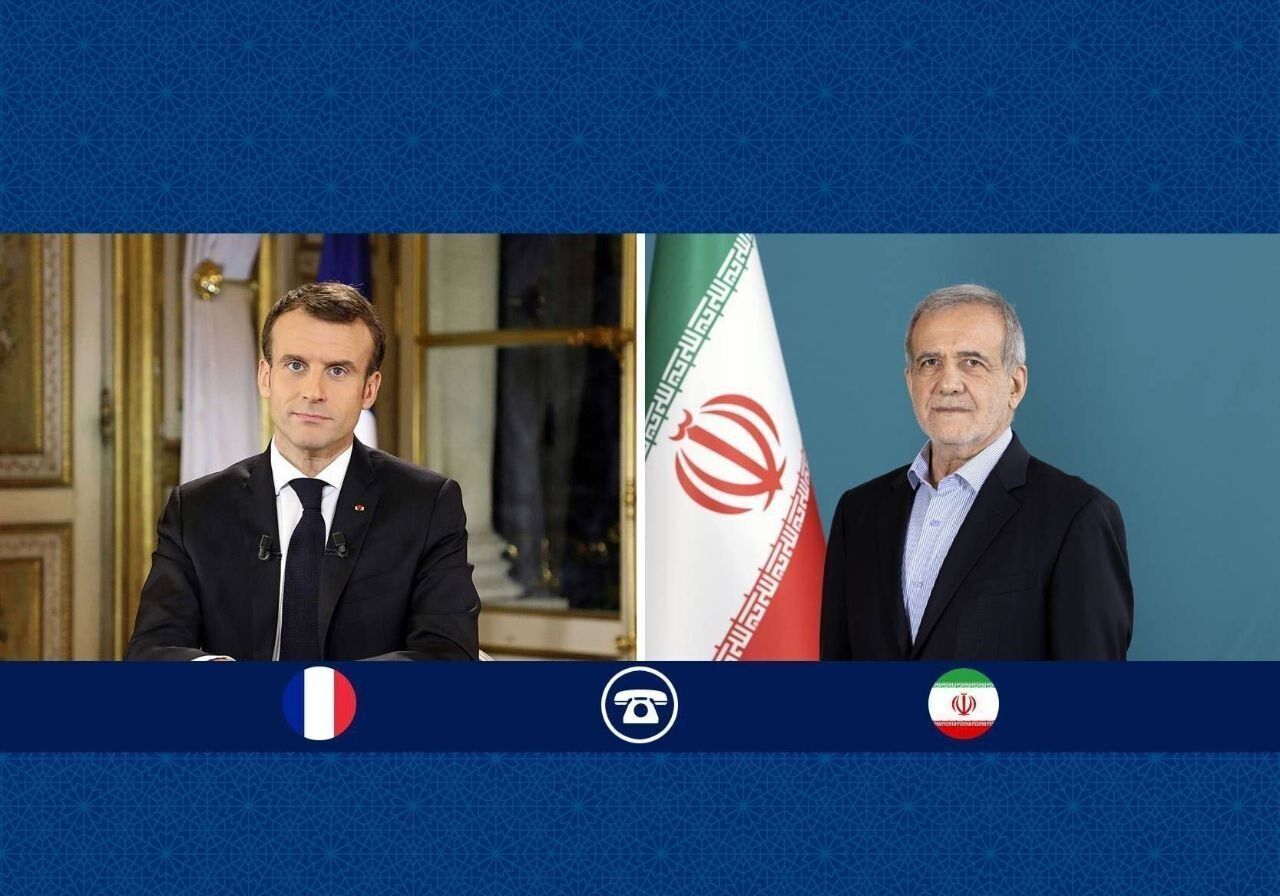
In a telephone conversation on Monday, Pezeshkian and his French counterpart Emmanuel Macron discussed the latest regional developments, the negotiations in Islamabad, and the prospects for a ceasefire agreement.
Referring to the Islamabad negotiations on April 11, Pezeshkian said the Iranian delegation acted with seriousness and goodwill in pursuit of a durable agreement.
However, he argued that despite achieving several technical understandings, excessive demands and a lack of political will from senior US officials prevented the talks from reaching a final conclusion.
The president emphasized the necessity of adhering to international principles and rules, noting, “The Islamic Republic of Iran is ready to continue dialogues solely within the framework of international laws and regulations, to safeguard the rights of the Iranian people. Europe can play a constructive role by encouraging the United States to respect these frameworks.”
Pezeshkian said that Iran’s principled policy is based on strengthening peace, stability, and regional security, as well as developing constructive engagement with neighbors, warning, “Approaches based on threats, pressure, and military action are not only unhelpful but also add to the complexity of issues and will exacerbate the self-inflicted problems of the American side.”
“The Islamic Republic of Iran considers diplomacy the preferred path for resolving disputes and, while preserving its national dignity and authority, declares its readiness for dialogue within legal frameworks,” he added.
Referring to the recent threat by the US President regarding the Strait of Hormuz, Pezeshkian emphasized, “The Islamic Republic of Iran has always sought to ensure sustainable security for the passage of ships through this strategic waterway. Any threat against the security of this region will have far-reaching consequences for global trade. At the same time, Iran is fully prepared to deal with any scenario within the framework of its national interests”.
Elsewhere in his remarks, Pezeshkian referred to the ceasefire and the other party’s breach of the initial agreement, noting, “The conditions of the Islamic Republic of Iran in this regard have been clearly stated. Contrary to some claims, it has been Iran that has insisted on the precise implementation of commitments—a point that Pakistani officials have also acknowledged.”
On the nuclear issue, the president reiterated, “The Islamic Republic of Iran has previously reached specific agreements with European countries, and the frameworks are completely clear. Iran has never sought to act outside international regulations and remains ready to continue negotiations within that same framework.”
For his part, Macron emphasized the need to include Lebanon in the initial ceasefire framework and outlined France’s views on Iran’s nuclear issue as well as legal concerns surrounding the Strait of Hormuz.
📲 @Irna_en
📌 Tehran, IRNA – President Masoud Pezeshkian has warned that any threat to the security of the Strait of Hormuz by US would carry significant repercussions for global trade, highlighting Iran’s consistent efforts to ensure safe passage in the strategic waterway.
In a telephone conversation on Monday, Pezeshkian and his French counterpart Emmanuel Macron discussed the latest regional developments, the negotiations in Islamabad, and the prospects for a ceasefire agreement.
Referring to the Islamabad negotiations on April 11, Pezeshkian said the Iranian delegation acted with seriousness and goodwill in pursuit of a durable agreement.
However, he argued that despite achieving several technical understandings, excessive demands and a lack of political will from senior US officials prevented the talks from reaching a final conclusion.
The president emphasized the necessity of adhering to international principles and rules, noting, “The Islamic Republic of Iran is ready to continue dialogues solely within the framework of international laws and regulations, to safeguard the rights of the Iranian people. Europe can play a constructive role by encouraging the United States to respect these frameworks.”
Pezeshkian said that Iran’s principled policy is based on strengthening peace, stability, and regional security, as well as developing constructive engagement with neighbors, warning, “Approaches based on threats, pressure, and military action are not only unhelpful but also add to the complexity of issues and will exacerbate the self-inflicted problems of the American side.”
“The Islamic Republic of Iran considers diplomacy the preferred path for resolving disputes and, while preserving its national dignity and authority, declares its readiness for dialogue within legal frameworks,” he added.
Referring to the recent threat by the US President regarding the Strait of Hormuz, Pezeshkian emphasized, “The Islamic Republic of Iran has always sought to ensure sustainable security for the passage of ships through this strategic waterway. Any threat against the security of this region will have far-reaching consequences for global trade. At the same time, Iran is fully prepared to deal with any scenario within the framework of its national interests”.
Elsewhere in his remarks, Pezeshkian referred to the ceasefire and the other party’s breach of the initial agreement, noting, “The conditions of the Islamic Republic of Iran in this regard have been clearly stated. Contrary to some claims, it has been Iran that has insisted on the precise implementation of commitments—a point that Pakistani officials have also acknowledged.”
On the nuclear issue, the president reiterated, “The Islamic Republic of Iran has previously reached specific agreements with European countries, and the frameworks are completely clear. Iran has never sought to act outside international regulations and remains ready to continue negotiations within that same framework.”
For his part, Macron emphasized the need to include Lebanon in the initial ceasefire framework and outlined France’s views on Iran’s nuclear issue as well as legal concerns surrounding the Strait of Hormuz.
📲 @Irna_en
💯25❤7👍7
🌍 Iran condemns desecration of Al-Aqsa Mosque
In a statement released on Monday night, Baqaei addressed the ongoing crimes committed by the Zionist regime in occupied Palestine, as well as its illegal attacks on Lebanon and other countries in the region, emphasizing the legal and moral responsibility of all nations to confront this regime and to prosecute and punish those responsible for these crimes.
Highlighting the importance of Al-Aqsa Mosque as the first qibla of Muslims, he underscored its significance for the Islamic Ummah and the Palestinian people.
Baqaei noted that the Zionist regime's act of desecrating Al-Aqsa Mosque is part of its policy to change the Islamic and historical identity of the holy city of al-Quds and to incite the sentiments of Muslims worldwide.
He called for effective action by the Organization of Islamic Cooperation (OIC) and Muslim countries to counter the actions of the Israeli apartheid regime that threaten the Islamic and historical identity of holy al-Quds.
His comments came after the Israeli regime’s far-right National Security Minister Itamar Ben-Gvir stormed the Al-Aqsa Mosque compound in occupied East al-Quds Old City – his third incursion into Islam’s third holiest site this year.
Accompanied by Israeli settlers under heavy protection from Israeli forces, Ben-Gvir offered Jewish prayers at the site, which is not allowed for non-Muslims as part of the status quo arrangement in place since 1967, though Jewish people are permitted to visit the compound.
The Palestinian Authority’s presidency condemned the storming of the mosque compound, which has become more frequent in recent years.
Ben-Gvir, who has stormed the mosque compound at least 16 times since taking office in 2022, is part of a growing settler movement that wants to take over the Al-Aqsa Mosque, with the far-right Israeli minister having expressed his intention to build a Jewish synagogue in place of the holy Muslim site.
📲 @Irna_en
📌 Tehran, IRNA – Foreign Ministry spokesperson Esmaeil Baqaei has strongly condemned the desecration of the Al-Aqsa Mosque by a group of extremist Zionists, led by a criminal minister of the Israeli regime.
In a statement released on Monday night, Baqaei addressed the ongoing crimes committed by the Zionist regime in occupied Palestine, as well as its illegal attacks on Lebanon and other countries in the region, emphasizing the legal and moral responsibility of all nations to confront this regime and to prosecute and punish those responsible for these crimes.
Highlighting the importance of Al-Aqsa Mosque as the first qibla of Muslims, he underscored its significance for the Islamic Ummah and the Palestinian people.
Baqaei noted that the Zionist regime's act of desecrating Al-Aqsa Mosque is part of its policy to change the Islamic and historical identity of the holy city of al-Quds and to incite the sentiments of Muslims worldwide.
He called for effective action by the Organization of Islamic Cooperation (OIC) and Muslim countries to counter the actions of the Israeli apartheid regime that threaten the Islamic and historical identity of holy al-Quds.
His comments came after the Israeli regime’s far-right National Security Minister Itamar Ben-Gvir stormed the Al-Aqsa Mosque compound in occupied East al-Quds Old City – his third incursion into Islam’s third holiest site this year.
Accompanied by Israeli settlers under heavy protection from Israeli forces, Ben-Gvir offered Jewish prayers at the site, which is not allowed for non-Muslims as part of the status quo arrangement in place since 1967, though Jewish people are permitted to visit the compound.
The Palestinian Authority’s presidency condemned the storming of the mosque compound, which has become more frequent in recent years.
Ben-Gvir, who has stormed the mosque compound at least 16 times since taking office in 2022, is part of a growing settler movement that wants to take over the Al-Aqsa Mosque, with the far-right Israeli minister having expressed his intention to build a Jewish synagogue in place of the holy Muslim site.
📲 @Irna_en
💯19👍7❤1



💬 Iran’s first VP reacts to Vance reporting to Netanyahu
In a post on his X account on Tuesday, Aref cited a remark by Israeli Prime Minister Benjamin Netanyahu, saying, “Vance [US Vice President] reported to me on his way back from Islamabad, as he does every day.”
“For the first time in history, a senior official of a government is providing ‘daily briefings’ to the head of another state!" he said.
"Do the American people realize that the White House has effectively turned into a ‘reporting branch’ for another regime?” Aref added.
📲 @Irna_en
📌 Tehran, IRNA – First Vice President Mohammad Reza Aref has asked the American people, “Do they realize that the White House has effectively turned into a ‘reporting branch’ for another regime?”
In a post on his X account on Tuesday, Aref cited a remark by Israeli Prime Minister Benjamin Netanyahu, saying, “Vance [US Vice President] reported to me on his way back from Islamabad, as he does every day.”
“For the first time in history, a senior official of a government is providing ‘daily briefings’ to the head of another state!" he said.
"Do the American people realize that the White House has effectively turned into a ‘reporting branch’ for another regime?” Aref added.
📲 @Irna_en
💯36👍12❤2
💬 War reparations among key issues in Iran-US talks, govt. spokesperson says
Speaking to Russia’s RIA Novosti news agency on Tuesday, Mohajerani said that the Iranian administration’s economic authorities will determine more precise figures through a multi-stage process.
The first will be an assessment of damage to buildings; the second will be an analysis of budget revenue losses and the impact of industrial shutdowns, she added.
Mohajerani noted that the preliminary and very crude figures put the damage at $270 billion so far.
She also added that Iran has raised the issue of possible damage to the region in the event of an attack on the Bushehr nuclear power plant with the IAEA.
On February 28, following the assassination of the late Leader of the Islamic Revolution Ayatollah Seyyed Ali Khamenei and several military commanders, the US and Israeli regimes initiated a sweeping military campaign against Iran.
In response, the Iranian Armed Forces executed a series of counterattacks over a span of 40 days, targeting American and Israeli military installations in the region and demonstrating their combat capabilities. Contrary to the expectations of a swift victory, the Iranian retaliations caused considerable damage to US and Israeli assets, prolonging the conflict and escalating tensions in the region.
In an attempt to ease hostilities, a two-week ceasefire was brokered on April 8, allowing for mediated negotiations to take place in Islamabad. Iran presented a ten-point plan during these discussions, which called for the withdrawal of US troops, the lifting of sanctions, and control over the key Strait of Hormuz.
Despite engaging in 21 hours of intense talks with US negotiators in Pakistan, the Iranian delegation returned to Tehran without reaching an agreement, citing a lack of trust and excessive demands by the US.
📲 @Irna_en
📌 Tehran, IRNA – The Iranian government spokesperson, Fatemeh Mohajerani, says that one of the topics in the negotiations with the United States and in the Islamabad talks is the issue of receiving war reparations.
Speaking to Russia’s RIA Novosti news agency on Tuesday, Mohajerani said that the Iranian administration’s economic authorities will determine more precise figures through a multi-stage process.
The first will be an assessment of damage to buildings; the second will be an analysis of budget revenue losses and the impact of industrial shutdowns, she added.
Mohajerani noted that the preliminary and very crude figures put the damage at $270 billion so far.
She also added that Iran has raised the issue of possible damage to the region in the event of an attack on the Bushehr nuclear power plant with the IAEA.
On February 28, following the assassination of the late Leader of the Islamic Revolution Ayatollah Seyyed Ali Khamenei and several military commanders, the US and Israeli regimes initiated a sweeping military campaign against Iran.
In response, the Iranian Armed Forces executed a series of counterattacks over a span of 40 days, targeting American and Israeli military installations in the region and demonstrating their combat capabilities. Contrary to the expectations of a swift victory, the Iranian retaliations caused considerable damage to US and Israeli assets, prolonging the conflict and escalating tensions in the region.
In an attempt to ease hostilities, a two-week ceasefire was brokered on April 8, allowing for mediated negotiations to take place in Islamabad. Iran presented a ten-point plan during these discussions, which called for the withdrawal of US troops, the lifting of sanctions, and control over the key Strait of Hormuz.
Despite engaging in 21 hours of intense talks with US negotiators in Pakistan, the Iranian delegation returned to Tehran without reaching an agreement, citing a lack of trust and excessive demands by the US.
📲 @Irna_en

❤15👍6💯2👏1
📡 Homeland for Iranians is ‘a legacy as ancient as a civilization’: Baqaei
“Homeland, for Iranians, is something far beyond a mere attachment to land and soil; it is a legacy as ancient as a civilization stretching back thousands of years, passed down from ancestors to their descendants,” Baqaei posted on X on Tuesday.
His message was accompanied by photograph of a young Iranian soldier, Hossein Mohammadi, who lost his hands and legs defending Iran during the latest US-Israeli aggression against the country.
The spokesperson praised the soldier for his bravery in defending the homeland even if it meant losing his hands.
“It is precisely this civilizational quality imbued with a spiritual essence that has caused all aggressors to ultimately regret their savage acts.”
He added: “This is how Iran has endured throughout history, and this is how it will continue to endure proudly.”
📲 @Irna_en
📌 Tehran, IRNA - Foreign Ministry spokesman Esmaeil Baqaei says homeland for Iranians is a legacy stretching thousands of years, giving them the power to repel aggressors throughout history.
“Homeland, for Iranians, is something far beyond a mere attachment to land and soil; it is a legacy as ancient as a civilization stretching back thousands of years, passed down from ancestors to their descendants,” Baqaei posted on X on Tuesday.
His message was accompanied by photograph of a young Iranian soldier, Hossein Mohammadi, who lost his hands and legs defending Iran during the latest US-Israeli aggression against the country.
The spokesperson praised the soldier for his bravery in defending the homeland even if it meant losing his hands.
“It is precisely this civilizational quality imbued with a spiritual essence that has caused all aggressors to ultimately regret their savage acts.”
He added: “This is how Iran has endured throughout history, and this is how it will continue to endure proudly.”
📲 @Irna_en
👍21❤11
🔻 Pezeshkian: Enemies target schools, universities to block Iran’s progress
During a visit to the Ministry of Education on Tuesday, Pezeshkian appreciated the efforts of teachers and administrators in continuing the educational process and serving the people during the 40 days of war imposed by the US and the Zionist regime on Iran.
He described education as the foundation of the country’s sustainable development, adding, “Any transformation in the country, without serious attention to the education system, will be unstable.”
The president also identified the enemy’s concerns about the growth and advancement of Iran in all fields as the main reason for all hostilities against the Iranian nation.
“The enemies of Iran cannot bear to see Iran’s development and empowerment; they have a problem with our knowledge, awareness, and abilities, and do not want Iran to be a developed country; therefore, they target science, schools, and universities,” Pezeshkian added.
He emphasized that the Iranian nation will continue to move on the path of progress and development, relying on the weapon of knowledge and its own capabilities, reaffirming his administration’s determination to serve the people sincerely.
The US and the Israeli regime launched a large-scale unprovoked military campaign against Iran following the assassination of then Leader of the Islamic Revolution Ayatollah Seyyed Ali Khamenei, along with several senior military commanders and civilians, on February 28.
In retaliation, Iranian Armed Forces launched attacks on American and Israeli positions in the region, demonstrating their capability to strike back effectively. Despite initial expectations by the attackers of a swift victory, the Iranian response proved significantly more potent, inflicting heavy damage on US and Israeli military resources while rallying the nation’s unity and resistance.
While the US president had issued an ultimatum, Pakistani mediation facilitated an agreement for a two-week ceasefire during which negotiations would take place in Islamabad. Iran has proposed a ten-point plan as the foundation for discussions, seeking terms such as the withdrawal of US forces from the region, lifting sanctions, and establishing control over the Strait of Hormuz.
The Supreme National Security Council of Iran emphasized on April 8 that the war led to a historic victory for Iran, compelling the US to accept negotiation terms, including a plan for guaranteed non-aggression and the cessation of hostilities.
📲 @Irna_en
📌 Tehran, IRNA – President Masoud Pezeshkian has emphasized that enemies target schools and universities to hinder Iran’s development and empowerment.
During a visit to the Ministry of Education on Tuesday, Pezeshkian appreciated the efforts of teachers and administrators in continuing the educational process and serving the people during the 40 days of war imposed by the US and the Zionist regime on Iran.
He described education as the foundation of the country’s sustainable development, adding, “Any transformation in the country, without serious attention to the education system, will be unstable.”
The president also identified the enemy’s concerns about the growth and advancement of Iran in all fields as the main reason for all hostilities against the Iranian nation.
“The enemies of Iran cannot bear to see Iran’s development and empowerment; they have a problem with our knowledge, awareness, and abilities, and do not want Iran to be a developed country; therefore, they target science, schools, and universities,” Pezeshkian added.
He emphasized that the Iranian nation will continue to move on the path of progress and development, relying on the weapon of knowledge and its own capabilities, reaffirming his administration’s determination to serve the people sincerely.
The US and the Israeli regime launched a large-scale unprovoked military campaign against Iran following the assassination of then Leader of the Islamic Revolution Ayatollah Seyyed Ali Khamenei, along with several senior military commanders and civilians, on February 28.
In retaliation, Iranian Armed Forces launched attacks on American and Israeli positions in the region, demonstrating their capability to strike back effectively. Despite initial expectations by the attackers of a swift victory, the Iranian response proved significantly more potent, inflicting heavy damage on US and Israeli military resources while rallying the nation’s unity and resistance.
While the US president had issued an ultimatum, Pakistani mediation facilitated an agreement for a two-week ceasefire during which negotiations would take place in Islamabad. Iran has proposed a ten-point plan as the foundation for discussions, seeking terms such as the withdrawal of US forces from the region, lifting sanctions, and establishing control over the Strait of Hormuz.
The Supreme National Security Council of Iran emphasized on April 8 that the war led to a historic victory for Iran, compelling the US to accept negotiation terms, including a plan for guaranteed non-aggression and the cessation of hostilities.
📲 @Irna_en

💯15❤4👍3🙏2👏1🤬1
🌍 Iran, Pakistan continue to exchange messages after Islamabad talks: Source
A diplomatic source told IRNA on Tuesday that Pakistan remains committed to its mediation efforts after the Islamabad talks ended on Sunday without a breakthrough.
In response to claims from some Pakistani sources and Western media regarding the next round of talks in Islamabad, the source stated that there is currently no information about any agreement to hold discussions either in Islamabad or in any other venue.
The source also emphasized that any future round of talks could occur anywhere and at any time; however, no official decision has been made regarding this matter yet.
On February 28, following the assassination of the late Leader of the Islamic Revolution Ayatollah Seyyed Ali Khamenei and several military commanders, the US and Israeli regimes initiated a sweeping military campaign against Iran.
In response, the Iranian Armed Forces executed a series of counterattacks over a span of 40 days, targeting American and Israeli military installations in the region and demonstrating their combat capabilities. Contrary to the expectations of a swift victory, the Iranian retaliations caused considerable damage to US and Israeli assets, prolonging the conflict and escalating tensions in the region.
In an attempt to ease hostilities, a two-week ceasefire was brokered on April 8, allowing for mediated negotiations to take place in Islamabad. Iran presented a ten-point plan during these discussions, which called for the withdrawal of US troops, the lifting of sanctions, and control over the key Strait of Hormuz.
Despite engaging in 21 hours of intense talks with US negotiators in Pakistan, the Iranian delegation returned to Tehran without reaching an agreement, citing a lack of trust and excessive demands by the US.
📲 @Irna_en
📌 Islamabad, IRNA – A diplomatic source in Pakistan says that the continuous exchange of messages between Tehran and Islamabad regarding the latest developments following the Islamabad talks is ongoing.
A diplomatic source told IRNA on Tuesday that Pakistan remains committed to its mediation efforts after the Islamabad talks ended on Sunday without a breakthrough.
In response to claims from some Pakistani sources and Western media regarding the next round of talks in Islamabad, the source stated that there is currently no information about any agreement to hold discussions either in Islamabad or in any other venue.
The source also emphasized that any future round of talks could occur anywhere and at any time; however, no official decision has been made regarding this matter yet.
On February 28, following the assassination of the late Leader of the Islamic Revolution Ayatollah Seyyed Ali Khamenei and several military commanders, the US and Israeli regimes initiated a sweeping military campaign against Iran.
In response, the Iranian Armed Forces executed a series of counterattacks over a span of 40 days, targeting American and Israeli military installations in the region and demonstrating their combat capabilities. Contrary to the expectations of a swift victory, the Iranian retaliations caused considerable damage to US and Israeli assets, prolonging the conflict and escalating tensions in the region.
In an attempt to ease hostilities, a two-week ceasefire was brokered on April 8, allowing for mediated negotiations to take place in Islamabad. Iran presented a ten-point plan during these discussions, which called for the withdrawal of US troops, the lifting of sanctions, and control over the key Strait of Hormuz.
Despite engaging in 21 hours of intense talks with US negotiators in Pakistan, the Iranian delegation returned to Tehran without reaching an agreement, citing a lack of trust and excessive demands by the US.
📲 @Irna_en

👍17❤5
⚡️ Turkish activists form ‘human chain’ at Tabriz Thermal Power Plant
A delegation of 80 Turkish cultural and media activists entered Iran earlier this week through the Bazargan border crossing. They are embarking on a multi-city tour to express solidarity with the Iranian people and show their support for the “Axis of Resistance.”
One of the most prominent demonstrations of the group’s mission is the human chain formed in Tabriz. After their stay in East and West Azerbaijan, the delegation is scheduled to travel to other major Iranian cities in the coming days.
📲 @Irna_en
📌 A group of Turkish civil society and media activists has formed a human chain around the Tabriz Thermal Power Plant in support of Iran’s resistance during the Ramadan war.
A delegation of 80 Turkish cultural and media activists entered Iran earlier this week through the Bazargan border crossing. They are embarking on a multi-city tour to express solidarity with the Iranian people and show their support for the “Axis of Resistance.”
One of the most prominent demonstrations of the group’s mission is the human chain formed in Tabriz. After their stay in East and West Azerbaijan, the delegation is scheduled to travel to other major Iranian cities in the coming days.
📲 @Irna_en
❤34👍12
🖥 Pezeshkian thanks 6 countries for stances against Zionist crimes
In a post on his X account on Tuesday, Pezeshkian said, “The essence of civilizations reveals itself at critical historical junctures."
"The positions taken by Spain, China, Russia, Türkiye, Italy, and Egypt against the warmongering and crimes of the Zionist regime stem from their deep cultural and historical roots.”
📲 @Irna_en
📌 Tehran, IRNA – President Masoud Pezeshkian has praised six countries for their positions against the crimes of the Zionist regime.
In a post on his X account on Tuesday, Pezeshkian said, “The essence of civilizations reveals itself at critical historical junctures."
"The positions taken by Spain, China, Russia, Türkiye, Italy, and Egypt against the warmongering and crimes of the Zionist regime stem from their deep cultural and historical roots.”
📲 @Irna_en
❤52👏17👍6💯2