
This media is not supported in your browser
VIEW IN TELEGRAM
Iraqi protesters took down the flag of the Al-Sabah regime from the Kuwaiti consulate in Basra.
📲 @Irna_en
📲 @Irna_en
❤52👍12
This media is not supported in your browser
VIEW IN TELEGRAM
In response to the US-Israeli attacks on Iran and threats to destroy infrastructure, Iranian singer Ali Zand Vakili stands on a railway track and sings "Vatan" (Homeland) and says: "I would sacrifice myself for the name of Iran".
📲 @Irna_en
📲 @Irna_en
❤105👍17👏6💔3👎2😁1
🖥 Trump retreats, agrees to two-week Pakistan-proposed ceasefire
Trump had previously threatened to target Iranian power plants, bridges and other civilian infrastructure, which to many legal experts would amount to a war crime.
Trump wrote on his Truth Social account that he had decided to stop attacks on Iran “based on conversations with Prime Minister Shehbaz Sharif and Field Marshal Asim Munir, of Pakistan.”
He also said that Iran has agreed to “the COMPLETE, IMMEDIATE, and SAFE OPENING of the Strait of Hormuz,” adding that this “will be a double sided CEASEFIRE!”
Claiming that the US has reached its military objectives, he noted that Washington has received “a 10 point proposal from Iran, and believe it is a workable basis on which to negotiate.”
The United States and Israel started a war on Iran on February 28 by assassinating Ayatollah Seyyed Ali Khamenei, the Leader of the Islamic Revolution, and targeting a school in the city of Minab, southern Iran, which about 170 students and school staff lost their lives. At the time, indirect negotiations between Iran and the United States were underway with the mediation of some regional countries.
By attacking civilian infrastructure and the people of Iran, the United States and Israel have violated international law, especially international humanitarian law; these attacks constitute a war crime and have also targeted officials of the Islamic Republic of Iran with their overt state terrorism in violation of all international laws.
In defense and within the framework of its right to legitimate defense, the Islamic Republic of Iran has been targeting military and security positions of Israel in various cities of occupied Palestine, as well as bases and deployment centers of US forces in the region, with missile, drone, and air strikes.
📲 @Irna_en
📌 Washington, IRNA – US President Donald Trump has once again backed down from his threats and announced that he would agree to a two-week pause in his war of aggression with Iran.
Trump had previously threatened to target Iranian power plants, bridges and other civilian infrastructure, which to many legal experts would amount to a war crime.
Trump wrote on his Truth Social account that he had decided to stop attacks on Iran “based on conversations with Prime Minister Shehbaz Sharif and Field Marshal Asim Munir, of Pakistan.”
He also said that Iran has agreed to “the COMPLETE, IMMEDIATE, and SAFE OPENING of the Strait of Hormuz,” adding that this “will be a double sided CEASEFIRE!”
Claiming that the US has reached its military objectives, he noted that Washington has received “a 10 point proposal from Iran, and believe it is a workable basis on which to negotiate.”
The United States and Israel started a war on Iran on February 28 by assassinating Ayatollah Seyyed Ali Khamenei, the Leader of the Islamic Revolution, and targeting a school in the city of Minab, southern Iran, which about 170 students and school staff lost their lives. At the time, indirect negotiations between Iran and the United States were underway with the mediation of some regional countries.
By attacking civilian infrastructure and the people of Iran, the United States and Israel have violated international law, especially international humanitarian law; these attacks constitute a war crime and have also targeted officials of the Islamic Republic of Iran with their overt state terrorism in violation of all international laws.
In defense and within the framework of its right to legitimate defense, the Islamic Republic of Iran has been targeting military and security positions of Israel in various cities of occupied Palestine, as well as bases and deployment centers of US forces in the region, with missile, drone, and air strikes.
📲 @Irna_en
👍24❤8😁6👎3💯1
🌍 Araqchi: Iran will halt fire if attacks stop
He made the remarks in a post on his X account on Thursday.
“On behalf of the Islamic Republic of Iran, I express gratitude and appreciation for my dear brothers HE Prime Minister of Pakistan Sharif and HE Field Marshal Munir for their tireless efforts to end the war in the region,” Araghchi wrote.
“In response to the brotherly request of PM Sharif in his tweet, and considering the request by the U.S. for negotiations based on its 15-point proposal as well as announcement by POTUS about acceptance of the general framework of Iran’s 10-point proposal as a basis for negotiations, I hereby declare on behalf of Iran’s Supreme National Security Council:
The United States and Israel started a war on Iran on February 28 by assassinating Ayatollah Seyyed Ali Khamenei, the Leader of the Islamic Revolution, and targeting a school in the city of Minab, southern Iran, in which about 170 students and school staff lost their lives. At the time, indirect negotiations between Iran and the United States were underway with the mediation of some regional countries.
By attacking civilian infrastructure and the people of Iran, the United States and Israel have violated international law, especially international humanitarian law; these attacks constitute a war crime and have also targeted officials of the Islamic Republic of Iran with their overt state terrorism in violation of all international laws.
In defense and within the framework of its right to legitimate defense, the Islamic Republic of Iran has been targeting military and security positions of Israel in various cities of occupied Palestine, as well as bases and deployment centers of US forces in the region, with missile, drone, and air strikes.
📲 @Irna_en
📌 Tehran, IRNA – Foreign Minister Seyyed Abbas Araghchi says if attacks against Iran are halted, Iranian Armed Forces will also cease their defensive operations.
He made the remarks in a post on his X account on Thursday.
“On behalf of the Islamic Republic of Iran, I express gratitude and appreciation for my dear brothers HE Prime Minister of Pakistan Sharif and HE Field Marshal Munir for their tireless efforts to end the war in the region,” Araghchi wrote.
“In response to the brotherly request of PM Sharif in his tweet, and considering the request by the U.S. for negotiations based on its 15-point proposal as well as announcement by POTUS about acceptance of the general framework of Iran’s 10-point proposal as a basis for negotiations, I hereby declare on behalf of Iran’s Supreme National Security Council:
The United States and Israel started a war on Iran on February 28 by assassinating Ayatollah Seyyed Ali Khamenei, the Leader of the Islamic Revolution, and targeting a school in the city of Minab, southern Iran, in which about 170 students and school staff lost their lives. At the time, indirect negotiations between Iran and the United States were underway with the mediation of some regional countries.
By attacking civilian infrastructure and the people of Iran, the United States and Israel have violated international law, especially international humanitarian law; these attacks constitute a war crime and have also targeted officials of the Islamic Republic of Iran with their overt state terrorism in violation of all international laws.
In defense and within the framework of its right to legitimate defense, the Islamic Republic of Iran has been targeting military and security positions of Israel in various cities of occupied Palestine, as well as bases and deployment centers of US forces in the region, with missile, drone, and air strikes.
📲 @Irna_en
❤28💯10👍3
📡 Iran’s SNSC: War objectives largely achieved, talks with US planned in Islamabad
The SNSC said early on Wednesday that Iran had continued the war for more than 40 days despite repeated requests by its adversaries to halt hostilities. According to the statement, Iranian authorities rejected several deadlines issued by US President Donald Trump, emphasizing that Tehran would not accept any timetable imposed by its enemies.
The statement said the continuation of military operations was aimed at achieving key objectives, including forcing the enemies into retreat and removing long‑term threats against Iran, and that Iranian forces had pushed their adversaries into a historic impasse.
According to the council, the decision to continue the conflict had the full backing of the Iranian people and would persist as long as necessary to secure major strategic gains and new regional security arrangements.
However, the statement added that, following guidance from the Leader of the Islamic Revolution Ayatollah Seyyed Mojtaba Hosseini Khamenei and approval by the Supreme National Security Council, the Islamic Republic has agreed to negotiations aimed at finalizing the details of a potential settlement.
The talks are expected to be held in Islamabad with Pakistan acting as an intermediary. Iranian officials said the negotiations could last up to 15 days, during which Tehran seeks to translate battlefield gains into political agreements.
📲 @Irna_en
📌 Tehran, IRNA – Iran’s Supreme National Security Council (SNSC) has announced in a statement that almost all of the country’s war objectives have been achieved, while announcing that negotiations with the United States are expected to take place in Islamabad to finalize the political outcome of the conflict.
The SNSC said early on Wednesday that Iran had continued the war for more than 40 days despite repeated requests by its adversaries to halt hostilities. According to the statement, Iranian authorities rejected several deadlines issued by US President Donald Trump, emphasizing that Tehran would not accept any timetable imposed by its enemies.
The statement said the continuation of military operations was aimed at achieving key objectives, including forcing the enemies into retreat and removing long‑term threats against Iran, and that Iranian forces had pushed their adversaries into a historic impasse.
According to the council, the decision to continue the conflict had the full backing of the Iranian people and would persist as long as necessary to secure major strategic gains and new regional security arrangements.
However, the statement added that, following guidance from the Leader of the Islamic Revolution Ayatollah Seyyed Mojtaba Hosseini Khamenei and approval by the Supreme National Security Council, the Islamic Republic has agreed to negotiations aimed at finalizing the details of a potential settlement.
The talks are expected to be held in Islamabad with Pakistan acting as an intermediary. Iranian officials said the negotiations could last up to 15 days, during which Tehran seeks to translate battlefield gains into political agreements.
📲 @Irna_en

👍20❤11👎4🔥4🤬1
📄 Trump reposts FM Araghchi’s X post as Iran’s official statement on ceasefire
The White House had earlier reposted Trump’s own statement on the social media platform Truth Social, presenting it as the official position of the US government on Iran. After that, Trump shared on his Truth Social a message posted by Iran’s foreign minister on X, reposting Tehran’s official stance.
The following is Foreign Minister Araghchi’s post on X, which was shared by President Trump as Iran’s official statement after the ceasefire announcement.
“On behalf of the Islamic Republic of Iran, I express gratitude and appreciation for my dear brothers HE Prime Minister of Pakistan Sharif and HE Field Marshal Munir for their tireless efforts to end the war in the region. In response to the brotherly request of PM Sharif in his tweet, and considering the request by the US for negotiations based on its 15-point proposal as well as announcement by POTUS about acceptance of the general framework of Iran's 10-point proposal as a basis for negotiations, I hereby declare on behalf of Iran's Supreme National Security Council: If attacks against Iran are halted, our Powerful Armed Forces will cease their defensive operations. For a period of two weeks, safe passage through the Strait of Hormuz will be possible via coordination with Iran's Armed Forces and with due consideration of technical limitations.”
Trump announced his agreement to the ceasefire in a post on his Truth Social: “Based on conversations with Prime Minister Shehbaz Sharif and Field Marshal Asim Munir, of Pakistan, and wherein they requested that I hold off the destructive force being sent tonight to Iran, and subject to the Islamic Republic of Iran agreeing to the COMPLETE, IMMEDIATE, and SAFE OPENING of the Strait of Hormuz, I agree to suspend the bombing and attack of Iran for a period of two weeks. This will be a double sided CEASEFIRE.”
📲 @Irna_en
📌 Washington, IRNA – US President Donald Trump has reposted an X message by Iranian Foreign Minister Abbas Araghchi on his Truth Social account, labeling it “Iran’s official statement” on a ceasefire announced between the two countries.
The White House had earlier reposted Trump’s own statement on the social media platform Truth Social, presenting it as the official position of the US government on Iran. After that, Trump shared on his Truth Social a message posted by Iran’s foreign minister on X, reposting Tehran’s official stance.
The following is Foreign Minister Araghchi’s post on X, which was shared by President Trump as Iran’s official statement after the ceasefire announcement.
“On behalf of the Islamic Republic of Iran, I express gratitude and appreciation for my dear brothers HE Prime Minister of Pakistan Sharif and HE Field Marshal Munir for their tireless efforts to end the war in the region. In response to the brotherly request of PM Sharif in his tweet, and considering the request by the US for negotiations based on its 15-point proposal as well as announcement by POTUS about acceptance of the general framework of Iran's 10-point proposal as a basis for negotiations, I hereby declare on behalf of Iran's Supreme National Security Council: If attacks against Iran are halted, our Powerful Armed Forces will cease their defensive operations. For a period of two weeks, safe passage through the Strait of Hormuz will be possible via coordination with Iran's Armed Forces and with due consideration of technical limitations.”
Trump announced his agreement to the ceasefire in a post on his Truth Social: “Based on conversations with Prime Minister Shehbaz Sharif and Field Marshal Asim Munir, of Pakistan, and wherein they requested that I hold off the destructive force being sent tonight to Iran, and subject to the Islamic Republic of Iran agreeing to the COMPLETE, IMMEDIATE, and SAFE OPENING of the Strait of Hormuz, I agree to suspend the bombing and attack of Iran for a period of two weeks. This will be a double sided CEASEFIRE.”
📲 @Irna_en
👍24❤6😁2🙏1
The Israeli daily Maariv conceded that Iran emerged as the victor from the 41 days of destructive conflict, while Israel and the United States withdrew not in triumph but in acknowledgment of an unparalleled loss.
📲 @Irna_en
📲 @Irna_en
😁19👍18❤2🤬2💯1
Yair Lapid, leader of the opposition in the Israeli regime: A political catastrophe like this has never occurred in our entire history.
Netanyahu has failed politically and strategically, and has not achieved any of the goals he set for himself.
📲 @Irna_en
Netanyahu has failed politically and strategically, and has not achieved any of the goals he set for himself.
📲 @Irna_en
😁36❤5👍5
📡 Envoy: Ceasefire depends on ending attacks under Iran’s desired conditions
Speaking to French media TF1, Aminnejad said Tehran did not start the war and is a victim of brutal US-Israeli military aggression.
As long as the threat continues, Iran’s Armed Forces and people will continue to defend their territory legitimately, he added.
However, based on the right of legitimate defense under Article 51 of the UN Charter, it will defend its territorial integrity against any scenario and under any circumstances, he reiterated.
In response to a question about the situation in the Strait of Hormuz, he rejected the accusation that Iran had blocked this waterway and said the existing insecurities are due to the military presence of the US and the Israeli regime in the region, their illegitimate aggression against Iran, and the assessment of its situation as unstable by ship owners and companies.
He noted that Iran, with the longest coastline in the Persian Gulf, has always been the guarantor of stability and security for shipping in this region throughout history.
Iran does not consider any country its enemy and is not considered a threat to any country, including France, he stressed.
US President Donald Trump once again backed down from his threats and announced that he would agree to a two-week pause in his war of aggression with Iran.
Trump had previously threatened to target Iranian power plants, bridges and other civilian infrastructure, which to many legal experts would amount to a war crime.
Trump wrote on his Truth Social account that he had decided to stop attacks on Iran “based on conversations with Prime Minister Shehbaz Sharif and Field Marshal Asim Munir, of Pakistan.”
He also said that Iran has agreed to “the COMPLETE, IMMEDIATE, and SAFE OPENING of the Strait of Hormuz,” adding that this “will be a double sided CEASEFIRE!”
The United States and Israel started a war on Iran on February 28 by assassinating Ayatollah Seyyed Ali Khamenei, the Leader of the Islamic Revolution, and targeting a school in the city of Minab, southern Iran, in which about 170 students and school staff lost their lives.
At the time, indirect negotiations between Iran and the United States were underway with the mediation of some regional countries.
📲 @Irna_en
📌 London, IRNA – Iran’s Ambassador to France Mohammad Aminnejad says Iran, as the party that has been attacked, still welcomes an end to violence and instability in the region, although this depends on ending the aggressors’ attacks under Iran’s desired conditions.
Speaking to French media TF1, Aminnejad said Tehran did not start the war and is a victim of brutal US-Israeli military aggression.
As long as the threat continues, Iran’s Armed Forces and people will continue to defend their territory legitimately, he added.
However, based on the right of legitimate defense under Article 51 of the UN Charter, it will defend its territorial integrity against any scenario and under any circumstances, he reiterated.
In response to a question about the situation in the Strait of Hormuz, he rejected the accusation that Iran had blocked this waterway and said the existing insecurities are due to the military presence of the US and the Israeli regime in the region, their illegitimate aggression against Iran, and the assessment of its situation as unstable by ship owners and companies.
He noted that Iran, with the longest coastline in the Persian Gulf, has always been the guarantor of stability and security for shipping in this region throughout history.
Iran does not consider any country its enemy and is not considered a threat to any country, including France, he stressed.
US President Donald Trump once again backed down from his threats and announced that he would agree to a two-week pause in his war of aggression with Iran.
Trump had previously threatened to target Iranian power plants, bridges and other civilian infrastructure, which to many legal experts would amount to a war crime.
Trump wrote on his Truth Social account that he had decided to stop attacks on Iran “based on conversations with Prime Minister Shehbaz Sharif and Field Marshal Asim Munir, of Pakistan.”
He also said that Iran has agreed to “the COMPLETE, IMMEDIATE, and SAFE OPENING of the Strait of Hormuz,” adding that this “will be a double sided CEASEFIRE!”
The United States and Israel started a war on Iran on February 28 by assassinating Ayatollah Seyyed Ali Khamenei, the Leader of the Islamic Revolution, and targeting a school in the city of Minab, southern Iran, in which about 170 students and school staff lost their lives.
At the time, indirect negotiations between Iran and the United States were underway with the mediation of some regional countries.
📲 @Irna_en
🤬16❤5👍4👏2
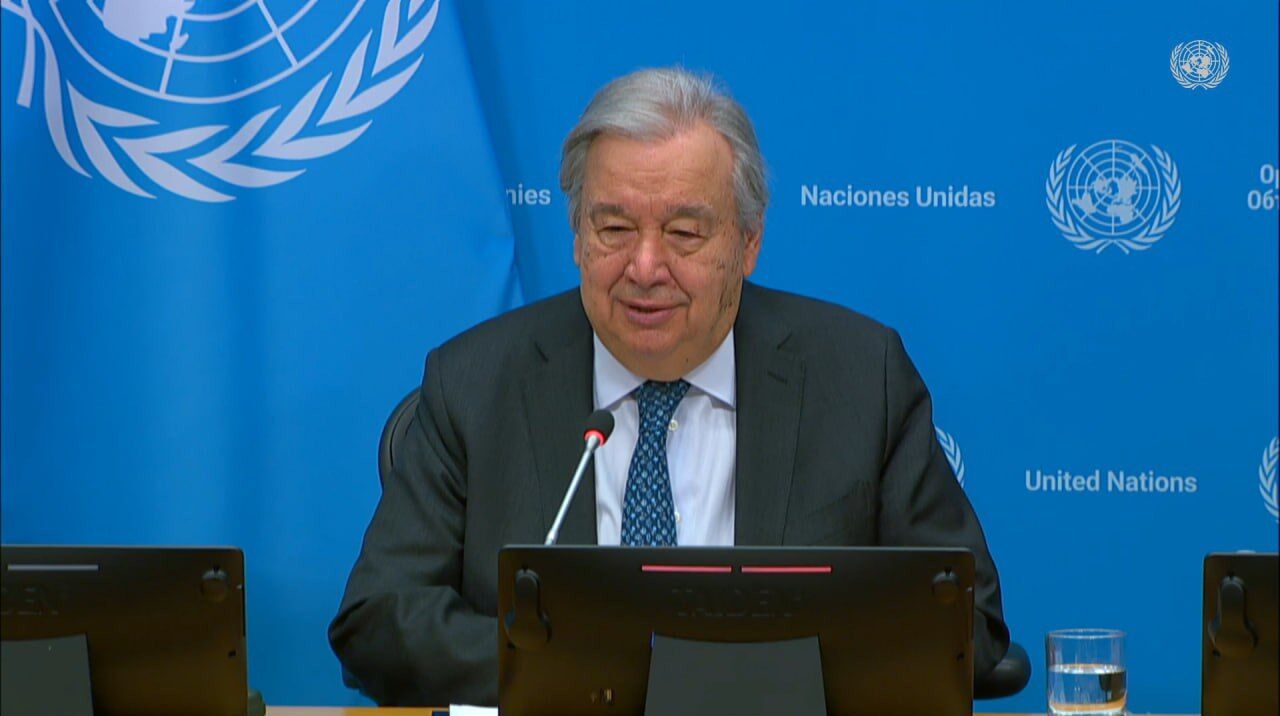
🎙 UN chief welcomes Iran-US ceasefire after 40 days of war
In a statement provided to IRNA, Stéphane Dujarric, spokesperson for the secretary general, said, “The secretary general welcomes the announcement of a two-week ceasefire by the United States and Iran.”
“He calls on all the parties to the current conflict in the Middle East to comply with their obligations under international law and to abide by the terms of the ceasefire in order to pave the way toward a lasting and comprehensive peace in the region,” the statement read.
The spokesperson added that the secretary general underscores that an end to hostilities is urgently needed to protect civilian lives and alleviate human suffering.
Dujarric further noted that the UN chief “expresses sincere appreciation for the efforts of Pakistan and other countries involved in facilitating the ceasefire,” adding that Jean Arnault, the secretary general’s personal envoy, is in the region to support efforts toward lasting peace.
Following 40 days of joint US-Israeli war against Iran, the two sides finally agreed early Wednesday Tehran time to a two-week ceasefire mediated by Pakistan.
US President Donald Trump announced Washington’s decision to step back from the war late Tuesday local time in a statement posted on the Truth Social platform.
Iran’s Supreme National Security Council (SNSC) has announced in a statement that almost all of the country’s war objectives have been achieved, while announcing that negotiations with the United States are expected to take place in Islamabad to finalize the political outcome of the conflict.
📲 @Irna_en
📌 New York, IRNA– United Nations Secretary-General Antonio Guterres has welcomed the announcement of a ceasefire between Iran and the United States following 40 days of US-Israeli war of aggression against the Islamic Republic.
In a statement provided to IRNA, Stéphane Dujarric, spokesperson for the secretary general, said, “The secretary general welcomes the announcement of a two-week ceasefire by the United States and Iran.”
“He calls on all the parties to the current conflict in the Middle East to comply with their obligations under international law and to abide by the terms of the ceasefire in order to pave the way toward a lasting and comprehensive peace in the region,” the statement read.
The spokesperson added that the secretary general underscores that an end to hostilities is urgently needed to protect civilian lives and alleviate human suffering.
Dujarric further noted that the UN chief “expresses sincere appreciation for the efforts of Pakistan and other countries involved in facilitating the ceasefire,” adding that Jean Arnault, the secretary general’s personal envoy, is in the region to support efforts toward lasting peace.
Following 40 days of joint US-Israeli war against Iran, the two sides finally agreed early Wednesday Tehran time to a two-week ceasefire mediated by Pakistan.
US President Donald Trump announced Washington’s decision to step back from the war late Tuesday local time in a statement posted on the Truth Social platform.
Iran’s Supreme National Security Council (SNSC) has announced in a statement that almost all of the country’s war objectives have been achieved, while announcing that negotiations with the United States are expected to take place in Islamabad to finalize the political outcome of the conflict.
📲 @Irna_en
🤬13👍8❤3👎1
🔻 Iran’s SNSC declares victory, urges national unity until outcome finalized
In a statement released Wednesday, the SNSC congratulated the Iranian people, saying the enemy had suffered an undeniable, historic, and crushing defeat in an unjust and illegal war against Iran.
The statement said the outcome was achieved through the leadership of Ayatollah Seyyed Mojtaba Hosseini Khamenei, the sacrifices of Iranian forces on the battlefield, and the widespread public support shown since the beginning of the aggression.
According to the council, the US was compelled to accept Iran’s proposed 10‑point framework, which includes commitments to refrain from further aggression, recognize Iran’s control over the Strait of Hormuz, accept Iran’s nuclear enrichment activities, lift primary and secondary sanctions, end related resolutions by international bodies, compensate Iran for damages, withdraw US combat forces from the region, and halt hostilities across all fronts, including actions against allied resistance groups.
The statement said Iran and its allies in Lebanon, Iraq, Yemen, and the Palestinian territories had delivered significant blows to their adversaries during 40 days of fighting, damaging military infrastructure and imposing heavy losses.
It added that when the conflict began, Iran’s adversaries expected to quickly achieve military dominance and destabilize the country politically and socially. However, the council said Iran’s missile and drone capabilities and coordinated regional response shifted the balance of the conflict.
The SNSC said Iranian forces and allied groups launched one of the most complex hybrid warfare operations in recent history against the United States and the Israeli regime, targeting military assets and infrastructure across the region.
Despite a major victory, the council emphasized that unity among the Iranian people remains essential until negotiations and final arrangements fully secure the outcome.
The US and Israeli regimes imposed the war on Iran on February 28, 2026, while the Islamic Republic was engaged in indirect negotiations with American envoys over the nuclear issue.
📲 @Irna_en
📌 Tehran, IRNA– Iran’s Supreme National Security Council (SNSC) has declared that the Islamic Republic has achieved a major victory following weeks of conflict, but stressed that national unity and resilience remain essential until the final details of the outcome are secured.
In a statement released Wednesday, the SNSC congratulated the Iranian people, saying the enemy had suffered an undeniable, historic, and crushing defeat in an unjust and illegal war against Iran.
The statement said the outcome was achieved through the leadership of Ayatollah Seyyed Mojtaba Hosseini Khamenei, the sacrifices of Iranian forces on the battlefield, and the widespread public support shown since the beginning of the aggression.
According to the council, the US was compelled to accept Iran’s proposed 10‑point framework, which includes commitments to refrain from further aggression, recognize Iran’s control over the Strait of Hormuz, accept Iran’s nuclear enrichment activities, lift primary and secondary sanctions, end related resolutions by international bodies, compensate Iran for damages, withdraw US combat forces from the region, and halt hostilities across all fronts, including actions against allied resistance groups.
The statement said Iran and its allies in Lebanon, Iraq, Yemen, and the Palestinian territories had delivered significant blows to their adversaries during 40 days of fighting, damaging military infrastructure and imposing heavy losses.
It added that when the conflict began, Iran’s adversaries expected to quickly achieve military dominance and destabilize the country politically and socially. However, the council said Iran’s missile and drone capabilities and coordinated regional response shifted the balance of the conflict.
The SNSC said Iranian forces and allied groups launched one of the most complex hybrid warfare operations in recent history against the United States and the Israeli regime, targeting military assets and infrastructure across the region.
Despite a major victory, the council emphasized that unity among the Iranian people remains essential until negotiations and final arrangements fully secure the outcome.
The US and Israeli regimes imposed the war on Iran on February 28, 2026, while the Islamic Republic was engaged in indirect negotiations with American envoys over the nuclear issue.
📲 @Irna_en
❤31👍7👏1💯1
📡 Russia, China stood on ‘right side of history’ after veto of Bahrain draft: Iran envoy
The ambassador made the remark in a statement addressed to a Security Council meeting on Tuesday on the adoption of the resolution on the Strait of Hormuz.
The following is the full text of the statement:
The draft resolution put before the Council was flawed—factually, legally, and politically.
The draft is entirely one-sided, biased, and indefensible. It distorts the realities on the ground by falsely attributing responsibility to Iran—the victim of aggression—while deliberately ignoring the root causes of the current crisis.
The text unjustifiably and misleadingly portrays Iran’s lawful measures in the Strait of Hormuz, which have been taken in the exercise of its inherent right of self-defense in accordance with the UN Charter, as threats to international peace and security. At the same time, the text seeks to legitimize subsequent unlawful actions by the aggressors and their allies under the pretext of safeguarding freedom of navigation and maritime safety in the Strait of Hormuz and the Persian Gulf.
Iran’s lawful actions cannot be viewed in isolation from the broader context of ongoing aggression against its territory and sovereignty. Attempts to portray them as threats to international peace and security are therefore legally unfounded and devoid of any credibility.
Mr. President, The objective of this draft is obvious: to punish the victim for defending its sovereignty and vital national interests in the Persian Gulf and the Strait of Hormuz, while providing political and legal cover for further unlawful acts by the aggressors.
Had this draft been adopted, it could have opened the door to dangerously broad and abusive interpretations that could be used to justify further uses of force and unlawful actions in clear violation of the UN Charter and international law.
It is deeply regrettable that neither Resolution 2817, nor this draft, nor the statements of certain Council members contain any reference to the initiators of the aggression, or their destabilizing conduct in the region, as well as the root causes of the current situation.
This clear omission reflects a persistent pattern of politicization and double standards within the Council. Let me be clear: this text would only embolden the United States and the Israeli regime to continue in their unlawful actions and atrocious crimes, while shielding them from accountability.
In substance, this was a United States draft—introduced under other names.
Today, the President of the United States, again, resorted to language that is not only deeply irresponsible but profoundly alarming, declaring that “the whole civilization will die tonight, never to be brought back.” Such rhetoric is unbecoming of any leader, let alone the head of a permanent member of this Council entrusted with the maintenance of international peace and security.
It is regrettable and alarming that, while in full view of international community the President of the United States shamelessly and brazenly issues threats to destroy all civilian infrastructure in Iran—including bridges, power plants, and energy facilities by setting a deadline—and openly reveals his intent to commit war crimes and crimes against humanity, the penholder of the draft resolution and its supporters have rushed to bring forward s . . .
📲 @Irna_en
📌 New York, IRNA– Iranian Ambassador and Permanent Representative to the United Nations in New York, Amir Saeid Iravani, has said Russia and China stood firmly on the right side of history by vetoing a Bahrain-backed Security Council draft resolution on the Strait of Hormuz, arguing their move prevented the Council from being used to legitimize aggression.
The ambassador made the remark in a statement addressed to a Security Council meeting on Tuesday on the adoption of the resolution on the Strait of Hormuz.
The following is the full text of the statement:
The draft resolution put before the Council was flawed—factually, legally, and politically.
The draft is entirely one-sided, biased, and indefensible. It distorts the realities on the ground by falsely attributing responsibility to Iran—the victim of aggression—while deliberately ignoring the root causes of the current crisis.
The text unjustifiably and misleadingly portrays Iran’s lawful measures in the Strait of Hormuz, which have been taken in the exercise of its inherent right of self-defense in accordance with the UN Charter, as threats to international peace and security. At the same time, the text seeks to legitimize subsequent unlawful actions by the aggressors and their allies under the pretext of safeguarding freedom of navigation and maritime safety in the Strait of Hormuz and the Persian Gulf.
Iran’s lawful actions cannot be viewed in isolation from the broader context of ongoing aggression against its territory and sovereignty. Attempts to portray them as threats to international peace and security are therefore legally unfounded and devoid of any credibility.
Mr. President, The objective of this draft is obvious: to punish the victim for defending its sovereignty and vital national interests in the Persian Gulf and the Strait of Hormuz, while providing political and legal cover for further unlawful acts by the aggressors.
Had this draft been adopted, it could have opened the door to dangerously broad and abusive interpretations that could be used to justify further uses of force and unlawful actions in clear violation of the UN Charter and international law.
It is deeply regrettable that neither Resolution 2817, nor this draft, nor the statements of certain Council members contain any reference to the initiators of the aggression, or their destabilizing conduct in the region, as well as the root causes of the current situation.
This clear omission reflects a persistent pattern of politicization and double standards within the Council. Let me be clear: this text would only embolden the United States and the Israeli regime to continue in their unlawful actions and atrocious crimes, while shielding them from accountability.
In substance, this was a United States draft—introduced under other names.
Today, the President of the United States, again, resorted to language that is not only deeply irresponsible but profoundly alarming, declaring that “the whole civilization will die tonight, never to be brought back.” Such rhetoric is unbecoming of any leader, let alone the head of a permanent member of this Council entrusted with the maintenance of international peace and security.
It is regrettable and alarming that, while in full view of international community the President of the United States shamelessly and brazenly issues threats to destroy all civilian infrastructure in Iran—including bridges, power plants, and energy facilities by setting a deadline—and openly reveals his intent to commit war crimes and crimes against humanity, the penholder of the draft resolution and its supporters have rushed to bring forward s . . .
📲 @Irna_en
❤26👍9💯5
📡 ‘School of Khamenei’ cause of Iran’s victory in 40-day war: Vice president
In a statement on Wednesday, Aref said the country’s “unshakable stability and victorious authority” were the result of the “formation of the School of Khamenei,” which he credited with strengthening national resilience and structural cohesion.
“Ayatollah Khamenei elevated … national endurance and structural cohesion in such a way that the 40th day of that red ascension (martyrdom) was tied to the proud and historic victory of the Iranian nation in the battle against the front of evil,” he said.
According to the statement, Aref also praised the Iranian people and armed forces, paying tribute to “the brave people present in the streets” and combat-ready fighters, while congratulating Iran’s strategic victory over the “front of arrogance.”
He stressed that the government would continue efforts to rebuild national infrastructure alongside maintaining military strength.
“The government, with continuous presence in the arenas of service, will advance the jihadi reconstruction of national infrastructure in parallel with military power,” he said.
Aref added that the war reshaped regional and global strategic equations. “This 40-day war was not merely a military victory, but a turning point in changing the strategic equations of the region and the world,” he said.
He further stated that Iran had “disrupted all calculations of the enemies” and opened “new horizons” for its allies.
The vice president also expressed appreciation for the “brotherly positions” of Pakistan and Prime Minister Shehbaz Sharif, adding that Iran would take part in talks in Islamabad “with full authority” while maintaining “absolute pessimism toward the deceptive nature of the United States.”
Following 40 days of joint US-Israeli war against Iran, the two sides finally agreed early Wednesday Tehran time to a two-week ceasefire mediated by Pakistan.
US President Donald Trump announced Washington’s decision to step back from the war late Tuesday local time in a statement posted on the Truth Social platform.
Iran’s Supreme National Security Council (SNSC) has announced in a statement that almost all of the country’s war objectives have been achieved, while announcing that negotiations with the United States are expected to take place in Islamabad to finalize the political outcome of the conflict.
📲 @Irna_en
📌 Tehran, IRNA – Vice President Mohammad Reza Aref has hailed the “proud and historic” victory in the 40-day war, attributing the outcome to the legacy of the martyred Leader of the Islamic Revolution, Ayatollah Seyyed Ali Khamenei.
In a statement on Wednesday, Aref said the country’s “unshakable stability and victorious authority” were the result of the “formation of the School of Khamenei,” which he credited with strengthening national resilience and structural cohesion.
“Ayatollah Khamenei elevated … national endurance and structural cohesion in such a way that the 40th day of that red ascension (martyrdom) was tied to the proud and historic victory of the Iranian nation in the battle against the front of evil,” he said.
According to the statement, Aref also praised the Iranian people and armed forces, paying tribute to “the brave people present in the streets” and combat-ready fighters, while congratulating Iran’s strategic victory over the “front of arrogance.”
He stressed that the government would continue efforts to rebuild national infrastructure alongside maintaining military strength.
“The government, with continuous presence in the arenas of service, will advance the jihadi reconstruction of national infrastructure in parallel with military power,” he said.
Aref added that the war reshaped regional and global strategic equations. “This 40-day war was not merely a military victory, but a turning point in changing the strategic equations of the region and the world,” he said.
He further stated that Iran had “disrupted all calculations of the enemies” and opened “new horizons” for its allies.
The vice president also expressed appreciation for the “brotherly positions” of Pakistan and Prime Minister Shehbaz Sharif, adding that Iran would take part in talks in Islamabad “with full authority” while maintaining “absolute pessimism toward the deceptive nature of the United States.”
Following 40 days of joint US-Israeli war against Iran, the two sides finally agreed early Wednesday Tehran time to a two-week ceasefire mediated by Pakistan.
US President Donald Trump announced Washington’s decision to step back from the war late Tuesday local time in a statement posted on the Truth Social platform.
Iran’s Supreme National Security Council (SNSC) has announced in a statement that almost all of the country’s war objectives have been achieved, while announcing that negotiations with the United States are expected to take place in Islamabad to finalize the political outcome of the conflict.
📲 @Irna_en
❤26🙏5👍2
🎙 Army chief warns of decisive response to any aggression after Isfahan attack
In a message on Wednesday praising the fallen officers, Hatami described their actions as “heroic, epic, and commendable” in repelling enemy aircraft.
“Any aggression against this land, under the shadow of divine power, will be met with a crushing and regret-inducing response, and its flames will engulf and dismantle their palaces of ambition and conspiracies,” he said.
Hatami further paid tribute to the fallen soldiers, saying their “honorable and powerful martyrdom” brought pride to the army and reflected steadfast commitment to safeguarding the Iranian nation.
The officers, operating as part of rapid-response air defense units in the Mahyar region, successfully fired missiles at hostile aircraft, playing a key role in thwarting the attack.
The incident occurred during a reported large-scale assault involving multiple enemy aircraft targeting Isfahan province, amid what Iranian officials described as a unified defensive response by armed forces and supporting groups.
📲 @Irna_en
📌 Tehran, IRNA – Chief Commander of Iran’s Army Major General Amir Hatami has warned that any aggression against the country will be met with a “crushing and regret-inducing response,” following the deaths of four army officers during a recent confrontation with US forces in the southern areas of Isfahan.
In a message on Wednesday praising the fallen officers, Hatami described their actions as “heroic, epic, and commendable” in repelling enemy aircraft.
“Any aggression against this land, under the shadow of divine power, will be met with a crushing and regret-inducing response, and its flames will engulf and dismantle their palaces of ambition and conspiracies,” he said.
Hatami further paid tribute to the fallen soldiers, saying their “honorable and powerful martyrdom” brought pride to the army and reflected steadfast commitment to safeguarding the Iranian nation.
The officers, operating as part of rapid-response air defense units in the Mahyar region, successfully fired missiles at hostile aircraft, playing a key role in thwarting the attack.
The incident occurred during a reported large-scale assault involving multiple enemy aircraft targeting Isfahan province, amid what Iranian officials described as a unified defensive response by armed forces and supporting groups.
📲 @Irna_en
👍15❤7👏3👎1💯1
🔻 Exclusive | Ayatollah Khamenei combined religious authority, democracy: Lebanese scholar
In an interview with IRNA, Sheikh Hamoud said one of Ayatollah Khamenei’s most important leadership qualities was his ability to integrate Islamic principles of governance with modern political practices such as elections, parliamentary institutions, and public participation.
According to the sheikh, this approach ensured that the foundations of governance remained rooted in Islamic jurisprudence while preserving the role of the people in shaping political institutions.
He noted that key bodies in Iran, including the leadership structure, the Assembly of Experts, and the presidency, are formed through electoral processes, creating a system where religious authority and popular representation coexist.
Hamoud added that this model continues the political vision established by the founder of the Islamic Republic, late Imam Khomeini, who introduced a new form of governance in the late 20th century during a period dominated by capitalist and communist systems, emphasizing Islam’s capacity to manage society.
The Lebanese cleric also highlighted Iran’s long-standing support for the Palestinian cause, describing it as one of the defining features of the leadership of both Imam Khomeini and Ayatollah Khamenei.
He further said that Ayatollah Khamenei played a significant role in challenging Western policies and exposing double standards regarding human rights, particularly in light of recent developments in the Gaza Strip.
Hamoud said the martyred Leader’s positions over more than three decades contributed to raising political awareness across the region.
A joint military attack by the US and the Israeli regime against Iran began on February 28, 2026, during which Ayatollah Seyyed Ali Khamenei, the Leader of the Islamic Revolution, was assassinated.
The assault took place while indirect negotiations between Tehran and Washington were underway to address disputes over Iran’s nuclear program.
Iran’s Supreme National Security Council (SNSC) has announced in a statement that almost all of the country’s war objectives have been achieved, while announcing that negotiations with the United States are expected to take place in Islamabad to finalize the political outcome of the conflict.
📲 @Irna_en
📌 Tehran, IRNA – The head of the World Union of Resistance Scholars Sheikh Maher Hamoud has praised the martyred Leader of the Islamic Revolution Ayatollah Seyyed Ali Khamenei, saying that the Leader offered a distinctive model of governance that combined Islamic religious authority with democratic mechanisms.
In an interview with IRNA, Sheikh Hamoud said one of Ayatollah Khamenei’s most important leadership qualities was his ability to integrate Islamic principles of governance with modern political practices such as elections, parliamentary institutions, and public participation.
According to the sheikh, this approach ensured that the foundations of governance remained rooted in Islamic jurisprudence while preserving the role of the people in shaping political institutions.
He noted that key bodies in Iran, including the leadership structure, the Assembly of Experts, and the presidency, are formed through electoral processes, creating a system where religious authority and popular representation coexist.
Hamoud added that this model continues the political vision established by the founder of the Islamic Republic, late Imam Khomeini, who introduced a new form of governance in the late 20th century during a period dominated by capitalist and communist systems, emphasizing Islam’s capacity to manage society.
The Lebanese cleric also highlighted Iran’s long-standing support for the Palestinian cause, describing it as one of the defining features of the leadership of both Imam Khomeini and Ayatollah Khamenei.
He further said that Ayatollah Khamenei played a significant role in challenging Western policies and exposing double standards regarding human rights, particularly in light of recent developments in the Gaza Strip.
Hamoud said the martyred Leader’s positions over more than three decades contributed to raising political awareness across the region.
A joint military attack by the US and the Israeli regime against Iran began on February 28, 2026, during which Ayatollah Seyyed Ali Khamenei, the Leader of the Islamic Revolution, was assassinated.
The assault took place while indirect negotiations between Tehran and Washington were underway to address disputes over Iran’s nuclear program.
Iran’s Supreme National Security Council (SNSC) has announced in a statement that almost all of the country’s war objectives have been achieved, while announcing that negotiations with the United States are expected to take place in Islamabad to finalize the political outcome of the conflict.
📲 @Irna_en
❤17👍4💯3👏1
This media is not supported in your browser
VIEW IN TELEGRAM
Commemoration ceremony of the 40th day of the martyrdom of the Leader of the Islamic Revolution Ayatollah Seyyed Ali Khamenei was held with the participation of the Minister of Culture and Islamic Guidance and religious minorities at Saint Sarkis Cathedral in Tehran.
📲 @Irna_en
📲 @Irna_en
👍27😢8❤2
Media is too big
VIEW IN TELEGRAM
The Jewish representative in the Iranian Parliament: The Zionist regime does not believe in true Judaism or Prophet Moses.
📲 @Irna_en
📲 @Irna_en
👍34💯10❤5
💬 Two-week ceasefire with US reached based on Iran’s principles, Pezeshkian says
In a post on his X account on Wednesday, Pezeshkian said that the achieved two-week ceasefire by accepting the general principles desired by Iran was the result of the sacrifices made by our great martyred Leader Ayatollah Seyyed Ali Khamenei, and the presence of all the people on the scene.
“From today onward, we will remain united. Whether in diplomacy, defense, on the streets, or in service provision,” he added.
Following 40 days of joint US-Israeli war against Iran, the two sides finally agreed early Wednesday Tehran time to a two-week ceasefire mediated by Pakistan.
US President Donald Trump announced Washington’s decision to step back from the war late Tuesday local time in a statement posted on the Truth Social platform.
Iran’s Supreme National Security Council (SNSC) has announced in a statement that almost all of the country’s war objectives have been achieved, while announcing that negotiations with the United States are expected to take place in Islamabad to finalize the political outcome of the conflict.
📲 @Irna_en
📌 Tehran, IRNA – President Masoud Pezeshkian has emphasized that the two-week ceasefire agreement between Tehran and Washington was reached based on the acceptance of Iran’s general principles.
In a post on his X account on Wednesday, Pezeshkian said that the achieved two-week ceasefire by accepting the general principles desired by Iran was the result of the sacrifices made by our great martyred Leader Ayatollah Seyyed Ali Khamenei, and the presence of all the people on the scene.
“From today onward, we will remain united. Whether in diplomacy, defense, on the streets, or in service provision,” he added.
Following 40 days of joint US-Israeli war against Iran, the two sides finally agreed early Wednesday Tehran time to a two-week ceasefire mediated by Pakistan.
US President Donald Trump announced Washington’s decision to step back from the war late Tuesday local time in a statement posted on the Truth Social platform.
Iran’s Supreme National Security Council (SNSC) has announced in a statement that almost all of the country’s war objectives have been achieved, while announcing that negotiations with the United States are expected to take place in Islamabad to finalize the political outcome of the conflict.
📲 @Irna_en
❤16👍6🙏3
💬 US was forced to accept ceasefire with Iran, Velayati says
“In the world’s new geometry of power and moving toward multipolar order, Iran is no longer merely a country; It rather plays its role as the axis of the Islamic hub,” Velayati said, according to the English translation of his Persian post on X which came hours after announcing a ceasefire in the US-Israeli-imposed war against Iran.
Noting that the Iranian armed forces are at the highest level of preparedness like the very first day of the aggression, he said that any miscalculations by the Israeli-Arab-American front in a possible violation of the ceasefire will be met with a firm and preventing response from Iran.
📲 @Irna_en
📌 Tehran, IRNA – Ali Akbar Velayati, an advisor to the Leader of the Islamic Revolution on international affairs, says the US was forced to accept the ceasefire with Iran which reflects a strategic defeat.
“In the world’s new geometry of power and moving toward multipolar order, Iran is no longer merely a country; It rather plays its role as the axis of the Islamic hub,” Velayati said, according to the English translation of his Persian post on X which came hours after announcing a ceasefire in the US-Israeli-imposed war against Iran.
Noting that the Iranian armed forces are at the highest level of preparedness like the very first day of the aggression, he said that any miscalculations by the Israeli-Arab-American front in a possible violation of the ceasefire will be met with a firm and preventing response from Iran.
📲 @Irna_en
❤12👍8