
Are you preparing for September or November council exams and need assistance with your courses. Let us help you pass your exams without stress. Classes started 12th of June. You can still be part of this amazing offer. Guess what refer people and also make some extra cash for yourself, dm me for more on this 💃💃💃💃💃
*🎤ANNOUNCEMENT 🎤*
_*SEPTEMBER/NOVEMBER COUNCIL EXAMS*_
Have you been overwhelmed on how to even start your Reading/Preparation towards your final qualifying exams?
It's even more challenging to note that all exams patterns have changed to OBJ and newer courses are introduced by NMCN
What are the best strategies to ACE your next exams?
Will you want to be guided on how to go about it?
In this edition of our training we are adding new features to our trainings that will address all the phobias associated with the CBT exams.
All you need to do is to sign up for the classes and get all the needed support
We have Qualified Registered Nurses/Midwife Educators ready to help you get those tough courses simplified.
*Join the 7th Edition of the council preparatory platforms which started 10th June, 2023 for both September/November council exams respectively.*
_*Courses/platforms covered in the paid class*_
👉 Cardiovascular Platform
👉 Nervous System Platfform
👉 GIT platform
👉 Normal and Complicated Midwifery platforms
👉 Urinary System Platform
👉 Endocrine and Respiratory System platforms
👉 Pharmacology Platform
👉 Mental Health Platform
👉 Opthalmology Platform
L👉 Research Methodology platform
👉 Management Platform
👉 Geriatric Nursing Platforms
👉 Hematopoitic System platform
👉 Musculoskeletal system platform
👉 HIV/AIDS and Infectious disease platform
👉 FON platform
👉 PHC platform
👉 Integumentary system platform
👉 Oncology platform
👉 Infant Platform (Midwifery only)
👉 Family Planning (Nurses and Midwives)
👉 Nursing Practicals/OSCE Platform
👉 Genetics and genetic disorders
👉 Nursing process/Care plan
And now introducing new courses/platforms
👉 Nutrition/Dietetics
👉 Nursing Informatics
👉 Disaster Nursing
👉 OBJ Live sessions happening biweekly on our WhatsApp group
💃💃💃💃💃
All these amazing offers goes for ONLY #4000 for the space of 6 Months, Meaning you only pay once.
Make your payment to: 2851668309 Zenith Bank. Michael Emmanuel, send the evidence of Payment to 07036808838
_*SEPTEMBER/NOVEMBER COUNCIL EXAMS*_
Have you been overwhelmed on how to even start your Reading/Preparation towards your final qualifying exams?
It's even more challenging to note that all exams patterns have changed to OBJ and newer courses are introduced by NMCN
What are the best strategies to ACE your next exams?
Will you want to be guided on how to go about it?
In this edition of our training we are adding new features to our trainings that will address all the phobias associated with the CBT exams.
All you need to do is to sign up for the classes and get all the needed support
We have Qualified Registered Nurses/Midwife Educators ready to help you get those tough courses simplified.
*Join the 7th Edition of the council preparatory platforms which started 10th June, 2023 for both September/November council exams respectively.*
_*Courses/platforms covered in the paid class*_
👉 Cardiovascular Platform
👉 Nervous System Platfform
👉 GIT platform
👉 Normal and Complicated Midwifery platforms
👉 Urinary System Platform
👉 Endocrine and Respiratory System platforms
👉 Pharmacology Platform
👉 Mental Health Platform
👉 Opthalmology Platform
L👉 Research Methodology platform
👉 Management Platform
👉 Geriatric Nursing Platforms
👉 Hematopoitic System platform
👉 Musculoskeletal system platform
👉 HIV/AIDS and Infectious disease platform
👉 FON platform
👉 PHC platform
👉 Integumentary system platform
👉 Oncology platform
👉 Infant Platform (Midwifery only)
👉 Family Planning (Nurses and Midwives)
👉 Nursing Practicals/OSCE Platform
👉 Genetics and genetic disorders
👉 Nursing process/Care plan
And now introducing new courses/platforms
👉 Nutrition/Dietetics
👉 Nursing Informatics
👉 Disaster Nursing
👉 OBJ Live sessions happening biweekly on our WhatsApp group
💃💃💃💃💃
All these amazing offers goes for ONLY #4000 for the space of 6 Months, Meaning you only pay once.
Make your payment to: 2851668309 Zenith Bank. Michael Emmanuel, send the evidence of Payment to 07036808838
_TODAY'S SHORT LECTURE_
*BODY ELECTROLYTES & FUNCTIONS*
Electrolytes are minerals in your body that carry an electric charge and play crucial roles in various physiological functions. Some important body electrolytes and their functions include:
Sodium (Na+):
Normal Range: 135-145 mmol/L
Function: Regulates fluid balance, helps transmit nerve signals, and plays a role in muscle contractions.
Potassium (K+):
Normal Range: 3.5-5.0 mmol/L
Function: Maintains heart rhythm, muscle contractions, and supports nerve function.
Calcium (Ca2+):
Normal Range: 8.5-10.2 mg/dL (or 2.1-2.55 mmol/L)
Function: Essential for bone health, muscle contractions, blood clotting, and nerve signaling.
Magnesium (Mg2+):
Normal Range: 1.5-2.5 mg/dL (or 0.75-1.25 mmol/L)
Function: Supports muscle and nerve function, bone health, and is involved in energy production.
Chloride (Cl-):
Normal Range: 96-106 mmol/L
Function: Helps maintain fluid balance, plays a role in digestion and is involved in the body's acid-base balance.
Phosphate (HPO4^2-):
Normal Range: 2.5-4.5 mg/dL (or 0.81-1.45 mmol/L)
Function: Important for bone and teeth health, energy production, and cellular function.
Bicarbonate (HCO3-):
Normal Range: 22-28 mEq/L (or 22-28 mmol/L)
Function: Helps regulate the body's acid-base balance by acting as a buffer, critical for maintaining blood pH.
Maintaining these electrolytes within their normal ranges is essential for overall health. Too much or too little of any of these electrolytes can lead to various health issues, including muscle weakness, cardiac arrhythmias, and nerve dysfunction. In the coming days, we will be looking at electrolytes disorders in our short lectures
*BODY ELECTROLYTES & FUNCTIONS*
Electrolytes are minerals in your body that carry an electric charge and play crucial roles in various physiological functions. Some important body electrolytes and their functions include:
Sodium (Na+):
Normal Range: 135-145 mmol/L
Function: Regulates fluid balance, helps transmit nerve signals, and plays a role in muscle contractions.
Potassium (K+):
Normal Range: 3.5-5.0 mmol/L
Function: Maintains heart rhythm, muscle contractions, and supports nerve function.
Calcium (Ca2+):
Normal Range: 8.5-10.2 mg/dL (or 2.1-2.55 mmol/L)
Function: Essential for bone health, muscle contractions, blood clotting, and nerve signaling.
Magnesium (Mg2+):
Normal Range: 1.5-2.5 mg/dL (or 0.75-1.25 mmol/L)
Function: Supports muscle and nerve function, bone health, and is involved in energy production.
Chloride (Cl-):
Normal Range: 96-106 mmol/L
Function: Helps maintain fluid balance, plays a role in digestion and is involved in the body's acid-base balance.
Phosphate (HPO4^2-):
Normal Range: 2.5-4.5 mg/dL (or 0.81-1.45 mmol/L)
Function: Important for bone and teeth health, energy production, and cellular function.
Bicarbonate (HCO3-):
Normal Range: 22-28 mEq/L (or 22-28 mmol/L)
Function: Helps regulate the body's acid-base balance by acting as a buffer, critical for maintaining blood pH.
Maintaining these electrolytes within their normal ranges is essential for overall health. Too much or too little of any of these electrolytes can lead to various health issues, including muscle weakness, cardiac arrhythmias, and nerve dysfunction. In the coming days, we will be looking at electrolytes disorders in our short lectures
Today's short Lecture
Understanding Hypocalcemia and Hypercalcemia
Introduction:
Today, we'll delve into two important disorders related to calcium levels in the body - hypocalcemia and hypercalcemia. Calcium is a crucial mineral that plays a vital role in various physiological processes. Imbalances in calcium levels can have significant consequences on health.
I. Hypocalcemia:
Causes:
Hypoparathyroidism: Reduced secretion of parathyroid hormone (PTH).
Vitamin D Deficiency: Impairs calcium absorption.
Kidney Disease: Interferes with calcium reabsorption.
Medications: Some drugs may decrease calcium levels (e.g., loop diuretics).
Pathophysiology:
Hypocalcemia results from an insufficient concentration of ionized calcium in the blood. Low calcium levels can lead to neuromuscular hyperexcitability, affecting both muscles and nerves.
Signs and Symptoms:
Muscle Cramps and Tetany: Involuntary muscle contractions.
Numbness and Tingling: Often in the extremities.
Seizures: Due to increased neuronal excitability.
Cardiac Arrhythmias: Can be life-threatening.
Management:
Calcium Supplementation: Oral or IV calcium, depending on the severity.
Vitamin D Replacement: Corrects underlying deficiencies.
Treat Underlying Cause: Address the condition responsible for hypocalcemia.
Lifestyle Modifications: Encourage dietary sources of calcium.
Nursing Considerations:
Monitor for signs of tetany and seizures.
Administer medications as prescribed.
Educate patients on dietary calcium sources.
Promote safety to prevent falls due to muscle weakness.
Complications:
Severe hypocalcemia can lead to life-threatening complications, such as laryngospasm, bronchospasm, and cardiac arrest.
II. Hypercalcemia:
Causes:
Primary Hyperparathyroidism: Overproduction of PTH.
Malignancy: Some cancers can produce PTH-related proteins.
Excess Vitamin D: Either from supplementation or granulomatous diseases.
Kidney Disease: Impaired calcium excretion.
Pathophysiology:
Hypercalcemia is characterized by an excess of ionized calcium in the blood. It can lead to decreased neuromuscular excitability and affect various organ systems.
Signs and Symptoms:
Muscle Weakness: Due to decreased neuromuscular excitability.
Confusion and Cognitive Changes: Often in severe cases.
Kidney Stones: Calcium deposits in the urinary system.
Cardiac Arrhythmias: Can be life-threatening.
Management:
Treat Underlying Cause: Address the condition responsible for hypercalcemia.
Fluid Replacement: Encourage hydration to promote calcium excretion.
Diuretics: In some cases, loop diuretics may be used.
Bisphosphonates: Medications that help lower calcium levels.
Nursing Considerations:
Monitor for cardiac arrhythmias and cognitive changes.
Administer medications and fluids as prescribed.
Educate patients on managing calcium intake.
Promote safety and fall prevention.
Complications:
Untreated hypercalcemia can lead to kidney damage, heart problems, and severe neurological issues.
Conclusion:
In summary, hypocalcemia and hypercalcemia are conditions characterized by imbalances in calcium levels. Proper management, including addressing underlying causes, is crucial for restoring calcium balance and preventing complications. Nurses play a vital role in monitoring patients and providing essential care for individuals with these conditions.
Understanding Hypocalcemia and Hypercalcemia
Introduction:
Today, we'll delve into two important disorders related to calcium levels in the body - hypocalcemia and hypercalcemia. Calcium is a crucial mineral that plays a vital role in various physiological processes. Imbalances in calcium levels can have significant consequences on health.
I. Hypocalcemia:
Causes:
Hypoparathyroidism: Reduced secretion of parathyroid hormone (PTH).
Vitamin D Deficiency: Impairs calcium absorption.
Kidney Disease: Interferes with calcium reabsorption.
Medications: Some drugs may decrease calcium levels (e.g., loop diuretics).
Pathophysiology:
Hypocalcemia results from an insufficient concentration of ionized calcium in the blood. Low calcium levels can lead to neuromuscular hyperexcitability, affecting both muscles and nerves.
Signs and Symptoms:
Muscle Cramps and Tetany: Involuntary muscle contractions.
Numbness and Tingling: Often in the extremities.
Seizures: Due to increased neuronal excitability.
Cardiac Arrhythmias: Can be life-threatening.
Management:
Calcium Supplementation: Oral or IV calcium, depending on the severity.
Vitamin D Replacement: Corrects underlying deficiencies.
Treat Underlying Cause: Address the condition responsible for hypocalcemia.
Lifestyle Modifications: Encourage dietary sources of calcium.
Nursing Considerations:
Monitor for signs of tetany and seizures.
Administer medications as prescribed.
Educate patients on dietary calcium sources.
Promote safety to prevent falls due to muscle weakness.
Complications:
Severe hypocalcemia can lead to life-threatening complications, such as laryngospasm, bronchospasm, and cardiac arrest.
II. Hypercalcemia:
Causes:
Primary Hyperparathyroidism: Overproduction of PTH.
Malignancy: Some cancers can produce PTH-related proteins.
Excess Vitamin D: Either from supplementation or granulomatous diseases.
Kidney Disease: Impaired calcium excretion.
Pathophysiology:
Hypercalcemia is characterized by an excess of ionized calcium in the blood. It can lead to decreased neuromuscular excitability and affect various organ systems.
Signs and Symptoms:
Muscle Weakness: Due to decreased neuromuscular excitability.
Confusion and Cognitive Changes: Often in severe cases.
Kidney Stones: Calcium deposits in the urinary system.
Cardiac Arrhythmias: Can be life-threatening.
Management:
Treat Underlying Cause: Address the condition responsible for hypercalcemia.
Fluid Replacement: Encourage hydration to promote calcium excretion.
Diuretics: In some cases, loop diuretics may be used.
Bisphosphonates: Medications that help lower calcium levels.
Nursing Considerations:
Monitor for cardiac arrhythmias and cognitive changes.
Administer medications and fluids as prescribed.
Educate patients on managing calcium intake.
Promote safety and fall prevention.
Complications:
Untreated hypercalcemia can lead to kidney damage, heart problems, and severe neurological issues.
Conclusion:
In summary, hypocalcemia and hypercalcemia are conditions characterized by imbalances in calcium levels. Proper management, including addressing underlying causes, is crucial for restoring calcium balance and preventing complications. Nurses play a vital role in monitoring patients and providing essential care for individuals with these conditions.
*TODAYS SHORT LECTURE*
Lecture on Hyperkalemia and Hypokalemia
I. Introduction
Potassium (K+) is a crucial electrolyte for various physiological functions in the body.
Abnormal levels of potassium can lead to two main conditions: Hyperkalemia (high potassium) and Hypokalemia (low potassium).
II. Hyperkalemia
A. Causes
Impaired kidney function.
Medications, such as ACE inhibitors and potassium-sparing diuretics.
Trauma, burns, or hemolysis.
Metabolic acidosis.
Excessive dietary intake.
Tissue breakdown (rhabdomyolysis).
B. Pathophysiology
In hyperkalemia, excessive potassium accumulates in the bloodstream.
This can disrupt electrical conduction in the heart and affect muscle function.
C. Signs and Symptoms
Cardiac arrhythmias.
Muscle weakness or paralysis.
Nausea, vomiting, and diarrhea.
Abnormal ECG findings, e.g., peaked T waves.
D. Management
Calcium gluconate to stabilize cardiac membrane.
Diuretics, such as furosemide, to increase potassium excretion.
Sodium polystyrene sulfonate to exchange potassium for sodium in the gut.
Hemodialysis in severe cases.
E. Nursing Considerations
Monitor ECG, potassium levels, and vital signs.
Educate patients on dietary potassium restrictions.
Administer medications as prescribed.
Promote a low-potassium diet.
F. Complications
Cardiac arrest.
Life-threatening arrhythmias.
Neuromuscular weakness.
G. Prevention
Monitoring potassium levels in at-risk patients.
Adjusting medications as needed.
Dietary modification.
*Hypokalemia*
A. Causes
Diuretic use.
Vomiting, diarrhea, or excessive sweating.
Insufficient dietary intake.
Metabolic alkalosis.
Certain medications, e.g., steroids.
B. Pathophysiology
In hypokalemia, potassium levels drop, affecting muscle and nerve function.
C. Signs and Symptoms
Muscle cramps and weakness.
Irregular heartbeat.
Fatigue.
Constipation.
D. Management
Potassium supplements (oral or IV).
Identifying and treating the underlying cause.
Adjusting medications causing hypokalemia.
E. Nursing Considerations
Monitor potassium levels, ECG, and vital signs.
Administer potassium supplements cautiously to avoid rapid infusion.
Educate patients on potassium-rich foods.
F. Complications
Severe hypokalemia can lead to cardiac arrhythmias.
G. Prevention
Monitor potassium levels in at-risk individuals.
Dietary modification.
Medication adjustments.
IV. Conclusion
Maintaining proper potassium balance is essential for overall health.
Identifying and managing hyperkalemia and hypokalemia promptly can prevent serious complications and improve patient outcomes.
Lecture on Hyperkalemia and Hypokalemia
I. Introduction
Potassium (K+) is a crucial electrolyte for various physiological functions in the body.
Abnormal levels of potassium can lead to two main conditions: Hyperkalemia (high potassium) and Hypokalemia (low potassium).
II. Hyperkalemia
A. Causes
Impaired kidney function.
Medications, such as ACE inhibitors and potassium-sparing diuretics.
Trauma, burns, or hemolysis.
Metabolic acidosis.
Excessive dietary intake.
Tissue breakdown (rhabdomyolysis).
B. Pathophysiology
In hyperkalemia, excessive potassium accumulates in the bloodstream.
This can disrupt electrical conduction in the heart and affect muscle function.
C. Signs and Symptoms
Cardiac arrhythmias.
Muscle weakness or paralysis.
Nausea, vomiting, and diarrhea.
Abnormal ECG findings, e.g., peaked T waves.
D. Management
Calcium gluconate to stabilize cardiac membrane.
Diuretics, such as furosemide, to increase potassium excretion.
Sodium polystyrene sulfonate to exchange potassium for sodium in the gut.
Hemodialysis in severe cases.
E. Nursing Considerations
Monitor ECG, potassium levels, and vital signs.
Educate patients on dietary potassium restrictions.
Administer medications as prescribed.
Promote a low-potassium diet.
F. Complications
Cardiac arrest.
Life-threatening arrhythmias.
Neuromuscular weakness.
G. Prevention
Monitoring potassium levels in at-risk patients.
Adjusting medications as needed.
Dietary modification.
*Hypokalemia*
A. Causes
Diuretic use.
Vomiting, diarrhea, or excessive sweating.
Insufficient dietary intake.
Metabolic alkalosis.
Certain medications, e.g., steroids.
B. Pathophysiology
In hypokalemia, potassium levels drop, affecting muscle and nerve function.
C. Signs and Symptoms
Muscle cramps and weakness.
Irregular heartbeat.
Fatigue.
Constipation.
D. Management
Potassium supplements (oral or IV).
Identifying and treating the underlying cause.
Adjusting medications causing hypokalemia.
E. Nursing Considerations
Monitor potassium levels, ECG, and vital signs.
Administer potassium supplements cautiously to avoid rapid infusion.
Educate patients on potassium-rich foods.
F. Complications
Severe hypokalemia can lead to cardiac arrhythmias.
G. Prevention
Monitor potassium levels in at-risk individuals.
Dietary modification.
Medication adjustments.
IV. Conclusion
Maintaining proper potassium balance is essential for overall health.
Identifying and managing hyperkalemia and hypokalemia promptly can prevent serious complications and improve patient outcomes.
Are you an aspiring nurse looking to take your career to the next level? Join our NMC UK Competency-Based Test Training, hosted by the experts at First Class Nursing Lectures. With over 98% success rates on both aspects at first attempt, Don’t miss this incredible opportunity!
📆 Started on November 10th, 2023 but registration is still on and you'll get all the lectures missed.
🏥 What You’ll Gain:
• Comprehensive Training
• Expert Guidance
• Mock Exams
• Confidence Building
• Success Strategies
💼 Private Tutorials Available Upon Request
🎯 Price: N5,000
🔗 For more information, details, and registration, check out our informative flyer. Your future as a skilled nurse in the UK awaits! 🇬🇧🩺
For further information click to contact:
wa.me/7036808838
Or see flyer for more details
📆 Started on November 10th, 2023 but registration is still on and you'll get all the lectures missed.
🏥 What You’ll Gain:
• Comprehensive Training
• Expert Guidance
• Mock Exams
• Confidence Building
• Success Strategies
💼 Private Tutorials Available Upon Request
🎯 Price: N5,000
🔗 For more information, details, and registration, check out our informative flyer. Your future as a skilled nurse in the UK awaits! 🇬🇧🩺
For further information click to contact:
wa.me/7036808838
Or see flyer for more details
*Enroll in the final IELTS training of the year and get ready for the test with top-notch instructors.*
*Our program includes:*
📍 Live sessions
📍 Daily feedback
📍 Up-to-date course materials
📍 Special tips and video sessions for effective coaching.
🛑 *The orientation and lectures will commence on Monday 13th November, 2023.*🛑
Fee =₦5000
*Payable into:*
5331377787,
First Class Nursing Lectures at Moniepoint MFB.
*Please send proof of payment along with your full name to 07036808838. For more details, check the attached flyer."*
*Our program includes:*
📍 Live sessions
📍 Daily feedback
📍 Up-to-date course materials
📍 Special tips and video sessions for effective coaching.
🛑 *The orientation and lectures will commence on Monday 13th November, 2023.*🛑
Fee =₦5000
*Payable into:*
5331377787,
First Class Nursing Lectures at Moniepoint MFB.
*Please send proof of payment along with your full name to 07036808838. For more details, check the attached flyer."*
MARCH/MAY COUNCIL EXAMS
Have you been overwhelmed on how to even start your reading towards your final qualifying exams? Or you don't have enough materials to study with?
It's even more challenging to note that all exams patterns have changed to OBJ and newer courses are introduced by NMCN
What are the best strategies to ACE your next exams?
Will you want to be guided on how to go about it?
New courses have been added to our training so as to address all the phobias associated with the CBT exams.
All you need to do is to sign up for the classes and get all the needed support
We have Qualified Registered Nurses/Midwife Educators ready to help you get those tough courses simplified.
Join the 8th Edition of the council preparatory platforms which will be starting 10th December, 2023 for both MARCH AND MAY council exams.
MOST NURSING AND MIDWIFERY COURSES ARE COVERED IN THE PAID CLASS
That isn't all. There will be live quiz and the winner gets a gift.
Isn't this amazing?
All these offers goes for ONLY #4000 for the space of 6 Months, Meaning you only pay once.
*Make your payment to: 5331377787*
First Class Nursing Lectures
Moniepoint MFB
Send the evidence of Payment to 07036808838
Have you been overwhelmed on how to even start your reading towards your final qualifying exams? Or you don't have enough materials to study with?
It's even more challenging to note that all exams patterns have changed to OBJ and newer courses are introduced by NMCN
What are the best strategies to ACE your next exams?
Will you want to be guided on how to go about it?
New courses have been added to our training so as to address all the phobias associated with the CBT exams.
All you need to do is to sign up for the classes and get all the needed support
We have Qualified Registered Nurses/Midwife Educators ready to help you get those tough courses simplified.
Join the 8th Edition of the council preparatory platforms which will be starting 10th December, 2023 for both MARCH AND MAY council exams.
MOST NURSING AND MIDWIFERY COURSES ARE COVERED IN THE PAID CLASS
That isn't all. There will be live quiz and the winner gets a gift.
Isn't this amazing?
All these offers goes for ONLY #4000 for the space of 6 Months, Meaning you only pay once.
*Make your payment to: 5331377787*
First Class Nursing Lectures
Moniepoint MFB
Send the evidence of Payment to 07036808838
MARCH/MAY COUNCIL EXAMS
Have you been overwhelmed on how to even start your reading towards your final qualifying exams? Or you don't have enough materials to study with?
It's even more challenging to note that all exams patterns have changed to OBJ and newer courses are introduced by NMCN
What are the best strategies to ACE your next exams?
Will you want to be guided on how to go about it?
New courses have been added to our training so as to address all the phobias associated with the CBT exams.
All you need to do is to sign up for the classes and get all the needed support
We have Qualified Registered Nurses/Midwife Educators ready to help you get those tough courses simplified.
Join the 8th Edition of the council preparatory platforms which will be starting 10th December, 2023 for both MARCH AND MAY council exams.
MOST NURSING AND MIDWIFERY COURSES ARE COVERED IN THE PAID CLASS
That isn't all. There will be live quiz and the winner gets a gift.
Isn't this amazing?
All these offers goes for
Have you been overwhelmed on how to even start your reading towards your final qualifying exams? Or you don't have enough materials to study with?
It's even more challenging to note that all exams patterns have changed to OBJ and newer courses are introduced by NMCN
What are the best strategies to ACE your next exams?
Will you want to be guided on how to go about it?
New courses have been added to our training so as to address all the phobias associated with the CBT exams.
All you need to do is to sign up for the classes and get all the needed support
We have Qualified Registered Nurses/Midwife Educators ready to help you get those tough courses simplified.
Join the 8th Edition of the council preparatory platforms which will be starting 10th December, 2023 for both MARCH AND MAY council exams.
MOST NURSING AND MIDWIFERY COURSES ARE COVERED IN THE PAID CLASS
That isn't all. There will be live quiz and the winner gets a gift.
Isn't this amazing?
All these offers goes for
This media is not supported in your browser
VIEW IN TELEGRAM
Video from Emmanuel
Today's short lecture
Gout
Definition:
Gout is a type of arthritis resulting from the buildup of uric acid crystals in joints, leading to inflammation and intense pain, commonly affecting the big toe.
Causes:
Uric Acid Imbalance: Overproduction or underexcretion of uric acid in the body.
Risk Factors: Genetics, diet rich in purines (red meat, seafood), obesity, certain medications (diuretics), and alcohol consumption.
Signs and Symptoms:
Acute Attacks: Sudden, severe joint pain, swelling, redness, and tenderness, often in the big toe but can affect other joints.
Intermittent Flare-ups: Periods of remission followed by recurrent attacks.
Pathophysiology:
Uric Acid Crystallization: Elevated uric acid levels lead to crystal formation in joints, triggering an inflammatory response.
Inflammation: Crystals cause irritation, leading to acute pain and joint damage over time if left untreated.
Management:
Medication: Nonsteroidal anti-inflammatory drugs (NSAIDs), colchicine, and corticosteroids to alleviate pain and reduce inflammation during acute attacks.
Urate-Lowering Therapy: Medications like allopurinol or probenecid to lower uric acid levels and prevent future attacks.
Prevention:
Dietary Changes: Limiting purine-rich foods and alcohol, staying hydrated, and maintaining a healthy weight.
Medication Adherence: Consistently taking prescribed medications to manage uric acid levels.
Nursing Interventions:
Pain Management: Administering prescribed medications promptly to alleviate acute pain.
Patient Education: Providing information on dietary modifications, medication adherence, and lifestyle changes to prevent and manage gout attacks.
Monitoring: Regularly assessing joint inflammation, pain levels, and medication effectiveness.
Drop your questions is you have any and I'll answer them. Thanks
Gout
Definition:
Gout is a type of arthritis resulting from the buildup of uric acid crystals in joints, leading to inflammation and intense pain, commonly affecting the big toe.
Causes:
Uric Acid Imbalance: Overproduction or underexcretion of uric acid in the body.
Risk Factors: Genetics, diet rich in purines (red meat, seafood), obesity, certain medications (diuretics), and alcohol consumption.
Signs and Symptoms:
Acute Attacks: Sudden, severe joint pain, swelling, redness, and tenderness, often in the big toe but can affect other joints.
Intermittent Flare-ups: Periods of remission followed by recurrent attacks.
Pathophysiology:
Uric Acid Crystallization: Elevated uric acid levels lead to crystal formation in joints, triggering an inflammatory response.
Inflammation: Crystals cause irritation, leading to acute pain and joint damage over time if left untreated.
Management:
Medication: Nonsteroidal anti-inflammatory drugs (NSAIDs), colchicine, and corticosteroids to alleviate pain and reduce inflammation during acute attacks.
Urate-Lowering Therapy: Medications like allopurinol or probenecid to lower uric acid levels and prevent future attacks.
Prevention:
Dietary Changes: Limiting purine-rich foods and alcohol, staying hydrated, and maintaining a healthy weight.
Medication Adherence: Consistently taking prescribed medications to manage uric acid levels.
Nursing Interventions:
Pain Management: Administering prescribed medications promptly to alleviate acute pain.
Patient Education: Providing information on dietary modifications, medication adherence, and lifestyle changes to prevent and manage gout attacks.
Monitoring: Regularly assessing joint inflammation, pain levels, and medication effectiveness.
Drop your questions is you have any and I'll answer them. Thanks
This media is not supported in your browser
VIEW IN TELEGRAM
Video from Emmanuel
*SEPTEMBER/NOVEMBER COUNCIL CLASSES*
Feeling overwhelmed about starting your preparations for the final qualifying exams?
Concerned about lack of study materials?
Exams are now in OBJ format with new courses introduced by NMCN.
Need strategies to excel in upcoming exams and are you interested in guided preparation?
New courses added to address CBT exam challenges.
Sign up for classes for necessary support as we have Qualified Registered Nurses/Midwife Educators available for assistance.Join the 9th Edition of council preparatory platforms starting June 2024.
Covers most nursing and midwifery courses in the paid class.Live quiz also available
*#4000 for 6 months, one-time payment.*
Payment details: 5331377787, Moniepoint MFB.First Class Nursing Lectures
Send payment evidence to 07036808838.
Feeling overwhelmed about starting your preparations for the final qualifying exams?
Concerned about lack of study materials?
Exams are now in OBJ format with new courses introduced by NMCN.
Need strategies to excel in upcoming exams and are you interested in guided preparation?
New courses added to address CBT exam challenges.
Sign up for classes for necessary support as we have Qualified Registered Nurses/Midwife Educators available for assistance.Join the 9th Edition of council preparatory platforms starting June 2024.
Covers most nursing and midwifery courses in the paid class.Live quiz also available
*#4000 for 6 months, one-time payment.*
Payment details: 5331377787, Moniepoint MFB.First Class Nursing Lectures
Send payment evidence to 07036808838.
*BREAKING NEWS*
WE HAVE A SPECIAL ANNOUNCEMENT TO MAKE TOMORROW EVENING (SUNDAY) ON ALL OUR PLATFORMS.
WATCH OUT ⏰⏰
WE HAVE A SPECIAL ANNOUNCEMENT TO MAKE TOMORROW EVENING (SUNDAY) ON ALL OUR PLATFORMS.
WATCH OUT ⏰⏰
Forwarded from PRIME NURSING CONSULT UK SUPPORT GROUP
Dear Subscribers,
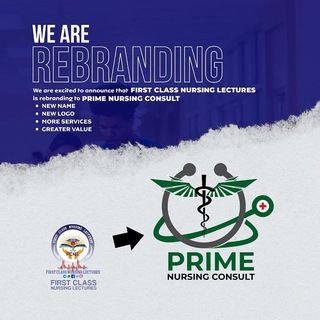
We are thrilled to announce that First Class Nursing Lectures is rebranding to PRIME NURSING CONSULT! Our new name and logo reflect our commitment to providing even more comprehensive services and greater value to our community. We are proud to share that we are now officially registered with the Corporate Affairs Commission (CAC) under Registration Number 7421158.
Rest assured, we remain the same dedicated organization, but with a fresh identity and enhanced offerings. Thank you for your continued support.Best regards,
The PRIME NURSING CONSULT Team
We are thrilled to announce that First Class Nursing Lectures is rebranding to PRIME NURSING CONSULT! Our new name and logo reflect our commitment to providing even more comprehensive services and greater value to our community. We are proud to share that we are now officially registered with the Corporate Affairs Commission (CAC) under Registration Number 7421158.
Rest assured, we remain the same dedicated organization, but with a fresh identity and enhanced offerings. Thank you for your continued support.Best regards,
The PRIME NURSING CONSULT Team

Title: Understanding Korsakoff's Syndrome
Brief overview of Korsakoff's syndrome.
1: What is Korsakoff's Syndrome?
Korsakoff's syndrome, also known as Korsakoff's psychosis or amnesic-confabulatory syndrome. Discuss its nature as a chronic memory disorder.
2: Causes of Korsakoff's Syndrome Thiamine Deficiency:
Emphasize the primary cause.
👉 Alcoholism: Chronic alcohol consumption leads to poor diet and impaired thiamine absorption.
👉 Malnutrition: Insufficient intake of nutrients, particularly thiamine.
👉 Other Medical Conditions: Disorders that impair nutrient absorption (e.g., gastrointestinal disorders, HIV/AIDS, certain cancers).
3: Symptoms of Korsakoff's Syndrome
● Amnesia: Significant memory loss, particularly anterograde amnesia (difficulty forming new memories) and sometimes retrograde amnesia (loss of past memories).
● Confabulation: Fabrication of stories or filling in memory gaps without the intention to deceive.
● Disorientation: Confusion about time and place.
● Difficulty Learning New Information or Skills: Impaired ability to acquire new information or skills.
4: Diagnosing Korsakoff's Syndrome
□ Clinical Observation: Based on observed symptoms and patient history, especially regarding alcohol use.
□ Response to Thiamine Supplementation: Improvement upon administration of thiamine can aid diagnosis.
□ Neuroimaging and Cognitive Tests: Used to assess brain damage and memory function.
5: Treatment of Korsakoff's Syndrome
📍Thiamine Supplementation: Immediate administration, often intravenously, followed by oral supplements.
📍Alcohol Abstinence: Essential to prevent further damage and support recovery.
📍Nutritional Support: Ensuring a balanced diet rich in essential nutrients.
📍Rehabilitation: Cognitive rehabilitation and therapy to manage symptoms and improve quality of life.
6: Prognosis and Long-term Outlook
Symptom Improvement: Some symptoms can improve with early and sustained treatment.
Cognitive Impairment: Often leads to lasting cognitive issues.
Importance of Early Intervention: Critical for the best possible outcome.
7: Prevention of Korsakoff's Syndrome
✍️ Adequate Nutrition: Ensuring sufficient intake of thiamine and other essential nutrients.
✍️ Responsible Alcohol Consumption: Reducing risk factors associated with alcohol use.
✍️ Early Treatment of Underlying Conditions: Addressing conditions that impair nutrient absorption promptly.
Brief overview of Korsakoff's syndrome.
1: What is Korsakoff's Syndrome?
Korsakoff's syndrome, also known as Korsakoff's psychosis or amnesic-confabulatory syndrome. Discuss its nature as a chronic memory disorder.
2: Causes of Korsakoff's Syndrome Thiamine Deficiency:
Emphasize the primary cause.
👉 Alcoholism: Chronic alcohol consumption leads to poor diet and impaired thiamine absorption.
👉 Malnutrition: Insufficient intake of nutrients, particularly thiamine.
👉 Other Medical Conditions: Disorders that impair nutrient absorption (e.g., gastrointestinal disorders, HIV/AIDS, certain cancers).
3: Symptoms of Korsakoff's Syndrome
● Amnesia: Significant memory loss, particularly anterograde amnesia (difficulty forming new memories) and sometimes retrograde amnesia (loss of past memories).
● Confabulation: Fabrication of stories or filling in memory gaps without the intention to deceive.
● Disorientation: Confusion about time and place.
● Difficulty Learning New Information or Skills: Impaired ability to acquire new information or skills.
4: Diagnosing Korsakoff's Syndrome
□ Clinical Observation: Based on observed symptoms and patient history, especially regarding alcohol use.
□ Response to Thiamine Supplementation: Improvement upon administration of thiamine can aid diagnosis.
□ Neuroimaging and Cognitive Tests: Used to assess brain damage and memory function.
5: Treatment of Korsakoff's Syndrome
📍Thiamine Supplementation: Immediate administration, often intravenously, followed by oral supplements.
📍Alcohol Abstinence: Essential to prevent further damage and support recovery.
📍Nutritional Support: Ensuring a balanced diet rich in essential nutrients.
📍Rehabilitation: Cognitive rehabilitation and therapy to manage symptoms and improve quality of life.
6: Prognosis and Long-term Outlook
Symptom Improvement: Some symptoms can improve with early and sustained treatment.
Cognitive Impairment: Often leads to lasting cognitive issues.
Importance of Early Intervention: Critical for the best possible outcome.
7: Prevention of Korsakoff's Syndrome
✍️ Adequate Nutrition: Ensuring sufficient intake of thiamine and other essential nutrients.
✍️ Responsible Alcohol Consumption: Reducing risk factors associated with alcohol use.
✍️ Early Treatment of Underlying Conditions: Addressing conditions that impair nutrient absorption promptly.