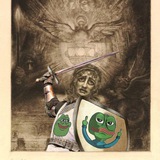
The family's name is derived from the Latin coleus, or testicle, and indeed, the family's coat of arms was two pairs of white testicles on a red field, above one red pair on a white field. The progenitor of the family, Gisalberto, was reportedly proud of this coat of arms which he displayed prominently on his properties. Later members of the family modified the testicles on the coat of arms into upside-down hearts.
😁5🌭3🍓1
Aromantic Spectrum Awareness Week is an annual event that takes place in February to celebrate and raise awareness of aromanticism. Aromanticism is a romantic orientation characterised by a lack of interest in romantic relationships. During Aromantic Spectrum Awareness Week, people of all gender identities, orientations, and backgrounds come together to celebrate aromanticism and raise awareness of the aromantic spectrum.
Forwarded from Wakingup1984
This media is not supported in your browser
VIEW IN TELEGRAM
Hachiko couldn’t understand why his owner didn’t come home, but never gave up hope that he would someday. For the next 9 years, 9 months, and 15 days, Hachiko was seen returning to the Shibuya train station at the time Ueno would usually arrive, patiently waiting for him to return.
READ MORE
READ MORE
❤🔥11😢5💔1
Forwarded from Wakingup1984
Full Hachiko Story:
In Japan, there lived a loyal dog named Hachiko. He was an Akita dog, and he had a very special bond with his owner, Professor Hidesaburo Ueno. Every morning, Hachiko would walk with the professor to Shibuya Station and see him off to work. Then, Hachiko would wait all day for his owner to come back on the evening train.
Their daily routine was a happy one until one sad day in 1925. That day, Professor Ueno didn't come back. He had passed away suddenly while at work. Hachiko didn't understand why his owner didn't return, but he kept waiting at the station. He came back every day, hoping to see his beloved owner again.
Hachiko's loyalty touched the hearts of the people who saw him at the station. They learned why he was waiting and started to bring him food and water. Hachiko became famous for his dedication, and people from all over came to see the loyal dog. In 1934, a statue was built at Shibuya Station to honor Hachiko's loyalty.
In Japan, there lived a loyal dog named Hachiko. He was an Akita dog, and he had a very special bond with his owner, Professor Hidesaburo Ueno. Every morning, Hachiko would walk with the professor to Shibuya Station and see him off to work. Then, Hachiko would wait all day for his owner to come back on the evening train.
Their daily routine was a happy one until one sad day in 1925. That day, Professor Ueno didn't come back. He had passed away suddenly while at work. Hachiko didn't understand why his owner didn't return, but he kept waiting at the station. He came back every day, hoping to see his beloved owner again.
Hachiko's loyalty touched the hearts of the people who saw him at the station. They learned why he was waiting and started to bring him food and water. Hachiko became famous for his dedication, and people from all over came to see the loyal dog. In 1934, a statue was built at Shibuya Station to honor Hachiko's loyalty.
🥰4❤🔥3👍1
Forwarded from Wakingup1984
❤4❤🔥1
Forwarded from 4bidden WISDOM
The_Eclectic_Histories_Of_The_United_States_1881_M_E_Thalheimer.pdf
26.5 MB
⚡1
Socialism and Cholera, 1850.
- Oras Vernet (French painter).
Cholera, personified by a figure in Asiatic garb, playing a flute made from the bone of a human shin, sits on a guillotine-like throne under the aegis of a skeleton in a cloak, the personification of death, seated cross-legged, reading a newspaper and holding a scythe with a flag inscribed "République France." Two shadowy figures raise a charred cross against a wall and fragments of architectural ruins crumbling to the right, signifying instability, destruction and doom.
- Oras Vernet (French painter).
Cholera, personified by a figure in Asiatic garb, playing a flute made from the bone of a human shin, sits on a guillotine-like throne under the aegis of a skeleton in a cloak, the personification of death, seated cross-legged, reading a newspaper and holding a scythe with a flag inscribed "République France." Two shadowy figures raise a charred cross against a wall and fragments of architectural ruins crumbling to the right, signifying instability, destruction and doom.
❤🔥2🤔1👌1