The Ludovisi Battle sarcophagus or "Great" Ludovisi sarcophagus is an ancient Roman sarcophagus dating to around AD 250–260, found in 1621 in the Vigna Bernusconi, a tomb near the Porta Tiburtina.It is also known as the Via Tiburtina Sarcophagus, though other sarcophagi have been found there. It is known for its densely populated, anti-classical composition of "writhing and highly emotive"Romans and Goths, and is an example of the battle scenes favored in Roman art during the Crisis of the Third Century. Discovered in 1621 and named for its first modern owner, Ludovico Ludovisi, the sarcophagus is now displayed at the Palazzo Altemps in Rome, part of the National Museum of Rome as of 1901.
The sarcophagus is a late outlier in a group of about twenty-five late Roman battle sarcophagi, the others all apparently dating to 170–210, made in Rome or in some cases Athens. These derive from Hellenistic monuments from Pergamon in Asia Minor showing Pergamene victories over the Gauls, and were all presumably commissioned for military commanders. The Portonaccio sarcophagus is the best known and most elaborate of the main Antonine group and shows both considerable similarities to the Great Ludovisi sarcophagus, and a considerable contrast in style and mood.
Forwarded from Hey frens
This media is not supported in your browser
VIEW IN TELEGRAM
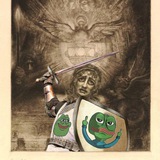
them: frogposting not allowed
mi:
mi:
❤2
The Mares of Diomedes (Greek: Διομήδους ἵπποι), also called the Mares of Thrace, were a herd of man-eating horses in Greek mythology. Magnificent, wild, and uncontrollable, they belonged to Diomedes of Thrace (not to be confused with Diomedes, son of Tydeus), king of Thrace, son of Ares and Cyrene who lived on the shores of the Black Sea. Bucephalus, Alexander the Great's horse, was said to be descended from these mares.
Media is too big
VIEW IN TELEGRAM
The Mares of Diomedes (The Man-Eating Horses)
This media is not supported in your browser
VIEW IN TELEGRAM
Rheinmetall_releases_Panther_KF51_Main_Battle_Tank
Repetition Technique.
Periodically repeat the phrase you wish to convey to the object, but remember to formulate the information in different ways.
The principle of advertising is based on this kind of manipulation: First you are presented with a piece of information many times, and then, when you are faced with the need to choose, you unconsciously choose something you have heard about many times.
Resist: Monitor the pressure you're under, including the repetition technique. Don't let quantity become quality by reminding yourself of the arguments of your own position.
Periodically repeat the phrase you wish to convey to the object, but remember to formulate the information in different ways.
The principle of advertising is based on this kind of manipulation: First you are presented with a piece of information many times, and then, when you are faced with the need to choose, you unconsciously choose something you have heard about many times.
Resist: Monitor the pressure you're under, including the repetition technique. Don't let quantity become quality by reminding yourself of the arguments of your own position.
Sniffing snuff was the original method of taking tobacco, first used by the American Indians. Christopher Columbus noticed them sniffing a mysterious powder during his second voyage of discovery (1494-6) and brought the substance back to Europe. Snuff taking fast became the vogue among the Spanish and the French, although it only gained limited acceptance in England until Charles II brought the habit back from his exile in France.