Which of the following hormonal factors inhibit small intestinal motility?
Anonymous Quiz
42%
a. Gastrin
31%
b. Serotonin
14%
c. CCK
14%
d. Glucagon
❤9🔥3😁2
Forwarded from 💯 संपूर्ण स्पर्धा परीक्षा मार्गदर्शन 🛜
Please open Telegram to view this post
VIEW IN TELEGRAM
❤4
DHS-DMER-NORCET Nursing Exam...
What is the SI unit of blood pressure?
Rationale:
• The blood pressure in the aorta, brachial artery and other large arteries increases to
a peak value of about 120 mmHg during each cardiac cycle (systolic pressure). The
blood pressure decreases to a minimum of about 70-80 mmHg during the cardiac cycle
(diastolic pressure).
• The arterial blood pressure is conventionally represented as systolic pressure over
diastolic pressure. For example: 120/80 mmHg.
• One mm of mercury is equal to 0.133 kPa (kilo Pascal).
In SI system (International System of units), the value will be 16.0/9.3 kPa
Other options:
• Option A: The unit mmHg (Hg stands for mercury) is the commonly used unit for
pressure in the measurement of blood pressure (but, it is not the SI unit for pressure).
• Option C: Torr is also a unit of pressure (based on absolute scale in physics).
• Option D: Newton is the unit for force, not pressure.
• The blood pressure in the aorta, brachial artery and other large arteries increases to
a peak value of about 120 mmHg during each cardiac cycle (systolic pressure). The
blood pressure decreases to a minimum of about 70-80 mmHg during the cardiac cycle
(diastolic pressure).
• The arterial blood pressure is conventionally represented as systolic pressure over
diastolic pressure. For example: 120/80 mmHg.
• One mm of mercury is equal to 0.133 kPa (kilo Pascal).
In SI system (International System of units), the value will be 16.0/9.3 kPa
Other options:
• Option A: The unit mmHg (Hg stands for mercury) is the commonly used unit for
pressure in the measurement of blood pressure (but, it is not the SI unit for pressure).
• Option C: Torr is also a unit of pressure (based on absolute scale in physics).
• Option D: Newton is the unit for force, not pressure.
❤16
Forwarded from gautam
Public link: Medical Quiz Questions and Answers
https://g.co/gemini/share/dcd7d319eed3
https://g.co/gemini/share/dcd7d319eed3
Gemini
Gemini - Medical Quiz Questions and Answers
Created with Gemini
❤12
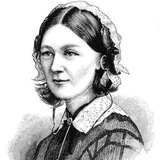
Florence Nightingale – Short Key Points :
Born on 12 May 1820 in Florence.
Known as the “Lady with the Lamp.”
Founder of modern nursing.
Worked during the Crimean War.
Improved hospital cleanliness and hygiene.
Reduced death rates of soldiers.
Used statistics and charts to show health data.
Started the Nightingale Training School in 1860.
Wrote the book Notes on Nursing.
Died on 13 August 1910 in London.
Born on 12 May 1820 in Florence.
Known as the “Lady with the Lamp.”
Founder of modern nursing.
Worked during the Crimean War.
Improved hospital cleanliness and hygiene.
Reduced death rates of soldiers.
Used statistics and charts to show health data.
Started the Nightingale Training School in 1860.
Wrote the book Notes on Nursing.
Died on 13 August 1910 in London.
❤9🔥1
Blood – Important Points : (Nursing Notes)
Definition :
Blood is a fluid connective tissue.
Average adult has about 5–6 liters of blood.
Components of Blood :
Plasma – liquid part (55%)
Formed elements (45%)
RBC (Red Blood Cells)
WBC (White Blood Cells)
Platelets
Functions of Blood :
Transport oxygen and nutrients
Remove carbon dioxide and waste
Maintain body temperature
Protect against infection
Help in clotting
RBC (Erythrocytes) :
Produced in bone marrow
Contains hemoglobin
Life span: 120 days
Normal count:
Male: 4.5–5.5 million/mm³
Female: 4–5 million/mm³
Hemoglobin (Hb) :
Carries oxygen
Normal value:
Male: 13–18 g/dL
Female: 12–16 g/dL
WBC (Leukocytes) :
Fight against infection
Normal count: 4,000–11,000/mm³
Types:
Neutrophils
Lymphocytes
Monocytes
Eosinophils
Basophils
Platelets (Thrombocytes) :
Help in blood clotting
Normal count: 1.5–4 lakh/mm³
Life span: 7–10 days
Blood Groups :
ABO system:
A
B
AB
O
Universal donor: O negative
Universal recipient: AB positive
Important Terms:
Anemia → low hemoglobin
Leukocytosis → increased WBC
Thrombocytopenia → low platelets
Hemophilia → bleeding disorder
Clotting Factors
Vitamin K helps clotting
Calcium is essential for coagulation
Nursing Important Points
Check blood group before transfusion
Observe for transfusion reactions
Maintain aseptic precautions
Monitor vital signs during transfusion
Definition :
Blood is a fluid connective tissue.
Average adult has about 5–6 liters of blood.
Components of Blood :
Plasma – liquid part (55%)
Formed elements (45%)
RBC (Red Blood Cells)
WBC (White Blood Cells)
Platelets
Functions of Blood :
Transport oxygen and nutrients
Remove carbon dioxide and waste
Maintain body temperature
Protect against infection
Help in clotting
RBC (Erythrocytes) :
Produced in bone marrow
Contains hemoglobin
Life span: 120 days
Normal count:
Male: 4.5–5.5 million/mm³
Female: 4–5 million/mm³
Hemoglobin (Hb) :
Carries oxygen
Normal value:
Male: 13–18 g/dL
Female: 12–16 g/dL
WBC (Leukocytes) :
Fight against infection
Normal count: 4,000–11,000/mm³
Types:
Neutrophils
Lymphocytes
Monocytes
Eosinophils
Basophils
Platelets (Thrombocytes) :
Help in blood clotting
Normal count: 1.5–4 lakh/mm³
Life span: 7–10 days
Blood Groups :
ABO system:
A
B
AB
O
Universal donor: O negative
Universal recipient: AB positive
Important Terms:
Anemia → low hemoglobin
Leukocytosis → increased WBC
Thrombocytopenia → low platelets
Hemophilia → bleeding disorder
Clotting Factors
Vitamin K helps clotting
Calcium is essential for coagulation
Nursing Important Points
Check blood group before transfusion
Observe for transfusion reactions
Maintain aseptic precautions
Monitor vital signs during transfusion
❤12
Heart – Short Key Points :
The heart is a muscular organ that pumps blood throughout the body.
It is located in the chest between the lungs.
Normal heart has 4 chambers:
Right atrium
Right ventricle
Left atrium
Left ventricle
The left ventricle is the strongest chamber.
Heart is covered by a membrane called pericardium.
The heart beats about 60–100 times/minute in adults.
Normal cardiac output is about 5 liters/minute.
Blood circulation is of two types:
Pulmonary circulation
Systemic circulation
Main valves of heart:
Tricuspid valve
Pulmonary valve
Mitral valve
Aortic valve
The heart receives oxygen through coronary arteries.
The natural pacemaker of heart is SA node.
ECG is used to record electrical activity of the heart.
Main function: supply oxygen and nutrients to body tissues.
Common heart diseases:
Hypertension
Coronary artery disease
Heart failure
Myocardial infarction (heart attack)
Regular exercise, healthy diet, and avoiding smoking help keep the heart healthy.
The heart is a muscular organ that pumps blood throughout the body.
It is located in the chest between the lungs.
Normal heart has 4 chambers:
Right atrium
Right ventricle
Left atrium
Left ventricle
The left ventricle is the strongest chamber.
Heart is covered by a membrane called pericardium.
The heart beats about 60–100 times/minute in adults.
Normal cardiac output is about 5 liters/minute.
Blood circulation is of two types:
Pulmonary circulation
Systemic circulation
Main valves of heart:
Tricuspid valve
Pulmonary valve
Mitral valve
Aortic valve
The heart receives oxygen through coronary arteries.
The natural pacemaker of heart is SA node.
ECG is used to record electrical activity of the heart.
Main function: supply oxygen and nutrients to body tissues.
Common heart diseases:
Hypertension
Coronary artery disease
Heart failure
Myocardial infarction (heart attack)
Regular exercise, healthy diet, and avoiding smoking help keep the heart healthy.
❤9