©Sir Frank Dicksee, The Two Crowns, 1900
-The Two Crowns of the title are the golden crown of a king and the crown of thorns worn by Christ on the cross. Dicksee invented this highly moral scene in which a medieval king, riding in a triumphal procession, is startled by the sight of a crucifix (or perhaps sees a vision of Christ) and is reminded of the transience of earthly power and success. In fact the chivalric, Christian knight had been a role model for the modern gentleman for most of the nineteenth century.
-The Two Crowns of the title are the golden crown of a king and the crown of thorns worn by Christ on the cross. Dicksee invented this highly moral scene in which a medieval king, riding in a triumphal procession, is startled by the sight of a crucifix (or perhaps sees a vision of Christ) and is reminded of the transience of earthly power and success. In fact the chivalric, Christian knight had been a role model for the modern gentleman for most of the nineteenth century.
©John Singer Sargent, Lady Helen Vincent, Viscountess d’Abernon, 1904 🇺🇸
- Painter's brilliant bravura brushwork, flair for rich colors, and dramatic juxtaposition of light and dark tones, he made striking images of the American and European elite. Born to American parents in Italy, Sargent spent most of his life in Europe, where he traveled extensively, studying the work of the Old Masters. He greatly admired Diego Velázquez’s realism and Frans Hals’s painterly brush strokes, both of which he would incorporate into his own work. Sargent painted this portrait of Lady Helen Vincent in Venice. A glimpse of the Grand Canal is visible through the balustrade in the lower-left corner. He elongates Lady Helen’s limbs, underscoring her gracefulness, while the black dress emphasizes her milk-white skin, a sign of her nobility. Her direct but pensive gaze suggests her intellect: she was a member of The Souls, a salon of prominent intellectuals that included Henry James and Edith Wharton.
- Painter's brilliant bravura brushwork, flair for rich colors, and dramatic juxtaposition of light and dark tones, he made striking images of the American and European elite. Born to American parents in Italy, Sargent spent most of his life in Europe, where he traveled extensively, studying the work of the Old Masters. He greatly admired Diego Velázquez’s realism and Frans Hals’s painterly brush strokes, both of which he would incorporate into his own work. Sargent painted this portrait of Lady Helen Vincent in Venice. A glimpse of the Grand Canal is visible through the balustrade in the lower-left corner. He elongates Lady Helen’s limbs, underscoring her gracefulness, while the black dress emphasizes her milk-white skin, a sign of her nobility. Her direct but pensive gaze suggests her intellect: she was a member of The Souls, a salon of prominent intellectuals that included Henry James and Edith Wharton.
Debussy - La damoiselle élue
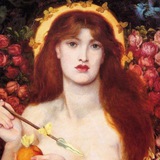
Debussy - La damoiselle élue (Inspired from Rossetti's "The Blessed Damozel" painting)
- La Damoiselle élue (The Blessed Damozel), L. 62, is a cantata for soprano soloist, 2-part children's choir, 2-part female (contralto) choir (with contralto solo), and orchestra, composed by Claude Debussy in 1887–1888 based on a text by Dante Gabriel Rossetti. It premiered in Paris in 1893.
Claude Debussy was interested in the symbolist movement and later took inspiration from a poem by Stéphane Mallarmé for his Prélude à l'après-midi d'un faune (1894). Reading an anthology of English poetry translated by Gabriel Sarrazin, "Poètes modernes d’Angleterre" (1883) gave Debussy the idea of composing a cantata on the poem "The Blessed Damozel" (1850) by Pre-Raphaelite poet and painter Dante Gabriel Rossetti. Debussy had probably not seen Rossetti's painting of the same title, but other pre-Raphaelite illustrations with a focus on a deep type of beauty values introduction had been seen by him.
[ Opera ]
@Classophily
- La Damoiselle élue (The Blessed Damozel), L. 62, is a cantata for soprano soloist, 2-part children's choir, 2-part female (contralto) choir (with contralto solo), and orchestra, composed by Claude Debussy in 1887–1888 based on a text by Dante Gabriel Rossetti. It premiered in Paris in 1893.
Claude Debussy was interested in the symbolist movement and later took inspiration from a poem by Stéphane Mallarmé for his Prélude à l'après-midi d'un faune (1894). Reading an anthology of English poetry translated by Gabriel Sarrazin, "Poètes modernes d’Angleterre" (1883) gave Debussy the idea of composing a cantata on the poem "The Blessed Damozel" (1850) by Pre-Raphaelite poet and painter Dante Gabriel Rossetti. Debussy had probably not seen Rossetti's painting of the same title, but other pre-Raphaelite illustrations with a focus on a deep type of beauty values introduction had been seen by him.
[ Opera ]
@Classophily
©Eugène Flandin (1809-1876), The Hagia Sophia, Constantinople
- Jean-Baptiste Eugène Napoléon Flandin, French orientalist, painter, archaeologist, and politician. Flandin’s archeological drawings and some of his military paintings are valued more highly by museum authorities than his purely artistic paintings. He is most renowned for his famous drawings and paintings of Persian monuments, landscapes, and social life made during his travels with the architect Pascal Coste during the years 1839–41. Flandin’s observations on the state of Persia and international politics in the mid-19th century also continue to provide important documentary information.
- Jean-Baptiste Eugène Napoléon Flandin, French orientalist, painter, archaeologist, and politician. Flandin’s archeological drawings and some of his military paintings are valued more highly by museum authorities than his purely artistic paintings. He is most renowned for his famous drawings and paintings of Persian monuments, landscapes, and social life made during his travels with the architect Pascal Coste during the years 1839–41. Flandin’s observations on the state of Persia and international politics in the mid-19th century also continue to provide important documentary information.