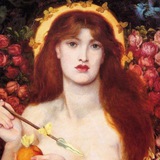
©Herbert James Draper, The Lament For Icarus, 1898
O idol! With thy ruby lips and pearly teeth, If thou dost desire my wings,
how shall I fly attendance on thee?
O idol! The moon-faced beauty of thee sits in the corner of the throne,
Alas! Why do I roam the earth in search of thy Crwon?
O idol! Thou mayst take my feet, yet I, blind, run towards thee
If thou dost wish to cut off my steps, how shall I find my way to mount sinai of thee?
❤🔥3
Gregorian and Ambrosian Music for the Feast of the Three Magi: Alleluia…
Schola Cantorum Coloniensis/Dr. Gabriel Maria Steinschulte
-Gregorian chant is the central tradition of Western plainchant, a form of monophonic, unaccompanied sacred song in Latin (and occasionally Greek) of the Roman Catholic Church.
[ Opera ]
@Classophily
[ Opera ]
@Classophily
©Evelyn De Morgan, The Angel of Death, 1880
O Thou! Who doth smile upon my existence, doth smile terribly upon my madness
My death, like a jest, doth laugh harshly upon my absence
Alas! The plight of that pauper who, upon beholding thy fair countenance
Doth steal death from him until he doth find no scent of thy deliverance
💔4
Audio
Antonio Vivaldi wrote at least three Gloria compositions, settings of the hymn Gloria in excelsis Deo (Latin for "Glory to God in the highest"), with words probably dating back to the 4th century, and an integral part of the mass ordinary about 1715.
The hymn begins with the angels sang when announcing the birth of Christ to shepherds in Luke 2 : 14. Other verses were added very early, forming a doxology (short hymn of praises to God).
[ Opera ]
@Classophily
The hymn begins with the angels sang when announcing the birth of Christ to shepherds in Luke 2 : 14. Other verses were added very early, forming a doxology (short hymn of praises to God).
[ Opera ]
@Classophily
©Briton Rivière, Aphrodite, 1902
She, in a hundred disguises, runs away and hides
You, in every trap, are entwined, O cursed one
What is it to them but humiliation?
When they saw you, they torn to pieces, one by one
Oh, Witness! You are the delightful antidote
Have mercy, Particularly, on thy beheaded one
❤🔥2
Graduel D'Alienor De Bretagne - Plainchant et polyphonies des XIII…
Graduel D'Alienor De Bretagne (Gradual of Eleanor of Brittany)
- Gregorian Plain-chant et polyphonies des XII & XIV siecles, Ensemble Organum, Marcel Peres
- As an antiphonary (Books containing antiphony (Call-Response singing)) or gradual (Latin gradus ("step") - Chanted on the step of the ambo or altar) of the 13th.
1. Natus est hodie Dominus, sequence 00:00
2. Kyrie: Orbis factor, polyphony 06:56
3. Gloria in excelsis Deo, chant 12:35
4. Alleluia. Per te Dei genitrix, polyphony 16:31
5. Alleluia. Nigra sum sed formosa, polyphony 20:16
6. Alleluia. Post partum, polyphony 23:39
7. Verbum bonum, sequence (polyphony) 26:31
8. Saint Paul à Titus, chant (Epistle troped in French) 29:31
9. Credo in unum Deum, polyphony 41:00
10.Hodie donum datur gracie, cantus (chant) 46:36
11. Viderunt omnes fines terre, communion (polyphony) 49:51
12. Virga lesse floruit, cantus (polyphony) 54:42
13. Benedicamus Domino, polyphony 57:39
14. Res est admirabilis, sequence (polyphony) 58:35
[ Opera ]
@Classophily
- Gregorian Plain-chant et polyphonies des XII & XIV siecles, Ensemble Organum, Marcel Peres
- As an antiphonary (Books containing antiphony (Call-Response singing)) or gradual (Latin gradus ("step") - Chanted on the step of the ambo or altar) of the 13th.
1. Natus est hodie Dominus, sequence 00:00
2. Kyrie: Orbis factor, polyphony 06:56
3. Gloria in excelsis Deo, chant 12:35
4. Alleluia. Per te Dei genitrix, polyphony 16:31
5. Alleluia. Nigra sum sed formosa, polyphony 20:16
6. Alleluia. Post partum, polyphony 23:39
7. Verbum bonum, sequence (polyphony) 26:31
8. Saint Paul à Titus, chant (Epistle troped in French) 29:31
9. Credo in unum Deum, polyphony 41:00
10.Hodie donum datur gracie, cantus (chant) 46:36
11. Viderunt omnes fines terre, communion (polyphony) 49:51
12. Virga lesse floruit, cantus (polyphony) 54:42
13. Benedicamus Domino, polyphony 57:39
14. Res est admirabilis, sequence (polyphony) 58:35
[ Opera ]
@Classophily
This media is not supported in your browser
VIEW IN TELEGRAM
©Catullus and Titian, Bacchus and Ariadne, 1523
'A moment of falling in love amidst all the chaos' 💘
Hear more from a Vivmar Curatorial Fellow, Maria Alambritis...
'A moment of falling in love amidst all the chaos' 💘
Hear more from a Vivmar Curatorial Fellow, Maria Alambritis...
❤🔥1
©Artemisia Gentileschi, Self Portrait as Saint Catherine of Alexandria, about ~1615, The National Gallery, London.
©Orazio Gentileschi, The Finding of Moses, ~1630, The National Gallery, London.
Like father, like daughter 🎨
We're taking a closer look at the work of Artemisia Gentileschi and her father, Orazio. Born in Rome, Artemisia was the eldest of five children and the only daughter of Orazio, whom she trained under. While her brothers remained working with her father, Artemisia pursued an independent career in Florence and became an artist of considerable success, working for the highest echelons of European society, including the Grand Duke of Tuscany and Philip IV of Spain.
In the late 1630s Artemisia travelled to London where her father had assumed a position at the court of Charles I. It is thought that Artemisia collaborated with Orazio on ceiling canvases in the Great Hall of the Queen’s House at Greenwich where his painting, 'The Finding of Moses', hung.
©Orazio Gentileschi, The Finding of Moses, ~1630, The National Gallery, London.
Like father, like daughter 🎨
We're taking a closer look at the work of Artemisia Gentileschi and her father, Orazio. Born in Rome, Artemisia was the eldest of five children and the only daughter of Orazio, whom she trained under. While her brothers remained working with her father, Artemisia pursued an independent career in Florence and became an artist of considerable success, working for the highest echelons of European society, including the Grand Duke of Tuscany and Philip IV of Spain.
In the late 1630s Artemisia travelled to London where her father had assumed a position at the court of Charles I. It is thought that Artemisia collaborated with Orazio on ceiling canvases in the Great Hall of the Queen’s House at Greenwich where his painting, 'The Finding of Moses', hung.