
AndroGuider | One Stop For The Techy You! India's Bold Move: $19.8 Billion Investment to Challenge China's Smartphone Dominance
https://ai4chat-files.s3.amazonaws.com/images/image_1784139788725.jpg TL;DR
* India has approved $19.2–$19.8 billion in semiconductor and electronics manufacturing investments across 10 major projects to build a self-reliant supply chain.
* The strategic push includes two new fabrication plants, multiple testing/packing facilities, and a $11 billion semiconductor fund to support AI, smartphone, and EV chip production.
* By targeting 10% of global semiconductor consumption by 2030, India aims to reduce reliance on China and capture a larger share of the shifting global electronics market.
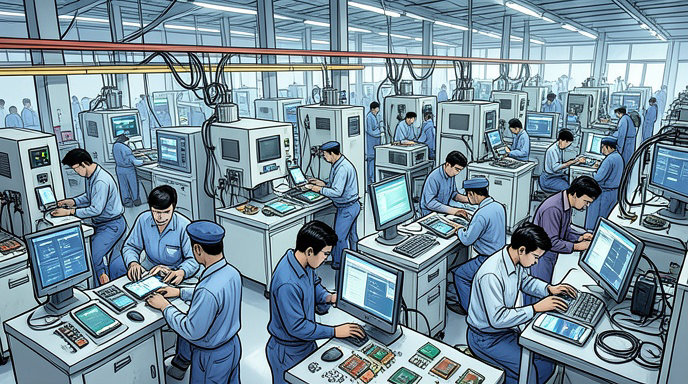
India is executing a historic economic pivot, approving over ₹1.6 lakh crore (approximately $19.2–$19.8 billion) in investments to establish a domestic semiconductor and smartphone manufacturing ecosystem. This massive financial commitment, spread across 10 approved semiconductor initiatives, marks New Delhi’s most aggressive attempt to decouple its electronics supply chain from China and position the nation as a primary global hub for chip production. A Strategic Shift Away from China
The core objective of this investment is to lessen reliance on imports and secure chips for critical sectors like telecommunications, automotive, and defense. As the global electronics market increasingly moves away from China due to geopolitical tensions and supply chain risks, India is positioning itself as the preferred alternative destination for manufacturing.
The Indian government’s Semiconductor Mission aims to alter the current landscape by establishing a complete supply chain within India, encompassing design, fabrication, testing, and packaging. This "full-stack" approach is designed to create a domestic buyer-supplier network, ensuring that chip manufacturers can integrate local components rather than relying solely on imports. The Anatomy of the Investment
The approved capital is not a single lump sum but a diversified portfolio of projects designed to build a comprehensive ecosystem:
* Two Semiconductor Fabrication Plants: The centerpiece includes major wafer fabrication units, with the largest being a $11 billion facility in Dholera, Gujarat, led by Tata Electronics and Taiwan’s PSMC (Powerchip Semiconductor Manufacturing Corp). This plant is expected to produce power integrated circuits, display drivers, and high-performance computing logic for AI and automotive sectors.
* Testing and Packaging Facilities: Multiple projects focus on assembly, testing, marking, and packaging (ATMP/OSAT), including a $3.3 billion unit by Tata Semiconductor in Assam and a $918 million facility in Gujarat by CG Power and Renesas.
* Electronic Components Manufacturing: In May 2025, India introduced a new initiative to bolster the manufacturing of active and passive electronic components, addressing a crucial bottleneck in the supply chain.
* The $11 Billion Fund: Complementing these projects, India is launching a dedicated $11 billion fund (1 lakh crore rupees) to supercharge domestic manufacturing and support the India Semiconductor Mission (ISM). Key Industry Players and Locations
The initiative has attracted massive private investment from global and domestic giants, concentrating heavily in states like Gujarat, Assam, and Odisha:
Company/Partner Investment Amount Location Focus Area Tata Electronics & PSMC $10.9 billion Dholera, Gujarat Semiconductor Fab (AI, Auto, EV) Tata Semiconductor (TSAT) $3.3 billion Morigaon, Assam Assembly, Testing, Packaging CG Power & Renesas $918 million Sanand, Gujarat Microcontrollers & SoC Foxconn &[...]
https://ai4chat-files.s3.amazonaws.com/images/image_1784139788725.jpg TL;DR
* India has approved $19.2–$19.8 billion in semiconductor and electronics manufacturing investments across 10 major projects to build a self-reliant supply chain.
* The strategic push includes two new fabrication plants, multiple testing/packing facilities, and a $11 billion semiconductor fund to support AI, smartphone, and EV chip production.
* By targeting 10% of global semiconductor consumption by 2030, India aims to reduce reliance on China and capture a larger share of the shifting global electronics market.
India is executing a historic economic pivot, approving over ₹1.6 lakh crore (approximately $19.2–$19.8 billion) in investments to establish a domestic semiconductor and smartphone manufacturing ecosystem. This massive financial commitment, spread across 10 approved semiconductor initiatives, marks New Delhi’s most aggressive attempt to decouple its electronics supply chain from China and position the nation as a primary global hub for chip production. A Strategic Shift Away from China
The core objective of this investment is to lessen reliance on imports and secure chips for critical sectors like telecommunications, automotive, and defense. As the global electronics market increasingly moves away from China due to geopolitical tensions and supply chain risks, India is positioning itself as the preferred alternative destination for manufacturing.
The Indian government’s Semiconductor Mission aims to alter the current landscape by establishing a complete supply chain within India, encompassing design, fabrication, testing, and packaging. This "full-stack" approach is designed to create a domestic buyer-supplier network, ensuring that chip manufacturers can integrate local components rather than relying solely on imports. The Anatomy of the Investment
The approved capital is not a single lump sum but a diversified portfolio of projects designed to build a comprehensive ecosystem:
* Two Semiconductor Fabrication Plants: The centerpiece includes major wafer fabrication units, with the largest being a $11 billion facility in Dholera, Gujarat, led by Tata Electronics and Taiwan’s PSMC (Powerchip Semiconductor Manufacturing Corp). This plant is expected to produce power integrated circuits, display drivers, and high-performance computing logic for AI and automotive sectors.
* Testing and Packaging Facilities: Multiple projects focus on assembly, testing, marking, and packaging (ATMP/OSAT), including a $3.3 billion unit by Tata Semiconductor in Assam and a $918 million facility in Gujarat by CG Power and Renesas.
* Electronic Components Manufacturing: In May 2025, India introduced a new initiative to bolster the manufacturing of active and passive electronic components, addressing a crucial bottleneck in the supply chain.
* The $11 Billion Fund: Complementing these projects, India is launching a dedicated $11 billion fund (1 lakh crore rupees) to supercharge domestic manufacturing and support the India Semiconductor Mission (ISM). Key Industry Players and Locations
The initiative has attracted massive private investment from global and domestic giants, concentrating heavily in states like Gujarat, Assam, and Odisha:
Company/Partner Investment Amount Location Focus Area Tata Electronics & PSMC $10.9 billion Dholera, Gujarat Semiconductor Fab (AI, Auto, EV) Tata Semiconductor (TSAT) $3.3 billion Morigaon, Assam Assembly, Testing, Packaging CG Power & Renesas $918 million Sanand, Gujarat Microcontrollers & SoC Foxconn &[...]
AndroGuider
AndroGuider | One Stop For The Techy You! India's Bold Move: $19.8 Billion Investment to Challenge China's Smartphone Dominance https://ai4chat-files.s3.amazonaws.com/images/image_1784139788725.jpg TL;DR * India has approved $19.2–$19.8 billion in semiconductor…
Vedanta $19.5 billion (announced) Gujarat Chip Manufacturing (Operational by 2024) Note: While the Foxconn-Vedanta announcement of $19.5 billion was a major early milestone, the cumulative approved investment across all 10 projects is now confirmed at approximately $18.2–$19.2 billion.
Major players like Micron Technology, HCL-Foxconn, and SiCSem are also investing billions to set up world-class infrastructure, including India’s first commercial compound fabrication plant in Odisha. Ambitious Targets and Economic Impact
India’s semiconductor market has already jumped from $38 billion to nearly $50 billion, with projections soaring to over $100 billion by 2030. The government’s long-term goal is to capture 10% of global semiconductor consumption by 2030, representing a $110 billion market target.
The economic ripple effects are expected to be substantial:
* Job Creation: The industry is projected to generate 1 million jobs by 2026, with specific projects like the Foxconn-Vedanta plant expected to create 100,000 jobs alone.
* Design Innovation: India is proving its technical capability with 22 design-linked projects and 6 approved fabrication plants, including a 3nm chip designed in India.
* Policy Support: The government now covers 50% of project costs for all fabrication units (regardless of chip size) and testing/packing facilities, a shift from the previous 28nm-only incentive structure. Challenges on the Road to Self-Reliance
Despite the bold financial commitments, India faces considerable challenges in establishing itself as a significant global player. Building a semiconductor ecosystem requires massive infrastructure, advanced talent, and a stable regulatory environment. The India Semiconductor Mission (ISM), approved in December 2021 with a ₹76,000 crore outlay, serves as the nodal agency to navigate these complexities.
Furthermore, the sector is still in the early stages of industrialization. While projects are approved, production is expected to begin by late 2026 for the Tata-PSMC plant, meaning the full impact of this $19.8 billion bet will take years to materialize. However, with four more units approved in August 2025 and a total of 10 projects now greenlit across six states, India is rapidly emerging as a credible alternative in the global chip race.
This strategic move is set to strengthen India's technology supply chain, anchor the nation firmly into the global chip supply chain, and fundamentally alter the dynamics of the electronics industry.
Major players like Micron Technology, HCL-Foxconn, and SiCSem are also investing billions to set up world-class infrastructure, including India’s first commercial compound fabrication plant in Odisha. Ambitious Targets and Economic Impact
India’s semiconductor market has already jumped from $38 billion to nearly $50 billion, with projections soaring to over $100 billion by 2030. The government’s long-term goal is to capture 10% of global semiconductor consumption by 2030, representing a $110 billion market target.
The economic ripple effects are expected to be substantial:
* Job Creation: The industry is projected to generate 1 million jobs by 2026, with specific projects like the Foxconn-Vedanta plant expected to create 100,000 jobs alone.
* Design Innovation: India is proving its technical capability with 22 design-linked projects and 6 approved fabrication plants, including a 3nm chip designed in India.
* Policy Support: The government now covers 50% of project costs for all fabrication units (regardless of chip size) and testing/packing facilities, a shift from the previous 28nm-only incentive structure. Challenges on the Road to Self-Reliance
Despite the bold financial commitments, India faces considerable challenges in establishing itself as a significant global player. Building a semiconductor ecosystem requires massive infrastructure, advanced talent, and a stable regulatory environment. The India Semiconductor Mission (ISM), approved in December 2021 with a ₹76,000 crore outlay, serves as the nodal agency to navigate these complexities.
Furthermore, the sector is still in the early stages of industrialization. While projects are approved, production is expected to begin by late 2026 for the Tata-PSMC plant, meaning the full impact of this $19.8 billion bet will take years to materialize. However, with four more units approved in August 2025 and a total of 10 projects now greenlit across six states, India is rapidly emerging as a credible alternative in the global chip race.
This strategic move is set to strengthen India's technology supply chain, anchor the nation firmly into the global chip supply chain, and fundamentally alter the dynamics of the electronics industry.
AndroGuider | One Stop For The Techy You!
US Indicts Russian Web Hosts for $62M Cybercrime Operation
https://ai4chat-files.s3.amazonaws.com/images/image_1784139831179.jpg TL;DR
* **Unsealed Charges:** A federal indictment returned in December 2024 was unsealed this week in the Northern District of Ohio, charging three Russian nationals and two "bulletproof" web hosting companies for facilitating cyberattacks.
* **Massive Profits:** Prosecutors allege the defendants helped hackers infect victims with malware and ransomware, netting over **$62 million** in proceeds from attacks on dozens of U.S. businesses across 20 states.
* **Global Sanctions:** The U.S. Treasury sanctioned the defendants and their companies in November 2025, with the U.K. and Australia joining the measures, though extradition from Russia remains unlikely. US Charges Russian Web Hosts Behind $62M Cybercrime Ring
The United States Department of Justice has unsealed a significant indictment against three Russian nationals and two web hosting companies accused of operating a "bulletproof" infrastructure that enabled a global cybercrime operation. The charges allege that Alexander Volosovik, Kirill Zatolokin, and Yulia Pankova, all residents of St. Petersburg, Russia, owned and operated Medialand LLC and ML.Cloud, providing the critical server infrastructure used to launch ransomware, phishing, and distributed denial-of-service (DDoS) attacks against U.S. targets. The "Bulletproof" Hosting Allegation
The core of the prosecution's argument rests on the defendants' role as "bulletproof" hosting providers. According to Justice Department statements, these companies deliberately marketed their services to shield criminal clients from law enforcement demands and takedowns, effectively acting as a shield for cybercriminals. Court documents allege that Medialand and ML.Cloud provided criminal co-conspirators with the means to infect victim computers with malware and ransomware, subsequently extorting victims for money and cryptocurrency.
Prosecutors stated that hackers utilized this infrastructure to target dozens of U.S. businesses across more than 20 states. The attacks included DDoS campaigns designed to knock websites offline, phishing operations to steal credentials, and direct cyberattacks on critical infrastructure. By offering these services, the companies allegedly facilitated the infection of thousands of IP addresses controlled by some of the planet's most vicious ransomware gangs. $62 Million in Proceeds and Ransomware Gangs
The financial scale of the operation is described as massive. Federal prosecutors say the cyberattacks facilitated by the Russian hosts netted approximately $62 million in proceeds from victims. The indictment specifically notes that the infrastructure was used by notorious ransomware gangs, including LockBit, BlackSuit, and Play, to carry out their extortion campaigns.
The indictment, which was originally returned by a federal grand jury in December 2024, charges the defendants with conspiracy to commit and aid and abet computer fraud, conspiracy to commit wire fraud, wire fraud, and conspiracy to commit money laundering. The U.S. Department of State's Rewards for Justice program has subsequently announced a reward of up to $10 million for information leading to the arrest or conviction of the indicted defendants. Sanctions and the Reality of Extradition
In a coordinated move preceding the unsealing of the indictment, the U.S. Department of the Treasury’s Office of Foreign Assets Control (OFAC) announced sanctions against the three individuals and their companies in November 2025. These sanctions block all U.S. property of the defendants and prohibit transactions by U.S. persons. The United Kingdom’s Foreign Commonwealth and Development Office joined the sanctions in[...]
US Indicts Russian Web Hosts for $62M Cybercrime Operation
https://ai4chat-files.s3.amazonaws.com/images/image_1784139831179.jpg TL;DR
* **Unsealed Charges:** A federal indictment returned in December 2024 was unsealed this week in the Northern District of Ohio, charging three Russian nationals and two "bulletproof" web hosting companies for facilitating cyberattacks.
* **Massive Profits:** Prosecutors allege the defendants helped hackers infect victims with malware and ransomware, netting over **$62 million** in proceeds from attacks on dozens of U.S. businesses across 20 states.
* **Global Sanctions:** The U.S. Treasury sanctioned the defendants and their companies in November 2025, with the U.K. and Australia joining the measures, though extradition from Russia remains unlikely. US Charges Russian Web Hosts Behind $62M Cybercrime Ring
The United States Department of Justice has unsealed a significant indictment against three Russian nationals and two web hosting companies accused of operating a "bulletproof" infrastructure that enabled a global cybercrime operation. The charges allege that Alexander Volosovik, Kirill Zatolokin, and Yulia Pankova, all residents of St. Petersburg, Russia, owned and operated Medialand LLC and ML.Cloud, providing the critical server infrastructure used to launch ransomware, phishing, and distributed denial-of-service (DDoS) attacks against U.S. targets. The "Bulletproof" Hosting Allegation
The core of the prosecution's argument rests on the defendants' role as "bulletproof" hosting providers. According to Justice Department statements, these companies deliberately marketed their services to shield criminal clients from law enforcement demands and takedowns, effectively acting as a shield for cybercriminals. Court documents allege that Medialand and ML.Cloud provided criminal co-conspirators with the means to infect victim computers with malware and ransomware, subsequently extorting victims for money and cryptocurrency.
Prosecutors stated that hackers utilized this infrastructure to target dozens of U.S. businesses across more than 20 states. The attacks included DDoS campaigns designed to knock websites offline, phishing operations to steal credentials, and direct cyberattacks on critical infrastructure. By offering these services, the companies allegedly facilitated the infection of thousands of IP addresses controlled by some of the planet's most vicious ransomware gangs. $62 Million in Proceeds and Ransomware Gangs
The financial scale of the operation is described as massive. Federal prosecutors say the cyberattacks facilitated by the Russian hosts netted approximately $62 million in proceeds from victims. The indictment specifically notes that the infrastructure was used by notorious ransomware gangs, including LockBit, BlackSuit, and Play, to carry out their extortion campaigns.
The indictment, which was originally returned by a federal grand jury in December 2024, charges the defendants with conspiracy to commit and aid and abet computer fraud, conspiracy to commit wire fraud, wire fraud, and conspiracy to commit money laundering. The U.S. Department of State's Rewards for Justice program has subsequently announced a reward of up to $10 million for information leading to the arrest or conviction of the indicted defendants. Sanctions and the Reality of Extradition
In a coordinated move preceding the unsealing of the indictment, the U.S. Department of the Treasury’s Office of Foreign Assets Control (OFAC) announced sanctions against the three individuals and their companies in November 2025. These sanctions block all U.S. property of the defendants and prohibit transactions by U.S. persons. The United Kingdom’s Foreign Commonwealth and Development Office joined the sanctions in[...]
AndroGuider | One Stop For The Techy You!
US Indicts Russian Web Hosts for $62M Cybercrime Operation
AndroGuider is a blog where you can scoop your daily need of tech information with some dose of special reviews and custom ROM overviews
AndroGuider
AndroGuider | One Stop For The Techy You! US Indicts Russian Web Hosts for $62M Cybercrime Operation https://ai4chat-files.s3.amazonaws.com/images/image_1784139831179.jpg TL;DR * **Unsealed Charges:** A federal indictment returned in December 2024 was unsealed…
full, while Australia’s Department of Foreign Affairs and Trade joined in part.
Despite the legal and financial pressure, the likelihood of the defendants facing trial in the United States remains low. The suspects reside in St. Petersburg, and extradition of Russian nationals to the U.S. is historically rare. U.S. Assistant Attorney General A. Tysen Duva acknowledged this reality while emphasizing the government's commitment to dismantling these networks: "We will continue to dismantle these networks and protect our critical infrastructure from cybercriminals at home and abroad." Global Implications for Cybersecurity
This case highlights the ongoing challenge of combating cybercrime that relies on infrastructure hosted in jurisdictions with limited cooperation with Western law enforcement. The "bulletproof" hosting model allows criminal organizations to operate with a degree of impunity, as the hosting providers explicitly refuse to comply with takedown requests from authorities.
The unsealing of this indictment serves as a warning to other infrastructure providers that knowingly facilitating cyberattacks on U.S. critical infrastructure will result in severe federal charges and international sanctions. While the physical capture of Volosovik, Zatolokin, and Pankova may be improbable, the unsealing of the charges and the imposition of sanctions aim to disrupt the financial ecosystems that support these global ransomware operations.
Despite the legal and financial pressure, the likelihood of the defendants facing trial in the United States remains low. The suspects reside in St. Petersburg, and extradition of Russian nationals to the U.S. is historically rare. U.S. Assistant Attorney General A. Tysen Duva acknowledged this reality while emphasizing the government's commitment to dismantling these networks: "We will continue to dismantle these networks and protect our critical infrastructure from cybercriminals at home and abroad." Global Implications for Cybersecurity
This case highlights the ongoing challenge of combating cybercrime that relies on infrastructure hosted in jurisdictions with limited cooperation with Western law enforcement. The "bulletproof" hosting model allows criminal organizations to operate with a degree of impunity, as the hosting providers explicitly refuse to comply with takedown requests from authorities.
The unsealing of this indictment serves as a warning to other infrastructure providers that knowingly facilitating cyberattacks on U.S. critical infrastructure will result in severe federal charges and international sanctions. While the physical capture of Volosovik, Zatolokin, and Pankova may be improbable, the unsealing of the charges and the imposition of sanctions aim to disrupt the financial ecosystems that support these global ransomware operations.
AndroGuider | One Stop For The Techy You!
Microsoft's Strategy: Undermining Competitors in the AI Race
https://ai4chat-files.s3.amazonaws.com/images/image_1784160943692.jpg TL;DR
* **Sales Training Shift:** Microsoft’s Chief Commercial Officer is reportedly training sales teams to downplay competitors OpenAI and Anthropic, urging them to highlight Microsoft’s own AI models as more efficient and cost-effective.
* **Internal Model Replacement:** The company is actively replacing OpenAI and Anthropic models with its internally built MAI models in core products like Excel, Outlook, and GitHub Copilot to drastically reduce AI spending.
* **Strategic Cost Focus:** Executives have explicitly stated the goal is to "reduce and ultimately eliminate" the high costs paid to Anthropic, while launching seven new AI models designed to match competitor capabilities at a lower price point. Microsoft's Strategy: Undermining Competitors in the AI Race
Microsoft is executing a aggressive pivot in its commercial strategy, moving from a collaborative AI ecosystem to a fiercely competitive one centered on its own technology. According to recent reports, the tech giant has begun training its sales force to actively downplay rival AI providers, specifically OpenAI and Anthropic, when pitching to enterprise clients. Judson Althoff, Microsoft’s Chief Commercial Officer (CCO), personally initiated this training earlier this month, focusing on how to market Microsoft’s products against OpenAI’s "Frontier," an enterprise AI agent platform.
The core of this new sales pitch is not just feature superiority, but economic necessity. Microsoft is positioning its own AI models as significantly more efficient and cost-effective than those of its competitors. This approach suggests a calculated effort to shift the market narrative from "who has the best model" to "who offers the best value," directly challenging the dominance of OpenAI’s Frontier and Anthropic’s Claude series in the enterprise space. Replacing Partners with Internal Models
The sales strategy is backed by a tangible shift in Microsoft’s product architecture. The company is no longer relying heavily on external partners for its core AI capabilities. Instead, Microsoft is replacing OpenAI and Anthropic models with its internally built "MAI" models in widely used software products like Excel and Outlook.
Tens of thousands of AI prompts in these applications are now completed weekly using Microsoft’s proprietary technology. This move represents a significant departure from previous reliance on external models and signals Microsoft’s confidence in its ability to build competitive AI at a lower cost. The transition extends beyond consumer apps; MAI models are also being integrated into GitHub Copilot for AI-assisted development, and a Microsoft-built transcription model is slated for use in Teams videoconferences in the coming months. The Cost-Cutting Motive
The driving force behind this strategy is financial. Microsoft’s leadership has openly acknowledged that the company pays a "lot of money" to Anthropic and aims to eliminate that cost entirely. In June, the company’s AI model chief stated that the goal was to reduce spending on Anthropic by increasing the usage of MAI models.
This cost-cutting initiative is supported by a surge in new product development. At its annual Build conference in June, Microsoft announced seven new AI models, including one that claims to match the coding abilities of Anthropic’s popular Opus 4.6 model at a reduced cost. By matching competitor performance while lowering the price, Microsoft aims to make its own models the default choice for businesses looking to optimize their AI budgets. Impact on the Competitive Landscape
This strategy poses a direct threat to the competitive landscape of the AI industry. For years, Microsoft and OpenAI have been viewed as "ride-or-di[...]
Microsoft's Strategy: Undermining Competitors in the AI Race
https://ai4chat-files.s3.amazonaws.com/images/image_1784160943692.jpg TL;DR
* **Sales Training Shift:** Microsoft’s Chief Commercial Officer is reportedly training sales teams to downplay competitors OpenAI and Anthropic, urging them to highlight Microsoft’s own AI models as more efficient and cost-effective.
* **Internal Model Replacement:** The company is actively replacing OpenAI and Anthropic models with its internally built MAI models in core products like Excel, Outlook, and GitHub Copilot to drastically reduce AI spending.
* **Strategic Cost Focus:** Executives have explicitly stated the goal is to "reduce and ultimately eliminate" the high costs paid to Anthropic, while launching seven new AI models designed to match competitor capabilities at a lower price point. Microsoft's Strategy: Undermining Competitors in the AI Race
Microsoft is executing a aggressive pivot in its commercial strategy, moving from a collaborative AI ecosystem to a fiercely competitive one centered on its own technology. According to recent reports, the tech giant has begun training its sales force to actively downplay rival AI providers, specifically OpenAI and Anthropic, when pitching to enterprise clients. Judson Althoff, Microsoft’s Chief Commercial Officer (CCO), personally initiated this training earlier this month, focusing on how to market Microsoft’s products against OpenAI’s "Frontier," an enterprise AI agent platform.
The core of this new sales pitch is not just feature superiority, but economic necessity. Microsoft is positioning its own AI models as significantly more efficient and cost-effective than those of its competitors. This approach suggests a calculated effort to shift the market narrative from "who has the best model" to "who offers the best value," directly challenging the dominance of OpenAI’s Frontier and Anthropic’s Claude series in the enterprise space. Replacing Partners with Internal Models
The sales strategy is backed by a tangible shift in Microsoft’s product architecture. The company is no longer relying heavily on external partners for its core AI capabilities. Instead, Microsoft is replacing OpenAI and Anthropic models with its internally built "MAI" models in widely used software products like Excel and Outlook.
Tens of thousands of AI prompts in these applications are now completed weekly using Microsoft’s proprietary technology. This move represents a significant departure from previous reliance on external models and signals Microsoft’s confidence in its ability to build competitive AI at a lower cost. The transition extends beyond consumer apps; MAI models are also being integrated into GitHub Copilot for AI-assisted development, and a Microsoft-built transcription model is slated for use in Teams videoconferences in the coming months. The Cost-Cutting Motive
The driving force behind this strategy is financial. Microsoft’s leadership has openly acknowledged that the company pays a "lot of money" to Anthropic and aims to eliminate that cost entirely. In June, the company’s AI model chief stated that the goal was to reduce spending on Anthropic by increasing the usage of MAI models.
This cost-cutting initiative is supported by a surge in new product development. At its annual Build conference in June, Microsoft announced seven new AI models, including one that claims to match the coding abilities of Anthropic’s popular Opus 4.6 model at a reduced cost. By matching competitor performance while lowering the price, Microsoft aims to make its own models the default choice for businesses looking to optimize their AI budgets. Impact on the Competitive Landscape
This strategy poses a direct threat to the competitive landscape of the AI industry. For years, Microsoft and OpenAI have been viewed as "ride-or-di[...]
AndroGuider | One Stop For The Techy You!
Microsoft's Strategy: Undermining Competitors in the AI Race
AndroGuider is a blog where you can scoop your daily need of tech information with some dose of special reviews and custom ROM overviews
AndroGuider
AndroGuider | One Stop For The Techy You! Microsoft's Strategy: Undermining Competitors in the AI Race https://ai4chat-files.s3.amazonaws.com/images/image_1784160943692.jpg TL;DR * **Sales Training Shift:** Microsoft’s Chief Commercial Officer is reportedly…
e" partners, with Microsoft serving as OpenAI’s primary infrastructure provider. However, the current push to sideline OpenAI and Anthropic suggests a shift toward "multi-model independence" and a potential distancing from OpenAI’s growing ambitions.
While Microsoft previously diversified its vendor pool by integrating Claude models into its Azure AI model marketplace alongside OpenAI, the new sales mandate indicates a move to prioritize its own stack over these partnerships. If successful, this approach could force other enterprises to reconsider their reliance on OpenAI and Anthropic, potentially accelerating a market shift toward proprietary, in-house AI solutions developed by major tech giants. Future Repercussions for the AI Industry
The implications of Microsoft’s strategy extend beyond immediate sales figures. By prioritizing cost-efficiency and internal model development, Microsoft may be setting a new standard for the industry where economic viability trumps raw model performance. This could pressure competitors like OpenAI and Anthropic to lower their prices or prove their value proposition more aggressively to justify their costs to enterprise clients.
Furthermore, as Microsoft invests up to $145 billion in AI this year—more than double its 2024 spending—the company is positioning itself to break through by strengthening AI agent technology that automates human tasks. If Microsoft’s agents can deliver comparable results to OpenAI’s Frontier at a fraction of the cost, the industry may see a rapid consolidation of AI adoption around Microsoft’s ecosystem, fundamentally altering how AI is deployed in the corporate world.
While Microsoft previously diversified its vendor pool by integrating Claude models into its Azure AI model marketplace alongside OpenAI, the new sales mandate indicates a move to prioritize its own stack over these partnerships. If successful, this approach could force other enterprises to reconsider their reliance on OpenAI and Anthropic, potentially accelerating a market shift toward proprietary, in-house AI solutions developed by major tech giants. Future Repercussions for the AI Industry
The implications of Microsoft’s strategy extend beyond immediate sales figures. By prioritizing cost-efficiency and internal model development, Microsoft may be setting a new standard for the industry where economic viability trumps raw model performance. This could pressure competitors like OpenAI and Anthropic to lower their prices or prove their value proposition more aggressively to justify their costs to enterprise clients.
Furthermore, as Microsoft invests up to $145 billion in AI this year—more than double its 2024 spending—the company is positioning itself to break through by strengthening AI agent technology that automates human tasks. If Microsoft’s agents can deliver comparable results to OpenAI’s Frontier at a fraction of the cost, the industry may see a rapid consolidation of AI adoption around Microsoft’s ecosystem, fundamentally altering how AI is deployed in the corporate world.
AndroGuider | One Stop For The Techy You!
Tesla Crash Investigation Reveals Driver's Full Throttle Acceleration
https://ai4chat-files.s3.amazonaws.com/images/image_1784160991048.jpg TL;DR
* Driver Full Throttle: Tesla AI chief Ashok Elluswamy confirmed vehicle data shows the driver manually pressed the accelerator pedal to 100% in a residential area, overriding self-driving features.
* Dual Federal Probe: The crash that killed 76-year-old Martha Avila in Katy, Texas, has triggered simultaneous investigations by the NHTSA and the NTSB, raising regulatory stakes for Tesla’s autonomous ambitions.
* Speed and Impact: The Tesla Model 3 reached 73 mph before crashing into a home, with the accelerator remaining fully pressed even after impact, according to Tesla’s internal data logs. Tesla Crash Investigation Reveals Driver's Full Throttle Acceleration
A fatal Tesla crash in Texas that drew intense scrutiny over the company’s autonomous driving capabilities has been clarified by new data from the vehicle itself. According to Ashok Elluswamy, Tesla’s vice president of artificial intelligence software, the vehicle’s event data recorder reveals that the driver manually overrode the self-driving system by pressing the accelerator pedal to 100%.
This finding directly contradicts initial speculation that the car’s Full Self-Driving (FSD) or Autopilot features were solely responsible for the incident. Elluswamy stated on X that the driver "manually rode-driving by accelerator all way to 100% the accelerator pedal in this residential area". The data further indicates that the accelerator remained fully depressed even after the vehicle crashed into the home, suggesting the driver maintained full throttle through the impact. Crash Details: 73 mph Impact in a Residential Zone
The incident occurred on June 19, 2026, in the Houston suburb of Katy, Texas. A Tesla Model 3, reportedly operating with driver-assistance features engaged, crashed into the front wall of a residence, killing 76-year-old Martha Avila. Police reports indicate the vehicle reached a speed of 73 mph during the crash, a velocity consistent with the driver pressing the accelerator to its maximum limit in a residential neighborhood.
First responders found the driver, Michael Butler, and a passenger in the vehicle. While the driver initially mentioned activating autopilot to authorities, the data logs suggest he manually intervened and accelerated the vehicle to its limit before the collision. The Harris County Sheriff’s Department noted that the driver was not intoxicated and is cooperating with the investigation. Dual Federal Investigations Launch
The crash has triggered a dual federal probe, with both the National Highway Traffic Safety Administration (NHTSA) and the National Transportation Safety Board (NTSB) opening investigations. The NHTSA announced its special investigation on June 22, shortly after the crash, folding the incident into its existing engineering analysis of FSD involving 3.2 million vehicles.
The NTSB joined the investigation days later, announcing it would examine the crash "in collaboration with the Harris County Sheriff’s Department". While the NTSB has not yet detailed the specific areas of its inquiry, the simultaneous involvement of two major federal agencies highlights the severity of the incident and the regulatory pressure mounting on Tesla as it expands its Robotaxi fleet. Legal Fallout and Implications for Tesla Safety Protocols
The family of the deceased, Martha Avila, has filed a lawsuit in Texas state court seeking over $1 million in damages, plus punitive damages for what they describe as Tesla’s "reckless disregard for a significant risk of serious bodily harm". The lawsuit alleges gross negligence, claiming the Autopilot and "self-driving" features of the Model 3 [...]
Tesla Crash Investigation Reveals Driver's Full Throttle Acceleration
https://ai4chat-files.s3.amazonaws.com/images/image_1784160991048.jpg TL;DR
* Driver Full Throttle: Tesla AI chief Ashok Elluswamy confirmed vehicle data shows the driver manually pressed the accelerator pedal to 100% in a residential area, overriding self-driving features.
* Dual Federal Probe: The crash that killed 76-year-old Martha Avila in Katy, Texas, has triggered simultaneous investigations by the NHTSA and the NTSB, raising regulatory stakes for Tesla’s autonomous ambitions.
* Speed and Impact: The Tesla Model 3 reached 73 mph before crashing into a home, with the accelerator remaining fully pressed even after impact, according to Tesla’s internal data logs. Tesla Crash Investigation Reveals Driver's Full Throttle Acceleration
A fatal Tesla crash in Texas that drew intense scrutiny over the company’s autonomous driving capabilities has been clarified by new data from the vehicle itself. According to Ashok Elluswamy, Tesla’s vice president of artificial intelligence software, the vehicle’s event data recorder reveals that the driver manually overrode the self-driving system by pressing the accelerator pedal to 100%.
This finding directly contradicts initial speculation that the car’s Full Self-Driving (FSD) or Autopilot features were solely responsible for the incident. Elluswamy stated on X that the driver "manually rode-driving by accelerator all way to 100% the accelerator pedal in this residential area". The data further indicates that the accelerator remained fully depressed even after the vehicle crashed into the home, suggesting the driver maintained full throttle through the impact. Crash Details: 73 mph Impact in a Residential Zone
The incident occurred on June 19, 2026, in the Houston suburb of Katy, Texas. A Tesla Model 3, reportedly operating with driver-assistance features engaged, crashed into the front wall of a residence, killing 76-year-old Martha Avila. Police reports indicate the vehicle reached a speed of 73 mph during the crash, a velocity consistent with the driver pressing the accelerator to its maximum limit in a residential neighborhood.
First responders found the driver, Michael Butler, and a passenger in the vehicle. While the driver initially mentioned activating autopilot to authorities, the data logs suggest he manually intervened and accelerated the vehicle to its limit before the collision. The Harris County Sheriff’s Department noted that the driver was not intoxicated and is cooperating with the investigation. Dual Federal Investigations Launch
The crash has triggered a dual federal probe, with both the National Highway Traffic Safety Administration (NHTSA) and the National Transportation Safety Board (NTSB) opening investigations. The NHTSA announced its special investigation on June 22, shortly after the crash, folding the incident into its existing engineering analysis of FSD involving 3.2 million vehicles.
The NTSB joined the investigation days later, announcing it would examine the crash "in collaboration with the Harris County Sheriff’s Department". While the NTSB has not yet detailed the specific areas of its inquiry, the simultaneous involvement of two major federal agencies highlights the severity of the incident and the regulatory pressure mounting on Tesla as it expands its Robotaxi fleet. Legal Fallout and Implications for Tesla Safety Protocols
The family of the deceased, Martha Avila, has filed a lawsuit in Texas state court seeking over $1 million in damages, plus punitive damages for what they describe as Tesla’s "reckless disregard for a significant risk of serious bodily harm". The lawsuit alleges gross negligence, claiming the Autopilot and "self-driving" features of the Model 3 [...]
AndroGuider | One Stop For The Techy You!
Tesla Crash Investigation Reveals Driver's Full Throttle Acceleration
AndroGuider is a blog where you can scoop your daily need of tech information with some dose of special reviews and custom ROM overviews
AndroGuider
AndroGuider | One Stop For The Techy You! Tesla Crash Investigation Reveals Driver's Full Throttle Acceleration https://ai4chat-files.s3.amazonaws.com/images/image_1784160991048.jpg TL;DR * Driver Full Throttle: Tesla AI chief Ashok Elluswamy confirmed vehicle…
were defective and failed to prevent the crash.
This incident underscores the ongoing debate regarding driver responsibility versus autonomous vehicle safety protocols. While Tesla argues that the data proves the driver was fully in control, regulators are scrutinizing whether the company’s safety systems adequately prevent or warn against such dangerous manual overrides in residential zones. The outcome of the NHTSA and NTSB investigations could significantly influence future regulations on autonomous vehicle technology and the liability frameworks surrounding driver-assist systems. The Ongoing Dialogue on Autonomy
The Texas crash serves as a critical case study in the evolving dialogue about autonomous vehicle technology. Even as companies like Tesla push toward full autonomy, incidents like this reveal the complexities of human-machine interaction. The confirmation that the driver pressed the accelerator to 100% challenges the narrative that the car was "driving itself" without human input, yet it also raises questions about why a driver would choose to accelerate at such a speed in a residential area when a driver-assist system was active.
As the federal investigations proceed, the focus will likely shift to whether Tesla’s safety protocols are sufficient to detect and mitigate such extreme manual overrides, and how the industry defines the boundary between driver assistance and true autonomy.
This incident underscores the ongoing debate regarding driver responsibility versus autonomous vehicle safety protocols. While Tesla argues that the data proves the driver was fully in control, regulators are scrutinizing whether the company’s safety systems adequately prevent or warn against such dangerous manual overrides in residential zones. The outcome of the NHTSA and NTSB investigations could significantly influence future regulations on autonomous vehicle technology and the liability frameworks surrounding driver-assist systems. The Ongoing Dialogue on Autonomy
The Texas crash serves as a critical case study in the evolving dialogue about autonomous vehicle technology. Even as companies like Tesla push toward full autonomy, incidents like this reveal the complexities of human-machine interaction. The confirmation that the driver pressed the accelerator to 100% challenges the narrative that the car was "driving itself" without human input, yet it also raises questions about why a driver would choose to accelerate at such a speed in a residential area when a driver-assist system was active.
As the federal investigations proceed, the focus will likely shift to whether Tesla’s safety protocols are sufficient to detect and mitigate such extreme manual overrides, and how the industry defines the boundary between driver assistance and true autonomy.
AndroGuider | One Stop For The Techy You!
Neko Health Secures $700M to Revolutionize Health Assessment with Body-Scanning Tech
https://ai4chat-files.s3.amazonaws.com/images/image_1784161026620.jpg TL;DR
* $700M Series C Funding: Neko Health, co-founded by Spotify CEO Daniel Ek, secured a $700 million Series C round led by Lightspeed Venture Partners, pushing its valuation to nearly $7 billion.
* US Launch Plans: The startup will deploy the capital to open its first U.S. clinics in New York and other cities later in 2026, marking its expansion beyond Sweden and the UK.
* Innovative Tech: Neko’s core offering combines in-house developed full-body medical scans with bloodwork to deliver comprehensive, preventive health assessments aimed at early disease detection. A $7 Billion Leap for Preventive Care
Stockholm-based health technology company Neko Health has officially closed a massive $700 million Series C funding round, cementing its status as a leader in the preventive healthcare sector. The round, announced on Wednesday, July 15, 2026, was led by Lightspeed Venture Partners and co-led by O.G. Venture Partners, with significant participation from existing investors like Atomico, General Catalyst, and Lakestar, alongside new backers including Liberty City Ventures and BDT & MSD.
This hyper-capitalized round propels Neko Health to a valuation of nearly $7 billion, representing a staggering fourfold increase from its $1.7 billion valuation just a year prior during its Series B in January 2025. The funding is strategically timed to support the company’s imminent entry into the United States, with its first flagship clinics set to open in Manhattan and other major cities later this year. The Vision: Redefining Preventive Healthcare
Founded by Spotify CEO Daniel Ek and Hjalmar Nilsonne, Neko Health was built on the premise of shifting healthcare from reactive treatment to proactive prevention. The company aims to redefine how individuals understand and act on their health by providing accessible, comprehensive data before symptoms arise.
"The fundraise follows a $260m Series B in January 2025," marking a period of explosive growth for the startup as it scales its infrastructure to meet a global demand for early disease detection. With an active international waitlist of 350,000 people, Neko is deploying this capital to fuel its "across-the-pond" expansion, aiming to make its preventive scanning clinics a standard part of the US healthcare landscape. Inside the Technology: Body Scans + Bloodwork
Neko Health’s competitive edge lies in its proprietary, in-house developed full-body medical scanning technology. Unlike competitors that rely on third-party hardware, Neko builds its scanning capabilities internally, allowing for rapid, cost-effective feature upgrades and a more integrated diagnostic experience.
The company’s assessment model is comprehensive, combining these advanced body scans with traditional bloodwork. This dual-approach provides a holistic view of a patient’s health, enabling the early detection of diseases and offering actionable insights for preventive care. By integrating these technologies, Neko aims to provide a "comprehensive health assessment" that goes beyond standard check-ups, identifying potential health risks with greater precision. An Elite Backing Coalition
The $700 million round attracted an elite tier of global technology leaders and celebrity builders, signaling strong confidence in Neko’s trajectory. Notable new and existing investors include Mark Zuckerberg and Priscilla Chan, who have backed the company alongside tech innovator Tim Ferriss, tennis star Maria Sharapova, musician will.i.am, and OpenAI.
The investment circle also includes high-profile figures [...]
Neko Health Secures $700M to Revolutionize Health Assessment with Body-Scanning Tech
https://ai4chat-files.s3.amazonaws.com/images/image_1784161026620.jpg TL;DR
* $700M Series C Funding: Neko Health, co-founded by Spotify CEO Daniel Ek, secured a $700 million Series C round led by Lightspeed Venture Partners, pushing its valuation to nearly $7 billion.
* US Launch Plans: The startup will deploy the capital to open its first U.S. clinics in New York and other cities later in 2026, marking its expansion beyond Sweden and the UK.
* Innovative Tech: Neko’s core offering combines in-house developed full-body medical scans with bloodwork to deliver comprehensive, preventive health assessments aimed at early disease detection. A $7 Billion Leap for Preventive Care
Stockholm-based health technology company Neko Health has officially closed a massive $700 million Series C funding round, cementing its status as a leader in the preventive healthcare sector. The round, announced on Wednesday, July 15, 2026, was led by Lightspeed Venture Partners and co-led by O.G. Venture Partners, with significant participation from existing investors like Atomico, General Catalyst, and Lakestar, alongside new backers including Liberty City Ventures and BDT & MSD.
This hyper-capitalized round propels Neko Health to a valuation of nearly $7 billion, representing a staggering fourfold increase from its $1.7 billion valuation just a year prior during its Series B in January 2025. The funding is strategically timed to support the company’s imminent entry into the United States, with its first flagship clinics set to open in Manhattan and other major cities later this year. The Vision: Redefining Preventive Healthcare
Founded by Spotify CEO Daniel Ek and Hjalmar Nilsonne, Neko Health was built on the premise of shifting healthcare from reactive treatment to proactive prevention. The company aims to redefine how individuals understand and act on their health by providing accessible, comprehensive data before symptoms arise.
"The fundraise follows a $260m Series B in January 2025," marking a period of explosive growth for the startup as it scales its infrastructure to meet a global demand for early disease detection. With an active international waitlist of 350,000 people, Neko is deploying this capital to fuel its "across-the-pond" expansion, aiming to make its preventive scanning clinics a standard part of the US healthcare landscape. Inside the Technology: Body Scans + Bloodwork
Neko Health’s competitive edge lies in its proprietary, in-house developed full-body medical scanning technology. Unlike competitors that rely on third-party hardware, Neko builds its scanning capabilities internally, allowing for rapid, cost-effective feature upgrades and a more integrated diagnostic experience.
The company’s assessment model is comprehensive, combining these advanced body scans with traditional bloodwork. This dual-approach provides a holistic view of a patient’s health, enabling the early detection of diseases and offering actionable insights for preventive care. By integrating these technologies, Neko aims to provide a "comprehensive health assessment" that goes beyond standard check-ups, identifying potential health risks with greater precision. An Elite Backing Coalition
The $700 million round attracted an elite tier of global technology leaders and celebrity builders, signaling strong confidence in Neko’s trajectory. Notable new and existing investors include Mark Zuckerberg and Priscilla Chan, who have backed the company alongside tech innovator Tim Ferriss, tennis star Maria Sharapova, musician will.i.am, and OpenAI.
The investment circle also includes high-profile figures [...]
AndroGuider | One Stop For The Techy You!
Neko Health Secures $700M to Revolutionize Health Assessment with Body-Scanning Tech
AndroGuider is a blog where you can scoop your daily need of tech information with some dose of special reviews and custom ROM overviews
AndroGuider
AndroGuider | One Stop For The Techy You! Neko Health Secures $700M to Revolutionize Health Assessment with Body-Scanning Tech https://ai4chat-files.s3.amazonaws.com/images/image_1784161026620.jpg TL;DR * $700M Series C Funding: Neko Health, co-founded by…
like footballer Thierry Henry and new venture partners Positive Sum and BDT & MSD. As part of the round, David Ofer of O.G. Venture Partners will join Neko’s Board of Directors, subject to regulatory approval, further strengthening the company’s strategic leadership. Strategic Expansion and Future Outlook
The primary objective of this funding is to scale Neko’s operations for its US launch. The company plans to open its inaugural flagship preventive scanning clinic in New York later in 2026, marking its first move outside the UK and Sweden. This expansion is critical for Neko to capture the massive US market, where demand for preventive health solutions is surging.
Neko Health’s rapid valuation growth—from $1.8 billion in early 2025 to nearly $7 billion in mid-2026—demonstrates the market’s appetite for its innovative model. With the backing of Lightspeed Venture Partners and a board increasingly populated by industry veterans, Neko is positioned to become a dominant force in the global preventive health technology sector, turning the promise of early disease detection into a scalable reality.
The primary objective of this funding is to scale Neko’s operations for its US launch. The company plans to open its inaugural flagship preventive scanning clinic in New York later in 2026, marking its first move outside the UK and Sweden. This expansion is critical for Neko to capture the massive US market, where demand for preventive health solutions is surging.
Neko Health’s rapid valuation growth—from $1.8 billion in early 2025 to nearly $7 billion in mid-2026—demonstrates the market’s appetite for its innovative model. With the backing of Lightspeed Venture Partners and a board increasingly populated by industry veterans, Neko is positioned to become a dominant force in the global preventive health technology sector, turning the promise of early disease detection into a scalable reality.
AndroGuider | One Stop For The Techy You!
OpenAI Launches $230 Keyboard for Codex Amid Legal Struggles with Apple
https://ai4chat-files.s3.amazonaws.com/images/image_1784161079096.jpg TL;DR
* OpenAI has launched its first branded hardware product, the Codex Micro, a $230 mini keyboard co-engineered with Work Louder specifically for power users of its Codex coding app.
* The device features six light-up keys to display agent status, a joystick for navigation, a dial to adjust reasoning levels, and customizable shortcut keys including a voice recorder for audio prompts.
* While the release marks a strategic shift toward developer-focused hardware to enhance "vibe coding," the search results do not confirm any ongoing legal disputes between OpenAI and Apple regarding hardware trade secrets or impact on brand strategy related to such litigation. OpenAI Launches $230 Keyboard for Codex Amid Legal Struggles with Apple
OpenAI has officially entered the hardware market with the release of the Codex Micro, a specialized $230 mini keyboard designed to streamline the workflow for developers using its Codex AI coding assistant. This launch represents the AI lab's first branded hardware product, shifting focus from consumer devices to a tool engineered specifically for software developers and "vibe coders" to make coding more tactile and efficient. A New Tool for Codex Power Users
The Codex Micro is not a general-purpose computer keyboard but a compact input device built to complement the Codex coding environment. Engineered by Work Louder, a Canadian-Italian keyboard manufacturer known for mechanical accessories, the device is based on Work Louder’s existing Creator Micro 2 programmable macro pad but features custom branding and integration for OpenAI's ecosystem.
The hardware is designed to "supercharge people's Codex usage" by providing dedicated physical controls for common development tasks that are typically handled via mouse or standard keyboard shortcuts. For users engaged in multi-agent orchestrations, the device allows seamless jumping between different AI agents, addressing a growing need in complex coding workflows. Key Features and Design Specifications
The Codex Micro distinguishes itself with several unique hardware features tailored for AI interaction:
* Light-Up Status Keys: The device includes six light-up keys that visually display an agent's current status, offering immediate feedback without needing to check the screen.
* Physical Controls: It features a joystick for navigation and a dial specifically for adjusting the agent's reasoning level, allowing developers to tweak AI performance dynamically.
* Customizable Shortcuts: Users can program shortcut keys for common Codex actions, including a dedicated voice recorder key for sending audio prompts to agents.
* Mechanical Options: Reflecting Work Louder's expertise, the keyboard is available in two mechanical key options: "clicky" and "silent."
The device is now available for purchase, following a teaser campaign launched by OpenAI last month which hinted at Codex-branded hardware. Strategic Shift: Developer Hardware Over Consumer AI
The launch of the Codex Micro signals a clear strategic pivot for OpenAI. Rather than entering the crowded consumer device market—a sector where the company has faced rumors of a personal AI device being developed by former Apple designer Jony Ive—OpenAI is targeting developer productivity.
OpenAI CFO Sarah Friar had previously indicated that a hardware device would be revealed by the end of the year, but the Codex Micro arrives earlier than some anticipated, [...]
OpenAI Launches $230 Keyboard for Codex Amid Legal Struggles with Apple
https://ai4chat-files.s3.amazonaws.com/images/image_1784161079096.jpg TL;DR
* OpenAI has launched its first branded hardware product, the Codex Micro, a $230 mini keyboard co-engineered with Work Louder specifically for power users of its Codex coding app.
* The device features six light-up keys to display agent status, a joystick for navigation, a dial to adjust reasoning levels, and customizable shortcut keys including a voice recorder for audio prompts.
* While the release marks a strategic shift toward developer-focused hardware to enhance "vibe coding," the search results do not confirm any ongoing legal disputes between OpenAI and Apple regarding hardware trade secrets or impact on brand strategy related to such litigation. OpenAI Launches $230 Keyboard for Codex Amid Legal Struggles with Apple
OpenAI has officially entered the hardware market with the release of the Codex Micro, a specialized $230 mini keyboard designed to streamline the workflow for developers using its Codex AI coding assistant. This launch represents the AI lab's first branded hardware product, shifting focus from consumer devices to a tool engineered specifically for software developers and "vibe coders" to make coding more tactile and efficient. A New Tool for Codex Power Users
The Codex Micro is not a general-purpose computer keyboard but a compact input device built to complement the Codex coding environment. Engineered by Work Louder, a Canadian-Italian keyboard manufacturer known for mechanical accessories, the device is based on Work Louder’s existing Creator Micro 2 programmable macro pad but features custom branding and integration for OpenAI's ecosystem.
The hardware is designed to "supercharge people's Codex usage" by providing dedicated physical controls for common development tasks that are typically handled via mouse or standard keyboard shortcuts. For users engaged in multi-agent orchestrations, the device allows seamless jumping between different AI agents, addressing a growing need in complex coding workflows. Key Features and Design Specifications
The Codex Micro distinguishes itself with several unique hardware features tailored for AI interaction:
* Light-Up Status Keys: The device includes six light-up keys that visually display an agent's current status, offering immediate feedback without needing to check the screen.
* Physical Controls: It features a joystick for navigation and a dial specifically for adjusting the agent's reasoning level, allowing developers to tweak AI performance dynamically.
* Customizable Shortcuts: Users can program shortcut keys for common Codex actions, including a dedicated voice recorder key for sending audio prompts to agents.
* Mechanical Options: Reflecting Work Louder's expertise, the keyboard is available in two mechanical key options: "clicky" and "silent."
The device is now available for purchase, following a teaser campaign launched by OpenAI last month which hinted at Codex-branded hardware. Strategic Shift: Developer Hardware Over Consumer AI
The launch of the Codex Micro signals a clear strategic pivot for OpenAI. Rather than entering the crowded consumer device market—a sector where the company has faced rumors of a personal AI device being developed by former Apple designer Jony Ive—OpenAI is targeting developer productivity.
OpenAI CFO Sarah Friar had previously indicated that a hardware device would be revealed by the end of the year, but the Codex Micro arrives earlier than some anticipated, [...]
AndroGuider | One Stop For The Techy You!
OpenAI Launches $230 Keyboard for Codex Amid Legal Struggles with Apple
AndroGuider is a blog where you can scoop your daily need of tech information with some dose of special reviews and custom ROM overviews
AndroGuider
AndroGuider | One Stop For The Techy You! OpenAI Launches $230 Keyboard for Codex Amid Legal Struggles with Apple https://ai4chat-files.s3.amazonaws.com/images/image_1784161079096.jpg TL;DR * OpenAI has launched its first branded hardware product, the Codex…
focusing on utility rather than a standalone AI appliance. The launch demonstrates a focus on improving the developer experience rather than introducing new AI capabilities, leveraging physical controls to enhance the "vibe coding" phenomenon.
Pricing for the new device is set at $230, which is slightly higher than the base Creator Micro 2 from Work Louder that sells for approximately $199, suggesting the OpenAI branding and custom integration add value to the product. Context on Legal Disputes and Brand Strategy
While the user query references ongoing legal disputes with Apple over hardware trade secrets, the available search results regarding the Codex Micro launch do not confirm any such active litigation or specific connection between this hardware release and Apple legal drama.
OpenAI has explicitly stated that this device is not the anticipated personal AI device associated with Jony Ive, distinguishing it from any potential Apple hardware collaborations or conflicts. The company's brand strategy appears to be centered on specialized tools for professionals rather than broad consumer hardware, potentially mitigating direct competition with Apple's consumer device lineup.
Without confirmed reports of legal disputes in the provided search results, the "legal drama" mentioned in the prompt may refer to broader industry tensions or unverified rumors not yet substantiated by current news coverage of the keyboard launch. The primary narrative remains the successful entry of OpenAI into the developer hardware space with a product designed to make AI coding more tactile and efficient.
Pricing for the new device is set at $230, which is slightly higher than the base Creator Micro 2 from Work Louder that sells for approximately $199, suggesting the OpenAI branding and custom integration add value to the product. Context on Legal Disputes and Brand Strategy
While the user query references ongoing legal disputes with Apple over hardware trade secrets, the available search results regarding the Codex Micro launch do not confirm any such active litigation or specific connection between this hardware release and Apple legal drama.
OpenAI has explicitly stated that this device is not the anticipated personal AI device associated with Jony Ive, distinguishing it from any potential Apple hardware collaborations or conflicts. The company's brand strategy appears to be centered on specialized tools for professionals rather than broad consumer hardware, potentially mitigating direct competition with Apple's consumer device lineup.
Without confirmed reports of legal disputes in the provided search results, the "legal drama" mentioned in the prompt may refer to broader industry tensions or unverified rumors not yet substantiated by current news coverage of the keyboard launch. The primary narrative remains the successful entry of OpenAI into the developer hardware space with a product designed to make AI coding more tactile and efficient.
AndroGuider | One Stop For The Techy You!
Microsoft Fixes Critical Security Flaw in Age of Empires II
https://ai4chat-files.s3.amazonaws.com/images/image_1784161161446.jpg TL;DR
* Microsoft patched CVE-2026-50663, an 8.8-rated remote code execution flaw in Age of Empires II: Definitive Edition that allows attackers to execute code via malicious game invites.
* The vulnerability stems from a relative path traversal weakness (CWE-23) requiring user interaction to exploit, meaning players must accept an invite or open content from an untrusted source.
* Users must update the game to version 101.103.46651.0 or higher via Steam or the Microsoft Store; checking Windows Update alone is insufficient to fix this game-specific issue. Critical Flaw Uncovered in Retro Classic
A newly patched security vulnerability in Age of Empires II: Definitive Edition has exposed players to the risk of remote code execution, potentially allowing hackers to seize control of their computers. Microsoft identified the flaw, tracked as CVE-2026-50663, and released a fix on July 14, 2026, just days after the advisory was published by the Microsoft Security Response Center.
The vulnerability lies in how the game handles network data, specifically through a relative path traversal error that could let an unauthorized attacker execute malicious code over a network. While the flaw is serious, it is not a "zero-click" attack; it requires a user to take action, such as accepting a game invite or opening content from an untrusted source, to trigger the exploit. The Mechanics of the Attack
The security weakness is classified as CWE-23 (Path Traversal), which allows attackers to manipulate file paths to access or execute files outside the intended directory. Microsoft’s CVSS assessment rates the vulnerability at 8.8 under version 3.1, indicating a "High" severity level, while the older CVSS v2 score hits a maximum 10.0 for "Critical" severity.
Key characteristics of the attack include:
* Network Reach: An attacker can reach the vulnerable component remotely without physical access to the victim's machine.
* Low Complexity: The attack requires no prior privileges and has low complexity, making it accessible to less sophisticated hackers.
* High Impact: Successful exploitation can compromise the confidentiality, integrity, and availability of the affected Windows account, potentially leading to full system control.
Because the attack relies on user interaction (UI:R), Microsoft emphasizes that the risk is tied to social engineering tactics, such as sending a malicious game invite to a friend who then clicks "accept." Affected Versions and Scope
Microsoft has confirmed that the vulnerability affects Age of Empires II: Definitive Edition versions from 1.0.0 up to, but not including, 101.103.46651.0. This means any player running a version older than 101.103.46651.0 is at risk and must update immediately.
Version 101.103.46651.0 is the first build outside the vulnerable range documented in the CVE record. Players who have not yet updated to this specific build are exposed to the remote code execution risk when joining sessions from untrusted sources. How to Update and Secure Your Game
Updating the game is the only effective mitigation against this flaw. Microsoft explicitly warns that simply checking that Windows Update completed is not sufficient, as the vulnerability resides in the game application itself, not the operating system. The corrective update must be delivered through the specific storefront or game-distribution channel used for the installation. Steps for Steam Users
1. Open Steam and navigate to the game’s Properties.
2. Check the Updates page to ensure the la[...]
Microsoft Fixes Critical Security Flaw in Age of Empires II
https://ai4chat-files.s3.amazonaws.com/images/image_1784161161446.jpg TL;DR
* Microsoft patched CVE-2026-50663, an 8.8-rated remote code execution flaw in Age of Empires II: Definitive Edition that allows attackers to execute code via malicious game invites.
* The vulnerability stems from a relative path traversal weakness (CWE-23) requiring user interaction to exploit, meaning players must accept an invite or open content from an untrusted source.
* Users must update the game to version 101.103.46651.0 or higher via Steam or the Microsoft Store; checking Windows Update alone is insufficient to fix this game-specific issue. Critical Flaw Uncovered in Retro Classic
A newly patched security vulnerability in Age of Empires II: Definitive Edition has exposed players to the risk of remote code execution, potentially allowing hackers to seize control of their computers. Microsoft identified the flaw, tracked as CVE-2026-50663, and released a fix on July 14, 2026, just days after the advisory was published by the Microsoft Security Response Center.
The vulnerability lies in how the game handles network data, specifically through a relative path traversal error that could let an unauthorized attacker execute malicious code over a network. While the flaw is serious, it is not a "zero-click" attack; it requires a user to take action, such as accepting a game invite or opening content from an untrusted source, to trigger the exploit. The Mechanics of the Attack
The security weakness is classified as CWE-23 (Path Traversal), which allows attackers to manipulate file paths to access or execute files outside the intended directory. Microsoft’s CVSS assessment rates the vulnerability at 8.8 under version 3.1, indicating a "High" severity level, while the older CVSS v2 score hits a maximum 10.0 for "Critical" severity.
Key characteristics of the attack include:
* Network Reach: An attacker can reach the vulnerable component remotely without physical access to the victim's machine.
* Low Complexity: The attack requires no prior privileges and has low complexity, making it accessible to less sophisticated hackers.
* High Impact: Successful exploitation can compromise the confidentiality, integrity, and availability of the affected Windows account, potentially leading to full system control.
Because the attack relies on user interaction (UI:R), Microsoft emphasizes that the risk is tied to social engineering tactics, such as sending a malicious game invite to a friend who then clicks "accept." Affected Versions and Scope
Microsoft has confirmed that the vulnerability affects Age of Empires II: Definitive Edition versions from 1.0.0 up to, but not including, 101.103.46651.0. This means any player running a version older than 101.103.46651.0 is at risk and must update immediately.
Version 101.103.46651.0 is the first build outside the vulnerable range documented in the CVE record. Players who have not yet updated to this specific build are exposed to the remote code execution risk when joining sessions from untrusted sources. How to Update and Secure Your Game
Updating the game is the only effective mitigation against this flaw. Microsoft explicitly warns that simply checking that Windows Update completed is not sufficient, as the vulnerability resides in the game application itself, not the operating system. The corrective update must be delivered through the specific storefront or game-distribution channel used for the installation. Steps for Steam Users
1. Open Steam and navigate to the game’s Properties.
2. Check the Updates page to ensure the la[...]
AndroGuider | One Stop For The Techy You!
Microsoft Fixes Critical Security Flaw in Age of Empires II
AndroGuider is a blog where you can scoop your daily need of tech information with some dose of special reviews and custom ROM overviews
AndroGuider
AndroGuider | One Stop For The Techy You! Microsoft Fixes Critical Security Flaw in Age of Empires II https://ai4chat-files.s3.amazonaws.com/images/image_1784161161446.jpg TL;DR * Microsoft patched CVE-2026-50663, an 8.8-rated remote code execution flaw…
test build is downloading.
3. Review the Downloads queue to confirm the update is active.
4. If the expected build does not install correctly, use the "Verify integrity of game files" option. Steps for Microsoft Store Users
1. Open the Microsoft Store application.
2. Click the [ ∙ ∙ ∙ ] symbol next to your profile picture.
3. Select Downloads and updates.
4. Press the Get updates button to automatically detect and install the latest changes.
5. Launch the game and verify the title screen displays Build 43210 (or the equivalent version number corresponding to 101.103.46651.0).
Until the corrected version is installed, the safest action for affected users is to not run the game and to avoid accepting invites from untrusted sources. Why This Matters for Retro Gaming Security
This incident highlights a growing trend in cybersecurity: even beloved retro games are not immune to modern threats. While Age of Empires II was originally released decades ago, its Definitive Edition relies on modern network architecture that, if not properly secured, can introduce critical vulnerabilities.
Security researchers have noted that the game's network architecture previously relied on "sanity checks" that were missing, leaving the system vulnerable to commands that could manipulate opponent units or cancel research. The patch for CVE-2026-50663 addresses this by introducing necessary sanity checks for every command received from another player, effectively closing the door on remote code execution via game invites.
As Microsoft continues to update its legacy titles, the focus remains on protecting users from indirect attacks that exploit the social nature of gaming. For players, the lesson is clear: always verify your game version and treat unsolicited invites with caution, as the line between a friendly game session and a security breach can be dangerously thin.
3. Review the Downloads queue to confirm the update is active.
4. If the expected build does not install correctly, use the "Verify integrity of game files" option. Steps for Microsoft Store Users
1. Open the Microsoft Store application.
2. Click the [ ∙ ∙ ∙ ] symbol next to your profile picture.
3. Select Downloads and updates.
4. Press the Get updates button to automatically detect and install the latest changes.
5. Launch the game and verify the title screen displays Build 43210 (or the equivalent version number corresponding to 101.103.46651.0).
Until the corrected version is installed, the safest action for affected users is to not run the game and to avoid accepting invites from untrusted sources. Why This Matters for Retro Gaming Security
This incident highlights a growing trend in cybersecurity: even beloved retro games are not immune to modern threats. While Age of Empires II was originally released decades ago, its Definitive Edition relies on modern network architecture that, if not properly secured, can introduce critical vulnerabilities.
Security researchers have noted that the game's network architecture previously relied on "sanity checks" that were missing, leaving the system vulnerable to commands that could manipulate opponent units or cancel research. The patch for CVE-2026-50663 addresses this by introducing necessary sanity checks for every command received from another player, effectively closing the door on remote code execution via game invites.
As Microsoft continues to update its legacy titles, the focus remains on protecting users from indirect attacks that exploit the social nature of gaming. For players, the lesson is clear: always verify your game version and treat unsolicited invites with caution, as the line between a friendly game session and a security breach can be dangerously thin.
AndroGuider | One Stop For The Techy You!
Apple's Curated Maps Advertising: No Home Services Allowed
https://ai4chat-files.s3.amazonaws.com/images/image_1784161215898.jpg TL;DR
* Home services banned: Apple’s new Maps advertising policy explicitly prohibits ads for plumbing, electrical work, HVAC, locksmiths, roofing, and general contracting, marking a sharp departure from Google’s broader approach.
* Curated ecosystem: Apple will show only one ad per search result with a distinct blue halo and “Ad” label, prioritizing physical locations customers visit while banning crypto ATMs, bail bonds, and political ads.
* Contextual targeting, no identity tracking: Ads are triggered by search queries and approximate location only; Apple does not link ad interactions to your Apple Account or collect precise location history.
Apple has quietly released the official rulebook for its upcoming Maps advertising program, revealing a deliberately curated strategy that diverges significantly from competitors like Google. While rivals often cast a wide net to capture every possible advertiser, Apple is narrowing the field to exclude broad categories like home services, signaling a shift toward a premium, trust-focused advertising ecosystem. The Home Services Exclusion
The most striking element of the new policy is the blanket ban on home services. According to Apple’s “News and Stocks, Maps, and Sports Programming Policies,” effective July 14, 2026, ad content promoting plumbing, electrical work, locksmith services, HVAC, pest control, roofing, or general contracting is strictly prohibited.
This decision stands in stark contrast to Google Maps, which actively allows these categories to compete for visibility. By excluding them, Apple aims to shape a distinct advertising environment that prioritizes businesses with physical storefronts where customers physically visit, rather than service providers who travel to a client’s location. The policy also bans other specific categories, including cryptocurrency ATMs and bail bond services, further narrowing the pool of eligible advertisers. A Single Ad, Clear Labels, and a Blue Halo
Apple’s approach to ad display is minimalist compared to the crowded search results often seen in Google Maps. The company will display only a single ad for users in Maps search results. This ad will be clearly distinguished from organic results through two visual cues:
* A small blue halo around the business pin on the map.
* A clear “Ad” label in the list of Suggested Places.
This transparency aligns with Apple’s broader design philosophy, ensuring users can instantly identify sponsored content without confusion. The broader policy also prohibits deceptive ads, profane content, political ads, and ads featuring weapons or violence, reinforcing the curated nature of the platform. Contextual Targeting Without Identity Tracking
Privacy remains a cornerstone of Apple’s Maps advertising model. Unlike many competitors that rely on extensive user profiling, Apple’s system uses contextual signals rather than identity-based data. Ads are triggered by the user’s current search query, approximate location, and the current map view.
Apple explicitly states that advertising information is not linked to a user’s Apple Account. Personal data stays on the device, is not collected or stored by Apple, and is not shared with advertisers or third parties. This means Apple is targeting the moment of the search rather than the person behind it. While there is no opt-out for seeing ads entirely (users in the U.S. and Canada will see them by default), users can disable Personalized Ads in their Privacy settings to prevent Apple from using their data for targeted advertising across all services. Launch Timeline and Market Impact
Although Apple ann[...]
Apple's Curated Maps Advertising: No Home Services Allowed
https://ai4chat-files.s3.amazonaws.com/images/image_1784161215898.jpg TL;DR
* Home services banned: Apple’s new Maps advertising policy explicitly prohibits ads for plumbing, electrical work, HVAC, locksmiths, roofing, and general contracting, marking a sharp departure from Google’s broader approach.
* Curated ecosystem: Apple will show only one ad per search result with a distinct blue halo and “Ad” label, prioritizing physical locations customers visit while banning crypto ATMs, bail bonds, and political ads.
* Contextual targeting, no identity tracking: Ads are triggered by search queries and approximate location only; Apple does not link ad interactions to your Apple Account or collect precise location history.
Apple has quietly released the official rulebook for its upcoming Maps advertising program, revealing a deliberately curated strategy that diverges significantly from competitors like Google. While rivals often cast a wide net to capture every possible advertiser, Apple is narrowing the field to exclude broad categories like home services, signaling a shift toward a premium, trust-focused advertising ecosystem. The Home Services Exclusion
The most striking element of the new policy is the blanket ban on home services. According to Apple’s “News and Stocks, Maps, and Sports Programming Policies,” effective July 14, 2026, ad content promoting plumbing, electrical work, locksmith services, HVAC, pest control, roofing, or general contracting is strictly prohibited.
This decision stands in stark contrast to Google Maps, which actively allows these categories to compete for visibility. By excluding them, Apple aims to shape a distinct advertising environment that prioritizes businesses with physical storefronts where customers physically visit, rather than service providers who travel to a client’s location. The policy also bans other specific categories, including cryptocurrency ATMs and bail bond services, further narrowing the pool of eligible advertisers. A Single Ad, Clear Labels, and a Blue Halo
Apple’s approach to ad display is minimalist compared to the crowded search results often seen in Google Maps. The company will display only a single ad for users in Maps search results. This ad will be clearly distinguished from organic results through two visual cues:
* A small blue halo around the business pin on the map.
* A clear “Ad” label in the list of Suggested Places.
This transparency aligns with Apple’s broader design philosophy, ensuring users can instantly identify sponsored content without confusion. The broader policy also prohibits deceptive ads, profane content, political ads, and ads featuring weapons or violence, reinforcing the curated nature of the platform. Contextual Targeting Without Identity Tracking
Privacy remains a cornerstone of Apple’s Maps advertising model. Unlike many competitors that rely on extensive user profiling, Apple’s system uses contextual signals rather than identity-based data. Ads are triggered by the user’s current search query, approximate location, and the current map view.
Apple explicitly states that advertising information is not linked to a user’s Apple Account. Personal data stays on the device, is not collected or stored by Apple, and is not shared with advertisers or third parties. This means Apple is targeting the moment of the search rather than the person behind it. While there is no opt-out for seeing ads entirely (users in the U.S. and Canada will see them by default), users can disable Personalized Ads in their Privacy settings to prevent Apple from using their data for targeted advertising across all services. Launch Timeline and Market Impact
Although Apple ann[...]
AndroGuider | One Stop For The Techy You!
Apple's Curated Maps Advertising: No Home Services Allowed
AndroGuider is a blog where you can scoop your daily need of tech information with some dose of special reviews and custom ROM overviews
AndroGuider
AndroGuider | One Stop For The Techy You! Apple's Curated Maps Advertising: No Home Services Allowed https://ai4chat-files.s3.amazonaws.com/images/image_1784161215898.jpg TL;DR * Home services banned: Apple’s new Maps advertising policy explicitly prohibits…
ounced Maps ads earlier this year with a promise they would arrive “this summer” in the U.S. and Canada, no specific launch date has been disclosed. However, the publication of advertiser documentation and the effective date of the new policies (July 14, 2026) suggest the rollout is imminent.
The European Commission recently determined that Apple Maps and Apple Ads do not qualify as “gatekeepers” under the Digital Markets Act (DMA), as they are not considered an important gateway for business users to reach end users. This regulatory finding may allow Apple to maintain its strict, curated approach without the same level of forced openness required for other DMA-designated platforms.
As the summer launch approaches, the exclusion of home services and the focus on physical retail locations will likely force advertisers in those sectors to pivot to other platforms, while Apple positions its Maps ads as a premium, high-trust channel for retailers and brands.
The European Commission recently determined that Apple Maps and Apple Ads do not qualify as “gatekeepers” under the Digital Markets Act (DMA), as they are not considered an important gateway for business users to reach end users. This regulatory finding may allow Apple to maintain its strict, curated approach without the same level of forced openness required for other DMA-designated platforms.
As the summer launch approaches, the exclusion of home services and the focus on physical retail locations will likely force advertisers in those sectors to pivot to other platforms, while Apple positions its Maps ads as a premium, high-trust channel for retailers and brands.
AndroGuider | One Stop For The Techy You!
SpaceX Stock Dips Ahead of Starship Launch: What It Means for Investors
https://ai4chat-files.s3.amazonaws.com/images/image_1784161264468.jpg TL;DR
* SpaceX shares fell below $140 for the first time since its mid-June IPO, dipping just above the $135 IPO price amid cooling investor enthusiasm despite Nasdaq 100 inclusion.
* Market sentiment has shifted from Musk’s ambitious promises to skepticism, with the stock down in July while the S&P 500 rose, erasing roughly $400–$600 billion in market value.
* The upcoming Starship launch and a 20% insider share unlock in early-to-mid August are critical factors that could either revive stock performance or intensify downward pressure. SpaceX Stock Dips Ahead of Starship Launch: What It Means for Investors
SpaceX (SPCX) shares dropped below $140 on Monday for the first time since the company began trading just over a month ago, closing more than 4% lower at just above $139. The stock had initially sold to the public at $135 in mid-June, and its slide toward that IPO level marks a significant cooling of the retail and institutional frenzy that greeted its debut. Earlier in the week, shares briefly slipped under $137, signaling that the psychological floor of the IPO price is now a real test for the stock.
This downturn follows a record-breaking launch in which SpaceX briefly became the fourth-largest company by market capitalization, surpassing Amazon and Microsoft, before slipping to seventh place. The company’s market value has contracted by approximately $400 billion to $600 billion in recent days, erasing earlier gains and bringing its valuation close to the critical $2 trillion threshold. Shifting Market Sentiment on Musk’s Promises
Investor enthusiasm for SpaceX has cooled despite strong backing from Wall Street analysts and the stock’s addition to the high-profile Nasdaq 100 index. While the S&P 500 has risen in July, SpaceX shares have declined, reflecting a broader shift in market sentiment regarding CEO Elon Musk’s ambitious promises. Retail investors remain net buyers, according to Vanda Research, and funds managed by Cathie Wood’s Ark Investment Management have continued purchasing shares. However, the broader tech sector downturn—evidenced by the Nasdaq Composite dropping 1.4%—has amplified SpaceX’s decline.
The selloff may also be driven by anxiety surrounding broader market conditions, including Micron’s upcoming earnings report and the Federal Reserve’s decision to maintain interest rates. Some analysts note that SpaceX is mirroring other prominent market launches that later traded below their offering prices, suggesting a normalization after an initial surge. The Starship Launch: A Potential Catalyst
The upcoming Starship launch is widely viewed as a critical event that could either revive investor confidence or further expose the stock’s vulnerabilities. SpaceX has been building momentum around Starship as a key driver of its long-term growth, with the launch seen as a potential proof point for Musk’s vision of reusable rocketry and interplanetary travel. If the launch succeeds, it could catalyze a rebound in stock performance by validating the company’s technological roadmap. Conversely, any failure or delay could intensify skepticism and accelerate the downward trend.
Market watchers are closely monitoring whether Starship’s performance can offset the growing pressure from insider share unlocks. Jeff Jacobson, a strategist at 22V Research, noted that a 20% insider share unlock is expected following SpaceX’s earnings report in early to mid-August, which could add downward pressure to the stock. Additional unlocks are anticipated around August 21 and September 10, with 10% of shares unlocking at 30% above the IPO price. What Investors Should Watch
For investors, the key metrics to monitor include SpaceX’s ability to h[...]
SpaceX Stock Dips Ahead of Starship Launch: What It Means for Investors
https://ai4chat-files.s3.amazonaws.com/images/image_1784161264468.jpg TL;DR
* SpaceX shares fell below $140 for the first time since its mid-June IPO, dipping just above the $135 IPO price amid cooling investor enthusiasm despite Nasdaq 100 inclusion.
* Market sentiment has shifted from Musk’s ambitious promises to skepticism, with the stock down in July while the S&P 500 rose, erasing roughly $400–$600 billion in market value.
* The upcoming Starship launch and a 20% insider share unlock in early-to-mid August are critical factors that could either revive stock performance or intensify downward pressure. SpaceX Stock Dips Ahead of Starship Launch: What It Means for Investors
SpaceX (SPCX) shares dropped below $140 on Monday for the first time since the company began trading just over a month ago, closing more than 4% lower at just above $139. The stock had initially sold to the public at $135 in mid-June, and its slide toward that IPO level marks a significant cooling of the retail and institutional frenzy that greeted its debut. Earlier in the week, shares briefly slipped under $137, signaling that the psychological floor of the IPO price is now a real test for the stock.
This downturn follows a record-breaking launch in which SpaceX briefly became the fourth-largest company by market capitalization, surpassing Amazon and Microsoft, before slipping to seventh place. The company’s market value has contracted by approximately $400 billion to $600 billion in recent days, erasing earlier gains and bringing its valuation close to the critical $2 trillion threshold. Shifting Market Sentiment on Musk’s Promises
Investor enthusiasm for SpaceX has cooled despite strong backing from Wall Street analysts and the stock’s addition to the high-profile Nasdaq 100 index. While the S&P 500 has risen in July, SpaceX shares have declined, reflecting a broader shift in market sentiment regarding CEO Elon Musk’s ambitious promises. Retail investors remain net buyers, according to Vanda Research, and funds managed by Cathie Wood’s Ark Investment Management have continued purchasing shares. However, the broader tech sector downturn—evidenced by the Nasdaq Composite dropping 1.4%—has amplified SpaceX’s decline.
The selloff may also be driven by anxiety surrounding broader market conditions, including Micron’s upcoming earnings report and the Federal Reserve’s decision to maintain interest rates. Some analysts note that SpaceX is mirroring other prominent market launches that later traded below their offering prices, suggesting a normalization after an initial surge. The Starship Launch: A Potential Catalyst
The upcoming Starship launch is widely viewed as a critical event that could either revive investor confidence or further expose the stock’s vulnerabilities. SpaceX has been building momentum around Starship as a key driver of its long-term growth, with the launch seen as a potential proof point for Musk’s vision of reusable rocketry and interplanetary travel. If the launch succeeds, it could catalyze a rebound in stock performance by validating the company’s technological roadmap. Conversely, any failure or delay could intensify skepticism and accelerate the downward trend.
Market watchers are closely monitoring whether Starship’s performance can offset the growing pressure from insider share unlocks. Jeff Jacobson, a strategist at 22V Research, noted that a 20% insider share unlock is expected following SpaceX’s earnings report in early to mid-August, which could add downward pressure to the stock. Additional unlocks are anticipated around August 21 and September 10, with 10% of shares unlocking at 30% above the IPO price. What Investors Should Watch
For investors, the key metrics to monitor include SpaceX’s ability to h[...]
AndroGuider | One Stop For The Techy You!
SpaceX Stock Dips Ahead of Starship Launch: What It Means for Investors
AndroGuider is a blog where you can scoop your daily need of tech information with some dose of special reviews and custom ROM overviews
AndroGuider
AndroGuider | One Stop For The Techy You! SpaceX Stock Dips Ahead of Starship Launch: What It Means for Investors https://ai4chat-files.s3.amazonaws.com/images/image_1784161264468.jpg TL;DR * SpaceX shares fell below $140 for the first time since its mid…
old above the $135 IPO price, the outcome of the Starship launch, and the timing of insider share unlocks. The stock’s volatility reflects a market that is still grappling with whether SpaceX’s valuation is justified by its current performance or by Musk’s future promises. While retail investors continue to buy, institutional pressure to support the stock may intensify as the company nears the $2 trillion market cap threshold.
The broader space industry is also affected by SpaceX’s downturn, with space stocks seeing an average decline of 17% since SpaceX’s IPO. This suggests that investor sentiment toward the sector is shifting, and SpaceX’s performance will likely influence the trajectory of other space-related equities.
In the coming weeks, the interplay between Starship’s success, insider selling, and macroeconomic conditions will determine whether SpaceX can stabilize its stock price or face further declines. Investors should weigh the potential upside of a successful launch against the risks of increased share supply and continued market skepticism.
The broader space industry is also affected by SpaceX’s downturn, with space stocks seeing an average decline of 17% since SpaceX’s IPO. This suggests that investor sentiment toward the sector is shifting, and SpaceX’s performance will likely influence the trajectory of other space-related equities.
In the coming weeks, the interplay between Starship’s success, insider selling, and macroeconomic conditions will determine whether SpaceX can stabilize its stock price or face further declines. Investors should weigh the potential upside of a successful launch against the risks of increased share supply and continued market skepticism.
AndroGuider | One Stop For The Techy You!
Thinking Machines Launches Inkling: A Game Changer for Custom AI Solutions
https://ai4chat-files.s3.amazonaws.com/images/image_1784161310274.jpg TL;DR
* **First Open Release:** Thinking Machines, the San Francisco startup founded by former OpenAI CTO Mira Murati, has launched **Inkling**, its first general-purpose open-weight AI model after 18 months of secretive development.
* **Custom AI Hypothesis:** Inkling challenges the "one-size-fits-all" AI paradigm by serving as a foundational framework for organizations to fine-tune tailored solutions using the company's **Tinker** platform, betting that customized models outperform generic ones.
* **Record-Breaking Specs:** The model features **975 billion total parameters** (with 41 billion active per task), supports native text, image, and audio processing, and has debuted as the **highest-scoring open-weight model from a US lab** on the Artificial Analysis Intelligence Index. Thinking Machines Launches Inkling: A Game Changer for Custom AI Solutions
In a significant move that could reshape the open-source AI landscape, Thinking Machines has officially unveiled **Inkling**, a new open-weight artificial intelligence model designed to disrupt the industry's reliance on universal, one-size-fits-all solutions. Released on Wednesday, July 15, 2026, Inkling marks the first public product from the San Francisco-based startup founded by **Mira Murati**, the former chief technology officer of OpenAI, following a year and a half of development in relative secrecy. A New Philosophy: Tailored AI Over Universal Models
The core hypothesis driving Inkling is a direct critique of the current AI market. While leading labs like OpenAI, Anthropic, and Google focus on flagship models intended to solve every problem, Thinking Machines argues that AI solutions **tailored and adapted by individual organizations** will ultimately deliver superior performance.
Inkling is not marketed as a final consumer product but rather as a **foundational framework**. The company intends for organizations to download the model's weights and fine-tune them using their own internal data and expertise via **Tinker**, Thinking Machines' dedicated model-customization platform. This approach allows companies to run Inkling locally within their own IT infrastructure, ensuring data privacy and creating highly specific tools for vertical tasks like medical diagnosis or financial risk control. Technical Specifications: Massive Scale, Efficient Operation
Inkling is architected as a **mixture-of-experts (MoE)** system, boasting a formidable **975 billion total parameters**. However, the model is designed for efficiency: for any specific task, it intelligently activates only a fraction of these—approximately **41 billion parameters**—ensuring faster and more cost-efficient operation.
The model is **natively multimodal**, capable of processing text, images, and audio simultaneously. It was trained on an extensive dataset of **45 trillion tokens** that encompass text, image, audio, and video, enabling it to reason across all these modalities without needing separate adapters. Key technical features include:
* **Context Window:** Supports up to **256K tokens** on the Tinker platform and extends to **1 million tokens** via open weights on Hugging Face.
* **License:** Released under the **Apache 2.0 license**, allowing for commercial use and secondary development.
* **Performance:** Inkling has debuted at **41 on the Artificial Analysis Intelligence Index**, surpassing NVIDIA’s Nemotron 3 Ultra (38) and becoming the highest-scoring open-weight model from a US lab. Breaking Records and Setting Pricing
The launch has already generated significant industry attention, with Inkling clearing its predecessor's score by three points and putting distance between itself and competitors li[...]
Thinking Machines Launches Inkling: A Game Changer for Custom AI Solutions
https://ai4chat-files.s3.amazonaws.com/images/image_1784161310274.jpg TL;DR
* **First Open Release:** Thinking Machines, the San Francisco startup founded by former OpenAI CTO Mira Murati, has launched **Inkling**, its first general-purpose open-weight AI model after 18 months of secretive development.
* **Custom AI Hypothesis:** Inkling challenges the "one-size-fits-all" AI paradigm by serving as a foundational framework for organizations to fine-tune tailored solutions using the company's **Tinker** platform, betting that customized models outperform generic ones.
* **Record-Breaking Specs:** The model features **975 billion total parameters** (with 41 billion active per task), supports native text, image, and audio processing, and has debuted as the **highest-scoring open-weight model from a US lab** on the Artificial Analysis Intelligence Index. Thinking Machines Launches Inkling: A Game Changer for Custom AI Solutions
In a significant move that could reshape the open-source AI landscape, Thinking Machines has officially unveiled **Inkling**, a new open-weight artificial intelligence model designed to disrupt the industry's reliance on universal, one-size-fits-all solutions. Released on Wednesday, July 15, 2026, Inkling marks the first public product from the San Francisco-based startup founded by **Mira Murati**, the former chief technology officer of OpenAI, following a year and a half of development in relative secrecy. A New Philosophy: Tailored AI Over Universal Models
The core hypothesis driving Inkling is a direct critique of the current AI market. While leading labs like OpenAI, Anthropic, and Google focus on flagship models intended to solve every problem, Thinking Machines argues that AI solutions **tailored and adapted by individual organizations** will ultimately deliver superior performance.
Inkling is not marketed as a final consumer product but rather as a **foundational framework**. The company intends for organizations to download the model's weights and fine-tune them using their own internal data and expertise via **Tinker**, Thinking Machines' dedicated model-customization platform. This approach allows companies to run Inkling locally within their own IT infrastructure, ensuring data privacy and creating highly specific tools for vertical tasks like medical diagnosis or financial risk control. Technical Specifications: Massive Scale, Efficient Operation
Inkling is architected as a **mixture-of-experts (MoE)** system, boasting a formidable **975 billion total parameters**. However, the model is designed for efficiency: for any specific task, it intelligently activates only a fraction of these—approximately **41 billion parameters**—ensuring faster and more cost-efficient operation.
The model is **natively multimodal**, capable of processing text, images, and audio simultaneously. It was trained on an extensive dataset of **45 trillion tokens** that encompass text, image, audio, and video, enabling it to reason across all these modalities without needing separate adapters. Key technical features include:
* **Context Window:** Supports up to **256K tokens** on the Tinker platform and extends to **1 million tokens** via open weights on Hugging Face.
* **License:** Released under the **Apache 2.0 license**, allowing for commercial use and secondary development.
* **Performance:** Inkling has debuted at **41 on the Artificial Analysis Intelligence Index**, surpassing NVIDIA’s Nemotron 3 Ultra (38) and becoming the highest-scoring open-weight model from a US lab. Breaking Records and Setting Pricing
The launch has already generated significant industry attention, with Inkling clearing its predecessor's score by three points and putting distance between itself and competitors li[...]
AndroGuider | One Stop For The Techy You!
Thinking Machines Launches Inkling: A Game Changer for Custom AI Solutions
AndroGuider is a blog where you can scoop your daily need of tech information with some dose of special reviews and custom ROM overviews
AndroGuider
AndroGuider | One Stop For The Techy You! Thinking Machines Launches Inkling: A Game Changer for Custom AI Solutions https://ai4chat-files.s3.amazonaws.com/images/image_1784161310274.jpg TL;DR * **First Open Release:** Thinking Machines, the San Francisco…
ke Gemma 4 31B and OpenAI’s gpt-oss-120b. On the GDPval-AA v2 benchmark, which scores models on real-world work tasks, Inkling posted an **Elo of 1238**, outperforming Kimi K2.6 and DeepSeek V4 Flash max.
For developers and organizations opting to use Inkling via the Tinker platform rather than running it locally, the pricing is set at **$1.87 per million input tokens** and **$4.68 per million output tokens** at the 64K context tier, with costs roughly doubling at the full 256K window. The model is also noted for its efficiency in coding tasks, matching competitive coding results while burning significantly fewer tokens than rivals. Availability and Developer Access
Inkling is immediately available through multiple channels. The full open weights are available for download on **Hugging Face**, allowing developers to run the model locally using tools like **llama.cpp** and **Unsloth Studio**. It is also accessible via Thinking Machines’ **Tinker platform** and through various partner integrations.
Soumith Chintala, a prominent figure in the open-source AI community, expressed excitement for the release, highlighting Inkling’s open-weight nature, massive parameter count, and native multimodal capabilities. The company plans to expand the ecosystem further, with announcements expected for a conversational version, **Inkling-Chat**, and a scientific literature-focused variant, **Inkling-Sci**, in the third quarter of 2026.
By releasing Inkling, Thinking Machines is betting that the future of AI lies not in a single super-intelligent model for everyone, but in a flexible infrastructure that empowers organizations to build their own specialized intelligence.
For developers and organizations opting to use Inkling via the Tinker platform rather than running it locally, the pricing is set at **$1.87 per million input tokens** and **$4.68 per million output tokens** at the 64K context tier, with costs roughly doubling at the full 256K window. The model is also noted for its efficiency in coding tasks, matching competitive coding results while burning significantly fewer tokens than rivals. Availability and Developer Access
Inkling is immediately available through multiple channels. The full open weights are available for download on **Hugging Face**, allowing developers to run the model locally using tools like **llama.cpp** and **Unsloth Studio**. It is also accessible via Thinking Machines’ **Tinker platform** and through various partner integrations.
Soumith Chintala, a prominent figure in the open-source AI community, expressed excitement for the release, highlighting Inkling’s open-weight nature, massive parameter count, and native multimodal capabilities. The company plans to expand the ecosystem further, with announcements expected for a conversational version, **Inkling-Chat**, and a scientific literature-focused variant, **Inkling-Sci**, in the third quarter of 2026.
By releasing Inkling, Thinking Machines is betting that the future of AI lies not in a single super-intelligent model for everyone, but in a flexible infrastructure that empowers organizations to build their own specialized intelligence.