
Forwarded from Townhall_3webbed
Most people think cross-border payments are a UX problem.
They’re not. They’re an infrastructure problem.
That’s what Tria is quietly fixing 👇
⸻
Traditional cross-country transfers break because:
• wallets don’t talk to each other
• chains don’t talk to each other
• users are forced to manage complexity manually
Tria flips this by abstracting chains without abstracting control.
You interact once.
Execution happens where it’s most efficient.
⸻
Where this gets interesting:
Tria is extending this abstraction into real-world payments.
Their Visa-powered card lets you:
• move value across countries
• spend without thinking about chains
• avoid manual bridges, swaps, or wallet hopping
Same principle as their infra:
move strategy and execution to where value already is.
⸻
This isn’t about “crypto cards.”
It’s about making cross-country value transfer boring.
And boring infra is usually the stuff that scales.
⸻
If you’re already moving funds internationally — or plan to —
signing up early for the Tria card makes sense.
Not for hype.
For optionality.
⸻
Tria links 👇
• Official website
• App / card signup
• Docs
• X / Twitter
• Telegram
(Recommend checking their pinned resources for the latest access)
⸻
If Tria executes well here,
cross-chain + cross-country becomes background process.
And that’s the real win.
They’re not. They’re an infrastructure problem.
That’s what Tria is quietly fixing 👇
⸻
Traditional cross-country transfers break because:
• wallets don’t talk to each other
• chains don’t talk to each other
• users are forced to manage complexity manually
Tria flips this by abstracting chains without abstracting control.
You interact once.
Execution happens where it’s most efficient.
⸻
Where this gets interesting:
Tria is extending this abstraction into real-world payments.
Their Visa-powered card lets you:
• move value across countries
• spend without thinking about chains
• avoid manual bridges, swaps, or wallet hopping
Same principle as their infra:
move strategy and execution to where value already is.
⸻
This isn’t about “crypto cards.”
It’s about making cross-country value transfer boring.
And boring infra is usually the stuff that scales.
⸻
If you’re already moving funds internationally — or plan to —
signing up early for the Tria card makes sense.
Not for hype.
For optionality.
⸻
Tria links 👇
• Official website
• App / card signup
• Docs
• X / Twitter
• Telegram
(Recommend checking their pinned resources for the latest access)
⸻
If Tria executes well here,
cross-chain + cross-country becomes background process.
And that’s the real win.
🐳1
Forwarded from Townhall_3webbed
Why Tria actually matters (and isn’t another “infra buzzword”)
Most crypto infra solves developer convenience.
Tria solves a coordination problem.
That difference is everything.
⸻
The real problem
Onchain today:
• Apps don’t know who users are across ecosystems
• Identity, intent, and reputation are fragmented
• Every app rebuilds the same user logic from scratch
Result: bad UX, weak personalization, and zero memory.
⸻
What Tria actually does
Tria provides a persistent user layer:
• Portable identity across apps
• Shared context (preferences, history, permissions)
• App composability at the user level, not just contracts
Think:
Less “connect wallet”
More “recognize the user”
⸻
Why this is a real product, not theory
You can’t fake:
• Apps integrating it before incentives
• Clear product surface (identity, permissions, context)
• A problem every consumer app hits by default
Infra that ships before hype usually wins.
⸻
The mental model
If blockchains are computers,
Tria is the operating system layer for users.
That’s why it’s boring to traders
and obvious to builders.
@usetria
Most crypto infra solves developer convenience.
Tria solves a coordination problem.
That difference is everything.
⸻
The real problem
Onchain today:
• Apps don’t know who users are across ecosystems
• Identity, intent, and reputation are fragmented
• Every app rebuilds the same user logic from scratch
Result: bad UX, weak personalization, and zero memory.
⸻
What Tria actually does
Tria provides a persistent user layer:
• Portable identity across apps
• Shared context (preferences, history, permissions)
• App composability at the user level, not just contracts
Think:
Less “connect wallet”
More “recognize the user”
⸻
Why this is a real product, not theory
You can’t fake:
• Apps integrating it before incentives
• Clear product surface (identity, permissions, context)
• A problem every consumer app hits by default
Infra that ships before hype usually wins.
⸻
The mental model
If blockchains are computers,
Tria is the operating system layer for users.
That’s why it’s boring to traders
and obvious to builders.
@usetria
❤2🐳1
Forwarded from Townhall_3webbed
Tria insight — the part most people are mispricing
Tria isn’t competing at the app layer.
It’s competing at the coordination + execution layer — where most systems quietly break.
The surface narrative is infra.
The real value is control over state movement.
A few angles that matter more than buzzwords:
• State growth discipline
Tria optimizes how data grows, not just where it’s stored. Unchecked state expansion kills composability long-term. This is a design-first choice, not marketing.
• Deterministic execution > raw throughput
Speed without predictability is noise. Tria leans toward execution you can reason about, which is what serious builders and automation care about.
• Failure isolation is the tell
Systems that fail locally survive globally. Tria’s architecture reduces blast radius — that’s invisible in bull markets and priceless in stress.
• Infra that attracts builders, not farmers
You don’t optimize incentives first if you’re infra-native. You optimize trust, guarantees, and upgrade safety. Usage comes later, but it’s stickier.
Net:
Tria is playing a long infra game — fewer users early, higher-quality dependency graph over time.
That’s how you end up critical without being loud.
Worth watching.
@usetria
Tria isn’t competing at the app layer.
It’s competing at the coordination + execution layer — where most systems quietly break.
The surface narrative is infra.
The real value is control over state movement.
A few angles that matter more than buzzwords:
• State growth discipline
Tria optimizes how data grows, not just where it’s stored. Unchecked state expansion kills composability long-term. This is a design-first choice, not marketing.
• Deterministic execution > raw throughput
Speed without predictability is noise. Tria leans toward execution you can reason about, which is what serious builders and automation care about.
• Failure isolation is the tell
Systems that fail locally survive globally. Tria’s architecture reduces blast radius — that’s invisible in bull markets and priceless in stress.
• Infra that attracts builders, not farmers
You don’t optimize incentives first if you’re infra-native. You optimize trust, guarantees, and upgrade safety. Usage comes later, but it’s stickier.
Net:
Tria is playing a long infra game — fewer users early, higher-quality dependency graph over time.
That’s how you end up critical without being loud.
Worth watching.
@usetria
❤2🐳1
Forwarded from Townhall_3webbed
Web3 products actually shipping (Part 1)
@usetria
A Web3 neobank combining payments, spending, and cross-chain transfers in one app.
Bridges everyday finance and crypto with self-custody, cashback cards, and fast routing.
#Web3 #Payments #CryptoBanking #DeFiInfra
⸻
@Vault777casino
A fully on-chain, provably fair crypto casino powered by transparency and smart contracts.
Non-custodial gaming with DAO governance, instant payouts, and revenue-sharing rewards.
#Onchain #GamingFi #ProvablyFair #DAO
⸻
@intodotspace
A Solana-based prediction market turning real-world outcomes into tradable markets.
Gamified trading, leverage, and token buybacks reward users for being right.
Website: https://into.space
Docs: https://docs.into.space
X: https://x.com/intodotspace
Telegram: https://t.me/intodotspace
#Solana #PredictionMarkets #OnchainTrading #DeFi
⸻
🧵 Web3 products actually shipping (Part 2)
@marginfi
A Solana-native lending protocol focused on capital efficiency and risk isolation.
Composable lending, borrow incentives, and permissionless integrations for power users.
#Solana #Lending #DeFiInfra
⸻
@driftprotocol
A full-stack on-chain derivatives exchange on Solana.
Perps, spot, and prediction-style markets with deep liquidity and advanced risk engines.
#Perps #OnchainTrading #Solana
⸻
@tensor_hq
An NFT marketplace optimized for traders, not tourists.
Advanced order books, sweeping tools, and real liquidity discovery on Solana NFTs.
#NFTFi #Marketplaces #Solana
⸻
🧵 Web3 products actually shipping (Part 3)
@jup_ag
Solana’s liquidity layer routing trades across the entire ecosystem.
Best execution, deep aggregation, and infrastructure most users touch without noticing.
#DEX #Liquidity #SolanaInfra
@usetria
A Web3 neobank combining payments, spending, and cross-chain transfers in one app.
Bridges everyday finance and crypto with self-custody, cashback cards, and fast routing.
#Web3 #Payments #CryptoBanking #DeFiInfra
⸻
@Vault777casino
A fully on-chain, provably fair crypto casino powered by transparency and smart contracts.
Non-custodial gaming with DAO governance, instant payouts, and revenue-sharing rewards.
#Onchain #GamingFi #ProvablyFair #DAO
⸻
@intodotspace
A Solana-based prediction market turning real-world outcomes into tradable markets.
Gamified trading, leverage, and token buybacks reward users for being right.
Website: https://into.space
Docs: https://docs.into.space
X: https://x.com/intodotspace
Telegram: https://t.me/intodotspace
#Solana #PredictionMarkets #OnchainTrading #DeFi
⸻
🧵 Web3 products actually shipping (Part 2)
@marginfi
A Solana-native lending protocol focused on capital efficiency and risk isolation.
Composable lending, borrow incentives, and permissionless integrations for power users.
#Solana #Lending #DeFiInfra
⸻
@driftprotocol
A full-stack on-chain derivatives exchange on Solana.
Perps, spot, and prediction-style markets with deep liquidity and advanced risk engines.
#Perps #OnchainTrading #Solana
⸻
@tensor_hq
An NFT marketplace optimized for traders, not tourists.
Advanced order books, sweeping tools, and real liquidity discovery on Solana NFTs.
#NFTFi #Marketplaces #Solana
⸻
🧵 Web3 products actually shipping (Part 3)
@jup_ag
Solana’s liquidity layer routing trades across the entire ecosystem.
Best execution, deep aggregation, and infrastructure most users touch without noticing.
#DEX #Liquidity #SolanaInfra
Space
Space - Solana Prediction Markets
The arena where truth wins, capital flows, and minds compete. Trade, stack reward points, and win more when you’re right.
Forwarded from Townhall_3webbed
This media is not supported in your browser
VIEW IN TELEGRAM
Why are banking, trading, and wallets still split across 5 different apps?
In 2026, that friction is a choice.
Tria merges:
• Self-custodial banking
• Instant trading
• Spendable crypto wallets
Into one financial OS.
Your money.
Your rules.
One interface.
🧠 The future isn’t more apps — it’s convergence
@usetria
In 2026, that friction is a choice.
Tria merges:
• Self-custodial banking
• Instant trading
• Spendable crypto wallets
Into one financial OS.
Your money.
Your rules.
One interface.
🧠 The future isn’t more apps — it’s convergence
@usetria
🐳2❤1🔥1
https://static.sosovalue.com/2026/01/06/6a99cf09-0c2c-492c-8628-660caf770b0e.png
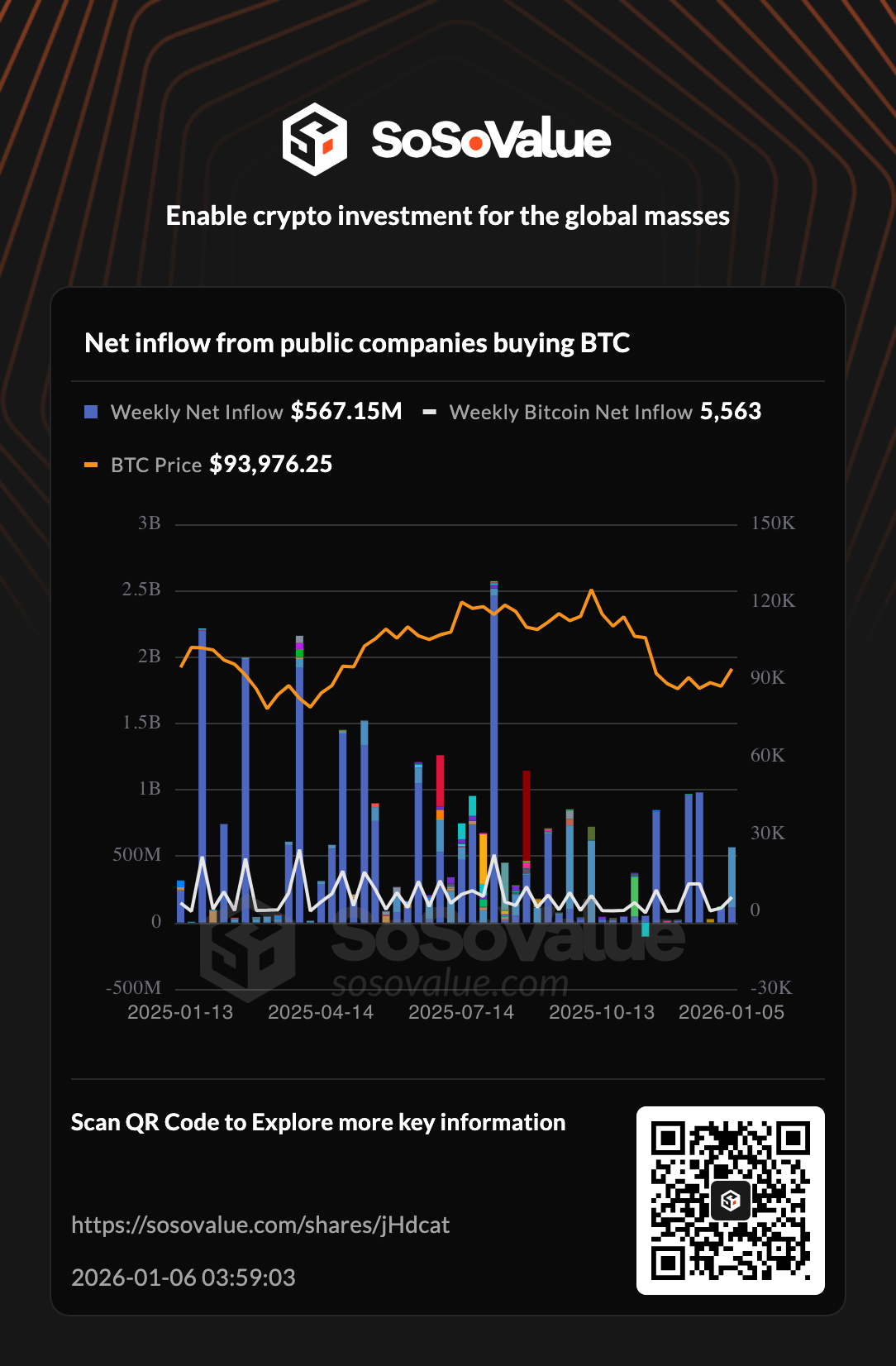
📊 Net inflow from public companies buying BTC | Jan 6
🔵 Weekly Net Inflow: $567.15M
⚪️ Weekly Bitcoin Net Inflow: 5,563
💰 BTC Price: $93,976.25
Explore more key information on #SoSoValue: https://sosovalue.com/shares/jHdcat
📊 Net inflow from public companies buying BTC | Jan 6
🔵 Weekly Net Inflow: $567.15M
⚪️ Weekly Bitcoin Net Inflow: 5,563
💰 BTC Price: $93,976.25
Explore more key information on #SoSoValue: https://sosovalue.com/shares/jHdcat
❤1
Forwarded from Townhall_3webbed
Tria Transparency Report: Progress, Operations, and Next Steps
Tria
@useTria
·
30m
Tria is building the first self-custodial neobank in public: we share how it works, how we grow, and what we’re shipping next. This report is a recap of a monumental 2025, and a record of how the system is operating as Tria enters its next phase of growth.
Why this post exists
Tria is building a self-custodial neobank designed for everyday use. From the start, our view has been simple: trust is earned through clarity and consistency.
Tria has grown, more users, partners, and infrastructure reviewers have asked the same questions. How does the system actually work? What does usage look like in practice? How do decisions get made as the product scales?
This post is a snapshot of how Tria operates today. What we’ve built, what the data shows, what we’ve learned by shipping in real conditions, and what we’re working on next. We publish this because clear disclosure is essential for evaluating financial infrastructure as it scales. It’s the first of our public transparency updates, and we intend to make them routine.
What we built
Tria is structured around a small set of product principles. These guide decisions across product, operations, and growth.
Self-custody as the default
Users retain control of their assets at all times, including while spending.
Everyday usability
Holding, spending, and moving value happens in one continuous flow.
Global by design
Built for regions where digital dollars and onchain rails are already part of daily financial life, currently supporting usage across 150+ countries.
Cost visibility
Fees and routes are explicit. No hidden conversions or bundled spreads. Card spend is routed with 0% Tria fees.
Key numbers
We share metrics or collect them selectively. Only numbers we are comfortable being referenced, tracked, and compared over time. In the first 3 months of closed-beta, Tria became the fastest growing self-custodial neobank.
All figures below are aggregated and rounded. Sources are Tria’s internal analytics and support systems. These metrics are published for operational transparency.
@usetria
Tria
@useTria
·
30m
Tria is building the first self-custodial neobank in public: we share how it works, how we grow, and what we’re shipping next. This report is a recap of a monumental 2025, and a record of how the system is operating as Tria enters its next phase of growth.
Why this post exists
Tria is building a self-custodial neobank designed for everyday use. From the start, our view has been simple: trust is earned through clarity and consistency.
Tria has grown, more users, partners, and infrastructure reviewers have asked the same questions. How does the system actually work? What does usage look like in practice? How do decisions get made as the product scales?
This post is a snapshot of how Tria operates today. What we’ve built, what the data shows, what we’ve learned by shipping in real conditions, and what we’re working on next. We publish this because clear disclosure is essential for evaluating financial infrastructure as it scales. It’s the first of our public transparency updates, and we intend to make them routine.
What we built
Tria is structured around a small set of product principles. These guide decisions across product, operations, and growth.
Self-custody as the default
Users retain control of their assets at all times, including while spending.
Everyday usability
Holding, spending, and moving value happens in one continuous flow.
Global by design
Built for regions where digital dollars and onchain rails are already part of daily financial life, currently supporting usage across 150+ countries.
Cost visibility
Fees and routes are explicit. No hidden conversions or bundled spreads. Card spend is routed with 0% Tria fees.
Key numbers
We share metrics or collect them selectively. Only numbers we are comfortable being referenced, tracked, and compared over time. In the first 3 months of closed-beta, Tria became the fastest growing self-custodial neobank.
All figures below are aggregated and rounded. Sources are Tria’s internal analytics and support systems. These metrics are published for operational transparency.
@usetria
X (formerly Twitter)
Tria (@useTria) on X
something is coming. october 4.
join the waitlist for early access → https://t.co/vC4MW27Omi
join the waitlist for early access → https://t.co/vC4MW27Omi
Forwarded from Townhall_3webbed
Tonso is positioning itself as more than a Telegram bot — it’s building an AI Signal Protocol + InfoFi Hub native to Telegram.
At its core, Tonso is experimenting with the Attention Economy of CTG:
signal > noise, insight > engagement farming.
How it works:
• AI-driven signal aggregation and filtering
• Incentives aligned around useful information, not spam
• Telegram as the native execution layer (distribution + action in one place)
Incentives
Reward Pool:
• Creators: 10,000 BUZZ
• Users: 1,000 BUZZ
No vesting.
No manual claims.
Rewards are automated, which removes friction and sybil theater.
Timeline
• Activity period: 16/12/2025 – 20/01/2026
• Claim period: Automated
Why this matters:
Most “InfoFi” projects stop at dashboards or feeds. Tonso is testing whether attention itself can be programmatic, measurable, and fairly rewarded — inside the platform where crypto discourse already lives.
If InfoFi works, it won’t look like a new app.
It’ll look like this. 👀
Watching Tonso closely.
https://t.me/TonsoAIBot/app?startapp=oLjery
At its core, Tonso is experimenting with the Attention Economy of CTG:
signal > noise, insight > engagement farming.
How it works:
• AI-driven signal aggregation and filtering
• Incentives aligned around useful information, not spam
• Telegram as the native execution layer (distribution + action in one place)
Incentives
Reward Pool:
• Creators: 10,000 BUZZ
• Users: 1,000 BUZZ
No vesting.
No manual claims.
Rewards are automated, which removes friction and sybil theater.
Timeline
• Activity period: 16/12/2025 – 20/01/2026
• Claim period: Automated
Why this matters:
Most “InfoFi” projects stop at dashboards or feeds. Tonso is testing whether attention itself can be programmatic, measurable, and fairly rewarded — inside the platform where crypto discourse already lives.
If InfoFi works, it won’t look like a new app.
It’ll look like this. 👀
Watching Tonso closely.
https://t.me/TonsoAIBot/app?startapp=oLjery
Telegram
TonsoAI
Join the AI Signal and Attention Economy of Telegram.
Launching with over $1M in rewards.
Launching with over $1M in rewards.
Forwarded from Townhall_3webbed
Prediction markets only work if information beats noise.
Space isn’t trying to gamify speculation — it’s building an information market where incentives reward being right, not being loud.
What stands out:
• Markets are designed to surface probabilistic truth, not just volume
• Capital flows toward high-signal forecasters, not influencers
• Clear separation between speculation, hedging, and information discovery
This matters because most markets fail at the same point:
they optimize for engagement instead of epistemic quality.
Space flips that:
Better incentives → better forecasts → better capital allocation.
If prediction markets are going to matter beyond memes and politics,
this is the direction they have to go.
Worth paying attention early. 👀
@intodotspace
Website: into.space
Docs: docs.into.space
X: x.com/intodotspace
Telegram: t.me/intodotspace
Space isn’t trying to gamify speculation — it’s building an information market where incentives reward being right, not being loud.
What stands out:
• Markets are designed to surface probabilistic truth, not just volume
• Capital flows toward high-signal forecasters, not influencers
• Clear separation between speculation, hedging, and information discovery
This matters because most markets fail at the same point:
they optimize for engagement instead of epistemic quality.
Space flips that:
Better incentives → better forecasts → better capital allocation.
If prediction markets are going to matter beyond memes and politics,
this is the direction they have to go.
Worth paying attention early. 👀
@intodotspace
Website: into.space
Docs: docs.into.space
X: x.com/intodotspace
Telegram: t.me/intodotspace
X (formerly Twitter)
Space (@intodotspace) on X
Space Prediction market on @solana The arena where truth wins, capital flows, and minds compete. Trade, stack reward points, and win more when you’re right.
🔥1
Forwarded from Tria KR Announcements 🇰🇷
Tria 2025 운영 현황 및 향후 계획
➡️ 자세한 내용
1. Tria의 정체성과 성과
- 자기 수탁형 네오뱅크: 사용자가 자산 통제권을 직접 갖는(Self-custodial) 일상용 금융 서비스를 지향합니다.
- 급격한 성장: 비공개 베타 출시 후 3개월 만에 가장 빠르게 성장하는 자기 수탁형 네오뱅크로 자리 잡았습니다.
- 운영 규모: 2025년 12월 기준 약 12만 명의 활성 사용자를 보유하고 있으며, 총 6,000만 달러의 온체인 볼륨을 처리했습니다.
2. 주요 운영 원칙 및 배운 점
- 철저한 자기 수탁: Tria 인프라에 장애가 발생하더라도 사용자의 개인 키와 자산은 온체인에서 안전하게 복구 가능함을 명확히 했습니다.
- 사용자 맞춤형 기능: 단순한 캐시백보다는 자산 보존과 수익(Yield) 창출에 대한 수요가 높음을 확인하고 관련 제품 개발을 가속화했습니다.
- 실용성 강화: BTC 보유자의 지출 편의를 위해 BTC 충전 기능을 추가했으며, 일본 등 특정 시장의 요구에 맞춰 거래 내역 내보내기 기능을 강화했습니다.
3. 시장 확장 및 고객 지원
- 단계적 확장: 수요 검증, 규제 검토, 소규모 테스트를 거치는 엄격한 7단계 체크리스트를 통해 신규 시장에 진입합니다.
- 투명한 장애 처리: 인프라 사고 발생 시 즉각적인 분류와 사용자 소통을 실시하며, 사후 분석 결과를 제품 개선에 직접 반영합니다.
4. 향후 로드맵
- 저축 및 수익 창출 관련 기능의 지속적인 출시.
- 월간 투명성 보고서 및 분기별 운영 검토를 통한 Building in public 지속.
1. Tria의 정체성과 성과
- 자기 수탁형 네오뱅크: 사용자가 자산 통제권을 직접 갖는(Self-custodial) 일상용 금융 서비스를 지향합니다.
- 급격한 성장: 비공개 베타 출시 후 3개월 만에 가장 빠르게 성장하는 자기 수탁형 네오뱅크로 자리 잡았습니다.
- 운영 규모: 2025년 12월 기준 약 12만 명의 활성 사용자를 보유하고 있으며, 총 6,000만 달러의 온체인 볼륨을 처리했습니다.
2. 주요 운영 원칙 및 배운 점
- 철저한 자기 수탁: Tria 인프라에 장애가 발생하더라도 사용자의 개인 키와 자산은 온체인에서 안전하게 복구 가능함을 명확히 했습니다.
- 사용자 맞춤형 기능: 단순한 캐시백보다는 자산 보존과 수익(Yield) 창출에 대한 수요가 높음을 확인하고 관련 제품 개발을 가속화했습니다.
- 실용성 강화: BTC 보유자의 지출 편의를 위해 BTC 충전 기능을 추가했으며, 일본 등 특정 시장의 요구에 맞춰 거래 내역 내보내기 기능을 강화했습니다.
3. 시장 확장 및 고객 지원
- 단계적 확장: 수요 검증, 규제 검토, 소규모 테스트를 거치는 엄격한 7단계 체크리스트를 통해 신규 시장에 진입합니다.
- 투명한 장애 처리: 인프라 사고 발생 시 즉각적인 분류와 사용자 소통을 실시하며, 사후 분석 결과를 제품 개선에 직접 반영합니다.
4. 향후 로드맵
- 저축 및 수익 창출 관련 기능의 지속적인 출시.
- 월간 투명성 보고서 및 분기별 운영 검토를 통한 Building in public 지속.
Please open Telegram to view this post
VIEW IN TELEGRAM
🔥1
Forwarded from Townhall_3webbed
Solstice / SLX — clarity, not spin
Solstice took an intentionally ambitious path with SLX ahead of public markets, with a simple structure from day one:
• Earn SLX through real usage via Flares for ecosystem participants
• Buy SLX via public access for those who wanted direct exposure without farming
We didn’t need to raise. The goal of the sale was distribution to aligned holders, not survival capital or hype-driven demand. That distinction matters.
Was the sale a knockout? No — and we won’t pretend otherwise. But it did exactly what it was designed to do: surface long-term conviction. The allocation was never meant for short-term optimization or clip-and-flip behavior.
A few facts worth being explicit about:
• Solstice is fully funded in-house
• Supported by Deus X Capital
• Already generating seven figures in ARR
• Actively distributing millions in yield to users
• Development, ops, and growth continue uninterrupted
• Only 5% of total supply was ever earmarked for public access
In line with that conviction-first approach, SLX will be 100% unlocked at TGE. This was always the plan. The vesting structure and FDV were intentionally not “easy choices” — they were filters.
For anyone who saw volatility and feels SLX isn’t the right fit, full refunds are available within 14 days of sale close. Conviction should go both ways.
The SLX launch remains on track for Q1 2026, with exchange listings, retail integrations, and regional venues already in motion. SLX launches with immediate utility across Solstice’s ecosystem:
$325M+ TVL · 40+ partners · 20+ institutional backers.
No dark arts. No financial engineering.
Just DeFi executed the right way.
It’s been a tough week — but we’re bullish on those building with us. 2026 will be a defining year for
https://t.me/townhallweb3/103
Solstice, and we’re focused on doing this the long-term way.
@Solstice_TG
Solstice took an intentionally ambitious path with SLX ahead of public markets, with a simple structure from day one:
• Earn SLX through real usage via Flares for ecosystem participants
• Buy SLX via public access for those who wanted direct exposure without farming
We didn’t need to raise. The goal of the sale was distribution to aligned holders, not survival capital or hype-driven demand. That distinction matters.
Was the sale a knockout? No — and we won’t pretend otherwise. But it did exactly what it was designed to do: surface long-term conviction. The allocation was never meant for short-term optimization or clip-and-flip behavior.
A few facts worth being explicit about:
• Solstice is fully funded in-house
• Supported by Deus X Capital
• Already generating seven figures in ARR
• Actively distributing millions in yield to users
• Development, ops, and growth continue uninterrupted
• Only 5% of total supply was ever earmarked for public access
In line with that conviction-first approach, SLX will be 100% unlocked at TGE. This was always the plan. The vesting structure and FDV were intentionally not “easy choices” — they were filters.
For anyone who saw volatility and feels SLX isn’t the right fit, full refunds are available within 14 days of sale close. Conviction should go both ways.
The SLX launch remains on track for Q1 2026, with exchange listings, retail integrations, and regional venues already in motion. SLX launches with immediate utility across Solstice’s ecosystem:
$325M+ TVL · 40+ partners · 20+ institutional backers.
No dark arts. No financial engineering.
Just DeFi executed the right way.
It’s been a tough week — but we’re bullish on those building with us. 2026 will be a defining year for
https://t.me/townhallweb3/103
Solstice, and we’re focused on doing this the long-term way.
@Solstice_TG
Forwarded from Townhall_3webbed
This media is not supported in your browser
VIEW IN TELEGRAM
It’s genuinely refreshing to see a small project like Space hit a meaningful milestone in a bear market.
Raising $10M+ when capital is cautious and narratives are tired isn’t noise — it’s conviction. That kind of backing doesn’t show up unless fundamentals and execution are being taken seriously.
I also tuned into a recent Space hosted by the team, and one thing stood out:
the honest explanation of leverage.
I came in assuming it would work like typical betting — slap 10× on any market, full degen mode. Instead, the team walked through why leverage is structured, constrained, and risk-aware. It’s not about amplifying guesses, it’s about precision and responsibility.
That clarity matters. Especially now.
In this market, the projects that survive aren’t the loudest —
they’re the ones willing to explain how things actually work.
https://t.me/intodotspace
Raising $10M+ when capital is cautious and narratives are tired isn’t noise — it’s conviction. That kind of backing doesn’t show up unless fundamentals and execution are being taken seriously.
I also tuned into a recent Space hosted by the team, and one thing stood out:
the honest explanation of leverage.
I came in assuming it would work like typical betting — slap 10× on any market, full degen mode. Instead, the team walked through why leverage is structured, constrained, and risk-aware. It’s not about amplifying guesses, it’s about precision and responsibility.
That clarity matters. Especially now.
In this market, the projects that survive aren’t the loudest —
they’re the ones willing to explain how things actually work.
https://t.me/intodotspace
Forwarded from Townhall_3webbed
Stablecoins aren’t interesting until you look at how they’re used.
Solstice isn’t chasing APY for screenshots — it’s building capital-efficient primitives:
• USX / eUSX designed for utility, not just parking
• Yield routed through real protocol demand
• Clear focus on sustainability over incentives spam
This is the kind of setup where mechanics matter more than marketing.
👀 And yes — TGE is coming soon.
The important part isn’t the date, it’s who’s positioned before attention arrives.
Watch usage. Watch consistency.
That’s usually where the edge forms first.
—
@Solstice_TG
Solstice isn’t chasing APY for screenshots — it’s building capital-efficient primitives:
• USX / eUSX designed for utility, not just parking
• Yield routed through real protocol demand
• Clear focus on sustainability over incentives spam
This is the kind of setup where mechanics matter more than marketing.
👀 And yes — TGE is coming soon.
The important part isn’t the date, it’s who’s positioned before attention arrives.
Watch usage. Watch consistency.
That’s usually where the edge forms first.
—
@Solstice_TG
🥰1🐳1
Forwarded from Townhall_3webbed
Multipli is officially entering the Telegram Attention Economy:
• 2.4 bps
• 1000 Tonso Buzz
allocated to Telegram’s best creators.
If you’re a TG channel creator:
• Talk about Multipli
• Earn Buzz
• Compete for mindshare
Attention is the asset. InfoFi is the rail.
What Multipli Is Actually Building
Most people still think “tokenization” = wrapping assets on-chain.
Multipli is building something deeper.
They’re creating scalable infrastructure that connects:
• Tokenized real-world assets
• Best-in-class asset managers
• Chains + money markets
Result: assets become transparent, composable, and deployable across the entire internet of assets.
This is not a product. It’s a coordination layer.
Why the Numbers Matter
Multipli isn’t early-stage theory.
They’ve raised $20M to help tokenize:
• $4T+ in bank reserves
• $12T in gold
• $40–50B in venture dry powder
This is where TradFi scale meets on-chain execution.
If tokenization works, infrastructure wins first.
TG Users: Why Pay Attention
This campaign isn’t just for creators.
Telegram users can:
• Discover Multipli
• Complete quests
• Earn points and rewards
You’re being paid to learn how next-gen capital deployment works.
Attention → information → incentives → ownership.
That’s InfoFi in practice.
Call to Action
Capital is moving on-chain whether people are ready or not.
Multipli lets you:
• Deploy capital
• Earn yield
• Earn rewards
• Participate early in tokenized asset infrastructure
Explore it here:
👉 https://multipli.fi/
If you’re serious about where capital markets are going, this is worth your attention.
• 2.4 bps
• 1000 Tonso Buzz
allocated to Telegram’s best creators.
If you’re a TG channel creator:
• Talk about Multipli
• Earn Buzz
• Compete for mindshare
Attention is the asset. InfoFi is the rail.
What Multipli Is Actually Building
Most people still think “tokenization” = wrapping assets on-chain.
Multipli is building something deeper.
They’re creating scalable infrastructure that connects:
• Tokenized real-world assets
• Best-in-class asset managers
• Chains + money markets
Result: assets become transparent, composable, and deployable across the entire internet of assets.
This is not a product. It’s a coordination layer.
Why the Numbers Matter
Multipli isn’t early-stage theory.
They’ve raised $20M to help tokenize:
• $4T+ in bank reserves
• $12T in gold
• $40–50B in venture dry powder
This is where TradFi scale meets on-chain execution.
If tokenization works, infrastructure wins first.
TG Users: Why Pay Attention
This campaign isn’t just for creators.
Telegram users can:
• Discover Multipli
• Complete quests
• Earn points and rewards
You’re being paid to learn how next-gen capital deployment works.
Attention → information → incentives → ownership.
That’s InfoFi in practice.
Call to Action
Capital is moving on-chain whether people are ready or not.
Multipli lets you:
• Deploy capital
• Earn yield
• Earn rewards
• Participate early in tokenized asset infrastructure
Explore it here:
👉 https://multipli.fi/
If you’re serious about where capital markets are going, this is worth your attention.
multipli.fi
Multipli — Borrow against Real World Tokenized Assets (Gold, Stocks, S&P 500)
Multipli lets you borrow against real-world assets such as tokenized gold, stocks, the S&P 500 and other tokenized assets, to unlock on-chain liquidity and yield without selling what you own.
🐳2🔥1
Forwarded from Townhall_3webbed
Solstice
Cash primitives win quietly or die violently
Solstice
@Solstice_TG
1/ Solstice is not a “stablecoin project”
USX is the interface.
eUSX is the product.
Solstice is building a yield-bearing collateral primitive designed to sit inside the rest of Solana DeFi.
If you frame it as “another stable,” you miss the point.
2/ The real Solstice question
Every ecosystem converges to one bottleneck:
Where does capital sit when it’s not trading?
If Solstice answers that reliably, it becomes embedded infrastructure.
If it doesn’t, it becomes a campaign artifact.
3/ The intended end-state
Best-case Solstice looks like:
• default idle capital,
• accepted collateral,
• neutral balance-sheet asset.
Not something users “choose,”
something protocols assume exists.
That’s how cash primitives win.
SUCCESS PATH — how Solstice actually wins
4/ eUSX becomes trusted collateral
• Predictable yield
• Conservative risk bounds
• Clean exit liquidity
Protocols integrate eUSX not for yield —
but because it’s safe enough to rely on.
5/ Stress-tested exits
Solstice treats volatility spikes as primary design cases, not edge cases:
• caps,
• circuit breakers,
• controlled unwind paths,
• no reflexive leverage loops.
Survivability > APY.
6/ Integration flywheel
Once eUSX is:
• in perps margin,
• in lending,
• in treasuries,
Solstice stops marketing to users and starts compounding via structural demand.
That’s irreversibility.
FAILURE MODES — where Solstice can break
7/ Strategy opacity
“Delta-neutral” without transparency = trust erosion.
If users or protocols can’t model downside, they will not size up no matter the yield.
8/ Liquidity illusion
Liquidity that exists until everyone wants out is not liquidity.
If exits degrade under stress, integrations unwind, fast and reflexively.
9/ Yield chasing drift
The temptation:
• stretch risk to stay competitive,
• quietly add fragility.
Cash primitives die the moment they stop behaving like cash.
10/ Final Solstice verdict
Solstice doesn’t need to be exciting.
It needs to be boringly correct under stress.
If it is → default cash leg.
If not → another yield experiment with a long post-mortem.
Cash primitives win quietly or die violently
Solstice
@Solstice_TG
1/ Solstice is not a “stablecoin project”
USX is the interface.
eUSX is the product.
Solstice is building a yield-bearing collateral primitive designed to sit inside the rest of Solana DeFi.
If you frame it as “another stable,” you miss the point.
2/ The real Solstice question
Every ecosystem converges to one bottleneck:
Where does capital sit when it’s not trading?
If Solstice answers that reliably, it becomes embedded infrastructure.
If it doesn’t, it becomes a campaign artifact.
3/ The intended end-state
Best-case Solstice looks like:
• default idle capital,
• accepted collateral,
• neutral balance-sheet asset.
Not something users “choose,”
something protocols assume exists.
That’s how cash primitives win.
SUCCESS PATH — how Solstice actually wins
4/ eUSX becomes trusted collateral
• Predictable yield
• Conservative risk bounds
• Clean exit liquidity
Protocols integrate eUSX not for yield —
but because it’s safe enough to rely on.
5/ Stress-tested exits
Solstice treats volatility spikes as primary design cases, not edge cases:
• caps,
• circuit breakers,
• controlled unwind paths,
• no reflexive leverage loops.
Survivability > APY.
6/ Integration flywheel
Once eUSX is:
• in perps margin,
• in lending,
• in treasuries,
Solstice stops marketing to users and starts compounding via structural demand.
That’s irreversibility.
FAILURE MODES — where Solstice can break
7/ Strategy opacity
“Delta-neutral” without transparency = trust erosion.
If users or protocols can’t model downside, they will not size up no matter the yield.
8/ Liquidity illusion
Liquidity that exists until everyone wants out is not liquidity.
If exits degrade under stress, integrations unwind, fast and reflexively.
9/ Yield chasing drift
The temptation:
• stretch risk to stay competitive,
• quietly add fragility.
Cash primitives die the moment they stop behaving like cash.
10/ Final Solstice verdict
Solstice doesn’t need to be exciting.
It needs to be boringly correct under stress.
If it is → default cash leg.
If not → another yield experiment with a long post-mortem.
❤2
Forwarded from Townhall_3webbed
This media is not supported in your browser
VIEW IN TELEGRAM
Space
Beliefs don’t scale as bets. They scale as markets.
Space
https://t.me/intodotspace
1/ Space is not “Polymarket on Solana”
That framing misses the architecture.
Space is not optimizing for bettors.
It’s optimizing for traders.
That single choice changes everything.
2/ The core insight
Prediction markets don’t fail because people don’t care.
They fail because:
• spreads are wide,
• liquidity is thin,
• capital efficiency is poor.
Space attacks this head-on.
3/ What Space is actually building
• Order-book based markets
• Continuous trading
• Leverage & margin
• Bot-friendly infrastructure
This is price discovery infra, not a novelty app.
SUCCESS PATH — how Space wins
4/ Liquidity becomes endogenous
When you support:
• market makers,
• arbitrageurs,
• bots,
liquidity shows up even when retail interest fades.
That’s how real markets persist.
5/ Leverage as a liquidity engine
Leverage isn’t about gambling.
It’s about:
• capital efficiency,
• tighter books,
• faster repricing.
Used carefully, it increases market depth, not chaos.
6/ Space as a substrate
The quiet ambition:
• bots trade probabilities,
• dashboards analyze belief curves,
• products hedge real-world risk.
Space becomes the belief layer other apps build on.
FAILURE MODES — where Space can break
7/ Resolution credibility
Every prediction market eventually lives or dies on:
• ambiguous outcomes,
• edge cases,
• disputes.
If resolution feels subjective, trust collapses instantly.
8/ Oracle / governance fragility
It doesn’t matter how good the trading engine is
if users don’t believe outcomes are enforced deterministically.
Markets price trust, not UI.
9/ Over-financialization too early
Leverage before:
• sufficient liquidity,
• robust resolution processes,
creates blowups that scare off serious capital.
Timing matters.
10/ Final Space verdict
If Space nails:
• deterministic resolution,
• trader-grade infra,
• composable market design,
it becomes the place probabilities are discovered, not guessed.
If it doesn’t, it’s just another clever interface with empty books.
The shared meta-lesson
Solstice and Space are solving different halves of the same system:
• Solstice → where capital safely waits
• Space → where beliefs get priced
If both succeed, Solana doesn’t just have DeFi apps —
it has native capital markets.
Defaults form quietly.
And once they form, they’re very hard to dislodge.
Beliefs don’t scale as bets. They scale as markets.
Space
https://t.me/intodotspace
1/ Space is not “Polymarket on Solana”
That framing misses the architecture.
Space is not optimizing for bettors.
It’s optimizing for traders.
That single choice changes everything.
2/ The core insight
Prediction markets don’t fail because people don’t care.
They fail because:
• spreads are wide,
• liquidity is thin,
• capital efficiency is poor.
Space attacks this head-on.
3/ What Space is actually building
• Order-book based markets
• Continuous trading
• Leverage & margin
• Bot-friendly infrastructure
This is price discovery infra, not a novelty app.
SUCCESS PATH — how Space wins
4/ Liquidity becomes endogenous
When you support:
• market makers,
• arbitrageurs,
• bots,
liquidity shows up even when retail interest fades.
That’s how real markets persist.
5/ Leverage as a liquidity engine
Leverage isn’t about gambling.
It’s about:
• capital efficiency,
• tighter books,
• faster repricing.
Used carefully, it increases market depth, not chaos.
6/ Space as a substrate
The quiet ambition:
• bots trade probabilities,
• dashboards analyze belief curves,
• products hedge real-world risk.
Space becomes the belief layer other apps build on.
FAILURE MODES — where Space can break
7/ Resolution credibility
Every prediction market eventually lives or dies on:
• ambiguous outcomes,
• edge cases,
• disputes.
If resolution feels subjective, trust collapses instantly.
8/ Oracle / governance fragility
It doesn’t matter how good the trading engine is
if users don’t believe outcomes are enforced deterministically.
Markets price trust, not UI.
9/ Over-financialization too early
Leverage before:
• sufficient liquidity,
• robust resolution processes,
creates blowups that scare off serious capital.
Timing matters.
10/ Final Space verdict
If Space nails:
• deterministic resolution,
• trader-grade infra,
• composable market design,
it becomes the place probabilities are discovered, not guessed.
If it doesn’t, it’s just another clever interface with empty books.
The shared meta-lesson
Solstice and Space are solving different halves of the same system:
• Solstice → where capital safely waits
• Space → where beliefs get priced
If both succeed, Solana doesn’t just have DeFi apps —
it has native capital markets.
Defaults form quietly.
And once they form, they’re very hard to dislodge.
Forwarded from Townhall_3webbed
This media is not supported in your browser
VIEW IN TELEGRAM
Solstice
Cash primitives win quietly or die violently
Solstice
@Solstice_TG
1/ Solstice is not a “stablecoin project”
USX is the interface.
eUSX is the product.
Solstice is building a yield-bearing collateral primitive designed to sit inside the rest of Solana DeFi.
If you frame it as “another stable,” you miss the point.
2/ The real Solstice question
Every ecosystem converges to one bottleneck:
Where does capital sit when it’s not trading?
If Solstice answers that reliably, it becomes embedded infrastructure.
If it doesn’t, it becomes a campaign artifact.
3/ The intended end-state
Best-case Solstice looks like:
• default idle capital,
• accepted collateral,
• neutral balance-sheet asset.
Not something users “choose,”
something protocols assume exists.
That’s how cash primitives win.
SUCCESS PATH — how Solstice actually wins
4/ eUSX becomes trusted collateral
• Predictable yield
• Conservative risk bounds
• Clean exit liquidity
Protocols integrate eUSX not for yield —
but because it’s safe enough to rely on.
5/ Stress-tested exits
Solstice treats volatility spikes as primary design cases, not edge cases:
• caps,
• circuit breakers,
• controlled unwind paths,
• no reflexive leverage loops.
Survivability > APY.
6/ Integration flywheel
Once eUSX is:
• in perps margin,
• in lending,
• in treasuries,
Solstice stops marketing to users and starts compounding via structural demand.
That’s irreversibility.
FAILURE MODES — where Solstice can break
7/ Strategy opacity
“Delta-neutral” without transparency = trust erosion.
If users or protocols can’t model downside, they will not size up no matter the yield.
8/ Liquidity illusion
Liquidity that exists until everyone wants out is not liquidity.
If exits degrade under stress, integrations unwind, fast and reflexively.
9/ Yield chasing drift
The temptation:
• stretch risk to stay competitive,
• quietly add fragility.
Cash primitives die the moment they stop behaving like cash.
10/ Final Solstice verdict
Solstice doesn’t need to be exciting.
It needs to be boringly correct under stress.
If it is → default cash leg.
If not → another yield experiment with a long post-mortem.
Cash primitives win quietly or die violently
Solstice
@Solstice_TG
1/ Solstice is not a “stablecoin project”
USX is the interface.
eUSX is the product.
Solstice is building a yield-bearing collateral primitive designed to sit inside the rest of Solana DeFi.
If you frame it as “another stable,” you miss the point.
2/ The real Solstice question
Every ecosystem converges to one bottleneck:
Where does capital sit when it’s not trading?
If Solstice answers that reliably, it becomes embedded infrastructure.
If it doesn’t, it becomes a campaign artifact.
3/ The intended end-state
Best-case Solstice looks like:
• default idle capital,
• accepted collateral,
• neutral balance-sheet asset.
Not something users “choose,”
something protocols assume exists.
That’s how cash primitives win.
SUCCESS PATH — how Solstice actually wins
4/ eUSX becomes trusted collateral
• Predictable yield
• Conservative risk bounds
• Clean exit liquidity
Protocols integrate eUSX not for yield —
but because it’s safe enough to rely on.
5/ Stress-tested exits
Solstice treats volatility spikes as primary design cases, not edge cases:
• caps,
• circuit breakers,
• controlled unwind paths,
• no reflexive leverage loops.
Survivability > APY.
6/ Integration flywheel
Once eUSX is:
• in perps margin,
• in lending,
• in treasuries,
Solstice stops marketing to users and starts compounding via structural demand.
That’s irreversibility.
FAILURE MODES — where Solstice can break
7/ Strategy opacity
“Delta-neutral” without transparency = trust erosion.
If users or protocols can’t model downside, they will not size up no matter the yield.
8/ Liquidity illusion
Liquidity that exists until everyone wants out is not liquidity.
If exits degrade under stress, integrations unwind, fast and reflexively.
9/ Yield chasing drift
The temptation:
• stretch risk to stay competitive,
• quietly add fragility.
Cash primitives die the moment they stop behaving like cash.
10/ Final Solstice verdict
Solstice doesn’t need to be exciting.
It needs to be boringly correct under stress.
If it is → default cash leg.
If not → another yield experiment with a long post-mortem.
Forwarded from Townhall_3webbed
This media is not supported in your browser
VIEW IN TELEGRAM
Solstice Finance — Stablecoin Shock, Controlled Recovery
USX Depeg (Dec 2025)
• Secondary-market price collapsed to ~$0.10.
• Team framed it as liquidity failure, not collateral failure — an important distinction.
Recovery Actions
• Direct liquidity injections from team + market makers.
• USX now trading ~$1.02, slightly above peg.
• Additional third-party NAV attestation requested to restore confidence.
Protocol Continuity
• YieldVault remains active.
• Delta-neutral strategy, ~13.96% historical net IRR.
• Signals confidence in balance-sheet integrity despite reputational damage.
Read: Solstice didn’t escape unscathed — but it didn’t implode either. The response was operational, not narrative-driven.
⸻
🌐 Solana Context (Early 2026)
• Institutional flows returning: Spot Solana ETFs saw $16M+ net inflows in a single day (Jan 5).
• Protocol-level scaling: The upcoming Alpenglow upgrade targets major latency and throughput gains.
• This environment favors:
• CLOB-based systems (Space)
• High-frequency, capital-efficient DeFi (Solstice)
USX Depeg (Dec 2025)
• Secondary-market price collapsed to ~$0.10.
• Team framed it as liquidity failure, not collateral failure — an important distinction.
Recovery Actions
• Direct liquidity injections from team + market makers.
• USX now trading ~$1.02, slightly above peg.
• Additional third-party NAV attestation requested to restore confidence.
Protocol Continuity
• YieldVault remains active.
• Delta-neutral strategy, ~13.96% historical net IRR.
• Signals confidence in balance-sheet integrity despite reputational damage.
Read: Solstice didn’t escape unscathed — but it didn’t implode either. The response was operational, not narrative-driven.
⸻
🌐 Solana Context (Early 2026)
• Institutional flows returning: Spot Solana ETFs saw $16M+ net inflows in a single day (Jan 5).
• Protocol-level scaling: The upcoming Alpenglow upgrade targets major latency and throughput gains.
• This environment favors:
• CLOB-based systems (Space)
• High-frequency, capital-efficient DeFi (Solstice)
Forwarded from Townhall_3webbed
Bottom Line
• Space represents offense: new market structure, new liquidity primitives, clean token economics.
• Solstice represents defense: stress absorption, balance-sheet verification, and recovery under pressure.
• Both are expressions of a maturing Solana stack — where infrastructure survives narratives, not the other way around.
• Space represents offense: new market structure, new liquidity primitives, clean token economics.
• Solstice represents defense: stress absorption, balance-sheet verification, and recovery under pressure.
• Both are expressions of a maturing Solana stack — where infrastructure survives narratives, not the other way around.
Forwarded from Townhall_3webbed
This media is not supported in your browser
VIEW IN TELEGRAM
Space — Liquidity-First Prediction Markets
Public Sale (Jan 2026)
• Raised $10.5M+, oversubscribed 423% — clear signal of latent demand for non-AMM prediction infra.
• Capital concentration mattered here: fewer, higher-conviction allocators → less post-TGE sell pressure.
Platform Architecture
• Launching with a CLOB-based market, not pools.
• 10× leverage on real-world events.
• Zero maker fees → directly attacks the core liquidity failure of legacy prediction markets.
Token Design
• $SPACE TGE follows launch.
• 50% of all protocol revenue → permanent buyback & burn
• 50% → treasury, aligning growth with long-term float reduction.
• This is not “emissions-driven liquidity” — it’s revenue-recycling liquidity.
Read: Space is positioning prediction markets as tradable financial instruments, not novelty betting apps.
Public Sale (Jan 2026)
• Raised $10.5M+, oversubscribed 423% — clear signal of latent demand for non-AMM prediction infra.
• Capital concentration mattered here: fewer, higher-conviction allocators → less post-TGE sell pressure.
Platform Architecture
• Launching with a CLOB-based market, not pools.
• 10× leverage on real-world events.
• Zero maker fees → directly attacks the core liquidity failure of legacy prediction markets.
Token Design
• $SPACE TGE follows launch.
• 50% of all protocol revenue → permanent buyback & burn
• 50% → treasury, aligning growth with long-term float reduction.
• This is not “emissions-driven liquidity” — it’s revenue-recycling liquidity.
Read: Space is positioning prediction markets as tradable financial instruments, not novelty betting apps.