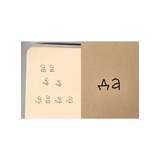
Футболка из серии «Обратная сторона луны»
Плотный хлопок, свободная посадка, принт объемной шелкографией
Размер М, 3500₽
Для заказа сюда @antons_vv
Плотный хлопок, свободная посадка, принт объемной шелкографией
Размер М, 3500₽
Для заказа сюда @antons_vv
Футболка из серии «Обратная стороная луны»
Плотный хлопок, свободная посадка, принт объемной шелкографией
Размер М, 3500₽
Для заказа сюда @antons_vv
Плотный хлопок, свободная посадка, принт объемной шелкографией
Размер М, 3500₽
Для заказа сюда @antons_vv
Activating
We’ve always been intuitively drawn towards the notion of the archive (think, for example, of our “Lost Formats Preservation Society” project, from 2000).
And we also regard our own website (which we’ve been maintaining since 1999) pretty much as an archive in itself—not as a commercial portfolio or flashy showcase, but really as a place to document our work in a more-or-less archival way.
However, it was in 2011–2012 that our interest in the archive really stepped up a notch. Around that time, we worked (as researchers, curators, and designers) on a couple of exhibitions that revolved around Provo (an Amsterdam-based movement that existed between 1965 and 1967). And while doing research on Provo (and its post-Provo offshoots), it became more and more clear to us that there existed, within the narrative of Provo, a clear link between the role of the archivist and the role of the activist. In short, we came across many examples of activism being inspired by archivism, and archivism being inspired by activism.
This really made us aware of these twin notions—the archived activity and the activated archive.
As a matter of fact, we feel that graphic design always plays a crucial role within this dialogue between archive and activity. Printed matter always functions as a gateway between the past and the future, between theory and practice. The graphic designer works with materials from the past (given text, found images, old typefaces, lost references, etc.), and turns this material into a time capsule (a poster, a pamphlet, a book, an installation, an exhibition), to be unpacked and decoded by a future reader/viewer. In that sense, we feel there is something inherently archival about graphic design.
Experimental Jetset. Typologies/-graphies/Topologies/-graphies
We’ve always been intuitively drawn towards the notion of the archive (think, for example, of our “Lost Formats Preservation Society” project, from 2000).
And we also regard our own website (which we’ve been maintaining since 1999) pretty much as an archive in itself—not as a commercial portfolio or flashy showcase, but really as a place to document our work in a more-or-less archival way.
However, it was in 2011–2012 that our interest in the archive really stepped up a notch. Around that time, we worked (as researchers, curators, and designers) on a couple of exhibitions that revolved around Provo (an Amsterdam-based movement that existed between 1965 and 1967). And while doing research on Provo (and its post-Provo offshoots), it became more and more clear to us that there existed, within the narrative of Provo, a clear link between the role of the archivist and the role of the activist. In short, we came across many examples of activism being inspired by archivism, and archivism being inspired by activism.
This really made us aware of these twin notions—the archived activity and the activated archive.
As a matter of fact, we feel that graphic design always plays a crucial role within this dialogue between archive and activity. Printed matter always functions as a gateway between the past and the future, between theory and practice. The graphic designer works with materials from the past (given text, found images, old typefaces, lost references, etc.), and turns this material into a time capsule (a poster, a pamphlet, a book, an installation, an exhibition), to be unpacked and decoded by a future reader/viewer. In that sense, we feel there is something inherently archival about graphic design.
Experimental Jetset. Typologies/-graphies/Topologies/-graphies
👍2🌚1👀1