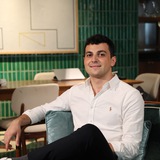
🏎️ Singapore F1 Grand Prix
Watching F1 from Hunter's WeWork office.
First Ufc, now Formula 1. Exploring the Singapore sports scene after five years of living here.
@valeranotes
Watching F1 from Hunter's WeWork office.
First Ufc, now Formula 1. Exploring the Singapore sports scene after five years of living here.
@valeranotes
❤42👍10🔥8❤🔥6😁4🏆2😍1
🥲 At the Singapore Ministry of Manpower
—Officer, where will my Employment Card be delivered?
—You should ask your employer.
—Oh, okay…thank you. Will do!
@valeranotes
—Officer, where will my Employment Card be delivered?
—You should ask your employer.
—Oh, okay…thank you. Will do!
@valeranotes
🤣76😁8👍2❤1
🙈Admissions Hitting Hard
Those are just admissions consultations in September. There have been quite a few more organizational meetings.
I cannot express the mental challenge of going through such a volume of essay ideas, ECs, research papers, etc.
Nevertheless, grateful to have a job that intellectually pushes me daily to catch up with our students and their diverse interests.
@valeranotes
Those are just admissions consultations in September. There have been quite a few more organizational meetings.
I cannot express the mental challenge of going through such a volume of essay ideas, ECs, research papers, etc.
Nevertheless, grateful to have a job that intellectually pushes me daily to catch up with our students and their diverse interests.
@valeranotes
👍52🔥17❤8👏4🏆3🤯2❤🔥1
We typically admit 30-50% of students to the Alumni Network. Joining the group means successfully graduating from any of the Freshman's courses.
As we celebrate the project's upcoming fourth birthday, we made an exception, allowing ALL the enrolled students in October to enjoy the Birthday Celebrations.
One may think we have worked with hundreds of students to produce our admissions results. However, we have traditionally focused on fewer students, doing our best to ensure their parents' investment in them will pay back.
I wonder where this journey will take us in 10-15 years when our students graduate and start performing on the highest levels in Business, Art, Science, Politics, etc.
We still have a lot to prove ourselves. We have side missions like having graduates in ALL Ivies—we have active students at Yale, Harvard, Columbia, and Cornell now, missing Princeton, Dartmouth, and Brown.
We also have main missions, such as increasing the diversity of Freshman students while bringing our approach to new countries and regions. Also, it would be phenomenal if someday we build the Freshman Business Accelerator to support student projects.
Alright, I may be just babbling at this point. It is 2:35 a.m. in Singapore. And this is NOT the official birthday address.
I am just happy with where we are as a community. And yes, we may be far from reaching our ultimate mission. But we will get there, slow and steady.
We will get there the Freshman Way!
@valeranotes
Please open Telegram to view this post
VIEW IN TELEGRAM
🥰38👍20🎉19❤7❤🔥3😢1
🌆 Freshman’s New Singapore Office
We might be starting with a single desk here, at WeWork 😂 But listen, we need to start somewhere.
@valeranotes
@valeranotes
❤70🔥28🤣20👍9💯4😁3❤🔥2😍1
Most imagine that the creative process involves an epiphany moment when an idea strikes you without warning. While such a rewarding experience may occasionally happen, this approach is unreliable because you do not control it.
Through the years, I have observed an alternative method employed by my family members who have worked as creative professionals: artists, teachers, and theater directors.
First, they start with unpolished sketches or drafts of their ideas. Then, they methodically improve them, often seeking feedback from the people whose perspectives they find valuable.
In college, I have developed a similar attitude. In writing essays, I avoided getting stuck by over-relying on my subconscious to bestow brilliant ideas on me.
I tried to overwhelm the creative problem. Wrote down any ideas that came to my mind first. Then, I filtered and built upon them while conversing with my peers when possible.
The creative process is an active, rigorous discovery rather than shy, hopeful waiting.
@valeranotes
Please open Telegram to view this post
VIEW IN TELEGRAM
❤77👍15⚡9🔥6❤🔥4
Parents of students who plan to take a gap year often insist on their kids enrolling in a local university program to hedge against a potential university rejection next year.
On the surface, it sounds like a win-win plan. Parents are relatively happy. And students have a chance of applying next year. However, for most applicants, this is an ill-conceived strategy.
On the one hand, you do not have the time to socialize or duly complete assignments at the local university. On the other hand, you fail to commit to the demanding application process.
Generally, TED Talks are akin to intellectual fast food. But a speech by Benjamin Hardy is an exception. He posits that crucial pursuits require 100% of your commitment. This heuristic maps well on the university admissions.
Indeed, in any competitive process, nothing less than a dedicated commitment is an essential requirement. We now have students who write 50 pages of reflections in two weeks and spend 10-12 hours daily improving their scores and working on their passion projects.
The admissions process is brutally competitive. So, if you take your dream seriously, you must use every resource to realize your vision.
@valeranotes
Please open Telegram to view this post
VIEW IN TELEGRAM
💔43👍24💯15❤7⚡2🔥1😍1
🥲 We Need to Talk About Acceptance Rates
Some students perceive a university's acceptance rate as an estimation of their admission chances. This view is misleading.
For example, Harvard has an acceptance rate of 3.4%. But it does not reflect your likelihood of getting accepted.
During consultations last year, some applications were so unique and exciting that I felt the admissions committee would be nuts not to admit them.
Those students' admissions chances seemed to be, say, 50-100%. Nevertheless, the acceptance rate for most students applying to Harvard is virtually 0%.
So, you can disentangle the 3.4% acceptance rate into the minority of students having solid admissions chances and the majority rejected even before having their files reviewed by the committee.
Of course, this is a simplified description, and many factors are at play. But thinking about rates this way is still helpful to develop an intuition for how the system works.
Conversely, there are universities with acceptance rates of 50% and above. Some applicants interpret this number as guaranteed admission.
However, if you require financial aid in most non-selective universities, your chances are again zero or close to it.
The admissions process is brutal for international students trying to get financial aid. Unfortunately, there are no "safety schools" for you.
@valeranotes
Some students perceive a university's acceptance rate as an estimation of their admission chances. This view is misleading.
For example, Harvard has an acceptance rate of 3.4%. But it does not reflect your likelihood of getting accepted.
During consultations last year, some applications were so unique and exciting that I felt the admissions committee would be nuts not to admit them.
Those students' admissions chances seemed to be, say, 50-100%. Nevertheless, the acceptance rate for most students applying to Harvard is virtually 0%.
So, you can disentangle the 3.4% acceptance rate into the minority of students having solid admissions chances and the majority rejected even before having their files reviewed by the committee.
Of course, this is a simplified description, and many factors are at play. But thinking about rates this way is still helpful to develop an intuition for how the system works.
Conversely, there are universities with acceptance rates of 50% and above. Some applicants interpret this number as guaranteed admission.
However, if you require financial aid in most non-selective universities, your chances are again zero or close to it.
The admissions process is brutal for international students trying to get financial aid. Unfortunately, there are no "safety schools" for you.
@valeranotes
😢81👍28❤9🕊3
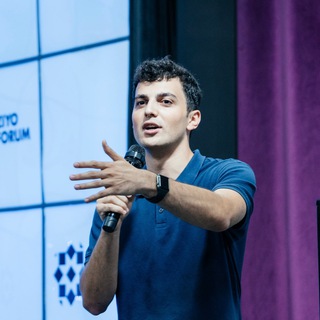
"I Am Quitting Admissions"
I thought about it several times during this year's Early Admissions season. But I obviously brushed off this intrusive thought.
For most of October, I worked 12-14-hour days. I could not call my parents for three weeks, barely left the confines of my room, and got severely ill from sitting at my computer from 11 a.m. to 5 a.m. almost every day.
Very few people see the sacrifices we are making every year to give our students a shot at achieving the impossible. This brutal process taught me to push for perfection even if a positive outcome is far from guaranteed.
It also taught me that achieving exceptional results requires an extraordinary process, the path so challenging most people would not dare take it.
In this sense, the Freshman admissions team appears united in our passion and respect for the craft that has uplifted students to venture beyond their wildest dreams.
We will keep pushing with no expectations. And keep doing what we do best, quietly hoping those sacrifices will be worth it.
@valeranotes
I thought about it several times during this year's Early Admissions season. But I obviously brushed off this intrusive thought.
For most of October, I worked 12-14-hour days. I could not call my parents for three weeks, barely left the confines of my room, and got severely ill from sitting at my computer from 11 a.m. to 5 a.m. almost every day.
Very few people see the sacrifices we are making every year to give our students a shot at achieving the impossible. This brutal process taught me to push for perfection even if a positive outcome is far from guaranteed.
It also taught me that achieving exceptional results requires an extraordinary process, the path so challenging most people would not dare take it.
In this sense, the Freshman admissions team appears united in our passion and respect for the craft that has uplifted students to venture beyond their wildest dreams.
We will keep pushing with no expectations. And keep doing what we do best, quietly hoping those sacrifices will be worth it.
@valeranotes
❤138👍17🕊9⚡5❤🔥4😢4🔥2
🌅 Good Morning
Giulia and I went on a week vacation. Both of us ended up working since the day started. I have had quick check-ins with Full Support and Admissions Program kids. And she attended to the consulting projects.
It is interesting how our professional paths differ. Upon graduation, I have run my project while Giulia took a corporate path, working at Deloitte and Marsh McLennan.
I did Politics, Economics, and Philosophy at Yale-NUS. She did Global Affairs and Biology. We are living testatments to the different paths Liberal Arts can take you.
@valeranotes
Giulia and I went on a week vacation. Both of us ended up working since the day started. I have had quick check-ins with Full Support and Admissions Program kids. And she attended to the consulting projects.
It is interesting how our professional paths differ. Upon graduation, I have run my project while Giulia took a corporate path, working at Deloitte and Marsh McLennan.
I did Politics, Economics, and Philosophy at Yale-NUS. She did Global Affairs and Biology. We are living testatments to the different paths Liberal Arts can take you.
@valeranotes
❤85👍18🔥11😍5❤🔥3👏1