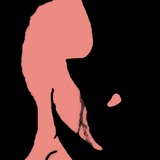
Late in the summer of 1908 Rodin moved the plaster of his sculpture of Honoré de Balzac out of his studio and into the open air so that Steichen, who disliked its chalky aspect in the daylight, could photograph it by the light of the moon. Waiting through several exposures as long as an hour each, Steichen made this exposure at 4:00 A.M., when the moonlight transformed the plaster into a monumental silhouette against the brooding nocturnal landscape. Steichen recalled that when he presented his finished pigment prints some weeks later, an elated Rodin exclaimed, "You will make the world understand my Balzac through your pictures. They are like Christ walking on the desert." Stieglitz reproduced this image along with nine of Rodin's drawings in "Camera Work" in July 1911.
“February, month of despair, with a skewered heart in the centre.”
— Morning in the Burned House; ‘February’ by Margaret Atwood
— Morning in the Burned House; ‘February’ by Margaret Atwood
Disgust relies on moral obtuseness. It is possible to view another human being as a slimy slug or a piece of revolting trash only if one has never made a serious good-faith attempt to see the world through that person’s eyes or to experience that person’s feelings. Disgust imputes to the other a subhuman nature. How, by contrast, do we ever become able to see one another as human? Only through the exercise of imagination.
- Martha Nussbaum, From Disgust to Humanity
- Martha Nussbaum, From Disgust to Humanity
“There are people who want to be seen in no other way than shining through others. There is a great deal of prudence in that.”
—Daybreak, §421 (edited).
—Daybreak, §421 (edited).