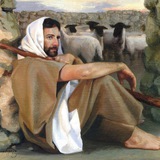
Forwarded from 😇✝️Sheep Not Goats✝️😇 (Sean Paul)
“But sanctify the Lord God in your hearts: and be ready always to give an answer…”
— 1 Peter 3:15
If someone asks why you still have peace in a world falling apart…tell them about Jesus.
Not religion.
Not tradition.
Not empty words.
Tell them about the Savior who still changes hearts, forgives sins, gives peace in tribulation, and offers eternal life to all who truly believe.
1 Peter 3:15 reminds us to always be ready to give an answer for the hope within us.
This world is growing darker, and people are searching for truth everywhere except the Word of God.
Be ready.
Your testimony may be the very thing God uses to wake someone up.
✝️LORD, direct us, correct us, and protect us, AMEN✝️
t.me/sheepnotgoats
— 1 Peter 3:15
If someone asks why you still have peace in a world falling apart…tell them about Jesus.
Not religion.
Not tradition.
Not empty words.
Tell them about the Savior who still changes hearts, forgives sins, gives peace in tribulation, and offers eternal life to all who truly believe.
1 Peter 3:15 reminds us to always be ready to give an answer for the hope within us.
This world is growing darker, and people are searching for truth everywhere except the Word of God.
Be ready.
Your testimony may be the very thing God uses to wake someone up.
✝️LORD, direct us, correct us, and protect us, AMEN✝️
t.me/sheepnotgoats
C. H. Spurgeon's
Evening Reading
(May 18th)
"Afterward." — Hebrews 12:11
How happy are tried Christians, afterwards. No calm more deep than that which succeeds a storm. Who has not rejoiced in clear shinings after rain? Victorious banquets are for well-exercised soldiers. After killing the lion we eat the honey; after climbing the Hill Difficulty, we sit down in the arbour to rest; after traversing the Valley of Humiliation, after fighting with Apollyon, the shining one appears, with the healing branch from the tree of life. Our sorrows, like the passing keels of the vessels upon the sea, leave a silver line of holy light behind them "afterwards." It is peace, sweet, deep peace, which follows the horrible turmoil which once reigned in our tormented, guilty souls. See, then, the happy estate of a Christian! He has his best things last, and he therefore in this world receives his worst things first. But even his worst things are "afterward" good things, harsh ploughings yielding joyful harvests. Even now he grows rich by his losses, he rises by his falls, he lives by dying, and becomes full by being emptied; if, then, his grievous afflictions yield him so much peaceable fruit in this life, what shall be the full vintage of joy "afterwards" in heaven? If his dark nights are as bright as the world's days, what shall his days be? If even his starlight is more splendid than the sun, what must his sunlight be? If he can sing in a dungeon, how sweetly will he sing in heaven! If he can praise the Lord in the fires, how will he extol Him before the eternal throne! If evil be good to him now, what will the overflowing goodness of God be to him then? Oh, blessed "afterward!" Who would not be a Christian? Who would not bear the present cross for the crown which cometh afterwards? But herein is work for patience, for the rest is not for today, nor the triumph for the present, but "afterward." Wait, O soul, and let patience have her perfect work.
Evening Reading
(May 18th)
"Afterward." — Hebrews 12:11
How happy are tried Christians, afterwards. No calm more deep than that which succeeds a storm. Who has not rejoiced in clear shinings after rain? Victorious banquets are for well-exercised soldiers. After killing the lion we eat the honey; after climbing the Hill Difficulty, we sit down in the arbour to rest; after traversing the Valley of Humiliation, after fighting with Apollyon, the shining one appears, with the healing branch from the tree of life. Our sorrows, like the passing keels of the vessels upon the sea, leave a silver line of holy light behind them "afterwards." It is peace, sweet, deep peace, which follows the horrible turmoil which once reigned in our tormented, guilty souls. See, then, the happy estate of a Christian! He has his best things last, and he therefore in this world receives his worst things first. But even his worst things are "afterward" good things, harsh ploughings yielding joyful harvests. Even now he grows rich by his losses, he rises by his falls, he lives by dying, and becomes full by being emptied; if, then, his grievous afflictions yield him so much peaceable fruit in this life, what shall be the full vintage of joy "afterwards" in heaven? If his dark nights are as bright as the world's days, what shall his days be? If even his starlight is more splendid than the sun, what must his sunlight be? If he can sing in a dungeon, how sweetly will he sing in heaven! If he can praise the Lord in the fires, how will he extol Him before the eternal throne! If evil be good to him now, what will the overflowing goodness of God be to him then? Oh, blessed "afterward!" Who would not be a Christian? Who would not bear the present cross for the crown which cometh afterwards? But herein is work for patience, for the rest is not for today, nor the triumph for the present, but "afterward." Wait, O soul, and let patience have her perfect work.
❤2
C. H. Spurgeon's
Morning Reading
(May 19th)
"I have seen servants upon horses, and princes walking as servants upon the earth." — Ecclesiastes 10:7
Upstarts frequently usurp the highest places, while the truly great pine in obscurity. This is a riddle in providence whose solution will one day gladden the hearts of the upright; but it is so common a fact, that none of us should murmur if it should fall to our own lot. When our Lord was upon earth, although He is the Prince of the kings of the earth, yet He walked the footpath of weariness and service as the Servant of servants: what wonder is it if His followers, who are princes of the blood, should also be looked down upon as inferior and contemptible persons? The world is upside down, and therefore, the first are last and the last first. See how the servile sons of Satan lord it in the earth! What a high horse they ride! How they lift up their horn on high! Haman is in the court, while Mordecai sits in the gate; David wanders on the mountains, while Saul reigns in state; Elijah is complaining in the cave while Jezebel is boasting in the palace; yet who would wish to take the places of the proud rebels? and who, on the other hand, might not envy the despised saints? When the wheel turns, those who are lowest rise, and the highest sink. Patience, then, believer, eternity will right the wrongs of time.
Let us not fall into the error of letting our passions and carnal appetites ride in triumph, while our nobler powers walk in the dust. Grace must reign as a prince, and make the members of the body instruments of righteousness. The Holy Spirit loves order, and He therefore sets our powers and faculties in due rank and place, giving the highest room to those spiritual faculties which link us with the great King; let us not disturb the divine arrangement, but ask for grace that we may keep under our body and bring it into subjection. We were not new created to allow our passions to rule over us, but that we, as kings, may reign in Christ Jesus over the triple kingdom of spirit, soul, and body, to the glory of God the Father.
Morning Reading
(May 19th)
"I have seen servants upon horses, and princes walking as servants upon the earth." — Ecclesiastes 10:7
Upstarts frequently usurp the highest places, while the truly great pine in obscurity. This is a riddle in providence whose solution will one day gladden the hearts of the upright; but it is so common a fact, that none of us should murmur if it should fall to our own lot. When our Lord was upon earth, although He is the Prince of the kings of the earth, yet He walked the footpath of weariness and service as the Servant of servants: what wonder is it if His followers, who are princes of the blood, should also be looked down upon as inferior and contemptible persons? The world is upside down, and therefore, the first are last and the last first. See how the servile sons of Satan lord it in the earth! What a high horse they ride! How they lift up their horn on high! Haman is in the court, while Mordecai sits in the gate; David wanders on the mountains, while Saul reigns in state; Elijah is complaining in the cave while Jezebel is boasting in the palace; yet who would wish to take the places of the proud rebels? and who, on the other hand, might not envy the despised saints? When the wheel turns, those who are lowest rise, and the highest sink. Patience, then, believer, eternity will right the wrongs of time.
Let us not fall into the error of letting our passions and carnal appetites ride in triumph, while our nobler powers walk in the dust. Grace must reign as a prince, and make the members of the body instruments of righteousness. The Holy Spirit loves order, and He therefore sets our powers and faculties in due rank and place, giving the highest room to those spiritual faculties which link us with the great King; let us not disturb the divine arrangement, but ask for grace that we may keep under our body and bring it into subjection. We were not new created to allow our passions to rule over us, but that we, as kings, may reign in Christ Jesus over the triple kingdom of spirit, soul, and body, to the glory of God the Father.
❤1
Ephesians 2:8-9 KJV
[8] For by grace are ye saved through faith; and that not of yourselves: it is the gift of God: [9] not of works, lest any man should boast.
https://bible.com/bible/1/eph.2.8-9.KJV
[8] For by grace are ye saved through faith; and that not of yourselves: it is the gift of God: [9] not of works, lest any man should boast.
https://bible.com/bible/1/eph.2.8-9.KJV
YouVersion | The Bible App | Bible.com
Ephesians 2:8-9 (KJV) - For by grace are ye saved through f | YouVersion
For by grace are ye saved through faith; and that not of yourselves: it is the gift of God: not of works, lest any man should boast.
Forwarded from 😇✝️Sheep Not Goats✝️😇 (Sean Paul)
Some of you are carrying weights you were never meant to keep holding.
Fear.
Shame.
Bitterness.
Sin.
Distractions.
The opinions of this world.
The enemy wants you exhausted, condemned, and spiritually stuck.
But Jesus said to lay those weights aside and keep running the race set before you.
God’s correction is not rejection.
His discipline is not hatred.
A loving Father corrects His children because He refuses to leave them lost.
Even when the road is painful…
Even when you feel weak…
Even when nobody else understands what God is doing in your life…
Do not quit.
The same Jesus who carried the cross will strengthen you to carry yours.
Repent.
Get back up.
Fix your eyes on Christ.
And keep running.
“He which hath begun a good work in you will perform it until the day of Jesus Christ.”
— Philippians 1:6
✝️LORD, direct us, correct us, and protect us, AMEN✝️
t.me/sheepnotgoats
Fear.
Shame.
Bitterness.
Sin.
Distractions.
The opinions of this world.
The enemy wants you exhausted, condemned, and spiritually stuck.
But Jesus said to lay those weights aside and keep running the race set before you.
God’s correction is not rejection.
His discipline is not hatred.
A loving Father corrects His children because He refuses to leave them lost.
Even when the road is painful…
Even when you feel weak…
Even when nobody else understands what God is doing in your life…
Do not quit.
The same Jesus who carried the cross will strengthen you to carry yours.
Repent.
Get back up.
Fix your eyes on Christ.
And keep running.
“He which hath begun a good work in you will perform it until the day of Jesus Christ.”
— Philippians 1:6
✝️LORD, direct us, correct us, and protect us, AMEN✝️
t.me/sheepnotgoats
C. H. Spurgeon's
Evening Reading
(May 19th)
"And he requested for himself that he might die." — 1 Kings 19:4
It was a remarkable thing that the man who was never to die, for whom God had ordained an infinitely better lot, the man who should be carried to heaven in a chariot of fire, and be translated, that he should not see death-should thus pray, "Let me die, I am no better than my fathers." We have here a memorable proof that God does not always answer prayer in kind, though He always does in effect. He gave Elias something better than that which he asked for, and thus really heard and answered him. Strange was it that the lion-hearted Elijah should be so depressed by Jezebel's threat as to ask to die, and blessedly kind was it on the part of our heavenly Father that He did not take His desponding servant at his word. There is a limit to the doctrine of the prayer of faith. We are not to expect that God will give us everything we choose to ask for. We know that we sometimes ask, and do not receive, because we ask amiss. If we ask for that which is not promised-if we run counter to the spirit which the Lord would have us cultivate-if we ask contrary to His will, or to the decrees of His providence-if we ask merely for the gratification of our own ease, and without an eye to His glory, we must not expect that we shall receive. Yet, when we ask in faith, nothing doubting, if we receive not the precise thing asked for, we shall receive an equivalent, and more than an equivalent, for it. As one remarks, "If the Lord does not pay in silver, He will in gold; and if He does not pay in gold, He will in diamonds." If He does not give you precisely what you ask for, He will give you that which is tantamount to it, and that which you will greatly rejoice to receive in lieu thereof. Be then, dear reader, much in prayer, and make this evening a season of earnest intercession, but take heed what you ask.
Evening Reading
(May 19th)
"And he requested for himself that he might die." — 1 Kings 19:4
It was a remarkable thing that the man who was never to die, for whom God had ordained an infinitely better lot, the man who should be carried to heaven in a chariot of fire, and be translated, that he should not see death-should thus pray, "Let me die, I am no better than my fathers." We have here a memorable proof that God does not always answer prayer in kind, though He always does in effect. He gave Elias something better than that which he asked for, and thus really heard and answered him. Strange was it that the lion-hearted Elijah should be so depressed by Jezebel's threat as to ask to die, and blessedly kind was it on the part of our heavenly Father that He did not take His desponding servant at his word. There is a limit to the doctrine of the prayer of faith. We are not to expect that God will give us everything we choose to ask for. We know that we sometimes ask, and do not receive, because we ask amiss. If we ask for that which is not promised-if we run counter to the spirit which the Lord would have us cultivate-if we ask contrary to His will, or to the decrees of His providence-if we ask merely for the gratification of our own ease, and without an eye to His glory, we must not expect that we shall receive. Yet, when we ask in faith, nothing doubting, if we receive not the precise thing asked for, we shall receive an equivalent, and more than an equivalent, for it. As one remarks, "If the Lord does not pay in silver, He will in gold; and if He does not pay in gold, He will in diamonds." If He does not give you precisely what you ask for, He will give you that which is tantamount to it, and that which you will greatly rejoice to receive in lieu thereof. Be then, dear reader, much in prayer, and make this evening a season of earnest intercession, but take heed what you ask.
❤2
C. H. Spurgeon's
Morning Reading
(May 20th)
"Marvellous lovingkindness." — Psalm 17:7
When we give our hearts with our alms, we give well, but we must often plead to a failure in this respect. Not so our Master and our Lord. His favours are always performed with the love of His heart. He does not send to us the cold meat and the broken pieces from the table of His luxury, but He dips our morsel in His own dish, and seasons our provisions with the spices of His fragrant affections. When He puts the golden tokens of His grace into our palms, He accompanies the gift with such a warm pressure of our hand, that the manner of His giving is as precious as the boon itself. He will come into our houses upon His errands of kindness, and He will not act as some austere visitors do in the poor man's cottage, but He sits by our side, not despising our poverty, nor blaming our weakness. Beloved, with what smiles does He speak! What golden sentences drop from His gracious lips! What embraces of affection does He bestow upon us! If He had but given us farthings, the way of His giving would have gilded them; but as it is, the costly alms are set in a golden basket by His pleasant carriage. It is impossible to doubt the sincerity of His charity, for there is a bleeding heart stamped upon the face of all His benefactions. He giveth liberally and upbraideth not. Not one hint that we are burdensome to Him; not one cold look for His poor pensioners; but He rejoices in His mercy, and presses us to His bosom while He is pouring out His life for us. There is a fragrance in His spikenard which nothing but His heart could produce; there is a sweetness in His honey-comb which could not be in it unless the very essence of His soul's affection had been mingled with it. Oh! the rare communion which such singular heartiness effecteth! May we continually taste and know the blessedness of it!
Morning Reading
(May 20th)
"Marvellous lovingkindness." — Psalm 17:7
When we give our hearts with our alms, we give well, but we must often plead to a failure in this respect. Not so our Master and our Lord. His favours are always performed with the love of His heart. He does not send to us the cold meat and the broken pieces from the table of His luxury, but He dips our morsel in His own dish, and seasons our provisions with the spices of His fragrant affections. When He puts the golden tokens of His grace into our palms, He accompanies the gift with such a warm pressure of our hand, that the manner of His giving is as precious as the boon itself. He will come into our houses upon His errands of kindness, and He will not act as some austere visitors do in the poor man's cottage, but He sits by our side, not despising our poverty, nor blaming our weakness. Beloved, with what smiles does He speak! What golden sentences drop from His gracious lips! What embraces of affection does He bestow upon us! If He had but given us farthings, the way of His giving would have gilded them; but as it is, the costly alms are set in a golden basket by His pleasant carriage. It is impossible to doubt the sincerity of His charity, for there is a bleeding heart stamped upon the face of all His benefactions. He giveth liberally and upbraideth not. Not one hint that we are burdensome to Him; not one cold look for His poor pensioners; but He rejoices in His mercy, and presses us to His bosom while He is pouring out His life for us. There is a fragrance in His spikenard which nothing but His heart could produce; there is a sweetness in His honey-comb which could not be in it unless the very essence of His soul's affection had been mingled with it. Oh! the rare communion which such singular heartiness effecteth! May we continually taste and know the blessedness of it!
🔥1
Galatians 5:16 KJV
[16] This I say then, Walk in the Spirit, and ye shall not fulfil the lust of the flesh.
https://bible.com/bible/1/gal.5.16.KJV
[16] This I say then, Walk in the Spirit, and ye shall not fulfil the lust of the flesh.
https://bible.com/bible/1/gal.5.16.KJV
YouVersion | The Bible App | Bible.com
Galatians 5:16 (KJV) - This I say then, Walk in the Spirit | YouVersion
This I say then, Walk in the Spirit, and ye shall not fulfil the lust of the flesh.
C. H. Spurgeon's
Evening Reading
(May 20th)
"I drew them with cords of a man, with bands of love." — Hosea 11:4
Our heavenly Father often draws us with the cords of love; but ah! how backward we are to run towards Him! How slowly do we respond to His gentle impulses! He draws us to exercise a more simple faith in Him; but we have not yet attained to Abraham's confidence; we do not leave our worldly cares with God, but, like Martha, we cumber ourselves with much serving. Our meagre faith brings leanness into our souls; we do not open our mouths wide, though God has promised to fill them. Does He not this evening draw us to trust Him? Can we not hear Him say, "Come, My child, and trust Me. The veil is rent; enter into My presence, and approach boldly to the throne of My grace. I am worthy of thy fullest confidence, cast thy cares on Me. Shake thyself from the dust of thy cares, and put on thy beautiful garments of joy." But, alas! though called with tones of love to the blessed exercise of this comforting grace, we will not come. At another time He draws us to closer communion with Himself. We have been sitting on the doorstep of God's house, and He bids us advance into the banqueting hall and sup with Him, but we decline the honour. There are secret rooms not yet opened to us; Jesus invites us to enter them, but we hold back. Shame on our cold hearts! We are but poor lovers of our sweet Lord Jesus, not fit to be His servants, much less to be His brides, and yet He hath exalted us to be bone of His bone and flesh of His flesh, married to Him by a glorious marriage-covenant. Herein is love! But it is love which takes no denial. If we obey not the gentle drawings of His love, He will send affliction to drive us into closer intimacy with Himself. Have us nearer He will. What foolish children we are to refuse those bands of love, and so bring upon our backs that scourge of small cords, which Jesus knows how to use!
Evening Reading
(May 20th)
"I drew them with cords of a man, with bands of love." — Hosea 11:4
Our heavenly Father often draws us with the cords of love; but ah! how backward we are to run towards Him! How slowly do we respond to His gentle impulses! He draws us to exercise a more simple faith in Him; but we have not yet attained to Abraham's confidence; we do not leave our worldly cares with God, but, like Martha, we cumber ourselves with much serving. Our meagre faith brings leanness into our souls; we do not open our mouths wide, though God has promised to fill them. Does He not this evening draw us to trust Him? Can we not hear Him say, "Come, My child, and trust Me. The veil is rent; enter into My presence, and approach boldly to the throne of My grace. I am worthy of thy fullest confidence, cast thy cares on Me. Shake thyself from the dust of thy cares, and put on thy beautiful garments of joy." But, alas! though called with tones of love to the blessed exercise of this comforting grace, we will not come. At another time He draws us to closer communion with Himself. We have been sitting on the doorstep of God's house, and He bids us advance into the banqueting hall and sup with Him, but we decline the honour. There are secret rooms not yet opened to us; Jesus invites us to enter them, but we hold back. Shame on our cold hearts! We are but poor lovers of our sweet Lord Jesus, not fit to be His servants, much less to be His brides, and yet He hath exalted us to be bone of His bone and flesh of His flesh, married to Him by a glorious marriage-covenant. Herein is love! But it is love which takes no denial. If we obey not the gentle drawings of His love, He will send affliction to drive us into closer intimacy with Himself. Have us nearer He will. What foolish children we are to refuse those bands of love, and so bring upon our backs that scourge of small cords, which Jesus knows how to use!
❤3
C. H. Spurgeon's
Morning Reading
(May 21st)
"If so be ye have tasted that the Lord is gracious." — 1 Peter 2:3
If:-then, this is not a matter to be taken for granted concerning every one of the human race. "If:"-then there is a possibility and a probability that some may not have tasted that the Lord is gracious. "If:"-then this is not a general but a special mercy; and it is needful to enquire whether we know the grace of God by inward experience. There is no spiritual favour which may not be a matter for heart-searching.
But while this should be a matter of earnest and prayerful inquiry, no one ought to be content whilst there is any such thing as an "if" about his having tasted that the Lord is gracious. A jealous and holy distrust of self may give rise to the question even in the believer's heart, but the continuance of such a doubt would be an evil indeed. We must not rest without a desperate struggle to clasp the Saviour in the arms of faith, and say, "I know whom I have believed, and I am persuaded that he is able to keep that which I have committed unto him." Do not rest, O believer, till thou hast a full assurance of thine interest in Jesus. Let nothing satisfy thee till, by the infallible witness of the Holy Spirit bearing witness with thy spirit, thou art certified that thou art a child of God. Oh, trifle not here; let no "perhaps" and "peradventure" and "if" and "maybe" satisfy thy soul. Build on eternal verities, and verily build upon them. Get the sure mercies of David, and surely get them. Let thine anchor be cast into that which is within the veil, and see to it that thy soul be linked to the anchor by a cable that will not break. Advance beyond these dreary "ifs;" abide no more in the wilderness of doubts and fears; cross the Jordan of distrust, and enter the Canaan of peace, where the Canaanite still lingers, but where the land ceaseth not to flow with milk and honey.
Morning Reading
(May 21st)
"If so be ye have tasted that the Lord is gracious." — 1 Peter 2:3
If:-then, this is not a matter to be taken for granted concerning every one of the human race. "If:"-then there is a possibility and a probability that some may not have tasted that the Lord is gracious. "If:"-then this is not a general but a special mercy; and it is needful to enquire whether we know the grace of God by inward experience. There is no spiritual favour which may not be a matter for heart-searching.
But while this should be a matter of earnest and prayerful inquiry, no one ought to be content whilst there is any such thing as an "if" about his having tasted that the Lord is gracious. A jealous and holy distrust of self may give rise to the question even in the believer's heart, but the continuance of such a doubt would be an evil indeed. We must not rest without a desperate struggle to clasp the Saviour in the arms of faith, and say, "I know whom I have believed, and I am persuaded that he is able to keep that which I have committed unto him." Do not rest, O believer, till thou hast a full assurance of thine interest in Jesus. Let nothing satisfy thee till, by the infallible witness of the Holy Spirit bearing witness with thy spirit, thou art certified that thou art a child of God. Oh, trifle not here; let no "perhaps" and "peradventure" and "if" and "maybe" satisfy thy soul. Build on eternal verities, and verily build upon them. Get the sure mercies of David, and surely get them. Let thine anchor be cast into that which is within the veil, and see to it that thy soul be linked to the anchor by a cable that will not break. Advance beyond these dreary "ifs;" abide no more in the wilderness of doubts and fears; cross the Jordan of distrust, and enter the Canaan of peace, where the Canaanite still lingers, but where the land ceaseth not to flow with milk and honey.
❤2
Proverbs 29:25 KJV
[25] The fear of man bringeth a snare: But whoso putteth his trust in the LORD shall be safe.
https://bible.com/bible/1/pro.29.25.KJV
[25] The fear of man bringeth a snare: But whoso putteth his trust in the LORD shall be safe.
https://bible.com/bible/1/pro.29.25.KJV
YouVersion | The Bible App | Bible.com
Proverbs 29:25 (KJV) - The fear of man bringeth a snare:
B | YouVersion
B | YouVersion
The fear of man bringeth a snare:
But whoso putteth his trust in the LORD shall be safe.
But whoso putteth his trust in the LORD shall be safe.
C. H. Spurgeon's
Evening Reading
(May 21st)
"There is corn in Egypt." — Genesis 42:2
Famine pinched all the nations, and it seemed inevitable that Jacob and his family should suffer great want; but the God of providence, who never forgets the objects of electing love, had stored a granary for His people by giving the Egyptians warning of the scarcity, and leading them to treasure up the grain of the years of plenty. Little did Jacob expect deliverance from Egypt, but there was the corn in store for him. Believer, though all things are apparently against thee, rest assured that God has made a reservation on thy behalf; in the roll of thy griefs there is a saving clause. Somehow He will deliver thee, and somewhere He will provide for thee. The quarter from which thy rescue shall arise may be a very unexpected one, but help will assuredly come in thine extremity, and thou shalt magnify the name of the Lord. If men do not feed thee, ravens shall; and if earth yield not wheat, heaven shall drop with manna. Therefore be of good courage, and rest quietly in the Lord. God can make the sun rise in the west if He pleases, and make the source of distress the channel of delight. The corn in Egypt was all in the hands of the beloved Joseph; he opened or closed the granaries at will. And so the riches of providence are all in the absolute power of our Lord Jesus, who will dispense them liberally to His people. Joseph was abundantly ready to succour his own family; and Jesus is unceasing in His faithful care for His brethren. Our business is to go after the help which is provided for us: we must not sit still in despondency, but bestir ourselves. Prayer will bear us soon into the presence of our royal Brother: once before His throne we have only to ask and have: His stores are not exhausted; there is corn still: His heart is not hard, He will give the corn to us. Lord, forgive our unbelief, and this evening constrain us to draw largely from Thy fulness and receive grace for grace.
Evening Reading
(May 21st)
"There is corn in Egypt." — Genesis 42:2
Famine pinched all the nations, and it seemed inevitable that Jacob and his family should suffer great want; but the God of providence, who never forgets the objects of electing love, had stored a granary for His people by giving the Egyptians warning of the scarcity, and leading them to treasure up the grain of the years of plenty. Little did Jacob expect deliverance from Egypt, but there was the corn in store for him. Believer, though all things are apparently against thee, rest assured that God has made a reservation on thy behalf; in the roll of thy griefs there is a saving clause. Somehow He will deliver thee, and somewhere He will provide for thee. The quarter from which thy rescue shall arise may be a very unexpected one, but help will assuredly come in thine extremity, and thou shalt magnify the name of the Lord. If men do not feed thee, ravens shall; and if earth yield not wheat, heaven shall drop with manna. Therefore be of good courage, and rest quietly in the Lord. God can make the sun rise in the west if He pleases, and make the source of distress the channel of delight. The corn in Egypt was all in the hands of the beloved Joseph; he opened or closed the granaries at will. And so the riches of providence are all in the absolute power of our Lord Jesus, who will dispense them liberally to His people. Joseph was abundantly ready to succour his own family; and Jesus is unceasing in His faithful care for His brethren. Our business is to go after the help which is provided for us: we must not sit still in despondency, but bestir ourselves. Prayer will bear us soon into the presence of our royal Brother: once before His throne we have only to ask and have: His stores are not exhausted; there is corn still: His heart is not hard, He will give the corn to us. Lord, forgive our unbelief, and this evening constrain us to draw largely from Thy fulness and receive grace for grace.
❤1
C. H. Spurgeon's
Morning Reading
(May 22nd)
"He led them forth by the right way." — Psalm 107:7
Changeful experience often leads the anxious believer to enquire "Why is it thus with me?" I looked for light, but lo, darkness came; for peace, but behold trouble. I said in my heart, my mountain standeth firm, I shall never be moved. Lord, thou dost hide Thy face, and I am troubled. It was but yesterday that I could read my title clear; to-day my evidences are bedimmed, and my hopes are clouded. Yesterday I could climb to Pisgah's top, and view the landscape o'er, and rejoice with confidence in my future inheritance; to-day, my spirit has no hopes, but many fears; no joys, but much distress. Is this part of God's plan with me? Can this be the way in which God would bring me to heaven? Yes, it is even so. The eclipse of your faith, the darkness of your mind, the fainting of your hope, all these things are but parts of God's method of making you ripe for the great inheritance upon which you shall soon enter. These trials are for the testing and strengthening of your faith-they are waves that wash you further upon the rock-they are winds which waft your ship the more swiftly towards the desired haven. According to David's words, so it might be said of you, "so He bringeth them to their desired haven." By honour and dishonour, by evil report and by good report, by plenty and by poverty, by joy and by distress, by persecution and by peace, by all these things is the life of your souls maintained, and by each of these are you helped on your way. Oh, think not, believer, that your sorrows are out of God's plan; they are necessary parts of it. "We must, through much tribulation, enter the kingdom." Learn, then, even to "count it all joy when ye fall into divers temptations."
"O let my trembling soul be still,
And wait Thy wise, Thy holy will!
I cannot, Lord, Thy purpose see,
Yet all is well since ruled by Thee."
Morning Reading
(May 22nd)
"He led them forth by the right way." — Psalm 107:7
Changeful experience often leads the anxious believer to enquire "Why is it thus with me?" I looked for light, but lo, darkness came; for peace, but behold trouble. I said in my heart, my mountain standeth firm, I shall never be moved. Lord, thou dost hide Thy face, and I am troubled. It was but yesterday that I could read my title clear; to-day my evidences are bedimmed, and my hopes are clouded. Yesterday I could climb to Pisgah's top, and view the landscape o'er, and rejoice with confidence in my future inheritance; to-day, my spirit has no hopes, but many fears; no joys, but much distress. Is this part of God's plan with me? Can this be the way in which God would bring me to heaven? Yes, it is even so. The eclipse of your faith, the darkness of your mind, the fainting of your hope, all these things are but parts of God's method of making you ripe for the great inheritance upon which you shall soon enter. These trials are for the testing and strengthening of your faith-they are waves that wash you further upon the rock-they are winds which waft your ship the more swiftly towards the desired haven. According to David's words, so it might be said of you, "so He bringeth them to their desired haven." By honour and dishonour, by evil report and by good report, by plenty and by poverty, by joy and by distress, by persecution and by peace, by all these things is the life of your souls maintained, and by each of these are you helped on your way. Oh, think not, believer, that your sorrows are out of God's plan; they are necessary parts of it. "We must, through much tribulation, enter the kingdom." Learn, then, even to "count it all joy when ye fall into divers temptations."
"O let my trembling soul be still,
And wait Thy wise, Thy holy will!
I cannot, Lord, Thy purpose see,
Yet all is well since ruled by Thee."
❤2
Romans 10:14 KJV
[14] How then shall they call on him in whom they have not believed? and how shall they believe in him of whom they have not heard? and how shall they hear without a preacher?
https://bible.com/bible/1/rom.10.14.KJV
[14] How then shall they call on him in whom they have not believed? and how shall they believe in him of whom they have not heard? and how shall they hear without a preacher?
https://bible.com/bible/1/rom.10.14.KJV
YouVersion | The Bible App | Bible.com
Romans 10:14 (KJV) - How then shall they call on him in | YouVersion
How then shall they call on him in whom they have not believed? and how shall they believe in him of whom they have not heard? and how shall they hear without a preacher?