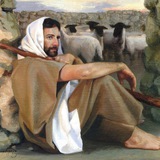
Acts 4:12 KJV
[12] Neither is there salvation in any other: for there is none other name under heaven given among men, whereby we must be saved.
https://bible.com/bible/1/act.4.12.KJV
[12] Neither is there salvation in any other: for there is none other name under heaven given among men, whereby we must be saved.
https://bible.com/bible/1/act.4.12.KJV
YouVersion | The Bible App | Bible.com
Acts 4:12 (KJV) - Neither is there salvation in any o | YouVersion
Neither is there salvation in any other: for there is none other name under heaven given among men, whereby we must be saved.
❤1
C. H. Spurgeon's
Evening Reading
(April 9th)
"Thy gentleness hath made me great." — Psalm 18:35
The words are capable of being translated, "Thy goodness hath made me great." David gratefully ascribed all his greatness not to his own goodness, but the goodness of God. "Thy providence," is another reading; and providence is nothing more than goodness in action. Goodness is the bud of which providence is the flower, or goodness is the seed of which providence is the harvest. Some render it, "Thy help," which is but another word for providence; providence being the firm ally of the saints, aiding them in the service of their Lord. Or again, "Thy humility hath made me great." "Thy condescension" may, perhaps, serve as a comprehensive reading, combining the ideas mentioned, including that of humility. It is God's making Himself little which is the cause of our being made great. We are so little, that if God should manifest His greatness without condescension, we should be trampled under His feet; but God, who must stoop to view the skies, and bow to see what angels do, turns His eye yet lower, and looks to the lowly and contrite, and makes them great. There are yet other readings, as for instance, the Septuagint, which reads, "Thy discipline"—Thy fatherly correction—"hath made me great;" while the Chaldee paraphrase reads, "Thy word hath increased me." Still the idea is the same. David ascribes all his own greatness to the condescending goodness of his Father in heaven. May this sentiment be echoed in our hearts this evening while we cast our crowns at Jesus' feet, and cry, "Thy gentleness hath made me great." How marvellous has been our experience of God's gentleness! How gentle have been His corrections! How gentle His forbearance! How gentle His teachings! How gentle His drawings! Meditate upon this theme, O believer. Let gratitude be awakened; let humility be deepened; let love be quickened ere thou fallest asleep tonight.
Evening Reading
(April 9th)
"Thy gentleness hath made me great." — Psalm 18:35
The words are capable of being translated, "Thy goodness hath made me great." David gratefully ascribed all his greatness not to his own goodness, but the goodness of God. "Thy providence," is another reading; and providence is nothing more than goodness in action. Goodness is the bud of which providence is the flower, or goodness is the seed of which providence is the harvest. Some render it, "Thy help," which is but another word for providence; providence being the firm ally of the saints, aiding them in the service of their Lord. Or again, "Thy humility hath made me great." "Thy condescension" may, perhaps, serve as a comprehensive reading, combining the ideas mentioned, including that of humility. It is God's making Himself little which is the cause of our being made great. We are so little, that if God should manifest His greatness without condescension, we should be trampled under His feet; but God, who must stoop to view the skies, and bow to see what angels do, turns His eye yet lower, and looks to the lowly and contrite, and makes them great. There are yet other readings, as for instance, the Septuagint, which reads, "Thy discipline"—Thy fatherly correction—"hath made me great;" while the Chaldee paraphrase reads, "Thy word hath increased me." Still the idea is the same. David ascribes all his own greatness to the condescending goodness of his Father in heaven. May this sentiment be echoed in our hearts this evening while we cast our crowns at Jesus' feet, and cry, "Thy gentleness hath made me great." How marvellous has been our experience of God's gentleness! How gentle have been His corrections! How gentle His forbearance! How gentle His teachings! How gentle His drawings! Meditate upon this theme, O believer. Let gratitude be awakened; let humility be deepened; let love be quickened ere thou fallest asleep tonight.
C. H. Spurgeon's
Morning Reading
(April 10th)
"The place which is called Calvary." — Luke 23:33
The hill of comfort is the hill of Calvary; the house of consolation is built with the wood of the cross; the temple of heavenly blessing is founded upon the riven rock-riven by the spear which pierced His side. No scene in sacred history ever gladdens the soul like Calvary's tragedy.
"Is it not strange, the darkest hour
That ever dawned on sinful earth,
Should touch the heart with softer power,
For comfort, than an angel's mirth?
That to the Cross the mourner's eye should turn,
Sooner than where the stars of Bethlehem burn?"
Light springs from the midday-midnight of Golgotha, and every herb of the field blooms sweetly beneath the shadow of the once accursed tree. In that place of thirst, grace hath dug a fountain which ever gusheth with waters pure as crystal, each drop capable of alleviating the woes of mankind. You who have had your seasons of conflict, will confess that it was not at Olivet that you ever found comfort, not on the hill of Sinai, nor on Tabor; but Gethsemane, Gabbatha, and Golgotha have been a means of comfort to you. The bitter herbs of Gethsemane have often taken away the bitters of your life; the scourge of Gabbatha has often scourged away your cares, and the groans of Calvary yields us comfort rare and rich. We never should have known Christ's love in all its heights and depths if He had not died; nor could we guess the Father's deep affection if He had not given His Son to die. The common mercies we enjoy all sing of love, just as the sea-shell, when we put it to our ears, whispers of the deep sea whence it came; but if we desire to hear the ocean itself, we must not look at every-day blessings, but at the transactions of the crucifixion. He who would know love, let him retire to Calvary and see the Man of sorrows die.
Morning Reading
(April 10th)
"The place which is called Calvary." — Luke 23:33
The hill of comfort is the hill of Calvary; the house of consolation is built with the wood of the cross; the temple of heavenly blessing is founded upon the riven rock-riven by the spear which pierced His side. No scene in sacred history ever gladdens the soul like Calvary's tragedy.
"Is it not strange, the darkest hour
That ever dawned on sinful earth,
Should touch the heart with softer power,
For comfort, than an angel's mirth?
That to the Cross the mourner's eye should turn,
Sooner than where the stars of Bethlehem burn?"
Light springs from the midday-midnight of Golgotha, and every herb of the field blooms sweetly beneath the shadow of the once accursed tree. In that place of thirst, grace hath dug a fountain which ever gusheth with waters pure as crystal, each drop capable of alleviating the woes of mankind. You who have had your seasons of conflict, will confess that it was not at Olivet that you ever found comfort, not on the hill of Sinai, nor on Tabor; but Gethsemane, Gabbatha, and Golgotha have been a means of comfort to you. The bitter herbs of Gethsemane have often taken away the bitters of your life; the scourge of Gabbatha has often scourged away your cares, and the groans of Calvary yields us comfort rare and rich. We never should have known Christ's love in all its heights and depths if He had not died; nor could we guess the Father's deep affection if He had not given His Son to die. The common mercies we enjoy all sing of love, just as the sea-shell, when we put it to our ears, whispers of the deep sea whence it came; but if we desire to hear the ocean itself, we must not look at every-day blessings, but at the transactions of the crucifixion. He who would know love, let him retire to Calvary and see the Man of sorrows die.
Psalm 145:18 KJV
[18] The LORD is nigh unto all them that call upon him, To all that call upon him in truth.
https://bible.com/bible/1/psa.145.18.KJV
[18] The LORD is nigh unto all them that call upon him, To all that call upon him in truth.
https://bible.com/bible/1/psa.145.18.KJV
YouVersion | The Bible App | Bible.com
Psalm 145:18 (KJV) - The LORD is nigh unto all them that | YouVersion
The LORD is nigh unto all them that call upon him,
To all that call upon him in truth.
To all that call upon him in truth.
❤🔥1
Forwarded from Handfuls On Purpose❤️ *See Ruth chapter 2 (Adriana)
Psalm 26:21 🕊️ Your perfection and faithfulness are my body guards, for you are my hope and I trust in you as my only protection.❤️-💌 The Faithful love of Jesus stands ever so near to protect you from the dangers of this world. In His love you can rely. He guards you with His very life, day in and day out. Live by the faithful love of the Son of God. You are on His heart today and everyday standing ever so near. ❤️🕊️
C. H. Spurgeon's
Evening Reading
(April 10th)
"For there stood by me this night the angel of God." — Acts 27:23
Tempest and long darkness, coupled with imminent risk of shipwreck, had brought the crew of the vessel into a sad case; one man alone among them remained perfectly calm, and by his word the rest were reassured. Paul was the only man who had heart enough to say, "Sirs, be of good cheer." There were veteran Roman legionaries on board, and brave old mariners, and yet their poor Jewish prisoner had more spirit than they all. He had a secret Friend who kept his courage up. The Lord Jesus despatched a heavenly messenger to whisper words of consolation in the ear of His faithful servant, therefore he wore a shining countenance and spake like a man at ease.
If we fear the Lord, we may look for timely interpositions when our case is at its worst. Angels are not kept from us by storms, or hindered by darkness. Seraphs think it no humiliation to visit the poorest of the heavenly family. If angel's visits are few and far between at ordinary times, they shall be frequent in our nights of tempest and tossing. Friends may drop from us when we are under pressure, but our intercourse with the inhabitants of the angelic world shall be more abundant; and in the strength of love-words, brought to us from the throne by the way of Jacob's ladder, we shall be strong to do exploits. Dear reader, is this an hour of distress with you? then ask for peculiar help. Jesus is the angel of the covenant, and if His presence be now earnestly sought, it will not be denied. What that presence brings in heart-cheer those remember who, like Paul, have had the angel of God standing by them in a night of storm, when anchors would no longer hold, and rocks were nigh.
"O angel of my God, be near,
Amid the darkness hush my fear;
Loud roars the wild tempestuous sea,
Thy presence, Lord, shall comfort me."
Evening Reading
(April 10th)
"For there stood by me this night the angel of God." — Acts 27:23
Tempest and long darkness, coupled with imminent risk of shipwreck, had brought the crew of the vessel into a sad case; one man alone among them remained perfectly calm, and by his word the rest were reassured. Paul was the only man who had heart enough to say, "Sirs, be of good cheer." There were veteran Roman legionaries on board, and brave old mariners, and yet their poor Jewish prisoner had more spirit than they all. He had a secret Friend who kept his courage up. The Lord Jesus despatched a heavenly messenger to whisper words of consolation in the ear of His faithful servant, therefore he wore a shining countenance and spake like a man at ease.
If we fear the Lord, we may look for timely interpositions when our case is at its worst. Angels are not kept from us by storms, or hindered by darkness. Seraphs think it no humiliation to visit the poorest of the heavenly family. If angel's visits are few and far between at ordinary times, they shall be frequent in our nights of tempest and tossing. Friends may drop from us when we are under pressure, but our intercourse with the inhabitants of the angelic world shall be more abundant; and in the strength of love-words, brought to us from the throne by the way of Jacob's ladder, we shall be strong to do exploits. Dear reader, is this an hour of distress with you? then ask for peculiar help. Jesus is the angel of the covenant, and if His presence be now earnestly sought, it will not be denied. What that presence brings in heart-cheer those remember who, like Paul, have had the angel of God standing by them in a night of storm, when anchors would no longer hold, and rocks were nigh.
"O angel of my God, be near,
Amid the darkness hush my fear;
Loud roars the wild tempestuous sea,
Thy presence, Lord, shall comfort me."
C. H. Spurgeon's
Morning Reading
(April 11th)
"I am poured out like water, and all my bones are out of joint." — Psalm 22:14
Did earth or heaven ever behold a sadder spectacle of woe! In soul and body, our Lord felt Himself to be weak as water poured upon the ground. The placing of the cross in its socket had shaken Him with great violence, had strained all the ligaments, pained every nerve, and more or less dislocated all His bones. Burdened with His own weight, the august sufferer felt the strain increasing every moment of those six long hours. His sense of faintness and general weakness were overpowering; while to His own consciousness He became nothing but a mass of misery and swooning sickness. When Daniel saw the great vision, he thus describes his sensations, "There remained no strength in me, for my vigour was turned into corruption, and I retained no strength:" how much more faint must have been our greater Prophet when He saw the dread vision of the wrath of God, and felt it in His own soul! To us, sensations such as our Lord endured would have been insupportable, and kind unconsciousness would have come to our rescue; but in His case, He was wounded, and felt the sword; He drained the cup and tasted every drop.
"O King of Grief! (a title strange, yet true
To Thee of all kings only due)
O King of Wounds! how shall I grieve for Thee,
Who in all grief preventest me!"
As we kneel before our now ascended Saviour's throne, let us remember well the way by which He prepared it as a throne of grace for us; let us in spirit drink of His cup, that we may be strengthened for our hour of heaviness whenever it may come. In His natural body every member suffered, and so must it be in the spiritual; but as out of all His griefs and woes His body came forth uninjured to glory and power, even so shall His mystical body come through the furnace with not so much as the smell of fire upon it.
Morning Reading
(April 11th)
"I am poured out like water, and all my bones are out of joint." — Psalm 22:14
Did earth or heaven ever behold a sadder spectacle of woe! In soul and body, our Lord felt Himself to be weak as water poured upon the ground. The placing of the cross in its socket had shaken Him with great violence, had strained all the ligaments, pained every nerve, and more or less dislocated all His bones. Burdened with His own weight, the august sufferer felt the strain increasing every moment of those six long hours. His sense of faintness and general weakness were overpowering; while to His own consciousness He became nothing but a mass of misery and swooning sickness. When Daniel saw the great vision, he thus describes his sensations, "There remained no strength in me, for my vigour was turned into corruption, and I retained no strength:" how much more faint must have been our greater Prophet when He saw the dread vision of the wrath of God, and felt it in His own soul! To us, sensations such as our Lord endured would have been insupportable, and kind unconsciousness would have come to our rescue; but in His case, He was wounded, and felt the sword; He drained the cup and tasted every drop.
"O King of Grief! (a title strange, yet true
To Thee of all kings only due)
O King of Wounds! how shall I grieve for Thee,
Who in all grief preventest me!"
As we kneel before our now ascended Saviour's throne, let us remember well the way by which He prepared it as a throne of grace for us; let us in spirit drink of His cup, that we may be strengthened for our hour of heaviness whenever it may come. In His natural body every member suffered, and so must it be in the spiritual; but as out of all His griefs and woes His body came forth uninjured to glory and power, even so shall His mystical body come through the furnace with not so much as the smell of fire upon it.
1 Corinthians 3:16 KJV
[16] Know ye not that ye are the temple of God, and that the Spirit of God dwelleth in you?
https://bible.com/bible/1/1co.3.16.KJV
[16] Know ye not that ye are the temple of God, and that the Spirit of God dwelleth in you?
https://bible.com/bible/1/1co.3.16.KJV
YouVersion | The Bible App | Bible.com
1 Corinthians 3:16 (KJV) - Know ye not that ye are the temple | YouVersion
Know ye not that ye are the temple of God, and that the Spirit of God dwelleth in you?
C. H. Spurgeon's
Evening Reading
(April 11th)
"Look upon mine affliction and my pain; and forgive all my sins." — Psalm 25:18
It is well for us when prayers about our sorrows are linked with pleas concerning our sins—when, being under God's hand, we are not wholly taken up with our pain, but remember our offences against God. It is well, also, to take both sorrow and sin to the same place. It was to God that David carried his sorrow: it was to God that David confessed his sin. Observe, then, we must take our sorrows to God. Even your little sorrows you may roll upon God, for He counteth the hairs of your head; and your great sorrows you may commit to Him, for He holdeth the ocean in the hollow of His hand. Go to Him, whatever your present trouble may be, and you shall find Him able and willing to relieve you. But we must take our sins to God too. We must carry them to the cross, that the blood may fall upon them, to purge away their guilt, and to destroy their defiling power.
The special lesson of the text is this:—that we are to go to the Lord with sorrows and with sins in the right spirit. Note that all David asks concerning his sorrow is, "Look upon mine affliction and my pain;" but the next petition is vastly more express, definite, decided, plain—"Forgive all my sins." Many sufferers would have put it, "Remove my affliction and my pain, and look at my sins." But David does not say so; he cries, "Lord, as for my affliction and my pain, I will not dictate to Thy wisdom. Lord, look at them, I will leave them to Thee, I should be glad to have my pain removed, but do as Thou wilt; but as for my sins, Lord, I know what I want with them; I must have them forgiven; I cannot endure to lie under their curse for a moment." A Christian counts sorrow lighter in the scale than sin; he can bear that his troubles should continue, but he cannot support the burden of his transgressions.
Evening Reading
(April 11th)
"Look upon mine affliction and my pain; and forgive all my sins." — Psalm 25:18
It is well for us when prayers about our sorrows are linked with pleas concerning our sins—when, being under God's hand, we are not wholly taken up with our pain, but remember our offences against God. It is well, also, to take both sorrow and sin to the same place. It was to God that David carried his sorrow: it was to God that David confessed his sin. Observe, then, we must take our sorrows to God. Even your little sorrows you may roll upon God, for He counteth the hairs of your head; and your great sorrows you may commit to Him, for He holdeth the ocean in the hollow of His hand. Go to Him, whatever your present trouble may be, and you shall find Him able and willing to relieve you. But we must take our sins to God too. We must carry them to the cross, that the blood may fall upon them, to purge away their guilt, and to destroy their defiling power.
The special lesson of the text is this:—that we are to go to the Lord with sorrows and with sins in the right spirit. Note that all David asks concerning his sorrow is, "Look upon mine affliction and my pain;" but the next petition is vastly more express, definite, decided, plain—"Forgive all my sins." Many sufferers would have put it, "Remove my affliction and my pain, and look at my sins." But David does not say so; he cries, "Lord, as for my affliction and my pain, I will not dictate to Thy wisdom. Lord, look at them, I will leave them to Thee, I should be glad to have my pain removed, but do as Thou wilt; but as for my sins, Lord, I know what I want with them; I must have them forgiven; I cannot endure to lie under their curse for a moment." A Christian counts sorrow lighter in the scale than sin; he can bear that his troubles should continue, but he cannot support the burden of his transgressions.
Job 41:1-2, 11 KJV
[1] Canst thou draw out leviathan with an hook? Or his tongue with a cord which thou lettest down? [2] Canst thou put an hook into his nose? Or bore his jaw through with a thorn?
[11] Who hath prevented me, that I should repay him? Whatsoever is under the whole heaven is mine.
https://bible.com/bible/1/job.41.1-11.KJV
[1] Canst thou draw out leviathan with an hook? Or his tongue with a cord which thou lettest down? [2] Canst thou put an hook into his nose? Or bore his jaw through with a thorn?
[11] Who hath prevented me, that I should repay him? Whatsoever is under the whole heaven is mine.
https://bible.com/bible/1/job.41.1-11.KJV