Satavahanas
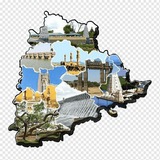
Gautami Putra Satakarni was the greatest king not only of all the Satavahanas but also of the entire early South Indian kings. He was the twenty-third ruler of the Satavahana empire. In the 18th year of his reign, he invaded Kshathrepas and killed his enemy ‘Nahapana’. The Jogalthambi hoard containing the coins of Nahapana restruck by Gautamiputra Satakarni, attests to his victory over the Saka.The Nasik epigraph describes him as 'Thrisamudra thoya peetha Vahana', 'Kshatriya Darpamana Mardana', Agamanilaya and Ekabrahmana'
In Gadhasapthasathi King Hala in the beginning and at the end of the work recited the glory of ‘Pashupathi’ and Gouri. The largest Shiva Linga belonging to the 2nd century A.D. was found at ‘Gudimallam’ in Chittoor district. Recent discoveries are providing interesting information about the popularity of Jainism and its 'Thirthankaras'. ‘Sheethalanatha’ the Tenth Jain Thirthankara hails from ‘Bhadrachalm’ in the Khammam district of Andhradesa (present Telangana). His grandson propagated Jainism in Andhradesha.
The epigraphs of Satavahanas contain a list of seventeen types of guilds. Among them ‘Dhammaka’, ‘Moolakara’, ‘Kolika’ (weavers) ‘Thilapisaka’, ‘Badayatrika’, ‘Blacksmith’ (Kammara) ;‘potter’ (Kularika), ‘Vadhaki’ (Carpenter), ‘Goldsmith’ (Suvarnakara), etc are very active in society
Satavahanas :Village’ stood as the base of administration. After ‘Aharam’ Village was the next unit. ‘Gramika’ or ‘Gramika’ or Gumika (Gulmika or Gowlmika) was the head of Village. The ‘Heerahadagalli epigraph’ and ‘Gadhasapthasathi’ are referring to ‘Gumika’. The ‘Gaamika’ Some times also exercised his powers in more than one village. The headship of the Village was hereditary. Collection of land revenue and maintenance of law and order in the village were the chief duties of the Gramika
The Nasik epigraph refers to different Gods and Goddesses. Rama, Kesava, Arjuna, Bhimasena, etc, the heroes of Ramayana and Mahabaratha are mentioned in it. In Gadhasapthasathi King Hala in the beginning and at the end of the work recited the glory of ‘Pashupathi’ and Gouri
According to ‘Kathavastu Sagaram’ Buddhism entered Telangana long before the commencement of the emperor Ashoka's rule. The ‘Bavari’ story in ‘Suttanipada’ is an example of this Bavari’, who has lived at ‘Kavithavana’ island on the Godavari River located in ‘Asmaka’ (Karimnagar, Nizamabad, Adilabad), Sent sixteen of his learned disciples to meet ‘Buddha’ who was at ‘Rajagraha’
Acharya Nagarjuna was the contemporary of Yagnasree Satakarni. He has been a versatile genius and scholar in many sastras. He was an expert in Buddhist philosophy. According to ‘Lankavatara Sutram’ he was born in a village named Vedali’ located in present Telangana. He founded the University of Mahayana Center at Amaravathi and Nagarjunakonda. His important works are ‘pragna paramita sastra’, Rasaratnakara, Arogyamanjari, and Suhrullekha.
👍9
Digital Bharat Nidhi:
The Department of Telecommunications has proposed the Digital Bharat Nidhi to replace the Universal Service Obligation Fund (USOF), aiming to improve rural telecom connectivity and address the underutilization of funds
👍4
committees in news along with their chairpersons:
1. National Education Policy (NEP) Committee:Dr. K. Kasturirangan
2. National Committee on Vaccine Administration (NCVA): Dr. V. K. Paul
3. Committee on Agricultural Reforms: Dr. Ashok Dalwai
4. Committee on Digital Payments: Nandan Nilekani
5. Committee on Cybersecurity: Lt. Gen. (Retd) Rajesh Pant
6. Committee on Judicial Reforms: Justice B. N. Srikrishna (Retd)
7. Committee on Environmental Conservation: Dr. K. Kasturirangan
8. Committee on Urban Development: Durga Shanker Mishra
9. Committee on Healthcare Infrastructure: Dr. Vinod Paul
10. Committee on Industrial Growth Chairperson: Amitabh Kant
👍11🙏6
India's Disease Elimination Targets and Strategies
1. Tuberculosis (TB)-Target Year: 2025
Strategy: Revised National TB Control Programme (RNTCP), National Strategic Plan for TB Elimination, DOTS (Directly Observed Treatment, Short-Course), NIKSHAY (web-based TB reporting system).
2. Malaria-Target Year: 2030
Strategy: National Framework for Malaria Elimination, National Strategic Plan for Malaria Elimination, vector control, prompt diagnosis, and treatment.
3. HIV/AIDS-Target Year: 2030
Strategy: National AIDS Control Programme (NACP), prevention programs, antiretroviral therapy (ART), awareness campaigns.
4. Kala-azar (Visceral Leishmaniasis)- Target Year: 2023
Strategy: Kala-azar Elimination Programme, vector control, case detection, and treatment.
5. Lymphatic Filariasis - Target Year: 2025
Strategy: Mass Drug Administration (MDA), Morbidity Management and Disability Prevention (MMDP).
6. Maternal Mortality Ratio (MMR)- Target Year: Below 70 per 100,000 live births by 2030
Strategy: Pradhan Mantri Surakshit Matritva Abhiyan (PMSMA), Janani Suraksha Yojana (JSY), skilled birth attendance, emergency obstetric care.
7. Infant Mortality Rate (IMR)- Target Year: Below 12 per 1,000 live births by 2030
Strategy: Intensified Mission Indradhanush (IMI), Rashtriya Bal Swasthya Karyakram (RBSK), immunization, newborn care.
8. Non-Communicable Diseases (NCDs)- Target Year: Reduce premature mortality from NCDs by one-third by 2030
Strategy: National Programme for Prevention and Control of Cancer, Diabetes, Cardiovascular Diseases and Stroke (NPCDCS), health promotion, early diagnosis, and treatment.
❤10👍5🙏3
Agricultural Revolutions in India
1. Green Revolution (1960s-1970s)
- Focus: Food grain production (wheat and rice)
- Key Components: HYV seeds, fertilizers, pesticides, irrigation
- Impact: Self-sufficiency in food grains
2. White Revolution (1970s-1990s)
- Focus: Milk production (Operation Flood)
- Key Components: Cooperative dairy farming, dairy technology
- Impact: Largest milk producer globally
3. Blue Revolution (1980s-2000s)
- Focus: Fish production
- Key Components: Aquaculture, marine and inland fisheries
- Impact: Growth in fish production and export
4. Yellow Revolution (1980s-1990s)
- Focus: Oilseed production
- Key Components: HYV seeds, better agronomic practices
- Impact: Reduced dependency on edible oil imports
5. Brown Revolution (1980s-1990s)
- Focus: Cocoa and non-traditional crops
- Key Components: Sustainable practices
- Impact: Diversification of agriculture
6. Golden Revolution (1991-2000s)
- Focus: Horticulture (fruits, vegetables, flowers)
- Key Components: R&D, storage facilities
- Impact: Boost in horticultural production and export
7. Pink Revolution (1990s-present)
- Focus: Meat and poultry production
- Key Components: Breeding techniques, livestock healthcare
- Impact: Increased poultry and meat production
8. Silver Revolution (1960s-present)
- Focus: Egg production
- Key Components: Improved poultry breeds, management practices
- Impact: Significant growth in egg production
👍8👌2🤝1
Ikshvaku
According to the inscription of Nagarjuna Konda Abiras or Sakas disturbed the Ikshvaku rule for a decade during the reign of Ehuvala Santamula. Further Maidavolu and Manchikallu inscription of Pallavas reveals that the Narsimhavarma, the Pallava’s first king’s invasion over Vijapuri led to the end of Ikshvaku rule.
As the coins of the Ikshvakus are found at Nagarjunakonda, Phanigiri, Nelakondapalli, Vaddemanu (Mahaboobnagar District), and Yeleswaram (Nalgonda District). It could be said that their kingdom extended to these areas. Whereas Satavahana coins are found extensively, Ikshvaku coins are found in a limited manner. The latter did not issue gold and silver coins
Vasishtiputra Santamula was the founder of the independent Ikshvaku Kingdom. He ruled for 13 years with the capital of Vijayapuri, it is revealed through his inscription issued by him in his reign of 13th year. The First Ruler of Ikshvakus followed the Vedic religion, the second ruler followed Buddhism, and the third ruler followed both Shaivism and Buddhism. Lion was the royal emblem of the Ikshvakus.
Even though Prakrit was the official language during the time of Ikshvakus. However, From Ehuvala Santamula period the Sanskrit Language received royal patronage. Kings donated villages and land to Vedic scholars. During this period Dhanyakatakam (Amaravati) and Nagarjuna Konda became famous educational centers and attracted scholars from outside countries.
👍7❤1
1. The GDP deflator is also called Implicit price deflator
2. The situation where the equilibrium level of real GDP falls short of potential GDP is known as a recessionary gap. This occurs when the economy is not producing at its full capacity and unemployment is higher than the natural rate of unemployment. The recessionary gap is often associated with a contractionary phase of the business cycle and can lead to deflationary pressures in the economy.
3. The amount by which the equilibrium level of real GDP exceeds the full employment level of GDP is called - Inflationary gap.
4. Inflation refers to an increase in the general price level of goods and services in an economy over time. Deflation, on the other hand, refers to a decrease in the general price level of goods and services over time.
5. High economic growth typically leads to higher demand for goods and services, as consumers have more money to spend and businesses are able to invest more in production. This increased demand can lead to inflationary pressures, as suppliers may increase prices to take advantage of the higher demand.
2. The situation where the equilibrium level of real GDP falls short of potential GDP is known as a recessionary gap. This occurs when the economy is not producing at its full capacity and unemployment is higher than the natural rate of unemployment. The recessionary gap is often associated with a contractionary phase of the business cycle and can lead to deflationary pressures in the economy.
3. The amount by which the equilibrium level of real GDP exceeds the full employment level of GDP is called - Inflationary gap.
4. Inflation refers to an increase in the general price level of goods and services in an economy over time. Deflation, on the other hand, refers to a decrease in the general price level of goods and services over time.
5. High economic growth typically leads to higher demand for goods and services, as consumers have more money to spend and businesses are able to invest more in production. This increased demand can lead to inflationary pressures, as suppliers may increase prices to take advantage of the higher demand.
👍3
mountain passes in News
1. Nathu La - Sikkim
2. Jalep La - Sikkim
3. Bomdi La - Arunachal Pradesh
4. Khardung La - Ladakh (Union Territory)
5. Rohtang Pass - Himachal Pradesh
6. Baralacha La - Himachal Pradesh
7. Shipki La - Himachal Pradesh
8. Zoji La - Ladakh (Union Territory)
9. Chang La - Ladakh (Union Territory)
10. Lipu Lekh Pass - Uttarakhand
11. Mana Pass - Uttarakhand
12. Niti Pass - Uttarakhand
13. Banihal Pass - Jammu and Kashmir
14. Pangong Tso Pass - Ladakh (Union Territory)
15. Sela Pass - Arunachal Pradesh
👍7🤝2❤1🙏1👌1
The major rivers of India along with their origins:
1. Ganges (Ganga) - Originates from the Gangotri Glacier in the Uttarakhand state.
2. Yamuna - Originates from the Yamunotri Glacier in the Uttarakhand state.
3. Brahmaputra - Originates from the Angsi Glacier in the Tibet Autonomous Region of China.
4. Indus - Originates from the Tibetan Plateau near Lake Mansarovar in the Tibet Autonomous Region of China.
5. Godavari - Originates from the Trimbakeshwar in the Maharashtra state.
6. Krishna - Originates from the Mahabaleshwar in the Maharashtra state.
7. Cauvery (Kaveri) - Originates from the Tala Kaveri in the Karnataka state.
8. Narmada - Originates from the Amarkantak Plateau in the Madhya Pradesh state.
9. Tapti (Tapi) - Originates from the Satpura Range in the Madhya Pradesh state.
10. Mahanadi - Originates from the Sihawa in the Chhattisgarh state.
11. Sutlej - Originates from the Rakshastal near Mount Kailash in the Tibet Autonomous Region of China.
12. Beas - Originates from the Beas Kund in the Himachal Pradesh state.
13. Ravi - Originates from the Kullu Hills near Rohtang Pass in the Himachal Pradesh state.
14. Chenab - Originates from the Baralacha Pass in the Himachal Pradesh state.
15. Jhelum - Originates from the Verinag Spring in the Jammu and Kashmir region.
👍10
Government Revises Composition Of NITI Aayog
The Government has revised the composition of NITI Aayog. Defence Minister Rajnath Singh has been included as an Ex-Officio Member along with Home Minister Amit Shah, Agriculture Minister Shivraj Singh Chouhan and Finance Minister Nirmala Sitharaman. A government Notification said the Special Invitees are Road Transport and Highways Minister Nitin Gadkari, Health Minister Jagat Prakash Nadda, Steel Minister H D Kumaraswamy, MSME Minister Jitan Ram Majhi, Panchayatiraj Minister Rajiv Ranjan Singh, Social Justice and Empowerment Minister Dr Virendra Kumar, Civil Aviation Minister K Rammohan Naidu, Tribal Affairs Minister Jual Oram, Women and Child Development Minister Annapurna Devi, Food Processing Minister Chirag Paswan and Minister for Planning Rao Inderjit Singh.
Prime Minister Narendra Modi remains the chairperson of NITI Aayog while Suman Bery will continue to hold the Vice President post. The Full Time Members are V K Saraswat, Prof. Ramesh Chand, Dr V K Paul, and Anand Virmani.
👍7
Project PARI (Public Art of India)
It is an initiative by the Ministry of Culture, Government of India, executed by Lalit Kala Akademi and the National Gallery of Modern Art. It aims to stimulate dialogue, reflection, and inspiration, enriching India’s cultural landscape.
Featuring a diverse range of artwork inspired by traditional Indian art forms, Project
PARI includes :
1.Sculptures that explore themes such as tributes to nature
2.Ideas from Natyashastra Gandhi ji
3.Traditional Indian toys Hospitality
4.Ancient knowledge Naad (Primeval Sound)
5.Harmony of Life
6.Kalpataru (the divine tree).
Women artists play a significant role, showcasing Bharat’s NARI SHAKTI through their substantial participation in the project
👍5🙏1