Forwarded from Hammer and Vajra
Buddhist Gods were Greek Gods to be honest. From Bactria, to Alexander's time, and the Kushan Empire the majority Aryan Gods of those regions were considered to be of the same pantheon or reflections of the same dieites.
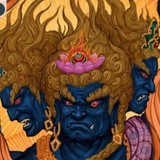
On the right his Ares very much matches what I think the Scythian Ares would look like and is a spitting image of a Greco styled Arya Āryācalanātha Vidyārāja
On the right his Ares very much matches what I think the Scythian Ares would look like and is a spitting image of a Greco styled Arya Āryācalanātha Vidyārāja
🔥3🤯1
The lyrics to this song have a rather Vajrayana quality.
https://youtu.be/7a7N5jD-2QU?si=j6upUBHBFy1SxPlB
Lighting Rod - Offspring
I am waiting on a mountaintop
For the moment that the sky will strike
My apologies are forever lost
Soon to ashes in a flash of light
Miles away from me
Hope is fading soon
Gone forever is a waste of time
My intentions like this waiting room
Only bring to me a fading light
Locked up forever inside
I look to the stars and ask why
Oh, if they could just change my dark heart to feel
All our self away
Thrown away
I am waiting like the single bloom
Lost forever in the storm of life
My intentions like this waiting room
Only bring to me a fading light
Locked up forever inside
I look to the stars and ask why
Oh if they could just show these wounds how to heal
Here I am (Oohh...Why?)
My last stand (Oohh...Why?)
And I know for all the rising and falling there's nothing to show
Throw me down, throw me down, throw me down...
It's been raining
And I will pay
World must come to me
I am a lightning rod
I am waiting
On a mountaintop
World above me
He will strike me
Locked up forever inside
I look to the stars and ask why
Oh if they could just change my dark heart to feel
All I am (Oohh...Why?)
My last stand (Oohh...Why?)
And I know for all the rising and falling there's nothing to show
https://youtu.be/7a7N5jD-2QU?si=j6upUBHBFy1SxPlB
Lighting Rod - Offspring
I am waiting on a mountaintop
For the moment that the sky will strike
My apologies are forever lost
Soon to ashes in a flash of light
Miles away from me
Hope is fading soon
Gone forever is a waste of time
My intentions like this waiting room
Only bring to me a fading light
Locked up forever inside
I look to the stars and ask why
Oh, if they could just change my dark heart to feel
All our self away
Thrown away
I am waiting like the single bloom
Lost forever in the storm of life
My intentions like this waiting room
Only bring to me a fading light
Locked up forever inside
I look to the stars and ask why
Oh if they could just show these wounds how to heal
Here I am (Oohh...Why?)
My last stand (Oohh...Why?)
And I know for all the rising and falling there's nothing to show
Throw me down, throw me down, throw me down...
It's been raining
And I will pay
World must come to me
I am a lightning rod
I am waiting
On a mountaintop
World above me
He will strike me
Locked up forever inside
I look to the stars and ask why
Oh if they could just change my dark heart to feel
All I am (Oohh...Why?)
My last stand (Oohh...Why?)
And I know for all the rising and falling there's nothing to show
YouTube
Lightning Rod
Provided to YouTube by Universal Music GroupLightning Rod · The OffspringSplinter℗ 2003 Round Hill RecordsReleased on: 2003-12-09Producer: Brendan O'BrienCom...
❤🔥1
Forwarded from Hammer and Vajra
This is an interesting video.
I agree and disagree with the presenter here theologically with my "dharma" as he puts it, and I don't fully agree with his stance against certain forms of transcendence (apotheosis) or that there isn't evil. I think there is evil in the imbalance and there is indeed adharmic forces whose worldview is of imbalancing Chaos in this era / Yuga. However, I 100% agree with his take on Dharmanation, Frank Morales, Frank's views towards Asatrú (trying to underhandedly lower Odin for conversion) and his anti Tantric stances.
Basically if you listen to Frank you are listening to a Christian sermon with Vaishnavism as a front.
Where I will agree with Frank (Acharya) is he positivity of his message, the meditations on "God," having the sacred scriptures, and having a standard of morality.
If it weren't for his and his followers' intentional anti Shaivism / Buddhism approach and attempts to undermine and manipulate Germanic Paganism (and other Western paths) I would have no beef with him.
https://youtu.be/vaSTYwio3aU?si=aPiW01bKxmmVAOgv
I agree and disagree with the presenter here theologically with my "dharma" as he puts it, and I don't fully agree with his stance against certain forms of transcendence (apotheosis) or that there isn't evil. I think there is evil in the imbalance and there is indeed adharmic forces whose worldview is of imbalancing Chaos in this era / Yuga. However, I 100% agree with his take on Dharmanation, Frank Morales, Frank's views towards Asatrú (trying to underhandedly lower Odin for conversion) and his anti Tantric stances.
Basically if you listen to Frank you are listening to a Christian sermon with Vaishnavism as a front.
Where I will agree with Frank (Acharya) is he positivity of his message, the meditations on "God," having the sacred scriptures, and having a standard of morality.
If it weren't for his and his followers' intentional anti Shaivism / Buddhism approach and attempts to undermine and manipulate Germanic Paganism (and other Western paths) I would have no beef with him.
https://youtu.be/vaSTYwio3aU?si=aPiW01bKxmmVAOgv
YouTube
Akkkarya Does Not Understand Sanatana Dharma
Acharya is no friend of tantrics or any follower of Aryan tradition.
◾◾◾◾◾◾◾◾◾◾◾◾
ૐ RIDE THE TIGER YOGA ૐ
"𝐀𝐰𝐚𝐤𝐞𝐧 𝐆𝐨𝐝, 𝐀𝐰𝐚𝐤𝐞𝐧 𝐕𝐨𝐢𝐝, 𝐀𝐰𝐚𝐤𝐞𝐧 𝐚𝐥𝐥 𝐭𝐡𝐚𝐭 𝐈 𝐚𝐦."
ᛋᛟ
In the Age of Shakti, the tradition of tantra offers the most powerful path to the full exploration…
◾◾◾◾◾◾◾◾◾◾◾◾
ૐ RIDE THE TIGER YOGA ૐ
"𝐀𝐰𝐚𝐤𝐞𝐧 𝐆𝐨𝐝, 𝐀𝐰𝐚𝐤𝐞𝐧 𝐕𝐨𝐢𝐝, 𝐀𝐰𝐚𝐤𝐞𝐧 𝐚𝐥𝐥 𝐭𝐡𝐚𝐭 𝐈 𝐚𝐦."
ᛋᛟ
In the Age of Shakti, the tradition of tantra offers the most powerful path to the full exploration…
🔥4
Forwarded from Hammer and Vajra
I have seen an uptick of right Buddhist groups and adherents who are starkly anti-Pagan, anti-folk faith, and anti-divinity. In turn, this has prompted Pagan groups to make anti-Buddhism statements.
This isn't how Eastern cultures who received Buddhism function.
That isn't to say that there wasn't any strife or disagreements (mostly with governments) but the folk and Lay religion, especially thsoe of Indo-European faiths, were almost always absorbed into the Buddhist cosmology, respected, and allowed to continue within it. Oftentimes, the Priests became representatives of both. Performing rites and teaching the proverbs and morals of both.
We see this in the Bön religion of Tibet and also in Shinto Japan (as well as historical and rural China).
This works even more so in Indo-European faiths and cultures where the Gods are regional interpretations of the same.
This was seen in Bactria, Ghandahar, Kushan Empire, etc. Of course, each local expression should be respected.
When I say syncreitc, I mean IE.
This isn't how Eastern cultures who received Buddhism function.
That isn't to say that there wasn't any strife or disagreements (mostly with governments) but the folk and Lay religion, especially thsoe of Indo-European faiths, were almost always absorbed into the Buddhist cosmology, respected, and allowed to continue within it. Oftentimes, the Priests became representatives of both. Performing rites and teaching the proverbs and morals of both.
We see this in the Bön religion of Tibet and also in Shinto Japan (as well as historical and rural China).
This works even more so in Indo-European faiths and cultures where the Gods are regional interpretations of the same.
This was seen in Bactria, Ghandahar, Kushan Empire, etc. Of course, each local expression should be respected.
When I say syncreitc, I mean IE.
❤1
Forwarded from Hammer and Vajra
Hammer and Vajra
I have seen an uptick of right Buddhist groups and adherents who are starkly anti-Pagan, anti-folk faith, and anti-divinity. In turn, this has prompted Pagan groups to make anti-Buddhism statements. This isn't how Eastern cultures who received Buddhism function.…
In addition, while Buddhism does have a different cosmological, theological, and metaphysical outlook than Abrahamic faiths and some modern interpretations of Paganism, when analyzed in a historical and cross religious Indo-European, Old European, and older religious world view it doesn't come off as that alien. Instead, they flow very well within it.
Buddhism being seen as escapism isn't any better than Valhalla, Heaven, Zoroastrian ressurerction, etc, being used as escapism.
Living ones life properly, fulfilled, and to the best is what is promoted by Buddhism proper, as well as all other Aryan faiths. Being fully passive, life denying, or nihilistic and escapist isn't Buddhist, isn't Indo-European in nature, and isn't of Arya spirituality.
Buddhism being seen as escapism isn't any better than Valhalla, Heaven, Zoroastrian ressurerction, etc, being used as escapism.
Living ones life properly, fulfilled, and to the best is what is promoted by Buddhism proper, as well as all other Aryan faiths. Being fully passive, life denying, or nihilistic and escapist isn't Buddhist, isn't Indo-European in nature, and isn't of Arya spirituality.
Take the Kālachakra pill.
Intro
https://youtu.be/HnV8pgKgu7M?si=rQuuS6wc_x6MNH0U
The Kālacakra tradition is based on Mahayana Buddhist non-dualism, which is strongly influenced by Madhyamaka philosophy, but also draws on a wide range of Buddhist and non-Buddhist (mainly Hindu) traditions (such as Vaibhāṣika, Kashmir Shaivism, Vaishnavism, and Samkhya). The Kālacakra tradition holds that Kālacakra teachings were taught in India by Gautama Buddha himself.[5][6] According to modern Buddhist studies, the original Sanskrit texts of the Kālacakra tradition "originated during the early decades of the 11th century CE, and we know with certainty that the Śrī Kālacakra and the Vimalaprabhā commentary were completed between 1025 and 1040 CE."[7] Kālacakra remains an active tradition of Buddhist tantra in Tibetan Buddhism, and its teachings and initiations have been offered to large public audiences, most famously by the 14th Dalai Lama, Tenzin Gyatso.
Wiki
https://en.m.wikipedia.org/wiki/Kalachakra
Intro
https://youtu.be/HnV8pgKgu7M?si=rQuuS6wc_x6MNH0U
The Kālacakra tradition is based on Mahayana Buddhist non-dualism, which is strongly influenced by Madhyamaka philosophy, but also draws on a wide range of Buddhist and non-Buddhist (mainly Hindu) traditions (such as Vaibhāṣika, Kashmir Shaivism, Vaishnavism, and Samkhya). The Kālacakra tradition holds that Kālacakra teachings were taught in India by Gautama Buddha himself.[5][6] According to modern Buddhist studies, the original Sanskrit texts of the Kālacakra tradition "originated during the early decades of the 11th century CE, and we know with certainty that the Śrī Kālacakra and the Vimalaprabhā commentary were completed between 1025 and 1040 CE."[7] Kālacakra remains an active tradition of Buddhist tantra in Tibetan Buddhism, and its teachings and initiations have been offered to large public audiences, most famously by the 14th Dalai Lama, Tenzin Gyatso.
Wiki
https://en.m.wikipedia.org/wiki/Kalachakra
🔥3👍2❤1
Temple of the Immovable (Dampa Zangpo)
Take the Kālachakra pill. Intro https://youtu.be/HnV8pgKgu7M?si=rQuuS6wc_x6MNH0U The Kālacakra tradition is based on Mahayana Buddhist non-dualism, which is strongly influenced by Madhyamaka philosophy, but also draws on a wide range of Buddhist and non…
Kālacakra cont (wiki)
The tradition contains teachings on cosmology, theology, philosophy, sociology, soteriology, myth, prophecy, medicine and yoga. It depicts a mythic reality whereby cosmic and socio-historical events correspond to processes in the bodies of individuals. These teachings are meant to lead to a transformation of one's body and mind into perfect Buddhahood through various yogic methods.
The tradition contains teachings on cosmology, theology, philosophy, sociology, soteriology, myth, prophecy, medicine and yoga. It depicts a mythic reality whereby cosmic and socio-historical events correspond to processes in the bodies of individuals. These teachings are meant to lead to a transformation of one's body and mind into perfect Buddhahood through various yogic methods.
👍2
Temple of the Immovable (Dampa Zangpo)
Kālacakra cont (wiki) The tradition contains teachings on cosmology, theology, philosophy, sociology, soteriology, myth, prophecy, medicine and yoga. It depicts a mythic reality whereby cosmic and socio-historical events correspond to processes in the bodies…
Kālacakra cont (wiki) Cosmology:
In the Kālacakratantra's cosmology, samsara (cyclic existence) is made up of innumerable Buddha fields and of the five elements or properties (characterized by origination, duration and destruction). The whole cosmos arises due to the collective karma of sentient beings, which produces vital winds (vayu) that mold and dissolve the atomic particles that make up the various inanimate things of the world and the bodies of sentient beings.[19]
A key element of the Kālacakratantra is the correspondence between macrocosmic processes and microcosmic processes. The Kālacakratantra maps the various features and developmental processes of the world system to various features of the human body.[20] The phrase "as it is outside, so it is within the body" (yatha bahye tatha dehe) is often found in the Kālacakratantra to emphasize the similarities and correspondence between human beings (inner Kālacakra) and the cosmos (outer Kālacakra), as well as with the enlightened Kālacakra mandala of deities (alternative Kālacakra). This correspondence comes about because both the cosmos and the bodies of sentient beings come into existence due to the efficacy of the habitual propensities of the minds of beings. In this sense, the cosmos is like a cosmic replica of a sentient being's body. Thus, one can say that the cosmos and the individual are nondual and mutually pervasive, even in terms of their conventional existence. They are interconnected and they influence each other.
In the Kālacakratantra's cosmology, samsara (cyclic existence) is made up of innumerable Buddha fields and of the five elements or properties (characterized by origination, duration and destruction). The whole cosmos arises due to the collective karma of sentient beings, which produces vital winds (vayu) that mold and dissolve the atomic particles that make up the various inanimate things of the world and the bodies of sentient beings.[19]
A key element of the Kālacakratantra is the correspondence between macrocosmic processes and microcosmic processes. The Kālacakratantra maps the various features and developmental processes of the world system to various features of the human body.[20] The phrase "as it is outside, so it is within the body" (yatha bahye tatha dehe) is often found in the Kālacakratantra to emphasize the similarities and correspondence between human beings (inner Kālacakra) and the cosmos (outer Kālacakra), as well as with the enlightened Kālacakra mandala of deities (alternative Kālacakra). This correspondence comes about because both the cosmos and the bodies of sentient beings come into existence due to the efficacy of the habitual propensities of the minds of beings. In this sense, the cosmos is like a cosmic replica of a sentient being's body. Thus, one can say that the cosmos and the individual are nondual and mutually pervasive, even in terms of their conventional existence. They are interconnected and they influence each other.
👍2❤1
Temple of the Immovable (Dampa Zangpo)
Kālacakra cont (wiki) Cosmology: In the Kālacakratantra's cosmology, samsara (cyclic existence) is made up of innumerable Buddha fields and of the five elements or properties (characterized by origination, duration and destruction). The whole cosmos arises…
You'll notice the similarities between the Kālacakra and the Womb Realm.
https://en.m.wikipedia.org/wiki/Womb_Realm
https://en.m.wikipedia.org/wiki/Womb_Realm
🙏2
Forwarded from Time Stamp: Birth by Sleep
Tfw pewdiepie doesn’t have a mirror in his gym, just a picture of Acala the noble immovable lord
🔥7🤔4
ॐ
oṃ
(The syllable of the most supreme exclamation of praise.)
vajrasattva-samaya
ma nu pā la ya vajrasattva
tve na u pa ti ṣṭha dṛ ḍho me bha va
su to ṣyo me bhava
su po ṣyo me bhava
a nu rak to me bhava
sarva-si ddhiṃ me pra ya ccha
sarva kar ma su ca me
cittim śre yaḥ ku ru
hūṃ
(Syllable of the heart essence, the seed Vajrasattva.)
ha ha ha ha
(Syllables of the four immeasurables, the four empowerments, four joys, and the four kāyas.)
hoḥ
(Syllable of joyous laughter in them.)
bhagavan sarva-tathāgata
vajra mā me mu ñca
vajribhava
mahāsamaya sattva āḥ.
āḥ.
oṃ
Vajrasattva’s Samaya
O Vajrasattva, protect the samaya.
May you remain firm in me.
Grant me complete satisfaction.
Grow within me (increase the positive within me).
Be loving towards me.
Grant me all the accomplishments,
As well as all the activities.
Make my mind virtuous.
hūṃ,ha ha ha ha, hoḥ
Bhagawan, who embodies all the Vajra Tathāgatas,
Do not abandon me.
Grant me realization of the vajra nature.
O great Samayasattva
Make me one with you
oṃ
(The syllable of the most supreme exclamation of praise.)
vajrasattva-samaya
ma nu pā la ya vajrasattva
tve na u pa ti ṣṭha dṛ ḍho me bha va
su to ṣyo me bhava
su po ṣyo me bhava
a nu rak to me bhava
sarva-si ddhiṃ me pra ya ccha
sarva kar ma su ca me
cittim śre yaḥ ku ru
hūṃ
(Syllable of the heart essence, the seed Vajrasattva.)
ha ha ha ha
(Syllables of the four immeasurables, the four empowerments, four joys, and the four kāyas.)
hoḥ
(Syllable of joyous laughter in them.)
bhagavan sarva-tathāgata
vajra mā me mu ñca
vajribhava
mahāsamaya sattva āḥ.
āḥ.
oṃ
Vajrasattva’s Samaya
O Vajrasattva, protect the samaya.
May you remain firm in me.
Grant me complete satisfaction.
Grow within me (increase the positive within me).
Be loving towards me.
Grant me all the accomplishments,
As well as all the activities.
Make my mind virtuous.
hūṃ,ha ha ha ha, hoḥ
Bhagawan, who embodies all the Vajra Tathāgatas,
Do not abandon me.
Grant me realization of the vajra nature.
O great Samayasattva
Make me one with you
🙏8