

SK On and Factorial Energy Strategic Alliance
SK On, the battery manufacturing arm of SK Innovation headquartered in Seoul, is teaming up with Factorial Energy to mass-produce solid-state batteries. These batteries replace the liquid electrolyte found in your current phone or electric car with a solid material. This shift offers three major improvements:
▪️ Lower fire risk, as solid electrolytes are not flammable.
▪️ Higher energy density, which packs more power into the same size.
▪️ Faster charging speeds compared to standard liquid-based cells.
Most electric vehicles today, such as the Tesla Model Y or the Hyundai Ioniq 5, rely on conventional liquid lithium-ion batteries. This new production effort seeks to surpass the energy density limits that have constrained those designs for the past decade.
We will likely see the first prototypes in road testing within the next three years.
#EV #TechNews #BatteryTech
Electrek
Subscribe
SK On, the battery manufacturing arm of SK Innovation headquartered in Seoul, is teaming up with Factorial Energy to mass-produce solid-state batteries. These batteries replace the liquid electrolyte found in your current phone or electric car with a solid material. This shift offers three major improvements:
▪️ Lower fire risk, as solid electrolytes are not flammable.
▪️ Higher energy density, which packs more power into the same size.
▪️ Faster charging speeds compared to standard liquid-based cells.
The alliance aims to merge Factorial Energy's proprietary battery chemistry with SK On's large-scale manufacturing infrastructure to bring this tech to the automotive market.
Most electric vehicles today, such as the Tesla Model Y or the Hyundai Ioniq 5, rely on conventional liquid lithium-ion batteries. This new production effort seeks to surpass the energy density limits that have constrained those designs for the past decade.
Safety and efficiency are the true bottlenecks of the electric era.
We will likely see the first prototypes in road testing within the next three years.
#EV #TechNews #BatteryTech
Electrek
Subscribe
❤1👍1

Google DeepMind upgrades humanoid robots with Gemini Robotics 2
On Thursday, Google DeepMind introduced Gemini Robotics 2, an AI model that finally gives humanoid robots full-body coordination. 🚀
Previously, these machines were mostly limited to moving their arms and upper bodies. The new software manages everything from their feet to their fingertips, allowing for smooth movement in physical spaces.
🔹 The system can automate complex chores involving hundreds of steps that used to require manual programming.
🔹 It allows multiple robots to collaborate and coordinate tasks together in the same area.
🔹 Robots can now crouch, bend, and stretch to reach objects on shelves, as shown using the Apptronik Apollo 2 model.
This is a major step forward from their earlier models, which could only handle stationary upper-body tasks like picking up a box from a desk. By enabling whole-body motion, these machines are evolving from simple tools into workers capable of navigating real-world environments.
This technology makes the prospect of autonomous household or warehouse assistants feel much more realistic than before.
#Google #AI #Robotics
The Verge
Subscribe
On Thursday, Google DeepMind introduced Gemini Robotics 2, an AI model that finally gives humanoid robots full-body coordination. 🚀
Previously, these machines were mostly limited to moving their arms and upper bodies. The new software manages everything from their feet to their fingertips, allowing for smooth movement in physical spaces.
🔹 The system can automate complex chores involving hundreds of steps that used to require manual programming.
🔹 It allows multiple robots to collaborate and coordinate tasks together in the same area.
🔹 Robots can now crouch, bend, and stretch to reach objects on shelves, as shown using the Apptronik Apollo 2 model.
This is a major step forward from their earlier models, which could only handle stationary upper-body tasks like picking up a box from a desk. By enabling whole-body motion, these machines are evolving from simple tools into workers capable of navigating real-world environments.
This technology makes the prospect of autonomous household or warehouse assistants feel much more realistic than before.
Robots are finally learning how to move like us.
#Google #AI #Robotics
The Verge
Subscribe
Superconstruction: How Your Brain Imagines the Future
Ever wonder why you can’t imagine a sensation you’ve never felt? Your mind constructs visions of the future using only the fragments of real experiences.
Read Full Story 🔹 Subscribe
#News ⚡️ #AI ⚡️ #Tech
Ever wonder why you can’t imagine a sensation you’ve never felt? Your mind constructs visions of the future using only the fragments of real experiences.
Read Full Story 🔹 Subscribe
#News ⚡️ #AI ⚡️ #Tech
👍2

Zoox robotaxis get green light in Las Vegas
Amazon-owned Zoox just cleared a major federal hurdle. The NHTSA granted the company a temporary exemption to charge for rides in its steering-wheel-free robotaxis, allowing up to 2,500 of these vehicles to operate in Las Vegas over the next two years. 🚀
These cars are built from scratch without steering wheels, pedals, or mirrors. Inside, you will find two bench seats facing each other instead of a standard driver’s console.
Before this move, federal rules required all vehicles carrying paying passengers to include manual controls. Zoox is now the first company to bypass these requirements for a purpose-built autonomous vehicle. It is a sharp departure from standard car regulations that have strictly mandated driver controls for decades.
You will likely see these custom machines on the streets as early as next month. The real test starts when they have to handle unpredictable city traffic full of human drivers.
#Zoox #Robotaxi #AutonomousVehicles
The Verge
Subscribe
Amazon-owned Zoox just cleared a major federal hurdle. The NHTSA granted the company a temporary exemption to charge for rides in its steering-wheel-free robotaxis, allowing up to 2,500 of these vehicles to operate in Las Vegas over the next two years. 🚀
These cars are built from scratch without steering wheels, pedals, or mirrors. Inside, you will find two bench seats facing each other instead of a standard driver’s console.
The agency’s decision creates an enhanced, adaptable oversight structure that will evolve as the company’s technology advances.
Before this move, federal rules required all vehicles carrying paying passengers to include manual controls. Zoox is now the first company to bypass these requirements for a purpose-built autonomous vehicle. It is a sharp departure from standard car regulations that have strictly mandated driver controls for decades.
You will likely see these custom machines on the streets as early as next month. The real test starts when they have to handle unpredictable city traffic full of human drivers.
The driverless future just hit the road.
#Zoox #Robotaxi #AutonomousVehicles
The Verge
Subscribe
Abu Dhabi Wealth Fund Bids $1.1 Billion For Disneyland Paris Resort Operator
Abu Dhabi's leading sovereign wealth fund, Mubadala Capital, has made a $1.1 billion bid for the owner of a groundbreaking resort on the fringes of Disneyland Paris.
Read Full Story 🔹 Subscribe
#News ⚡️ #AI ⚡️ #Tech
Abu Dhabi's leading sovereign wealth fund, Mubadala Capital, has made a $1.1 billion bid for the owner of a groundbreaking resort on the fringes of Disneyland Paris.
Read Full Story 🔹 Subscribe
#News ⚡️ #AI ⚡️ #Tech

Factorial Energy and SK On partner for solid-state batteries
Factorial Energy, a developer from the United States, has officially teamed up with SK On from South Korea to mass-produce solid-state batteries for electric vehicles.
This technology aims to solve the primary limitations of the lithium-ion batteries found in your current electric car. By swapping out liquid components for solid materials, these cells become significantly safer and more energy-dense. The partnership is notable because it focuses on adapting existing factory infrastructure rather than requiring entirely new assembly lines.
🔹 They use solid electrolytes to eliminate fire risks.
🔹 They pack more energy into a smaller, lighter package.
🔹 They leverage current production lines to scale faster.
Unlike the standard lithium-ion batteries that rely on liquid electrolytes—the technology powering almost every EV on the road today—these solid-state units provide a more stable and efficient foundation. Scaling this manufacturing process is a major shift for the automotive industry.
Moving from liquid to solid-state tech is how we shift from today’s 300-mile range to tomorrow’s 600-mile standard.
#batteries #EV #tech
Interesting Engineering
Subscribe
Factorial Energy, a developer from the United States, has officially teamed up with SK On from South Korea to mass-produce solid-state batteries for electric vehicles.
This technology aims to solve the primary limitations of the lithium-ion batteries found in your current electric car. By swapping out liquid components for solid materials, these cells become significantly safer and more energy-dense. The partnership is notable because it focuses on adapting existing factory infrastructure rather than requiring entirely new assembly lines.
🔹 They use solid electrolytes to eliminate fire risks.
🔹 They pack more energy into a smaller, lighter package.
🔹 They leverage current production lines to scale faster.
Unlike the standard lithium-ion batteries that rely on liquid electrolytes—the technology powering almost every EV on the road today—these solid-state units provide a more stable and efficient foundation. Scaling this manufacturing process is a major shift for the automotive industry.
Moving from liquid to solid-state tech is how we shift from today’s 300-mile range to tomorrow’s 600-mile standard.
Replacing liquid electrolytes with solids is the key to doubling driving range.
#batteries #EV #tech
Interesting Engineering
Subscribe
❤1👍1

29.71% efficiency in new solar cell technology
Researchers in China have developed a new four-terminal solar cell design that hits a record efficiency of 29.71%. This development could significantly increase how much electricity we generate from sunlight by using advanced material engineering.
The team used a chemical compound called bis(2-pyridylmethyl) sulfide to stabilize the perovskite layer. Think of a solar cell as a sandwich; the perovskite is the top layer that absorbs light, but it often develops structural "leaks" that reduce power output. This chemical acts like a specialized glue, holding the delicate structure together and preventing those performance-killing defects. By stacking this on top of a CIGS layer, the cell captures a much broader range of the light spectrum than traditional panels.
Most standard silicon panels you see on rooftops today typically hover between 20% and 22% efficiency. This experimental approach pushes that limit much higher, meaning you could potentially generate more power from the same amount of roof space. 🚀
This innovation brings us closer to making renewable energy more compact and efficient for daily use.
#SolarEnergy #CleanTech #RenewableEnergy
Interesting Engineering
Subscribe
Researchers in China have developed a new four-terminal solar cell design that hits a record efficiency of 29.71%. This development could significantly increase how much electricity we generate from sunlight by using advanced material engineering.
The team used a chemical compound called bis(2-pyridylmethyl) sulfide to stabilize the perovskite layer. Think of a solar cell as a sandwich; the perovskite is the top layer that absorbs light, but it often develops structural "leaks" that reduce power output. This chemical acts like a specialized glue, holding the delicate structure together and preventing those performance-killing defects. By stacking this on top of a CIGS layer, the cell captures a much broader range of the light spectrum than traditional panels.
Most standard silicon panels you see on rooftops today typically hover between 20% and 22% efficiency. This experimental approach pushes that limit much higher, meaning you could potentially generate more power from the same amount of roof space. 🚀
This innovation brings us closer to making renewable energy more compact and efficient for daily use.
While standard panels hit 22%, this new design pushes power output to 29.71%.
#SolarEnergy #CleanTech #RenewableEnergy
Interesting Engineering
Subscribe
❤2
How To Tell If A Music Artist Is AI
AI music artists are gaining listeners and sparking controversy. Learn how to identify AI-generated musicians, why they're growing, and who profits.
Read Full Story 🔹 Subscribe
#News ⚡️ #AI ⚡️ #Tech
AI music artists are gaining listeners and sparking controversy. Learn how to identify AI-generated musicians, why they're growing, and who profits.
Read Full Story 🔹 Subscribe
#News ⚡️ #AI ⚡️ #Tech
👍1
California Solar Milestone in May
In May, California achieved a global first for a major economy: solar power generated 51% of the state's electricity. This marks the first time such a large region has met more than half its energy needs using sunshine. 🚀
The state reached this point by adding nearly 7,000 MW of new solar and battery capacity in just one year. The battery fleet now exceeds 15,000 MW, a 1,944% jump since 2019. These batteries soak up extra solar power during the day and release it to the grid once the sun sets.
This growth is significantly faster than the national average. While the rest of the United States has expanded renewable energy at an average rate of 0.9% per year since 2008, California has grown at 1.9% over the same period.
For a resident, this means cleaner, more consistent power throughout the evening hours.
#California #SolarEnergy #Renewables
Canary Media
Subscribe
In May, California achieved a global first for a major economy: solar power generated 51% of the state's electricity. This marks the first time such a large region has met more than half its energy needs using sunshine. 🚀
The state reached this point by adding nearly 7,000 MW of new solar and battery capacity in just one year. The battery fleet now exceeds 15,000 MW, a 1,944% jump since 2019. These batteries soak up extra solar power during the day and release it to the grid once the sun sets.
This growth is significantly faster than the national average. While the rest of the United States has expanded renewable energy at an average rate of 0.9% per year since 2008, California has grown at 1.9% over the same period.
For a resident, this means cleaner, more consistent power throughout the evening hours.
Energy independence is starting to look like a standard Tuesday.
#California #SolarEnergy #Renewables
Canary Media
Subscribe
❤2
Why a selloff in gold and silver is dragging bitcoin down
Bitcoin has long been lumped in with precious metals as a hedge against a weakening dollar. That trade is unwinding on a hawkish Fed, and bitcoin is falling alongside the metals it was supposed to rival.
Read Full Story 🔹 Subscribe
#News ⚡️ #AI ⚡️ #Tech
Bitcoin has long been lumped in with precious metals as a hedge against a weakening dollar. That trade is unwinding on a hawkish Fed, and bitcoin is falling alongside the metals it was supposed to rival.
Read Full Story 🔹 Subscribe
#News ⚡️ #AI ⚡️ #Tech
❤1
Big Rooter Power: New 1.2 GW Solar Farm in Bremond
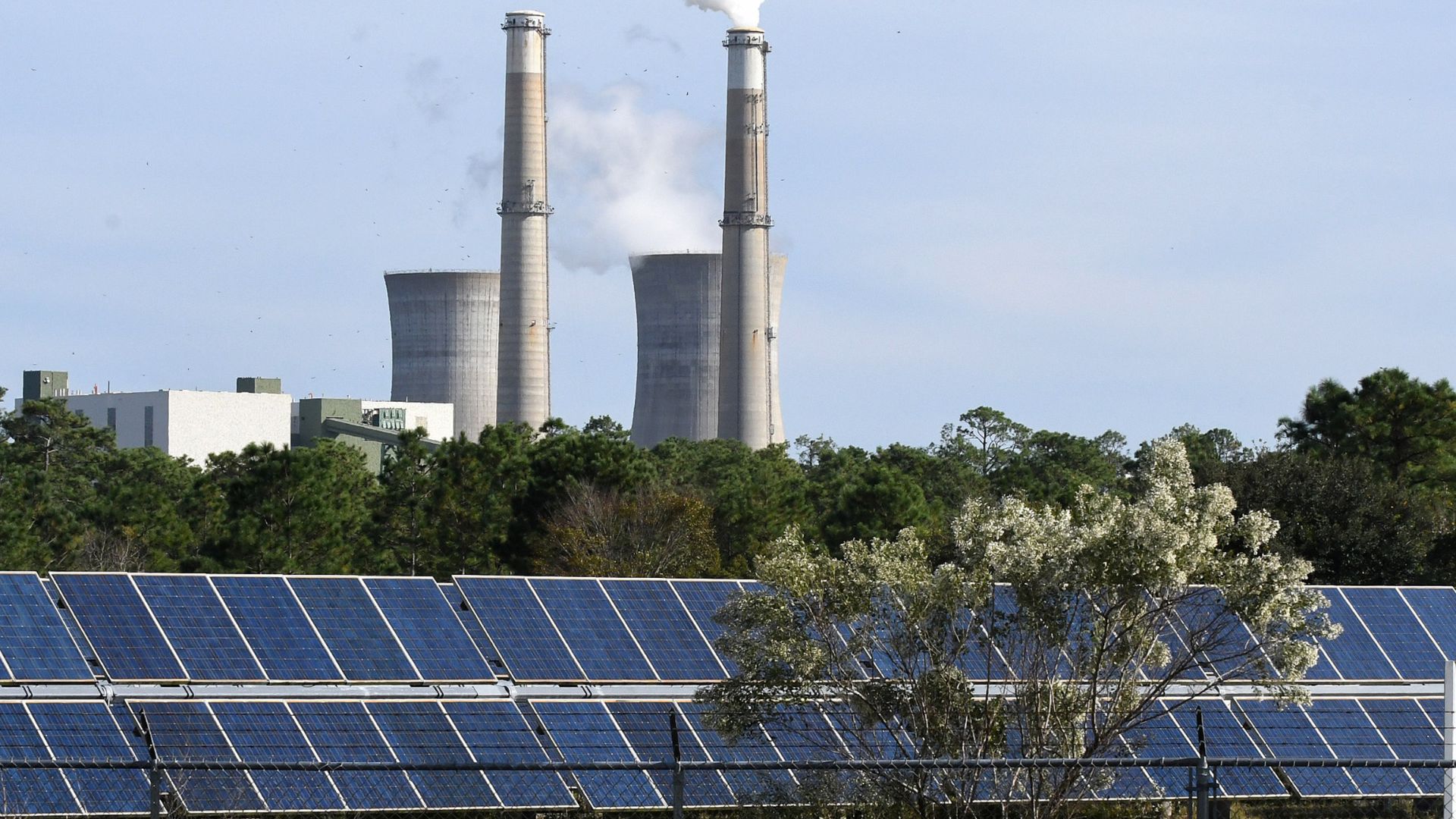
Construction has kicked off for Panamint Capital's massive new solar energy project in Bremond, Texas, which will eventually generate 1.2 GW of power. This installation aims to change how we use industrial land by placing clean energy infrastructure directly alongside active fossil fuel operations.
The project, known as Big Rooter Power, will be built on the site of the Twin Oaks power station. Instead of clearing the land, the developers will install 2,000,000 solar panels around the existing coal mining facilities. This $1.7 billion development is divided into three distinct steps to manage the transition:
🔹 The first phase, Big Rooter West, adds 491 MW of capacity by August 2028.
🔹 The second phase, Big Rooter East, adds 658 MW, with construction starting in December 2026 and finishing by August 2029.
🔹 The entire project will create over 800 construction jobs in the region.
While other energy initiatives like the Gateway Solar & Storage site in Illinois have paved the way for reusing older industrial land, this site is set to become the largest solar array ever built at an active coal mine in North America. It is a practical test of how to squeeze more life and electricity out of land that is already tied to the power grid.
#energy #texas #solar
Canary Media
Subscribe
Construction has kicked off for Panamint Capital's massive new solar energy project in Bremond, Texas, which will eventually generate 1.2 GW of power. This installation aims to change how we use industrial land by placing clean energy infrastructure directly alongside active fossil fuel operations.
The project, known as Big Rooter Power, will be built on the site of the Twin Oaks power station. Instead of clearing the land, the developers will install 2,000,000 solar panels around the existing coal mining facilities. This $1.7 billion development is divided into three distinct steps to manage the transition:
🔹 The first phase, Big Rooter West, adds 491 MW of capacity by August 2028.
🔹 The second phase, Big Rooter East, adds 658 MW, with construction starting in December 2026 and finishing by August 2029.
🔹 The entire project will create over 800 construction jobs in the region.
While other energy initiatives like the Gateway Solar & Storage site in Illinois have paved the way for reusing older industrial land, this site is set to become the largest solar array ever built at an active coal mine in North America. It is a practical test of how to squeeze more life and electricity out of land that is already tied to the power grid.
Repurposing old industrial sites is the next logical step for grid growth.
#energy #texas #solar
Canary Media
Subscribe
👍1

China's 15th Five-Year Plan to Add 370GW of Green Energy
China just finalized its energy roadmap for the years 2026–2030. The State Council, along with the National Development and Reform Commission and National Energy Administration, is set to add over 370GW of new wind and solar capacity by 2030. 🚀
This plan is about more than just installing gear. It focuses on building massive solar projects in deserts and upgrading how the power grid moves electricity. The State Council also released the 15th Five-Year Carbon Peaking Action Plan to help guide this shift. By 2030, the country expects total renewable energy consumption to reach about 1.8 billion tonnes of standard coal equivalent.
The targets are quite specific when compared to the recent past. The plan calls for a 17% reduction in CO2 emissions per unit of GDP compared to 2025 levels. It also aims to boost non-fossil energy use to 25% of the total energy mix.
Can the grid really handle such a rapid transformation?
#China #RenewableEnergy #Energy
Energy Storage News
Subscribe
China just finalized its energy roadmap for the years 2026–2030. The State Council, along with the National Development and Reform Commission and National Energy Administration, is set to add over 370GW of new wind and solar capacity by 2030. 🚀
This plan is about more than just installing gear. It focuses on building massive solar projects in deserts and upgrading how the power grid moves electricity. The State Council also released the 15th Five-Year Carbon Peaking Action Plan to help guide this shift. By 2030, the country expects total renewable energy consumption to reach about 1.8 billion tonnes of standard coal equivalent.
The targets are quite specific when compared to the recent past. The plan calls for a 17% reduction in CO2 emissions per unit of GDP compared to 2025 levels. It also aims to boost non-fossil energy use to 25% of the total energy mix.
A massive pivot to green energy infrastructure.
Can the grid really handle such a rapid transformation?
#China #RenewableEnergy #Energy
Energy Storage News
Subscribe
❤1👍1
TeraWulf Inc. (WULF) is One of the Worst AI Stocks Under $30, According to Short Sellers
TeraWulf Inc. (NASDAQ:WULF) is one of the 10 worst artificial intelligence stocks under $30 according to short sellers. Back on May 26, Terawulf Inc. (NASDAQ...
Read Full Story 🔹 Subscribe
#News ⚡️ #AI ⚡️ #Tech
TeraWulf Inc. (NASDAQ:WULF) is one of the 10 worst artificial intelligence stocks under $30 according to short sellers. Back on May 26, Terawulf Inc. (NASDAQ...
Read Full Story 🔹 Subscribe
#News ⚡️ #AI ⚡️ #Tech
❤1

Lithium-hunting fish robots
Engineers in the United States are designing nanorobots that look like tiny fish to solve our battery supply chain issues. They aim to pull lithium directly from seawater, a source that holds an estimated 230 billion tons of the metal. 🚀
These bots don't use hooks or nets. Instead, they use special surfaces that grab lithium ions as they swim through the ocean currents.
This approach aims to secure the raw materials we need for high-capacity batteries without tearing up the earth.
Currently, we rely heavily on mining operations like those in the Atacama Desert. Those sites use massive evaporation ponds that waste water and disrupt local habitats, making this ocean-based method a much cleaner path forward.
If this scales, we might look at the ocean as a battery mine rather than just a place to swim.
#Tech #Sustainability #Batteries
Interesting Engineering
Subscribe
Engineers in the United States are designing nanorobots that look like tiny fish to solve our battery supply chain issues. They aim to pull lithium directly from seawater, a source that holds an estimated 230 billion tons of the metal. 🚀
These bots don't use hooks or nets. Instead, they use special surfaces that grab lithium ions as they swim through the ocean currents.
The robot design mimics the efficient swimming motion of real fish, allowing them to cover more area and collect lithium far better than static filter systems.
This approach aims to secure the raw materials we need for high-capacity batteries without tearing up the earth.
Currently, we rely heavily on mining operations like those in the Atacama Desert. Those sites use massive evaporation ponds that waste water and disrupt local habitats, making this ocean-based method a much cleaner path forward.
If this scales, we might look at the ocean as a battery mine rather than just a place to swim.
Plenty of fish in the sea.
#Tech #Sustainability #Batteries
Interesting Engineering
Subscribe
👍3
Intel Corporation (INTC)’s Stock Has Surged but Needs an Engineering Revival
Intel Corporation (NASDAQ:INTC) is among the Best Semiconductor Stocks. On June 23, The Wall Street Journal reported that Intel Corporation (NASDAQ:INTC)’s s...
Read Full Story 🔹 Subscribe
#News ⚡️ #AI ⚡️ #Tech
Intel Corporation (NASDAQ:INTC) is among the Best Semiconductor Stocks. On June 23, The Wall Street Journal reported that Intel Corporation (NASDAQ:INTC)’s s...
Read Full Story 🔹 Subscribe
#News ⚡️ #AI ⚡️ #Tech
👍1

U.S. Air Force designs hypersonic VTOL bombers
The U.S. Air Force is currently exploring the development of a reusable, hypersonic bomber capable of vertical take-off and landing. This concept focuses on eliminating the dependency on traditional runways by using VTOL technology to launch from virtually any secure location.
Hypersonic flight involves speeds exceeding 5 times the speed of sound. By removing the requirement for long tarmac strips, the military aims to increase its tactical flexibility significantly. This platform would allow for strike missions from small or unprepared sites, forcing opponents to rethink how they track potential threats.
Unlike current bombers such as the B-21 Raider or the long-serving B-52 Stratofortress, which require massive, fixed-location airbases to operate, this craft could theoretically deploy from almost anywhere. It represents a major pivot toward decentralized, high-speed aerial warfare.
The sheer engineering effort required to make a massive bomber hover like a helicopter is a staggering prospect. It is a bold leap that turns the quietest patch of land into a frontline base.
#AirForce #Aviation #Tech
Interesting Engineering
Subscribe
The U.S. Air Force is currently exploring the development of a reusable, hypersonic bomber capable of vertical take-off and landing. This concept focuses on eliminating the dependency on traditional runways by using VTOL technology to launch from virtually any secure location.
Hypersonic flight involves speeds exceeding 5 times the speed of sound. By removing the requirement for long tarmac strips, the military aims to increase its tactical flexibility significantly. This platform would allow for strike missions from small or unprepared sites, forcing opponents to rethink how they track potential threats.
Unlike current bombers such as the B-21 Raider or the long-serving B-52 Stratofortress, which require massive, fixed-location airbases to operate, this craft could theoretically deploy from almost anywhere. It represents a major pivot toward decentralized, high-speed aerial warfare.
The sheer engineering effort required to make a massive bomber hover like a helicopter is a staggering prospect. It is a bold leap that turns the quietest patch of land into a frontline base.
A runway-free future is coming.
#AirForce #Aviation #Tech
Interesting Engineering
Subscribe
Floating wind turbines at the University of Queensland get cheaper
Researchers at the University of Queensland have developed an engineering fix that reduces the cost of building floating wind turbines by 40% through a simple redesign of their geometric structure.
By using simpler shapes, the team found they can use much less steel while keeping the massive towers stable in rough ocean conditions. This reduces the expenses for companies looking to build wind farms in deep waters.
Floating projects have historically cost significantly more than traditional fixed-bottom turbines. While fixed structures are anchored directly into the shallow seabed, floating designs need complex buoys to stay upright. This optimization brings the price of these floating bases much closer to their fixed counterparts, potentially opening up vast, deep-water areas for energy generation.
This shift makes offshore wind power much more practical on a larger scale 🚀.
Will we soon see floating wind farms popping up in deep waters around the globe?
#energy #engineering #technology
Interesting Engineering
Subscribe
Researchers at the University of Queensland have developed an engineering fix that reduces the cost of building floating wind turbines by 40% through a simple redesign of their geometric structure.
By using simpler shapes, the team found they can use much less steel while keeping the massive towers stable in rough ocean conditions. This reduces the expenses for companies looking to build wind farms in deep waters.
The team managed to maintain structural stability while slashing the amount of raw material required for the platforms.
Floating projects have historically cost significantly more than traditional fixed-bottom turbines. While fixed structures are anchored directly into the shallow seabed, floating designs need complex buoys to stay upright. This optimization brings the price of these floating bases much closer to their fixed counterparts, potentially opening up vast, deep-water areas for energy generation.
This shift makes offshore wind power much more practical on a larger scale 🚀.
Better geometry is unlocking cheaper offshore energy.
Will we soon see floating wind farms popping up in deep waters around the globe?
#energy #engineering #technology
Interesting Engineering
Subscribe
👍1
Mexico’s Victory Over Ecuador Made the Ground Shake. Was It an Artificial Earthquake?
Fans’ euphoric reactions to the Mexican national team’s recent victory in the 2026 World Cup caused a series of unusual vibrations that were detected by seismic warning systems.
Read Full Story 🔹 Subscribe
#News ⚡️ #AI ⚡️ #Tech
Fans’ euphoric reactions to the Mexican national team’s recent victory in the 2026 World Cup caused a series of unusual vibrations that were detected by seismic warning systems.
Read Full Story 🔹 Subscribe
#News ⚡️ #AI ⚡️ #Tech
❤1
Court Ruling Speeds Up Power Grid Connections
The D.C. Circuit Court of Appeals has officially upheld FERC Order 2023, clearing a major legal hurdle to modernize the national energy grid. This decision mandates critical reforms to shorten the years-long waiting lines for new clean energy projects to join the power network.
Right now, plugging a wind farm or solar plant into the grid is a slow process. Developers often wait years just to get approved. Think of it like trying to join a busy highway where the on-ramp is permanently closed. The new order forces grid operators to prioritize projects that are actually ready to build, rather than letting speculative plans block the line.
Previously, the system relied on a "first-come, first-served" approach that allowed stalled projects to clog the queue for years. The Federal Energy Regulatory Commission struggled to manage this growing backlog, which blocked new capacity. By contrast, the new rules implement a "first-ready, first-served" standard. This change effectively cuts the red tape that previously prevented renewable energy from reaching homes efficiently. 🚀
#Energy #Grid #Infrastructure
CleanTechnica
Subscribe
The D.C. Circuit Court of Appeals has officially upheld FERC Order 2023, clearing a major legal hurdle to modernize the national energy grid. This decision mandates critical reforms to shorten the years-long waiting lines for new clean energy projects to join the power network.
Right now, plugging a wind farm or solar plant into the grid is a slow process. Developers often wait years just to get approved. Think of it like trying to join a busy highway where the on-ramp is permanently closed. The new order forces grid operators to prioritize projects that are actually ready to build, rather than letting speculative plans block the line.
Previously, the system relied on a "first-come, first-served" approach that allowed stalled projects to clog the queue for years. The Federal Energy Regulatory Commission struggled to manage this growing backlog, which blocked new capacity. By contrast, the new rules implement a "first-ready, first-served" standard. This change effectively cuts the red tape that previously prevented renewable energy from reaching homes efficiently. 🚀
Infrastructure just got a green light to move faster.
#Energy #Grid #Infrastructure
CleanTechnica
Subscribe
❤1
MTG Marvel Super Heroes' Most Valuable Cards
From heroes to villains and that all-important Infinity Stone, here are the priciest cards in Magic's new Marvel Super Heroes set.
Read Full Story 🔹 Subscribe
#News ⚡️ #AI ⚡️ #Tech
From heroes to villains and that all-important Infinity Stone, here are the priciest cards in Magic's new Marvel Super Heroes set.
Read Full Story 🔹 Subscribe
#News ⚡️ #AI ⚡️ #Tech
❤1

State Power Investment Corp ships 3,750 tonnes of green ammonia
State Power Investment Corp has set a global record for green ammonia transport by shipping 3,750 tonnes of the fuel to South Korea in a single batch. 🚀
Green ammonia is hydrogen processed into a liquid form. This makes it much easier to store and move across the ocean. The fuel burns without releasing carbon, which makes it a strong contender to replace dirty fuel oils in power plants and large cargo ships. This shipment marks a major step from small, experimental trials toward actual industrial supply chains.
While previous international hydrogen projects were limited to symbolic, tiny quantities, this successful delivery proves that modern tankers and port infrastructure can handle significant commercial volumes. It suggests that moving green fuels is shifting from a theoretical concept to a functioning reality.
This is the kind of progress needed to move clean energy from the drawing board into the power grid.
#GreenEnergy #Hydrogen #Logistics
PV Magazine
Subscribe
State Power Investment Corp has set a global record for green ammonia transport by shipping 3,750 tonnes of the fuel to South Korea in a single batch. 🚀
Green ammonia is hydrogen processed into a liquid form. This makes it much easier to store and move across the ocean. The fuel burns without releasing carbon, which makes it a strong contender to replace dirty fuel oils in power plants and large cargo ships. This shipment marks a major step from small, experimental trials toward actual industrial supply chains.
While previous international hydrogen projects were limited to symbolic, tiny quantities, this successful delivery proves that modern tankers and port infrastructure can handle significant commercial volumes. It suggests that moving green fuels is shifting from a theoretical concept to a functioning reality.
This is the kind of progress needed to move clean energy from the drawing board into the power grid.
Big things have small beginnings.
#GreenEnergy #Hydrogen #Logistics
PV Magazine
Subscribe
❤2