
Post-Mythos Cybersecurity: Keep calm and carry on
As some of those fears, uncertainties, and doubts about Mythos are starting to feel real, what can we do about it? Paradoxically, I believe that little needs to change in what we’ve been doing for years.
Read Full Story 🔹 Subscribe
#News ⚡️ #AI ⚡️ #Tech
As some of those fears, uncertainties, and doubts about Mythos are starting to feel real, what can we do about it? Paradoxically, I believe that little needs to change in what we’ve been doing for years.
Read Full Story 🔹 Subscribe
#News ⚡️ #AI ⚡️ #Tech

Tesla’s massive power grid expansion
Tesla is locking in significant electricity supplies for the future. The company just signed long-term agreements to buy the power output from new renewable projects totaling 649 MW across Arizona and Texas. 🚀🔥
In Arizona, Tesla secured 90% of the energy from Project Sterling. This site features 509 MW of solar capacity paired with a 360 MW battery system and is expected to start operations in 2028. The power producer ContourGlobal, owned by the firm KKR, is building this facility.
Meanwhile, Tesla will take the full output of Lumen Farm in Texas. This 140 MW solar project is being built by Zelestra, which is backed by EQT. It is scheduled to come online in 2029.
Unlike industry competitors who typically purchase carbon offsets to balance their usage, Tesla is directly securing the physical electricity output from these major developers. This approach signals a shift toward vertical integration of energy, moving far beyond the company's earlier, smaller-scale energy pilot projects.
These massive battery systems will help stabilize the grid during times of high demand. We will soon see how these large-scale storage solutions hold up under real-world pressure.
#Tesla #RenewableEnergy #TechNews
Interesting Engineering
Subscribe
Tesla is locking in significant electricity supplies for the future. The company just signed long-term agreements to buy the power output from new renewable projects totaling 649 MW across Arizona and Texas. 🚀🔥
In Arizona, Tesla secured 90% of the energy from Project Sterling. This site features 509 MW of solar capacity paired with a 360 MW battery system and is expected to start operations in 2028. The power producer ContourGlobal, owned by the firm KKR, is building this facility.
Meanwhile, Tesla will take the full output of Lumen Farm in Texas. This 140 MW solar project is being built by Zelestra, which is backed by EQT. It is scheduled to come online in 2029.
These long-term power purchase agreements ensure that as Tesla scales its energy infrastructure, it relies on directly contracted sustainable sources rather than buying environmental credits.
Unlike industry competitors who typically purchase carbon offsets to balance their usage, Tesla is directly securing the physical electricity output from these major developers. This approach signals a shift toward vertical integration of energy, moving far beyond the company's earlier, smaller-scale energy pilot projects.
These massive battery systems will help stabilize the grid during times of high demand. We will soon see how these large-scale storage solutions hold up under real-world pressure.
Securing energy infrastructure is the new strategic frontier.
#Tesla #RenewableEnergy #TechNews
Interesting Engineering
Subscribe

Solar overtakes coal in the United States as of May 2026
In May 2026, the United States hit a major turning point: solar power produced more electricity than coal for the first time in history. ☀️
This shift marks a massive change in the national energy landscape. For decades, coal served as a primary backbone of power generation. Now, the rapid construction of solar farms has turned the tables. This decentralized setup creates new headaches, though. Unlike a central, guarded coal plant, solar parks are spread across vast distances and are much harder to protect from theft or vandalism. 🚧
This is a sharp reversal from just a few years ago, when coal provided a significantly larger portion of the grid's power compared to the then-developing solar sector. ⚡
Protecting these widespread assets is becoming a critical priority for the industry. You might notice more security patrols or camera systems if you happen to pass by these energy sites in the coming months.
#energy #solar #US
PV Magazine
Subscribe
In May 2026, the United States hit a major turning point: solar power produced more electricity than coal for the first time in history. ☀️
This shift marks a massive change in the national energy landscape. For decades, coal served as a primary backbone of power generation. Now, the rapid construction of solar farms has turned the tables. This decentralized setup creates new headaches, though. Unlike a central, guarded coal plant, solar parks are spread across vast distances and are much harder to protect from theft or vandalism. 🚧
This is a sharp reversal from just a few years ago, when coal provided a significantly larger portion of the grid's power compared to the then-developing solar sector. ⚡
Protecting these widespread assets is becoming a critical priority for the industry. You might notice more security patrols or camera systems if you happen to pass by these energy sites in the coming months.
The energy map of the country has officially changed.
#energy #solar #US
PV Magazine
Subscribe
❤1👏1

The FCC has restricted imports of Chinese-made robots and energy gear
The Federal Communications Commission (FCC) in the United States is moving to block new imports of Chinese-made robots and power inverters to prevent cybersecurity hacks similar to the 2023 Volt Typhoon incident. This policy impacts everything from high-tech humanoids to common household vacuum cleaners. ⚠️
The agency is aiming to protect critical infrastructure from potential foreign interference. These devices could act as entry points for attackers, so any new product now requires a strict review by the Pentagon and the Department of Homeland Security.
This move creates a massive barrier for manufacturers like Sungrow Power Supply and Huawei, who currently dominate the energy market with aggressive pricing. It follows the same path as the earlier restrictions placed on Chinese drones, which effectively locked them out of the U.S. market.
It is a stark reminder of how geopolitical tension now dictates the gadgets you can buy at the store. Recall how the restrictions on Huawei networking gear completely reshaped the global telecom landscape—users ultimately paid the price for that isolation.
#tech #security #FCC
Ars Technica
Subscribe
The Federal Communications Commission (FCC) in the United States is moving to block new imports of Chinese-made robots and power inverters to prevent cybersecurity hacks similar to the 2023 Volt Typhoon incident. This policy impacts everything from high-tech humanoids to common household vacuum cleaners. ⚠️
The agency is aiming to protect critical infrastructure from potential foreign interference. These devices could act as entry points for attackers, so any new product now requires a strict review by the Pentagon and the Department of Homeland Security.
This policy specifically targets hardware that connects renewable energy sources to power grids and AI data centers, treating them as potential security vulnerabilities.
This move creates a massive barrier for manufacturers like Sungrow Power Supply and Huawei, who currently dominate the energy market with aggressive pricing. It follows the same path as the earlier restrictions placed on Chinese drones, which effectively locked them out of the U.S. market.
It is a stark reminder of how geopolitical tension now dictates the gadgets you can buy at the store. Recall how the restrictions on Huawei networking gear completely reshaped the global telecom landscape—users ultimately paid the price for that isolation.
The era of unrestricted foreign tech is coming to a close.
#tech #security #FCC
Ars Technica
Subscribe
👍1
From supermarket to World Cup - the forgotten England team
New Ferens Park feels a world away from the New York New Jersey Stadium, but it was on this artificial pitch in the north east of England where a future member of Thomas Tuchel's World Cup squad got what he called his "break".
Read Full Story 🔹 Subscribe
#News ⚡️ #AI ⚡️ #Tech
New Ferens Park feels a world away from the New York New Jersey Stadium, but it was on this artificial pitch in the north east of England where a future member of Thomas Tuchel's World Cup squad got what he called his "break".
Read Full Story 🔹 Subscribe
#News ⚡️ #AI ⚡️ #Tech
Baidu and Lyft launch robotaxis in London
Baidu's Apollo Go platform officially started road testing in London, aiming for a full launch by 2027.
The trial uses the Freenow ride-hailing network, which Lyft acquired in 2025. This is a significant expansion to bring Apollo Go technology into the UK market. This step comes only days after the company completed 1 fully driverless trial in Hong Kong.
While typical tests are often designed for left-hand-drive roads, this project is specifically tuned for the unique right-hand-drive traffic of the UK.
#Baidu #Lyft #Robotaxi
TechCrunch
Subscribe
Baidu's Apollo Go platform officially started road testing in London, aiming for a full launch by 2027.
The trial uses the Freenow ride-hailing network, which Lyft acquired in 2025. This is a significant expansion to bring Apollo Go technology into the UK market. This step comes only days after the company completed 1 fully driverless trial in Hong Kong.
While typical tests are often designed for left-hand-drive roads, this project is specifically tuned for the unique right-hand-drive traffic of the UK.
The company expanded from 1 trial in Hong Kong to 2 global markets in just 1 week.
#Baidu #Lyft #Robotaxi
TechCrunch
Subscribe
👍1
Margaret Atwood Details Her First & Only Encounter With AI & Shares Her Assessment: “It’s Garbage In, Garbage Out” — Babell Literary Festival
“The thing about AI is that it’s garbage in, garbage out,” Margaret Atwood concluded this afternoon in her famously sardonic tone during a career Q&A at the inaugural Babell Literary and Cultural Festival in Porto, Portugal. The legendary Canadian author was…
Read Full Story 🔹 Subscribe
#News ⚡️ #AI ⚡️ #Tech
“The thing about AI is that it’s garbage in, garbage out,” Margaret Atwood concluded this afternoon in her famously sardonic tone during a career Q&A at the inaugural Babell Literary and Cultural Festival in Porto, Portugal. The legendary Canadian author was…
Read Full Story 🔹 Subscribe
#News ⚡️ #AI ⚡️ #Tech

SK On and Factorial Energy Strategic Alliance
SK On, the battery manufacturing arm of SK Innovation headquartered in Seoul, is teaming up with Factorial Energy to mass-produce solid-state batteries. These batteries replace the liquid electrolyte found in your current phone or electric car with a solid material. This shift offers three major improvements:
▪️ Lower fire risk, as solid electrolytes are not flammable.
▪️ Higher energy density, which packs more power into the same size.
▪️ Faster charging speeds compared to standard liquid-based cells.
Most electric vehicles today, such as the Tesla Model Y or the Hyundai Ioniq 5, rely on conventional liquid lithium-ion batteries. This new production effort seeks to surpass the energy density limits that have constrained those designs for the past decade.
We will likely see the first prototypes in road testing within the next three years.
#EV #TechNews #BatteryTech
Electrek
Subscribe
SK On, the battery manufacturing arm of SK Innovation headquartered in Seoul, is teaming up with Factorial Energy to mass-produce solid-state batteries. These batteries replace the liquid electrolyte found in your current phone or electric car with a solid material. This shift offers three major improvements:
▪️ Lower fire risk, as solid electrolytes are not flammable.
▪️ Higher energy density, which packs more power into the same size.
▪️ Faster charging speeds compared to standard liquid-based cells.
The alliance aims to merge Factorial Energy's proprietary battery chemistry with SK On's large-scale manufacturing infrastructure to bring this tech to the automotive market.
Most electric vehicles today, such as the Tesla Model Y or the Hyundai Ioniq 5, rely on conventional liquid lithium-ion batteries. This new production effort seeks to surpass the energy density limits that have constrained those designs for the past decade.
Safety and efficiency are the true bottlenecks of the electric era.
We will likely see the first prototypes in road testing within the next three years.
#EV #TechNews #BatteryTech
Electrek
Subscribe
❤1👍1

Google DeepMind upgrades humanoid robots with Gemini Robotics 2
On Thursday, Google DeepMind introduced Gemini Robotics 2, an AI model that finally gives humanoid robots full-body coordination. 🚀
Previously, these machines were mostly limited to moving their arms and upper bodies. The new software manages everything from their feet to their fingertips, allowing for smooth movement in physical spaces.
🔹 The system can automate complex chores involving hundreds of steps that used to require manual programming.
🔹 It allows multiple robots to collaborate and coordinate tasks together in the same area.
🔹 Robots can now crouch, bend, and stretch to reach objects on shelves, as shown using the Apptronik Apollo 2 model.
This is a major step forward from their earlier models, which could only handle stationary upper-body tasks like picking up a box from a desk. By enabling whole-body motion, these machines are evolving from simple tools into workers capable of navigating real-world environments.
This technology makes the prospect of autonomous household or warehouse assistants feel much more realistic than before.
#Google #AI #Robotics
The Verge
Subscribe
On Thursday, Google DeepMind introduced Gemini Robotics 2, an AI model that finally gives humanoid robots full-body coordination. 🚀
Previously, these machines were mostly limited to moving their arms and upper bodies. The new software manages everything from their feet to their fingertips, allowing for smooth movement in physical spaces.
🔹 The system can automate complex chores involving hundreds of steps that used to require manual programming.
🔹 It allows multiple robots to collaborate and coordinate tasks together in the same area.
🔹 Robots can now crouch, bend, and stretch to reach objects on shelves, as shown using the Apptronik Apollo 2 model.
This is a major step forward from their earlier models, which could only handle stationary upper-body tasks like picking up a box from a desk. By enabling whole-body motion, these machines are evolving from simple tools into workers capable of navigating real-world environments.
This technology makes the prospect of autonomous household or warehouse assistants feel much more realistic than before.
Robots are finally learning how to move like us.
#Google #AI #Robotics
The Verge
Subscribe
Superconstruction: How Your Brain Imagines the Future
Ever wonder why you can’t imagine a sensation you’ve never felt? Your mind constructs visions of the future using only the fragments of real experiences.
Read Full Story 🔹 Subscribe
#News ⚡️ #AI ⚡️ #Tech
Ever wonder why you can’t imagine a sensation you’ve never felt? Your mind constructs visions of the future using only the fragments of real experiences.
Read Full Story 🔹 Subscribe
#News ⚡️ #AI ⚡️ #Tech
👍2

Zoox robotaxis get green light in Las Vegas
Amazon-owned Zoox just cleared a major federal hurdle. The NHTSA granted the company a temporary exemption to charge for rides in its steering-wheel-free robotaxis, allowing up to 2,500 of these vehicles to operate in Las Vegas over the next two years. 🚀
These cars are built from scratch without steering wheels, pedals, or mirrors. Inside, you will find two bench seats facing each other instead of a standard driver’s console.
Before this move, federal rules required all vehicles carrying paying passengers to include manual controls. Zoox is now the first company to bypass these requirements for a purpose-built autonomous vehicle. It is a sharp departure from standard car regulations that have strictly mandated driver controls for decades.
You will likely see these custom machines on the streets as early as next month. The real test starts when they have to handle unpredictable city traffic full of human drivers.
#Zoox #Robotaxi #AutonomousVehicles
The Verge
Subscribe
Amazon-owned Zoox just cleared a major federal hurdle. The NHTSA granted the company a temporary exemption to charge for rides in its steering-wheel-free robotaxis, allowing up to 2,500 of these vehicles to operate in Las Vegas over the next two years. 🚀
These cars are built from scratch without steering wheels, pedals, or mirrors. Inside, you will find two bench seats facing each other instead of a standard driver’s console.
The agency’s decision creates an enhanced, adaptable oversight structure that will evolve as the company’s technology advances.
Before this move, federal rules required all vehicles carrying paying passengers to include manual controls. Zoox is now the first company to bypass these requirements for a purpose-built autonomous vehicle. It is a sharp departure from standard car regulations that have strictly mandated driver controls for decades.
You will likely see these custom machines on the streets as early as next month. The real test starts when they have to handle unpredictable city traffic full of human drivers.
The driverless future just hit the road.
#Zoox #Robotaxi #AutonomousVehicles
The Verge
Subscribe
Abu Dhabi Wealth Fund Bids $1.1 Billion For Disneyland Paris Resort Operator
Abu Dhabi's leading sovereign wealth fund, Mubadala Capital, has made a $1.1 billion bid for the owner of a groundbreaking resort on the fringes of Disneyland Paris.
Read Full Story 🔹 Subscribe
#News ⚡️ #AI ⚡️ #Tech
Abu Dhabi's leading sovereign wealth fund, Mubadala Capital, has made a $1.1 billion bid for the owner of a groundbreaking resort on the fringes of Disneyland Paris.
Read Full Story 🔹 Subscribe
#News ⚡️ #AI ⚡️ #Tech

Factorial Energy and SK On partner for solid-state batteries
Factorial Energy, a developer from the United States, has officially teamed up with SK On from South Korea to mass-produce solid-state batteries for electric vehicles.
This technology aims to solve the primary limitations of the lithium-ion batteries found in your current electric car. By swapping out liquid components for solid materials, these cells become significantly safer and more energy-dense. The partnership is notable because it focuses on adapting existing factory infrastructure rather than requiring entirely new assembly lines.
🔹 They use solid electrolytes to eliminate fire risks.
🔹 They pack more energy into a smaller, lighter package.
🔹 They leverage current production lines to scale faster.
Unlike the standard lithium-ion batteries that rely on liquid electrolytes—the technology powering almost every EV on the road today—these solid-state units provide a more stable and efficient foundation. Scaling this manufacturing process is a major shift for the automotive industry.
Moving from liquid to solid-state tech is how we shift from today’s 300-mile range to tomorrow’s 600-mile standard.
#batteries #EV #tech
Interesting Engineering
Subscribe
Factorial Energy, a developer from the United States, has officially teamed up with SK On from South Korea to mass-produce solid-state batteries for electric vehicles.
This technology aims to solve the primary limitations of the lithium-ion batteries found in your current electric car. By swapping out liquid components for solid materials, these cells become significantly safer and more energy-dense. The partnership is notable because it focuses on adapting existing factory infrastructure rather than requiring entirely new assembly lines.
🔹 They use solid electrolytes to eliminate fire risks.
🔹 They pack more energy into a smaller, lighter package.
🔹 They leverage current production lines to scale faster.
Unlike the standard lithium-ion batteries that rely on liquid electrolytes—the technology powering almost every EV on the road today—these solid-state units provide a more stable and efficient foundation. Scaling this manufacturing process is a major shift for the automotive industry.
Moving from liquid to solid-state tech is how we shift from today’s 300-mile range to tomorrow’s 600-mile standard.
Replacing liquid electrolytes with solids is the key to doubling driving range.
#batteries #EV #tech
Interesting Engineering
Subscribe
❤1👍1

29.71% efficiency in new solar cell technology
Researchers in China have developed a new four-terminal solar cell design that hits a record efficiency of 29.71%. This development could significantly increase how much electricity we generate from sunlight by using advanced material engineering.
The team used a chemical compound called bis(2-pyridylmethyl) sulfide to stabilize the perovskite layer. Think of a solar cell as a sandwich; the perovskite is the top layer that absorbs light, but it often develops structural "leaks" that reduce power output. This chemical acts like a specialized glue, holding the delicate structure together and preventing those performance-killing defects. By stacking this on top of a CIGS layer, the cell captures a much broader range of the light spectrum than traditional panels.
Most standard silicon panels you see on rooftops today typically hover between 20% and 22% efficiency. This experimental approach pushes that limit much higher, meaning you could potentially generate more power from the same amount of roof space. 🚀
This innovation brings us closer to making renewable energy more compact and efficient for daily use.
#SolarEnergy #CleanTech #RenewableEnergy
Interesting Engineering
Subscribe
Researchers in China have developed a new four-terminal solar cell design that hits a record efficiency of 29.71%. This development could significantly increase how much electricity we generate from sunlight by using advanced material engineering.
The team used a chemical compound called bis(2-pyridylmethyl) sulfide to stabilize the perovskite layer. Think of a solar cell as a sandwich; the perovskite is the top layer that absorbs light, but it often develops structural "leaks" that reduce power output. This chemical acts like a specialized glue, holding the delicate structure together and preventing those performance-killing defects. By stacking this on top of a CIGS layer, the cell captures a much broader range of the light spectrum than traditional panels.
Most standard silicon panels you see on rooftops today typically hover between 20% and 22% efficiency. This experimental approach pushes that limit much higher, meaning you could potentially generate more power from the same amount of roof space. 🚀
This innovation brings us closer to making renewable energy more compact and efficient for daily use.
While standard panels hit 22%, this new design pushes power output to 29.71%.
#SolarEnergy #CleanTech #RenewableEnergy
Interesting Engineering
Subscribe
❤2
How To Tell If A Music Artist Is AI
AI music artists are gaining listeners and sparking controversy. Learn how to identify AI-generated musicians, why they're growing, and who profits.
Read Full Story 🔹 Subscribe
#News ⚡️ #AI ⚡️ #Tech
AI music artists are gaining listeners and sparking controversy. Learn how to identify AI-generated musicians, why they're growing, and who profits.
Read Full Story 🔹 Subscribe
#News ⚡️ #AI ⚡️ #Tech
👍1
California Solar Milestone in May
In May, California achieved a global first for a major economy: solar power generated 51% of the state's electricity. This marks the first time such a large region has met more than half its energy needs using sunshine. 🚀
The state reached this point by adding nearly 7,000 MW of new solar and battery capacity in just one year. The battery fleet now exceeds 15,000 MW, a 1,944% jump since 2019. These batteries soak up extra solar power during the day and release it to the grid once the sun sets.
This growth is significantly faster than the national average. While the rest of the United States has expanded renewable energy at an average rate of 0.9% per year since 2008, California has grown at 1.9% over the same period.
For a resident, this means cleaner, more consistent power throughout the evening hours.
#California #SolarEnergy #Renewables
Canary Media
Subscribe
In May, California achieved a global first for a major economy: solar power generated 51% of the state's electricity. This marks the first time such a large region has met more than half its energy needs using sunshine. 🚀
The state reached this point by adding nearly 7,000 MW of new solar and battery capacity in just one year. The battery fleet now exceeds 15,000 MW, a 1,944% jump since 2019. These batteries soak up extra solar power during the day and release it to the grid once the sun sets.
This growth is significantly faster than the national average. While the rest of the United States has expanded renewable energy at an average rate of 0.9% per year since 2008, California has grown at 1.9% over the same period.
For a resident, this means cleaner, more consistent power throughout the evening hours.
Energy independence is starting to look like a standard Tuesday.
#California #SolarEnergy #Renewables
Canary Media
Subscribe
❤2
Why a selloff in gold and silver is dragging bitcoin down
Bitcoin has long been lumped in with precious metals as a hedge against a weakening dollar. That trade is unwinding on a hawkish Fed, and bitcoin is falling alongside the metals it was supposed to rival.
Read Full Story 🔹 Subscribe
#News ⚡️ #AI ⚡️ #Tech
Bitcoin has long been lumped in with precious metals as a hedge against a weakening dollar. That trade is unwinding on a hawkish Fed, and bitcoin is falling alongside the metals it was supposed to rival.
Read Full Story 🔹 Subscribe
#News ⚡️ #AI ⚡️ #Tech
❤1
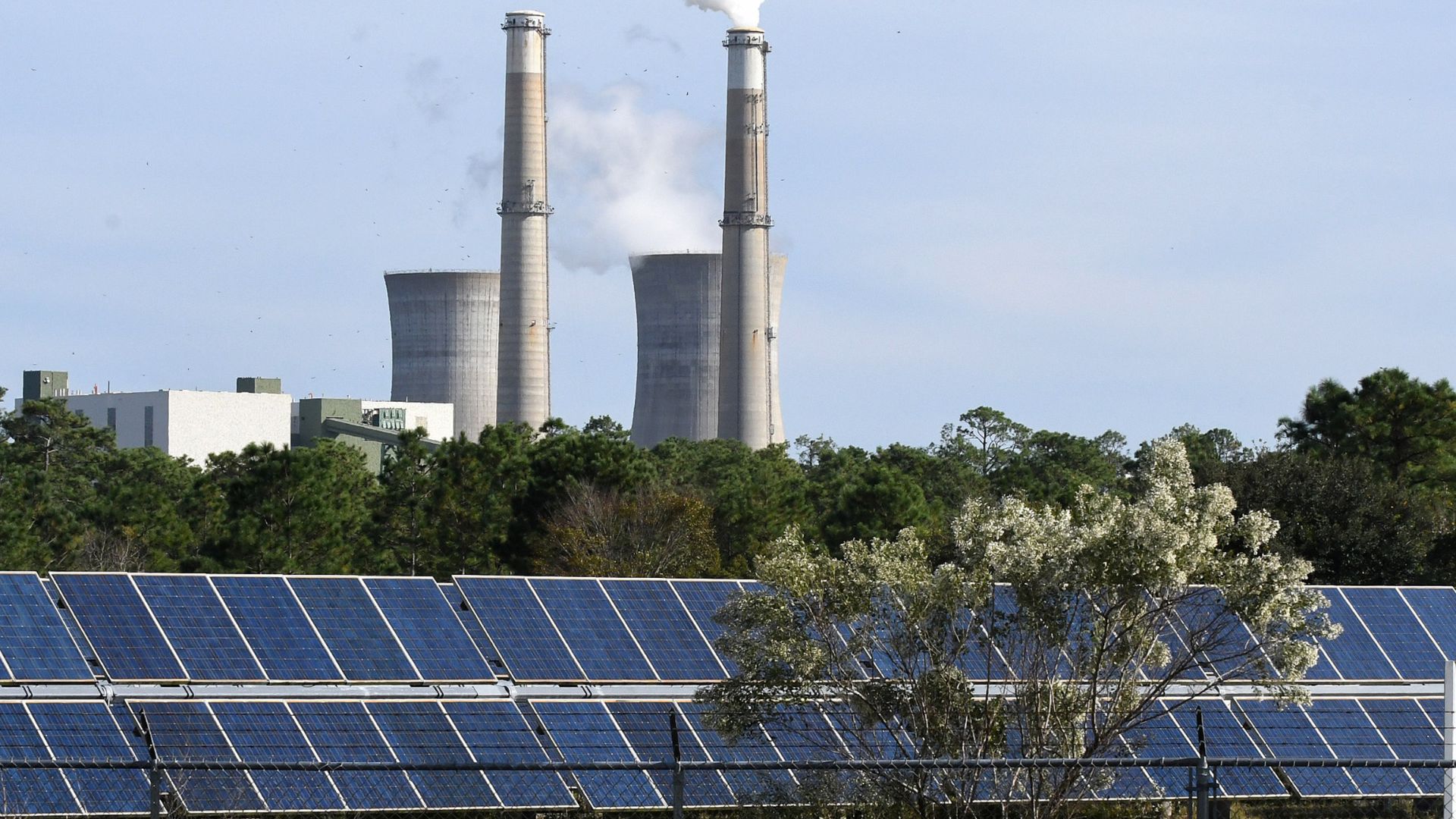
Big Rooter Power: New 1.2 GW Solar Farm in Bremond
Construction has kicked off for Panamint Capital's massive new solar energy project in Bremond, Texas, which will eventually generate 1.2 GW of power. This installation aims to change how we use industrial land by placing clean energy infrastructure directly alongside active fossil fuel operations.
The project, known as Big Rooter Power, will be built on the site of the Twin Oaks power station. Instead of clearing the land, the developers will install 2,000,000 solar panels around the existing coal mining facilities. This $1.7 billion development is divided into three distinct steps to manage the transition:
🔹 The first phase, Big Rooter West, adds 491 MW of capacity by August 2028.
🔹 The second phase, Big Rooter East, adds 658 MW, with construction starting in December 2026 and finishing by August 2029.
🔹 The entire project will create over 800 construction jobs in the region.
While other energy initiatives like the Gateway Solar & Storage site in Illinois have paved the way for reusing older industrial land, this site is set to become the largest solar array ever built at an active coal mine in North America. It is a practical test of how to squeeze more life and electricity out of land that is already tied to the power grid.
#energy #texas #solar
Canary Media
Subscribe
Construction has kicked off for Panamint Capital's massive new solar energy project in Bremond, Texas, which will eventually generate 1.2 GW of power. This installation aims to change how we use industrial land by placing clean energy infrastructure directly alongside active fossil fuel operations.
The project, known as Big Rooter Power, will be built on the site of the Twin Oaks power station. Instead of clearing the land, the developers will install 2,000,000 solar panels around the existing coal mining facilities. This $1.7 billion development is divided into three distinct steps to manage the transition:
🔹 The first phase, Big Rooter West, adds 491 MW of capacity by August 2028.
🔹 The second phase, Big Rooter East, adds 658 MW, with construction starting in December 2026 and finishing by August 2029.
🔹 The entire project will create over 800 construction jobs in the region.
While other energy initiatives like the Gateway Solar & Storage site in Illinois have paved the way for reusing older industrial land, this site is set to become the largest solar array ever built at an active coal mine in North America. It is a practical test of how to squeeze more life and electricity out of land that is already tied to the power grid.
Repurposing old industrial sites is the next logical step for grid growth.
#energy #texas #solar
Canary Media
Subscribe
👍1

China's 15th Five-Year Plan to Add 370GW of Green Energy
China just finalized its energy roadmap for the years 2026–2030. The State Council, along with the National Development and Reform Commission and National Energy Administration, is set to add over 370GW of new wind and solar capacity by 2030. 🚀
This plan is about more than just installing gear. It focuses on building massive solar projects in deserts and upgrading how the power grid moves electricity. The State Council also released the 15th Five-Year Carbon Peaking Action Plan to help guide this shift. By 2030, the country expects total renewable energy consumption to reach about 1.8 billion tonnes of standard coal equivalent.
The targets are quite specific when compared to the recent past. The plan calls for a 17% reduction in CO2 emissions per unit of GDP compared to 2025 levels. It also aims to boost non-fossil energy use to 25% of the total energy mix.
Can the grid really handle such a rapid transformation?
#China #RenewableEnergy #Energy
Energy Storage News
Subscribe
China just finalized its energy roadmap for the years 2026–2030. The State Council, along with the National Development and Reform Commission and National Energy Administration, is set to add over 370GW of new wind and solar capacity by 2030. 🚀
This plan is about more than just installing gear. It focuses on building massive solar projects in deserts and upgrading how the power grid moves electricity. The State Council also released the 15th Five-Year Carbon Peaking Action Plan to help guide this shift. By 2030, the country expects total renewable energy consumption to reach about 1.8 billion tonnes of standard coal equivalent.
The targets are quite specific when compared to the recent past. The plan calls for a 17% reduction in CO2 emissions per unit of GDP compared to 2025 levels. It also aims to boost non-fossil energy use to 25% of the total energy mix.
A massive pivot to green energy infrastructure.
Can the grid really handle such a rapid transformation?
#China #RenewableEnergy #Energy
Energy Storage News
Subscribe
❤1👍1
TeraWulf Inc. (WULF) is One of the Worst AI Stocks Under $30, According to Short Sellers
TeraWulf Inc. (NASDAQ:WULF) is one of the 10 worst artificial intelligence stocks under $30 according to short sellers. Back on May 26, Terawulf Inc. (NASDAQ...
Read Full Story 🔹 Subscribe
#News ⚡️ #AI ⚡️ #Tech
TeraWulf Inc. (NASDAQ:WULF) is one of the 10 worst artificial intelligence stocks under $30 according to short sellers. Back on May 26, Terawulf Inc. (NASDAQ...
Read Full Story 🔹 Subscribe
#News ⚡️ #AI ⚡️ #Tech
❤1

Lithium-hunting fish robots
Engineers in the United States are designing nanorobots that look like tiny fish to solve our battery supply chain issues. They aim to pull lithium directly from seawater, a source that holds an estimated 230 billion tons of the metal. 🚀
These bots don't use hooks or nets. Instead, they use special surfaces that grab lithium ions as they swim through the ocean currents.
This approach aims to secure the raw materials we need for high-capacity batteries without tearing up the earth.
Currently, we rely heavily on mining operations like those in the Atacama Desert. Those sites use massive evaporation ponds that waste water and disrupt local habitats, making this ocean-based method a much cleaner path forward.
If this scales, we might look at the ocean as a battery mine rather than just a place to swim.
#Tech #Sustainability #Batteries
Interesting Engineering
Subscribe
Engineers in the United States are designing nanorobots that look like tiny fish to solve our battery supply chain issues. They aim to pull lithium directly from seawater, a source that holds an estimated 230 billion tons of the metal. 🚀
These bots don't use hooks or nets. Instead, they use special surfaces that grab lithium ions as they swim through the ocean currents.
The robot design mimics the efficient swimming motion of real fish, allowing them to cover more area and collect lithium far better than static filter systems.
This approach aims to secure the raw materials we need for high-capacity batteries without tearing up the earth.
Currently, we rely heavily on mining operations like those in the Atacama Desert. Those sites use massive evaporation ponds that waste water and disrupt local habitats, making this ocean-based method a much cleaner path forward.
If this scales, we might look at the ocean as a battery mine rather than just a place to swim.
Plenty of fish in the sea.
#Tech #Sustainability #Batteries
Interesting Engineering
Subscribe
👍3