

First 'exosatellite' discovered 71 light-years away
A team led by Kevin Hoy from the Universidad Diego Portales and the European Southern Observatory has identified an object located 71 light-years from us. This detection of the first confirmed 'exosatellite' complicates our neat definitions of stars, planets, and moons.
An 'exosatellite' is essentially a moon orbiting a planet outside our own solar system. We have always grouped space objects into simple, tidy buckets: stars, planets, and moons. The discovery of this object shows that these categories are not as rigid as our school textbooks suggest. ✨
Previously, the search for life in space focused almost entirely on finding isolated planets. Detecting this satellite is a significant step forward from just scanning for those larger parent planets, as these smaller objects are much harder to spot due to their size.
What other hidden objects are we missing right under our noses?
#space #astronomy #science
HotHardware
Subscribe
A team led by Kevin Hoy from the Universidad Diego Portales and the European Southern Observatory has identified an object located 71 light-years from us. This detection of the first confirmed 'exosatellite' complicates our neat definitions of stars, planets, and moons.
An 'exosatellite' is essentially a moon orbiting a planet outside our own solar system. We have always grouped space objects into simple, tidy buckets: stars, planets, and moons. The discovery of this object shows that these categories are not as rigid as our school textbooks suggest. ✨
Previously, the search for life in space focused almost entirely on finding isolated planets. Detecting this satellite is a significant step forward from just scanning for those larger parent planets, as these smaller objects are much harder to spot due to their size.
The universe rarely fits into the boxes we build for it.
What other hidden objects are we missing right under our noses?
#space #astronomy #science
HotHardware
Subscribe
👍1
Genetic technologies to enhance crop nutritional value under climate change
This Review reflects on the joint power of genetic technologies, including untapped CRISPR–Cas techniques to combat hidden hunger and improve crop resilience, and argues in favour of their combined use to overcome these societal challenges.
Read Full Story 🔹 Subscribe
#News ⚡️ #AI ⚡️ #Tech
This Review reflects on the joint power of genetic technologies, including untapped CRISPR–Cas techniques to combat hidden hunger and improve crop resilience, and argues in favour of their combined use to overcome these societal challenges.
Read Full Story 🔹 Subscribe
#News ⚡️ #AI ⚡️ #Tech
👍1👎1
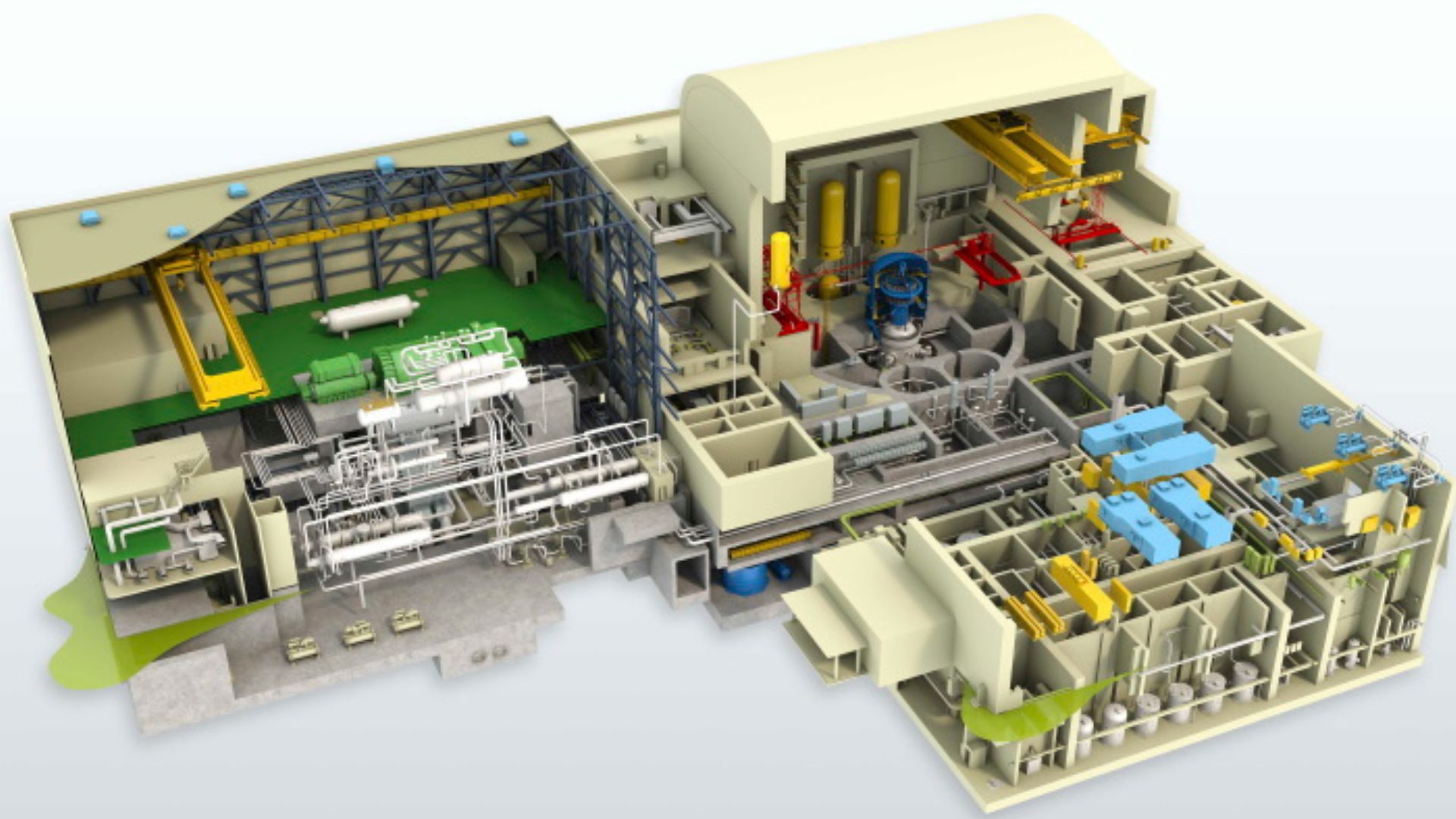
Samsung Heavy Industries and U.S. Firm Plan Floating Nuclear Plant
Samsung Heavy Industries, headquartered in South Korea, has announced a new collaboration with an American company to design a floating nuclear power plant. This project bridges shipbuilding expertise with modern reactor technology to bring electricity to remote locations. ⚡
The concept relies on flexible, offshore infrastructure rather than fixed terrestrial sites:
▫️ The design features Small Modular Reactors (SMRs). These are factory-built, miniaturized reactors that are significantly safer to manage and faster to install than traditional, site-built power plants.
▫️ These platforms are intended to power offshore industrial sites, such as drilling rigs and data centers, which currently rely on expensive and polluting diesel generators.
▫️ Because the entire facility floats, it can be towed to different locations, allowing energy infrastructure to move along with industrial demand.
While Rosatom already operates the Akademik Lomonosov in the Arctic, this new venture focuses on mass-producing standardized units for a wider range of international maritime operations.
#NuclearEnergy #Samsung #MaritimeTech
Interesting Engineering
Subscribe
Samsung Heavy Industries, headquartered in South Korea, has announced a new collaboration with an American company to design a floating nuclear power plant. This project bridges shipbuilding expertise with modern reactor technology to bring electricity to remote locations. ⚡
The concept relies on flexible, offshore infrastructure rather than fixed terrestrial sites:
▫️ The design features Small Modular Reactors (SMRs). These are factory-built, miniaturized reactors that are significantly safer to manage and faster to install than traditional, site-built power plants.
▫️ These platforms are intended to power offshore industrial sites, such as drilling rigs and data centers, which currently rely on expensive and polluting diesel generators.
▫️ Because the entire facility floats, it can be towed to different locations, allowing energy infrastructure to move along with industrial demand.
While Rosatom already operates the Akademik Lomonosov in the Arctic, this new venture focuses on mass-producing standardized units for a wider range of international maritime operations.
The future of energy might be parked just off the coast.
#NuclearEnergy #Samsung #MaritimeTech
Interesting Engineering
Subscribe
👍1
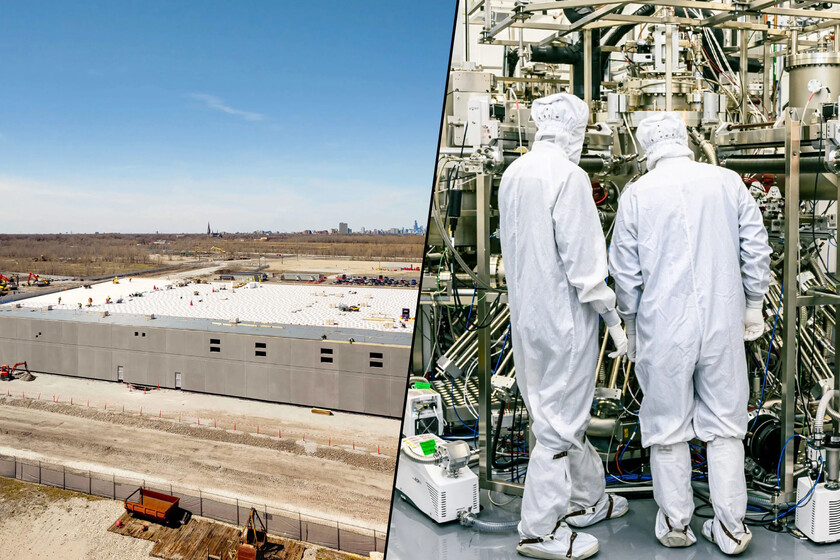
PsiQuantum breaks ground in Chicago ⚛️
PsiQuantum is constructing a massive 6,000-square-meter facility in Chicago to build the world's first fault-tolerant, large-scale quantum computer. They are skipping traditional superconducting designs and are instead using light particles, or photons, to process information.
Most experimental quantum computers today struggle to move past 1,000 qubits. PsiQuantum aims to leapfrog this by building a machine with over one million qubits. By using photons, the company can leverage standard semiconductor manufacturing techniques. This makes the hardware much easier to scale up compared to the delicate, specialized circuits used by competitors. 🏗️
While industry giants like IBM and Google have invested heavily in superconducting qubits that require extreme cooling and unique fabrication, PsiQuantum argues that photonics is the faster path to a practical, utility-scale machine. 📉
This project is backed by over $1 billion in funding. It is a high-stakes bet to bypass smaller, incremental tests and go straight for a massive, working system. If this engineering strategy pays off, it could finally unlock the ability to simulate complex new materials or discover new medicines at scale. 💻
#QuantumComputing #Technology #Chicago
Xataka
Subscribe
PsiQuantum is constructing a massive 6,000-square-meter facility in Chicago to build the world's first fault-tolerant, large-scale quantum computer. They are skipping traditional superconducting designs and are instead using light particles, or photons, to process information.
Most experimental quantum computers today struggle to move past 1,000 qubits. PsiQuantum aims to leapfrog this by building a machine with over one million qubits. By using photons, the company can leverage standard semiconductor manufacturing techniques. This makes the hardware much easier to scale up compared to the delicate, specialized circuits used by competitors. 🏗️
While industry giants like IBM and Google have invested heavily in superconducting qubits that require extreme cooling and unique fabrication, PsiQuantum argues that photonics is the faster path to a practical, utility-scale machine. 📉
This project is backed by over $1 billion in funding. It is a high-stakes bet to bypass smaller, incremental tests and go straight for a massive, working system. If this engineering strategy pays off, it could finally unlock the ability to simulate complex new materials or discover new medicines at scale. 💻
The race for real quantum power is officially heating up.
#QuantumComputing #Technology #Chicago
Xataka
Subscribe
👍1
China’s LineShine just topped the global supercomputer ranking: what you need to know
The supercomputer has an innovative chip design that allows it to carry out more than 2 quintillion calculations per second.
Read Full Story 🔹 Subscribe
#News ⚡️ #AI ⚡️ #Tech
The supercomputer has an innovative chip design that allows it to carry out more than 2 quintillion calculations per second.
Read Full Story 🔹 Subscribe
#News ⚡️ #AI ⚡️ #Tech
👍2❤1
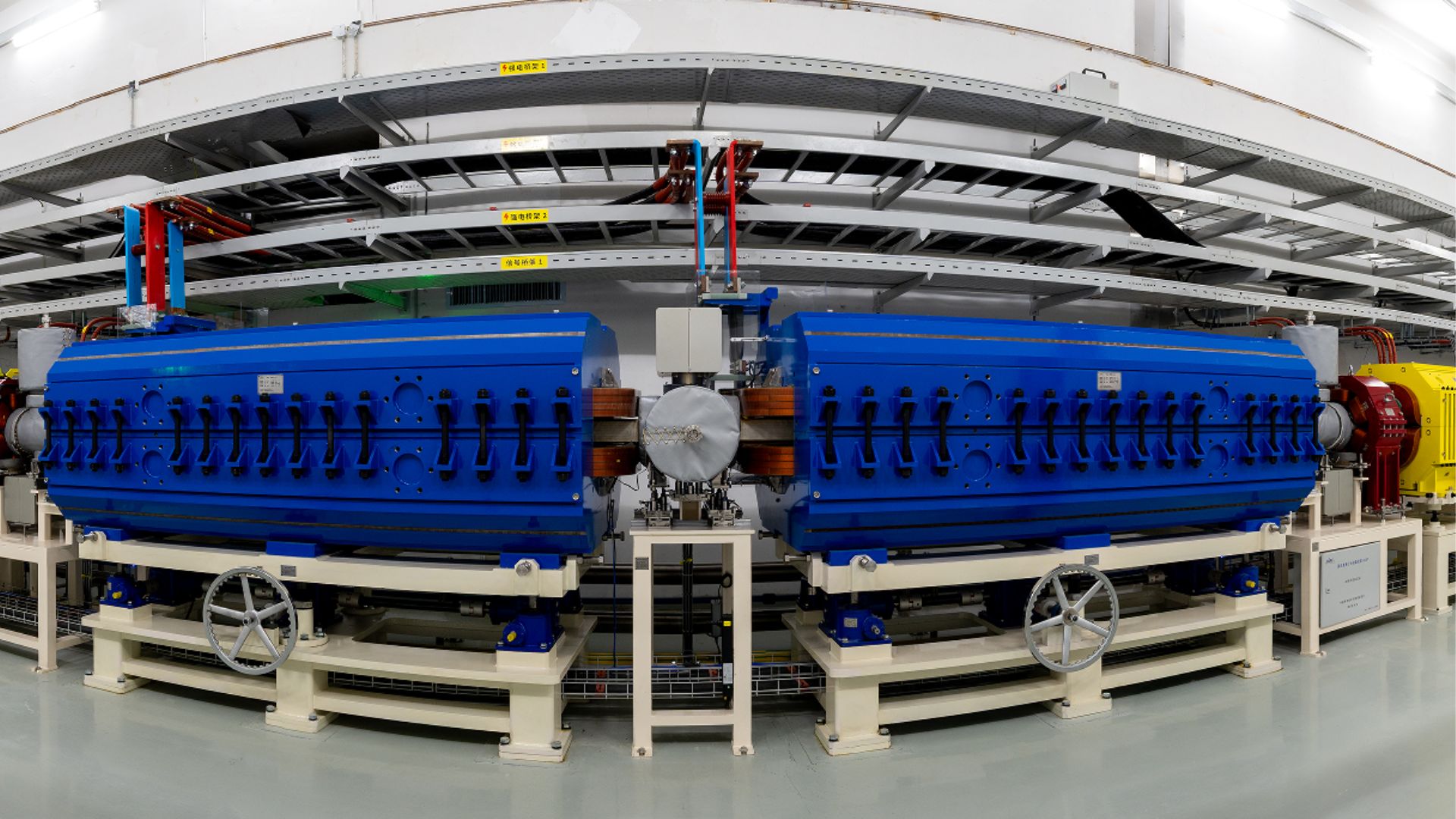
HIAF: China's massive new particle accelerator 🚀
China has launched the High Intensity Heavy-ion Accelerator Facility in Huizhou. This new research hub is designed to generate the world’s most intense atomic beams for advanced nuclear physics.
Atomic beams are essentially streams of particles smashed together at high speeds to reveal how matter is built. By pushing these beams to record intensities, researchers can create rare isotopes that do not exist naturally on our planet. This helps scientists study the deep structure of atomic nuclei and the origins of the heaviest elements in the universe.
This site competes directly with the Facility for Rare Isotope Beams at Michigan State University in the US. While that lab has long held the top spot for beam power, this new facility in China significantly raises the bar for global high-energy research capabilities.
This is a significant step that will likely change how we understand the basic building blocks of our world. Expect to see a surge of new physics papers coming from these experiments soon.
#science #physics #China
Interesting Engineering
Subscribe
China has launched the High Intensity Heavy-ion Accelerator Facility in Huizhou. This new research hub is designed to generate the world’s most intense atomic beams for advanced nuclear physics.
Atomic beams are essentially streams of particles smashed together at high speeds to reveal how matter is built. By pushing these beams to record intensities, researchers can create rare isotopes that do not exist naturally on our planet. This helps scientists study the deep structure of atomic nuclei and the origins of the heaviest elements in the universe.
This site competes directly with the Facility for Rare Isotope Beams at Michigan State University in the US. While that lab has long held the top spot for beam power, this new facility in China significantly raises the bar for global high-energy research capabilities.
This is a significant step that will likely change how we understand the basic building blocks of our world. Expect to see a surge of new physics papers coming from these experiments soon.
Physics just got a massive power boost.
#science #physics #China
Interesting Engineering
Subscribe
👍1
Judge Says Florida’s Social Media Law Is “Literally Impossible” To Obey. Thanks To The Supreme Court, It Gets A Trial Anyway.
Remember a few years ago when both Texas and Florida passed laws trying to tell social media companies they couldn’t moderate political content? Those cases eventually made their way to the Supreme Court, where the Court (as it’s been known to do) kinda punte…
Read Full Story 🔹 Subscribe
#News ⚡️ #AI ⚡️ #Tech
Remember a few years ago when both Texas and Florida passed laws trying to tell social media companies they couldn’t moderate political content? Those cases eventually made their way to the Supreme Court, where the Court (as it’s been known to do) kinda punte…
Read Full Story 🔹 Subscribe
#News ⚡️ #AI ⚡️ #Tech

Robots get more agile with Nvidia's new tech
Nvidia has updated its simulation framework, allowing the Unitree Go1 quadruped robot to achieve walking speeds of 2.0 m/s.
The "sim-to-real gap" is the biggest hurdle in robotics—that is, the problem where a robot trained in a virtual environment trips the moment it hits real, uneven pavement. Using Isaac Sim and Isaac Lab, this new method trains the robot in a digital world to handle obstacles before it ever steps outside. It learns to recover its balance from massive nudges, making it significantly more stable.
Previously, quadrupeds relied on built-in factory controllers that were stable but struggled with sudden chaos. This new approach achieves the same 2.0 m/s velocity and 1.8 rad/s angular velocity as the stock software while gaining much higher recovery capabilities. This progress brings robots closer to environments where they don't need a human to pick them up every time they hit a bump.
#robotics #Nvidia #tech
Subscribe
Nvidia has updated its simulation framework, allowing the Unitree Go1 quadruped robot to achieve walking speeds of 2.0 m/s.
The "sim-to-real gap" is the biggest hurdle in robotics—that is, the problem where a robot trained in a virtual environment trips the moment it hits real, uneven pavement. Using Isaac Sim and Isaac Lab, this new method trains the robot in a digital world to handle obstacles before it ever steps outside. It learns to recover its balance from massive nudges, making it significantly more stable.
Previously, quadrupeds relied on built-in factory controllers that were stable but struggled with sudden chaos. This new approach achieves the same 2.0 m/s velocity and 1.8 rad/s angular velocity as the stock software while gaining much higher recovery capabilities. This progress brings robots closer to environments where they don't need a human to pick them up every time they hit a bump.
Better software means your future delivery bot won't tumble over a curb.
#robotics #Nvidia #tech
Subscribe
❤2
AI-designed enzymes outperform natural CRISPR tools
As of 2024, the first synthetic CRISPR enzymes are here 🚀, demonstrating significantly higher DNA editing efficiency than the natural versions found in biology.
Engineering these proteins through artificial intelligence allows for a level of precision that nature alone could not achieve. Biological enzymes often hit performance limits, making them less reliable for complex medical tasks.
This represents a change from simply using tools provided by nature to actively crafting them from scratch. These AI-generated versions clear the hurdles that previously held back therapeutic applications, offering a more effective way to fix genetic issues compared to the early, natural tools.
#CRISPR #BioTech #Innovation
iXBT: Новости
Subscribe
As of 2024, the first synthetic CRISPR enzymes are here 🚀, demonstrating significantly higher DNA editing efficiency than the natural versions found in biology.
Engineering these proteins through artificial intelligence allows for a level of precision that nature alone could not achieve. Biological enzymes often hit performance limits, making them less reliable for complex medical tasks.
By using AI to optimize protein structures, engineers have overcome the inherent limitations that once slowed down genetic editing processes.
This represents a change from simply using tools provided by nature to actively crafting them from scratch. These AI-generated versions clear the hurdles that previously held back therapeutic applications, offering a more effective way to fix genetic issues compared to the early, natural tools.
We are no longer limited by what nature evolved.
#CRISPR #BioTech #Innovation
iXBT: Новости
Subscribe
❤2👍1💊1
New Gaslight macOS Malware Uses Prompt Injection to Disrupt AI-Assisted Analysis
A previously undocumented Rust-based macOS implant and information stealer has been found to embed a prompt injection payload designed to trick a malware analyst's artificial intelligence (AI) tools and trick it into aborting or refusing an analysis of the ar…
Read Full Story 🔹 Subscribe
#News ⚡️ #AI ⚡️ #Tech
A previously undocumented Rust-based macOS implant and information stealer has been found to embed a prompt injection payload designed to trick a malware analyst's artificial intelligence (AI) tools and trick it into aborting or refusing an analysis of the ar…
Read Full Story 🔹 Subscribe
#News ⚡️ #AI ⚡️ #Tech
👍3💊1
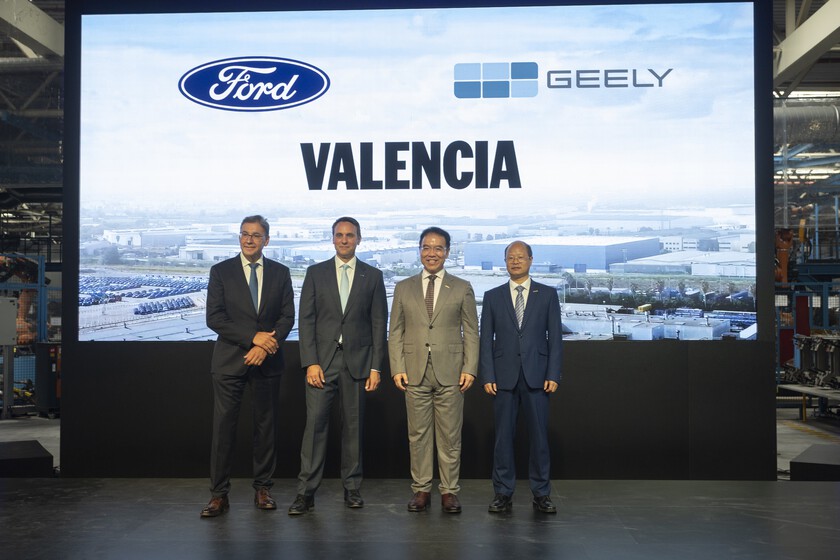
Ford and Geely will share the Almussafes plant in Spain
Ford and Geely have agreed to form a joint venture to revitalize the Almussafes factory in Valencia, Spain. This partnership aims to secure the future of the plant by producing a new generation of electric and plug-in hybrid vehicles starting in 2028.
The Ford facility has been operating at reduced capacity, sparking concerns about potential closures among the workforce. Under the new deal, Ford will hold a 66% stake in the joint venture, while Geely will own the remaining 34%. Operations are expected to merge within the first half of 2027.
The production line will feature a mix of vehicles:
▫️ Ford Kuga and the new Ford Bronco Sport
▫️ Two Geely electric models
▫️ One joint multi-energy model designed with Ford’s driving dynamics
Unlike recent collaborations where Geely partnered with Renault or Volkswagen to share platforms, this deal directly integrates Geely into an established Ford production site to prevent its obsolescence.
#Ford #Geely #Automotive
Xataka
Subscribe
Ford and Geely have agreed to form a joint venture to revitalize the Almussafes factory in Valencia, Spain. This partnership aims to secure the future of the plant by producing a new generation of electric and plug-in hybrid vehicles starting in 2028.
The Ford facility has been operating at reduced capacity, sparking concerns about potential closures among the workforce. Under the new deal, Ford will hold a 66% stake in the joint venture, while Geely will own the remaining 34%. Operations are expected to merge within the first half of 2027.
The production line will feature a mix of vehicles:
▫️ Ford Kuga and the new Ford Bronco Sport
▫️ Two Geely electric models
▫️ One joint multi-energy model designed with Ford’s driving dynamics
Unlike recent collaborations where Geely partnered with Renault or Volkswagen to share platforms, this deal directly integrates Geely into an established Ford production site to prevent its obsolescence.
Empty factory space costs more to maintain than a shared production line.
#Ford #Geely #Automotive
Xataka
Subscribe
👍1
Ioana teleanu shifts AI tools from thinking for you to making you think
designboom in a conversation with ioana teleanu about how AI is fundamentally changing the contemporary design landscape.
The post ioana teleanu shifts AI tools from thinking for you to making you think appeared first on designboom | architecture & design mag…
Read Full Story 🔹 Subscribe
#News ⚡️ #AI ⚡️ #Tech
designboom in a conversation with ioana teleanu about how AI is fundamentally changing the contemporary design landscape.
The post ioana teleanu shifts AI tools from thinking for you to making you think appeared first on designboom | architecture & design mag…
Read Full Story 🔹 Subscribe
#News ⚡️ #AI ⚡️ #Tech
🫡3👍2
X-ray imaging successful on Fram2
In March 2025, four non-medical astronauts aboard a SpaceX Crew Dragon capsule successfully took the first diagnostic X-rays in orbit. 🚀
The crew used a portable X-ray unit, about the size of a beach cooler, to image their hands, forearms, chests, and abdomens. They only needed four hours of training to get it right.
For over sixty years, space crews relied solely on ultrasounds to check for injuries. Unlike X-rays, ultrasounds require significant technical skill and constant physical contact to transmit sound waves, making them difficult to use for quick, remote diagnostics.
#SpaceX #Fram2 #SpaceMedicine
Xataka
Subscribe
In March 2025, four non-medical astronauts aboard a SpaceX Crew Dragon capsule successfully took the first diagnostic X-rays in orbit. 🚀
The crew used a portable X-ray unit, about the size of a beach cooler, to image their hands, forearms, chests, and abdomens. They only needed four hours of training to get it right.
Independent radiologists compared the space-captured images with pre-flight scans and confirmed they were accurate enough to detect fractures.
For over sixty years, space crews relied solely on ultrasounds to check for injuries. Unlike X-rays, ultrasounds require significant technical skill and constant physical contact to transmit sound waves, making them difficult to use for quick, remote diagnostics.
A simple portable device has effectively cleared the medical barrier for long-duration deep-space travel.
#SpaceX #Fram2 #SpaceMedicine
Xataka
Subscribe
🔥1
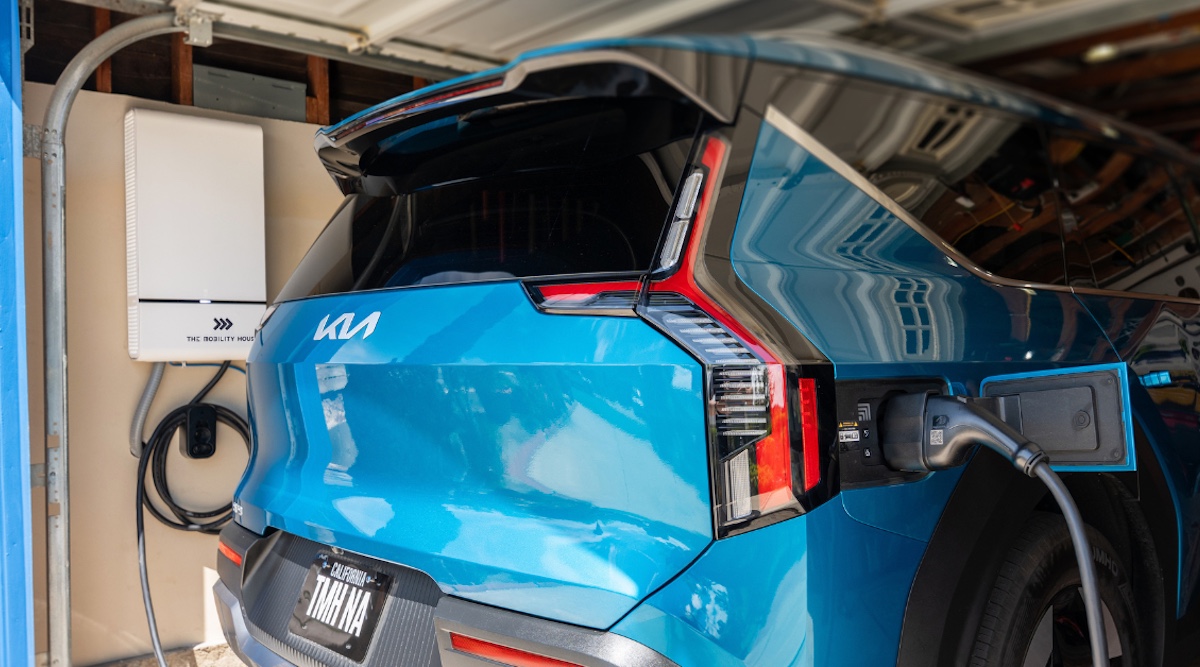
Massachusetts tests EVs as grid batteries
Eversource and National Grid are launching a new program in Massachusetts that allows electric vehicle owners to use their cars to support the power grid. This pilot enables Vehicle-to-Grid (V2G) technology, allowing your parked car to send electricity back to the grid during peak demand. You get paid for the flexibility provided.
The project relies on a partnership between several industry players to connect vehicle batteries to the local utility infrastructure:
▪️ EnergyHub manages the software bridge between the utility providers and your car.
▪️ Sunrun and The Mobility House coordinate the charging equipment and ensure your vehicle is ready to feed energy back when requested.
▪️ This initiative adds V2G-capable cars to the existing ConnectedSolutions demand response program.
The ConnectedSolutions program previously relied on static assets like home smart thermostats and wall-mounted battery packs to manage grid load. Including electric vehicles turns mobile assets into potential grid stabilizers. Most cars spend the majority of their day parked, making them currently underutilized energy storage units.
#EV #V2G #Energy
CleanTechnica
Subscribe
Eversource and National Grid are launching a new program in Massachusetts that allows electric vehicle owners to use their cars to support the power grid. This pilot enables Vehicle-to-Grid (V2G) technology, allowing your parked car to send electricity back to the grid during peak demand. You get paid for the flexibility provided.
The project relies on a partnership between several industry players to connect vehicle batteries to the local utility infrastructure:
▪️ EnergyHub manages the software bridge between the utility providers and your car.
▪️ Sunrun and The Mobility House coordinate the charging equipment and ensure your vehicle is ready to feed energy back when requested.
▪️ This initiative adds V2G-capable cars to the existing ConnectedSolutions demand response program.
The ConnectedSolutions program previously relied on static assets like home smart thermostats and wall-mounted battery packs to manage grid load. Including electric vehicles turns mobile assets into potential grid stabilizers. Most cars spend the majority of their day parked, making them currently underutilized energy storage units.
Your car is turning into a battery on wheels.
#EV #V2G #Energy
CleanTechnica
Subscribe
🔥1
Who will control Africa’s AI infrastructure, and at what cost?
Data centres and AI systems are expanding across Africa, bringing new pressure on energy and resources.
Read Full Story 🔹 Subscribe
#News ⚡️ #AI ⚡️ #Tech
Data centres and AI systems are expanding across Africa, bringing new pressure on energy and resources.
Read Full Story 🔹 Subscribe
#News ⚡️ #AI ⚡️ #Tech
💊2

MTU Aero Engines validates hydrogen propulsion ✈️
MTU Aero Engines hit a major milestone in 2024 by successfully validating its new hydrogen fuel cell system for aviation. This technology is designed to power commercial aircraft with zero emissions, a significant shift from traditional kerosene engines.
Hydrogen fuel cells create electricity by mixing hydrogen with oxygen from the air. The only exhaust produced is water. This provides a way to fly without burning fossil fuels, solving the primary challenge of cleaner aviation. 🌍
While traditional engines rely on burning jet fuel, this system uses electric motors to drive the propeller. Unlike Airbus, which is experimenting with burning hydrogen directly in jet engines, MTU Aero Engines is focusing on fuel cells to generate power. This creates a much quieter and cleaner flight experience compared to the roar of conventional turbines. ⚡
It is a practical solution that brings us one step closer to sustainable travel. 🛠️
#aviation #hydrogen #technology
Interesting Engineering
Subscribe
MTU Aero Engines hit a major milestone in 2024 by successfully validating its new hydrogen fuel cell system for aviation. This technology is designed to power commercial aircraft with zero emissions, a significant shift from traditional kerosene engines.
Hydrogen fuel cells create electricity by mixing hydrogen with oxygen from the air. The only exhaust produced is water. This provides a way to fly without burning fossil fuels, solving the primary challenge of cleaner aviation. 🌍
While traditional engines rely on burning jet fuel, this system uses electric motors to drive the propeller. Unlike Airbus, which is experimenting with burning hydrogen directly in jet engines, MTU Aero Engines is focusing on fuel cells to generate power. This creates a much quieter and cleaner flight experience compared to the roar of conventional turbines. ⚡
It is a practical solution that brings us one step closer to sustainable travel. 🛠️
Moving away from kerosene is the hardest task in aviation history.
#aviation #hydrogen #technology
Interesting Engineering
Subscribe
🔥1

GE Aerospace flies hybrid engine at 30,000 feet
GE Aerospace, in a partnership with Boeing, NASA, and Beta Technologies, has successfully tested a hybrid-electric propulsion system at 30,000 feet.
This achievement matters because it matches the altitude where standard kerosene-powered jets usually fly. Think of it like a hybrid car: the system uses both electric batteries and jet fuel to get the plane moving. This setup helps the engine run more efficiently during the climb and cruise phases.
▪️ It demonstrates that electric-assisted power is viable for high-altitude passenger travel.
▪️ The technology is specifically designed to significantly lower fuel consumption.
▪️ It confirms that hybrid systems can handle the extreme conditions of commercial flight paths.
Unlike current commercial jets, which burn pure kerosene from takeoff to landing, this prototype shows we can finally integrate electric power into the main flight loop.
#GEAerospace #Aviation #TechNews
Electrive
Subscribe
GE Aerospace, in a partnership with Boeing, NASA, and Beta Technologies, has successfully tested a hybrid-electric propulsion system at 30,000 feet.
This achievement matters because it matches the altitude where standard kerosene-powered jets usually fly. Think of it like a hybrid car: the system uses both electric batteries and jet fuel to get the plane moving. This setup helps the engine run more efficiently during the climb and cruise phases.
▪️ It demonstrates that electric-assisted power is viable for high-altitude passenger travel.
▪️ The technology is specifically designed to significantly lower fuel consumption.
▪️ It confirms that hybrid systems can handle the extreme conditions of commercial flight paths.
Unlike current commercial jets, which burn pure kerosene from takeoff to landing, this prototype shows we can finally integrate electric power into the main flight loop.
The sky is no longer the limit.
#GEAerospace #Aviation #TechNews
Electrive
Subscribe
🔥1

First Commercial-Scale Cobalt Facility in the US
A new commercial-scale cobalt processing facility is launching in the United States. This plant sets a new standard by integrating solar power and hitting a 70% water recycling rate.
Cobalt is a vital ingredient in the lithium-ion batteries used in your smartphone and electric car. Processing it is usually an energy-heavy task that consumes enormous amounts of water. By using solar energy to power operations and keeping most of the water in a closed loop, this facility drastically reduces the environmental footprint of the raw materials we rely on daily.
Traditional refineries often rely on local power grids and lack such advanced water recycling systems, which has historically caused projects to stall due to environmental and supply concerns. Bringing this production home strengthens supply chains for the next generation of gadgets.
Will this make the batteries in your next phone more sustainable?
#cobalt #battery #sustainability
Interesting Engineering
Subscribe
A new commercial-scale cobalt processing facility is launching in the United States. This plant sets a new standard by integrating solar power and hitting a 70% water recycling rate.
Cobalt is a vital ingredient in the lithium-ion batteries used in your smartphone and electric car. Processing it is usually an energy-heavy task that consumes enormous amounts of water. By using solar energy to power operations and keeping most of the water in a closed loop, this facility drastically reduces the environmental footprint of the raw materials we rely on daily.
Traditional refineries often rely on local power grids and lack such advanced water recycling systems, which has historically caused projects to stall due to environmental and supply concerns. Bringing this production home strengthens supply chains for the next generation of gadgets.
The future of tech starts with cleaner manufacturing.
Will this make the batteries in your next phone more sustainable?
#cobalt #battery #sustainability
Interesting Engineering
Subscribe
🔥2
China Defies US Restrictions and Builds the World’s Fastest Supercomputer
The Chinese supercomputer LineShine was ranked as the fastest in the world, despite not using any GPUs.
Read Full Story 🔹 Subscribe
#News ⚡️ #AI ⚡️ #Tech
The Chinese supercomputer LineShine was ranked as the fastest in the world, despite not using any GPUs.
Read Full Story 🔹 Subscribe
#News ⚡️ #AI ⚡️ #Tech
👍4
Robots face new reality tests
Robots are leaving the clean lab environment and entering the messy real world, starting with the new RAD benchmark that features 5,848 images of everyday objects.
Vision-language models often struggle when lighting shifts or camera angles change, creating a gap between lab success and real-world performance. Developers are now pushing to make machines more robust for daily tasks by introducing new standards for how robots perceive their surroundings.
These technical upgrades offer better ways to handle unpredictable tasks:
▫️ RAD uses a Franka robotic arm to test how robots spot defects like scratches or stains under uncontrolled, real-world lighting.
▫️ VTM-Nav improves navigation by using a persistent memory system that lets robots remember rooms they have visited, beating the older WMNav control by 4.6 points on HM3D datasets.
▫️ NVIDIA released its Ising Calibration 1.5 model, which can interpret diagnostic outputs from quantum computers to fix errors without needing prior training examples.
While previous benchmarks relied on fixed camera views and static conditions, these new systems expect the chaos of a real room. These updates help bridge the gap for engineers who need robots that do not fail the moment the environment changes.
#robotics #ai #tech
NVIDIA Developer Blog
Subscribe
Robots are leaving the clean lab environment and entering the messy real world, starting with the new RAD benchmark that features 5,848 images of everyday objects.
Vision-language models often struggle when lighting shifts or camera angles change, creating a gap between lab success and real-world performance. Developers are now pushing to make machines more robust for daily tasks by introducing new standards for how robots perceive their surroundings.
These technical upgrades offer better ways to handle unpredictable tasks:
▫️ RAD uses a Franka robotic arm to test how robots spot defects like scratches or stains under uncontrolled, real-world lighting.
▫️ VTM-Nav improves navigation by using a persistent memory system that lets robots remember rooms they have visited, beating the older WMNav control by 4.6 points on HM3D datasets.
▫️ NVIDIA released its Ising Calibration 1.5 model, which can interpret diagnostic outputs from quantum computers to fix errors without needing prior training examples.
While previous benchmarks relied on fixed camera views and static conditions, these new systems expect the chaos of a real room. These updates help bridge the gap for engineers who need robots that do not fail the moment the environment changes.
Machines are finally learning to navigate the chaos of our world.
#robotics #ai #tech
NVIDIA Developer Blog
Subscribe
❤1🔥1
A US Army commander used attack drones and C4-packed robots to clear a deadly breach before soldiers even got in the fight
A recent drill saw dozens of drones targeting enemy weapons, sensors, and positions before soldiers attempted to approach.
Read Full Story 🔹 Subscribe
#News ⚡️ #AI ⚡️ #Tech
A recent drill saw dozens of drones targeting enemy weapons, sensors, and positions before soldiers attempted to approach.
Read Full Story 🔹 Subscribe
#News ⚡️ #AI ⚡️ #Tech
1💊4