
Backed by genius Blizzard artist Ken West (League of Legends, Call of Duty, Overwatch…), Elite Wolf Society has been on Twitter for 5 days and is already taking the NFT space by storm with more than 30k followers already!
With a VERY strong, fully doxed founding team, and a great number of senior investors backing the project, we can only guess how far this collection will go.
Here are the main reasons why you should follow up on EWS:
✅
✅
✅
✅
✅
Check their roadmap here -> elitewolfsociety.com
Make sure to join their discord -> https://discord.gg/RSDbStUVP2
⚠️ As they want a truly exclusive and influential community, the supply will be strongly limited.
With a VERY strong, fully doxed founding team, and a great number of senior investors backing the project, we can only guess how far this collection will go.
Here are the main reasons why you should follow up on EWS:
✅
The Society is a private, exclusive network dedicated to the success of its members✅
It offers great business and investment opportunities✅
You can benefit from real access to their global, worldwide network, and get mentored by successful business moguls✅
Your project can (and very well may be) funded by their private community fund dedicated to in-community investment✅
A 100 000$ transfer to the wallet address owning the ultra legendary NFT of the collection.Check their roadmap here -> elitewolfsociety.com
Make sure to join their discord -> https://discord.gg/RSDbStUVP2
⚠️ As they want a truly exclusive and influential community, the supply will be strongly limited.

This media is not supported in your browser
VIEW IN TELEGRAM
💥THE MAJOR BREAKTHROUGH OF DEFIHORSE - THINGS ARE ABOUT TO EXPLODE BEFORE INO - WE ARE ALL READY! 💥
DeFiHorse is beyond happy with the remarkable global growth, thanks to the amazing support from our Community.
The Whitelist Race for INO just ended with:
🌟 2,000,000 entries
🌟 50,000 participants
🌟 TOP 1 country: Ukraine
🔥Over 500,000 members🔥 across all channels, including:
💫 130,000 followers on Telegram Global Community
💫 104,000 followers on Twitter
💫 93,000 followers on Telegram News
💫 62,000 followers on Facebook
💫 31,000 followers on Discord
…and SO MANY MORE TO COME.
#TheCreationOfGod: The First NFT Sale for Heroic Steed is happening. Grab your opportunity because these NFTs are not to be missed.
👉 Time: 1 PM 27/02/2022 UTC
👉 Location: rada.network/en/launchverse/defihorse/heroic
👉 Medium Sale Info | Medium Guideline
🏇🏻 Time to invest, Racers!
GRAB THE CHANCE TO XX YOUR ASSET NOW WITH WORLD-CLASS HORSERACING DEFIHORSE’S INITIAL NFT OFFERING!
World-Class Horse Racing DeFiHorse is offering its initial NFT Sale now with ONLY 300 BOX for sale.
👉 JOIN NOW: https://rada.network/en/launchverse/defihorse/heroic
You don’t wanna miss this golden chance to get xx!
World-Class Horse Racing DeFiHorse is offering its initial NFT Sale now with ONLY 300 BOX for sale.
👉 JOIN NOW: https://rada.network/en/launchverse/defihorse/heroic
You don’t wanna miss this golden chance to get xx!
Penalties and extra time: The scoreboard for soccer club crypto deals.
Despite Turkish government regulations having hamstrung Bitci’s soccer sponsorship deals, footballing crypto companies already have home-field advantage.
The world’s most popular sport suffered an own-goal as European clubs canceled their partnerships with Bitci, a Turkish crypto exchange. However, plenty of substitute crypto companies are on the bench, ready to bring crypto to the mainstream through soccer.
Growing yet unclear cryptocurrency regulations in Turkey have reportedly hampered the company’s ability to make payments, leading to a lack of confidence among major soccer clubs.
Portugal’s Sporting CP — the green-and-white-striped footballers famed for being the club where Cristiano Ronaldo cut his teeth — and Italian Serie A club Spezia have also canceled their partnership with Bitci. The F1 powerhouse Mclaren Racing terminated its sponsorship deal with Bitci earlier in February.
Barcelona also recently announced that it would favor a partnership deal with Binance over Spotify despite the launch of its fan token in April 2021.
While it would appear that crypto and soccer partnerships are down to 10 players, deals, enthusiasm and sponsorships for crypto among football clubs are an open goal.
Of England’s 20 football clubs, 17 have at least one deal with a cryptocurrency firm. For Watford soccer club, not only does Dogecoin (DOGE) appear on the shirtsleeve, but Stakecom sponsors the main body of the shirt.
Eighty miles Southeast of Watford, in Southampton, “the Saints,” as they are known locally, launched a Bitcoin (BTC) hunt on Wednesday. In partnerships with crypto betting site Sportsbetio, the online quiz winner takes home a whole BTC.
Still in England, Bitcoin podcaster Peter McCormack sparked the beginnings of an English underdog story as he bought his local club Bedford FC. He’s keen to take on the Premier League with the help of Bitcoin and its community.
While Cryptocom recently renamed the American football stadium in Los Angeles from the Staples Center to the Cryptocom arena, in Italy, the entire football league is sponsored by the cryptocurrency giant.
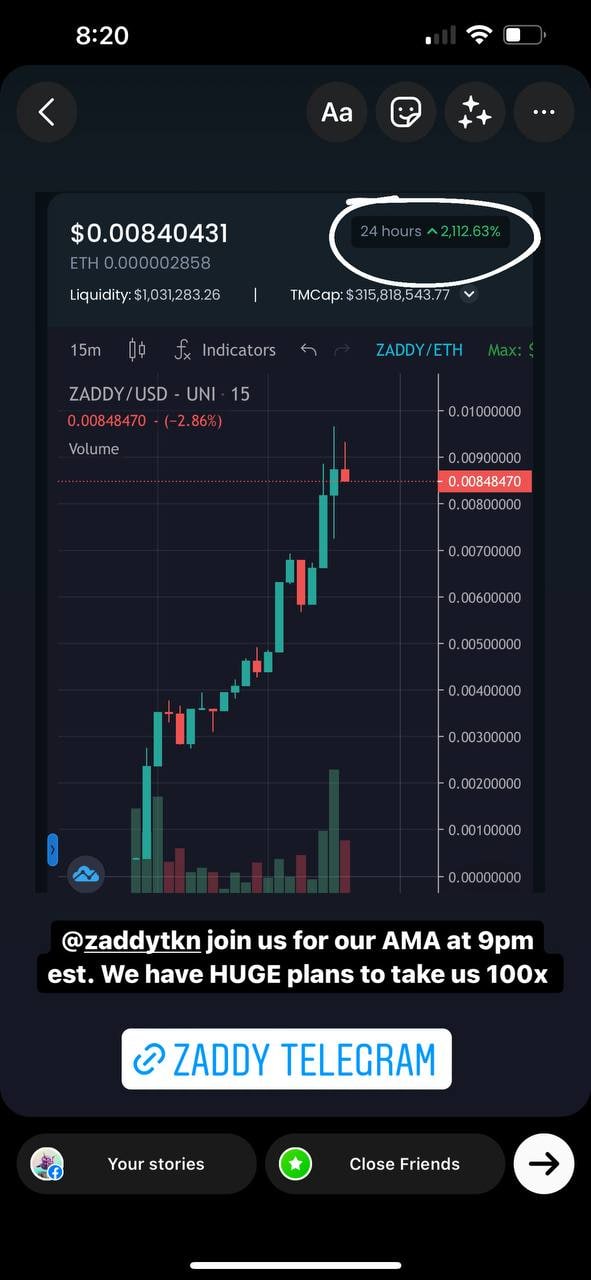
Zaddy Token 1ETH Giveaway in 7 days 💎
We did over $1,000,000 in volume in our first day and have over 600 holders in less than 24 hours!!!!
This projects purpose is to help the people of Ukraine in their tragic time of need.
We made our first donation yesterday (https://etherscan.io/tx/0xe686dd6eca4b98aa7ef20049f127e3e2c89a393ca47b2b45cf485ec2350453fd)
We have tons of marketing on the works. Let’s get together for a great cause, help us eat the dip and MOON this project!!! 🚀🚀🚀
• Join telegram https://t.me/+ourBepjtTzxjMGRh • To qualify you MUST purchase at least .25 Eth worth or Zaddy tokenWe did over $1,000,000 in volume in our first day and have over 600 holders in less than 24 hours!!!!
This projects purpose is to help the people of Ukraine in their tragic time of need.
We made our first donation yesterday (https://etherscan.io/tx/0xe686dd6eca4b98aa7ef20049f127e3e2c89a393ca47b2b45cf485ec2350453fd)
We have tons of marketing on the works. Let’s get together for a great cause, help us eat the dip and MOON this project!!! 🚀🚀🚀
Ukraine cancels token airdrop, reveals new NFT plans.
Ukraine has received nearly $40 million in crypto donations, out of which almost $7 million came after the announcement of the now-canceled airdrop.
Ukrainian Vice Prime Minister Mykhailo Fedorov informed the public on Wednesday that the country has decided to cancel an airdrop for crypto donors that was announced on Tuesday and plans to raise more money through the sale of nonfungible tokens (NFTs) instead.
Ukraine’s crypto airdrop program took an unexpected turn on Wednesday when a fake account created 7 billion “Peace World Tokens,” making it seem like it was the official airdrop token for crypto donors.
The fake airdrop began almost an hour before the officially announced time but was flagged soon after by Etherscan. A couple hours later, Fedorov announced that Ukraine plans to use NFTs and has given up plans of offering any fungible tokens.
The official Ukrainian crypto wallet for donations reportedly received $7 million in donations after the airdrop announcement, which became a topic of debate on Crypto Twitter. While the minister didn’t reveal the reason for the cancellation of the airdrop, some in the crypto community were not happy about the U-turn, while others, like Twitter influencer Cobie, found some humor in the situation.

Solana TVL and price drop 50%+ from ATH, but gaming DApps could turn the tables.
SOL price is down 48% year-to-date and data shows that its decentralized app use is fading out, but there are a few reasons to remain hopeful.
2022 has not been a good start for cryptocurrencies. To date, the total market capitalization has dropped by 21% to $1.77 trillion. Solana‘s (SOL) correction has been even more brutal, presenting a 48.5% correction year-to-date.
Solana leads the staking charts with $35 billion in value locked, which is equivalent to 74% of the SOL tokens in circulation. Multiple reasons can be identified for the underperformance including four network outages in late 2021 and early 2022.
The latest incident on Jan. 7 was attributed to a distributed denial-of-service (DDoS) attack, causing Solana Lab developers to update the code and consequently reject these types of requests.
However, investors are more concerned about the centralization caused by the costs of being a Solana validator. To achieve 400 millisecond block times, the recommended hardware includes a 12 core 2.8GHz CPU, 256 GB memory, high-speed 1 TB SSD drives and a low-latency internet connection.
Solana‘s primary decentralized application (DApp) metric started to display weakness earlier in November after the network‘s total value locked (TVL) began to linger at $15 billion.
The chart above shows how Solana‘s DApp deposits saw a 50% decrease in three months as the indicator reached its lowest level since Sept. 8. As a comparison, Fantom‘s TVL currently stands at $9.5 billion after doubling in three months. Another DApp scaling solution competitor, Terra, saw an 87% TVL hike to $23.2 billion.
On the bright side, on Feb. 21, FTX US, the American arm of the global crypto derivative and spot exchange FTX, announced a new blockchain gaming unit. It is also worth noting that Solana Ventures partnered with FTX and Lightspeed Venture on Nov. 5 to launch a $100 million fund dedicated to the sector.

NEW NFT DROP🚀💣
The real life Ready Player One.
Are you ready to enter the Astroverse?
💥 Astrominers is a collection of 8,888 NFTs
🎨 Made by famous artists
🌎 Collection that gives back to the earth
💧 For each NFT sold, one water-bund will be created
🚀 On THE ETHEREUM BLOCKCHAIN
☠️ Game in the Metaverse in partnership with well-known gaming company
⚠️⚠️1 NFT and 10 WL Giveaway ! ⚠️⚠️
To enter:
1️⃣ Like, Share and Follow our socials (Open ticket and send proof)
2️⃣ Join our Discord (link is below)
3️⃣ invite a friend on our discord (each invite is an extra entry 😉)
👀Join our Discord to change your life vision!
https://discord.gg/75hzBcg8EM
PS: Holders of BAYC/MAYC, DOODLES, IF, CYBERKONG, CLONE X, COOL CAT and AZUKI come claim your WL spot in our discord 😉
Just open a ticket.🎟(Only 500 available)
Discord
Discord - Group Chat That’s All Fun & Games
Discord is great for playing games and chilling with friends, or even building a worldwide community. Customize your own space to talk, play, and hang out.
CEXs refuse blanket asset freeze of all Russian users, though questions linger.
If Western sanctions ramp up, CEXs may be forced to ban all Russian users from using their services, as they have previous done in Iran.
Centralized exchanges (CEX) and CEOs from companies such as Binance, Coinbase and Kraken have all stated they would only freeze the assets of Russian clients specifically targeted by Western sanctions — not that of everyday Russian users.
A few days prior, Mykhailo Fedorov, Ukraine’s minister of digital transformation, had called for “all major crypto exchanges to block wallet addresses of Russians” and “also to sabotage ordinary users by freezing their assets.” In explaining why he was not preemptively banning all Russians (though, Coinbase is not available in Russia), Brian Armstrong, CEO of Coinbase, specifically wrote:
“We believe everyone deserves access to basic financial services unless the law says otherwise. Some ordinary Russians are using crypto as a lifeline now that their currency has collapsed. Many of them likely oppose what their country is doing, and a ban would hurt them, too.”
However, Armstrong also said that “if the U.S. government decides to impose a ban, we will of course follow those laws.” The sentiments of this statement were echoed by Kraken CEO Jesse Powell, who stated:
“Kraken cannot freeze the accounts of our Russian clients without a legal requirement to do so. Russians should be aware that such a requirement could be imminent.”
Unsanctioned individuals appear to be feeling the effects of sanctions even so. The day prior, Binance announced that cardholders of sanctioned Russian banks would not be able to use them on its platform. On Friday, Redditor u/Sammy12xyz raised the issue Iranian crypto enthusiasts face amid calls for CEXs to crackd own on Russian customers, claiming:
“It’s already happened to Iranian accounts. We’ve been blocked out of Binance for two years, and no one’s said shit. Are we not innocent?”
Despite such sanctions, it appears there are several, albeit limited, ways to circumvent them.
Media is too big
VIEW IN TELEGRAM
WORLD’S MOST PREMIUM HORSE-RACING PROJECT - DEFIHORSE HIT THE MARKET WITH AN INITIAL PUBLIC SALE🐎
⭐️All eyes are on the grand IBCO of DeFiHorse. With millions of dollars raised successfully, the project holds great potential for interested investors. With the chosen method of IBCO, participants can be confident about the efficiency, transparency, and profitable values that the sale round brings.
✨Check out the details on the Public Sale HERE!
SEC rejects spot Bitcoin ETF applications from NYDIG and Global X.
The New York Digital Investment Group and Global X originally filed applications with the SEC for spot Bitcoin ETF listings in June and August 2021, respectively.
The United States Securities and Exchange Commission, or SEC, has disapproved spot Bitcoin exchange-traded fund applications from the New York Digital Investment Group and fund manager Global X after deferring on a decision several times in the last year.
According to two separate Thursday filings, the SEC rejected proposed rule changes from the Cboe BZX Exchange and New York Stock Exchange’s Arca to list and trade shares of the Global X Bitcoin Trust and New York Digital Investment Group’s Bitcoin exchange-traded fund, or ETF, respectively. The SEC said that NYSE Arca and Cboe BZX had not met the burden under the Exchange Act and the SEC’s Rules of Practice of showing the ETF would be “designed to prevent fraudulent and manipulative acts and practices” and “protect investors and the public interest.”
The New York Digital Investment Group, or NYDIG, and Global X filed applications with the SEC for spot Bitcoin (BTC) ETFs in June and August 2021, respectively, but the commission designated longer periods of time to approve or disapprove the proposed rule change and opened the applications for public comment several times before reaching a decision on Thursday. The rejections followed similar decisions for spot BTC ETF applications from WisdomTree and VanEck.
Though the U.S. regulator has yet to approve any spot Bitcoin ETF application from financial institutions, investment vehicles linked to Bitcoin futures have had more success. Many companies filed applications for BTC “strategy” ETFs following SEC chair Gary Gensler saying in August 2021 he would be more open to accepting exchange-traded funds based on crypto futures rather than through direct exposure. The commission has since approved ETFs linked to BTC futures from Valkyrie, ProShares and VanEck.
As crypto ETF applications from other firms are still in the pipeline, at least one company is taking more of an initiative to seemingly put pressure on regulators.
Nansen's indexes reveal insightful trends in the NFT space.
The platform's newly-introduced NFT-500:ETH index reports a 68.5% growth for the top-500 Ethereum NFT’s since the beginning of the year, despite experiencing a corrective 28.8% decline over the course of the past 30-days.
The research branch of Nansen, a popular blockchain data firm, has published a meticulous twelve-page report quantifying the performance of Ethereum-based nonfungible tokens, or NFTs, since the turn of the year, unveiling a number of compelling indications as to the economic and cultural future of the ecosystem.
Citing the profound impact of traditional financial indexes such as the Dow Jones Industrial Average, S&P 500 and the Nasdaq Composite, the report contemplates the vast potential for comparable models focusing on NFT's, arguing that both education and adoption could be significantly enhanced through their wide-scale utilization.
Last month, Nansen released six NFT indexes: Nansen NFT-500, Nansen Blue Chip-10, Nansen Social-100, Nansen Gaming-50, Nansen Art-20, Nansen Metaverse-20, all which according to the accompanying blog post, were designed to “raises the bar for quality financial infrastructure that supports the growing depth of the NFT industry.”
Nansen’s NFT-500 index aggregates the performance of the leading 500 NFT collections on Ethereum for both ERC-721 and ERC-1155, across ETH and USD market capitalization. These collections equate to 85.4% of the daily market volume since 1 January 2022.
Assessing the performance of the NFT-500 index across the period Jan 1st to March 9th 2022, it is revealed that the price of assets increased by 68.5% when denominated in ETH, and gained 20.9% when measured in USD.
In contrast, the performance of the ETH index of the last 30-days — as illustrated in the line graph below — stands in stark contrast, recording -28.8% and -38.5% in ETH and USD, respectively.
Upon our request for specific clarification as to the calculation method for the numerical figure seen on the y-axis, research analyst at Nansen, Louisa Choe stated that “the index level is the value of an investment relative to its value at one fixed point in time. The index started at 1,000 on 1/1/2022.”
Qatar exploring digital banks and central bank digital currencies.
The central bank is expected to set a direction for its future focus soon, particularly on various fintech verticals.
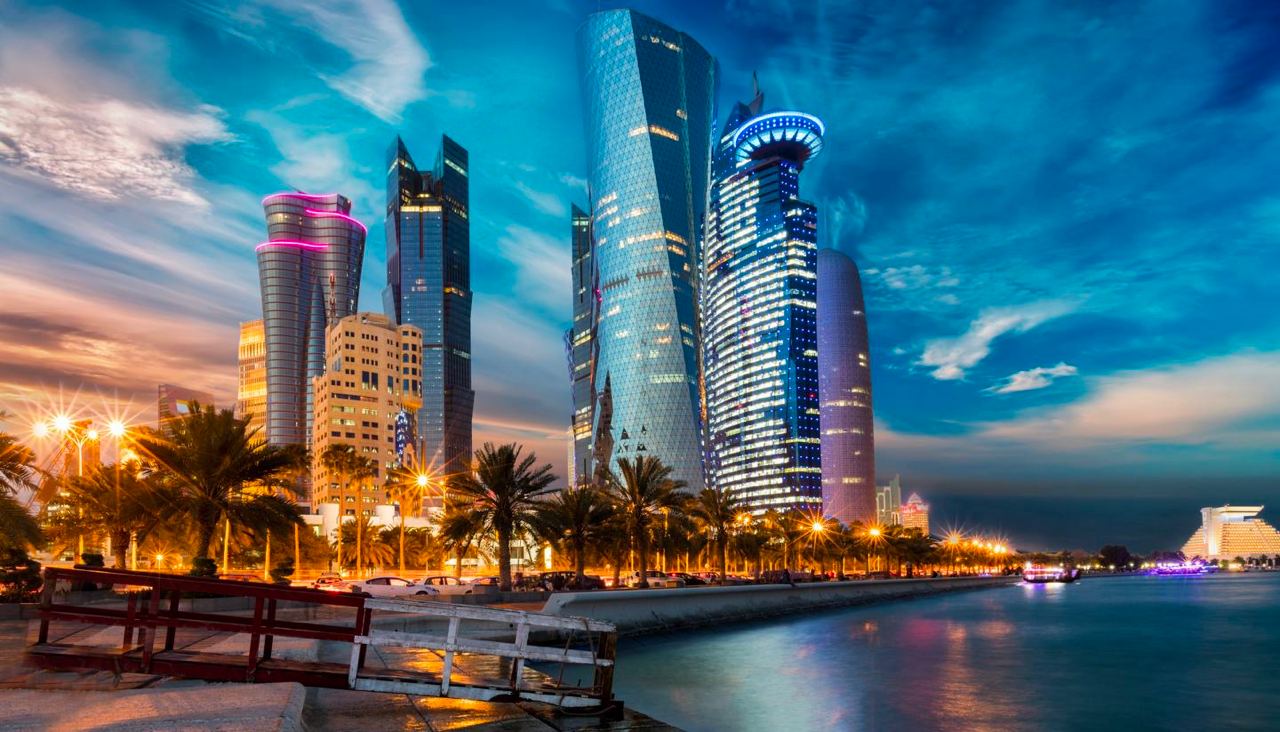
The Qatar Central Bank (QCB) is reportedly investigating the possibility of launching a digital currency and issuing digital bank licenses.
According to the head of the fintech section at QCB, Alanood Abdullah Al Muftah, the central bank is expected to set a direction for its future focus soon on a range of fintech verticals.
Al Muftah noted that QCB will also determine whether Qatar can establish a central bank digital currency (CBDC). She explained:
"Each central bank should study digital banks, considering their growing significance in the global market. We also see the direction of the market moving toward having a digital currency. However, it's still being studied whether we're having a digital currency or not."
While commenting on Qatar's regulatory sandbox, Al Muftah said that three firms in the payments sector are currently testing solutions with the central bank. She also stated that the QCB is considering other firms interested in utilizing the regulatory sandbox.
A regulatory sandbox is a space in which fintech firms can test new products, services, business models and delivery mechanisms in a real-world setting while benefiting from an accelerated authorization process and supervisory monitoring.
Private Qatari bank Dukhan Bank, meanwhile, is examining the possibility of creating a digital bank in Qatar, its chief operations and digital officer Narayanan Srinivasan told The Peninsula. However, Srinivasan warned that his institution would only build a digital bank after a better understanding of its economics. As per the report, Dukhan Bank is also considering blockchain technology in the payments sector.
Although private virtual currencies like Bitcoin (BTC) have grown in popularity and followers, government-backed CBDCs, frequently regarded as an antithesis to private cryptocurrencies, have been accelerating rapidly. According to data from the Atlantic Council, as of June 2019, 87 nations are currently developing their own digital currency, with only 14 having completed the pilot phase. Nine countries have already implemented a CBDC.
Russian, Chinese Central Banks ‘Working Together On SWIFT-Alternative Interoperability’.
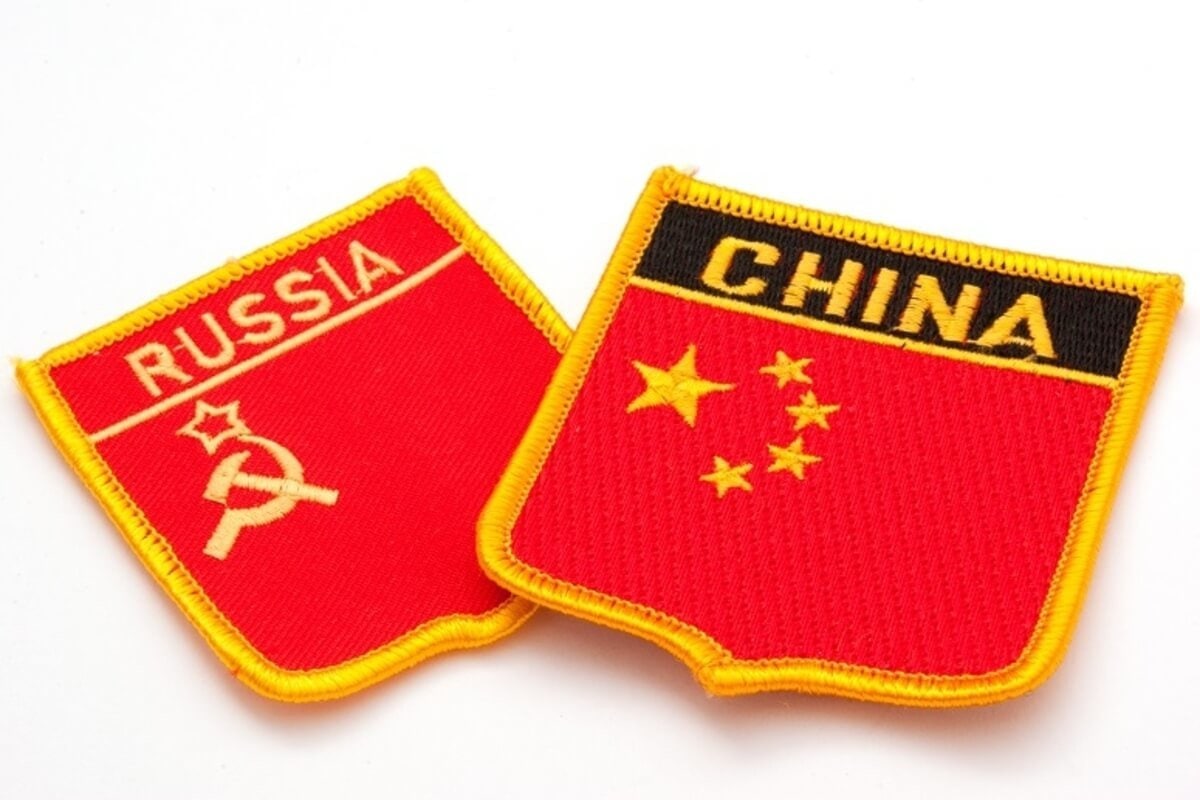
A senior Russian parliamentarian has claimed that the Central Bank is working with the People’s Bank of China on workarounds that may help the countries bypass the SWIFT banking network – including domestic alternatives, blockchain solutions, and digital fiats.
Per Tass, via Rambler, Anatoly Aksakov, the Chairman of the State Duma’s Committee on the Financial Markets, told attendees at a recent press conference that the central banks were working on interoperability solutions that may allow Moscow’s homegrown SWIFT alternative SPFS to connect with China’s own version, the CIPS.
Aksakov claimed that in the first two months of 2022, trade between Russia and China had increased by “more than 40%,” and predicted that the trend would continue upward – particularly if a mutual SWIFT workaround can be agreed upon.
SWIFT is a banking messaging network, and Russia’s exclusion from it as a result of Western-led sanctions has hit exporters particularly hard. But as previously reported, both Moscow and Beijing have long anticipated the need for homegrown alternatives – and have been working on them for years.
Russia's attack on Ukraine, however, has sped up the need for innovation on this and other financial technology fronts.
Aksakov was quoted as stating that in order to “remove risks” associated with conducting trade without a bank messaging system solution, it was “necessary to establish interaction between” the SPFS and CIPs networks.
He said:
“I know that this work is underway. The Central Bank is interacting with the People’s Bank of China. And I believe that the current situation will stimulate the relevant processes. We have a very efficient system [the SPFS] and the current situation demonstrates that.”
Sphere Finance aims to do governance acquisitions using a treasury amassed by investors, for investors. The profits from the investments are then sent to investors as dividends in the form of the $SPHERE token every 30 minutes, 48 times a day. The treasury is amassed through taxes that users agree to pay for buying, selling & transferring their tokens, including the "Dynamic" tax, an additional tax for every % of the LP that you hold and sell on a transactional basis. Later, the project will take the form of an index fund, like an S&P 500 of crypto, airdropping tokens as dividends to holders. Join the movement.
Telegram: https://t.me/SphereDeFi
Discord: https://discord.gg/spheredefi
Twitter: https://twitter.com/SphereDeFi
Telegram: https://t.me/SphereDeFi
Discord: https://discord.gg/spheredefi
Twitter: https://twitter.com/SphereDeFi
Malaysian deputy finance minister responds to proposal to legalize Bitcoin.
Similar to countries like Indonesia, Malaysia has not banned crypto trading but the government doesn't want to adopt crypto for payments.
An official at the Ministry of Finance of Malaysia reportedly opposed the idea of adopting cryptocurrencies like Bitcoin (BTC) as a payment method following recent crypto-friendly proposals by the deputy communications minister.
Malaysia has no plans to recognize BTC as legal tender, deputy finance minister Mohd Shahar Abdullah said in a parliamentary meeting on Thursday, according to a Bloomberg report.
“Cryptocurrencies like Bitcoin are not suitable for use as a payment instrument due to various limitations,” Mohd Shahar declared, citing risks like volatility and potential cyber threats.
Instead of adopting cryptocurrency for payments, Malaysia will continue to focus on the potential development of the central bank digital currency (CBDC), the official added, stating:
“The growing technology and payment landscape have prompted Bank Negara Malaysia to actively assess the potential of CBDC.”
The Ministry of Finance of Malaysia did not immediately respond to Cointelegraph’s request to comment. This article will be updated pending new information.
Mohd Shahar’s remarks came shortly after Malaysia’s deputy communications and multimedia minister Datuk Zahidi Zainul Abidin called on local regulators and lawmakers to legalize certain use cases of cryptocurrencies and nonfungible tokens (NFTs) on Monday. The official stressed that such measures would significantly support young people as crypto and NFTs have been growing "massively" popular among the younger generation.
Some sources also suggested that Zahidi proposed not just legalizing certain cryptocurrency transactions in Malaysia but rather adopting cryptocurrency as legal tender.
Despite not being willing to adopt cryptocurrency as a means of payment, Malaysian regulators have apparently not restricted the trading of cryptocurrencies so far, following in the steps of many other countries like Indonesia.
Coinbase to track off-platform crypto transfers in Canada, Singapore, Japan.
Certain Coinbase users will need to disclose recipient information when sending cryptocurrencies to non-Coinbase wallets.
Citing compliance with local jurisdictions, crypto exchange Coinbase announced to soon collect additional information from users based in Canada, Singapore and Japan.
Effective from April 1, Coinbase users from Canada, Singapore and Japan will be required to provide additional information while sending cryptocurrencies to a different (non-Coinbase) platform.
However, while Singaporean and Japanese investors will be required to share additional information about the recipient for every single off-platform transaction, Canadians sending less than $801 (1,000 CAD) will be exempted from this requirement.
Screenshot of Coinbase requesting recipient information from Canadian users. Source: Coinbase
As shown in the above screenshot, Canadian users will need to share the full name and residential address of the recipient.
Moreover, Canadian users — that suffice the above two conditions — will lawfully require to provide the recipient’s (self) information even while transferring funds between their own crypto wallets.
On the other hand, both Japanese and Singaporean regulations will require Coinbase to collect information about the recipients from local investors for every single off-platform transaction with no minimum threshold.
Similar to Canadian users, investors from Japan will need to disclose information including the recipient’s name and full address and the name of the crypto exchange handling the wallet.
Singapore users will not require to provide the recipient’s residential address but will require only the recipient’s name and country of residence. The lack of any required information will bar the user from sending cryptocurrencies out of the Coinbase platform for the jurisdictions in question.
Coinbase users that no longer reside in these jurisdictions will need to update their country of registration in order to gain exemption from the soon-to-be-implemented rule.
For many jurisdictions, the road to mainstream crypto adoption is paved by stringent regulations under the pretext of investor protection. Starting April 2022, the Thailand Securities and Exchange Commission (SEC) announced a ban on crypto payments throughout the country.
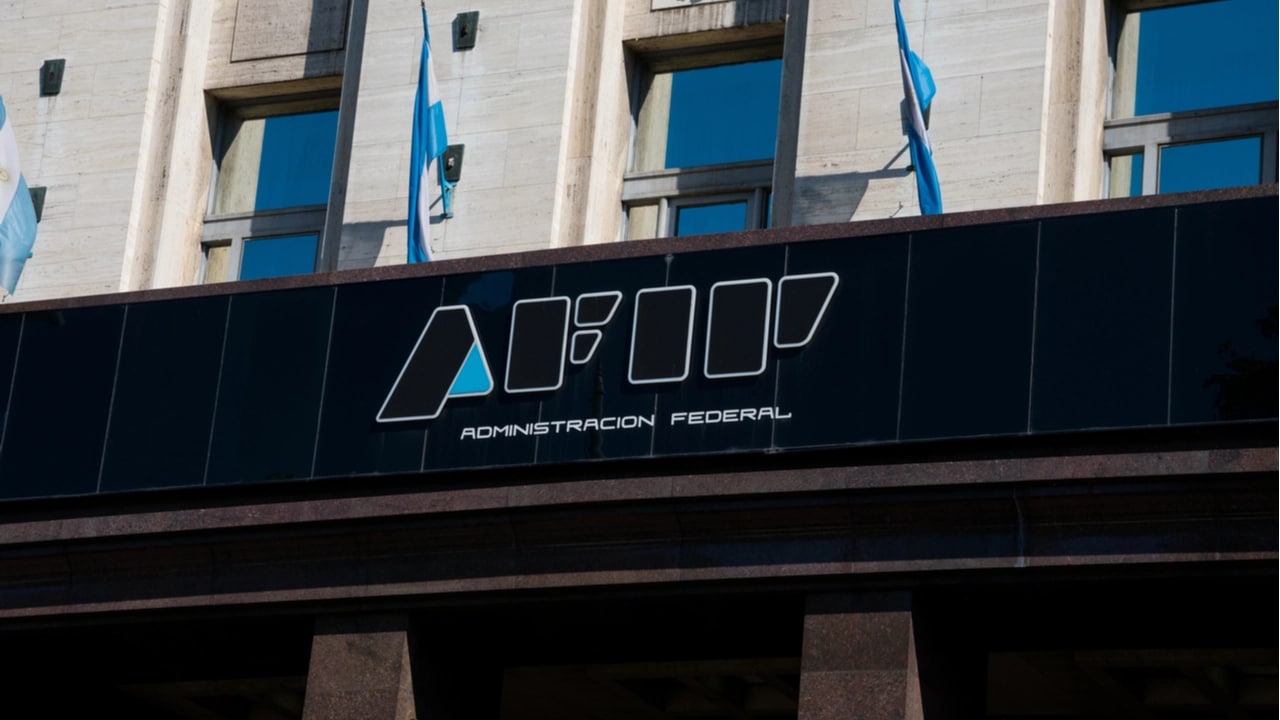
Argentinian Tax Agency Amps Up Scrutiny for Crypto Traders and Holders With New Requirements
The Argentinian Tax Agency (AFIP) is watching the movements of cryptocurrency traders and holders, to tighten its control over their transactions. The institution is now sending emails to Argentinian citizens asking for a series of data regarding supposed cryptocurrency operations made in their names. The agency requires the public keys of the citizen and a list of transactions made during a certain time period.
The AFIP, the Argentinian tax watchdog, has decided to take the battle against cryptocurrency tax evasion directly to users of these currencies. While the agency had required information from exchanges before, the responsibility is now directed to certain users that have received a requirement to answer a series of questions regarding their history with digital assets.
The requirement compels users to deliver data like the public keys of the wallets they are currently managing, and a list of digital asset movements that must include dates, the cryptocurrencies involved, the amounts moved, and the kind of operation. Furthermore, the citizens must justify the origin of the funds used to perform these transactions and the complete crypto savings held.
The required info is to include transactions that go back to 2018, so the numbers could be very high, according to Germán Nlhoul from Criptocontador.
The opinion of experts in the country is divided regarding this new move of the AFIP. Some think that the institution has the right to require this information from crypto users. This is the case with Juan Manuel Scarso, a fintech tax expert who explained:
[The AFIP] has broad powers to verify, at any time, including with respect to current fiscal periods, the compliance that the obligors or those responsible give to the laws, regulations, resolutions and administrative instructions, supervising the situation of any alleged responsible.
However, others differ in their views and state that the Argentinian Tax Agency might be overreaching by requiring some of this data from the citizens, without stating the purpose of these requirements clearly. This is the case with Mariano Neira, who stated:
Among the requirements on crypto assets that are circulating, an excessive request for information and also a clear affectation of patrimonial intimacy can be observed.
This information is already required by the organization from the exchanges, which must comply with this requirement by law. However, some have speculated that this pivot is due to the exchanges being non-compliant with the regulation, forcing the agency to look for the info from other sources.
XRP Lawyer Predicts SEC Will Come After Crypto Exchanges Next
The U.S. Securities and Exchange Commission (SEC) issued guidelines for the crypto trading platforms. The advisory asked platforms to reflect digital assets they hold for users on their balance sheets at fair value.
John Deaton, Lawyer for XRP holders in the Ripple Vs SEC lawsuit, predicted that now the commission will be filing cases against exchanges.
The SEC in the advisory has highlighted the technological, legal, and regulatory risks linked to protecting crypto assets.
The release cites an October 2020 report which includes the amount of digital assets stolen from crypto trading platforms in 2018.
However, the commission says that these risks are not new and the staff has reviewed the financial statements of some organisations.
👉 Read more
Crypto Helps Ukraine Defend Itself Against Russia's Invasion, Here’s How You Can Contribute.
Cryptoassets continue to prove their case in Ukraine, as well over USD 100m in crypto was raised during the first five weeks of the Russian invasion.
Per a report by blockchain research firm TRM which analyzed over 50 crypto donation campaigns, official government entities have received over USD 50m of donations. Other popular non-governmental organization (NGO) campaigns have netted another USD 50m in donations.
Bitcoin (BTC) and ethereum (ETH) were the most popular cryptoassets and together facilitated over 85% of all transactions. Alternative networks like Tron (TRX), BNB, and Litecoin (LTC) have stayed distantly behind.
According to Alex Bornyakov, The Deputy Minister of Digital Transformation of Ukraine, cryptoassets have been “extremely useful” in the facilitation of funds in the country and have already purchased invaluable equipment for the Ukrainian Army.
In the recent episode of the Wolf of All Streets show, Bornyakov elaborated that cryptoassets were especially beneficial during the first days of the war when there was a lot of chaos in the country. “If you want to send a wire, and wire is going to get to your supplier in three days, you honestly don’t have three days, and maybe in three days you’re not going to live in this country anymore,” he said. In these circumstances, crypto is much faster, he added.

Let's meet the international #fintech ZEN.com! It will accept and convert digital assets to fiat upon receipt.
Currently, the service supports Bitcoin (including instant transfers and top-ups), Ethereum, and USD-T, as well as Litecoin (only transfers from fiat account to an exchange or a wallet).
Convert also digital assets to EUR or other currencies and spend funds conveniently with your Mastercard. One of the attractive features of the service is its competitive pricing.
Top-ups, meaning sending the assets from an exchange or a digital wallet to an EUR currency account at ZEN.COM incurs a fee of 0.5% (Platinum plan) or 0.9% (Gold plan). This is a no-brainer. ccess to Gold plan costs EUR 0,99 monthly, while Platinum is just EUR 4,99 monthly.
Use the code SOCRYPTOLANDZEN in their app and get 120 days free subscription: https://www.zen.com/personal?utm_medium=SOCRYPTOLAND&utm_source=Influencer&utm_campaign=PERFORMANCE_X
