
Get Ready For Crypto Banking, DeFi & CBDC Surprises - Venture Capitalist.
Banks will likely open crypto accounts next to fiat accounts, decentralized finance (DeFi) will claim its trillion-dollar company, while central bank digital currencies (CBDCs) will suprise many by entering our lives sooner than expected, Marc van der Chijs, entrepreneur, crypto-focused venture capitalist, and co-founder of VC firm First Block Capital (FBC).
The good and bad of crypto banking
If banks decide to open such crypto accounts, "this will have major implications, because it allows people to more easily buy and hold bitcoin or other crypto tokens," according to the entrepreneur.
"Once people realize that they are losing money by holding dollars or other fiat currencies, it will be an easy switch to putting money into bitcoin," van der Chijs said.
A bumpy DeFi road towards first trillion
The FBC founder also discussed DeFi, describing it as "very interesting," but something that "has a long way to go before it will go mainstream." And while "the current hype is good because early adopters now all know about the future of finance," there will be a lot of disappointment in the space "because it will take much longer than most people think." Van der Chijs estimated that it will be at least five years before DeFi will grow out of its current niche space.
He further noted that now is a great time to build DeFi tools, but warned people not to expect that their solution and their token will be one of the winners a decade from now. "The innovation in DeFi is amazing but it's still too early for long-term investors," he said. "Eventually it might replace traditional finance, but most of the current DeFi tokens will be long gone by then, just like most of the top altcoins from 2013 are not around anymore."
"That being said, the next trillion-dollar company will likely be a DeFi company. It will disrupt the banks and the insurance companies, and I don't think they see it coming yet," van der Chijs added.
CBDCs coming sooner than one may think
Van der Chijs mentioned other trends that he has noticed in the crypto/blockchain space, and which are not necessarily discussed as much as they should be.
The trend towards CBDC in the entrepreneur's opinion is very important, and it will come sooner than many people think, because it gives central banks power by distributing money directly to the people, instead of through commercial banks.
"It allows Central Banks to let commercial banks go bankrupt without blowing up the financial system," he said, adding that he's not a fan of CBDCs, as they allow the government to decide what somebody's money can be used for, and they can take people's money whenever they want.
But there is a silver lining here as well, van der Chijs finds.
"This is scary, but it will likely lead to a lot more people learning about bitcoin. Suddenly there will be a very important new use case for bitcoin, because that currency will give you the freedom to do whatever you want."

Bitcoin and Altcoins Correcting Gains But Holding Key Supports.
Bitcoin price
After a short-term downside correction, bitcoin price found support just above USD 12,800. BTC started a fresh increase and climbed back above USD 13,000. An initial resistance on the upside is near the USD 13,200 level. The first major resistance is near the USD 13,350, above which the bulls might aim for a break above the USD 13,500 level.
On the downside, an initial support is near the USD 13,000 level. The main weekly support seems to be forming near the USD 12,750 level.
Ethereum price
Ethereum price started a downside correction from the USD 420 resistance. ETH/USD is currently trading with a positive bias above the USD 400 and USD 405 levels. An immediate resistance is near the USD 412 level, but the main resistance for upside continuation is near the USD 420 level.
If there is another downside correction, the USD 400 support holds the key. A clear break below USD 400 could push the price towards the USD 385 weekly support zone.
Bitcoin cash, chainlink and XRP price
Bitcoin cash price climbed higher above the USD 270 and USD 275 levels, but it failed to test the USD 280 resistance. BCH is currently consolidating near the USD 270 level and it might correct a few points. The first major support is near the USD 265 level, below which the USD 260 zone could provide a strong support.
Chainlink (LINK) rallied above the USD 11.00 and USD 12.00 levels. It traded to a new monthly high at USD 12.95 before starting a downside correction. The price is now trading near USD 12.35, with a strong support near USD 12.20 and USD 12.00. On the upside, the bulls might struggle to clear USD 13.00.
XRP price corrected lower, but it remained well bid above the USD 0.250 and USD 0.252 levels. The price is now rising and trading above USD 0.255. However, the bulls need to gain strength above the weekly hurdles at USD 0.260 and USD 0.262 to start another major increase.
Other altcoins market today
In the past few hours, many altcoins gained over 5%, including FIL, QNT, NEAR, RSR, HEDG, DOGE, EGLD, XMR, BAL, BSV, and AR. Conversely, ABBC, EWT, OCEAN, UMA, ATOM, and AMLP are down over 5%.
Overall, bitcoin price is showing a lot of positive signs above USD 12,750 and USD 13,000. There could be more range moves in BTC, but there are high chances of an upside break above USD 13,200 and USD 13,350 in the near term.

Trump Hackers Spur US Interest in Monero…But Not Prices.
Crypto scammers who successfully hacked into United States President Donald Trump’s election campaign looking for payment in monero (XMR) appear to have sparked a new interest in the most popular privacy coin – albeit one that has failed to save it from a price slide.
The move has sent scores of Americans to search engines to hunt for data about XMR, with a spike recorded on the Google Trends analytics site on October 28.
Meanwhile, at pixel time (09:52 UTC), XMR, ranked 14th by market capitalization, trades at USD 133 and is down by 2% in a day, trimming its weekly gains to less than 9%.
The scammers appear to have hacked into the donaldjtrump.com site, replacing the contents with a bogus Department of Justice-approved notice stating that “this site has been seized.”
The hackers, who appeared more proficient in computer skills than English writing abilities, wrote,
“The world has had enough of the fake-news spreaded daily by president Donald J. Trump. It is time to allow the world to know truth [sic].”
The hackers also claimed to have a host of information, ranging from “origin” data on the coronavirus pandemic to juicy exposes on Trump himself provided by the President’s own family.
All they would need to finance their campaign, they claimed, was generous donations to two XMR addresses.
On Reddit, one poster opined that internet pranksters may have been behind the prank, writing,
“That takedown notice reeks of 4chan.”
Another claimed that the move could be “bullish for XMR.”
But one Redditor claimed on the same thread that they were still “too scared to buy monero.”
As for President Trump’s own feelings about crypto – well, he long ago made his own feelings on the matter crystal clear.

Tron's JustLink Said to be a Chainlink 'Copy-Paste'; Tron Mainnet Attacked.
Following the launch of JustLink as an "oracle answer for Chainlink on Tron," some are thinking it's more than just an answer - accusing the team behind the network and the project's founder Justin Sun of another blatant copy-paste. Meanwhile, the network's mainnet suffered an attempted attack today.
Just a couple of days ago, on October 30, Tron (TRX) founder Justin Sun announced that JustLink went live as "the first decentralized blockchain oracle on the Tron network." It's said it can feed smart contracts with real-world data, including but not limited to lending prices, stablecoin exchange rates, derivative prices, and market estimations.
Additionally, according to the announcement by the Just Foundation, JustLink is "the oracle answer for Chainlink on Tron."
As soon as the news hit the Cryptoverse, however, industry observers have started drawing parallels between JustLink's whitepaper and that of the decentralized oracle platform Chainlink (LINK). Some have gone as far as to argue that: "It's the Tron brand. If you don't copy paste, it's not a Tron "product"."
Chainlink supporter Timo Harings, for example, shared two images, side by side, showing minor differences in phrasing of the subtitles within the two whitepapers. Overall, very generally, Chainlink's whitepaper has more sections and is 38 pages long, compared to JustLink's 10 pages.
"Not just the paper either, but basically the entire code base as well. It's a shameless copy and paste," added SmartContent co-founder ChainLinkGod.eth. This poster claimed that Sun "has done it again" and warned that, "with Tron having zero expertise on the subject of oracles, this will only result in an oracle attack and loss of user funds."
The arguments ChainLinkGod.eth made include changing all mentions of "Chainlink," but allegedly forgetting to do the same for "LINK."
Others, however, argued that every invention was copied by others, but also that "copying is the ultimate form of flattery." Twitter user 'D' stated that Tron is "ahead and winning with user base across multiple industries with lower fees within blockchain. So, higher likelihood of mass adoption," and adding: "Blockchain for the people. Not just crypto nerds."
Meanwhile, this isn't the first time Tron and Justin Sun were accused of copy-pasting other projects' work, as plagiarism accusations have been plaguing them for years - including reports that they've plagiarized their whitepaper, which Sun denied and blamed on the translation from the original version in Chinese.
Much of what the team behind Tron is offering or plans to offer seems to be a version of existing projects, including Ethereum (ETH) which it's reportedly emulating, aiming for its users, as well as Uniswap, MakerDAO, etc. As reported previously, JustLink is the third part of the announced DeFi ecosystem that's currently being formed around the Tron blockchain. Tron launched its own decentralized token swap protocol, Just Swap, in August.

Bitcoin And Altcoins Regain Strength, Hurdles Remain.
After a major downside correction, bitcoin price found support near the USD 14,450 zone. BTC started a fresh increase and climbed above the USD 15,000 resistance. The price even cleared the USD 15,350 resistance, but it is currently (05:30 UTC) struggling to clear the USD 15,550 and USD 15,600 resistance levels.
Similarly, there was a fresh increase in most major altcoins, including ethereum, XRP, litecoin, EOS, XLM, LINK, BNB, TRX, bitcoin cash, and ADA. ETH/USD is back above USD 440 and USD 450, but it is facing an uphill task near the USD 460 level. XRP/USD is stuck below USD 0.255 and it is consolidating above the USD 0.250 support.
Bitcoin price
After a fresh increase above USD 15,000, bitcoin price gained strength. BTC even surged above the USD 15,350 and USD 15,400 levels. However, the bulls seem to be facing a strong selling interest near the USD 15,550 and USD 15,600 levels. A successful break and close above USD 15,600 is a must for a sustained upward move towards the USD 15,850 and USD 16,000 resistance levels.
An initial support on the downside is near the USD 15,350 level. The main weekly support is now forming near the USD 15,050 and USD 15,000 levels.
Ethereum price
Ethereum price is up 3% and it managed to climb back above the USD 440 and USD 450 resistance levels. To continue higher, ETH must surpass the USD 258 and USD 260 levels. The next major weekly resistance is waiting near the USD 470 zone.
If there is a fresh decline, the USD 440 level might act as a strong support. If the bears manage to clear the USD 440 support, the price might slide towards the weekly support at USD 425.
Bitcoin cash, chainlink and XRP price
Bitcoin cash price is up 5% and it is gaining pace above the USD 260 and USD 265 resistance levels as its hard fork is approaching. An immediate resistance is near the USD 270 level, above which the bulls might aim for a test of the USD 280 barrier. If there is a downside correction, the USD 260 level might provide support. The next key support is near USD 250.
Chainlink (LINK) formed a strong support base near USD 10.50 and USD 10.60. It gained pace and surged above the USD 11.20 resistance level. The price even climbed towards the USD 13.00 level before correcting back to USD 12.50. LINK is currently consolidating gains above the USD 12.20 and USD 12.00 support levels.
XRP price remained well bid above the USD 0.245 support and it climbed back above USD 0.250. The price is now trading above USD 0.252, with a key hurdle near the USD 0.255 level. A clear break above the USD 0.255 resistance might lead the price towards the USD 0.262 and USD 0.264 resistance levels.
Other altcoins market today
In the past few hours, many altcoins gained over 5%, including RUNE, MANA, AAVE, EWT, RSR, LRC, AMPL, STX, BAND, OCEAN, REN, KSM, UNI, SNX, and CEL. Conversely, ABBC and TMTG are showing bearish signs.
Overall, bitcoin price is trading in a positive zone above the USD 15,350 and USD 15,200 levels. Having said that, BTC might start another corrective decrease if it continues to struggle near USD 15,550 and USD 15,600.

Bitcoin Breaches USD 16,000 For The First Time Since January 2018.
Today, the most popular cryptocurrency, bitcoin (BTC), surpassed the USD 16,000 level for the first time since January 2018, getting closer to its all-time high of USD 20,000.
BTC was above USD 16,000 for around half an hour before correcting lower. At pixel time (10:39 UTC), BTC trades at USD 15,923 and is up by 3% in a day and 10% in a week. The price jumped by 41% in a month and 83% in a year.
It took a week for BTC to increase from USD 15,000 to USD 16,000. Other major coins are almost unchanged today.
As reported last week, according to Northman Trader founder Sven Henrich, as long as BTC can remain above the breakout trend line it has "significant technical room higher."
"Also note BTC is showing some retracement action and has room lower for a potential retest of the trend line. But note that inside the larger wedge consolidation a potentially much more bullish pattern has emerged, that of a potential inverse which would point to near [USD] 17,000," he said.
"Over the past few years, we’ve been waiting to see how crypto would make the leap forward to the mainstream, wondering what it would take to catapult it over the chasm. We found out the answer just this month," Matt Hougan, Chief Investment Officer (CIO) at Bitwise Asset Management, argued in a commentary this week, reminding of PayPal crypto news, bullish statements by JPMorgan, among other drivers.
"In the coming months, we expect to see major banks launch crypto custody services, and brokerages open up access to crypto products; we expect to see retailers proudly displaying “we accept crypto” signs; we expect large institutions to start building major applications on public blockchains; and we expect investment conversations to transition from “why should I invest” to “why aren’t we already invested?” he said, adding that the "next six months are likely to change the game."

Not Every Country Can Shake The Magical Money Tree Amid Coronavirus Pandemic.
COVID continues to ravage societies around the world, and a key issue is how governments can afford to fight it. As economies are disrupted, governments are stepping in to increase their spending to bail out companies, pay the cost of health measures, and subsidise workers’ wages.
Before COVID, when people argued that the state should be able to offer free healthcare and free education, among other services, and welfare measures, a standard political response was that state resources were limited. Asked by a nurse in 2017 why her wages hadn’t increased from 2009 levels, then British prime minister, Theresa May, said: “There is no magic money tree that we can shake that suddenly provides for everything that people want.”
Except, a few years later, the government has not only been able to pay the wages of millions, it has also created rescue packages for thousands of firms and offered people vouchers to eat out in restaurants. A number of European countries have also taken the unprecedented step of underwriting the wages of millions of workers in response to the pandemic.
How is the British state and others capable of this radical increase in spending at a time when revenues from taxes are collapsing?
‘Magic money tree’
The answer to this lies in the debt market. Over the past few months, world governments have drastically increased their borrowing to cover the costs of the pandemic. It might appear logical that the cost of credit will go up during uncertain economic times. The reality, however, is that capital often goes to safer sovereign debt during economic downturns, particularly as the equity markets become unstable and volatile.
Over recent months, rather than struggling to find lenders or having to pay more for debt, the governments of the major economies have been awash with credit at historically low rates. In October, the EU, until now a small player in the debt market (as borrowing mostly is by national governments of member states), began a major borrowing campaign as part of the efforts to fight COVID through the SURE programme (Support to mitigate Unemployment Risks in an Emergency) which was created in May.
The first sale of bonds worth EUR 17bn was met with what some described as “outrageous demand”, with investors bidding a total of USD 233bn to buy them. This intense competition was for bonds that offered a return of -0.26% over ten years, meaning that an investor who holds the bond to maturity will receive less than they paid today.
The EU is not the only borrower that is effectively being paid to borrow money. Many of the advanced economies have been in recent years and months selling debt at negative rates. For some countries, the shift has been dramatic. Even countries such as Spain, Italy and Greece that were previously seen as relatively risky borrowers, with Greece going through a major debt crisis, are now enjoying borrowing money at very low rates.
The reason for this phenomenon is that while these bonds are initially bought by “traditional” market actors, central banks are buying huge quantities of these bonds once they are circulated in the market. For a few years now, the European Central Bank (ECB) has been an active buyer of European government bonds – not directly from governments but from the secondary market (from investors who bought these bonds earlier). This ECB asset purchase programme was expanded to help weather the COVID crisis, with the ECB spending EUR 676bn on government bonds from the start of 2020 until September.
Other central banks in the major advanced economies are following the same strategy. Through these programmes, those central banks encourage investors to keep buying government bonds with the knowledge that the demand for those bonds in the secondary market will remain strong.

This Is The Main Story in Bitcoin Now According to Pantera Capital CEO.
Demand outpacing supply is “THE story in Bitcoin right now,” as BTC is already knocking on the door of its all-time high of USD 20,000, Dan Morehead, CEO and Co-founder of major crypto investment firm Pantera Capital, stressed.
PayPal’s crypto push is “already having a huge impact,” Morehead wrote in his November letter on Friday, pointing to PayPal’s 300 million users who just gained easy access to bitcoin. This development comes on the heels of first-mover Jack Dorsey’s Square’s Cash App, which has been in the bitcoin game for more than two years and whose bitcoin sales continue to increase quarter after quarter. Cash App raked in USD 1.63bn “of bitcoin revenue” in the third quarter this year.
Morehead pointed out that between PayPal and Cash App, “more than 100% of all newly issued bitcoins” are already being bought.” If PayPal continues buying at its current pace, it will be “buying more than all of the newly issued bitcoin within weeks,” Morehead noted, adding that this is where the “finite supply, inelasticity part comes in: At a higher price.” These dynamics are paving the way for the bitcoin shortage and are driving the bitcoin price close to new heights.
Moreover, PayPal and Square aren't the only ones buying up bitcoins. As reported, on Friday, Managing Director at major crypto asset management firm Grayscale, Michael Sonnenshein, said that their team "scoped up over USD 188m around BTC 10,000 into Grayscale Bitcoin Trust alone, yesterday."
Per Bytetree data, BTC miners generated BTC 6,825 in the past seven days. However, as reported, 3.4m bitcoin are readily available to buyers now, while BTC trading volume on exchanges dropped by 41% in November.
Also, Pantera’s Morehead sees a world in which other “larger financial institutions” will catch FOMO (fear of missing out), leading to the “supply scarcity” becoming “even more imbalanced.”
He also made the case for a further expansion of the US Federal Reserve’s balance sheet, given the outcome of the US elections with a divided government. By setting the money printer to “brrr,” policymakers will inflate the value of assets “whose quantity cannot be eased,” benefitting store of value assets bitcoin and gold.
At pixel time (05:32 UTC), BTC trades at USD 18,626, dropping from USD 18,946, reached earlier today. The price is still up by almost 3% in a day and 15% in a week. It rallied by 46% in a month and 143% in a year.

Ethereum Surges As Whales Accomplish ETH 2.0 Phase 0 Mission.
Just hours before the deadline, Ehtereum (ETH) whales alongside smaller stakers have managed to send all the required ether to the ETH 2.0 deposit contract, allowing to launch Phase 0 on December 1 and extending the ETH rally.
There are ETH 574,880 (USD 356m) sent to the contract, or almost 10% more than initially was required to start the phase that will bring the Beacon Chain.
ETH price extended its gains too, and is now trading at USD 620. It's up by 7% in a day and 33% in a week.
The deposit contract is one of the final steps towards the Phase 0 rollout, as it will enable ETH transactions between the original Ethereum and its second iteration. Phase 0, aka the beacon chain, is considered to be "the central control tower keeping track of the 32 shards on Ethereum 2.0."
This phase brings with it the long-awaited proof-of-stake (PoS) consensus mechanism, and will enable users to earn rewards through staking ETH on the network and by acting as an active or passive validator. To earn these rewards, validators will have to lock up their ETH in the deposit contract. The minimum that can be staked is ETH 32.
However, the final switch from the current proof-of-work consensus mechanism, which involves mining and is also used by Bitcoin (BTC), to (PoS), is not expected in at least a year, as Ethereum co-founder Vitalik Buterin said last week.
“Ethereum needs to scale to become a global substrate of the clearing and settlement layer," Andrew Keys, a managing member in Darma Capital and one of the first employees of the Ethereum application incubator ConsenSys, told Bloomberg. According to him, the current version of Ethereum proved that gold, currencies, music and other real-world items could successfully be digitized, but "now, it needs to be able to serve global volume."
ECB Exec: Sovereign Money Needs To Be Reinvented.
Retail payments play a fundamental role in our daily lives and for the economy. Last year, adults in the euro area made two payments per day on average.1 The universe of retail transactions2 amounted to 213 billion payments – two million every five minutes – with an estimated total value of EUR 164 trillion.3
As part of its mission to promote the smooth operation of the payment system, the Eurosystem has two main objectives in the area of retail payments. The first is to guarantee that people have access to efficient payment solutions that meet their preferences. The second is to ensure that transactions remain safe, underpinning confidence in our currency and the functioning of our economy.
Technological innovation means that the policy implications of these objectives are changing, and new opportunities and risks are emerging. Today I will present the Eurosystem’s response: a strategy for empowering Europeans with efficient, inclusive and secure payments in the digital age. And I will argue that the impending revolution in payments requires us to stand ready to reinvent sovereign money.
Convenience and safety in the digital age
Payments have evolved substantially over time, but the key determinants of their success have remained fundamentally unchanged. People want payments that offer convenience and safety at a low cost. Convenience requires payments to be easy to use, fast and widely accepted, while safety requires low risk from an economic, financial and societal perspective.
The digital transformation is raising the bar for convenience and safety. With the growth of e-commerce and connected lifestyles, people are increasingly demanding immediacy and seamless integration between payments and digital services. At the same time, they are increasingly concerned about privacy, cybersecurity and reliability.
This wide range of desirable features creates scope for innovative payment solutions. Currently, none of the existing solutions – cash, cards, credit transfers, direct debits and e-money – meet all the required features at once. People are forced to use several instruments at the same time. In-person transactions4 are mostly conducted with cash and cards.5 Remote purchases are dominated by cards and e-payments.6 And bills are generally paid using direct debits and credit transfers.7
Cash offers a secure and inclusive way of making in-person payments, but it is not well suited for payments in a digital context, such as in e-commerce. So it is no surprise that it is being used less.9 Payment cards, on the other hand, facilitate digital, contactless payments. But they are not accepted everywhere. And the Europe-wide acceptance of cards issued under national card schemes currently relies on agreements with international card schemes. As a result, people mostly use international schemes for cross-border card payments, and the European market for card payments is dominated by non-European schemes.
Generally, Europe is increasingly relying on foreign providers, with a high degree of market concentration in some segments, such as card transactions and online payments.10
We should not let this reliance turn into dependence. Dependence on foreign providers and excessive market concentration would harm competition, limiting the choice for consumers and exposing them to non-competitive pricing. It could reduce the resilience of the payment system and weaken the ability of European authorities to exercise controls.
We must ensure that the payment market remains open to competition, including from European suppliers and technology.
Coin Race: Top Winners/Losers of November; XRP Steals the Month From Bitcoin.
Even without looking at the charts, anybody who remotely followed what's been happening in the broad crypto market will have noticed what a great month November was for - some of it. Particularly its second half brought another small spring to many coins, building on top of the October one, with projects turning green left and right, reaching double-digit rises. Major coins including bitcoin (BTC) and ethereum (ETH) surged to levels not seen in years. Others, though few, ended the month in red.
A correction did follow the initial surge, as it often does, and after individual coins had been pulled down, some of them by double-digit percentages, the very end of the month saw plenty of greenery yet again, with the world's number one coin even breaking all-time highs on its path to USD 20,000.
But all was not green. November was good to some, but also quite bloody for others.
And as we enter the last month of 2020, let's take a look at the best and the worst perfumers in the month behind us.
There is no better place to see the fruits of November than on the list of the top 10 coins by market capitalization. It is led by XRP, which over the past month appreciated a whopping 117.5%. It's the only three-digit increase on the list. It was a busy month for XRP-affiliated Ripple, during which a single week saw the coin's price more than double, while the interest in the term 'XRP' on Google search had also reached its highest point in more than two years.
The second place is taken by bitcoin and its 63.53% increase. The number one coin by market capitalization has had an adventurous month so to say, climbing from USD 13,700 at its beginning to nearing the all-time high, dropping as it was about to surpass it, then finally reaching USD 19,696 on the month's very last day.
For some, the price rise and volatility seen by many coins in November, particularly the major ones, and again, particularly bitcoin, was not a surprise. Kraken Intelligence had estimated that after the second least volatile October on record, BTC price and volatility could both be expected to climb in November.
Litecoin (LTC) took the third place, having gone up 41.5%. The coin grew fast over the past month, overtaking bitcoin cash (BCH) and now sitting as the 5th coin by market capitalization. Its price also went from USD 55 to USD 93 at its highest in November.
Cardano (ADA) sat on the fourth place this past month with an increase of 36.64%, and it's followed by the second coin by market capitalization, ethereum (ETH), which appreciated 27.5%. The latter's price went up from USD 386 to USD 621. This was a very important period for Ethereum, which launched its Ethereum 2.0 smart contract in November and is scheduled to launch the very first phase of ETH 2.0, Phase 0, today.
Binance coin (BNB) follows ETH closely with a nearly 25% rise, while the least to appreciate in November was bitcoin cash, with a rise of 8.4%. It was an eventful month for BCH too as it went through yet another hard fork on the 15th.
But as we said - November wasn't just about price appreciation. For some, the month was more volatile than for the others, and two on this list ended it red. Polkadot (DOT) dropped 13.4%, and chainlink (LINK) 10.6%.

Bitcoin and Altcoins Signaling Downside Break.
Bitcoin price failed to extend gains above USD 19,500. As a result, BTC reacted to the downside below the USD 19,200 and USD 19,000 support levels. The price is currently (13:00 UTC) trading below USD 19,000 and it seems like there are chances of more downsides below USD 18,800 and USD 18,500.
Similarly, there was a downside break in most major altcoins, including ethereum, XRP, litecoin, EOS, XLM, LINK, BNB, TRX, bitcoin cash, and ADA. ETH/USD broke the key USD 600 support level and even traded below USD 595. XRP/USD declined over 5% and it traded below the main USD 0.600 support zone.
Bitcoin price
After a rejection near USD 19,500, bitcoin price reacted to the downside. BTC broke the USD 19,000 support level to enter a short-term bearish zone. The price is approaching the USD 18,800 support and it seems like it could continue to move down towards the USD 18,500 support. Any more losses might call for a push towards USD 18,200.
On the upside, the previous support near USD 19,000 may possibly act as a resistance. The main resistance is still near the USD 19,500 level.
Ethereum price
Ethereum price followed a similar pattern and declined below the USD 600 support. ETH is down 3% and it is trading near the USD 590 level. An initial support is near USD 585, followed by USD 580. A downside break below USD 580 might call for a push towards the USD 570 level.
On the upside, the price could struggle to clear the USD 598 and USD 600 resistance levels. A close above USD 600 is a must to start a fresh increase towards USD 615 and USD 620.
Bitcoin cash, litecoin and XRP price
Bitcoin cash price is now trading well below the USD 300 level. BCH traded below the USD 290 level and it might continue to slide towards the USD 282 and USD 280 levels. The next key support sits near the USD 270 level. On the upside, the bulls might face a strong selling interest near the USD 300 level.
Litecoin (LTC) is moving lower below the USD 86.50 support level. LTC is testing the USD 85.00 level and it could soon retest the USD 83.20 support. Any more losses might call for a push towards the USD 80.50 and USD 80.00 support levels. On the upside, the price might face resistance at USD 88.50.
XRP price declined heavily after it failed on many occasions to gain pace above the USD 0.635 level. The price is down over 5% and it traded below the USD 0.600 support. The next major support is at USD 0.575, below which the price might dive towards the USD 0.550 support.
Venezuela Paying Iranian, Turkish Companies in Bitcoin.
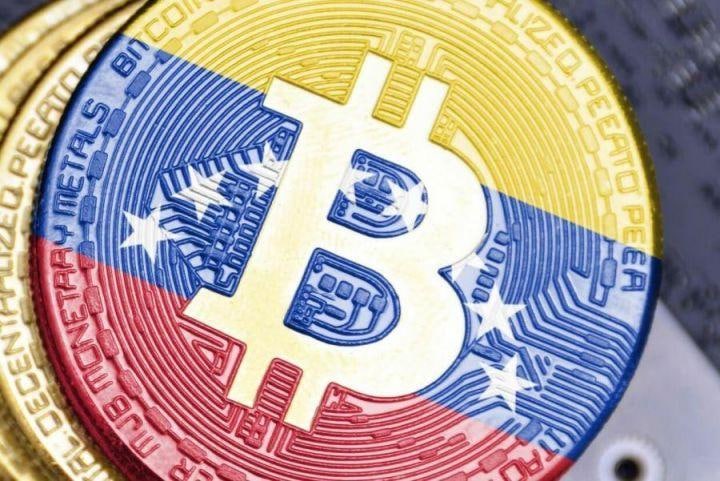
With crypto prices still sky-high, it appears that Venezuela’s ruling Nicolás Maduro administration has been looking to make hay while the sun shines – and is already starting to pay companies in Turkey and Iran in bitcoin (BTC), making use of a large state-owned stash of BTC and ethereum (ETH), with crypto prices still soaring.
Unnamed “sources at the Central Bank of Venezuela” have stated that “payments to companies from allied countries such as Iran and Turkey have been made using bitcoin.”
The country, which has developed its own cryptoasset, the petro – reportedly backed by unbarrelled oil reserves – has found itself in a deepening financial crisis as a combination of American sanctions and the coronavirus pandemic have taken their toll on the Venezuelan economy.
But Maduro appears to have sanctioned a range of crypto business channels in an effort to bypass sanctions – and if the Central Bank is to be believed, there is now no shortage of takers of Venezuelan BTC in the international community.
The same sources stated that President Maduro is making use of its recently passed “Anti-Blockade Law,” a piece of legislation that allows the Venezuelan executive to authorize “the creation and implementation of any kind of financial mechanism” for payments, including “cryptoassets and tokens based on blockchain technology.”
Earlier this year, Tareck El Aissami, the Venezuelan Vice President and Minister of the Economy, announced that the state would begin creating a system of farm subsidies and loans backed by a “basket” of cryptoassets including the petro and other more popular international tokens.
Clampdown on Crypto To Keep France In The Paleolithic Era Of Banking - MP
In what he called an attempt to dry the financing of terrorism, French Finance Minister Bruno Le Maire has unveiled a regulation that is to enable the state to combat the anonymity of crypto transactions. Meanwhile, local crypto industry players and at least one politician accuse the ministry of potentially hampering the sector's development.
“It is regrettable that France is still distinguished within the EU by additional constraints. Why not instead put forward efforts made to simplify KYC whose bureaucratic rules date back to the Paleolithic and are benefiting the existing banking institutions,” Pierre Person, an MP from the ruling La République En Marche! (LREM) party, said.
In a more tongue-to-cheek fashion, Simon Polrot, President of France’s crypto asset industry association ADAN, tweeted that “France is making big waves in the international crypto press! Finally, we are promoting our superb national cryptocu… oh, no, we’re talking about the counterproductive KYC-AML measure of the day. Good job”.
Meanwhile, one Twitter user hailing from the French cryptosphere described the proposal as yet “another fight against the wrong opponent,” advising the Finance Ministry to instead focus its efforts on the country’s banks.
“Because of your 'repressive' measures against crypto companies, France will again miss a major technological shift, just like it missed the Internet shift in the early 2000s,” the user, who goes by the name of Yggdrasil, tweeted.
In a statement, the Ministry of the Economy, Finance and the Recovery said that “digital assets (cryptoassets) present important opportunities for the economy” but “last September’s dismantling in France of a terrorist financing network using digital asset transactions is a reminder of the existence of criminal undertakings against which it is necessary to fight.”
“This is why the government wishes to promote the development of cryptoassets under the best conditions of security and attractiveness,” the ministry claims. “New regulatory provisions will be presented with the aim to accelerate the launch of digital identification solutions for digital asset transactions.”
Among others, the ministry is to enforce new obligations on crypto exchanges and custody services. These will be related to the assessment of money laundering and terrorism financing risks related to crypto transactions, know your customer (KYC) measures, seizing assets suspected of serving criminal ends, but also increased cooperation with the French intelligence services.

🎄Bybit Jingle Brawl🎄
This festive season, Bybit has launched the fun-filled Jingle Brawl - a BTCUSD trading competition.
🏆 Up to 25 BTC Prize Pool
🎁 Exclusive Bybit-Branded Xmas Hampers
📱 8 Sets of iPhone 12 Pro up for Grabs
Inside our Bybit Hampers, you can find specially curated Ugly Sweater, Christmas Socks, Christmas Cards, and Tumblr; designed for our traders.
Registrations is ongoing till Dec. 22, 2020. And participants will only need a minimum equity of 0.01 BTC to join the competition, ending on Dec. 23, 2020.
👉 Join Bybit Jingle Brawl Here
Bitcoin Now Retail Inflation Hedge, Experts Agree – and Altcoins May Follow Suit
The most popular cryptocurrency, bitcoin (BTC) has become a mainstream hedge as a store of value – for a diversifying set of investors, experts have claimed, with altcoins also set for a retail boost further down the line.
A broadening tranche of analysts and industry insiders are adding their voices, as Jeff Currie, the Head of Commodities Research at Goldman Sachs, told Bloomberg TV,
“I would argue that bitcoin is the retail inflation hedge. You look at gold. People like to say it stole demand from gold. There's really no evidence that it has.”
He added that if “you overlay a chart of bitcoin on the price chart for copper they look very similar,” also opining that other metals have similar correlations with BTC at that gold and bitcoin can co-exist.
His comments echoed sentiments expressed by PwC’s crypto lead Henri Arslanian, who told the same media outlet that “institutional investors are coming in and that pretty much changes their game when it comes to the whole cryptoassets market.”
Arslanian added,
“[We] have seen on numerous companies buy bitcoin as part of a treasury because they see it as a hedge against inflation. So I think many people are now seeing it as that.”
This kind of “positioning” toward bitcoin is “particularly” coming “from a lot of the more traditional financial” firms “or corporates,” he concluded.
The experts were speaking as BTC and altcoins appear to be correcting their gains, with BTC now consolidating after failing to clear the USD 23,200 mark today.
At the time of writing (15:59 UTC), BTC trades at USD 22,550 and is down by 3% in a day, trimming its weekly gains to 24%. Meanwhile, other cryptoassets from the top 10 club are down up to 6% today.
Industry insiders have been having their say, too.
Philip Gradwell, the Chief Economist at blockchain analysis firm Chainalysis, wrote in his newsletter yesterday that he expected to see “significant swings in the price over the next few days as the market tries to find a balance between demand and supply.”
However, he expressed no shortage of optimism, adding,
“I don’t expect to have to wait as long for a new all-time high after today as I did after December 17, 2017. In 2020, bitcoin has matured as a financial asset that is well suited to our current macro environment and due to this large investors have purchased millions of bitcoin, significantly reducing the remaining supply available to buy.”
There was yet further reason for festive BTC cheer as Gradwell wrote that with the macro environment “unfortunately unlikely to change soon,” high prices would “attract even more demand, likely pushing prices higher.
He also stressed that there is much less liquidity in the current market than there was in 2017, which would explain the rapid price increase this week.
"Interestingly, investors who have held bitcoin for 6 or more months have added 68 thousand bitcoin to current liquidity relative to 2017. This suggests that some investors are taking a more calculated view of the market this time around and realizing their gains rather than remain long," he added.
“With its price sitting firmly above USD 20,000, its next goal seems to be the USD 25,000 mark. Meanwhile, USD 20,000 could become the coin's new strong support level. With only two weeks remaining before the end of the year, many assume that the rally will be short, but impactful.”
However, he warned that sharp correction is also possible, "considering the time of the year and the upcoming winter holidays."
Bitcoin & Crypto Taxes In US: When to Sell and When to Hodl.
That was then, this is now
Sharon Yip, certified public accountant (CPA), a crypto tax advisor working closely with crypto tax software company CoinTracking, spoke about the tax dynamics for crypto investors. Yip, whose practice is dedicated to helping cryptoasset investors and blockchain companies dealing with crypto taxes, explained how in 2018, many people weren’t prepared to pay crypto-related taxes.
Many investors lost money as their portfolios tumbled in value. And when tax time came around, she said, they didn’t have the money to cover the bill. So they either intentionally avoided reporting their crypto transactions or simply didn’t know how to.
Now many of those investors are in hot water after receiving notices from the US Internal Revenue Service (IRS) related to 2018. This effort came as a result of US crypto exchanges like Coinbase issuing 1099-K forms to certain customers, which allowed the tax agency to match the forms with individuals who didn’t report their taxes. Investors whose crypto payments exceed USD 20,000 or who have completed more than 200 transactions are the recipients of a 1099-K.
“This is very serious. Based on the people who received the tax notice and contacted us for help, we’ve seen a range of tax assessments go from USD 45,000 to USD 1.5m based on sales proceeds once you throw in penalties and interest,” said Yip, adding that every single time you trade, it adds up. “It’s like a snowball that keeps rolling bigger.”
Taxable event
The IRS classifies cryptoassets as property. Yip’s advice to investors who are looking to capture a profit in this bull market is to have a clear idea about gains and losses and not to make assumptions. CoinTracking advises clients to make tax projections to gauge how much they might owe. Even if you have a full-time job with a W2 and just trade on the side, it might not be enough to cover taxes for capital gains. As a result, you could end up with a large balance due, which could trigger penalties for underpayment.
First and foremost, Yip explained, investors should know that every crypto transaction is a taxable event. The only time it’s not taxable is if you purchase crypto with fiat money, which is akin to buying stock. But if you are buying one crypto with another crypto, it’s a taxable event.
“It’s a two-step transaction. For example, if you’re using BTC to buy EOS, you are treated as if you are selling BTC for USD and then use the USD to buy the second coin, EOS. This situation will recognize a tax gain or loss,” explained Yip.
“People are not prepared and have no idea how to handle this. Whether they pocket the profits or invest in other coins that could go higher, people really need to be prepared for the tax consequences. I’m shocked how people thought as long as they didn’t cash out, they don’t have to pay taxes.”
She gives the scenario of an investor buying BTC at USD 5,000. Now that it’s trading at USD 23K, they might sell it and use the proceeds to buy another coin. Even though they put zero cash back in their pocket, it’s a taxable event.
“From the IRS’ perspective, it’s the same whether you sold at USD 23,000 and pocketed the money or turned around and bought another coin. It’s your choice,” Yip said.
It is a common belief that the majority of crypto investors didn’t report their crypto transactions on tax returns, and as Yip noted, the government needs the money now more than ever with all of the stimulus it is giving away.
“This is an area where they can go after people and get their money back,” she said.
Fact-checking Ripple’s Claim that ‘Many G20 Gov’ts’ Call XRP a ‘Currency’.
The struggle between the US Securities and Exchanges Commission (SEC) and one of the nation’s biggest crypto companies, Ripple, is coming to a head, leading exchanges all over the world, including American giant Coinbase to suspend the XRP token. The SEC has branded XRP a security, and has launched a potentially devastating lawsuit against Ripple.
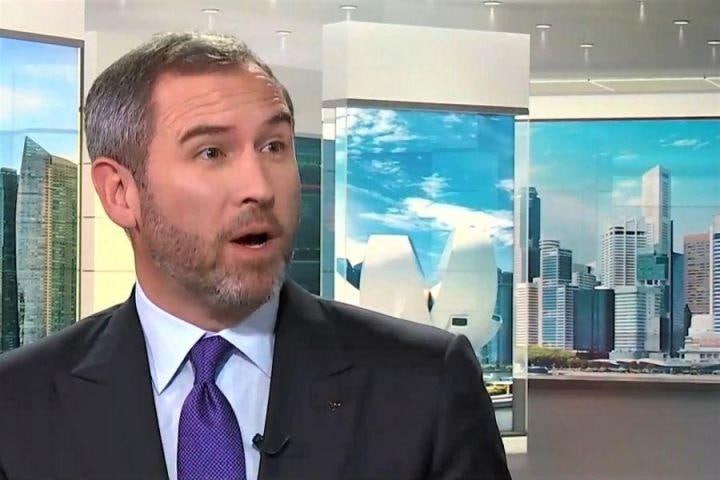
But Ripple has indicated that it is up for the fight, and in an impassioned defense of the token just ahead of Christmas, Ripple CEO Brad Garlinghouse made the claim that is not a security and that “many other G20 governments call XRP a currency,” leading him to the conclusion that “it is truly confounding that the SEC would take this step.”
But just how true is this claim? Do “many” G20 nations really hold this belief? We decided to find out.
Argentina
We’ve found no evidence of any Argentinian regulator saying anything in particular about XRP. Crypto legislation is very much in its infancy in Argentina.
Australia
A New South Wales judge ruled this year that crypto could be used as a legitimate form of investment, saying that bitcoin (BTC) could be “used as a security” and was a “recognized form of investment,” per the Australian Associated Press. But there is no clear link to XRP in this ruling - or any other that we could find.
Brazil
Ripple has a significant presence in Brazil, but it doesn’t look like anyone in a position of power has ruled on XRP’s legal status.
Canada
Cryptoassets are policed under securities laws in Canada, with no known exemption for XRP, and the country’s Currency Act of 1985, last amended in 2018, only specifies that Canadian dollars are legal tender.
China
Crypto’s name is mud in the Middle Kingdom - at least officially.
France
The situation is more nuanced in France, where the central Bank of France has spoken about XRP’s possible role in powering central bank digital currencies (CBDCs), per Fr24, but we were unable to unearth anything official about its “currency” status or otherwise.
Germany
The picture in Germany is confusing, to say the least. This super long document from the financial regulatory body the Federal Financial Supervisory Authority (BaFin) goes into great detail in its discussion of security tokens specifically, and other tokens, listing the laws that would apply in variety of scenarios. Crucially, however, the regulator refrains from making mention of any particular token. For the TL;DL crew, the answer is a resounding maybe, but nothing close to a firm “yes.”
India
No records or rulings found here.
Indonesia
Indonesia has a number of crypto-related regulations, but we couldn’t find any record of a ruling on XRP’s legal status.
Italy
Crypto still does not have any kind of legal tender status in Italy, and no references to XRP were found on our searches.
Japan
Japan is arguably way ahead of the rest of the world when it comes to crypto regulation, which is all carefully policed by the regulatory Financial Services Agency (FSA). The FSA approves tokens for listing on exchanges, so regularly goes into great detail on the legal status of individual altcoins. Ripple’s closest Asian ally is the Japanese financial giant SBI, which this week issued a statement pointing out that “XRP is a ‘cryptoasset’ under the Japanese Funds Settlement Law, and not a ‘security’ under the Financial Instruments and Exchange Act.”
South Korea
Seoul has remained silent on the matter, although sources familiar with the matter told that the government may seek to adopt a policy of token approval for exchanges at an unspecified future date.
XRP Army Fils A Petition, Digital Yuan Giweaway.
Legal news
XRP investors have filed a petition against the US Securities and Exchange Commission (SEC) on December 29, claiming "irreparable harm and damages" that declaring XRP a security causes them. The petitioners argued that the SEC is not protecting the investors it's tasked with protecting, and that the SEC complaint against Ripple is damaging to the holders of XRP. At the time of writing, 26,719 people had signed the petition, while 100,000 signatories are needed to move forward.
CBDCs news
Citizens in Shenzhen, China, will receive another combined USD 3m in handouts as the central People’s Bank of China (PBoC) prepares to conduct another test for its forthcoming digital yuan token. Per an official announcement from the government of Shenzhen, 100,000 digital red envelopes will be distributed to residents as part of a lucky draw even that will see “winners” credited with around USD 30 worth of the new central bank digital currency. The winners will have until January 17 to spend their tokens at 10,000 retailers in Shenzhen. The event follows on from a similar giveaway that conducted in the city in October 2020.
Regulation news
The US Financial Crimes Enforcement Network (FinCEN) announced its intention to amend the Bank Secrecy Act’s Foreign Bank and Financial Accounts (FBAR) regulations, which may see Americans having to report owning more than USD 10,000 in cryptoassets with foreign financial or virtual asset service providers. Currently, FBARs must be filed by individuals who have over USD 10,000 in foreign financial accounts. According to a brief rulemaking notice, "FinCEN intends to propose to amend the regulations implementing the Bank Secrecy Act (BSA) regarding reports of foreign financial accounts (FBAR) to include virtual currency as a type of reportable account.”
The central bank of Kyrgyzstan, the National Bank of the Kyrgyz Republic, has unveiled plans to introduce two pieces of draft crypto-related legislation, and has indicated that it wants to police the nation’s exchanges. If enshrined into law, the bills would introduce a number of Anti-money Laundering and Combating the Financing of Terrorism (AML/CFT)-related regulations, per Sputnik Kyrgyzstan. They would also force exchanges to operate within a legal framework in a bid to fight crypto-related fraud, debut a crypto tax system, force exchanges to apply to the National Bank for operating permits and provide a legal definition for terms such as “cryptoasset.”
Investing news
Bitwise Asset Management, a US-based provider of crypto index funds, said that it recently surpassed USD 500m in assets under management (AUM), after reporting USD 100m in AUM on October 28, 2020. The increased demand came primarily from Bitwise's core audience, investment professionals, including financial advisors, hedge funds, corporate balance sheets, and other institutional investors, they said.
Financial advisory and fintech organization deVere Group's CEO, Nigel Green, sold half of his bitcoin (BTC) holdings as it was rallying in December, he revealed in an announcement, his reason being that "it should now be treated as any other investment – that’s to say, where possible, it’s better to sell high and re-buy in the dips." He added that, while the longer-term price trajectory for BTC is upwards, many traders will see record high prices as an opportunity to sell, "so we can expect some pullback on prices in the near-term."
Bitstamp, Korbit Owner Set to Take Control of Bithumb.
The owner of Nexon, the South Korean gaming giant and the owner of the Bitstamp and Korbit crypto exchanges, has reportedly agreed on a deal worth USD 458m to buy a controlling stake in Bithumb, the nation’s market-leading trading platform.
Bithumb has been looking for a sale for several months after a failed takeover and accusations of fraud against two key executives. The exchange was placed on the market last year, with Samjong KPMG placed in charge of finding a buyer.
A number of parties expressed an interest in the exchange, but many have been put off by a new set of stringent compliance and regulatory measures set to promulgate in March, as well as an unresolved legal issue that could cost the platform USD 67 million in unpaid taxes.
But, per Maeil Kyungjae, Nexon supremo Kim Jung-ju has decided to take the plunge, in a deal that will see him take up a controlling 65% stake in the trading platform.
The exchange was valued at just under USD 600m, but it appears that the owners’ desire to exit the market post haste drew them to consider a much lower price.
Kim’s involvement in the crypto industry has been very eventful. His Nexon firm (and the NXC holding company) made its first crypto buy, Korbit, in September 2017, later moving to buy the European exchange Bitstamp in October 2018. Last year, NXC announced it was launching a third exchange from scratch.

This Multibillion Bitcoin Dump By US Gov Could Be a Drop in the Bucket.
The bitcoin (BTC) price has been a runaway train of late and there is seemingly nothing that can get in its way. Some believe that even if one of the largest BTC whales, the US Government, decides to sell its stash now worth billions of USD it wouldn't have a material effect on the market as BTC trading volumes more than doubled in a month.
As reported, in November, the US Department of Justice (DoJ) has forfeited BTC 69,370, worth over USD 1bn at the time. At the time of writing (07:59 UTC), it's worth more than USD 2.7bn, as BTC is trading at USD 39,629 after it briefly touched USD 42,000 yesterday.
The US government now controls the 6th richest BTC address (and the 4th richest if we exclude addresses controlled by crypto exchanges).
Meanwhile, the US Attorney’s Office for the Northern District of California recently filed a civil complaint for the forfeiture of those coins. If history is any indication, the bitcoins could be due to be sold in an auction by the US Marshals Service. That is what happened in 2014 and 2015 when the US government gained control of more than BTC 144,000 — worth USD 122m at the time and USD 5.7bn today — and sold them.
Indeed, auctioning off the bitcoins could be tempting for an incoming administration for whom the money spigot is poised to open wider as the pandemic tightens its grip on the economy.