
Australian digital finance industry wants to legally recognize DAOs.
A new legal initiative in Australia wants to allow DAO project governors to contract with other legal entities through DeFi tools.
Specialists and lawyers focused on decentralized finance (DeFi) are launching an initiative to create a new type of legal entity in Australia representing decentralized autonomous organizations (DAOs).
The country's Digital Law Association and global law firm Herbert Smith Freehills are lobbying an Australian Senate committee to formally recognize new decentralized models for corporate governance. These new DAO models would replace the board of directors with an internet community, the Australian Financial Review reported Thursday.
The initiative specifically intends to allow “DAO Limited” project governors to contract with other legal entities through DeFi tools, implementing blockchain technology to remove traditional intermediaries like banks and exchanges. Limited liability status will also prevent Australian members of a DAO from being liable for losses incurred by decisions made by a member of the community.
According to the lawyers, legalizing DAOs in Australia could make the country more attractive for global digital asset businesses, as groups of local DeFi entrepreneurs reportedly shift offshore to jurisdictions like Singapore and Germany.
A DAO is a decentralized organization with certain sets of rules that are encoded as a computer program and are usually based on blockchain technology. The first most important attempt to create a DAO was “The DAO,” a machine-operating venture organization launched in 2016.
The news comes as some cryptocurrency exchanges are shifting to a decentralized structure. Yesterday, ShapeShift crypto exchange announced plans to open-source its platform and dissolve its entire corporate structure in a move to underscore its commitment to DeFi. “Inspired by the broader DeFi community, we’ll now help pioneer a new model of economic coordination for the 21st century. No corporate entity, no banks and no borders. The tools are ready,” ShapeShift founder and CEO Erik Voorhees said.

✔️ Looking for 100x returns on your stake? SWAPP Staking Pool 3 is now live. Stake over 5 years to get crazy APYs. Scrape interest every epoch!
✔️ Swapp is democratizing the data industry, putting the power over consumer data where it belongs: In the hands of each individual consumer. Powering this newly decentralized data industry is our blockchain-driven infrastructure which is open to users ranging in size from individual consumers up to institutional players. Listed on CoinMarketCap Today! ✔️
🔥 STAKE YOUR TOKENS FOR CRAZY APYS 🔥
✅ SWAPP Staking Pools: https://dapp.swapp.ee/?w=0xde121Cc755c1D1786Dd46FfF7e373e9372FD79D8
📊 Holders: 3220+
🛡 AUDITED by RD Auditors and ChainConsulting 4x
🦎 Listed in CoinGecko & LiveCoinWatch, CoinMarketCap
💡 Our links: 💡
WEBSITE -> https://swapp.ee
TWITTER -> https://twitter.com/SwappFi
TELEGRAM -> https://t.me/SwappToken
🚀 BUY IT NOW 🚀
[UNISWAP] -> https://v2.info.uniswap.org/token/0x8cb924583681cbfe487a62140a994a49f833c244
ETHERSCAN -> https://etherscan.io/token/0x8cb924583681cbfe487a62140a994a49f833c244
CoinGecko -> https://www.coingecko.com/en/coins/swapp
CoinMarketCap -> https://coinmarketcap.com/currencies/swapp-protocol/
X (formerly Twitter)
Swapp Protocol ® (@SwappFi) on X
OFFICIAL SWAPP PROTOCOL TWITTER / Available on #eth #bsc #cronos / Data Monetization & Privacy w/ SwappID https://t.co/9lPt3LWKp1
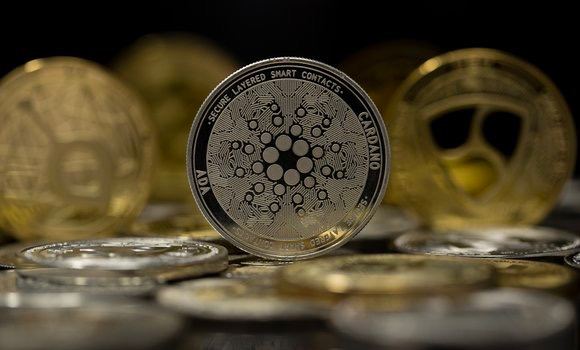
Cardano grows closer to launching smart contracts with new testnet.
The Alonzo White testnet brings NFTs and various De-Fi use cases one step closer for Cardano.
IOHK, the blockchain development team behind Cardano, announced on July 15 that the project’s Alonzo test net had officially transitioned from Blue to White, bringing with it the ecosystem’s long anticipated expansion to functional smart contracts.
While the previous testnet, known as Alonzo Blue, did offer some smart contract features, these were only available to a limited number of insiders. Yesterday’s upgrade will allow about 500 validators, stake pool operators, and developers to test these features going forward.
Alonzo White is set to run for two to four weeks before upgrading to the final testnet for its current development phase, known as Alonzo Purple.
Despite some recent backlash from others in the blockchain community, Cardano founder Charles Hoskinson recently said in a YouTube video that everything is still on track according to the project's development roadmap, noting that more than $10 million in NFTs have been sold throughout the Cardano network along with “tens of thousands of assets”. Once Alonzo White is released to the mainnet, developers will be able to launch dApps, NFTs and more.
On the heels of the Alonzo White announcement, an NFT and DeFi Marketplace called the Spores Network announced a successful $2.3 million fundraise on July 16. The company stated that it hopes to leverage Cardano's lower transaction costs, lower carbon footprints, and higher transaction throughput to bring NFTs to mainstream users.
With more companies and artists joining the growing NFT market, such as Dolce and Gabbana and a fantasy soccer platform, bringing more NFTs to the network could lead to big gains for Cardano and its users.
Kraken CCO will join crypto exchange Bitstamp to run US operations.
“We doubled our US team in 2021 and expect to triple the team by 2022,” said Robert Zagotta.
Cryptocurrency exchange Bitstamp has hired Robert Zagotta, chief commercial officer of Kraken, to be the first CEO of its business in the United States.
In an announcement today, Bitstamp said Zagotta would be coming on board to “oversee day-to-day operations” and accelerate the exchange’s growth in the country. He was with crypto exchange Kraken for more than three years and also worked as a senior managing director with the Chicago Mercantile Exchange Group.
“The US has a unique regulatory landscape and a huge potential upside in the digital asset industry,” said Bitstamp Global CEO Julian Sawyer. “By appointing a regional CEO for Bitstamp, it demonstrates the importance that the United States is playing for our global exchange.”
Zagotta told Cointelegraph he would be focused on “the intricacies and opportunities in the U.S. market,” while Sawyer would handle Bitstamp’s global vision. He said his goal would be to draw in interest from U.S. businesses and investors, but the exchange was “already a major competitor” for local crypto exchanges.
Bitstamp has hired several professionals to fill executive roles in recent months. Sawyer, a former Gemini executive, replaced the exchange’s long-running CEO and co-founder Nejc Kodrič in October. The firm also announced it would be taking on a new chief financial officer and chief operating officer in April.
“We will continue to bring in top talent in the U.S. and around the globe,” said Zagotta. “We doubled our US team in 2021 and expect to triple the team by 2022.”
According to Bitstamp, the crypto exchange has seen a 570% increase in new customers in the United States for the first half of 2021, with a 281% increase in assets under management. Data from CoinMarketCap shows the exchange ranks 11th overall, with a daily trading volume of more than $270 million.

Rangers Protocol launches Ethereum Virtual Machine-compatible testnet.
The project is branding its testnet as useful to “new developers without blockchain background knowledge."
The Rangers Protocol has opened its testnet to users aiming to provide an Ethereum Virtual Machine-compatible solution that supports cross-chain contract interoperability.
In a Friday announcement, the Rangers Protocol said it had successfully migrated its first Dapp to the testnet which went live on July 19. The project migrated an Ethereum-based lending protocol, BlueStone, to the testnet, a move the protocol described as “smooth and developer-friendly” given Rangers’ Ethereum Virtual Machine, or EVM, compatibility.
Though there are seemingly alternative solutions utilizing blockchain technology friendly to Solidity developers, Rangers Protocol is branding its testnet as useful to “new developers without blockchain background knowledge.” Individuals interested in building using the protocol will reportedly have an easier time creating nonfungible tokens, or NFTs, as well as gaming applications in a permissionless environment.
Rangers Protocol co-founder Mary Ma announced in June that it would be launching its testnet in July following $3.7 million seed and private equity funding rounds. Ma claimed the protocol would have decentralized apps on its network, and include a cross-chain protocol, NFT protocol, and EVM compatible system. The project is reportedly the work of three years of development.
Crypto also recently launched its chain testnet allowing projects built on EVM-compatible chains to transfer over to its ecosystem. The open source testnet, Cronos, runs on a proof-of-authority consensus algorithm and is powered by proof-of-stake chain Ethermint.
Originally branded as the Rocket Protocol, Rangers is a China-based crypto company with an estimated valuation of $63 million. Venture funds backing the project include Pantera Capital, Huobi Ventures Blockchain Fund, Framework Ventures, Alameda Research, AU21 Capital, Hashkey Capital, SevenX Ventures, SNZ, Spark Digital Capital, and others.

Take Part in PrimeXBT’s $20,000 Giveaway!
PrimeXBT is excited to present an all-new giveaway designed to reward some of the platform’s users who interact with PrimeXBT on social media and community chanels.
Learn more https://primexbt.com/blog/take-part-in-primexbts-20000-giveaway/
PrimeXBT is excited to present an all-new giveaway designed to reward some of the platform’s users who interact with PrimeXBT on social media and community chanels.
Learn more https://primexbt.com/blog/take-part-in-primexbts-20000-giveaway/
Institutions continue offloading BTC exposure despite price rebound.
Bitcoin funds are still in decline as institutional sentiment remains bearish.
Investments in institutional Bitcoin products have continued to decline this past week.
In its July 26 Digital Asset Fund Flows report, CoinShares notes institutional crypto products have experienced outflows for the third consecutive week, with $28 million exiting the sector during the week ending July 23. As such, the week saw a 170% increase in outflows compared to the $10.4 million for the previous seven days.
The findings revealed that Bitcoin-based funds saw the largest outflows with $24 million, or 85% of combined outflows from crypto products. Monthly outflows for BTC are now at $49 million, although year-to-date flows remain positive at $4.1 billion. CoinShares stated:
“Last week’s outflows suggest negative sentiment still pervades the asset class despite more recent constructive comments from key industry players.”
Ether products also saw outflows of $7.3 million over the week, while multi-asset funds bucked the trend with a net inflow totaling $3.1 million. The report added that multi-asset funds are the only class of crypto investment products that have experienced net inflows for every week of 2021 so far.
Despite the downturn, leading crypto asset manager, Grayscale, recorded an inflow of $2.5 million for the period. Its latest assets under management bulletin reports total assets under management of $33.6 billion as of July 27.
CoinShares concluded that investment product turnover remains low at $1.7 billion for the week — comprising just 22% of May’s weekly average.
However, CoinShares’ data was recorded before Monday’s bullish market action that saw Bitcoin gain 15% in less than three hours.

🇬🇧 Crypto Exchange Currency.com joined the British crypto association CryptoUK
Regulated Crypto Exchange of Tokenized Assets Currency.com joined CryptoUK, the UK cryptocurrency association.
CryptoUK is a self-regulating trade association of the United Kingdom, works to raise industry standards, eliminates misconceptions about the cryptocurrency sector and establishes a dialogue with the authorities. Currency.com joins the association as an executive member.
Along with other members of the association, the crypto exchange will provide information to regulatory and policy-making bodies in order to facilitate the development of new regulatory norms in the crypto sector.
Along with Currency.com, CryptoUK’s executive members are Crypto(.)com, CryptoCompare, BCB Group, Electroneum, eToro, Ripple, Simmons & Simmons and others.
Register and trade on Currency.com top cryptocurrencies and tokenized assets!
🎙AMA Announcement
Crypto Land will host an AMA Session with ESP in Crypto Land + ESP chat.
⏱START 4PM UTC 31.07.2021
Prepare your best questions and be ready to participate in time, see you soon.
Please make sure to follow Telegram group @espcoin_chat
🌐Website - http://www.espcoin.io
Crypto Land will host an AMA Session with ESP in Crypto Land + ESP chat.
⏱START 4PM UTC 31.07.2021
Prepare your best questions and be ready to participate in time, see you soon.
Please make sure to follow Telegram group @espcoin_chat
🌐Website - http://www.espcoin.io
Bitcoin Mining Difficulty Breaks the 2nd-Longest Drop Streak.
After four consecutive drops, Bitcoin (BTC) mining difficultly increased on July 31, cutting into the growing profit margins of BTC miners.
Bitcoin mining difficulty, or the measure of how hard it is to compete for mining rewards, went up by 6%.
This brought it back up from the 13 T level, where it had dropped during the previous adjustment, to almost 14.5 T - still far from the all-time high of 25.05 T. Also, this is the first adjustment up since China cracked down on crypto mining in May.
Nonetheless, this increase comes after four drops in a row, two of which were quite substantial: the historic drop of nearly 28%, and a drop of nearly 16%.
Notably, having more than two consecutive drops is not that common at all. Prior to this, there were only two such cases: three drops in late 2018, and eight in late 2011.
Per BitInfoCharts, hashrate, or the computational power of the network, has seen a smaller increase since the previous adjustment two weeks ago, going up from 101.15E to 104.39E (7-day simple moving average). This is nearly 43% lower than the all-time high recorded on May 14, and 24% higher that the yearly low hit on July 3.
Bitcoin mining profitability has also seen a jump since the last difficulty adjustment, going up 19% in two weeks.
FTX Sees 'Explosive Growth' With More than 1M Sign-Ups This Year
A two-year-old crypto unicorn, derivatives exchange FTX, just showed an "explosive growth and adoption" as it has seen more than a million sign-ups in the first half of 2021, marking a nearly 400% rise in this period of time.
"And it’s safe to say that users keep coming back for more," said the exchange in their review of the year's first half, as they've recorded more than 10m 1-day active users since January 1.
Further "enormous growth" has been seen in volume, with USD 1.88trn in total volume and an average daily volume (ADV) of USD 10.97bn - which represents a 934% increase since January. In comparison, last year’s total volume was over USD 385bn, while ADV was USD 1.06bn.
Additional points made by the review include:
- spot margin lending saw "massive increases": the total notional value of outstanding loans (in a 24 hour period) exceeded USD 2.5bn in May;
- FTX (the exchange's US operations) has the deepest liquidity of all US competitors, having gone from less than USD 1m a day in mid-2020 to a peak of nearly USD 1bn a day;
- FTX over-the-counter volume averaged USD 500m-USD1bn in daily volume across over 100 different currencies on FTX and some 20 currencies on FTX;
- in January alone, the exchange listed 70 new markets and overall added more than 100 listed markets and support for 125 assets as collateral, compared to the end of 2020 when they had had 1,100 listed markets and had added support for 71 assets to be used as collateral.
As for the year's second half, the exchange said that they see opportunities for further expanding their global product line, the US operations, international presence, and charitable efforts.
As reported in July, the operator of the exchange, FTX Trading Ltd., said it closed USD 900m Series B fundraise, with over 60 investors valuing the company at USD 18bn, as it looks to expand its global presence and accelerate growth. A year ago, it was valued at USD 1bn.
The coin that represents all Doge Coins is givingaway 150$ to you guys!!
Republic of Dogs ($ROD) is a deflationary BSC token that strives to be the representing coin of all Dog Coins.
♛ 2% Rewards to Holders
♛ 3% Marketing Contribution
♛ 7% Buy-Back Contracts
♛ Long-term marketing strategy
♛ Transparent project
Pre-sale in the upcoming days, huge marketing campaign the one you've never seen before!
Join telegram group: https://t.me/rodtoken
Follow on twitter: twitter.com/RODTOKEN_
Telegram
Republic of DOGS($ROD)
Countdown Pre-Sale at : https://rodtoken.com
Twitter: twitter.com/RODTOKEN_
Telegram
h
v
PoS Coins, Lightning, DeFi & DEXes In Danger as US Bill Chaos Intensifies.
Mayhem appears to have broken loose in the world of American politics, and the crypto community may be caught in the eye of the storm, as now, proof-of-stake (PoS) networks might be left in danger at a time when Ethereum (ETH) is moving towards PoS. Moreover, the Lightning Network, decentralized exchanges, and DeFi might get hurt too.
A controversial infrastructure bill being moved with alacrity through the parliamentary system contains a number of clauses that pertain to crypto players and how they are taxed. As previously reported, most of these pertain to the legal definition of a “broker.” This week, the American crypto community has attempted to drive up support for a bipartisan amendment to the bill put forward by three senators, including the crypto-keen Cynthia Lummis.
The original bill could force the crypto mining and trading community to cough up a staggering USD 28 billion – to help fund hundreds of billions worth of USD worth of public spending projects. “Broker” status would force miners and developers to provide exhaustive lists of documents and transaction history records to Internal Revenue Service officials – before paying taxes on their holdings and historic earnings.
Lummis, along with the Senate Finance Committee Chairman Ron Wyden and the Republican Senators Pat Toomey, proposed an amendment that would exempt miners, validators, blockchain developers and wallet-making developers from being classed as “brokers” – and thus subject to all of the provisions of the bill.
Meanwhile, Treasury Secretary Janet L. Yellen spoke with lawmakers Thursday to raise objections to the effort led by Wyden and other senators to weaken the legislation’s proposed crypto overhauls, The Washington Post reported, citing two undisclosed people. Yellen lobbied Wyden about the matter, per the report.
And now, a fresh spanner has been thrown into the works – in the shape of a brand new, rival amendment that appears to have backing from the Presidential office.
The amendment was launched by senators Rob Portman, Mark Warner and Kyrsten Sinema. Confusingly, perhaps, this new amendment proposed the same for of exemption as the original amendment – but only for proof-of-work (PoW) miners, such as Bitcoin (BTC), and (for now), ETH miners. That means developers and validators on proof-of-stake networks like and Cardano (ADA) (or yet-to-be-launched Ethereum 2.0) would be classed as brokers – while Bitcoin protocol professionals would effectively escape unscathed.
Some were quick to point out that in some respects at least, there appeared to be very little difference if at all between at least certain parts of the latest amendment proposal.
🚀 Robinhood grew by 123% after the IPO
The popular trading platform Robinhood showed an increase of 123% after its IPO, becoming one of the most successful IPOs this year.
Regulated crypto exchange Currency.com conducted a listing of tokenized shares of Robinhood. Investors have the opportunity to buy, sell, store and withdraw token shares from the crypto exchange to a crypto wallet that supports the ERC-20 standard, and trading with leverage up to 20x is also available.
Total for Currency.com there are more than 2000 tokenized assets available, including:
- Top cryptocurrencies.
- Promotions.
- Stock indexes.
- ETF.
- Currencies.
- Raw materials.
- Bonds.
You can top up your account on the crypto exchange by bank transfers, from a Visa/MasterCard card in RUB, EUR, USD and BYN
Register with Currency.com and trade Robinhood token shares!
Pre-sale in 10minutes, huge marketing campaign the one you've never seen before + a famous rapper is going to advertise our pre-sale shhh🤫!
Pre-Sale link : www.rodtoken.com/presale
✅ Website : https://rodtoken.com
✅ Telegram : https://t.me/rodtoken - beware of scammers.
♛ 2% Rewards to Holders💰
♛ 3% Marketing Contribution💎
♛ 7% Buy-Back Contracts🔥
♛ Long-term marketing strategy
♛ Transparent project🖼
♛ Total Supply: 1 Quadrilion🔥
Presale will be organized on DxSale Platform.
Rodtoken
Rodtoken: Buy Bitcoin & Crypto - Crypto Exchange, App & Wallet
Man who minted 14M ICX tokens due to a bug can pursue lawsuit to keep them.
A flaw in an upgrade to the ICON blockchain in 2020 allowed a user to repeatedly mint millions of ICX tokens.
A cryptocurrency enthusiast who exploited a bug in the ICON network to mint a large amount of its native ICX token can pursue entitlement claims according to a California federal judge.
On Monday, Aug. 9, U.S. District Judge William H. Orrick said that the case raises novel questions about digital property. He added that plaintiff Mark Shin had adequately alleged that the ICON Foundation was wrong to freeze his crypto asset accounts after he took advantage of its flawed code.
According to Law360, the allegations were enough to allow the case to go forward, with Judge Orrick denying the bulk of ICON Foundation's motion to dismiss the claims.
According to court filings, Shin discovered a bug in the ICON Network's code after a software update in August 2020. When attempting to transfer staked tokens, Shin discovered that 25,000 new native ICX tokens had appeared in his wallet.
He thought that there was a “visual bug with the wallet software” and attempted the process again whereby another 25,000 ICX tokens were generated.
The code flaw allowed Shin to create a total of 14 million new ICX tokens worth around $7.8 million at the time. Many of those tokens he then transferred to the Kraken and Binance cryptocurrency exchanges.
According to the court order, Shin acknowledged that “the authors and developers of the [software update] may not have intended for the network proposal to behave as it did,” but argued that he was the new lawful owner of the tokens since the code changes had been adopted.
He claimed that ICON disagreed and asked Binance and Kraken to have his accounts frozen, saying that he had attacked the network. The judge agreed with the plaintiff’s claims of possible token ownership rights allowing the case to proceed, stating:
“The inquiry at this stage, however, is whether Shin has plausibly alleged possessory interest in the ICX tokens. I find that he has.”

🚀 London hardfork in the Ethereum network - will there be to the moon?
On August 5, the London hardfork took place in the main Ethereum network, which continues the network's transition from the PoW algorithm to the PoS algorithm, which in the future may have a positive impact on the value of ETH. The transition to the new algorithm assumes a slower issue of Ethereum, which can form a shortage of coins on the market.
The potential goal of ETH is to update the historical maximum, which is at $4 380, which is more than 50% higher than the current levels. Do not miss the opportunity to invest in Ethereum and go "to the moon" together with the top cryptocurrency!
Buy the ETH legally and safely, using a bank transfer in RUB, EUR, USD, BYN, as well as using Visa/MasterCard cards on a regulated crypto exchange of tokenized assets Currency.com!
Register and trade on Currency.com!
What Is the Metaverse? A High-Tech Plan to Facebookify the World.
Facebook chief executive Mark Zuckerberg recently announced the tech giant will shift from being a social media company to becoming “a metaverse company”, functioning in an “embodied internet” that blends real and virtual worlds more than ever before.
So what is “the metaverse”? It sounds like the kind of thing billionaires talk about to earn headlines, like Tesla chief Elon Musk spruiking “pizza joints” on Mars. Yet given almost three billion people use Facebook each month, Zuckerberg’s suggestion of a change of direction is worth some attention.
The term “metaverse” isn’t new, but it has recently seen a surge in popularity and speculation about what this all might mean in practice.
The idea of the metaverse is useful and it’s likely to be with us for some time. It’s a concept worth understanding even if, like me, you are critical of the future its proponents suggest.
The metaverse: a name whose time has come?
Humans have developed many technologies to trick our senses, from audio speakers and televisions to interactive video games and virtual reality, and in future we may develop tools to trick our other senses such as touch and smell. We have many words for these technologies, but as yet no popular word that refers to the totality of the mash-up of old-fashioned reality (the physical world) and our fabricated extensions to reality (the virtual world).
Words like “the internet” and “cyberspace” have come to be associated with places we access through screens. They don’t quite capture the steady interweaving of the internet with virtual realities (such as 3D game worlds or virtual cities) and augmented reality (such as navigation overlays or Pokémon GO).
Just as important, the old names don’t capture the new social relationships, sensory experiences and economic behaviours that are emerging along with these extensions to the virtual. For example, Upland mashes together a virtual reflection of our world with non-fungible tokens (NFTs) and property markets.

❗️🔥 How to become MILLIONAIRES in this bullrun 🔥❗️
✅ I will share a hidden gem with you that was recently mentioned by CNBC and Bitboy and also was awarded by the German Government.
The project is called ACRIA and they are building an improved version of Chainlink. Acria is already partnering with the German Government and other big companies and projects like MakerDAO, Litecoin, Polygon.
✅ Acria is building on Cardano (ADA) too
✅ A 100x is possible with this project. I am also invested in the project.
✅ Get in now and get double the amount of ACRIA Tokens (limited time only)
💵 Buy ACRIA here 👉 https://acria.network/
Buy Acria now or you will regret it!
Crypto Sector World’s 3rd Industry in Phishing Attacks Growth - Report.
hishing activities continue to intensify across the world, with their volume for the second quarter of 2021 outpacing the same period last year by 22%. Cryptocurrency increasingly finds itself in attackers’ sight, with a tenfold increase in attacks on exchanges, according to a recent report by cyber threat intelligence company PhishLabs. Due to a spike in attacks, the crypto sector is now ranked as the third industry in terms of growth of phishing attempts.
“In Q2, a combination of brand, executive, and employee impersonation attacks accounted for over half (54.7%) of all social media attacks in the Cryptocurrency sector. This activity identifies threat actor attempts at impersonating cryptocurrency businesses to confuse customers and cash in on the sector’s skyrocketing growth,” the US firm said.
The global crypto industry reported a 13% increase in phishing attacks in the April-June 2021 period compared with the first quarter of this year.
This meant that only two other industries reported a higher growth rate in such attacks in the second quarter of 2021: payment services, with a staggering increase of 561.8%, and broadcast media, up 112.5%, as indicated by data from the report.
“We anticipate cryptocurrency businesses will continue to be aggressively targeted by threat actors through social media in future quarters, due to a majority of their activity and communication taking place through social platforms,” PhishLabs said.
Three site staging methods accounted for all of the phishing attacks targeting crypto exchanges, according to the report.
“Free Hosting solutions hosted 96.5% of the phishing sites, while Compromised Sites accounted for 3.4% of the activity. A small number of sites targeting exchanges abused development tools for staging,” according to PhishLabs.
The remaining 0.1% of such attacks on crypto exchanges were staged with the use of development tools, the analysis said.

🤑 Crypto Exchange Currency.com continues a series of tournaments for traders with a prize fund of $10 000!
In order to participate in the tournament, it is necessary to:
- Register on Currency.com.
- Pass the verification procedure.
- Perform trading operations with leverage.
- Demonstrate the highest profitability.
- Get into the TOP 3 participants and take the prize.
The winners will be determined by the highest yield (P&L) on leveraged trading operations. The rewards are distributed as follows:
🥇1st place - $5 000
🥈 2nd place - $3 000
🥉 3rd place - $2 000
The tournament runs until August 27, 2021. Register and win!