
Bahamas, Cambodia, China Lead Global CBDC Race, UK Launches Taskforce.
The Bahamas, Cambodia, and China are the three countries with the most mature central bank digital currency (CBDC) projects, as only 23% of the world’s retail projects have reached the implementation stage, and close to 70% of wholesale projects are in pilot program phase, according to international consultancy PwC. Meanwhile, today, the Bank of England (BoE) and Her Majesty’s Treasury announced the joint creation of a new Taskforce to coordinate work on the potential UK CBDC.
The Bahamas and Cambodia secured top positions on the podium as their respective CBDC projects are live, while China is currently testing its digital yuan project. More than 88% of the world’s CBDC projects that are currently in the pilot or production phase use blockchain technology, according to data from the report, which was obtained by Bloomberg.
“CBDCs will contribute significantly to the modernization of the international monetary landscape, hand-in-hand with reconfiguration in both payment and financial infrastructure,” according to PwC, who estimates that this new type of money will generate new opportunities for further digitization in both corporates and financial institutions.
Within the field of interbank or wholesale projects, Thailand and Hong Kong were tied for the top spot, followed by Singapore, Canada, and the UK, PwC said.
The central bank also said it will establish a CBDC Unit that will lead its internal exploration around CBDC and external engagement on CBDC.
The BoE and the Treasury stressed that they have not yet made a decision on whether to introduce a CBDC in the UK, and they "will engage widely with stakeholders on the benefits, risks and practicalities of doing so."
Per the announcement, a CBDC would be a new form of digital money issued by the Bank of England and for use by households and businesses. "It would exist alongside cash and bank deposits, rather than replacing them," they said.
Meanwhile, per the PwC report, other large economies, such as the US and the European Union, have lagged behind, but recent statements by decision-makers indicate that the European and American CBDC projects could gain traction amid increasing pressure from China and its digital yuan initiative.
Also, motivations behind the countries’ respective CBDC efforts vary, with some countries declaring they want to use such currencies to increase their populations’ financial inclusion, and others aiming to use them as a source of enhanced control over their monetary policies.

Thodex Users File Complaints Alleging Fraud as CEO Flees the Country.
Turkish crypto traders have reportedly filed thousands of criminal complaints against local crypto exchange Thodex alleging fraud, while its head had reportedly fled the country.
The lawyer representing the users said that the complaints were filed after the users were unable to access their accounts or withdraw their money, reported Reuters.
Lawyer Oguz Evren Kilic said he was contacted by users on Wednesday who filed a criminal complaint on behalf of several people in Ankara, while thousands of others had also filed complaints across the country.
“It is not clear where this is headed," he told Reuters. "There have been thousands of criminal complaints made in many places around Turkey,” adding that the platform had 400,000 users, 391,000 of whom were active. “We will file a case with the consumer court right away. The two processes - criminal complaints and the case - will run simultaneously,” Kilic said.
Per Bloomberg, the lawyer claimed that with this number of active users, assets that remain “irretrievable” may be worth hundreds of millions of dollars.
The trading volume on Thodex was USD 744.9m on April 21, down from 1.39bn recorded five days prior, according to CoinGecko.
The lawyer also said that a preliminary assessment by police showed Thodex CEO Faruk Fatih Ozer had flown out of the country on Tuesday, with the users worried that he took with him the money meant for trading on the platform. Ozer was reportedly seen in Albania.
As reported, Thodex abruptly halted trading on Wednesday citing an unspecified partnership transaction, spurring complaints from users who can’t access their digital assets. Services are said to be shut for approximately five working days while the share transfer is completed, but the exchange said that users needn’t worry about their investments.
An Istanbul prosecutor’s office said it has launched an investigation into the company due to claims that it had led to the “aggrievement of many citizens,” per Reuters.
The Turkish government should take action as soon as possible, Cemil Ertem, senior economic adviser to President Recep Tayyip Erdogan, told Bloomberg. “Pyramid schemes are being established in this area. Turkey will undoubtedly carry out a regulation that’s in line with its economy but also by following global developments.”
But Kilic is quoted as saying that “we said in meetings with various government authorities that a digital asset law should be made and legal regulations should be created. You cannot do anything with bans in this age.”
Last week, Turkey banned the use of crypto assets for payments, claiming that tokens entail significant risks due to volatile market values, irrevocable transactions and can be used to fund illicit behavior.

🚀🚀PIXL - MOONSHOT🚀🚀
PIXL is aiming to lead the blockchain industry in advertising by partnering with other crypto currencies - both old and new.
The partnerships will bring further investments into PIXL, increasing the value for all holders.
🌟TOKENOMICS🌟
5% automatically distributed to coin holders 🌟
5% distributed to LP 🌟
Liquidity locked for 5 years 🌟
No dev wallets 🌟
Completely rug-proof! 🌟
Ownership Renounced 🌟
🌟ACHIEVEMENTS first 6 days🌟
2400+ holders ✅
Audit fully complete - 100% pass in all areas ✅
CoinGecko Application has been submitted ✅
Unirocket price bot up and running ✅
1st video AMA completed ✅
$5M+ MarketCap ✅
AUDIT results: https://solidity.finance/audits/PIXL/
Website - https://pixl.one
Telegram: @PIXLCoin
Twitter: https://twitter.com/pixlcoin
Youtube: https://www.youtube.com/channel/UCapfVtQNmR444PAw8ufLK_w
Instagram: https://www.instagram.com/Pixl_Crypto_Official/
Ethereum Won't Hide From Quantum Computers Behind PoS Shield.
Quantum computing has long been regarded as Bitcoin (BTC)’s ‘bogeyman.’ The popular fear is that, as secure as Bitcoin and other proof-of-work cryptoassets are in terms of standard cryptography, quantum computers could provide additional means of breaking them.
One other popular assumption is that, because they don’t use PoW, proof-of-stake cryptoassets such as Cardano (ADA), Polkadot (DOT), and Tron (TRX) (and eventually, Ethereum (ETH)) aren’t as vulnerable to quantum computing attacks as networks like Bitcoin, Bitcoin Cash (BCH) and Litecoin (LTC). However, according to a variety of computer scientists and crypto experts, it’s not the consensus mechanism of a coin which creates the biggest risk in terms of quantum computers, but rather the signature system.
In other words, given that the vast majority of PoS cryptoassets also use (non-quantum) cryptographic signature systems to sign individual transactions, they’re nearly as vulnerable to quantum hacks as their PoW rivals. That said, the advent of sufficiently powerful quantum computers is still some way off, while their emergence is likely to incentivize a widespread shift to post-quantum cryptography.
It’s the first mechanism that affects PoW more than PoS, with Bitcoin and other proof-of-work coins theoretically vulnerable to a quantum computer-driven 51% attack.
That said, Marek Narożniak — a physics PhD student at New York University who has worked with Prof. Tim Byrne on research into quantum computing — explains that talk of a 51% attack perpetrated by quantum computers still remains theoretical.
“If someone has a sufficiently large quantum computer and wishes to perform a 51% attack — consisting of outperforming remaining miners and producing invalid blocks — it would have to be a really massive quantum machine. The reason for that is that Bitcoin's proof-of-work is based on a hashing function for which there is no known efficient quantum algorithm that can reverse it,”.
But while Bitcoin’s weakness compared to PoS cryptoassets is still pretty hypothetical, quantum computing poses another threat that concerns PoS and PoW in equal measure.
“Even if consensus requires no cryptographic ‘work’ in the case of PoS it still does rely on cryptography which is currently mainly based on elliptic curves which are vulnerable to quantum algorithms. An attacker with sufficiently powerful quantum computers could break other validators signatures and still mess with the consensus,” said Narożniak.
This is a concern echoed by other commentators. In an analysis published by Deloitte, Bram Bosch wrote that around four million bitcoins are stored in addresses that use p2pk and p2pkh scripting, which is vulnerable to attacks via quantum computers.

This media is not supported in your browser
VIEW IN TELEGRAM
🔥HAPI @hapiHF will be one of the main partners of The BIGGEST Solana Hackathon YET. With Dona Mara as one of the main judges 🔥
🎉This incredible news mean that HAPI will be one of the invited guests on Solana Hackathon with Dyma Budorin and Dona Mara as main judges.
👉Further solidifying and consolidating our relationships with Solana
----------------------------------------------------
💰 TOTAL PRIZE POOL (Including grants): 1 000 000$
🟥 And special Prize from the Dona himself: 25 000$
✈️ GLOBAL PARTICIPATION: Yes. Hackathon will take place online
🗓 DATE: 15 May - 7 June 2021 (3 weeks in total)
-----------------------------------------------------
🔸What is Hackathon Solana Season?
The basic principles of Solana Hackathon are development of Solana ecosystem via facilitation of ideas and technological advancements on Solana blockchain.
------------------------------------------------------
📓 To know more about The Biggest Solana Hackathon yet visit solana.com/hackathon
Someone Paid USD 1.7M In Litecoin For Tom Brady Football Card.
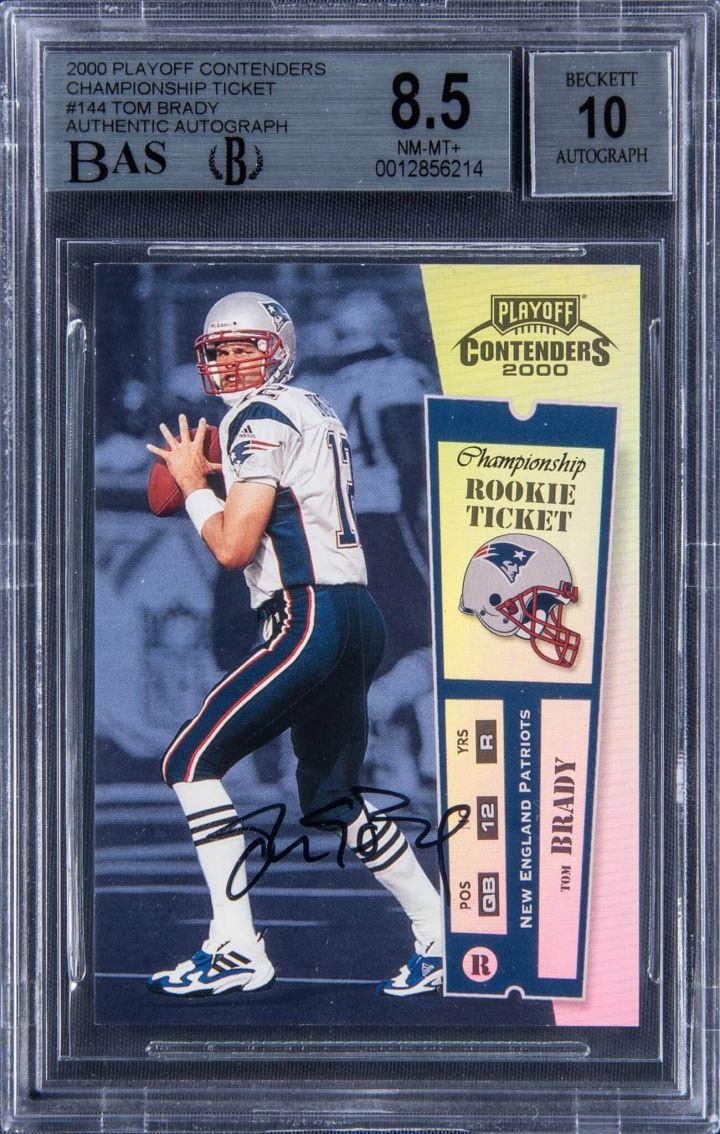
In what is called one of the largest "hard asset" transactions to be paid entirely in cryptocurrency, an unknown buyer purchased an autographed Tom Brady football card for about USD 1.68m worth of litecoin (LTC) at an auction hosted by Goldin Auctions.
The auction house says this marks the most expensive item to be paid in crypto since the company began to accept this form of payment last month.
“The hobby is undergoing incredible growth unlike anything I have seen in my 40+ years in the industry,” Ken Goldin, Founder of Goldin Auctions, told Sports Collectors Daily.
“What’s amazing to see is that the same thing is playing out with crypto. Trading cards and crypto are now two of the most rapidly growing alternative asset classes and we know there is a lot of overlap between the communities. We believe this may be one of the most expensive hard assets ever paid for in crypto,” he was quoted as saying.
Tyler Winklevoss, CEO and co-founder of Gemini, said that the 2000 Playoff Contenders card featuring Tom Brady, who was at that time a rookie drafted by the New England Patriots where he would spend a total of 20 seasons, was sold in partnership with his crypto exchange.
The card is “known as the "Holy Grail" of the collecting industry,” Winklevoss said.
This said, the item is not the most expensive card of this type to be bought at an auction. Earlier this month, a similar card autographed by the American athlete was sold for more than USD 2.25m at an auction hosted by Lelands Auctions. Both cards had a card grade of 8.5 out of 10, but the card auctioned by Lelands had a slightly lower autograph grade of 9 out of 10, compared with 10 out of 10 for the card purchased with litecoin.
At 09:58 UTC, LTC, ranked 10th by market capitalization, trades at USD 258 and is up by 2% in a day. The price is down by almost 1% in a week, trimming its monthly gains to 33%.
🤝 Currency.com announces a partnership with TradingView
Regulated tokenized asset exchange Currency.com has signed a partnership with TradingView, one of the world’s largest trading communities. Now Currency.com users can access TradingView charts directly from their dashboard, allowing them to analyze the market conditions faster and take more informed decisions.
Moreover, Currency.com customers will be able to share their ideas and strategies with other traders in real time, while TradingView users will be able to trade on Currency.com with minimal spreads and low fees.
Currency.com supports over 2,000 tokenized assets that you can buy, sell, and trade with a leverage up to x100, including:
- Tokenized shares
- Tokenized indices
- Tokenized ETFs
- Tokenized commodities
- Tokenized currencies
- Major cryptocurrencies.
Register and trade on Currency.com!
Are Wall Street Giants Playing the 'Make-Bitcoin-Cheaper' Game Again?
It seems that the Wall Street actors may be playing the same game seen in January - bashing bitcoin (BTC) when it looks relatively weak, while and/or before doing their own BTC-related move. We saw this from JPMorgan and Guggenheim Partners earlier, and now it's Goldman Sachs.
This week, US-based investment giant Goldman Sachs said that the competition from other cryptoassets, energy use, and lack of use cases are among the concerns surrounding bitcoin's long-term store of value demand.
It is too early for bitcoin to compete with gold for safe-haven demand, said the bank, but the two can co-exist, as Reuters reported. It added that the extensive energy use made it vulnerable to losing its store of value demand to a "better-designed" contender.
"While Bitcoin benefits from greater liquidity, it suffers from lack of real use and weak environmental, social, governance (ESG) scoring, due to its high energy consumption," the banks is quoted as saying. "The only way this record-sized and fast approaching supply crunch can be solved is via a surge in price to new record highs."
Furthermore, in the same note, Jeffrey Currie, Goldman's head of commodities research, said, per Kitco, that BTC "gave ground to other cryptocurrencies such as ether and altcoins. This, in our view, underscores the fact that competition among cryptocurrencies for the status of dominant long-term store of value is still on and adds an additional source of risk to holding bitcoin."
Just a month ago, it was reported that Goldman Sachs aims to offer its first investment vehicles for bitcoin and other unspecified digital assets to clients of its private wealth management group in the second quarter of this year. Some of the clients were reportedly considering BTC to be a hedge against inflation.
The bank also offers a crypto trading desk and is dealing BTC futures and non-deliverable forwards for their clients.
Furthermore, earlier in March, Goldman said it saw rising demand for BTC not only among institutional investors, but also in the private wealth management industry.
The company has delivered several relatively favorable views on crypto over the years. In late November 2017, Currie said that BTC was a commodity with many similarities to gold, and that the volatility that concerned investors stemmed mainly from its lack of liquidity. "I don’t see why there is all this hostility to it," Currie told Bloomberg back then. BTC is "not much different than gold." He added though that the "real innovation" is in the ledger, not in BTC itself.
In January this year, Currie stated that bitcoin was showing signs of maturity, but that the level of institutional investment in it was still very small - more is needed for it to stabilize. BTC had a market value of above USD 600bn at the time and over USD 1trn today. "That can give you some long-run equilibrium," Currie told CNBC. But the level of volatility and uncertainty in the market "makes it very difficult to forecast it."

South Korean Crypto Tax U-Turn Looking Unlikely, Despite Outcry.
Despite the recent outcry about crypto tax among younger South Koreans, a new small survey has found that most of the respondents are in favor of imposing taxes on crypto traders’ profits.
Per Segye Ilbo and Chosun, the survey quizzed 500 people aged 18 and over nationwide and was commissioned by the media network YTN and conducted by Real Meter.
And almost one in six respondents said they were in favor of the introduction of taxes – in line with the government’s plans. A new act on crypto taxes is set to come into force on January 1 next year. Less than 40% said they disagreed, with just 8% undecided on the matter.
And there appeared to be a firm gender divide on the issue. Despite a small army of South Korean crypto moms rushing into the crypto market, some 60% of female respondents said they backed taxes. Respondents aged in the forties were the demographic group most in favor of the tax measures, with over 62% backing the bill.
The measure has proven to be so decisive that it has sent the government into a spin, with some senior lawmakers saying that there is no going back on the tax plans – which will see higher-earning crypto traders forced to pay capital gains tax bills of 20% on their profits. But other figures from the ruling Democratic Party – afraid that a massive surge in online ire from the “2030” demographic (people aged 20-39) will turn on the party in the polls in next March’s general elections.
Some Democrat lawmakers have suggested conciliatory actions and have even talked vaguely about the possibility of delaying or amending the bill prior to promulgation. The main opposition party, meanwhile, has launched a “crypto taskforce” and has berated the Democratic Party for “betraying” young crypto-keen citizens.
But the survey appeared to show that not all people in their 20s are pinning their hopes on crypto riches: While 48% of twentysomethings respondents said they wanted the tax plans scrapped, 47.5% said they liked the idea of crypto taxes – with less than 5% stating they were unsure.
Meanwhile, a South Korean lawyer discussed the chances of a legal u-turn in crypto tax law plans in a column for Sisa Journal, Lee Kyung-geun, an Advisor at the Yulchon law firm, and the Vice Chairman of the Financial Tax Forum, pointed out that some ruling party officials have spoken of the possibility of deferring the new tax measures.
Lee wrote that politicians are likely to stick to the line that “wherever there is a source of income, it must be taxed,” and opined that to ensure “the sound development of the South Korean cryptocurrency market,” a framework of “laws and systems” was needed, as well as “legal mechanisms to prevent excessive speculation” on crypto trading platforms.

CryptEx is throwing $350,000 ☄️ into Staking on May, 10
What is CryptEx?
CryptEx is a B2B set of security services for Binance Smart Chain projects. CryptEx charges customers, and 50% of the fees go to its holders.
How to earn 50% of the fees?
All you have to do is stake CRX from your wallet, and every time a client pays for CryptEx services, the stakers get 50% out of this payment. All the rewards are paid in 💰BNB
Ask any question in the official CryptEx telegram chat 👉 @cryptexlocker
What about $100,000?
Since February 20, CryptEx provided services to 52 projects, charging them a total of over $100 000. However, staking has been released only on May 2.
After May 10, CryptEx will distribute 50% out of earned income between all CRX stakers. APY SHOULD BE ON FIRE 🔥.
Also, CRX Stakers are getting 1 000 000 DROPS (more than $250,000)during the airdrop. The snapshot will be recorded after May 10, at a random time.
Tiсker: $CRX
Max Supply: 100,000 CRX
Current Price: $36.88
FD MCap: $3,687,867
Network: Binance Smart Chain
Where to buy: 1Inch, ApeSwap, PancakeSwap V1
Join the chat: 🔥 @cryptexlocker
Investments news.
- An earnings report by e-commerce giant Mercado Libre shows that the company has purchased USD 7.8m worth of bitcoin (BTC). The purchase happened in the first quarter of 2021, as part of their treasury strategy.
- American financial services and bank holding company State Street Corporation has launched a Bitcoin Thematic Indicator series that quantifies media coverage of the asset to gauge the market sentiment. The tool’s purpose is to help institutional investors make informed decisions when planning their portfolios.
- Mexican crypto trading platform Bitso has become a unicorn as its valuation reached USD 2.2bn, following a Series C round of funding that injected them with a total of USD 250m, the Entrepreneur reported, adding that this deal makes them the first crypto company in Latin America to be valued more than USD 1bn.
- Swedish crypto broker Safello’s initial public offering (IPO) was oversubscribed by 1,240%—with a total of SEK 40.5m (USD 4.8m) available, the recorded interest came up to SEK 502m. The issue will see the company receiving around 1,500 new shareholders, but not all subscribers will receive the allotment.
- South Korean blockchain company Streami Inc. has announced that they’ve received a strategic investment from US-based major crypto company Digital Currency Group (DCG), making the latter their second-largest shareholder.
- Custom NFT startup Bitski has raised USD 19m in a Series A led by Andreessen Horowitz, according to TechCrunch. The startup is looking to simplify the entrance into NFT creation for brands and artists that may not be fully sold on crypto as a whole, with one of their early partners being Adidas.
- Upshot, a blockchain-based protocol that "incentivizes experts to answer subjective questions honestly," said it has raised USD 7.5m in Series A funding co-led by Framework Ventures, CoinFund, Blockchain Capital, and other investors. "The company’s first product - Upshot One - is specifically designed to tackle the problem of NFT price-discovery by incentivizing a community of experts to provide trustworthy, efficient appraisals of NFTs," they said in an emailed announcement.
- VanEck has launched a new thematic equity exchange-traded fund (ETF) in Europe providing exposure to companies deriving significant revenue from the digital assets ecosystem. The VanEck Vectors Digital Assets Equity UCITS ETF has listed on London Stock Exchange in US dollars (DAPP LN) and pound sterling (DAGB LN) and on Deutsche Börse in euros (DAVV GY), ETF Strategy reported.

🤑 How to earn $5,000 in a week? Take part in Currency.com's trading competition!
Follow several steps to join:
- Sign up to Currency.com
- Verify your account
- Trade with leverage
- Reach the highest P&L
- Become one of the TOP-3 participants and get your award
Traders with the highest P&L for leveraged-operations will become winners. The three leading traders will get:
🔸 1st place – $5,000
🔸 2nd place – $3,000
🔸 3rd place – $2,000
Join the competition and become the next winner! Read more: https://currency.com/cxmaygamecis
El Corte Inglés Fast-tracks Bitcoin-flavored Brand Name Registrations.
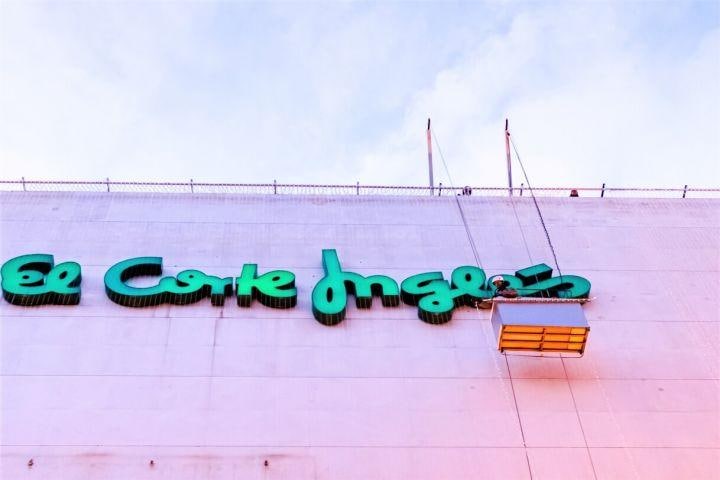
The Spanish retail giant El Corte Inglés has registered the business name Bitcor, in an indication that it could be prepared to take a further step into the world of crypto-related business.
Per El Pais, the firm has registered the brand name with the European Union Intellectual Property Office. The report added that the firm had also registered the brand name Bitcor El Corte Inglés on March 23. The office, it claimed, is currently in the process of considering “possible oppositions,” to the registrations, although “to date, none have been put forward.”
The company has fast-tracked its applications, and unless last-minute obstacles appear, the brands will be formally registered on June 28.
The application, El Pais reported, detailed that the Bitcor brand will provide “financial services, financial transactions related to currency exchange and currency trading.”
The media outlet added that “together with the Bitcor name,” this “makes its connection with the world of crypto clear.”
It also quoted “sources close to El Corte Inglés” as confirming the brands will have a crypto bent although they explained that the firm had “no imminent plan on the table to launch a cryptocurrency or any service related to this activity.”
The company refused to comment on the matter when asked by El Pais. Cryptonews has also submitted a request for comment.
However, El Pais’ sources also confirmed the company may have made a “preventive registry,” hoping to restrict other companies from using before it had made up its mind about taking the crypto plunge.
Back in 2019, the firm announced that it would begin using blockchain-powered solutions to track its renewable energy usage, while in 2018, the retailer was reportedly held talks with Eurocoinpay, a Spanish crypto pay platform based in León, about possible crypto pay-related business.
But El Corte Inglés’ latest move is by far its most bullish to date, even if has yet to come to fruition: The firm’s popular Bricor brand retails a range of DIY and home improvement equipment and materials. The company also operates a number of other business arms, all of which end in the -cor suffix, such as the Supercor and Hipercor supermarket outlets.
A Bitcor brand could potentially seek to retail crypto, particularly given the success of other high-street crypto retailers. These include Bitbase, which now has physical outlets in most of Spain’s biggest cities, with multiple outlets now operating in cities such as Barcelona and Madrid.
Drops ($DOP) have opened the Whitelist for their IDO on Polkastarter.
IDO Drops on Polkastarter will take place on the 21st of May. In order to participate you will need to hold at least 250 POLS on ERC20 or BEP20.
🔹 Hardcap at IDO: $200,000 (333,333 DOP)
🔹 Price at IDO: $0.60
🔹 Max allocation: $210
Previously Drops announced that they closed a private round raising $1m from such investors as Axia8 Ventures, Bitscale Capital, Blocksync, AU21, X21, D64 Ventures, Genblock and Drops Ventures. Also, their strategic partners include Polkastarter, Quantstamp, 0xb1, Kyros Ventures, Zokyo, PetRock Capital and BlockStar Technologies, as well as a number of high caliber angel investors.
Drops is a platform, which will bring a much needed DeFi-style infrastructure to the NFT market, providing such products as NFT trustless loans, NFT staking, liquid NFTs, and NFT vaults.
Find out more about Drops: https://t.me/drops_nft
Follow on Twitter: @dropsnft

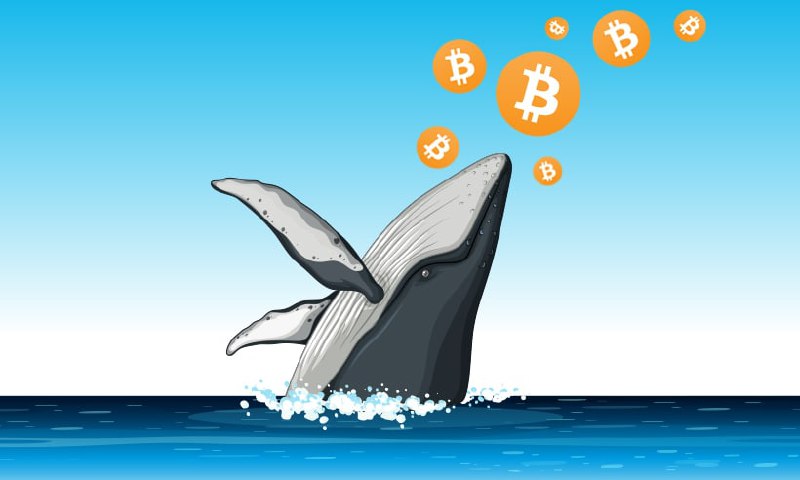
Bitcoin whale MicroStrategy buys additional 271 BTC.
CEO Michael Saylor disclosed the $15 million BTC purchase on Thursday.
Bitcoin whale MicroStrategy buys additional 271 BTCNEWS
MicroStrategy, a Virginia-based business intelligence firm, has added another 271 Bitcoin (BTC) to its strategic reserves, underscoring CEO Michael Saylor’s growing conviction in the digital asset.
The purchases were made through May 13 for an average price of $55,387, Saylor disclosed on Thursday. MicroStrategy now has 91,850 BTC on its books for an average purchase price of $24,403.
MicroStrategy also disclosed the purchase to the United States Securities and Exchange Commission through a Form 8-K filing that was submitted on Thursday.
Although MicroStrategy’s purchase appears to have coincided with the latest correction in Bitcoin’s price, which was spurred on by Elon Musk’s sudden decision to stop accepting BTC payments for Tesla vehicles, the business intelligence firm isn’t timing the market. Saylor indicated in February that he doesn’t intend to slow the rate of his company’s BTC purchasin as he snatched up another $1 billion worth of the digital asset.
MicroStrategy sits atop the Bitcoin corporate treasuries list, accounting for 0.437% of the asset’s circulating supply.
MicroStrategy is acquiring Bitcoin on the premise that the digital asset is a dependable store of value in the face of systemic dollar debasement. It has gone as far as issuing debt to expand its Bitcoin portfolio.
The United States’ M2 money supply has exploded since the 2008 financial crisis and, more recently, since the onset of the COVID-19 pandemic. Since February 2020, the money supply has expanded nearly 30% to $19.896 trillion, according to the St. Louis Federal Reserve Bank. To put that in perspective, the year-over-year increase in the M2 money supply had never exceeded 15% until 2020.
NYDFS taps former DOJ attorney as deputy virtual currency chief.
The former Department of Justice trial attorney has been with the New York State Department of Financial Services for eight years.
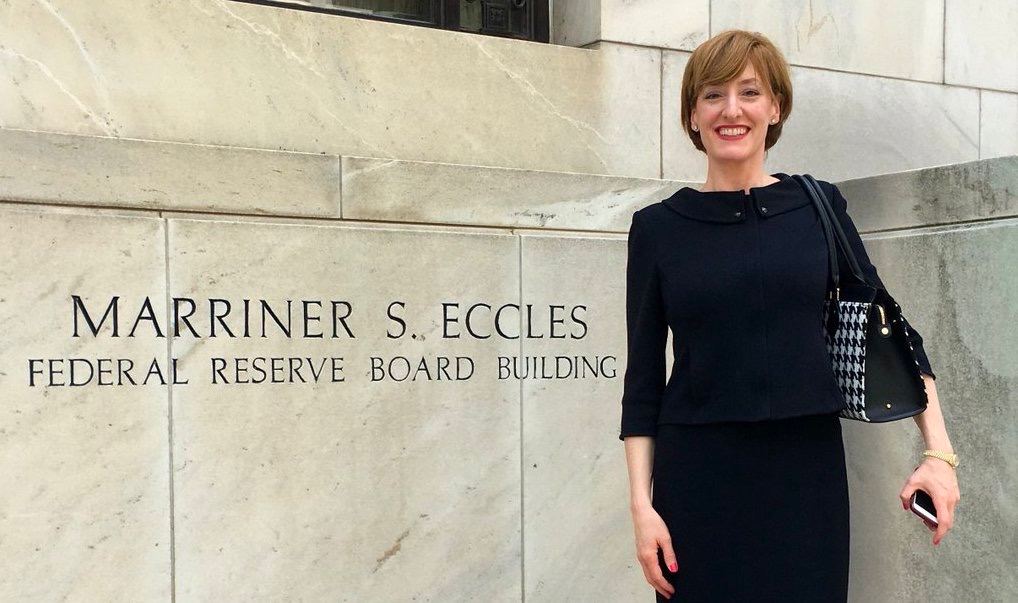
Debra Brookes’ new role with the New York State Department of Financial Services may suggest more of a focus on regulation through enforcement.
An attorney who has been working at New York’s Department of Financial Services, or NYDFS, since 2013, Brookes has served in key roles in the department’s Enforcement Division, Financial Frauds and Consumer Protection Division, and Consumer Protection and Financial Enforcement Division before becoming deputy virtual currency chief for its Research and Innovation Division in March. Prior to that, she worked as a trial attorney with the U.S. Department of Justice for five years, leading and participating in “complex white-collar investigations.”
Though the former DOJ attorney’s views on crypto have not been widely reported, she did contribute to a NYDFS report over the July 2020 hack on Twitter, which resulted in many high-profile accounts sending tweets fraudulently promising followers that they would double Bitcoin (BTC) payments sent to a specific address. That report concluded that “cryptocurrency companies had robust programs around cybersecurity, fraud-prevention, and anti-money laundering programs.”
With regulatory authority over many crypto exchanges and firms, the NYDFS has approved Goldman Sachs-backed crypto custodian BitGo to operate as an independent custodian in New York. The regulator has also granted BitLicenses — virtual currency licenses which allow firms to do business with customers and companies based in the state — to both global crypto payments processor BitPay and institutional cryptocurrency exchange Bakkt.
Brookes works under Jon Blattmachr, who has been the NYDFS' virtual currency chief since October 2020.

LAUNCHED LESS THAN 24 HRS AGO, UNDER 500K MCAP
Welcome to Grill.Farm on #BSC!
The fingerlicious Chicken $GRILL is here to both satisfy your cravings for a community-centered, trusted and fair token, as well as rile up your appetite for some succulent and decadent chicken meat 🍗
📈 Charts:
1️⃣ https://poocoin.app/tokens/0x7853401a1095dd0b04edb92366233c37fb511e89
2️⃣ https://www.dextools.io/app/pancakeswap/pair-explorer/0xac7ffc46af6503fe0ce490eb7fa14733673bbfb2
✅ Contract: https://bscscan.com/address/0x7853401a1095dd0b04edb92366233c37fb511e89
🔒 Liquidity LOCKED
🗺 Check our roadmap:
https://grilled-chicken-token.medium.com/what-is-grilled-chicken-token-addf2a07aba2
🔗 Links:
Website: http://grill.farm/
Telegram: https://t.me/Grill_Farm
Announcements: https://t.me/GrillFarm
Discord: SOON
Twitter: https://twitter.com/Grill_Farm
Instagram: https://instagram.com/Grill_Farm

'Crypto regulatory crackdown is starting' but it’ll be OK, says Avanti CEO.
Caitlin Long has stated she is optimistic about the crypto regulations that are taking shape in the United States as the focus is on taxation and compliance.
'Crypto regulatory crackdown is starting' but it’ll be OK, says Avanti CEO.
The founder and CEO of Avanti Financial, Caitlin Long says the “U.S. crypto regulatory crackdown” has begun, but emphasized it’s not a “Bitcoin ban.”
She said she was optimistic that the forthcoming regulations would simply bring crypto laws into line with standard financial rules around taxes and compliance.
There has been a renewed focus on regulations in recent weeks, with the brutal crypto market crash leaving left Washington fumbling for a response.
Avanti's CEO provided a chronology of nine news stories, public statements and announcements covering the IRS, the Office of the Comptroller of the Currency, FinCen, and the Secretary of the Treasury, among others, from May 5 to May 21, concluding the new regulations comprise a "compliance crackdown."
“It may not yet be over, but the pattern is pretty clear: it's a compliance crackdown for sure, but path for ‘responsible innovation’ in US does seem to remain open.”
Long highlighted a May 20 Department of the Treasury report that called for exchanges and custodians to report crypto transactions larger than $10,000.
“Leveraging this information — rather than introducing new requirements for taxpayers — is a proven way to improve compliance,” the report read.
Long also pointed out the Federal Reserve is taking aim at the stablecoin industry as well with the Fed chair Jerome Powell putting out a statement yesterday.
“As stablecoins’ use increases, so must our attention to the appropriate regulatory and oversight framework,” he said. He then remarked:
“This includes paying attention to private-sector payments innovators who are currently not within the traditional regulatory arrangements applied to banks, investment firms, and other financial intermediaries.”
Long characterized this as a “warning shot” saying that its “consistent w/ the theme-comply w/ laws & don't take shortcuts (i.e., get fully regulated as a bank & pay the full regulatory freight).”
In the statement Powell also revealed that the governing body is moving ahead with plans to research how to implement a U.S. central bank currency, or CBDC. The Fed chair noted the “key focus is on whether and how a CBDC could improve on an already safe, effective, dynamic, and efficient U.S. domestic payments system.”
Hacken Foundation launched a new disruptive cyber security project - one stop compliance protocol for DeFI- PureFi🔰
💎 PureFi performs a ML analysis and protects ALL honest DeFi market players from dirty money via NFT/Verifiable Credentials.
💎 Verifiable Credentials serves a purpose of a full-fledged KYC/AML verification and proves the origin of funds without disclosure other data (ZK-SNARK)
PureFi is HOT & profitable⤵️
🚀 $UFI token ➡️ DAOMaker, Uniswap 🔜
🚀 70% of PureFi service fees ➡️ used for burning $UFI tokens
🚀 $UFI token ➡️ available to HackenAI App yieldfarming
Excited? Join for an early access now ✅ #hacken $HAI $UFI #purefi
Telegram
Hacken (HAI) Official Chat
https://linktr.ee/hackenverse
Community of crypto and cybersecurity enthusiasts united to keep not only themselves but also their friends and family safe.
Official Discord: https://discord.gg/hacken
🔸$HAI: https://hai.hacken.io
Community of crypto and cybersecurity enthusiasts united to keep not only themselves but also their friends and family safe.
Official Discord: https://discord.gg/hacken
🔸$HAI: https://hai.hacken.io
Domino's Pizza franchises in the Netherlands will offer workers Bitcoin salary.
Any employee who earns more than minimum wage will have the option for the excess salary to be paid in crypto.
Domino's Pizza franchises in the Netherlands will offer workers Bitcoin salary.
A franchisee of many Domino’s Pizza locations in the Netherlands announced today that its workers would have the choice of being paid in Bitcoin.
According to Immensus Holding, the franchisee behind 16 Domino's Pizza locations out of the more than 270 in the Netherlands, its employees will be able to choose between being paid in euros or Bitcoin (BTC) for all salary above the country’s minimum wage. BTC Direct, a Netherlands-based crypto firm with a fiat-to-crypto onramp, will handle the payments for any of the company’s more than 1000 employees who choose to participate.
"We are a modern company, and we work with a lot of young employees,” said Immensus co-owner Jonathan Gurevich. “We hear them talking about Bitcoin and we want to offer the opportunity to own cryptocurrency.”
Dutch law requires that companies pay minimum wage for employees in euros. The minimum monthly wage in the country depends on age and hours worked, but generally workers aged 15-18 could expect to earn more working at the pizza chain than required by local law, meaning they could potentially pocket a little Bitcoin monthly.
Immensus’ announcement it would offer BTC payments coincides with the 11th anniversary of the first successfully documented commercial transaction of cryptocurrency for two Papa John’s pizzas, an event now known as Bitcoin Pizza Day. However, it also comes the same week the price of Bitcoin and many cryptocurrencies experienced double digit percentage drops, with BTC almost dipping under $30,000.
"A monthly Bitcoin salary can be compared to dollar cost averaging into Bitcoin," said BTC Direct's Jerrymie Marcus. "So all the benefits are the same, you don't have to time the market, and in the long run you cancel out short and mid term volatility. This actually benefits the employee, they save value automatically in an ever-increasing asset."
In 2010, Laszlo Hanyecz’s purchase of those pizzas cost him 10,000 BTC — worth hundreds of millions of dollars now. However, even some Bitcoin bulls and pizza lovers are seemingly hesitant to use BTC as a medium of exchange.
On Tuesday, Anthony ‘Pomp’ Pompliano, known for his educational podcasts on crypto, announced he was launching a pizza company aimed at supporting small business and the Human Rights Foundation's Bitcoin Development Fund. However, customers at the Bitcoin Pizza venture can only use crypto cards for payment. Pomp later explained his reasons for not accepting BTC:
"We don't want people giving up their Bitcoin for pizza, but rather we are working to raise money in the form of depreciating fiat dollars to help fund Bitcoin development.”

Fed-Published DeFi Study By a European Professor Boosts Industry Morale.
Decentralized Finance (DeFi) remains a niche market, but its efficiency, transparency, accessibility, and composability make for interesting characteristics, enabling it to potentially contribute to a more robust and transparent global financial infrastructure, according to a study published by the St. Louis branch of the US Federal Reserve (Fed).
However, it is written not by the Fed but by Fabian Schär, Professor of distributed ledger technologies and fintech and Managing Director of the Center for Innovative Finance at the Faculty of Business and Economics of Switzerland’s University of Basel.
“DeFi still is a niche market with relatively low volumes — however, these numbers are growing rapidly. The value of funds that are locked in DeFi-related smart contracts recently crossed 10 billion USD,” the author said.
“The spectacular growth of these assets alongside some truly innovative protocols suggests that DeFi may become relevant in a much broader context and has sparked interest among policymakers, researchers, and financial institutions.”
Also, in his research, Schär used a multi-layered framework to analyze DeFi’s architecture and building blocks. These include token standards, decentralized exchanges, decentralized debt markets, blockchain derivatives, as well as on-chain asset management protocols. The framework enabled him to highlight the opportunities and potential risks within the DeFi ecosystem.
“DeFi has unleashed a wave of innovation. On the one hand, developers are using smart contracts and the decentralized settlement layer to create trustless versions of traditional financial instruments. On the other hand, they are creating entirely new financial instruments that could not be realized without the underlying public blockchain,” according to the paper. “Atomic swaps, autonomous liquidity pools, decentralized stablecoins, and flash loans are just a few of many examples that show the great potential of this ecosystem.”
This said, the researcher recognized that, while “this technology has great potential, there are certain risks involved. Smart contracts can have security issues that may allow for unintended usage, and scalability issues limit the number of users.”
eanwhile, the paper is already echoing through the cryptosphere, triggering the enthusiasm of various industry representatives, including Jay Hao, CEO of crypto exchange OKEx who called the study “the gem of the day”. Others, such as a DeFi investor who tweets as Arthur, admitted they “didn't expect it to come this early”.
Some industry observers even claimed that the study’s publication could indicate a forthcoming re-orientation in the Fed’s conservative approach to DeFi.
“Someone at the Fed had to accept the article for publication. Someone at the Fed decided it was adequately reviewed. The St. Louis Fed is promoting the article through its Twitter feed. Don’t downplay it too much,” a user who goes by the name Notorious PtG, replied to a remark that the Fed is not the author of the report.