
Cheelee's project that will change our reality.
Cheelee is a new short video social network like Tik Tok, only with Web 3.0 technologies
The uniqueness of the project is that you immediately begin to receive rewards for watching the feed. Yes, you just watch the video and get tokens. I'll tell you the details, but first, an important announcement:
The Cheelee project is launching a $100,000 Community Drop. The project will not have a public sale and the first 50% of the tokens will be dropped to everyone who becomes part of the Cheelee community before January 10th.
The second drop will be after the launch of the application in the new year. So you have at least two chances to get tokens.
Cheelee is the world's first GameFi short video platform, targeting a mass audience more than any other crypto project.
We understand that only projects available to each user can make the crypto popular for everyone.
If you want to really change your life, your social status, fulfill your dream, then join Cheelee, get NFT points, try the mechanics, withdraw your first money earned by watching the feed and move on!
Well, join Cheelee and grab the tokens: https://tinyurl.com/4fzu93r2
gleam.io
Join Cheelee and grab CHEEL tokens! Get yours 1000х😎
Cheelee is giving $50000 in CHEEL tokens for ALL participants💸 Would you like to get CHEEL tokens which will fly up to the moon and give you really a lot of x's? Then don't miss your chance! 😎 Everyone who joins to the community will get CHEEL tokens! Sounds…
ETH staking on top exchanges contributes to Ethereum censorship: Data.
One of the biggest factors harming Ethereum’s credible neutrality is the use of censoring MEV relays by crypto ecosystems and exchanges.
For most crypto ecosystems, being compliant with federal sanctions have a negative impact on its global reach. However, when it comes to Ethereum, investors have significant power to decide the degree of compliance the ecosystem obeys.
Nearly 60% of all post-Merge Ethereum blocks comply with the United States sanctions put forth by the Office of Foreign Assets Control (OFAC). While the crypto community stands against this transformation, many fail to realize their own contribution to helping Ethereum attain total OFAC compliance.
One of the biggest factors harming Ethereum’s credible neutrality is the use of censoring Miner extractable value (MEV) relays by crypto ecosystems and exchanges. MEV relays work as a mediator between block producers and block builders, which are being used by prominent crypto players, such as Binance, Celsius Network, Coinbase, Kraken and Cream Finance, to name a few.
Users staking Ether on platforms (as shown above) that run censoring MEV relays on their validators are directly contributing to the censorship of Ethereum. Crypto platforms can help remediate the situation by adopting a non-censoring MEV-boost relay.
For validators and relay operators, some of the popular MEV-boost relays that don’t promote censorship include Ultra Sound Money, Agnostic Boost, Aestus, BloXroute Max Profit, BloxRoute Ethical, Manifold and Relayooor.
At the time of writing, 67 of the last 100 Ethereum blocks were found enforcing OFAC compliance.
As investors, it is important to understand that protocol-level censorship is deterrent to crypto’s goal of unleashing open and inclusive finance. Hence, it becomes important for both investors and service providers to opt for non-censoring MEV-boost relays.
The Ethereum ecosystem recently witnessed two dormant addresses wake up after four years to transfer 22,982 ETH.
The ETH transfers in question can be traced back to trading platforms Genesis and Poloniex where the unknown whales transferred 13,103.99 ETH and 9,878 ETH, respectively.

Alameda wallets funnel over $1.7M via crypto mixers overnight.
Data negates the possibility of liquidators behind the fund transfers due to the use of mixing tools and extensive planning to hide transaction paths.
30 cryptocurrency wallets linked to Alameda Research, the bankrupt sister company of crypto exchange FTX, became active on Dec. 28 following four weeks of inactivity. These wallets swapped and mixed over $1.7 million worth of crypto assets through various crypto-mixing services.
Crypto mixers are often used by market exploiters and criminals to obscure the transaction path so that the funds cannot be traced to the original source.
As Cointelegraph reported on Dec. 28, the sudden movement of funds from Alameda wallets just days after Sam Bankman Fried was released on bail raised suspicions across the crypto community. Nearly 24 hours later, it seems the culprit behind these fund transfers used extensive planning to hide transaction routes.
According to data shared by the crypto forensic group Arkham, the first transfer of funds began with multiple Alameda addresses swapping tokens for Ether/Tether, sending them to crypto mixers. A majority of these transfers were tracked to two main wallets starting with 0xe5D and 0x971.
Tokens from the Alameda wallet were first sent to an address starting with 0x738, and then on to an address 0x64e. This 0x64e wallet then splits up the ETH and sends it to smaller wallets, in sizes of generally $200,000 and $50,000. After that, it was sent to mixers such as Fixedfloat and ChangeNOW.
Another wallet was used to swap for stablecoins, where wallet assets were first swapped into USDT and then sent to Fixedfloat. A total of 800,000 USDT was swapped out using mixers, while another 400,000 USDT was funneled via other methods. An additional 200,000 USDT worth of stablecoins were sent to the Bitcoin network using renBTC.
In total, $1.7 million worth of funds were swapped and sent through various mixing services as follows:
270.5 ETH through ChangeNOW (~$325k)
800,000 USDT through Fixedfloat
200,000 USDT through Curve SynthSwap to native Bitcoin
200,000 USDT through Airswap
200,000 USDT through other crypto-mixing services
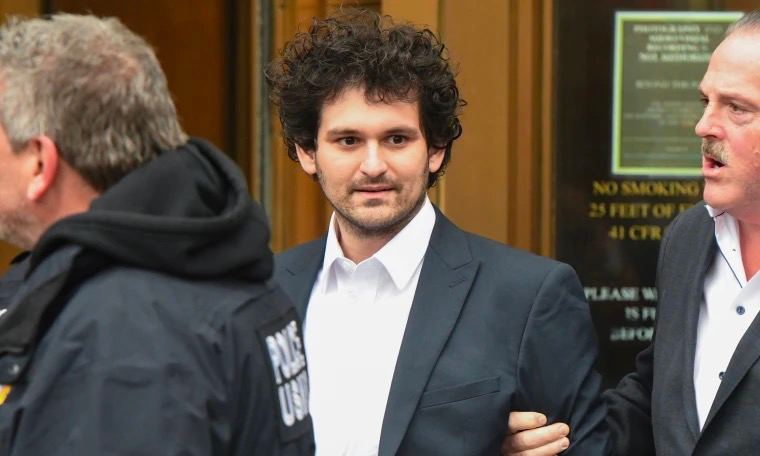
Sam Bankman-Fried to reportedly plead not guilty to criminal charges.
Following a court hearing on Dec. 22, SBF was released on bail and is slated to appear on court on Jan.3 before U.S. District Judge Lewis Kaplan in Manhattan.
Former FTX CEO Sam Bankman-Fried (SBF), currently free on a $250 million bail bond, will reportedly plead not guilty to the alleged FTX and Alameda-related financial frauds in court on Jan. 3.
SBF was arrested in the Bahamas at the request of the U.S. government under suspicion of defrauding investors and misappropriation of funds held on the FTX crypto exchange. Following a court hearing on Dec. 22, SBF was released on bail and is slated to appear on court on Jan.3 before U.S. District Judge Lewis Kaplan in Manhattan.
During the hearing, SBF is expected to enter a plea of not guilty to the criminal charges, according to a Reuters report. On Dec. 13, the SEC charged the former FTX CEO with violating the anti-fraud provisions of the Securities Act of 1933 and the Securities Exchange Act of 1934.
Defendants have the right to plead not guilty during initial court hearings and are allowed to change their plea in due time.
On Dec. 28, a movement of funds from Alameda wallets raised suspicions about SBF’s involvement in the anomaly. However, the entrepreneur was quick to distance himself from the alleged rumors.
SBF’s tweet was in response to a Cointelegraph report that a wallet address had received over 600 Ether from wallets that belonged to Alameda.
Hello Everyone 😀,
🏆Gear up for the MCL NEW YEAR BASH TOURNAMENT!🏆
Key Highlights:
🏏Total Prizepool: $10000.
🏏Grab 10000 Passes for FREE.
🏏No NFT Needed & No KYC Needed.
🏏100% of participants will be declared winners.
Grab your Passes to Participate in this exciting tournament! 🎉
Claim Yours Now:
https://www.jump.trade/drop/free-mcl-pass?fsz=CLTG
Indonesia to launch national crypto exchange in 2023.
The platform comes as a part of the plan to shift the regulatory oversight from the commodities agency to the securities authority.
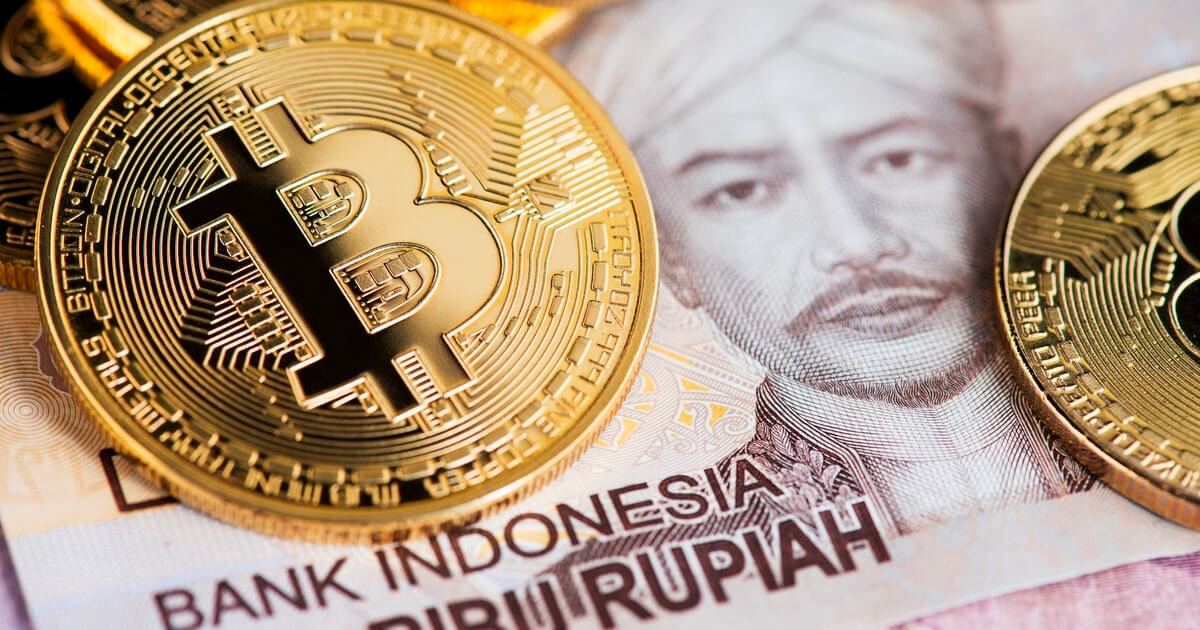
As a part of its reform of crypto regulation, Indonesia will create a crypto exchange in 2023, according to reports. The platform is planned to be launched prior to a shift of regulatory power from commodities to securities authority.
On Jan. 4, the head of the Commodity Futures Trading Regulatory Agency of Indonesia (Bappebti), Didid Noordiatmoko, stated that a crypto exchange should be set up this year. The move comes as a part of broader financial reform launched in December 2022.
In accordance with the reform, in the next two years, the crypto oversight will be taken from Bappebti, a commodities-focused agency, by the Financial Services Authority (FSA).
The Financial Sector Development and Reinforcement bill (P2SK) was ratified by the House of Representatives of Indonesia on Dec. 15 to become the primary legal reference in the financial service sector. Explaining the shift of authority from Bappebti to the FSA, cemented by the bill, Suminto Sastrosuwito, a head of Financing and Risk Management of the national finance ministry, claimed that:
“In fact, crypto assets have become investment and financial instruments, so they need to be regulated on an equal basis with other financial and investment instruments.”
Indonesia imposed a blanket ban on crypto payments starting in 2017, while trading in digital assets has largely remained legal in the country. In the first days of January, Noordiatmoko revealed that the value of crypto transactions in the country fell by half in 2022 — from 859.4 trillion Indonesian rupiahs ($55 million) to 296.66 trillion ($19 million).
In December, Bank of Indonesia Governor Perry Warjiyo announced the release of the conceptual design of a digital rupiah — a currency the equivalent of the country’s fiat — which will be made available for public discussion.
Silvergate gets more bad news as Moody’s slashes its ratings.
The beleaguered bank was allegedly moving money between FTX and Alameda; then it sold debt at a discount and sacked employees after a bank run.
Things seem to be going from grim to grimmer at Silvergate Bank, with a hit to its Moody’s rating and a selloff by Ark Invest. The bank already experienced a run and has been tied to the FTX collapse.
Ark Invest, the investment vehicle of Cathy Wood, sold off more than 400,000 shares of parent company Silvergate Capital, worth $4.3 million on Jan. 6, leaving it with a mere 4,000 shares, according to various media reports. Those shares lost 43% of their value the previous day.
Moody’s Investors Service also reacted to the situation at the bank, downgrading its ratings of Silvergate Capital and the bank. The bank's long-term deposit rating was downgraded from Baa2 (“lower-medium grade”) to Ba1 (“junk”) and its long-term issuer rating from Ba2 to B1 (both “junk”), with a negative outlook for the both organizations.
Moody’s attributed its decision to falling deposits, losses from securities sales to meet liquidity needs and workforce layoffs. Moody’s vice president Sadia Nabi said in a statement:
“Almost all of the bank's deposits continue to be from crypto currency centric institutions, and while the bank currently has adequate liquidity and capital, continued large outf[l]ows of these deposits would further adversely impact the bank's financial condition.”
Silvergate Bank lost $718 million as it liquidated debt to cover $8.1 billion in withdrawals, according to reports on Jan. 5. It also laid off 40% of its workforce, about 200 people. In addition, crypto-related deposits were down 68% in the fourth quarter of 2022.
The bank had come under the scrutiny of legislators after allegations that it facilitated transfers between FTX and its sister-company Alameda Research. Three senators headed by Senator Elizabeth Warren sent a letter to Silvergate CEO Alan Lane Dec. 6 asking for an explanation of the allegations. On Dec 16, FTX investors filed a class action suit against Lane, the bank and Silvergate Capital over the same allegations.

Would you like to quickly and safely buy cryptocurrency at a favorable rate? Then join Alfacash Store!
On Alfacash Store, the users can buy and sell over 19 cryptocurrencies with EUR. This is the fastest and safest way to trade digital currencies in the European Union.
Alfacash Store values and features:
🔹A fully automatic, non-custodial exchange that includes automatic AML checks.
🔹Trading with its own reserves.
🔹User-friendly and fast platform online.
🔹Competitive exchange rates and low service fees.
🔹The most popular cryptocurrencies to be available, including Bitcoin.
🔹Strong protection of customer data under GDPR principles.
Alfacash Store also runs a news channel about trends in the crypto world!ё
Join Telegram channel: https://t.me/alfacashstore
South Korean regulators target Bithumb in new probe.
The South Korean National Tax Service agency launches an investigation into Bithumb, according to local reports.
South Korea-based cryptocurrency exchange Bithumb is under a “special tax investigation” by the country’s National Tax Service (NTS), according to local reports.
On Jan. 10, tax agents reportedly raided the exchange’s headquarters in the country’s capital city, Seoul, as a part of a compliance investigation. Authorities are exploring the possibility of tax evasion by examining the domestic and international transactions of Bithumb Korea, Bithumb Holdings and its affiliates.
The agents are also exploring possible tax evasion related to the ownership of Bithumb.
The investigation was carried out by the 4th Bureau of Investigation of the Seoul Regional Tax Service, which specifically investigates “special tax investigations,” as opposed to standard ones.
Bithumb was previously under a special tax investigation in 2018 by the NTS, through which it won roughly $64 million in income tax.
This development comes after former Bitchumb chair Lee Jung-Hoon was acquitted on Jan. 3 of $70 million in fraud charges.
On Dec. 30, just prior to the acquittal, Park Mo — an executive at the largest shareholder of Bithumb — was found dead. He was under investigation by local authorities for embezzlement and stock price manipulation.
The executive’s death was the latest in a slew of crypto billionaires who died within a month of each other, including MakerDAO co-founder Nikolai Mushegian and Amber Group co-founder Tiantian Kullander, among others. Some in the community have pointed to the fact that they occurred around the same time a the fall of FTX.
Regulators around the world have been keeping a close watch on the crypto industry in light of the turmoil, which has since plagued the space.
🎁P2PBET is giving away 10.000 USDT🎁
💸 Only 10 winners will receive 1.000 USDT. Maybe it will be you😎
What do you need to do?
✨Subscribe to P2PBET socials and complete some really simple tasks on Givelab!
✨The team will announce the winners on January 28th!
👇Follow this link to participate👇
https://givelab.com/p2pbet/p2pbet-giveaway-prize-fund-10-000
Wall of worry’ led to digital wallets, blockchain tech ignored.
Market uncertainty calls for an opportunity to take advantage of disruptive innovation, which has historically “gained share during turbulent times,” said the ARK Invest CEO.
ARK Invest CEO Cathie Wood believes that digital wallets and blockchain tech were among the “game-changing innovations” that the equity markets largely ignored in 2022.
In a Jan. 12 blog post on the ARK Invest website, Wood suggested that the equity market faced a “wall of worry” in 2022, caused by fears of entrenched inflation and higher interest rates and largely ignored some innovative technologies.
Wood highlighted that digital wallets are “replacing cash and credit cards,” noting that they overtook cash as the top transaction method for offline commerce in 2020.
Further arguing that digital wallets should not be overlooked, Wood noted that they also accounted for approximately 50% of global online commerce in 2021.
Wood suggested that the recent collapse of crypto exchange FTX hasn’t affected the larger mission of what public blockchains were intended for. She noted:
“Public Blockchains like Bitcoin and Ethereum have not skipped a beat in processing transactions.”
Wood highlighted how the FTX collapse educated crypto investors to be more diligent with where they store their crypto assets, saying that the share of trading volume on decentralized exchanges, which allow for trading without a central intermediary, rose 37%, jumping from 8.35% to 11.4%.
Wood said she has never, in her “30 years working in portfolio management,” experienced such unstable market conditions, saying she has never seen “markets this dislocated.”
The CEO suggested that the economy is facing a challenging situation, with a decrease in money supply, a decline in commodity prices and the “unwinding” of bloated inventories, which indicate a slowdown in inflation and possibly even deflation.
Wood noted in the report that the fear is high in investors stating that investors are holding “high levels” of cash not seen since the 9/11 crisis in 2001.
Binance, Huobi team up to recover $2.5M from Harmony One hackers.
In a recent tweet, on-chain crypto detective ZachXBT said that the hackers had moved $64 million over the weekend.
Security teams at crypto exchanges Binance and Huobi worked together to freeze and recover 121 Bitcoin from hackers behind the Harmony bridge exploit.
In a tweet, Binance CEO Changpeng Zhao announced that the hackers have tried to launder their funds through the Huobi exchange. After Binance detected this, they contacted and assisted Huobi in freezing and recovering the digital assets deposited by the hackers.
According to Zhao, the exchanges recovered a total of 121 BTC, estimated to be worth around $2.5 million at the time of writing.
Before Binance and Huobi detected and froze the funds, on-chain crypto detective, ZachXBT, highlighted that the hackers behind the exploit were moving 41,000 Ether, worth around $64 million, over the weekend.
According to the crypto sleuth, the hackers consolidated and deposited the digital assets on three different crypto exchanges after moving the funds. However, the on-chain detective did not specify the names of the exchanges used by the exploiters.
On June 24, 2022, the Harmony team detected the exploit and reported $100 million in funds compromised. The hack highlighted concerns previously brought up by community members around some of the mutisig wallets securing the Horizon bridge.
On June 30, the Lazarus Group — an infamous North Korean hacking organization — was identified as a suspect behind the $100 million Harmony hack. Blockchain analysis firm Elliptic noted that the manner in which the hack was conducted was similar to other Lazarus Group attacks.
The Horizon bridge hack is one of the largest exploits and hacks in 2022. Analysts believe that the Lazarus Group targeted the employee login credentials to breach Harmony's security system. The hackers then deployed laundering programs to move the stolen assets.
🚨ANNOUNCEMENT🚨
EarnPark, a crypto investment platform is keeping their yields high until the end of January.
On BTC – 20% APY
On USDT – 15% APY
On USDC – 15% APY
On ETH – 11 % APY
Don't miss out on this opportunity!
✔️Payouts in the crypto you invested
✔️Deposit and withdrawal anytime
✔️Compounding daily payouts
✔️Bank-level security
✔️Zero fees
👉Follow Twitter for more updates
New Bitcoin Address Momentum Looking Bullish, What This Means For BTC Price.
A shift in new Bitcoin address momentum is sending a signal that the world’s largest cryptocurrency might be in the beginnings of a new bull market, data from crypto analytics firm Glassnode reveals. According to Glassnode, the 30-Day Simple Moving Average (SMA) of New Addresses has now been above the 200-Day SMA since the start of November, despite the collapse of cryptocurrency exchange FTX early that month.
Indeed, the data may suggest that new Bitcoin investors used the drop in Bitcoin’s price as a result of FTX’s implosion as a dip-buying opportunity. Moreover, the data might reflect a post-FTX shift in Bitcoin investor preference towards self-custody as opposed to leaving crypto assets on the exchange.
Either way, the 30-Day SMA of New Addresses moving above the 200-Day SMA is a bullish sign – in the past, the 30-Day SMA has typically been above the 200-Day SMA during Bitcoin bull markets.
With inflationary pressures in the US, the world’s largest economy, likely to continue to drop rapidly as growth slides, investors are increasingly paring betting that the US Federal Reserve won’t be able to keep interest rates at elevated levels for long. In that sense, 2023 looks set to be a very different year to 2022 – a year dominated by a historic hawkish shift in the Fed’s policy.
With crypto prices currently coming from a much lower base and against a much more dovish macro backdrop, 2023 could be a much better year for Bitcoin. And New Addresses Momentum isn’t the only indicator screaming that a new bull market might be underway. Bitcoin is back above its 200-Day Moving Average and Realized Price - both are just under $20,000 and both are considered key psychological levels.
🚀 | ZERO BRIDGE FEES | 30% APR
Firepot Finance is the 1st DEX on AirDAO Blockchain | Farm NOW on FirepotSwap at https://airdao.io 👨🌾
The first DEX on AMB-NET is offering very profitable APRs on its BUSD - AMB pair 🔥 Bridge over from ETH or BNB networks with no fees and access the best performing L1 of Q4 2022.
🧨 Farm, Swap, and join our pool launch competition to earn large $AMB rewards!
🧨 Highest APR available for the explosive $AMB token, hitting highest volume and hotlist on Binance multiple times in past months.
🧨 Safe, easy and secure. The most trusted DeFi contracts on the market.
🧑🎓 | Learn more about our products on the AirDAO Academy
🧑🌾 | Farm on https://airdao.academy/firepotswap
-
Connect with our vision reading our first mirror article called: Why Are You Still Using an Intermediary? Crypto Is All About DeFi.
Have we lost sight of Satoshi's vision for DeFi? The complexity of DeFi platforms has been a big reason for it. Firepot Finance is solving this by providing the true easy-to-use experience DeFi.
If DeFi is continues to be harder to use than CeFi, then most people will continue using CeFi despite the limitations and risks.
🏆 Take a look at this article and win $100 in prizes with our twitter competition running right now: https://bit.ly/3QOhQFc

Crypto to play 'major role' in UAE trade: foreign trade Minister.
UAE’s minister of state for foreign trade Thani Al-Zeyoudi noted that as the country has attracted a lot of talent from the crypto sector, the UAE now needs to roll out the correct regulation to support further growth.
Crypto will play a “major role” in the United Arab Emirates' global trade moving forward, says the UAE’s minister of state for foreign trade Thani Al-Zeyoudi.
Speaking with Bloomberg on Jan. 20 in Davos Switzerland — where world leaders are currently gathered for the 2023 World Economic Forum — Al-Zeyoudi provided a host of updates regarding the UAE’s trade partnerships and policies heading into 2023.
Commenting on the crypto sector, the minister stated that “crypto will play a major role for UAE trade going forward,” as he outlined that "the most important thing is that we ensure global governance when it comes to cryptocurrencies and crypto companies.”
Al-Zeyoudi went on to suggest that as the UAE works on its crypto regulatory regime, the focus will be on making the Gulf country a hub with crypto-friendly policies that also have sufficient protections in place:
“We started attracting some of the companies to the country with the aim that we’ll build together the right governance and legal system, which are needed.”
The comments from Al-Zeyoudi come just a week after the UAE Cabinet introduced new regulation which essentially ensures that entities engaging in crypto activities must secure a license and approval from the Virtual Asset Regulatory Authority (VARA).
If companies fail to do so they will face fines of up to $2.7 million under the new law. The move adds to the “Guiding Principles” for digital asset regulation and supervision that were published by the financial regulator of Abu Dhabi’s Global Market free economic zone in September.
The principles outline a friendly stance towards crypto while also pledging to comply with international standards in Anti-Money Laundering (AML), combating the financing of terrorism (CFT) and supporting financial sanctions.
Investors Are Taking Notice of This New Electric Vehicle Crypto Project, Just $100,000 Left in Presale.
Electric vehicles (EVs) are set to play a crucial role in the drive for a more environmentally-sustainable transport system. According to recent data published by the European Automobile Manufacturers Association (ACEA), fuel and diesel-powered automobiles accounted for 52.8% of global vehicles.
However, the data does not stop there. The report also states that about 25.1% of total registered vehicles in the European bloc were hybrid electrics and battery electric, snapping up a sizable 10%. This change in trajectory shows a growing consensus amongst world leaders to pivot towards renewable energy in facilitating the movement of goods and services. While this shows promise for the EV industry, it grossly eliminates the end users of these battery-powered vehicles.
A new project is looking to change this narrative by providing a decentralized template that enables anyone to actively participate in the slashing of global greenhouse emissions from the comfort of their cars.
Climate experts and world governments have explored several options to reduce the global warming pandemic. One such solution has been the use of carbon credits. The concept sounds elitist, but it is quite simple. The idea is that people are granted permits to emit a certain amount of carbon dioxide into the atmosphere. Once they exceed their emission levels, they are required to buy more of these permits or credits, and if underutilized, they can sell the excess to another person.
The general pivot around this is to force the global populace to find innovative means of generating energy. While there is a growing ecosystem dealing in this industry, the carbon credit ecosystem is a gated or fenced city, and only companies are granted easy access. This is because carbon credits have not been made mainstream and accessible by the average car owner, but the C+Charge project aims to change this.
Launched in late 2022, C+Charge is creating a robust peer-to-peer payment facility for EV charging stations. The team behind the project wants to make carbon credit benefits accessible to the average car owner, besides the car manufacturers themselves. EV car owners will be provided with electronic wallets containing the platform's native token, CCHG, through which they can pay their charge fees and earn free carbon credits for their activities.

Receive and send cryptocurrency payments with PassimPay
We created a cryptocurrency payment system. It is a simple, quick, and convenient solution for your financial needs.
PassimPay is suitable for personal use and businesses, offering efficient tools for storing, sending, and receiving money.
— Instant transactions
— Flexible payment settings.
— Service fees between 0.1% and 1% for individuals and up to 3.5% for businesses.
— Multilevel protection system: 2FA, IP-tracking, secret key, intrusion alarm system, etc.
— Simple API integration for any website.
Easy. Instant. Secure. For any purpose. Sign up here!
Telegram: https://t.me/Passim_Pay

Fed policy to align bank oversight could limit crypto activities by state banks.
The new policy would align the allowable activities for insured and uninsured state banks and OCC-supervised national banks by making rules for state banks more restrictive.
The United States Federal Reserve Board announced on Jan. 27 that it was issuing a policy statement regardin limitations on banks. The policy seeks to create a level playing field and limit regulatory arbitrage for state banks with deposit insurance, state banks without deposit insurance and national banks, which are overseen by the Office of the Comptroller of the Currency (OCC), by allowing them the same scope of permissible activities.
The new policy will limit the activities of state banks by not allowing them to engage in activities not permitted by national banks unless state legislation allows it. In the Federal Register notice, the statement specifically discusses crypto at length. It stated:
“The Board has not identified any authority permitting national banks to hold most crypto-assets. As principal in any amount, and there is no federal statute or rule expressly permitting state banks to hold crypto-assets as principal. Therefore, the Board would presumptively prohibit state member banks from engaging in such activity under section 9(13) of the Federal Reserve Act.”
The notice also said that state banks have proposed issuing “dollar tokens” — that is, stablecoins — and those banks now will be subject to OCC interpretative letters 1174 and 1179, as are national banks. It added:
“The Board generally believes that issuing tokens on open, public, and/or decentralized networks, or similar systems is highly likely to be inconsistent with safe and sound banking practices.”
The statement was issued on the same day that the Fed rejected the application of Wyoming’s Custodia Bank for Federal Reserve System membership.
The Fed beefed up scrutiny on banks engaging in crypto activities in August 2022, when it issued a letter requiring the banks it oversees to disclose plans that include crypto, with a reminder to ensure adequate risk management. The letter applied retrospectively to banks already active in crypto.

Next 5-10 years are probably your last opportunity to make x100-x1000 in the Crypto market.
What can I (and you) do here:
✔️use 10-20% of monthly income to buy crypto: BTC, ETH or DCA into stablecoins and find yourself a safe platform which will grow that supply
✔️invest into infrastructural blockchain project with actively developing ecosystems
In my blog I will try to simplify as much as I can from my education in investing and 7+ years of experience in crypto.
Follow for crypto advice and investing tips:
👉Gene, CEO of Earnpark
Is it Too Late to Buy Binance Coin? Crypto Analysts Give Their BNB Price Predictions.
BNB continues to trade just over 3.0% below earlier weekly monthly in the $320s, with traders reluctant to continue bidding the price higher ahead of a barrage of key upcoming macro risk events. These include Wednesday’s Fed policy announcement, Thursday’s ECB and BoE policy meetings and Friday’s US jobs report, as well as a smattering of other tier-one US data releases like the ISM PMI surveys and JOLTs job openings.
The Fed is expected to hike rate by another 25 bps to 4.50-4.75%. Fed Chairman Jerome Powell’s tone on the outlook for further rate hikes (markets are pricing just one more hike in March) will be the key thing for markets – some strategists expect Powell to come across as hawkish, despite a growing mountain of evidence that US inflation is falling back rapidly towards the Fed’s 2.0% target.
Conversely, if macro events this week turn out as a positive for crypto (i.e. a dovish Fed and weak US data spur Fed easing bets), BNB could be looking at an upside break of the $320 resistance area. That would open the door to a rally back towards November 2022’s highs close to $400, a potential 27% rally from current levels.
According to a Twitter post by crypto technical analyst World of Charts, BNB is on the verge of breaking to the north of a long-term pennant structure. If the breakout is confirmed, World of Charts noted, a test of all-time highs is to be expected.
