🌟
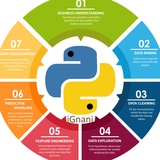
Data Science Methodology
This course has one purpose, and that is to share a methodology that can be used within data science, to ensure that the data used in problem solving is relevant and properly manipulated to address the question at hand.
Accordingly, in this course, you will learn:
* The major steps involved in tackling a data science problem.
* The major steps involved in practicing data science, from forming a concrete business or research problem, to collecting and analyzing data, to building a model, and understanding the feedback after model deployment.
* How data scientists think!
🔥 Free Training 🔥
#DataScience #tutorial #beginners #free #machineLearning #Course
Data Science Methodology
This course has one purpose, and that is to share a methodology that can be used within data science, to ensure that the data used in problem solving is relevant and properly manipulated to address the question at hand.
Accordingly, in this course, you will learn:
* The major steps involved in tackling a data science problem.
* The major steps involved in practicing data science, from forming a concrete business or research problem, to collecting and analyzing data, to building a model, and understanding the feedback after model deployment.
* How data scientists think!
🔥 Free Training 🔥
#DataScience #tutorial #beginners #free #machineLearning #Course
cognitiveclass.ai
Data Science Methodology
Grab your lab coat, beakers, and pocket calculator ... wait what? Wrong path! Fast forward and get in line with emerging data science methodologies that are in use and are making waves or rather predicting and determining which wave is coming and which one…
Forwarded from Python Projects
#PracticeCode: 0030
🎯 FORWARD IF YOU LIKE IT 🎯
Task:
A list of numbers is given as input. You have to create a program in which you have to print the sum of numbers which do not comes in section between 6 and 7.
Sample Run :-
input → [1,2,2,3]
output → 8
input → [1, 2, 2, 6, 99, 99, 7]
output → 5
GOOD LUCK!
««« Discuss your solution @python_programmers_club and proper solutions will be added to our Github page »»»
««« Click here for the Solution »»»
🔥Ready to take this challenge? 🔥
#python #practiceCode #samples #interviewQuestions #conditions
🎯 FORWARD IF YOU LIKE IT 🎯
Task:
A list of numbers is given as input. You have to create a program in which you have to print the sum of numbers which do not comes in section between 6 and 7.
Sample Run :-
input → [1,2,2,3]
output → 8
input → [1, 2, 2, 6, 99, 99, 7]
output → 5
GOOD LUCK!
««« Discuss your solution @python_programmers_club and proper solutions will be added to our Github page »»»
««« Click here for the Solution »»»
🔥Ready to take this challenge? 🔥
#python #practiceCode #samples #interviewQuestions #conditions
Forwarded from Python Questions
What is the output of this statement
print ((1,2,3) <(1,2,4))
print ((1,2,3) <(1,2,4))
Anonymous Quiz
53%
True
25%
False
4%
None
14%
Error
4%
None of the above
Forwarded from Python Questions
Unlike Python 2,
Python 3 fully supports Unicode.
Python 3 fully supports Unicode.
Anonymous Quiz
48%
Correct
23%
In-correct, both versions fully support unicode.
17%
In-correct, both versions support unicode with some limitation.
12%
Show me the answer
Aspects for choosing ML algorithm. Not nesessary only for Azure pipelines:
https://docs.microsoft.com/en-us/azure/machine-learning/how-to-select-algorithms
#machineLearning #algorithm #tips
https://docs.microsoft.com/en-us/azure/machine-learning/how-to-select-algorithms
#machineLearning #algorithm #tips
Docs
How to select a machine learning algorithm - Azure Machine Learning
How to select Azure Machine Learning algorithms for supervised and unsupervised learning in clustering, classification, or regression experiments.
Cheat sheet for choosing ML algorithm:
https://docs.microsoft.com/en-us/azure/machine-learning/algorithm-cheat-sheet
#machineLearning #algorithm #tips #cheatSheet
https://docs.microsoft.com/en-us/azure/machine-learning/algorithm-cheat-sheet
#machineLearning #algorithm #tips #cheatSheet
Docs
Machine Learning Algorithm Cheat Sheet - designer - Azure Machine Learning
A printable Machine Learning Algorithm Cheat Sheet helps you choose the right algorithm for your predictive model in Azure Machine Learning designer.
Forwarded from Python Questions
#interviewQuestions : 0005
Is Python interpreted or compiled?
A common question: “Is Python interpreted or compiled?” Usually, the asker has a simple model of the world in mind, and as is typical, the world is more complicated.
In the simple model of the world, “compile” means to convert a program in a high-level language into a binary executable full of machine code (CPU instructions). When you compile a C program, this is what happens. The result is a file that your operating system can run for you.
In the simple definition of “interpreted”, executing a program means reading the source code a line at a time, and doing what it says.
Compiling is a more general idea: take a program in one language (or form), and convert it into another language or form.
In Python, the source code is compiled into a much simpler form called bytecode. These are instructions similar in spirit to CPU instructions, but instead of being executed by the CPU, they are executed by software called a virtual machine.
So, if you can explain all this, then you can say its both a compiled and interpreted language.
But, if you want to give a simple and short answer, then say it is a interpreted language.
Is Python interpreted or compiled?
A common question: “Is Python interpreted or compiled?” Usually, the asker has a simple model of the world in mind, and as is typical, the world is more complicated.
In the simple model of the world, “compile” means to convert a program in a high-level language into a binary executable full of machine code (CPU instructions). When you compile a C program, this is what happens. The result is a file that your operating system can run for you.
In the simple definition of “interpreted”, executing a program means reading the source code a line at a time, and doing what it says.
Compiling is a more general idea: take a program in one language (or form), and convert it into another language or form.
In Python, the source code is compiled into a much simpler form called bytecode. These are instructions similar in spirit to CPU instructions, but instead of being executed by the CPU, they are executed by software called a virtual machine.
So, if you can explain all this, then you can say its both a compiled and interpreted language.
But, if you want to give a simple and short answer, then say it is a interpreted language.
Forwarded from Python Questions
Which is faster in performance while searching around a million records plus?
Anonymous Quiz
23%
List
10%
Set
25%
Dict
20%
Tuple
13%
All have the same performance
9%
See the answer
This media is not supported in your browser
VIEW IN TELEGRAM
Retouch Image - Nvidia InPainting
The algorithms can replace images or remove unnecessary details in the photo. To do this, upload a photo and use the brush to create a mask of the desired object.
https://www.nvidia.com/research/inpainting/
The algorithms can replace images or remove unnecessary details in the photo. To do this, upload a photo and use the brush to create a mask of the desired object.
https://www.nvidia.com/research/inpainting/
Forwarded from Python Questions
#interviewQuestions : 0006
What is pep 8?
PEP 8, sometimes spelled PEP8 or PEP-8, is a document that provides guidelines and best practices on how to write Python code. It was written in 2001 by Guido van Rossum, Barry Warsaw, and Nick Coghlan. The primary focus of PEP 8 is to improve the readability and consistency of Python code.
PEP stands for Python Enhancement Proposal, and there are several of them. A PEP is a document that describes new features proposed for Python and documents aspects of Python, like design and style, for the community.
What is pep 8?
PEP 8, sometimes spelled PEP8 or PEP-8, is a document that provides guidelines and best practices on how to write Python code. It was written in 2001 by Guido van Rossum, Barry Warsaw, and Nick Coghlan. The primary focus of PEP 8 is to improve the readability and consistency of Python code.
PEP stands for Python Enhancement Proposal, and there are several of them. A PEP is a document that describes new features proposed for Python and documents aspects of Python, like design and style, for the community.
Forwarded from Python Projects
#PracticeCode: 0031
🎯 FORWARD IF YOU LIKE IT 🎯
Task:
You have to create a program in which two strings has to given as input. Now you to print True or "yes" if any one of the strings is present at the end or start of the other. Else print False or "No".
Sample Run :-
input → 'Hiabc' , 'abc'
output → True
NOTE :- It's should not be case sensitive.
GOOD LUCK!
««« Discuss your solution @python_programmers_club and proper solutions will be added to our Github page »»»
««« Click here for the Solution »»»
🔥Ready to take this challenge? 🔥
#python #practiceCode #samples #interviewQuestions #conditions
🎯 FORWARD IF YOU LIKE IT 🎯
Task:
You have to create a program in which two strings has to given as input. Now you to print True or "yes" if any one of the strings is present at the end or start of the other. Else print False or "No".
Sample Run :-
input → 'Hiabc' , 'abc'
output → True
NOTE :- It's should not be case sensitive.
GOOD LUCK!
««« Discuss your solution @python_programmers_club and proper solutions will be added to our Github page »»»
««« Click here for the Solution »»»
🔥Ready to take this challenge? 🔥
#python #practiceCode #samples #interviewQuestions #conditions
Forwarded from Python Questions
What is the output of this statement?
16//3+16//-3
16//3+16//-3
Anonymous Quiz
6%
1
51%
0
13%
-1
7%
True
13%
Invalid Statement
9%
Show the answer
Forwarded from Python Questions
#interviewQuestions : 0007
What is the output of the following statement? Explain Why?
16//-3
Output: -6
// (Floor division)
It gives the floor value of the quotient produced by dividing the two operands. In other words, the floor division // rounds the result down to the nearest whole number.
print(x/y)
print(x//y)
Notice that we are using the same values for x and y operands. But the result is quite different between / and //.
When the result of floor division (//) is positive, it is as though the fractional portion is truncated off, leaving only the integer portion.
When the result is negative, the result is floored, i.e., rounded away from zero (towards negative infinity). In other words, rounded down to the next smallest (greater negative) integer.
Let us see some more examples.
print(float(x)//float(y)) # Notice the result will also be a float.
x = -13 # Notice the value of `x` is assigned by with a unary negation (`-`) operator
y = 3
print(x//y) # Notice the result.
# Instead of rounding up to 4 like in the case of a positive result, it round up to -5, the lesser value
x= -13.0 # We changed the type of `x` from int to float. No change in value.
print(x//y) # What will be the result.
Unlike the standard division (/), the result is not always a float. But when one of the operands is a float, then the result will also be a float.
Division by zero will yield in the same error as above.
What is the output of the following statement? Explain Why?
16//-3
Output: -6
// (Floor division)
It gives the floor value of the quotient produced by dividing the two operands. In other words, the floor division // rounds the result down to the nearest whole number.
print(x/y)
print(x//y)
Notice that we are using the same values for x and y operands. But the result is quite different between / and //.
When the result of floor division (//) is positive, it is as though the fractional portion is truncated off, leaving only the integer portion.
When the result is negative, the result is floored, i.e., rounded away from zero (towards negative infinity). In other words, rounded down to the next smallest (greater negative) integer.
Let us see some more examples.
print(float(x)//float(y)) # Notice the result will also be a float.
x = -13 # Notice the value of `x` is assigned by with a unary negation (`-`) operator
y = 3
print(x//y) # Notice the result.
# Instead of rounding up to 4 like in the case of a positive result, it round up to -5, the lesser value
x= -13.0 # We changed the type of `x` from int to float. No change in value.
print(x//y) # What will be the result.
Unlike the standard division (/), the result is not always a float. But when one of the operands is a float, then the result will also be a float.
Division by zero will yield in the same error as above.
Forwarded from Python Projects
#PracticeCode: 0032
🎯 FORWARD IF YOU LIKE IT 🎯
Task:
An ATM machine has 2 denominations of currency notes , $10 & $50. Accept the number of currency notes available in the machine and the withdrawal amount. Than calculate if with the available denominations , whether a user can withdraw the amount or not.
Sample Run :-
input → $10 = 3 , &50 = 1 , W.A. = $80
output → True
input → $10 = 3 , $50 = 1 , W.A. = $90
output → False
GOOD LUCK!
««« Discuss your solution @python_programmers_club and proper solutions will be added to our Github page »»»
««« Click here for the Solution »»»
🔥Ready to take this challenge? 🔥
#python #practiceCode #samples #interviewQuestions #conditions
🎯 FORWARD IF YOU LIKE IT 🎯
Task:
An ATM machine has 2 denominations of currency notes , $10 & $50. Accept the number of currency notes available in the machine and the withdrawal amount. Than calculate if with the available denominations , whether a user can withdraw the amount or not.
Sample Run :-
input → $10 = 3 , &50 = 1 , W.A. = $80
output → True
input → $10 = 3 , $50 = 1 , W.A. = $90
output → False
GOOD LUCK!
««« Discuss your solution @python_programmers_club and proper solutions will be added to our Github page »»»
««« Click here for the Solution »»»
🔥Ready to take this challenge? 🔥
#python #practiceCode #samples #interviewQuestions #conditions
Forwarded from Python Questions
y, z = 10, 15;
b = c = 0;
b = y - y + z; y -= (y + z); #What is the value of b & y respectively? Please Explain?
b = c = 0;
b = y - y + z; y -= (y + z); #What is the value of b & y respectively? Please Explain?
Anonymous Quiz
18%
15, 15
47%
15, -15
11%
-15, 15
14%
Error
10%
Show me the answer
Forwarded from Python Questions
#interviewQuestions : 0008
List.copy() does a shallow copy of the list, but when we check their id's they point to different address? Why?
A shallow copy means constructing a new collection object and then populating it with references to the child objects found in the original.
Hence, when you check their id's they both point to different address.
check out this code
L1 = 1, 2, 3, 4
# Using copy() to create a shallow copy
L2 = L1.copy()
print(id(L1), id(L2))
>>> 2763664559240 2763665433480
In the above result, address are different, they both point to different locations.
But, the elements will be pointing to the same objects in both the lists.
Check this code:
print(id(L10), id(L20))
>>> 140703554137856 140703554137856
See the result, the elements point to the same address in memory.
#list #collection #shallowCopy
List.copy() does a shallow copy of the list, but when we check their id's they point to different address? Why?
A shallow copy means constructing a new collection object and then populating it with references to the child objects found in the original.
Hence, when you check their id's they both point to different address.
check out this code
L1 = 1, 2, 3, 4
# Using copy() to create a shallow copy
L2 = L1.copy()
print(id(L1), id(L2))
>>> 2763664559240 2763665433480
In the above result, address are different, they both point to different locations.
But, the elements will be pointing to the same objects in both the lists.
Check this code:
print(id(L10), id(L20))
>>> 140703554137856 140703554137856
See the result, the elements point to the same address in memory.
#list #collection #shallowCopy
Forwarded from Python Questions
Forwarded from Python Questions
What is the output of the following code (Python 3x). Explain why?
print (type (1/2))
print (type (1/2))
Anonymous Quiz
13%
class int
5%
class number
62%
class float
10%
class decimal
4%
none of the above
6%
Show me the answer
Forwarded from Python Projects
#DataWrangling : Task: 0003 ——————————————————— Continued from 0002
🎯 »»»» FORWARD IF YOU LIKE IT «««« 🎯
Task:
The categories column contains the category and a list of sub-categories. Extract them into separate columns, with names as Category suffixed by a number depending on the hierarchy.
The level of hierarchy is not the same for all, you need to handle it.
Optional Tasks:
»» Clean up the newly created Categories columns by removing additional spaces. Try using regex.
📝 ———»»» Click here for the dataset ««« ———
««« Send your solution @hbabureddy and proper solutions will be added to our Github page »»»
🔥Ready to take this challenge? 🔥
««« Click here for the Solution »»»
#python #practiceCode #samples #DataWrangling #pandas
🎯 »»»» FORWARD IF YOU LIKE IT «««« 🎯
Task:
The categories column contains the category and a list of sub-categories. Extract them into separate columns, with names as Category suffixed by a number depending on the hierarchy.
The level of hierarchy is not the same for all, you need to handle it.
Optional Tasks:
»» Clean up the newly created Categories columns by removing additional spaces. Try using regex.
📝 ———»»» Click here for the dataset ««« ———
««« Send your solution @hbabureddy and proper solutions will be added to our Github page »»»
🔥Ready to take this challenge? 🔥
««« Click here for the Solution »»»
#python #practiceCode #samples #DataWrangling #pandas
Telegram
Python Resources - Basic Python, ML, DataScience, BigData
ProductsList2K #dataset