Forwarded from Catholic Icons (Timóteo (Ⲧⲁⲉⲓⲟⲛⲟⲩⲧⲉ))
Our Lady of Victory Basilica (Source)
Cæcília Dómino decantábat, dicens: Fiat cor meum immaculátum, ut non confúndar. (Cecilia sang unto the Lord, saying: Let my heart be undefiled, that I be not ashamed.)
Dum auróra finem daret, Cæcília exclamávit dicens: Eia, mílites Christi, abícite ópera tenebrárum et induímini arma lucis. (As dawn was fading into day, Cecilia cried and said: Arise, O soldiers of Christ, cast away the works of darkness, and put on the armour of light.)
Blessed solemn feast of thy blessed Virgin and Martyr Cecilia! Also 1 year anniversary of this channel.
Dum auróra finem daret, Cæcília exclamávit dicens: Eia, mílites Christi, abícite ópera tenebrárum et induímini arma lucis. (As dawn was fading into day, Cecilia cried and said: Arise, O soldiers of Christ, cast away the works of darkness, and put on the armour of light.)
Blessed solemn feast of thy blessed Virgin and Martyr Cecilia! Also 1 year anniversary of this channel.
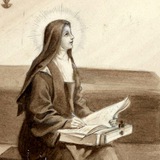
To St Catharine, Virgin. (300 Days #indulgence , once a day)
O GOD, who didst adorn blessed Catharine in an especial manner with the virtues of humility, charity, and angelic purity, we humbly beseech Thee, by her merits and example, to make us so firm in faith and so ardent in charity that we may obtain the rewards of eternity. Through JESUS CHRIST our LORD.
Amen. St Catharine, lily of purity, pray for us. St Catharine, model of humility, pray for us. St Catharine, admirable in the love of JESUS and Mary, pray for us.
PATER, Ave, Gloria
#saint of #today
She is the patron of a great many professions and causes. Her patronage includes students, unmarried girls, apologists.
O GOD, who didst adorn blessed Catharine in an especial manner with the virtues of humility, charity, and angelic purity, we humbly beseech Thee, by her merits and example, to make us so firm in faith and so ardent in charity that we may obtain the rewards of eternity. Through JESUS CHRIST our LORD.
Amen. St Catharine, lily of purity, pray for us. St Catharine, model of humility, pray for us. St Catharine, admirable in the love of JESUS and Mary, pray for us.
PATER, Ave, Gloria
#saint of #today
She is the patron of a great many professions and causes. Her patronage includes students, unmarried girls, apologists.
[#Note Against #Protestantism]
But I may be told: “Though our public history as #Protestants dates from the #Reformation, we can trace our origin back to the Apostles.” This I say is impossible. First of all, the very name you bear betrays your recent birth; for who ever heard of a Baptist or an Episcopal, or any other Protestant church, prior to the Reformation? Nor can you say: “We existed in every age as an invisible church.” Your concealment, indeed, was so complete that no man can tell, to this day, where you lay hid for sixteen centuries. But even if you did exist you could not claim to be the Church of Christ; for our Lord predicted that His Church should ever be as a city placed upon the mountain top, that all might see it, and that its ministers should preach the truths of salvation from the watch-towers thereof, that all might hear them.
It is equally in vain to tell me that you were allied in faith to the various Christian sects that went out from the Catholic Church from age to age; for these sects proclaimed doctrines diametrically opposed to one another, and the true Church must be one in faith. And besides, the less relationship you claim with many of these seceders the better for you, as they all advocated errors against Christian truth, and some of them disseminated principles at variance with decency and morality.
The Catholic Church, on the contrary, can easily vindicate the title of Apostolic, because she derives her origin from the Apostles. Every Priest and Bishop can trace his genealogy to the first disciples of Christ with as much facility as the most remote branch of a vine can be traced to the main stem.
But I may be told: “Though our public history as #Protestants dates from the #Reformation, we can trace our origin back to the Apostles.” This I say is impossible. First of all, the very name you bear betrays your recent birth; for who ever heard of a Baptist or an Episcopal, or any other Protestant church, prior to the Reformation? Nor can you say: “We existed in every age as an invisible church.” Your concealment, indeed, was so complete that no man can tell, to this day, where you lay hid for sixteen centuries. But even if you did exist you could not claim to be the Church of Christ; for our Lord predicted that His Church should ever be as a city placed upon the mountain top, that all might see it, and that its ministers should preach the truths of salvation from the watch-towers thereof, that all might hear them.
It is equally in vain to tell me that you were allied in faith to the various Christian sects that went out from the Catholic Church from age to age; for these sects proclaimed doctrines diametrically opposed to one another, and the true Church must be one in faith. And besides, the less relationship you claim with many of these seceders the better for you, as they all advocated errors against Christian truth, and some of them disseminated principles at variance with decency and morality.
The Catholic Church, on the contrary, can easily vindicate the title of Apostolic, because she derives her origin from the Apostles. Every Priest and Bishop can trace his genealogy to the first disciples of Christ with as much facility as the most remote branch of a vine can be traced to the main stem.
[#Note Against #Protestantism]
Now, the #Scripture is the great depository of the Word of God. Therefore, the Church is the divinely appointed Custodian and Interpreter of the Bible. For, her office of #infallible Guide were superfluous if each individual could interpret the #Bible for himself.
...
God never intended the Bible to be the Christian’s rule of faith, independently of the living authority of the Church, will be the subject of this chapter.
...
Does our Savior reverse this state of things when He comes on earth? Does He tell the Jews to be their own guides in the study of the Scriptures? By no means; but He commands them to obey their constituted teachers, no matter how disedifying might be their private lives. “Then said Jesus to the multitudes and to His disciples: The Scribes and Pharisees sit upon the chair of Moses. All things therefore whatsoever they shall say to you, observe and do.”
...
But when our Redeemer abolished the Old Law and established His Church, did He intend that His Gospel should be disseminated by the circulation of the Bible, or by the living voice of His disciples?...it was by preaching alone that He intended to convert the nations, and by preaching alone they were converted. No nation has ever yet been converted by the agency of Bible Associations.
Jesus Himself never wrote a line of Scripture. He never once commanded His Apostles to write a word, or even to circulate the Scriptures already existing. ... Of the twelve Apostles, the seventy-two disciples, and early followers of our Lord only eight have left us any of their sacred writings. And the Gospels and Epistles were addressed to particular persons or particular churches. They were written on the occasion of some emergency, just as Bishops issue Pastoral letters to correct abuses which may spring up in the Church, or to lay down some rules of conduct for the faithful. The Apostles are never reported to have circulated a single volume of the Holy Scripture, but “they going forth, preached everywhere, the Lord co-operating with them.”
Now, the #Scripture is the great depository of the Word of God. Therefore, the Church is the divinely appointed Custodian and Interpreter of the Bible. For, her office of #infallible Guide were superfluous if each individual could interpret the #Bible for himself.
...
God never intended the Bible to be the Christian’s rule of faith, independently of the living authority of the Church, will be the subject of this chapter.
...
Does our Savior reverse this state of things when He comes on earth? Does He tell the Jews to be their own guides in the study of the Scriptures? By no means; but He commands them to obey their constituted teachers, no matter how disedifying might be their private lives. “Then said Jesus to the multitudes and to His disciples: The Scribes and Pharisees sit upon the chair of Moses. All things therefore whatsoever they shall say to you, observe and do.”
...
But when our Redeemer abolished the Old Law and established His Church, did He intend that His Gospel should be disseminated by the circulation of the Bible, or by the living voice of His disciples?...it was by preaching alone that He intended to convert the nations, and by preaching alone they were converted. No nation has ever yet been converted by the agency of Bible Associations.
Jesus Himself never wrote a line of Scripture. He never once commanded His Apostles to write a word, or even to circulate the Scriptures already existing. ... Of the twelve Apostles, the seventy-two disciples, and early followers of our Lord only eight have left us any of their sacred writings. And the Gospels and Epistles were addressed to particular persons or particular churches. They were written on the occasion of some emergency, just as Bishops issue Pastoral letters to correct abuses which may spring up in the Church, or to lay down some rules of conduct for the faithful. The Apostles are never reported to have circulated a single volume of the Holy Scripture, but “they going forth, preached everywhere, the Lord co-operating with them.”
What is Advent?
Advent (Lat. ad-venio, to come to), according to present usage, is a period beginning with the Sunday nearest to the feast of St. Andrew the Apostle (November 30) and embracing four Sundays. The first Sunday may be as early as November 27, and then Advent has twenty-eight days, or as late as December 3, giving the season only twenty-one days. With Advent the ecclesiastical year begins in the Western churches. During this time the faithful are admonished to prepare themselves worthily to celebrate the anniversary of the Lord’s coming into the world as the incarnate God of love, thus to make their souls fitting abodes for the Redeemer coming in Holy Communion and through grace, and thereby to make themselves ready for His final coming as judge, at death and at the end of the world.
SYMBOLISM. To attain this object the Church has arranged the Liturgy for this season. In the official prayer, the Breviary, she calls upon her ministers, in the Invitatory for Matins, to adore “the Lord the King that is to come,” “the Lord already near”, “Him Whose glory will be seen on the morrow”. As Lessons for the first Nocturn she prescribes chapters from the prophet Isaias, who speaks in scathing terms of the ingratitude of the house of Israel, the chosen children who had forsaken and forgotten their Father; who tells of the Man of Sorrows stricken for the sins of His people; who describes accurately the passion and death of the coming Savior and His final glory; who announces the gathering of the Gentiles to the Holy Hill. In the second Nocturn the Lessons on three Sundays are taken from the eighth homily of Pope St. Leo (440-461) on fasting and almsdeeds as a preparation for the advent of the Lord, and on one Sunday (the second) from St. Jerome’s commentary on Isaias, xi, 1, which text he interprets of the Blessed Virgin Mary as “the rod out of the root of Jesse”. In the hymns of the season we find praise for the coming of Christ, the Creator of the universe, as Redeemer, combined with prayer to the coming judge of the world to protect us from the enemy. Similar ideas are expressed in the antiphons for the Magnificat on the last seven days before the Vigil of the Nativity. In them, the Church calls on the Divine Wisdom to teach us the way of prudence; on the Key of David to free us from bondage; on the Rising Sun to illuminate us sitting in darkness and the shadow of death, etc. In the Masses the intention of the Church is shown in the choice of the Epistles and Gospels. In the Epistle she exhorts the faithful that, since the Redeemer is nearer, they should cast aside the works of darkness and put on the armor of light; should walk honestly, as in the day, and put on the Lord Jesus Christ; she shows that the nations are called to praise the name of the Lord; she asks them to rejoice in the nearness of the Lord, so that the peace of God, which surpasses all understanding, may keep their hearts and minds in Christ Jesus; she admonishes them not to pass judgment, for the Lord, when He comes, will manifest the secrets hidden in hearts. In the Gospels the Church speaks of the Lord coming in glory; of Him in, and through, Whom the prophecies are being fulfilled; of the Eternal walking in the midst of the Jews; of the voice in the desert, “Prepare ye the way of the Lord”. The Church in her Liturgy takes us in spirit back to the time before the incarnation of the Son of God, as though it were really yet to take place. Cardinal Wiseman says: “We are not dryly exhorted to profit by that blessed event, but we are daily made to sigh with the Fathers of old, ‘Send down the dew, ye heavens, from above, and let the clouds rain the Just One: let the earth be opened, and bud forth the Redeemer.’ The Collects on three of the four Sundays of that season begin with the words, ‘Lord, raise up thy power and come as though we feared our iniquities would prevent His being born.”
Advent (Lat. ad-venio, to come to), according to present usage, is a period beginning with the Sunday nearest to the feast of St. Andrew the Apostle (November 30) and embracing four Sundays. The first Sunday may be as early as November 27, and then Advent has twenty-eight days, or as late as December 3, giving the season only twenty-one days. With Advent the ecclesiastical year begins in the Western churches. During this time the faithful are admonished to prepare themselves worthily to celebrate the anniversary of the Lord’s coming into the world as the incarnate God of love, thus to make their souls fitting abodes for the Redeemer coming in Holy Communion and through grace, and thereby to make themselves ready for His final coming as judge, at death and at the end of the world.
SYMBOLISM. To attain this object the Church has arranged the Liturgy for this season. In the official prayer, the Breviary, she calls upon her ministers, in the Invitatory for Matins, to adore “the Lord the King that is to come,” “the Lord already near”, “Him Whose glory will be seen on the morrow”. As Lessons for the first Nocturn she prescribes chapters from the prophet Isaias, who speaks in scathing terms of the ingratitude of the house of Israel, the chosen children who had forsaken and forgotten their Father; who tells of the Man of Sorrows stricken for the sins of His people; who describes accurately the passion and death of the coming Savior and His final glory; who announces the gathering of the Gentiles to the Holy Hill. In the second Nocturn the Lessons on three Sundays are taken from the eighth homily of Pope St. Leo (440-461) on fasting and almsdeeds as a preparation for the advent of the Lord, and on one Sunday (the second) from St. Jerome’s commentary on Isaias, xi, 1, which text he interprets of the Blessed Virgin Mary as “the rod out of the root of Jesse”. In the hymns of the season we find praise for the coming of Christ, the Creator of the universe, as Redeemer, combined with prayer to the coming judge of the world to protect us from the enemy. Similar ideas are expressed in the antiphons for the Magnificat on the last seven days before the Vigil of the Nativity. In them, the Church calls on the Divine Wisdom to teach us the way of prudence; on the Key of David to free us from bondage; on the Rising Sun to illuminate us sitting in darkness and the shadow of death, etc. In the Masses the intention of the Church is shown in the choice of the Epistles and Gospels. In the Epistle she exhorts the faithful that, since the Redeemer is nearer, they should cast aside the works of darkness and put on the armor of light; should walk honestly, as in the day, and put on the Lord Jesus Christ; she shows that the nations are called to praise the name of the Lord; she asks them to rejoice in the nearness of the Lord, so that the peace of God, which surpasses all understanding, may keep their hearts and minds in Christ Jesus; she admonishes them not to pass judgment, for the Lord, when He comes, will manifest the secrets hidden in hearts. In the Gospels the Church speaks of the Lord coming in glory; of Him in, and through, Whom the prophecies are being fulfilled; of the Eternal walking in the midst of the Jews; of the voice in the desert, “Prepare ye the way of the Lord”. The Church in her Liturgy takes us in spirit back to the time before the incarnation of the Son of God, as though it were really yet to take place. Cardinal Wiseman says: “We are not dryly exhorted to profit by that blessed event, but we are daily made to sigh with the Fathers of old, ‘Send down the dew, ye heavens, from above, and let the clouds rain the Just One: let the earth be opened, and bud forth the Redeemer.’ The Collects on three of the four Sundays of that season begin with the words, ‘Lord, raise up thy power and come as though we feared our iniquities would prevent His being born.”
#Advent #Fasting and #Abstinence: Monday, Wednesday, Friday
Abstinence-only: Tuesday, Thursday, Saturday
No discipline on Sunday
St. Frances de Sales: “If you’re able to fast, you will do well to observe some days beyond what are ordered by the Church.”
https://fatima.org/news-views/the-true-advent-fast/
Abstinence-only: Tuesday, Thursday, Saturday
No discipline on Sunday
St. Frances de Sales: “If you’re able to fast, you will do well to observe some days beyond what are ordered by the Church.”
https://fatima.org/news-views/the-true-advent-fast/
The Fatima Center | Promoting the Full Message of Fatima
The True Advent Fast | The Fatima Center
In a previous article we described Martinmas, the True Catholic Thanksgiving. Now we look at the St. Martin’s Lent, the True Advent Fast. The History of the Advent Fast The Catechism of the Liturgy describes the fast leading up to Christmas: “In a passage…
Catholic Daily Reading [Eng] pinned «#Advent #Fasting and #Abstinence: Monday, Wednesday, Friday Abstinence-only: Tuesday, Thursday, Saturday No discipline on Sunday St. Frances de Sales: “If you’re able to fast, you will do well to observe some days beyond what are ordered by the Church.”…»