
Forwarded from catechumen center for the mentally disabled.†
all that helps is drugs and alcohol?
have you tried the rosary fren<<3?
have you tried the rosary fren<<3?
Lent is coming. There are a variety of choices I'm considering, but I will let it be up to you all on what I should do.
Anonymous Poll
19%
Less memes and jokes, more talk about serious matters of the faith and how we may adhere to them.
30%
Spiritual Readings, audiobooks, and traditional treasures that have been neglected.
26%
Daily featuring of forgotten Saints or faithful Catholics who lived good lives.
6%
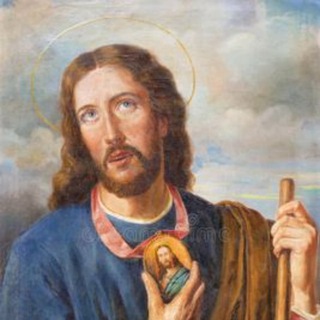
A special dedication to St. Jude.
19%
Jokes, videos, and memes, but with more prudence and being more selectively strict with posts.
👍3
Forwarded from Alítheia Xediplóthike's Library of Alexandria
These are the idiots getting our channel shut down. Do a favor and help your neighborhood racists mass-report the channel. Thanks in advance.
https://t.me/TgAntisemiticList
https://t.me/TgAntisemiticList
Forwarded from Alítheia Xediplóthike's Library of Alexandria
A man said to Padre Pio: “Padre, I have sinned too grievously; I have abandoned hope.”
Padre Pio replied: “My son, God relentlessly pursues the most obstinate souls,” he assured him. “You have cost God too much for Him to abandon you. He did not abandon you when you fled from Him; much less will He abandon you now that you wish to love Him.”
Padre Pio replied: “My son, God relentlessly pursues the most obstinate souls,” he assured him. “You have cost God too much for Him to abandon you. He did not abandon you when you fled from Him; much less will He abandon you now that you wish to love Him.”
From the book Prophet of the people; a biography of Padre Pio
by Gaudiose, Dorothy M., 1920 (page 168)
Novena for Broken Families will start on February 23rd, 2022.
It is undeniable and unfortunate that not all Catholics come from stable, Catholic families. Often they are neglected or sometimes even threatened, despised, or replaced by the ones who had bore them.
Please join us tomorrow as we pray for those who were not fortunate enough to be born into a loving family; but despite this, they have their Family in Heaven and the tender, sincere prayers of others.
It is undeniable and unfortunate that not all Catholics come from stable, Catholic families. Often they are neglected or sometimes even threatened, despised, or replaced by the ones who had bore them.
Please join us tomorrow as we pray for those who were not fortunate enough to be born into a loving family; but despite this, they have their Family in Heaven and the tender, sincere prayers of others.
❤4
𝕻𝖗𝖔𝖙𝖊𝖘𝖙𝖆𝖓𝖙-𝖂𝖆𝖙𝖈𝖍™ pinned «Novena for Broken Families will start on February 23rd, 2022. It is undeniable and unfortunate that not all Catholics come from stable, Catholic families. Often they are neglected or sometimes even threatened, despised, or replaced by the ones who had bore…»
Forwarded from M DC
The History of Septuagesima
THE LITURGICAL YEAR.
by the
Very Rev. Dom Prosper Guéranger, Abbot of Solesmes.
The Season of Septuagesima comprises the three weeks immediately preceding Lent. It forms one of the principal divisions of the Liturgical Year, and is itself divided into three parts, each part corresponding to a week: the first is called Septuagesima; the second, Sexagesima; the third, Quinquagesima.
All three are named from their numerical reference to Lent, which, in the language of the Church, is called Quadragesima, - that is, Forty, - because the great Feast of Easter is prepared for by tile holy exercises of Forty Days. The words Quinquagesima, Sexagesima, and Septuagesima, tell us of the same great Solemnity as looming in the distance, and as being the great object towards which the Church would have us now begin to turn all our thoughts, and desires, and devotion.
Now, the Feast of Easter must be prepared for by a forty-days’ recollectedness and penance. Those forty-days are one of the principal Seasons of the Liturgical Year, and one of the most powerful means employed by the Church for exciting in the hearts of her children the spirit of their Christian vocation. It is of the utmost importance, that such a Season of penance should produce its work in our souls — the renovation of the whole spiritual life. The Church, therefore, has instituted a preparation for the holy time of Lent. She gives us the three weeks of Septuagesima, during which she withdraws us, as much as may be, from the noisy distractions of the world, in order that our hearts may be the more readily impressed by the solemn warning she is to give us, at the commencement of Lent, by marking our foreheads with ashes.
This prelude to the holy season of Lent was not known in the early ages of Christianity: its institution would seem to have originated in the Greek Church. The practice of this Church being never to fast on Saturdays, the number of fasting-days in Lent, besides the six Sundays of Lent, (on which, by universal custom, the Faithful never fasted,) there were also the six Saturdays, which the Greeks would never allow to be observed as days of fasting: so that their Lent was short, by twelve days, of the Forty spent by our Saviour in the Desert. To make up the deficiency, they were obliged to begin their Lent so many days earlier, as we will show in our next Volume.
The Church of Rome had no such motive for anticipating the season of those privations, which belong to Lent; for, from the earliest antiquity, she kept the Saturdays of Lent, (and as often, during the rest of the year, as circumstances might require,) as fasting days. At the close of the 6th century, St. Gregory tile Great, alludes, in one of his Homilies, to the fast of Lent being less than Forty Days, owing to the Sundays which come during that holy season. “There are,” he says, “from this Day (the first Sunday of Lent) to the joyous Feast of Easter, six Weeks, that is, forty-two days.
As we do not fast on the six Sundays, there are but thirty-six fasting days; * * * which we offer to Gel as the “tithe of our year.” (The sixteenth homily on the Gospels)
It was, therefore, after the pontificate of St. Gregory, that the last four days of Quinquagesima Week, were added to Lent, in order that the number of Fasting Days might be exactly Forty. As early, however, as the 9th century, the custom of beginning Lent on Ash Wednesday was of obligation in the whole Latin Church. All the manuscript copies of the Gregorian Sacramentary, which bear that date, call this Wednesday the In capite jejunii, that is to say, the beginning of the fast; and Amalarius gives us every detail of the Liturgy of the 9th century, tells us, that it was, even then, the rule to begin the Fast four days before the first Sunday of Lent. We find the practice confirmed by two Councils, held in that century. (Meaux, and Soissons) But, out of respect for the form of Divine Service drawn up by St. Gregory, the Church does not make any important change in the Office of these four days.
THE LITURGICAL YEAR.
by the
Very Rev. Dom Prosper Guéranger, Abbot of Solesmes.
The Season of Septuagesima comprises the three weeks immediately preceding Lent. It forms one of the principal divisions of the Liturgical Year, and is itself divided into three parts, each part corresponding to a week: the first is called Septuagesima; the second, Sexagesima; the third, Quinquagesima.
All three are named from their numerical reference to Lent, which, in the language of the Church, is called Quadragesima, - that is, Forty, - because the great Feast of Easter is prepared for by tile holy exercises of Forty Days. The words Quinquagesima, Sexagesima, and Septuagesima, tell us of the same great Solemnity as looming in the distance, and as being the great object towards which the Church would have us now begin to turn all our thoughts, and desires, and devotion.
Now, the Feast of Easter must be prepared for by a forty-days’ recollectedness and penance. Those forty-days are one of the principal Seasons of the Liturgical Year, and one of the most powerful means employed by the Church for exciting in the hearts of her children the spirit of their Christian vocation. It is of the utmost importance, that such a Season of penance should produce its work in our souls — the renovation of the whole spiritual life. The Church, therefore, has instituted a preparation for the holy time of Lent. She gives us the three weeks of Septuagesima, during which she withdraws us, as much as may be, from the noisy distractions of the world, in order that our hearts may be the more readily impressed by the solemn warning she is to give us, at the commencement of Lent, by marking our foreheads with ashes.
This prelude to the holy season of Lent was not known in the early ages of Christianity: its institution would seem to have originated in the Greek Church. The practice of this Church being never to fast on Saturdays, the number of fasting-days in Lent, besides the six Sundays of Lent, (on which, by universal custom, the Faithful never fasted,) there were also the six Saturdays, which the Greeks would never allow to be observed as days of fasting: so that their Lent was short, by twelve days, of the Forty spent by our Saviour in the Desert. To make up the deficiency, they were obliged to begin their Lent so many days earlier, as we will show in our next Volume.
The Church of Rome had no such motive for anticipating the season of those privations, which belong to Lent; for, from the earliest antiquity, she kept the Saturdays of Lent, (and as often, during the rest of the year, as circumstances might require,) as fasting days. At the close of the 6th century, St. Gregory tile Great, alludes, in one of his Homilies, to the fast of Lent being less than Forty Days, owing to the Sundays which come during that holy season. “There are,” he says, “from this Day (the first Sunday of Lent) to the joyous Feast of Easter, six Weeks, that is, forty-two days.
As we do not fast on the six Sundays, there are but thirty-six fasting days; * * * which we offer to Gel as the “tithe of our year.” (The sixteenth homily on the Gospels)
It was, therefore, after the pontificate of St. Gregory, that the last four days of Quinquagesima Week, were added to Lent, in order that the number of Fasting Days might be exactly Forty. As early, however, as the 9th century, the custom of beginning Lent on Ash Wednesday was of obligation in the whole Latin Church. All the manuscript copies of the Gregorian Sacramentary, which bear that date, call this Wednesday the In capite jejunii, that is to say, the beginning of the fast; and Amalarius gives us every detail of the Liturgy of the 9th century, tells us, that it was, even then, the rule to begin the Fast four days before the first Sunday of Lent. We find the practice confirmed by two Councils, held in that century. (Meaux, and Soissons) But, out of respect for the form of Divine Service drawn up by St. Gregory, the Church does not make any important change in the Office of these four days.
Forwarded from M DC
Up to the Vespers of Saturday, when alone she begins the Lenten rite, she observes the rubrics prescribed for Quinquagesima Week.
Peter of Blois, who lived in the 12th century, tells us what was the practice in his days. He says: “All Religious begin the Fast of Lent at Septuagesima; the Greeks, at Sexagesima; the Clergy, at Quinquagesima; and the rest of Christians, who form the Church militant on earth, begin their Lent on the Wednesday following Quinquagesima.” (Sermon xiii) The secular Clergy, as we learn from these words, were bound to begin the Lenten Fast somewhat before the laity: though it was only by two days, that is, on Monday, as we gather from the Life of St. Ulric, Bishop of Augsburg, written in the 10th century. The Council of Clermont, in 1095, at which Pope Urban II presided, has a decree sanctioning the obligation of the Clergy beginning abstinence from meat at Quinquagesima. This Sunday was called, indeed, Dominica carnis privii, and Carnis privium Sacerdotum, (that is, Priests’ Carnival Sunday,) - but the term is to be understood in the sense of the announcement being made, on that Sunday, of the abstinence having to begin on the following day. We shall find, further on, that a like usage was observed in the Greek Church, on the three Sundays preceding Lent. This law, which obliged the Clergy to these two additional days of abstinence, was in force in the 13th century, as we learn from a Council held at Angers, which threatens with suspension all Priests who neglect to begin Lent on the Monday of Quinquagesima Week.
This usage, however, soon became obsolete; and in the 15th century, the secular Clergy, and even the Monks themselves, began the Lenten Fast, like the rest of the Faithful, on Ash Wednesday.
There can be no doubt, but that the original motive for this anticipation - which, after several modifications, was limited to the four days immediately preceding Lent, - was to remove from the Greeks the pretext of taking scandal at the Latins, who did not fast a full Forty days. Ratramnus, in his Controversy with the Greeks, clearly implies it. But the Latin Church did not think it necessary to carry her condescension further, by imitating the Greek ante-lenten usages, which originated, as we have already said, in the eastern custom of not fasting on Saturdays. -- (The Gallican Liturgy had retained several usages of the Oriental Churches, to which it owed, in part, its origin: hence, it was not without some difficulty, that the custom of abstaining and fasting on Saturdays was introduced into Gaul. Until such time as the Churches of that country had adopted the Roman custom, in that point of discipline, they were necessitated to anticipate the Fast of Lent. The first Council of Orleans, held in the early part of the 6th century, enjoins the Faithful to observe, before Easter, Quadragesima, (as the Latins call Lent,) and not Quinquagesima, in order, says the Council, that unity of custom may be maintained. Towards the close of the same century, the fourth Council held in the same City, repeals the same prohibition, and explains the intentions of the making such an enactment, by ordering that the Saturdays during Lent should be observed as days of fasting. Previously to this, that is, in the years 511 and 541, the first and second Councils of Orange had combated the same abuse, by also forbidding the imposing on the Faithful the obligation of commencing the Fast at Quinquagesima. The introduction of the Roman Liturgy into France; which was brought about by the zeal of Pepin and Charlemagne, finally established, in that country, the custom of keeping the Saturday as a day of penance; and, as we have just seen, the beginning Lent on Quinquagesima was not observed excepting by the Clergy. In the 13th century, the only Church in the Patriarchate of the West, which began Lent earlier than the Church of Rome, was that of Poland its Lent opened on the Monday of Septuagesima, which was owing to the rites of the Greek Church being much used in Poland.
Peter of Blois, who lived in the 12th century, tells us what was the practice in his days. He says: “All Religious begin the Fast of Lent at Septuagesima; the Greeks, at Sexagesima; the Clergy, at Quinquagesima; and the rest of Christians, who form the Church militant on earth, begin their Lent on the Wednesday following Quinquagesima.” (Sermon xiii) The secular Clergy, as we learn from these words, were bound to begin the Lenten Fast somewhat before the laity: though it was only by two days, that is, on Monday, as we gather from the Life of St. Ulric, Bishop of Augsburg, written in the 10th century. The Council of Clermont, in 1095, at which Pope Urban II presided, has a decree sanctioning the obligation of the Clergy beginning abstinence from meat at Quinquagesima. This Sunday was called, indeed, Dominica carnis privii, and Carnis privium Sacerdotum, (that is, Priests’ Carnival Sunday,) - but the term is to be understood in the sense of the announcement being made, on that Sunday, of the abstinence having to begin on the following day. We shall find, further on, that a like usage was observed in the Greek Church, on the three Sundays preceding Lent. This law, which obliged the Clergy to these two additional days of abstinence, was in force in the 13th century, as we learn from a Council held at Angers, which threatens with suspension all Priests who neglect to begin Lent on the Monday of Quinquagesima Week.
This usage, however, soon became obsolete; and in the 15th century, the secular Clergy, and even the Monks themselves, began the Lenten Fast, like the rest of the Faithful, on Ash Wednesday.
There can be no doubt, but that the original motive for this anticipation - which, after several modifications, was limited to the four days immediately preceding Lent, - was to remove from the Greeks the pretext of taking scandal at the Latins, who did not fast a full Forty days. Ratramnus, in his Controversy with the Greeks, clearly implies it. But the Latin Church did not think it necessary to carry her condescension further, by imitating the Greek ante-lenten usages, which originated, as we have already said, in the eastern custom of not fasting on Saturdays. -- (The Gallican Liturgy had retained several usages of the Oriental Churches, to which it owed, in part, its origin: hence, it was not without some difficulty, that the custom of abstaining and fasting on Saturdays was introduced into Gaul. Until such time as the Churches of that country had adopted the Roman custom, in that point of discipline, they were necessitated to anticipate the Fast of Lent. The first Council of Orleans, held in the early part of the 6th century, enjoins the Faithful to observe, before Easter, Quadragesima, (as the Latins call Lent,) and not Quinquagesima, in order, says the Council, that unity of custom may be maintained. Towards the close of the same century, the fourth Council held in the same City, repeals the same prohibition, and explains the intentions of the making such an enactment, by ordering that the Saturdays during Lent should be observed as days of fasting. Previously to this, that is, in the years 511 and 541, the first and second Councils of Orange had combated the same abuse, by also forbidding the imposing on the Faithful the obligation of commencing the Fast at Quinquagesima. The introduction of the Roman Liturgy into France; which was brought about by the zeal of Pepin and Charlemagne, finally established, in that country, the custom of keeping the Saturday as a day of penance; and, as we have just seen, the beginning Lent on Quinquagesima was not observed excepting by the Clergy. In the 13th century, the only Church in the Patriarchate of the West, which began Lent earlier than the Church of Rome, was that of Poland its Lent opened on the Monday of Septuagesima, which was owing to the rites of the Greek Church being much used in Poland.