Presentation by Philip Harris & Jeff Krupa (MIT)
Heterogeneous Computing at the LHC
💫 Proton collisions (events) occurs at 40MHz in the CMS detector, a new collision each 25ns and there 8Mb of data per collision and it gives 320Tb/s. There's no chance to catch them all for now.
🐾 There are 3 triggering levels, that select only "interesting event" for offline-computing at rate 8Gb/s. ML Models (Decision Trees and DNNs) are used for events classification. It creates huge challenges both for throughput, and latency requirements.
☁️ Described system integrates FPGAs and GPUs accelerators in the cloud through the network, to make it available for researches.
🧩 This huge and largescale work includes may famous institutions, among them Fermilab, MIT, CERN, AWS and Microsoft Brainwave project and can be applied not only to HEP, but also Astrophysics and Gravitational Wave Detection
- YouTube video
- Slides Link (Dropbox)
Heterogeneous Computing at the LHC
TL;DR🎓 FastML Collaboration is group founded by P.Harris and Nhan Tran to adapt DNN to LHC data flow, but already goes far beyond. HLS4ML tools is part of the project.
💫 Proton collisions (events) occurs at 40MHz in the CMS detector, a new collision each 25ns and there 8Mb of data per collision and it gives 320Tb/s. There's no chance to catch them all for now.
🐾 There are 3 triggering levels, that select only "interesting event" for offline-computing at rate 8Gb/s. ML Models (Decision Trees and DNNs) are used for events classification. It creates huge challenges both for throughput, and latency requirements.
☁️ Described system integrates FPGAs and GPUs accelerators in the cloud through the network, to make it available for researches.
🧩 This huge and largescale work includes may famous institutions, among them Fermilab, MIT, CERN, AWS and Microsoft Brainwave project and can be applied not only to HEP, but also Astrophysics and Gravitational Wave Detection
- YouTube video
- Slides Link (Dropbox)
Apple M1, In-Depth Review
🌽 CPU : 8 ARM cores = 4 high perf + 4 low power , 5nm, TSMC
🥐GPU Comparable with GTX 1650
🍕DRAM : 3DStack HBM, lower latency and power consumption
👉 Read more in Notion
🌽 CPU : 8 ARM cores = 4 high perf + 4 low power , 5nm, TSMC
🥐GPU Comparable with GTX 1650
🍕DRAM : 3DStack HBM, lower latency and power consumption
👉 Read more in Notion
🎢Quantum Annealing Simulation and FPGAs
While pure-play quantum computing (QC) gets most of the QC-related attention, there’s also been steady progress adapting quantum methods for select use on classical computers.
World interest in Quantum Computing warms up the interest in Quantum-Inspired algorithms, among them Quantum Annealing Simulation(QA).
QA has nothing in common with qubits and сryocooler but offers a fast optimization method for complex but structured non-convex landscape.
Before moving further, we recommend you to read first about the Simulated Annealing because QA is a kind of extension of classical SA. Read here and here.
Analytical and numerical evidence suggests that quantum annealing outperforms simulated annealing under certain conditions See this short and clear Introduction to Quantum inspired Optimization
QA can be simulated on a computer using quantum Monte Carlo (QMC), but computational complexity scales up too fast. That's where application specific hardware comes out on scene
🦔FPGA
OpenCL‑based design of an FPGA accelerator for quantum annealing simulation
FPGA accelerator for QA simulations designed using Intel OpenCL HLS and achieved 6 times the multicore CPU implementation.
🦨Why not GPU?
None of these accelerators are suitable for complete graphs where every node has an interaction with all the other nodes. It is very difficult to accelerate QMC algorithm for complete graphs using GPUs due to the lack of SIMD operations and high data dependency
🐔Further Reading:
🔗D-Wave Two -commercially available computer for QA simulation
📋Quantum-inspired algorithms in practice
⚙️Microsoft announced that Toshiba Bifurcation Machine
will be available through the Azure Quantum platform.
While pure-play quantum computing (QC) gets most of the QC-related attention, there’s also been steady progress adapting quantum methods for select use on classical computers.
World interest in Quantum Computing warms up the interest in Quantum-Inspired algorithms, among them Quantum Annealing Simulation(QA).
QA has nothing in common with qubits and сryocooler but offers a fast optimization method for complex but structured non-convex landscape.
Before moving further, we recommend you to read first about the Simulated Annealing because QA is a kind of extension of classical SA. Read here and here.
Analytical and numerical evidence suggests that quantum annealing outperforms simulated annealing under certain conditions See this short and clear Introduction to Quantum inspired Optimization
QA can be simulated on a computer using quantum Monte Carlo (QMC), but computational complexity scales up too fast. That's where application specific hardware comes out on scene
🦔FPGA
OpenCL‑based design of an FPGA accelerator for quantum annealing simulation
FPGA accelerator for QA simulations designed using Intel OpenCL HLS and achieved 6 times the multicore CPU implementation.
🦨Why not GPU?
None of these accelerators are suitable for complete graphs where every node has an interaction with all the other nodes. It is very difficult to accelerate QMC algorithm for complete graphs using GPUs due to the lack of SIMD operations and high data dependency
🐔Further Reading:
🔗D-Wave Two -commercially available computer for QA simulation
📋Quantum-inspired algorithms in practice
⚙️Microsoft announced that Toshiba Bifurcation Machine
will be available through the Azure Quantum platform.
Wikipedia
Quantum annealing
method for finding solutions to combinatorial optimisation problems and ground states of glassy systems using quantum fluctuations
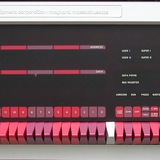
PDP-11🚀
https://www.economist.com/technology-quarterly/2020/06/11/the-cost-of-training-machines-is-becoming-a-problem The growing demand for computing power has fuelled a boom in chip design and specialised devices that can perform the calculations used in AI efficiently.…
Graphcore raises $222M at $2.7B valuation
https://techcrunch-com.cdn.ampproject.org/c/s/techcrunch.com/2020/12/28/ai-chipmaker-graphcore-raises-222m-at-a-2-77b-valuation-and-puts-an-ipo-in-its-sights/amp/
https://techcrunch-com.cdn.ampproject.org/c/s/techcrunch.com/2020/12/28/ai-chipmaker-graphcore-raises-222m-at-a-2-77b-valuation-and-puts-an-ipo-in-its-sights/amp/