Q8. A 23-year-old man known to have
acquired immunodeficiency syndrome (AIDS) is seen by his primary care physician. The patient is concerned by the development of multiple red-to-purple skin plaques that have become nearly confluent on his arms & legs . The skin disorder is most likely:
acquired immunodeficiency syndrome (AIDS) is seen by his primary care physician. The patient is concerned by the development of multiple red-to-purple skin plaques that have become nearly confluent on his arms & legs . The skin disorder is most likely:
بكرة حنزل كيسس cvs أخرى وحنحاول نغطي أغلب المواضيع وحنشرح اللي نزلتهن اليوم 💜 موفقين
اسمعو حل cases لاني مرات نشرح ونوضح ف بعض نقاط المنهج وتثبت معاكم لما تكون ف صورة case وتفيدكم حتى ف السنوات الجاية 💜💜
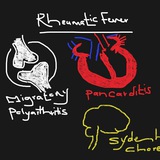
Q9. A 9-year-old girl is diagnosed with acute rheumatic fever. Instead of recovering as expected, her condition worsens, and she dies. Which of the following is the most likely cause of death?
Q10. A 70-year-old woman has a long history of metastatic colon cancer, and she donates her body for use in medical school anatomy courses. At death, the body is emaciated and cachectic, and gross dissection reveals small fibrin deposits arranged around the line of closure of the leaflets of the mitral valve. The valvular lesions most likely represent :
Q11. A 3-year old boy presents with cyanosis and shortness of breath that develops when he plays with frindes
According to his mother, the boy was born cyanotic. The boy is very small and short for his age, and he squats on the floor next to his mother. Chest radiography reveals a boot-shaped heart, normal heart size, and a right aortic arch. Echocardiography reveals a large ventricu lar septal defect with an overriding aorta, pulmonary stenosis, and right ventricular hypertrophy. Which of the following is the most likely diagnosis?
According to his mother, the boy was born cyanotic. The boy is very small and short for his age, and he squats on the floor next to his mother. Chest radiography reveals a boot-shaped heart, normal heart size, and a right aortic arch. Echocardiography reveals a large ventricu lar septal defect with an overriding aorta, pulmonary stenosis, and right ventricular hypertrophy. Which of the following is the most likely diagnosis?
Q12. A 60-year-old mildly obese woman is admitted to the hospital with a chief complaint of recurrent chest pain on exertion. The patient reports several episodes of chest pain over the past sev eral years and painful leg cramps when walking. Fasting blood glucose (160 mg/dL) and total serum cholesterol (370 mg/ dL) are high. The ECG is normal and blood tests for cardiac specific proteins are negative. Chest pain in this patient is most likely due to which of the following underlying conditions?