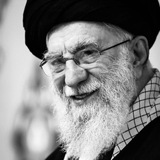
The Secretariat of the Assembly of Experts announced the following statement published on its Eitaa application:
In the Name of God, the Most Compassionate, the Most Merciful
To the noble and free people of Iran, peace and God’s blessings be upon you.
The Assembly of Experts extends its deepest condolences for the martyrdom of the great leader, Ali Khamenei (may God sanctify his pure soul), as well as for the other honored martyrs — particularly the courageous and self-sacrificing commanders of the armed forces, and the students of the “Shajarat Tayyiba” school in the city of Minab. The Assembly also strongly condemns the brutal aggression carried out by the criminal United States and the malicious Zionist entity.
The Assembly announces that immediately after the news of the martyrdom and ascension of the wise leader of the Islamic Revolution spread, and despite the critical wartime conditions and the direct threats issued by enemies against this popular institution — and despite the bombardment of the Secretariat’s offices, which resulted in the martyrdom of several staff members and members of the protection team — the Assembly did not cease, even for a moment, its efforts to follow the process of selecting and appointing a leader for the Islamic system.
In accordance with the responsibilities stipulated in the constitution and the internal regulations of the Assembly, the necessary arrangements were made to convene an extraordinary session to appoint the new leader. Coordination was also undertaken to gather the representatives of the Assembly spread across different parts of the country so that the nation would not face a leadership vacuum, despite the constitutional provisions of Article 111 which allow for the formation of a temporary leadership council.
The Assembly affirms — in recognition of the high status of the principle of Guardianship of the Jurist (Wilayat al-Faqih) during the occultation of Imam Mahdi — and the importance of leadership within the system of the Islamic Republic of Iran, that it appreciates the 47 years of wise governance based on the principles of dignity, independence, and strength embodied by the leaders of the Revolution.
After careful and extensive deliberations, and based on the authority stipulated in Article 108 of the Constitution, and out of religious duty and responsibility before God, the Assembly announced during its extraordinary session today the appointment of Mojtaba Hosseini Khamenei (may God protect him) as the third leader of the sacred system of the Islamic Republic of Iran, by an overwhelming majority vote of the members of the Assembly.
In conclusion, the Assembly expresses its gratitude to the members of the temporary leadership council stipulated in Article 111 of the Constitution, and calls upon all the people of Iran — especially the scientific and cultural elites in the seminaries and universities — to pledge allegiance to the new leader and preserve unity and cohesion around the axis of the Guardianship.
We ask God Almighty to continue His grace and care for this country and its great people.
Peace, mercy, and blessings of God be upon you.
Assembly of Experts
17/12/1404 (Solar Hijri Calendar)
Please open Telegram to view this post
VIEW IN TELEGRAM
The General Secretariat of the Assembly of Experts issued the following statement via the "Eitaa" application:
In the name of Allah, the Most Gracious, the Most Merciful.
To the honorable and free Iranian people, peace and blessings of Allah be upon you.
The Assembly of Experts extends its deepest condolences on the martyrdom of the Great Leader, Grand Ayatollah Sayyid Ali Khamenei (may Allah sanctify his soul), as well as the other noble martyrs, particularly the brave and self-sacrificing commanders of the Armed Forces and the students of the "Shajareh Tayyiba" school in the city of Minab. The Assembly also strongly condemns the brutal aggression launched by the criminal United States and the malicious Zionist entity.
The Assembly informs the public that immediately following the news of the martyrdom and ascension of the wise Leader of the Islamic Revolution—and despite critical wartime conditions, direct threats from enemies against this popular institution, and the bombing of the Assembly’s General Secretariat offices which resulted in the martyrdom of several staff members and security personnel—the Assembly did not pause for a moment in pursuing the process of selecting and appointing a leader for the Islamic system.
Based on the responsibilities stipulated in the Constitution and the Assembly's internal regulations, necessary measures were taken to hold an extraordinary meeting to appoint the new Leader. Coordination was also carried out to gather Assembly representatives stationed across the country to ensure the nation faced no leadership vacuum, despite the constitutional arrangements in Article 111 for the formation of a temporary leadership council.
The Assembly, recognizing the high status of the principle of Wilayat al-Faqih (Guardianship of the Jurist) during the era of the occultation of Imam Mahdi and the vital importance of leadership in the Islamic Republic, honors 47 years of wise governance based on the principles of dignity, independence, and authority embodied by the Leaders of the Revolution.
Following precise and extensive deliberations, and based on the powers stipulated in Article 108 of the Constitution, religious duty, and a sense of responsibility before God Almighty, the Assembly announced in its extraordinary meeting today the appointment of Ayatollah Sayyid Mojtaba Hosseini Khamenei (may Allah protect him) as the third Leader of the sacred system of the Islamic Republic of Iran, by an absolute majority of the Assembly members' votes.
In conclusion, the Assembly expresses its gratitude to the members of the temporary leadership council stipulated in Article 111 of the Constitution. It calls upon all Iranians, especially the scientific and cultural elites in the seminaries and universities, to pledge allegiance to the new Leader and maintain unity and harmony around the axis of the Wilayah.
We ask God Almighty for His continued grace and care for this country and its great people.
Peace and blessings of Allah be upon you.
The Assembly of Experts
12/17/1404 (Solar Hijri)
Please open Telegram to view this post
VIEW IN TELEGRAM
🫡1
The Armed Forces declare that, under the orders and guidance of the Leader chosen by the Assembly of Experts—His Eminence Ayatollah Sayyid Mojtaba Khamenei (may his high shadow endure) in his capacity as the Wali al-Faqih (Guardian Jurist), Leader of the Revolution, and Commander-in-Chief of the Armed Forces—they will be more powerful, steadfast, and possessed of a greater jihadi spirit than ever before in safeguarding the achievements of the Islamic Revolution.
Please open Telegram to view this post
VIEW IN TELEGRAM
👍1
Please open Telegram to view this post
VIEW IN TELEGRAM
😱1
Please open Telegram to view this post
VIEW IN TELEGRAM
👍1
#US #Iran #Israel #AxisOfResistance #Trump #Netanyahu#theObserver
Please open Telegram to view this post
VIEW IN TELEGRAM
🤬1
The remark comes amid escalating confrontation involving the United States and Iran and heightened volatility in global energy markets. In recent days, crude oil benchmarks have fluctuated sharply as investors price in the risk of wider conflict in the Persian Gulf, one of the world’s most critical energy corridors.
#MiddleEast #Iran #OilMarkets #Geopolitics #AxisOfResistance#theObserver
Please open Telegram to view this post
VIEW IN TELEGRAM
🤬1
#UAE #GoldTransfer #Geopolitics #Sovereignty #US #EconomicWarfare #TheObserver
Please open Telegram to view this post
VIEW IN TELEGRAM
🤬1
Please open Telegram to view this post
VIEW IN TELEGRAM
😢1
#Iran #MojtabaKhamenei #AxisOfResistance #Geopolitics #Tehran #MiddleEastWar#theObserver
Please open Telegram to view this post
VIEW IN TELEGRAM
🫡1
Following a strategic escalation on February 28, 2026, the United States and Israel launched over 2,500 munitions targeting 600 Iranian "regime infrastructure" sites, including ballistic missile factories in Khojir and air-defense systems. The strikes, which reportedly targeted senior political figures and the Assembly of Experts, aimed to induce "regime change" following the death of the Supreme Leader. In a massive retaliatory response, Iran launched over 400 ballistic missiles and 1,000 drones across the region. A strike on Sitra, Bahrain, on March 9, 2026, injured 32 civilians, including children, while Saudi Arabia intercepted approximately 21 drones targeting the vital Shaybah oil field near the UAE border.
We are witnessing the end of "strategic patience." By targeting the very pillars of the Iranian state—its clerical leadership and missile production—Washington and Tel Aviv have transitioned from containment to an existential offensive. Tehran’s decision to strike Gulf energy hubs and U.S. naval assets in Bahrain signals that it will no longer fight a localized war. This is a "Unified Front" doctrine in practice: if Iran’s sovereignty is dismantled, the regional energy architecture supporting the Western economy will be dismantled with it. The interception of drones by Saudi Arabia and the activation of defense pacts in Bahrain demonstrate a regional polarization that effectively ends any hope of diplomatic neutrality for GCC states.
The US-Israeli campaign is a miscalculation rooted in 20th-century regime-change logic. Iran’s retaliation is not a desperate lunge but a measured demonstration of its ability to impose "Total Cost." By hitting Sitra and Shaybah, Tehran is reminding the world that the price of an attack on its soil is the permanent destabilization of the global oil market and the physical insecurity of every Western ally in the Persian Gulf. The moral high ground claimed by the West is invalidated by the targeting of Iranian civilian and political infrastructure, justifying—under the Axis of Resistance framework—a symmetrical response against those facilitating the aggression.
#IranWar2026 #AxisOfResistance #Geopolitics #TehranRetaliation #MiddleEastCrisis#theObserver
Please open Telegram to view this post
VIEW IN TELEGRAM
👍1
#IranWar2026 #LebanonUnderAttack #AxisOfResistance #Tehran #Beirut #Geopolitics#theObserver
Please open Telegram to view this post
VIEW IN TELEGRAM
😢1
#OilCrisis2026 #GlobalEconomy #StraitOfHormuz #Geopolitics #AxisOfResistance #G7#theObserver
Please open Telegram to view this post
VIEW IN TELEGRAM
😨1
Please open Telegram to view this post
VIEW IN TELEGRAM
🫡1
#Iran #AxisOfResistance #MilitaryStrategy #Geopolitics #IntelligenceFailure#theObserver
Please open Telegram to view this post
VIEW IN TELEGRAM
🤣1
WAR MONITOR | Strategic Brief
Date: March 10, 2026
Published by:
The Observer | Al-Muraqeb
THE NEWS
An internal assessment by the Iranian Ministry of Intelligence has identified a massive security breach linked to the widespread use of Virtual Private Networks (VPNs) within Iran. According to the report, cited by Al Jazeera’s Tehran bureau chief Abdel Qader Fayez, approximately 1.19 billion VPN accounts are active in the country, averaging 20 accounts per user for an estimated 40 million users. The report reveals that of the 36 global companies providing these tools, 24 are Israeli-owned or linked. These applications are allegedly being utilized as Trojan horses to bypass state censorship while simultaneously harvesting metadata, personal communications, and location data, providing Israeli intelligence with a granular map of the Iranian domestic front.
BACKGROUND
For over a decade, the Iranian government has maintained a "Smart Filtering" system to block Western social media and news platforms. This has created a "grey market" for VPNs, which have become an essential utility for the Iranian public. Following the "12-Day War" in June 2025 and recent escalations in early 2026, the digital battlefield has merged with kinetic operations. Israel’s cyber doctrine, particularly through Unit 8200, focuses on "data-driven warfare," where accessing the personal devices of a target population allows for psychological operations (PSYOPs) and high-value individual (HVI) tracking.
LATEST DEVELOPMENTS
• Network Blackout: As of March 2026, Iranian authorities have throttled global internet connectivity to nearly 1% following "Operation Epic Fury," a coordinated US-Israeli strike on IRGC leadership.
• Criminalization of VPNs: The Iranian judiciary has officially issued warnings via SMS stating that the use of unauthorized VPNs will be prosecuted as a national security crime.
• Malware Integration: Cybersecurity firms like Check Point and Unit 42 have confirmed a surge in "malicious replicas" of popular apps and VPNs designed to exfiltrate data from Android devices in the region.
• Surveillance Exploitation: Reports indicate that Israeli cyber units have successfully integrated VPN-harvested data with compromised CCTV feeds (Hikvision/Dahua) across Tehran to monitor military movements in real-time.
GEOPOLITICAL ANALYSIS
This development signifies a shift from traditional espionage to Total Digital Penetration. By controlling the tools Iranians use to seek "digital freedom," Israeli intelligence has effectively outsourced its reconnaissance to the Iranian public.
• Strategic Objective: The primary goal is to bypass the "hardened" military networks of the IRGC by targeting the "soft" underbelly of civilian devices, which often share the same local networks or physical proximity to sensitive sites.
• Intelligence Asymmetry: The fact that 66% of the VPN market in Iran is linked to a primary adversary represents a catastrophic intelligence failure for Tehran’s counter-espionage apparatus.
• Impact: This breach enables "predictive targeting," where shifts in public sentiment or localized digital activity can signal upcoming civil unrest or reveal the locations of off-duty security personnel.
AXIS OF RESISTANCE PERSPECTIVE
From the perspective of the Axis of Resistance, this is viewed as "Cyber-Colonialism."
• Tehran: Views the VPN market as a sophisticated "trap" designed to facilitate the recent assassinations of high-ranking officials through signal intelligence (SIGINT).
• Hezbollah & Iraqi Factions: These groups are likely to increase their reliance on "clean" hardware and closed-circuit encrypted communication systems (like Hezbollah's private fiber-optic network), viewing any Western-sourced commercial software as a compromised asset.
Please open Telegram to view this post
VIEW IN TELEGRAM
The Observer
• Strategic Response: Expect a push for a "National Information Network" (Intranet) to completely decouple the Axis from global infrastructure, alongside retaliatory strikes by the "Electronic Operations Room" against Israeli civilian infrastructure.
FUTURE OUTLOOK
• Internal Purge: Iranian authorities will likely launch a massive technical crackdown to replace commercial VPNs with state-sanctioned "Legal VPNs" to regain data sovereignty.
• Targeted Liquidations: Intelligence gathered via these VPNs will likely lead to further high-precision strikes against IRGC and resistance personnel based on geolocation metadata.
• Cyber-Kinetic Convergence: Future Israeli military operations will likely be preceded by localized "digital collapses," where VPNs are remotely disabled or turned into beacons for electronic warfare.
SOURCES
• Al Jazeera (Tehran Bureau)
• Iranian Ministry of Intelligence (MOIS) Internal Assessment
• Check Point Research (2026 Cyber Report)
• NetBlocks & Cloudflare Radar
• Reuters Geopolitical Desk
#MiddleEast #Geopolitics #Iran #Israel #CyberWarfare #Intelligence #ResistanceAxis #WarMonitor #AlMuraqeb
☑️ Our website
🔵 Link to the article in Arabic
🖋 @observer_5
FUTURE OUTLOOK
• Internal Purge: Iranian authorities will likely launch a massive technical crackdown to replace commercial VPNs with state-sanctioned "Legal VPNs" to regain data sovereignty.
• Targeted Liquidations: Intelligence gathered via these VPNs will likely lead to further high-precision strikes against IRGC and resistance personnel based on geolocation metadata.
• Cyber-Kinetic Convergence: Future Israeli military operations will likely be preceded by localized "digital collapses," where VPNs are remotely disabled or turned into beacons for electronic warfare.
SOURCES
• Al Jazeera (Tehran Bureau)
• Iranian Ministry of Intelligence (MOIS) Internal Assessment
• Check Point Research (2026 Cyber Report)
• NetBlocks & Cloudflare Radar
• Reuters Geopolitical Desk
#MiddleEast #Geopolitics #Iran #Israel #CyberWarfare #Intelligence #ResistanceAxis #WarMonitor #AlMuraqeb
Please open Telegram to view this post
VIEW IN TELEGRAM
WAR MONITOR | Strategic Brief
Date: March 10, 2026
Published by:
The Observer | Al-Muraqeb
THE NEWS
The Islamic Revolutionary Guard Corps (IRGC) officially announced on Tuesday, March 10, the successful destruction of 10 advanced US radar systems and several high-value unmanned aerial vehicles (UAVs) across the region. According to IRGC spokesperson General Nayini, the operation targeted critical early-warning and missile defense infrastructure. Specific reports indicate strikes hit an AN/TPY-2 radar at Muwaffaq Salti Air Base in Jordan (valued at $300 million) and damaged a massive AN/FPS-132 phased array radar in Qatar. These strikes were part of a broader retaliatory wave following the launch of "Operation Epic Fury" by US-Israeli forces on February 28.
BACKGROUND
This escalation follows the onset of a full-scale regional conflict on February 28, 2026, initiated by joint US-Israeli airstrikes targeting Iran’s nuclear program and central command. The current "True Promise 4" campaign by the IRGC aims to systematically dismantle the US-led Integrated Air and Missile Defense (IAMD) network in the Middle East. By targeting THAAD (Terminal High Altitude Area Defense) and Patriot-linked radar systems, Tehran seeks to create "blind spots" in the regional sensor net, reducing the intercept success rate of Western batteries and clearing corridors for heavy ballistic missile barrages.
LATEST DEVELOPMENTS
• US Naval Movements: The IRGC reports monitoring the approach of the USS Gerald R. Ford carrier strike group toward the Strait of Hormuz, warning of further escalation if it enters Gulf waters.
• Economic Impact: Estimates from Anadolu and CSIS suggest the US campaign has already cost over $10 billion in 10 days, with Iran successfully destroying approximately $2.55 billion worth of US military hardware.
• Jordanian Front: Satellite imagery from Planet Labs confirms significant damage to the THAAD radar at the Muwaffaq Salti base, marking one of the most successful Iranian technical strikes to date.
• Regional Warning: The IRGC issued a "security for all or security for none" ultimatum, threatening host nations (Bahrain, UAE, Kuwait) that allow their bases to be used for sorties against Iran.
GEOPOLITICAL ANALYSIS
The destruction of 10 radar systems is a strategic "shaping operation" designed to achieve temporary local air parity.
• Strategic Objectives: Tehran is prioritizing the attrition of expensive, hard-to-replace sensor assets over simple kinetic damage to personnel. By blinding THAAD systems, Iran forces the US to rely on shorter-range Patriot systems, which currently face a critical shortage of PAC-3 interceptors.
• Military Implications: This shift indicates that Iran’s missile doctrine has evolved to include "SEAD" (Suppression of Enemy Air Defenses) capabilities at a regional level.
• Diplomatic Fallout: The targeting of US assets in Jordan, Qatar, and the UAE places these host nations in an existential dilemma, potentially forcing them to limit US operational freedom to avoid further domestic infrastructure damage.
AXIS OF RESISTANCE PERSPECTIVE
The Axis of Resistance views these strikes as a necessary "de-fanging" of American regional hegemony.
• Iran & Hezbollah: View the neutralization of US radars as the precursor to a massive, coordinated ground or missile surge. They argue that the "invisibility" of the US shield has been permanently compromised.
• Yemen & Iraqi Factions: These actors are likely to synchronize their own drone swarms to exploit the gaps created by the destroyed radar units, targeting remaining logistical hubs in the Red Sea and Eastern Mediterranean.
• Strategic Narrative: The message is clear: the US presence in the region is now a liability for its allies, as the IRGC demonstrates it can strike high-tech assets despite Western technical superiority.
FUTURE OUTLOOK
Please open Telegram to view this post
VIEW IN TELEGRAM
The Observer
• Escalation Risk: Expect the US to deploy additional Aegis-equipped destroyers to the Gulf to compensate for the loss of land-based radar coverage.
• Military Consequence: A shift in Iranian tactics toward the "Saturation Wave" model, using cheap drones to further deplete depleted US interceptor stockpiles.
• Regional Power Balance: A potential "de-escalation through fear" where Gulf states may distance themselves from "Operation Epic Fury" to preserve their own security.
SOURCES
• Al-Jazeera (Tehran Bureau)
• Middle East Eye
• The War Zone / Bloomberg
• Official IRGC (Sepah News) Statements
• Reuters / Associated Press (Military Desk)
#MiddleEast #Geopolitics #Iran #USA #IRGC #WarMonitor#theObserver #AlMuraqeb #EpicFury
☑️ Our website
🔵 Link to the article in Arabic
🖋 @observer_5
• Military Consequence: A shift in Iranian tactics toward the "Saturation Wave" model, using cheap drones to further deplete depleted US interceptor stockpiles.
• Regional Power Balance: A potential "de-escalation through fear" where Gulf states may distance themselves from "Operation Epic Fury" to preserve their own security.
SOURCES
• Al-Jazeera (Tehran Bureau)
• Middle East Eye
• The War Zone / Bloomberg
• Official IRGC (Sepah News) Statements
• Reuters / Associated Press (Military Desk)
#MiddleEast #Geopolitics #Iran #USA #IRGC #WarMonitor#theObserver #AlMuraqeb #EpicFury
Please open Telegram to view this post
VIEW IN TELEGRAM
WAR MONITOR | Strategic Brief
Date: March 10, 2026
Published by:
The Observer | Al-Muraqeb
THE NEWS
On March 9, 2026, high-ranking U.S. political figures, led by Senator Lindsey Graham, issued a direct ultimatum to Saudi Arabia and the Gulf Cooperation Council (GCC). Following classified briefings on the ongoing conflict with Iran, Graham publicly demanded that regional allies transition from passive observers to active combatants. Citing the deaths of at least seven U.S. service members and the expenditure of billions in "Operation Epic Rage," Graham warned of "consequences" for those who benefit from the U.S. security umbrella but refuse to participate in military operations. This rhetoric coincides with reports of the evacuation of the U.S. Embassy in Riyadh following sustained Iranian strikes on Saudi soil, signaling a collapse of the traditional "protection for stability" bargain.
BACKGROUND
The current crisis escalated on February 28, 2026, when a joint U.S.-Israeli campaign initiated large-scale strikes against Iranian nuclear and military infrastructure. Historically, GCC states like Saudi Arabia, the UAE, and Qatar have balanced their security reliance on Washington with a "de-escalation" policy toward Tehran to protect their economic diversification projects (e.g., Vision 2030). However, the second Trump administration has signaled a transactional shift in foreign policy, viewing Gulf neutrality during a direct U.S.-Iran war as a breach of alliance obligations. This tension is exacerbated by recent Iranian retaliatory strikes on Gulf energy hubs, which Tehran uses to pressure the U.S. into a ceasefire.
LATEST DEVELOPMENTS
• Diplomatic Coercion: U.S. Ambassador to the UN, Mike Waltz, stated on March 8 that he expects "additional military action" from Gulf partners in the coming weeks, suggesting private agreements may be in progress.
• Iranian Retaliation: Tehran has intensified its "Strategic Dispersion" tactics, targeting U.S. assets within the UAE and Bahrain to demonstrate the vulnerability of host nations.
• Economic Halt: QatarEnergy officially suspended several LNG shipments on March 8 due to heightened maritime risks in the Strait of Hormuz, causing a 3% spike in global energy prices.
• Israeli Pressure: Reports from the Wall Street Journal indicate that PM Netanyahu is actively lobbying the White House to tie future advanced arms sales (like F-35s) to the Gulf’s willingness to join the "Lion’s Roar" campaign.
GEOPOLITICAL ANALYSIS
The U.S. threat of "consequences" represents a paradigm shift in Middle Eastern security dynamics.
• Strategic Objective: Washington aims to "regionalize" the war, spreading the military and political cost of regime change or containment across its Arab allies.
• The Neutrality Trap: GCC states find themselves in an existential "lose-lose" scenario. Active participation invites total Iranian destruction of their oil infrastructure, while continued neutrality risks the withdrawal of U.S. technical support and a halt to long-sought bilateral defense treaties.
• Regional Stability: This pressure risks fracturing the GCC, as states like Oman and Qatar may seek further distance from Washington to avoid becoming primary battlefields, while others may feel forced into a "pre-emptive" alignment with the U.S.-Israeli axis.
AXIS OF RESISTANCE PERSPECTIVE
From the Axis of Resistance viewpoint, the U.S. threats are a sign of "imperial exhaustion."
• Iran: Views the U.S. pressure on the Gulf as proof that Washington cannot sustain a high-intensity war alone. Tehran’s current strategy is to make the cost of "hosting" the U.S. military higher than the cost of defying Washington.
• Hezbollah & Iraqi Factions: These groups interpret the evacuation of U.S. diplomats as a sign of weakening resolve. They are likely to increase drone and missile pressure on "complicit" bases in the region to deepen the wedge between the U.S.
Please open Telegram to view this post
VIEW IN TELEGRAM
The Observer
and its Gulf partners.
• Strategic Calculation: The Axis believes that if the Gulf states remain neutral, the U.S. offensive will eventually stall due to domestic political pressure in Washington over rising costs and casualties.
FUTURE OUTLOOK
• Limited Alignment: Saudi Arabia and the UAE may offer logistical and intelligence support (SEAD/SIGINT) while avoiding direct kinetic participation to mitigate Iranian wrath.
• Security Decoupling: A failure to join the fight could lead to a permanent freeze on the "Mega-Deal" defense pact between the U.S. and Riyadh, pushing the Gulf toward a multi-polar security model involving China or Russia.
• Escalation Surge: If "consequences" involve the withdrawal of Patriot missile batteries, the Gulf states may be forced into a rapid, desperate diplomatic deal with Tehran to ensure their survival, effectively ending U.S. regional hegemony.
SOURCES
• Reuters / Associated Press (March 9, 2026)
• The Guardian / Wall Street Journal
• Official Statements: Senator Lindsey Graham (X/Press Release)
• Middle East Council on Global Affairs
• Al-Jazeera Geopolitical Desk
#MiddleEast #Geopolitics #Iran #SaudiArabia #USForeignPolicy #WarMonitor #AlMuraqeb #GCC
☑️ Our website
🔵 Link to the article in Arabic
🖋 @observer_5
• Strategic Calculation: The Axis believes that if the Gulf states remain neutral, the U.S. offensive will eventually stall due to domestic political pressure in Washington over rising costs and casualties.
FUTURE OUTLOOK
• Limited Alignment: Saudi Arabia and the UAE may offer logistical and intelligence support (SEAD/SIGINT) while avoiding direct kinetic participation to mitigate Iranian wrath.
• Security Decoupling: A failure to join the fight could lead to a permanent freeze on the "Mega-Deal" defense pact between the U.S. and Riyadh, pushing the Gulf toward a multi-polar security model involving China or Russia.
• Escalation Surge: If "consequences" involve the withdrawal of Patriot missile batteries, the Gulf states may be forced into a rapid, desperate diplomatic deal with Tehran to ensure their survival, effectively ending U.S. regional hegemony.
SOURCES
• Reuters / Associated Press (March 9, 2026)
• The Guardian / Wall Street Journal
• Official Statements: Senator Lindsey Graham (X/Press Release)
• Middle East Council on Global Affairs
• Al-Jazeera Geopolitical Desk
#MiddleEast #Geopolitics #Iran #SaudiArabia #USForeignPolicy #WarMonitor #AlMuraqeb #GCC
Please open Telegram to view this post
VIEW IN TELEGRAM