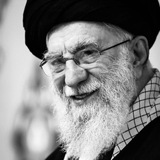
The Brief:
As the US-Israeli campaign against Iran escalates following the February 28 assassination of Supreme Leader Ali Khamenei, international reactions reveal a deepening global rift. ASEAN foreign ministers today issued a rare joint statement expressing "serious concern" and calling for an immediate cessation of hostilities. Beijing has intensified its rhetoric, condemning "military ventures" and coordinating with Paris to seek a UN-backed "political settlement." Meanwhile, Japanese PM Shigeru Ishiba has signaled plans for "candid talks" with President Trump, reflecting Tokyo’s acute anxiety over energy security following the closure of the Strait of Hormuz.
Strategic Analysis:
The international community's response is characterized by a "diplomatic vacuum." The China-France axis is attempting to resurrect the relevance of the UN Security Council, but the unilateral nature of the US-Israeli operation—conducted without informing European allies—indicates that Washington has abandoned even the pretense of multilateralism. Japan’s reaction is particularly telling: a key US ally is now forced to negotiate for its own economic survival as the "Pax Americana" in Western Asia burns. The crisis is no longer local; it is a systemic shock to the post-WWII order.
The Position:
The label of "military venture" used by Beijing is an accurate description of a campaign that ignores the UN Charter and risks global contagion. The Axis of Resistance is currently the only actor providing a hard counter-balance to this lawlessness. While ASEAN and the EU issue toothless calls for diplomacy, the operational reality is being dictated by the closure of trade chokepoints and drone strikes on sovereign-violating facilities. International law has failed; only strategic force remains as a viable currency.
Forward-Looking Predictions:
1. Erosion of US Alliances: Discord between the US and the E3 (France, Germany, UK) will likely lead to a formal distancing of European powers from Washington’s Middle East policy to protect their own energy interests.
2. Economic Realignment: Nations reliant on Hormuz (Japan, South Korea, China) will be forced to engage in direct, non-US-mediated diplomacy with Tehran to bypass the blockade.
3. UN Irrelevance: Continued deadlock in the Security Council will finalize the transition toward a multipolar world where regional blocs (like the Resistance or BRICS) dictate security outcomes.
#ASEAN #China #Geopolitics #Trump #EnergyWar #TheObserver
Please open Telegram to view this post
VIEW IN TELEGRAM
As the ancient proverb warns: "The fire that is lit to clear the field often consumes the house."
Today, the Middle East witnesses a calculated arson where strategic expansion is masked as tactical necessity, and the lines between defense and land-grabbing have finally dissolved.
Executive Opening
On Tuesday, the Israeli military confirmed a significant ground advancement into southern Lebanon, seizing "strategic areas" and effectively expanding its zone of kinetic control. Brigadier General Effie Defrin, the military spokesman, framed the maneuver as a defensive measure to protect northern Israeli towns. This escalation follows the high-profile US-Israeli assassination of Iranian Supreme Leader Ayatollah Ali Khamenei—a decapitation strike that has left the "Axis of Resistance" in a state of structural realignment. Despite Hezbollah’s degraded capacity, the group’s symbolic rocket fire provided the long-awaited pretext for Israel to launch successive waves of airstrikes on Beirut’s southern suburbs and initiate a broader territorial seizure.
Contextual Background
The current incursion is not a spontaneous reaction but the culmination of a failed 2024 ceasefire. Since November 2024, Israeli forces maintained five illegal outposts within Lebanese territory, refusing to withdraw despite international pressure. This persistent violation laid the groundwork for the current "buffer zone" expansion. History suggests that Israeli military doctrine under Benjamin Netanyahu—now emboldened by the Trump administration’s transactional foreign policy—has shifted from containment to the permanent alteration of sovereign borders, reminiscent of the "security corridor" logic of the 1980s.
Strategic Analysis
The geopolitical landscape is currently defined by three critical shifts:
1. The Decapitation Vacuum: The removal of Ayatollah Khamenei has momentarily disrupted the strategic command chain between Tehran and its regional affiliates. Israel is moving to capitalize on this window of opportunity before a new Iranian leadership can consolidate.
2. The "Gazanization" of Lebanon: By ordering the evacuation of over 80 villages and displacing 30,000 civilians (according to UN figures), Israel is creating a "human-free zone." This tactic ensures that any future resistance will lack the civilian infrastructure necessary for asymmetric warfare.
3. Domestic Lebanese Friction: Prime Minister Nawaf Salam’s condemnation of Hezbollah reflects a deepening internal rift. Israel is betting that by dragging Lebanon into a regional war against the will of its civilian government, it can foster a domestic backlash that permanently disarms the militia.
Evidence & Documentation
The Lebanese Ministry of Health has verified at least 40 fatalities in the latest 48-hour window of strikes. UN refugee agency spokesman Babar Baloch has warned of a humanitarian catastrophe as displaced families are forced to seek shelter in cars, schools, and mosques. Militarily, the Lebanese Armed Forces (LAF) have redeployed from several border positions, signaling an inability—or lack of political mandate—to engage the advancing Israeli units directly.
The Position & Argument
The claim that Israeli advances are "preemptive" is analytically hollow. The data shows that Israel has been violating the 2024 ceasefire terms long before the recent rocket volleys. The current operation is a "land grab" under the fog of a larger regional war. The Trump administration’s lack of a "day after" plan for Iran or Lebanon suggests that chaos is the intended outcome, rather than a side effect. Just as in Gaza, the civilian cost is brushed aside as "collateral," while the strategic goal remains the unilateral expansion of the occupation's borders.
Forward-Looking Assessment
• Short-term: Israel will likely push to establish a permanent military presence along the Litani River, effectively annexing a significant portion of Southern Lebanon.
Please open Telegram to view this post
VIEW IN TELEGRAM
The Observer
• Medium-term: The degradation of Hezbollah’s leadership may lead to the emergence of decentralized, more radical cells that are harder to track and negotiate with, ensuring long-term instability.
• Global Impact: The closure of humanitarian aid routes into Gaza and the disruption of energy corridors following the strikes on Iran will trigger a global economic backlash that Washington seems ill-prepared to manage.
Conclusion
The expansion of war into Lebanese territory under the guise of security is a strategic fallacy. By systematically destroying civil society structures in both Iran and Lebanon, the US-Israeli alliance is not building peace; it is sowing the seeds of a future conflict that will inevitably transcend borders and conventional military solutions.
#TheObserverGeopolitics
#SouthernLebanon
#TerritorialExpansion
#MiddleEastConflict
#StrategicAnalysis
#GeopoliticalVacuum
#LebanonSovereignty
#RegionalSecurity
#AxisOfResistance
#LandGrabPolicy
• Global Impact: The closure of humanitarian aid routes into Gaza and the disruption of energy corridors following the strikes on Iran will trigger a global economic backlash that Washington seems ill-prepared to manage.
Conclusion
The expansion of war into Lebanese territory under the guise of security is a strategic fallacy. By systematically destroying civil society structures in both Iran and Lebanon, the US-Israeli alliance is not building peace; it is sowing the seeds of a future conflict that will inevitably transcend borders and conventional military solutions.
#TheObserverGeopolitics
#SouthernLebanon
#TerritorialExpansion
#MiddleEastConflict
#StrategicAnalysis
#GeopoliticalVacuum
#LebanonSovereignty
#RegionalSecurity
#AxisOfResistance
#LandGrabPolicy
The Resilience of Systems: Beyond the Cult of Personality in Geopolitical Conflict
Thesis: The targeted removal of high-level leadership—specifically the recent assassination of Grand Ayatollah Ali Khamenei—represents a tactical shock that fails to address the structural, institutional, and ideological redundancies of the Iranian state, likely leading to systemic hardening rather than collapse.
Executive Opening
On February 28, 2026, a coordinated U.S.–Israeli kinetic operation resulted in the death of Grand Ayatollah Ali Khamenei, ending a 37-year tenure that defined the modern geopolitical posture of the Islamic Republic. While Western capitals framed the strike as a "decapitation" of the "Axis of Resistance," the immediate aftermath has not been the anticipated systemic unraveling. Instead, Tehran has activated constitutional succession protocols under the oversight of the Assembly of Experts and the Islamic Revolutionary Guard Corps (IRGC), signaling that the state’s "Deep Architecture" remains functionally intact despite the loss of its ideological apex.
Contextual Background
The Western strategic tradition often over-relies on the "Great Man" theory of history—the belief that systems are merely extensions of a singular will. This was the flawed logic behind the 2003 "De-Ba'athification" of Iraq and the recent capture of Nicolás Maduro in Venezuela.
In the Iranian context, the office of the Vali-ye Faqih (Guardian Jurist) is not merely a dictatorship; it is a constitutional anchor. Since the 1989 transition from Ayatollah Khomeini to Khamenei, the leadership has spent nearly four decades building institutional redundancy. Power is distributed across a tripod of the Clerical Establishment, the Security Apparatus (IRGC), and the Bonyads (Economic Foundations).
Strategic Analysis
1. The Constitutional Mechanism
According to Articles 107 and 111 of the Iranian Constitution, the Assembly of Experts—a body of 88 clerics—is tasked with electing a successor. In the interim, a council consisting of the President, the head of the Judiciary, and one of the theologians of the Guardian Council manages the transition. This ensures there is no "power vacuum" for external actors to exploit.
2. The IRGC as the Systemic Stabilizer
The IRGC is no longer just a military wing; it is a multi-sector conglomerate. Its primary interest is regime continuity to protect its vast economic holdings and regional influence. A leadership void likely empowers the IRGC to act as the "kingmaker," ensuring the next Leader is someone who prioritizes military-industrial strength and the "Forward Defense" doctrine.
3. Multipolarity and External Shields
Unlike the isolation of Iraq in 2003, 2026 Iran is integrated into a multipolar framework. Through the BRICS+ alliance and strategic pacts with Beijing and Moscow, the "system" possesses economic and diplomatic lifelines that bypass Western-led "decapitation" strategies.
Evidence & Documentation
• Succession Candidates: Internal intelligence points to Mojtaba Khamenei (offering continuity) and Alireza A'afi (Director of Seminaries, offering clerical legitimacy) as frontrunners.
• Institutional Actors: The Supreme National Security Council (SNSC) has already convened to synchronize the IRGC’s "True Promise III" retaliatory framework.
• Precedent: The 2024 death of President Ebrahim Raisi in a helicopter crash served as a "stress test" for the system; the transition was seamless, proving that the bureaucracy outlives the individual.
Position & Argument
Decapitation is a kinetic solution to a structural problem. By targeting the Leader, the U.S. and Israel have removed the primary "balancer" of Iranian factions. Without Khamenei’s pragmatic restraint, the system is logically driven toward its most radical elements.
The Moral Realist Perspective:
Power in the Global South is increasingly "networked." When the head of a network is removed, the nodes (the IRGC, Hezbollah, the PMF in Iraq) do not disappear; they decentralize and often escalate.
Please open Telegram to view this post
VIEW IN TELEGRAM
👍1
The Observer
The strike on February 28 satisfies a desire for "spectacle" but ignores the "substance" of Iranian statecraft.
Forward-Looking Assessment
• Short-term: Intense, asymmetric retaliation via regional proxies to establish a new deterrence threshold.
• Medium-term: A "Garrison State" evolution. The Assembly of Experts will likely favor a candidate with deep ties to the security apparatus, effectively ending any remaining "reformist" influence.
• Risks: The primary risk is a "Succession Struggle" turning into a civil rift; however, the external threat of U.S./Israeli escalation acts as a powerful adhesive, forcing elite cohesion.
Conclusion
History teaches that while men are mortal, institutions are resilient. The "system" of the Islamic Republic was designed specifically to survive the loss of its architects. The strike of 2026 has changed the face of the leadership, but it has not broken the gears of the machine. The West has traded a known adversary for an unpredictable, hardened institution.
#Geopolitics #IranSuccession #StrategicAnalysis #MiddleEast #AxisOfResistance
Forward-Looking Assessment
• Short-term: Intense, asymmetric retaliation via regional proxies to establish a new deterrence threshold.
• Medium-term: A "Garrison State" evolution. The Assembly of Experts will likely favor a candidate with deep ties to the security apparatus, effectively ending any remaining "reformist" influence.
• Risks: The primary risk is a "Succession Struggle" turning into a civil rift; however, the external threat of U.S./Israeli escalation acts as a powerful adhesive, forcing elite cohesion.
Conclusion
History teaches that while men are mortal, institutions are resilient. The "system" of the Islamic Republic was designed specifically to survive the loss of its architects. The strike of 2026 has changed the face of the leadership, but it has not broken the gears of the machine. The West has traded a known adversary for an unpredictable, hardened institution.
#Geopolitics #IranSuccession #StrategicAnalysis #MiddleEast #AxisOfResistance
👍1
The Development:
For the second time in recent weeks, Saudi Aramco’s Ras Tanura terminal—the world’s largest offshore oil loading facility—was struck by an unidentified projectile on March 4, 2026. While Reuters reports significant operational tremors, no group has claimed responsibility. This follows a previous incident that Tehran dismissed as a "false flag" operation orchestrated by Israeli intelligence to trigger a regional conflagration and disrupt global energy markets.
Strategic Analysis:
Historically, Ras Tanura is the jugular vein of the global energy architecture. Targeting it serves two diametrically opposed agendas:
1. The Resistance Logic: Demonstrating that "total security" is a myth if regional blockades or assassinations continue.
2. The "Third Party" Provocation: A classic Cui Bono (who benefits?) scenario where Mossad or allied actors simulate "Iranian-backed" strikes to force a reluctant Washington into a direct kinetic confrontation with Tehran.
The Position:
The absence of a claim of responsibility is telling. Genuine Axis operations usually carry a clear political demand. This latest strike bears the hallmarks of a strategic provocation designed to sabotage potential de-escalation tracks. The evidence of previous "unidentified" strikes in the Persian Gulf suggests that tactical "ghost" operations are being used as a tool of geopolitical blackmail against the Riyadh-Tehran normalization process.
Projections:
• Short-term: Expect a sharp spike in Brent Crude prices as insurance premiums for Gulf tankers skyrocket.
• Mid-term: Saudi Arabia will likely accelerate its independent security dialogues with regional powers rather than relying on U.S. "protections" that have proven porous.
• Risk: A high probability of a "tit-for-tat" shadow war in the maritime domain between Israel and the Axis of Resistance, potentially targeting shipping in the Bab al-Mandab.
#SaudiAramco #RasTanura #EnergySecurity #Geopolitics #MiddleEast #StrategicAnalysis
Please open Telegram to view this post
VIEW IN TELEGRAM
👍1
The News:
As Operation Epic Fury enters its second week (March 2026), U.S. CENTCOM has confirmed the intensive use of Advanced Precision Kill Weapon System (APKWS) laser-guided rockets—costing approximately $30,000 per unit—to intercept Iranian Shahed-131/136 loitering munitions. CENTCOM officials labeled these drones "killer drones" and a "menace" that has destabilized the region for years. The drones, constructed primarily from low-cost carbon fiber, fiberglass, and honeycomb-core composites, are being deployed in massive "saturation swarms" to overwhelm sophisticated air defense nodes.
Strategic Analysis:
This is the zenith of asymmetric attrition. By using high-fidelity precision munitions to down drones built with commercial off-the-shelf (COTS) components and simple fiberglass airframes, the U.S. is winning the tactical engagement but losing the logistical war.
• The Cost Curve:
While a $30,000 rocket is "cheap" compared to a $4 million Patriot interceptor, it still costs nearly 1.5x to 3x the estimated production cost of a base-model Shahed ($10k–$20k).
• Industrial Throughput: Iran’s "distributed manufacturing" model—utilizing small workshops rather than large, vulnerable factories—allows for a replacement rate that far outpaces the production of Western precision seekers and laser-guidance kits.
The Position:
The rhetoric of "killer drones" masks a deeper strategic anxiety: the obsolescence of the traditional air defense umbrella. The U.S. is currently expending limited stockpiles of guided munitions to counter what are essentially "flying lawnmowers." This creates a "munitions gap" that leaves high-value assets vulnerable to the second wave of ballistic and hypersonic missiles. The reliance on $30k "smart bombs" for $10k targets is not a victory; it is a controlled depletion of American strategic reserves.
Forward-Looking Projections:
• Short-term:
CENTCOM will likely be forced to transition to "soft-kill" electronic warfare and experimental directed-energy (laser) systems as kinetic interceptor stocks dwindle.
• Mid-term: Expect the "Shahed-ization" of regional conflicts; non-state actors will adopt these fiberglass designs to force Western powers into bankrupting defense cycles.
• Risk: A saturation threshold exists where the volume of incoming $20k drones exceeds the "ready-to-fire" capacity of any carrier strike group, leading to a catastrophic defensive failure.
#AsymmetricWarfare #Shahed #CENTCOM #DefenseEconomics #IranWar2026 #StrategicAttrition
Please open Telegram to view this post
VIEW IN TELEGRAM
👍1
The News:
On March 4, 2026, two precision-guided drones successfully struck a sensitive intelligence facility operated by the CIA in Iraq. CBS, citing sources within Gulf and Western intelligence circles, confirmed the breach of the site, which has long served as a hub for regional clandestine operations. The strike follows a week of massive regional escalation after the February 28 assassination of the Iranian Supreme Leader. While the U.S. frames its presence as "advisory," the targeting of this specific facility—often shielded from public oversight—highlights a direct hit on the nerves of American deep-state infrastructure in the Middle East.
Strategic Analysis:
For decades, Iraq has been treated as a laboratory for CIA expansionism. From the 2003 invasion to the present day, the Agency has utilized Iraqi soil to map resources, monitor local infrastructure, and coordinate "deniable" operations against neighboring states.
• The Intelligence Gap: This strike demonstrates a catastrophic failure in U.S. electronic warfare and jamming umbrellas, which were designed to protect high-value intelligence hubs.
• Axis Maturity: The operation signifies that the "Axis of Resistance" no longer differentiates between military bases and intelligence outposts; both are now viewed as legitimate targets in a war of total regional liberation.
The Position:
The "Observer" views this operation not as an act of random aggression, but as a surgical exercise in asymmetric justice. The CIA’s presence in Iraq is a violation of sovereignty that predates current hostilities. By striking the architects of regional instability, the Resistance is signaling that the era of "consequence-free" intelligence gathering is over. Security for the American apparatus is no longer guaranteed, regardless of how many concrete "T-walls" or surveillance arrays they hide behind.
Forward-Looking Projections:
• Short-term: A desperate U.S. retreat into "Green Zone" bunkers and a spike in domestic Iraqi calls for the total expulsion of American personnel.
• Mid-term: The CIA will likely attempt to relocate its primary regional nodes to Iraqi Kurdistan or the UAE, though these, too, are now within the verified range of Resistance swarms.
• Risk: Expect "false flag" narratives to emerge from Washington to justify a broader kinetic campaign against Iraqi popular mobilization forces (PMF) in response to this humiliation.
#Iraq #CIA #IntelligenceWar #Sovereignty #ResistanceAxis #USIntervention
Please open Telegram to view this post
VIEW IN TELEGRAM
👍1
The News:
On March 4, 2026, QatarEnergy officially declared Force Majeure on all liquefied natural gas (LNG) exports, following a total production halt at the Ras Laffan Industrial City. The move follows precise drone strikes on March 2 that targeted the world’s largest liquefaction plant and associated water infrastructure in Mesaieed. According to Reuters and industry sources, the shutdown of the primary Ras Laffan facility necessitates a minimum two-week cooling period for a safe restart, followed by an additional 14 days to regain full export capacity. This 30-day disruption effectively removes 20% of the global LNG supply from the market instantaneously.
Strategic Analysis:
The "Swiss Watch" of global energy—the Qatari LNG circuit—has been stopped by the "Asymmetric Hammer."
• The Technical Trap: Unlike crude oil, which can be stored or redirected with relative ease, LNG is a highly technical, continuous-process commodity. The Ras Laffan complex is a centralized "chokepoint" for global energy security; its paralysis creates a supply vacuum that cannot be filled by U.S. or Australian spot markets in the short term.
• Geopolitical Leverage: The strike serves as a visceral reminder of the "Hormuz Vulnerability." Even without a physical blockade of the Strait, the neutralization of the onshore production head makes the maritime path irrelevant. This is a demonstration of "Functional Denial"—the ability to kill an economy by stopping the factory, not just the road.
The Position:
The "Observer" views the declaration of Force Majeure as the formalization of a Strategic Energy Siege. For years, Western capitals ignored the warnings that regional security is indivisible; they believed the Gulf’s gas would flow even as they fueled escalations elsewhere. This shutdown is not merely a technical failure—it is the logical outcome of a policy that prioritizes kinetic "spectacle" over institutional stability. Global gas prices, having already surged 50%, are now entering a "dark winter" phase where the cost of intervention is finally being priced into the European and Asian domestic markets.
Forward-Looking Projections:
• Short-term: Immediate gas rationing in India and Southeast Asia, coupled with a historic price decoupling between Brent crude and natural gas.
• Mid-term: A "European Storage Panic" as inventories drop toward the 25% threshold, forcing EU capitals to choose between military support for current operations or domestic industrial survival.
• Risk: If the "two-week restart" window is missed due to continued regional instability, the global LNG market faces a permanent structural shift toward high-cost, low-reliability pricing that could trigger a global recession by Q3 2026.
#QatarEnergy #LNG #RasLaffan #GlobalEnergyCrisis #Geopolitics #ForceMajeure #AxisOfResistance
Please open Telegram to view this post
VIEW IN TELEGRAM
❤2
The News:
Hezbollah Secretary-General Sheikh Naim Qassem has confirmed a strategic shift toward active military response, launching rocket barrages against Israeli positions. This escalation follows 15 months of Lebanese restraint, during which UN and Lebanese Army data recorded over 10,000 Israeli violations and the martyrdom of 500 individuals. The move responds to systemic border destruction, kidnappings, and the unprecedented targeting of Supreme Leader Imam Sayyid Ali Khamenei.
Strategic Analysis:
The "diplomatic path" has proven to be a strategic trap. While Lebanon adhered to agreements, the Zionist entity utilized the hiatus to advance the "Greater Israel" doctrine, openly emboldened by US diplomatic backing. The Lebanese government’s decisions on August 5 and 7 are identified as critical strategic errors that effectively licensed Israeli aggression. Historically, the entity views ceasefire periods not as a bridge to peace, but as a tactical window for expansionism.
Position & Evidence:
The current military response is a calculated necessity. Evidence shows that 15 months of "patience" only yielded more displacement and sovereignty erosion. The Axis of Resistance operates on the reality that power is the only language the occupation respects. To remain silent in the face of 10,000 violations is not diplomacy; it is a surrender of national existence.
Geopolitical Outlook:
1. Redefining Deterrence: The Resistance will likely intensify precision strikes to force a recalculation within the Israeli security establishment.
2. Internal Attrition: Increased pressure on the Zionist home front will expose the limits of their air defense systems and political stability.
3. Shift in Negotiations: Future diplomatic frameworks will no longer be dictated by Israeli terms, as the "field" now holds the primary leverage.
#Lebanon #Hezbollah #Geopolitics #AxisOfResistance #TheObserver
Please open Telegram to view this post
VIEW IN TELEGRAM
The Situation Report:
As "Operation Epic Fury" enters its sixth day, the conflict has escalated into a direct regional conflagration. Following the 10th wave of joint U.S.-Israeli strikes on Tehran and Sanandaj—and the sinking of the Iranian frigate IRIS Dena—Tehran responded with a massive ballistic barrage on Tel Aviv and occupied Jerusalem. Simultaneously, U.S. assets in Kuwait, Bahrain, and Qatar were targeted, while the strategic closure of the Strait of Hormuz has frozen 20\% of global energy transit.
Strategic Analysis:
The current theatre demonstrates a radical shift in power dynamics. The U.S. reliance on naval and aerial superiority is being countered by Iran’s "Asymmetric Supremacy" in the maritime domain. By closing the Strait of Hormuz, the Axis of Resistance has weaponized geography against global capital. Historically, the West has underestimated the resilience of sovereign regional powers; the strikes on U.S. bases signal that the era of "low-cost intervention" is officially over.
Analytic Position:
The evidence suggests that the U.S.-Israeli alliance is caught in a tactical trap. While they can strike stationary targets, they cannot secure the flow of energy or protect their regional hubs from saturation attacks. The bombardment of Tel Aviv proves that the "Iron Dome" and its successors are no longer a guarantee of safety, shifting the psychological weight of the war into the heart of the Zionist entity.
Geopolitical Predictions:
1. Energy Paralysis: A prolonged blockade of Hormuz will trigger a global inflationary spiral, likely forcing a fractious U.S. administration to seek an exit strategy before the domestic economy collapses.
2. Frontier Expansion: The sinking of the Dena in the Indian Ocean indicates that the naval war will expand toward the Cape of Good Hope, challenging Western maritime dominance globally.
3. Strategic Realignment: U.S. regional allies, seeing their bases targeted despite "protection" agreements, will likely pivot toward a neutral or de-escalatory stance to preserve their own stability.
#AxisOfResistance #Iran #HormuzStrait #Geopolitics #TheObserver #GlobalCrisis
Please open Telegram to view this post
VIEW IN TELEGRAM
The Situation Report:
As of March 5, 2026, the Lebanon-Israel theater has transitioned from aerial skirmishes to a full-scale ground incursion. Israeli forces have penetrated several border towns, most notably Khiam, Houla, and Kfar Kila, aiming to establish a 15-km "security buffer." In Beirut, heavy airstrikes have targeted the southern suburbs (Dahiyeh), specifically the Airport Highway and Haret Hreik. Meanwhile, a targeted drone strike in the Beddawi refugee camp killed a senior Hamas official. Lebanon’s Ministry of Health reports 72 deaths and 437 injuries over the last 48 hours as the offensive widens.
Strategic Analysis:
Israel’s tactical objective is to decouple the Lebanese front from the broader regional war involving Iran. By targeting infrastructure like the Airport Highway and predominantly Christian areas like Baabda and Hazmieh, the IDF is attempting to incite internal sectarian friction and isolate Hezbollah. However, Hezbollah’s expansion of rocket fire to include Tel Aviv and Haifa Bay demonstrates a resilient command structure. Historically, Israeli ground incursions in Lebanon have suffered from "mission creep," often turning into quagmires of attrition rather than swift victories.
Analytic Position:
The aggression is a desperate attempt to reset the regional balance after the collapse of prior deterrence frameworks. The Resistance is utilizing a "defensive depth" strategy, allowing limited incursions into border villages to engage the IDF in high-cost, close-quarters combat. The targeting of Israeli economic hubs in the north and center proves that despite 10,000 documented Israeli violations over the past year, the Resistance maintains the capacity for strategic retaliation.
Geopolitical Predictions:
1. Protracted Attrition: The battle for Khiam and the Litani axis will likely result in significant Israeli mechanized losses, forcing the IDF to rely on more indiscriminate airpower.
2. Economic Paralysis: Sustained rocket fire on Haifa and Tel Aviv will halt Israeli industrial output and port activity, creating immense domestic political pressure on Netanyahu’s cabinet.
3. Regional Spillover: Should the ground invasion deepen, the Axis of Resistance will likely intensify strikes on Israeli and U.S. assets across the region to force a synchronized ceasefire.
#Lebanon #Hezbollah #Beirut #Geopolitics #GroundInvasion #TheObserver
Please open Telegram to view this post
VIEW IN TELEGRAM
The Situation Report:
The latest 48-hour ground incursion has inflicted significant hardware and personnel losses on the IDF. Field reports confirm the destruction or disabling of at least 4 Merkava tanks via guided missiles in the Kfar Kela, Tel Nahas, and Kfar Shouba sectors. Notably, two tanks were struck while attempting to evacuate a previously disabled vehicle under heavy smoke cover. While Israeli official sources acknowledge only limited injuries, Resistance communiqués report confirmed casualties among armored units following "direct-clash" ambushes in Al-Dhahira and Khiam.
Strategic Analysis:
The systematic destruction of the Merkava—long touted as the pinnacle of armored protection—shatters the IDF’s psychological edge. The use of advanced Anti-Tank Guided Missiles (ATGMs) in the "Frontier Zone" proves that the Resistance’s defensive infrastructure remained intact despite months of preparatory airstrikes. This is the "Hells of the South" strategy: drawing the enemy into a narrow kill zone where aerial superiority is neutralized by close-quarter combat and pre-positioned ambushes.
Analytic Position:
The discrepancy between IDF reporting and field reality is a deliberate attempt to manage domestic morale. However, the loss of four main battle tanks in a localized sector within 48 hours is a catastrophic failure of tactical intelligence. For every meter the IDF advances, it pays in elite crews and multi-million dollar hardware. The "buffer zone" objective is rapidly transforming into a logistical nightmare, where the rescue of one vehicle leads to the loss of two more.
Geopolitical Predictions:
1. Armored Retraction: The IDF will likely pivot toward infantry-heavy operations to mitigate tank losses, which will inevitably lead to a higher toll of soldier fatalities.
2. Erosion of Public Trust: As hardware losses mount without significant territorial "security" being established, the Israeli public’s support for a prolonged ground war will plummet.
3. Strategic Re-evaluation: The failure to suppress the Resistance’s anti-armor capabilities will force the Zionist command to reconsider the depth of their incursion, likely leading to a tactical retreat to safer, albeit less effective, positions.
#Hezbollah #IDF #Merkava #LebanonWar #Geopolitics #TheObserver
Please open Telegram to view this post
VIEW IN TELEGRAM
The Situation Report:
As of March 5, 2026, the Lebanon-Israel theater has transitioned from aerial skirmishes to a full-scale ground incursion. Israeli forces have penetrated several border towns, most notably Khiam, Houla, and Kfar Kila, aiming to establish a 15-km "security buffer." In Beirut, heavy airstrikes have targeted the southern suburbs (Dahiyeh), specifically the Airport Highway and Haret Hreik. Meanwhile, a targeted drone strike in the Beddawi refugee camp killed a senior Hamas official. Lebanon’s Ministry of Health reports 72 deaths and 437 injuries over the last 48 hours as the offensive widens.
Strategic Analysis:
Israel’s tactical objective is to decouple the Lebanese front from the broader regional war involving Iran. By targeting infrastructure like the Airport Highway and predominantly Christian areas like Baabda and Hazmieh, the IDF is attempting to incite internal sectarian friction and isolate Hezbollah. However, Hezbollah’s expansion of rocket fire to include Tel Aviv and Haifa Bay demonstrates a resilient command structure. Historically, Israeli ground incursions in Lebanon have suffered from "mission creep," often turning into quagmires of attrition rather than swift victories.
Analytic Position:
The aggression is a desperate attempt to reset the regional balance after the collapse of prior deterrence frameworks. The Resistance is utilizing a "defensive depth" strategy, allowing limited incursions into border villages to engage the IDF in high-cost, close-quarters combat. The targeting of Israeli economic hubs in the north and center proves that despite 10,000 documented Israeli violations over the past year, the Resistance maintains the capacity for strategic retaliation.
Geopolitical Predictions:
1. Protracted Attrition: The battle for Khiam and the Litani axis will likely result in significant Israeli mechanized losses, forcing the IDF to rely on more indiscriminate airpower.
2. Economic Paralysis: Sustained rocket fire on Haifa and Tel Aviv will halt Israeli industrial output and port activity, creating immense domestic political pressure on Netanyahu’s cabinet.
3. Regional Spillover: Should the ground invasion deepen, the Axis of Resistance will likely intensify strikes on Israeli and U.S. assets across the region to force a synchronized ceasefire.
#Lebanon #Hezbollah #Beirut #Geopolitics #GroundInvasion #TheObserver
Please open Telegram to view this post
VIEW IN TELEGRAM
The Situation Report:
In a striking divergence from military reality, the Tel Aviv Stock Exchange (TA-125) hit a record high today, surging nearly 6\%. Investors are doubling down on defense giants like Elbit Systems and energy firms, betting on a "New Middle East" following U.S.-Israeli strikes on Iran. However, the domestic political landscape is fractured; while the stock market climbs, the civilian toll is rising, with at least 12 Israelis killed and over 60 wounded by retaliatory strikes reaching as far as Beit Shemesh and central Israel.
Strategic Analysis:
The Israeli market is currently operating under a "Security Bubble." The strengthening of the Shekel by 1.5\% reflects a conviction that the Iranian-led Axis can be militarily dismantled in a single campaign. This ignores the "long-tail" risk of guerrilla warfare in South Lebanon. Historically, market gains during the opening phases of an invasion are often erased by the logistical and human costs of a protracted occupation. The IDF's "limited" incursion is already facing structural resistance that the TASE has yet to price in.
Analytic Position:
The current economic optimism is intellectually undisciplined. It assumes a "frictionless" victory that does not exist in Lebanese topography. While Netanyahu utilizes market gains to bolster his political standing, the physical destruction of Merkava units on the border serves as a leading indicator of a looming military quagmire. The "Greater Israel" rhetoric may satisfy the political right, but the reality of 30,000 newly displaced Israelis in the north creates a socio-economic burden that no stock rally can offset.
Geopolitical Predictions:
1. Market Correction: As the "Fog of War" clears and the casualty counts of elite units become public, a sharp reversal in the TA-125 is inevitable.
2. Political Paralysis: If the ground incursion fails to stop the rocket fire on central Israel, the internal pressure on the Netanyahu cabinet will shift from supportive euphoria to aggressive demands for accountability.
3. The "Hormuz" Factor: Ongoing disruptions in the Strait of Hormuz will eventually spike domestic inflation in Israel, eroding the current gains in the energy sector and devaluing the Shekel.
#IsraelEconomy #TASE #WarCosts #LebanonFront #Geopolitics #TheObserver
Please open Telegram to view this post
VIEW IN TELEGRAM
The Situation Report:
The regional
conflagration has triggered a systemic collapse in the global order. Brent crude prices are surging toward $100 per barrel following the effective blockade of maritime chokepoints. Diplomatic fault lines have deepened; Spain has formally denounced the U.S.-Israeli strikes as illegal, prompting President Trump to threaten a trade embargo. Meanwhile, China has set its lowest economic growth target since 1991 (4.5\% to 5\%), citing external shocks and the volatility of the global energy landscape.
Strategic Analysis:
The current conflict has transformed energy security from a commodity issue into a potent tool of asymmetric warfare. The "Resistance Tax" on global oil is exposing the structural fragility of Western economies. Historically, the U.S. has maintained hegemony through the guarantee of maritime stability; that era is ending. The public rift between Washington and Madrid indicates that the "Atlantic Alliance" is disintegrating under the weight of Trump’s transactional diplomacy and the reality of regional blowback.
Analytic Position:
The evidence confirms that the Axis of Resistance now holds the "kill switch" for the global economy. Washington’s attempt to bully allies like Spain into compliance via trade threats is a symptom of geopolitical decline, not strength. China’s revised growth targets serve as a sober acknowledgment that the Western-led global market is no longer a reliable engine for stability, forcing a pivot toward a more insulated, multi-polar economic framework.
Geopolitical Predictions:
1. Global Hyper-Inflation: Should Brent crude exceed $100 for a sustained period, Western markets will face a stagflationary crisis that could trigger domestic civil unrest across Europe.
2. Defensive Neutrality: More EU states will likely follow Spain’s lead, seeking to decouple from U.S. military adventures to safeguard their own industrial energy needs.
3. Petroyuan Acceleration: The instability of the dollar-backed order will accelerate the transition toward the Yuan in energy settlements, as Eastern powers move to bypass U.S. financial coercion.
#GlobalEconomy #OilCrisis #Spain #Trump #ChinaNPC #Geopolitics #TheObserver
Please open Telegram to view this post
VIEW IN TELEGRAM
👍1
The IDF has issued an immediate evacuation warning for residents in Beirut's southern suburbs (Dahieh) ahead of planned airstrikes.
Mandatory Routes
• Bourj el-Barajneh & Hadath: Move East toward Mount Lebanon via the Beirut–Damascus road.
• Haret Hreik & Shiyyah: Move North toward Tripoli via the Beirut–Tripoli road or East via the Metn Expressway.
Prohibitions
• Do not move South. Any movement southward is strictly forbidden and poses an immediate threat to life.
Context
Israel's Finance Minister stated that the Dahiya district will soon resemble Khan Younis in Gaza. Residents are advised to leave their homes immediately until further notice is provided.
#Lebanon #Beirut #Dahieh #IDF #Evacuation #Emergency
Please open Telegram to view this post
VIEW IN TELEGRAM
Factual Summary:
In a significant escalation under "Operation Promise 4," the Islamic Revolutionary Guard Corps (IRGC) launched a coordinated drone and missile strike against the Bahrain Petroleum Company (BAPCO) complex, Mina Salman, and the Sheikh Isa Airbase. Reports confirm massive blazes at the BAPCO refinery following direct hits by "Kheibar" ballistic missiles and a swarm of suicide drones. This follows previous strikes on the U.S. Fifth Fleet headquarters in Juffair. Local footage confirms extensive damage to fuel storage tanks and the primary command center at Sheikh Isa Airbase, marking one of the most severe penetrations of regional air defenses to date.
Strategic Analysis:
Tehran has decisively shifted from "strategic patience" to "active deterrence," effectively dismantling the illusion of security provided by U.S. umbrella defenses. By targeting BAPCO, the IRGC has struck the logistical marrow of Western military operations in the Gulf. This operation exposes the tactical obsolescence of Western-made interceptors against saturation attacks and underscores a shift in power dynamics where the "Axis of Resistance" now dictates the geography of the battlefield.
Position and Perspective:
The Bahraini monarchy’s decision to remain a primary launchpad for U.S.-Israeli aggression has transformed the island into a front-line casualty of the broader regional conflict. Host countries must realize that providing sanctuary for the U.S. Fifth Fleet is no longer a strategic asset but a catastrophic liability. The strikes are a calculated response to the persistent violation of Iranian sovereignty, proving that no base is beyond reach and no energy asset is immune.
Geopolitical Predictions:
1. Energy Gridlock: Persistent strikes on Gulf energy infrastructure will trigger global market volatility, directly impacting the U.S. domestic economy and its electoral stability.
2. Defensive Re-evaluation: Host nations like Bahrain and the UAE may be forced to distance themselves from U.S. military mandates to prevent the total destruction of their economic foundations.
3. Symmetric Retaliation: The conflict is likely to expand toward maritime chokepoints, potentially leading to a complete closure of the Strait of Hormuz if Western aggression persists.
#Bahrain #Manama #IRGC #BAPCO #FifthFleet #AxisOfResistance #StrategicDeterrence
Please open Telegram to view this post
VIEW IN TELEGRAM
Factual Summary:
Over the past 120 hours, the Zionist-American aggression against Iran has pivoted from military suppression to a documented campaign of urban terror. The targeting list confirms strikes on over 30 non-military sites, including critical healthcare hubs (Gandhi, Motahari, and Baqaei Hospitals), educational centers (Shahid Mahallati and Hedayat schools), and historical landmarks like the UNESCO-listed Golestan Palace. Death tolls are mounting in residential sectors: 20 killed in Tehran’s Niloufar Square, 27 in Maragheh, and a massacre of 18 youth in a Lamerd sports hall. Even infant care centers and emergency medical bases in peripheral cities like Chabahar and Hamedan have not been spared.
Strategic Analysis:
The shift toward "soft targets" is a textbook application of the Dahiya Doctrine—the use of disproportionate force against civilian infrastructure to induce political collapse. This transition signifies a failure to degrade Iran’s hardened military assets; unable to penetrate missile silos, the "Epstein Coalition" targets neonatal wards and marketplaces. Historically, this mirrors the desperation of failing empires attempting to break the national will through "Shock and Awe." By hitting the Tehran Grand Bazaar and diplomatic police hubs, the aggressors seek to disrupt the social contract and economic heartbeat of the state.
Position and Perspective:
The rhetoric of "surgical strikes" is a geopolitical fiction designed for Western media consumption. The data proves otherwise: the objective is collective punishment. Targeting the Iranian Red Crescent and trauma hospitals during an active conflict is a flagrant violation of the Geneva Conventions. This isn’t collateral damage; it is a calculated strategy of state-sponsored terrorism intended to compensate for the Coalition’s inability to secure a decisive military victory on the electronic or ballistic fronts.
Geopolitical Predictions:
1. Reciprocal Infrastructure Targeting: Iran’s "Response Policy" will likely evolve to include Israeli economic and logistical arteries as direct symmetrical retaliation for the targeting of Tehran’s hospitals.
2. Acceleration of Domestic Self-Sufficiency: The destruction of medical and educational facilities will expedite Iran’s transition toward a total war economy, hardening the population against external diplomatic pressure.
3. Regional Blowback: As civilian casualties rise, the political cost for regional states cooperating with the U.S. will become unsustainable, potentially leading to a forced withdrawal of Western diplomatic missions for security reasons.
#Iran #Tehran #WarCrimes #AxisOfResistance #CivilianTargeting #Geopolitics
Please open Telegram to view this post
VIEW IN TELEGRAM
Subheading
Claims of a large-scale Kurdish ground assault on Iran reveal more about geopolitical pressure strategies than about an actual battlefield reality.
Opening Reflection
An old proverb from the Persian frontier says: “A kingdom rarely falls from the strength of armies outside its walls; it falls when the gates are quietly opened from within.”
Modern geopolitical warfare often follows this logic. Major powers do not always begin with invasions. They begin with narratives, proxy networks, and pressure points along fragile borders.
In the current regional climate, the emerging narrative of a “Kurdish ground assault on Iran” deserves careful scrutiny.
Executive Opening
Recent reports circulating in Western media suggested that thousands of Iraqi Kurds had launched a ground operation against Iran. However, the narrative quickly became unclear when FOX News national security correspondent Jennifer Griffin clarified that the individuals involved might not actually be Iraqi Kurds, but rather Iranian actors returning from Iraq with the intention of triggering unrest inside Iran.
Simultaneously, multiple reports have pointed to increasing activity among Iranian Kurdish armed groups operating along the Iraqi–Iranian border.
Tehran has repeatedly accused these networks of operating logistical hubs and intelligence facilities inside Iraqi Kurdistan with support from external actors.
This raises a central strategic question:
Is this a genuine insurgent movement—or an attempt to open a new geopolitical pressure front against Iran?
Historical and Geopolitical Context
The Iran–Iraq Kurdish borderlands have long functioned as a zone of irregular conflict.
Since the 1980s, several Iranian Kurdish opposition groups have operated from mountainous bases inside northern Iraq. The most notable include:
• Kurdistan Democratic Party of Iran (PDKI)
• Free Life Party of Kurdistan (PJAK)
• Komala
• Kurdistan Freedom Party (PAK)
After the 2003 U.S. invasion of Iraq, the Kurdistan Region evolved into a highly sensitive geopolitical arena where several layers of power intersect:
• U.S. military and intelligence presence
• economic interdependence with Iran
• intra-Kurdish political rivalries
• Baghdad–Erbil federal tensions
This environment makes the region a natural platform for indirect conflict strategies.
Strategic Analysis
1. Framing an Internal Uprising
Presenting armed activity as a “Kurdish uprising against Tehran” serves several strategic objectives:
• localizing the conflict
• reducing the appearance of external intervention
• placing continuous security pressure on Iran’s western frontier
This approach aligns with long-standing doctrines of proxy and hybrid warfare.
2. Pressure on Iraqi Kurdish Parties
Reports suggest strong external pressure on the two dominant Kurdish political forces:
• the Kurdistan Democratic Party (KDP), led by the Barzani leadership
• the Patriotic Union of Kurdistan (PUK), historically closer to Iran
Allowing logistical corridors for Iranian Kurdish militants would require cooperation from both.
Yet Kurdish authorities face severe constraints:
• the fragile economic structure of the Kurdistan Region
• extensive trade ties with Iran
• domestic political stability concerns
For these reasons, the Kurdish leadership has repeatedly stated that their territory should not be used as a launchpad for attacks against neighboring states.
3. Iran’s Deterrence Strategy
Iran has responded with a doctrine of preventive cross-border deterrence.
In recent years, Tehran has conducted multiple missile and drone strikes inside northern Iraq, targeting what it claims are intelligence facilities and militant infrastructure linked to hostile actors.
The strategic objective is clear:
prevent the western border from transforming into a sustained insurgency corridor.
Evidence and Indicators
Several developments point toward a broader geopolitical maneuver rather than an organic rebellion:
Please open Telegram to view this post
VIEW IN TELEGRAM
👍1
The Observer
• international media reports highlighting renewed activity among Iranian Kurdish armed groups
• public statements indicating Kurdish fears of confronting U.S. pressure
• repeated Iranian military strikes against alleged militant facilities in Iraqi Kurdistan
At the same time, the Kurdistan Regional Government has formally declared that it rejects the use of its territory for military operations against Iran.
Strategic Position
The claim that a large-scale Kurdish ground campaign against Iran is underway appears—at least for now—closer to a narrative shaping effort than to a verified battlefield development.
What is more plausible is a multi-layered pressure strategy involving:
• the reactivation of Kurdish militant networks
• psychological signaling aimed at Tehran
• the creation of a perception of internal unrest
However, the structural realities of Iraq’s political landscape limit the scalability of such a project.
Forward Assessment
Short Term
The most likely developments include:
• limited cross-border militant activity
• targeted Iranian preventive strikes
• continued political pressure on Kurdish leadership
Medium Term
Northern Iraq may increasingly evolve into a low-intensity pressure zone against Iran, primarily in the intelligence and proxy warfare domain.
Nevertheless, the probability of a full-scale Kurdish insurgency inside Iran remains low.
Conclusion
In geopolitics, narratives often precede wars.
The story of a sweeping Kurdish assault on Iran currently appears to function more as strategic messaging than operational reality.
Yet history also warns that small frontier conflicts can evolve into regional crises when major powers see strategic opportunity in them.
What is unfolding along the Kurdish mountains may therefore be less about a rebellion—and more about the quiet opening of another front in the wider struggle over Iran’s strategic environment.
#Iran
#Iraq
#Kurdistan
#Geopolitics
#AxisOfResistance
#MiddleEast
• public statements indicating Kurdish fears of confronting U.S. pressure
• repeated Iranian military strikes against alleged militant facilities in Iraqi Kurdistan
At the same time, the Kurdistan Regional Government has formally declared that it rejects the use of its territory for military operations against Iran.
Strategic Position
The claim that a large-scale Kurdish ground campaign against Iran is underway appears—at least for now—closer to a narrative shaping effort than to a verified battlefield development.
What is more plausible is a multi-layered pressure strategy involving:
• the reactivation of Kurdish militant networks
• psychological signaling aimed at Tehran
• the creation of a perception of internal unrest
However, the structural realities of Iraq’s political landscape limit the scalability of such a project.
Forward Assessment
Short Term
The most likely developments include:
• limited cross-border militant activity
• targeted Iranian preventive strikes
• continued political pressure on Kurdish leadership
Medium Term
Northern Iraq may increasingly evolve into a low-intensity pressure zone against Iran, primarily in the intelligence and proxy warfare domain.
Nevertheless, the probability of a full-scale Kurdish insurgency inside Iran remains low.
Conclusion
In geopolitics, narratives often precede wars.
The story of a sweeping Kurdish assault on Iran currently appears to function more as strategic messaging than operational reality.
Yet history also warns that small frontier conflicts can evolve into regional crises when major powers see strategic opportunity in them.
What is unfolding along the Kurdish mountains may therefore be less about a rebellion—and more about the quiet opening of another front in the wider struggle over Iran’s strategic environment.
#Iran
#Iraq
#Kurdistan
#Geopolitics
#AxisOfResistance
#MiddleEast
👍1