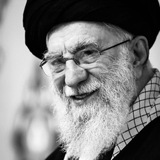
On August 3, the solemn anniversary of the Yazidi genocide, President of the Kurdistan Region Nechirvan Barzani visited Damascus, where he met with Ahmed al-Sharaa (Abu Mohammad al-Jolani).
The timing of this visit carries profound historical and humanitarian symbolism, particularly for Iraqis in general and the Yazidi community in particular.
It brings together the President of the Kurdistan Region—whose administration continues to face longstanding criticism and accusations of withdrawing and failing to protect the Yazidis during the ISIS assault in that dark summer of 2014— with a figure such as al-Jolani, who once served as Abu Bakr al-Baghdadi’s representative and founded the Syrian branch of the organization before breaking away in 2013 and pledging allegiance to Ayman al-Zawahiri.
Although al-Jolani and al-Baghdadi later split over organizational and ideological differences, the optics of this meeting underscore complex political intersections that, in the eyes of many observers, transcend the blood of the victims and a violent past in which extremism and terrorism became intertwined with shifting regional calculations—often at the expense of marginalized communities and their enduring suffering.
This raises an obvious question: In what official capacity was Nechirvan Barzani representing himself during this visit? Was he there as a representative of the Republic of Iraq, or solely as the President of the Kurdistan Region?
The symbolism is difficult to ignore. On a day marking one of the darkest chapters in Iraq’s modern history, the absence of Iraq’s national flag at such a high-level meeting adds another layer of political controversy to an already deeply sensitive visit.
Please open Telegram to view this post
VIEW IN TELEGRAM
🤬1
📰 The News
📅 On Monday, August 3, 2026, Kurdistan Region President Nechirvan Barzani arrived in Damascus on his first visit to Syria since the fall of Bashar al-Assad’s government.
📄 Official statements focused on “economic cooperation,” “border security,” and “regional coordination.”
The Geopolitical Reality
While our brothers in the Kurdistan Region have been working tirelessly to redraw Fishkhabour as part of Duhok Province instead of Nineveh Province, the rest of us are watching the map being redrawn in real time.
💰 Because the talks in Damascus were not primarily about Syrian Kurds or “regional stability.”
🎯 The real agenda is infrastructure and energy.
🛢️ Negotiations over the Kirkuk–Ceyhan oil export pipeline and the Development Road Project are reportedly taking place with Erbil and Damascus—not Baghdad.
⚠️ The objective is to reduce Iraq’s federal government from a decision-maker to a mere spectator.
🛰️ The Observer’s Assessment
🇮🇶 We support Iraq’s unity and sovereignty without apology—and these developments undermine both.
Bottom Line
📍 Fishkhabour is part of Nineveh.
🛢️ The oil pipeline is an Iraqi national asset.
The Development Road is Iraq’s national project.
Please open Telegram to view this post
VIEW IN TELEGRAM
🤬1
Summary:
A new report examining the Iran–US confrontation highlights growing uncertainty over Washington’s next move. According to the report, U.S. President Donald Trump faces a difficult choice between launching a wider military campaign against Iran or seeking a new political arrangement to avoid further escalation.
The report notes that Iran has maintained its ability to retaliate, while U.S. and Israeli officials remain concerned about the cost of a prolonged conflict. It also highlights pressure on the U.S. military, particularly naval resources, and growing doubts among some allies about Washington’s strategy.
The analysis suggests that the current confrontation has become a strategic test: Washington seeks to pressure Tehran into concessions, while Iran attempts to challenge U.S. influence without crossing into a full-scale war. The possibility of escalation around regional flashpoints remains a major concern.
Conclusion:
The report concludes that the Iran crisis has entered a critical phase where neither side appears ready for a decisive confrontation, yet both continue testing each other’s limits. The coming period may determine whether diplomacy prevails or whether the region moves toward another major escalation.
Source: Report dated 3 August 2026 (compiled from Israeli, American, and international media analyses)
Please open Telegram to view this post
VIEW IN TELEGRAM
🤯1
📖 RECOMMENDED READING: KIDNAPPED on the Global SUMUD FLOTILLA to Gaza 2026
Author: Fra Hughes
Editor’s Review: From the Streets of Belfast to International Waters
If you want to understand the true cost of frontline international solidarity, Fra Hughes’ latest account is essential reading.
In KIDNAPPED on the Global SUMUD FLOTILLA to Gaza 2026, Hughes—a veteran activist and writer from North Belfast—delivers a raw, unvarnished eyewitness narrative of what happened when Israeli commandos intercepted civilian aid vessels in international waters. Carrying nothing more than food, medical supplies, and human empathy, the activists aboard were met with sniper lasers, high-seas abductions, and brutal illegal detention.
What makes this memoir stand out from typical political commentary is its deeply personal, cross-generational perspective. Hughes doesn't just detail the 72 hours of degradation, strip-searches, and military prison cages at Ketziot in the Negev desert; he seamlessly traces the thread back to his childhood in Northern Ireland. Growing up on Belfast’s "Murder Mile" during the height of the Troubles, dodging sectarian death squads, and witnessing military occupation at home instilled in him a lifelong commitment to standing with the oppressed—from Belfast to Beirut, and ultimately to Gaza.
Key Highlights of the Book:
The High-Seas Interception: A vivid, minute-by-minute breakdown of the commandos boarding the vessel Diabolo in international waters, 600 miles off the coast of Gaza.
Inside Ketziot Prison: Firsthand testimonies of the psychological intimidation, stress positions, and physical violence inflicted on international humanitarians.
The Belfast Parallel: An illuminating look at how Northern Ireland's anti-colonial struggle intersects with the Palestinian movement for liberation and self-determination.
15 Years of Sumud: Chronicles of previous land convoys, the Viva Palestina initiatives, and grassroots humanitarian aid efforts.
Written with the grit, directness, and moral clarity characteristic of a Belfast native, Hughes reminds us that sumud (steadfastness) is not just a concept—it is an active choice.
This isn't just a book about high-seas piracy or state violence; it is a testament to unwavering human dignity. Highly recommended for everyone following strategic developments and grassroots resistance in the region.
📬 Contact & Publisher Details
For media inquiries, speaking engagements, or review copies, you can reach out directly or through the publisher:
Author: Fra Hughes
Publisher Site: Daraja Press
Publication Location: Wakefield, Quebec, Canada
ISBN: 9781997742449
☑️ Our website
🖋 @observer_5
Author: Fra Hughes
Editor’s Review: From the Streets of Belfast to International Waters
If you want to understand the true cost of frontline international solidarity, Fra Hughes’ latest account is essential reading.
In KIDNAPPED on the Global SUMUD FLOTILLA to Gaza 2026, Hughes—a veteran activist and writer from North Belfast—delivers a raw, unvarnished eyewitness narrative of what happened when Israeli commandos intercepted civilian aid vessels in international waters. Carrying nothing more than food, medical supplies, and human empathy, the activists aboard were met with sniper lasers, high-seas abductions, and brutal illegal detention.
What makes this memoir stand out from typical political commentary is its deeply personal, cross-generational perspective. Hughes doesn't just detail the 72 hours of degradation, strip-searches, and military prison cages at Ketziot in the Negev desert; he seamlessly traces the thread back to his childhood in Northern Ireland. Growing up on Belfast’s "Murder Mile" during the height of the Troubles, dodging sectarian death squads, and witnessing military occupation at home instilled in him a lifelong commitment to standing with the oppressed—from Belfast to Beirut, and ultimately to Gaza.
Key Highlights of the Book:
The High-Seas Interception: A vivid, minute-by-minute breakdown of the commandos boarding the vessel Diabolo in international waters, 600 miles off the coast of Gaza.
Inside Ketziot Prison: Firsthand testimonies of the psychological intimidation, stress positions, and physical violence inflicted on international humanitarians.
The Belfast Parallel: An illuminating look at how Northern Ireland's anti-colonial struggle intersects with the Palestinian movement for liberation and self-determination.
15 Years of Sumud: Chronicles of previous land convoys, the Viva Palestina initiatives, and grassroots humanitarian aid efforts.
Written with the grit, directness, and moral clarity characteristic of a Belfast native, Hughes reminds us that sumud (steadfastness) is not just a concept—it is an active choice.
This isn't just a book about high-seas piracy or state violence; it is a testament to unwavering human dignity. Highly recommended for everyone following strategic developments and grassroots resistance in the region.
📬 Contact & Publisher Details
For media inquiries, speaking engagements, or review copies, you can reach out directly or through the publisher:
Author: Fra Hughes
Publisher Site: Daraja Press
Publication Location: Wakefield, Quebec, Canada
ISBN: 9781997742449
Please open Telegram to view this post
VIEW IN TELEGRAM
👍1
Donald Trump’s self-proclaimed status as a master negotiator is unravelling in real time on the international stage. What is being presented as high-stakes diplomacy is, in reality, a chaotic series of contradictory posts, unilateral declarations, and immediate diplomatic denials that leave the White House looking disjointed and out of control.
The Anatomy of a Contradiction
Within a 48-hour window, the messaging from Washington shifted wildly between imminent total war and claims of an agreed-upon diplomatic breakthrough:
The Military Threat: Trump posted that the U.S. was
"locked and loaded and ready to go against the Islamic Republic of Iran, at levels of Military Terror, Strength, and Power not seen since World War II."
The Claimed Breakthrough: Hours later, he claimed he cancelled scheduled strikes because
"the perimeters of a deal has been agreed to"
and that Iran and Middle Eastern allies had "
asked by Iran, and other Middle Eastern Countries, to hold off any attack."
The Reality Check: Mediators and counter-parties immediately exposed the discrepancy. Pakistani officials confirmed that no date or venue had been finalized for direct talks, while Qatar and Islamabad remain bogged down in preliminary efforts just to bring the parties back to the table. Tehran flatly rejected the claim that talks were scheduled or that any deal on the Strait of Hormuz had been struck.
The Retraction & Accusation: Facing immediate public refutations, Trump pivoted to damage control, claiming on Truth Social that
"Iranian Leadership is unbelievably duplicitous! They ask for a meeting, some would say 'beg,' talks begin... and they say, openly and proudly, that they're not having any discussions."
Why the "Art of the Deal" Fails in Geopolitics
1. Conducting Diplomacy via Social Media: Negotiating complex international security frameworks—involving critical maritime chokepoints like the Strait of Hormuz—cannot be conducted via impulsive social media posts. Negotiating in public before terms are anchored destroys leverage and leaves allies scrambling for clarity.
2. Alienating Mediators and Allies: When key regional intermediaries (Pakistan, Qatar, Oman, and Saudi Arabia) are forced to publicly correct or clarify statements coming out of Washington, it erodes trust in U.S. commitments.
3. Coercion Without Strategy: Threatening
"total surrender"
while simultaneously declaring that a deal is
"imminent"
signals a lack of strategic coherence. It confuses adversaries, unnerves regional partners, and destabilizes global energy markets.
Bottom Line
True leverage in international negotiations requires precision, discipline, and quiet channel management. Public posturing, moving goalposts, and reactionary venting when narrative control slips do not constitute strength—they reveal an administration reacting to events rather than driving them.
Note :
Perhaps the most intriguing explanation is that genuine negotiations are, in fact, taking place behind closed doors, and that Trump is either not part of the process or does not have the full picture.
This could explain the glaring contradictions in his statements—his rapid shift from threatening war to announcing a breakthrough deal, only to later accuse Iran after its public denial. If that is indeed the case, then the confusion he appears to be displaying is not evidence of someone directing the negotiations, but rather of someone trying to catch up with a diplomatic process unfolding beyond his own narrative.
Please open Telegram to view this post
VIEW IN TELEGRAM
🤡1
Foreign press information reported the destruction percentages in Southern Lebanese towns:
Translation
Foreign press information reported the destruction percentages in Southern Lebanese towns:
El Khiam: 90%
Kfar Kila: 87%
Odaisseh (Al-Adeyssah): 90%
Deir Mimas / Deir Siriane: 65% (Deir Siriane)
At-Tiri / At-Taibe: 65% (At-Taibe / El-Taybeh)
Houla: 83%
El-Qantara: 52%
Mays El-Jabal: 65%
Blida: 99%
Mhaibib: 100%
Maroun El-Ras: 99%
Yaroun: 76%
Bint Jbeil: 54%
At-Tiri: 57%
Aita Al-Shaab: 61%
Marwahin: 100%
Naqoura: 87%
Qabrikha: 13%
Details and Context
Source Material & Methodology:
Data mapping destruction percentages in border towns across Southern Lebanon is primarily compiled by international news organizations (such as Le Monde and EL PAÍS), human rights entities (Amnesty International), and local research bodies (CNRS Lebanon) using high-resolution satellite imagery (radar/SAR analysis) and thermal data.
Core Frontline Zone: Villages reporting total or near-total destruction (e.g., Mhaibib 100%, Marwahin 100%, Blida 99%, Maroun El-Ras 99%) were subjected to controlled explosive demolitions, aerial bombardment, and clearing operations aimed at establishing a buffer corridor along the border.
Impact Distribution: The heaviest devastation is concentrated in border municipalities within the Nabatieh and South Lebanon Governorates (particularly the Bint Jbeil, Marjayoun, and Tyre districts). In inland towns like Qabrikha (13%), destruction levels drop relative to direct border communities.
☑️ Our website
🖋 @observer_5
Translation
Foreign press information reported the destruction percentages in Southern Lebanese towns:
El Khiam: 90%
Kfar Kila: 87%
Odaisseh (Al-Adeyssah): 90%
Deir Mimas / Deir Siriane: 65% (Deir Siriane)
At-Tiri / At-Taibe: 65% (At-Taibe / El-Taybeh)
Houla: 83%
El-Qantara: 52%
Mays El-Jabal: 65%
Blida: 99%
Mhaibib: 100%
Maroun El-Ras: 99%
Yaroun: 76%
Bint Jbeil: 54%
At-Tiri: 57%
Aita Al-Shaab: 61%
Marwahin: 100%
Naqoura: 87%
Qabrikha: 13%
Details and Context
Source Material & Methodology:
Data mapping destruction percentages in border towns across Southern Lebanon is primarily compiled by international news organizations (such as Le Monde and EL PAÍS), human rights entities (Amnesty International), and local research bodies (CNRS Lebanon) using high-resolution satellite imagery (radar/SAR analysis) and thermal data.
Core Frontline Zone: Villages reporting total or near-total destruction (e.g., Mhaibib 100%, Marwahin 100%, Blida 99%, Maroun El-Ras 99%) were subjected to controlled explosive demolitions, aerial bombardment, and clearing operations aimed at establishing a buffer corridor along the border.
Impact Distribution: The heaviest devastation is concentrated in border municipalities within the Nabatieh and South Lebanon Governorates (particularly the Bint Jbeil, Marjayoun, and Tyre districts). In inland towns like Qabrikha (13%), destruction levels drop relative to direct border communities.
Please open Telegram to view this post
VIEW IN TELEGRAM
Please open Telegram to view this post
VIEW IN TELEGRAM
😱1
The Observer
🔥 EXPOSED: Riyadh’s Allegations Collapse As Baghdad Takes Diplomatic Action In a televised interview, Iraqi government spokesman Rabee Al-Aboudi revealed critical details regarding recent regional friction. The Breakdown: Zero Conclusive Evidence: During…
Please open Telegram to view this post
VIEW IN TELEGRAM
The Rome Negotiations: Capitulation Under the Guise of Diplomacy
As of August 2026, the diplomatic delegation led by Ambassador Simon Karam has arrived in Rome to engage in direct negotiations with Israel. Under intense American pressure to force an
Beirut is playing into a trap. Engaging in direct talks in European capitals while Tel Aviv systematically dismantles the border region is not diplomacy—it is a strategic miscalculation that grants cover to an ongoing policy of total erasure.
The facts on the ground strip away any diplomatic ambiguity:
Systematic Rejection of De-escalation: Israel’s immediate rejection of proposed pilot arrangements in Bint Jbeil and Khiam demonstrates zero intent to negotiate. Tel Aviv demands total submission, not compromise.
The Scale of Erasure: According to joint assessments by the UNDP and the Lebanese National Council for Scientific Research, direct structural damage in the South has surpassed $1.38 billion. More than 11,095 buildings have been completely destroyed—affecting 17,891 housing units—generating over 3.1 million cubic meters of rubble.
Targeting Bint Jbeil & Khiam: Satellite analysis shows that in Bint Jbeil alone, over 70% of the urban mass has been flattened, destroying more than 1,076 structures including historic quarters, civilian power grids, and local medical facilities. In Khiam, entire residential sectors, water infrastructure, and essential clinics have been systematically demolished to enforce a depopulated buffer zone ( 90% of urban mass has been flattened) .
Macroeconomic Devastation: Lebanon’s Southern Council estimates the broader cumulative destruction across southern infrastructure and agriculture at $10 billion to $20 billion, with nearly 100,000 structures damaged or leveled across border municipalities.
Direct negotiations are built on leverage. By coming to the table in Rome without pre-conditions, baseline guarantees, or an immediate cessation of demolitions, the Lebanese government is betraying the resilience of the South.
The southerners who lost their homes, land, and livelihood do not need performative talks in Rome; they require an uncompromising sovereign stance that treats their existence as non-negotiable.
☑️ Our website
🖋 @observer_5
As of August 2026, the diplomatic delegation led by Ambassador Simon Karam has arrived in Rome to engage in direct negotiations with Israel. Under intense American pressure to force an
"executive framework,"
Beirut is playing into a trap. Engaging in direct talks in European capitals while Tel Aviv systematically dismantles the border region is not diplomacy—it is a strategic miscalculation that grants cover to an ongoing policy of total erasure.
The facts on the ground strip away any diplomatic ambiguity:
Systematic Rejection of De-escalation: Israel’s immediate rejection of proposed pilot arrangements in Bint Jbeil and Khiam demonstrates zero intent to negotiate. Tel Aviv demands total submission, not compromise.
The Scale of Erasure: According to joint assessments by the UNDP and the Lebanese National Council for Scientific Research, direct structural damage in the South has surpassed $1.38 billion. More than 11,095 buildings have been completely destroyed—affecting 17,891 housing units—generating over 3.1 million cubic meters of rubble.
Targeting Bint Jbeil & Khiam: Satellite analysis shows that in Bint Jbeil alone, over 70% of the urban mass has been flattened, destroying more than 1,076 structures including historic quarters, civilian power grids, and local medical facilities. In Khiam, entire residential sectors, water infrastructure, and essential clinics have been systematically demolished to enforce a depopulated buffer zone ( 90% of urban mass has been flattened) .
Macroeconomic Devastation: Lebanon’s Southern Council estimates the broader cumulative destruction across southern infrastructure and agriculture at $10 billion to $20 billion, with nearly 100,000 structures damaged or leveled across border municipalities.
Direct negotiations are built on leverage. By coming to the table in Rome without pre-conditions, baseline guarantees, or an immediate cessation of demolitions, the Lebanese government is betraying the resilience of the South.
The southerners who lost their homes, land, and livelihood do not need performative talks in Rome; they require an uncompromising sovereign stance that treats their existence as non-negotiable.
Please open Telegram to view this post
VIEW IN TELEGRAM
Please open Telegram to view this post
VIEW IN TELEGRAM
👎1
In his latest speech, Hezbollah Secretary-General Naim Qassem sharply condemned the Lebanese government's direct negotiations in Rome as humiliation and free concessions, while asserting that regional deterrence, internal resistance, and complete alignment with Iran remain the only viable paths to force an Israeli withdrawal and rebuild the South.
Please open Telegram to view this post
VIEW IN TELEGRAM
❤2
The Observer
For further details:
1️⃣ Rejection of Negotiations & Critique of the Lebanese Government
Direct Talks Condemned: Characterized all direct negotiations as bringing "shame, humiliation, and endless concessions" to Lebanon, claiming Israel gained political advantages without achieving field control.
Attack on Political Leadership: Accused the Lebanese authority of aiding Israeli-U.S. objectives instead of protecting sovereignty. Called on the government to halt "free concessions," confront American pressure, and demand an immediate stop to the destruction of southern towns (referencing recent 700-ton bombings).
2️⃣ Strategic Alliances & Geopolitics
Iran's Role: Asserted that the cessation of aggression was driven by the U.S.-Iran memorandum/talks, claiming Iran made stopping the conflict a key condition. Stated that Trump remains deterred by Iranian terms.
Syria-Lebanon Relations: Emphasized mutual stability between Lebanon and Syria, supported Syrian territorial integrity, and confirmed Hezbollah’s readiness to meet with Syrian leadership at an appropriate time.
3️⃣ Domestic Unity & Internal Front
Alliance with Amal: Stressed the strong, impenetrable alliance between Hezbollah and the Amal Movement.
National Cohesion: Called for internal unity among all Lebanese factions, rejected any division of Lebanon, and equated aggression against the South with an attack on the entire nation.
Warning to Internal Opponents: Stated that anyone executing or aligning with the Israeli project within Lebanon will be confronted just like the external enemy.
4️⃣ . South Lebanon, Military Stance, & Reconstruction
Resistance Continuity: Reaffirmed ongoing military readiness, insisting Israel’s only choice is full withdrawal. Supported the deployment of the Lebanese Army south of the Litani River.
Commitment to Reconstruction: Acknowledged the immense loss of life and property in the South and Beirut’s Southern Suburbs (Dahiyeh). Pledged to leverage all efforts—in coordination with friendly states and the Lebanese government—to secure housing and rebuilding.
☑️ Our website
🖋 @observer_5
Direct Talks Condemned: Characterized all direct negotiations as bringing "shame, humiliation, and endless concessions" to Lebanon, claiming Israel gained political advantages without achieving field control.
Attack on Political Leadership: Accused the Lebanese authority of aiding Israeli-U.S. objectives instead of protecting sovereignty. Called on the government to halt "free concessions," confront American pressure, and demand an immediate stop to the destruction of southern towns (referencing recent 700-ton bombings).
Iran's Role: Asserted that the cessation of aggression was driven by the U.S.-Iran memorandum/talks, claiming Iran made stopping the conflict a key condition. Stated that Trump remains deterred by Iranian terms.
Syria-Lebanon Relations: Emphasized mutual stability between Lebanon and Syria, supported Syrian territorial integrity, and confirmed Hezbollah’s readiness to meet with Syrian leadership at an appropriate time.
Alliance with Amal: Stressed the strong, impenetrable alliance between Hezbollah and the Amal Movement.
National Cohesion: Called for internal unity among all Lebanese factions, rejected any division of Lebanon, and equated aggression against the South with an attack on the entire nation.
Warning to Internal Opponents: Stated that anyone executing or aligning with the Israeli project within Lebanon will be confronted just like the external enemy.
Resistance Continuity: Reaffirmed ongoing military readiness, insisting Israel’s only choice is full withdrawal. Supported the deployment of the Lebanese Army south of the Litani River.
Commitment to Reconstruction: Acknowledged the immense loss of life and property in the South and Beirut’s Southern Suburbs (Dahiyeh). Pledged to leverage all efforts—in coordination with friendly states and the Lebanese government—to secure housing and rebuilding.
Please open Telegram to view this post
VIEW IN TELEGRAM
Al-Muraqeb
The Observer | Geopolitical Intelligence & Analysis
In-depth geopolitical analysis, military intelligence, and strategic assessments.
👍1
🚜 Ground Military Movements:
🛑 Hadatha–Haris Axis: Three Israeli military vehicles advanced from the town of Hadatha toward the outskirts of Haris.
Please open Telegram to view this post
VIEW IN TELEGRAM
😢1
The Observer
Givati Mutiny: When Gaza Vets Walk Off the Base What Happened? Over 100 combat soldiers and squad commanders from the elite Tzabar Battalion (Givati Brigade) abandoned their posts at the Sde Teiman base, laid down their weapons, and went AWOL to go home.…
The mutiny within the Israeli military’s “Sabar” Battalion of the Givati Brigade continues to deepen.
▪️ Three additional soldiers identified as leaders of the mutiny have been sentenced to 30 days in military prison and removed from combat duty.
▪️ Another soldier, who had already begun his pre-discharge leave, was also barred from combat service and sentenced to 20 days in prison.
The growing number of disciplinary measures highlights mounting internal tensions within one of the Israeli army’s elite infantry brigades amid the ongoing conflict.
Source: Israeli Army Radio.
Please open Telegram to view this post
VIEW IN TELEGRAM
👍1
A new report published by Yedioth Ahronoth, referencing data from Tel Aviv University researchers and the Central Bureau of Statistics, reveals a sustained, record-breaking wave of emigration. Between 2023 and 2025, approximately 268,509 Israeli citizens left the country for continuous periods of three months or more.
This shift marks a structural break from historical norms, escalating from localized political friction into a broader structural exodus.
Key Data & Metrics
Yearly Breakdown (Departures > 3 months):
2023: 86,509
2024: 91,499
2025: 90,922
Historical Baseline: Annual long-term departures averaged ~60,000 per year between 2010 and 2019.
The total for 2013–2015 stood at 183,219, indicating a 46% surge in the 2023–2025 period.
Long-Term Projection: Researchers project that between 45,000 and 50,000 of the 2025 departures will translate into permanent relocations (exceeding 12 months abroad).
Demographics and High-Value Capital
The exodus is disproportionately concentrated among critical human capital pillars:
Sectors Affected: Higher education academics, PhD holders, software engineers, medical professionals, and top-tier income earners.
Economic Vulnerability: Lacking vast natural resource reserves, the Israeli macroeconomic model relies heavily on high-tech innovation and knowledge-intensive industries. Loss of this workforce directly threatens tax bases, high-tech R&D, and institutional capacity.
Geopolitical Analysis &
Strategic Outlook
Lead researcher Prof. Itai Ater (Tel Aviv University / Economists for Democracy Forum) warns that while current numbers do not cause immediate operational collapse, they break previous demographic equilibrium.
The primary geopolitical risk is the tipping point dynamic:
The continuous departure of over a quarter of a million Israelis ultimately works to the long-term benefit of the native population and the owner of the lands ( meaning the Palestinians) serving as a clear indicator that deep-rooted attachment to the land cannot be synthetically replicated, and that the occupying presence is fundamentally unsustainable.
Please open Telegram to view this post
VIEW IN TELEGRAM
👍1
📍 Areas affected:
▪️ Bourj El Barajneh
▪️ Haret Hreik
▪️ Bir Hassan
▪️ Jnah
▪️ Old Airport Road
▪️ New Airport Road
▪️ Ghobeiry
▪️ Ouzai (Coastal Road)
Please open Telegram to view this post
VIEW IN TELEGRAM
🤔1
Source: Haaretz | Date: August 4, 2026
Key Military Updates
Paving Supply Routes: The IDF combat engineering units are actively opening and paving new military-grade roads in Southern Lebanon. These supply routes bypass historical bottlenecks, allowing rapid movement for heavy armor (Merkava IV, armored personnel carriers) and sustained tactical resupply.
Permanent Outpost Footprint: Reports confirm the establishment of at least 7 military bases/outposts deeper inside South Lebanese territory to consolidate tactical high ground and operational dominance.
Khiam Outpost Transformation: IDF engineering units demolished the historic Khiam prison structure and converted the high-ground site into an active military base.
Engineering Strategy ("Gaza Playbook"): The IDF is applying heavy infrastructure alteration—land clearing, building demolitions along the border line, and establishing fortified patrol axes—to create a permanent line of sight and deny Hezbollah short-range ATGM (Anti-Tank Guided Missile) launch positions.
Tactical & Strategic Assessment
Please open Telegram to view this post
VIEW IN TELEGRAM
Please open Telegram to view this post
VIEW IN TELEGRAM